 Mercedes-Benz V-Class
All generations, specs and history
Published Sources (3) Report an error
By Felix Hartmann, Automotive Technology & EV Contributor
- Built
- 1996–present
- Generations
- 3 · W638 to W447
- Top power
- 190 kW (258 PS)
Timeline
V-Class generations
Click a generation for its own page


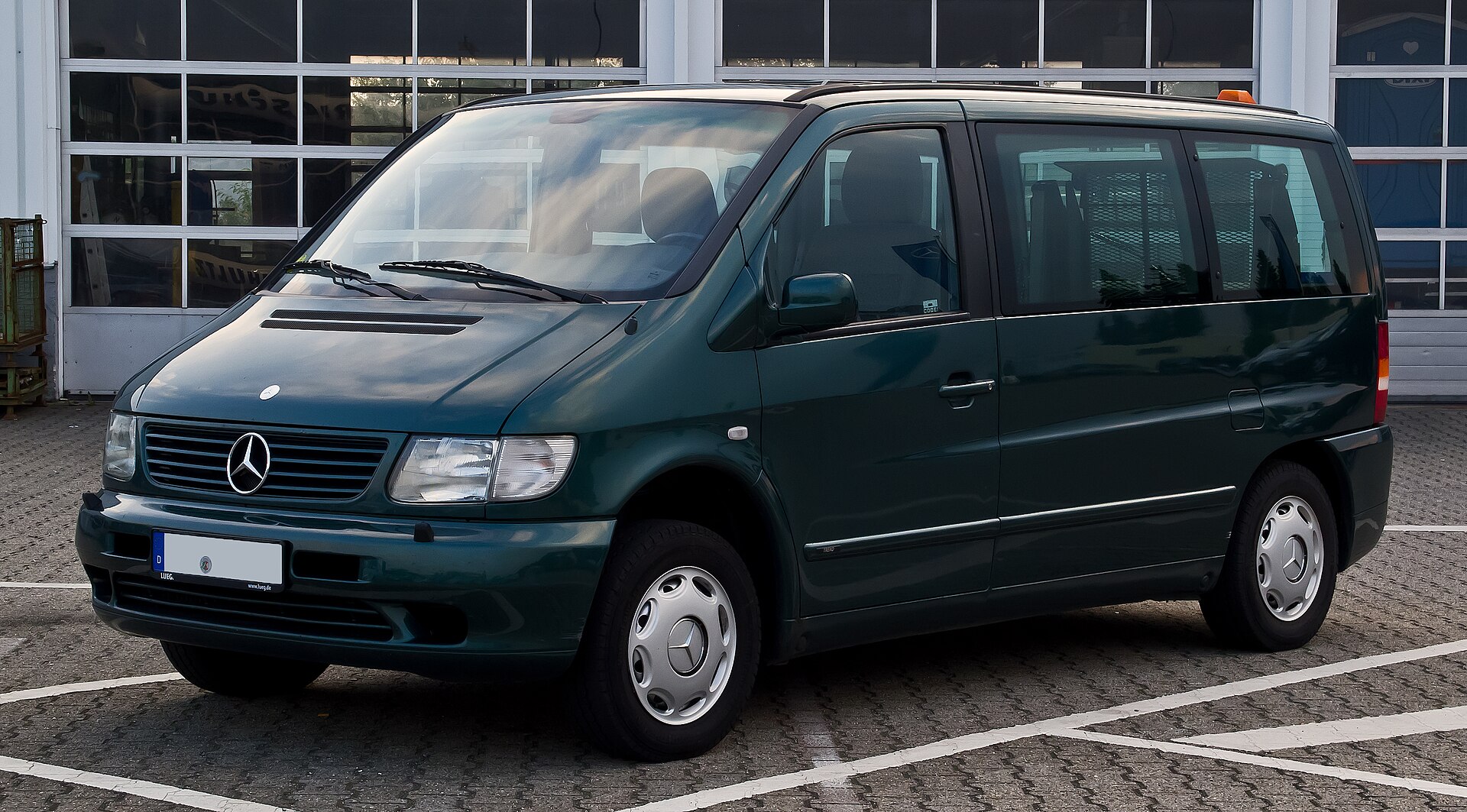
- V-Class W638 1996–2003 · Minivan / MPV · 72–128 kW (98–174 PS)
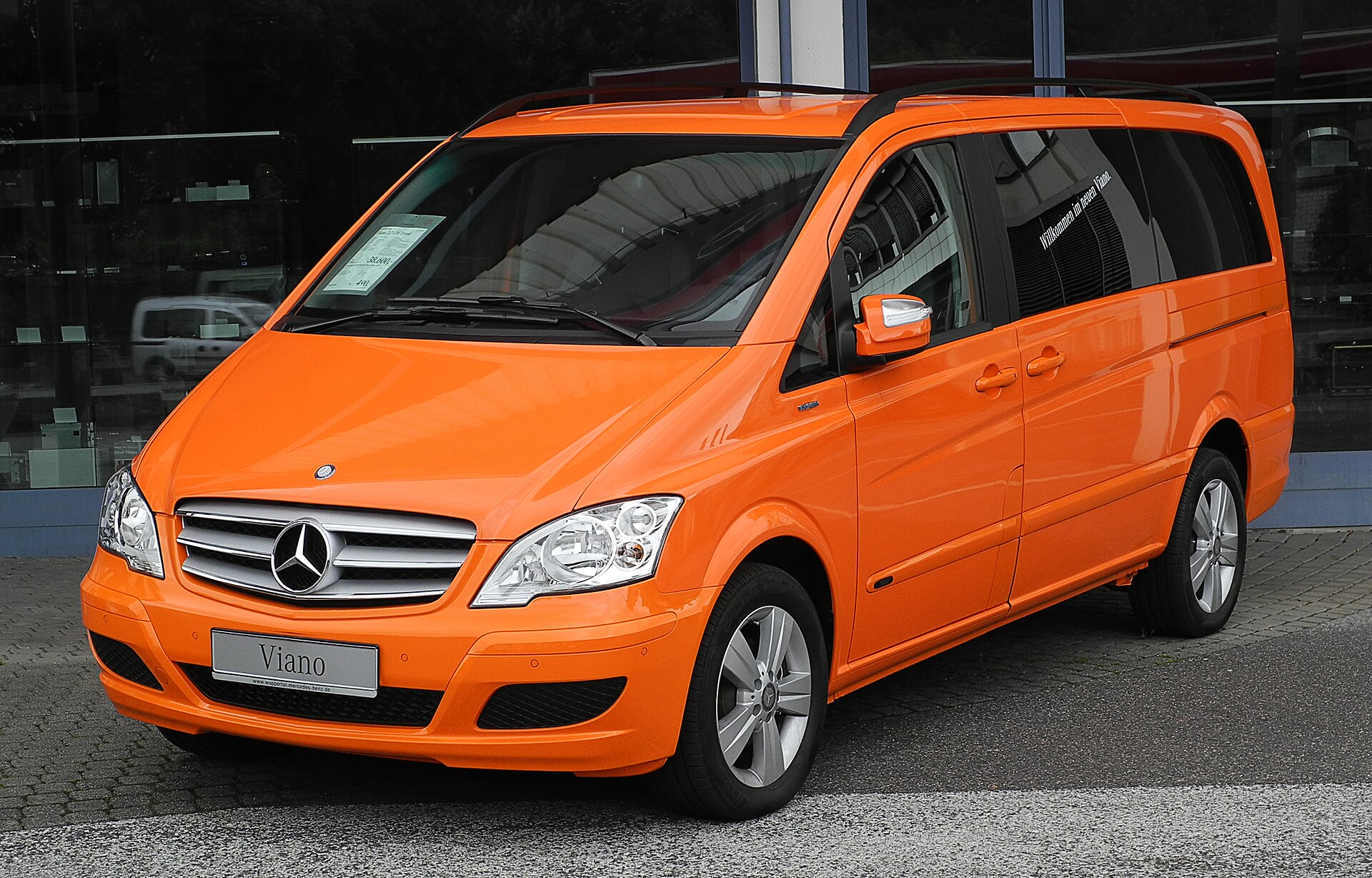
- Viano W639 2003–2014 · Minivan / MPV · 80–190 kW (109–258 PS)
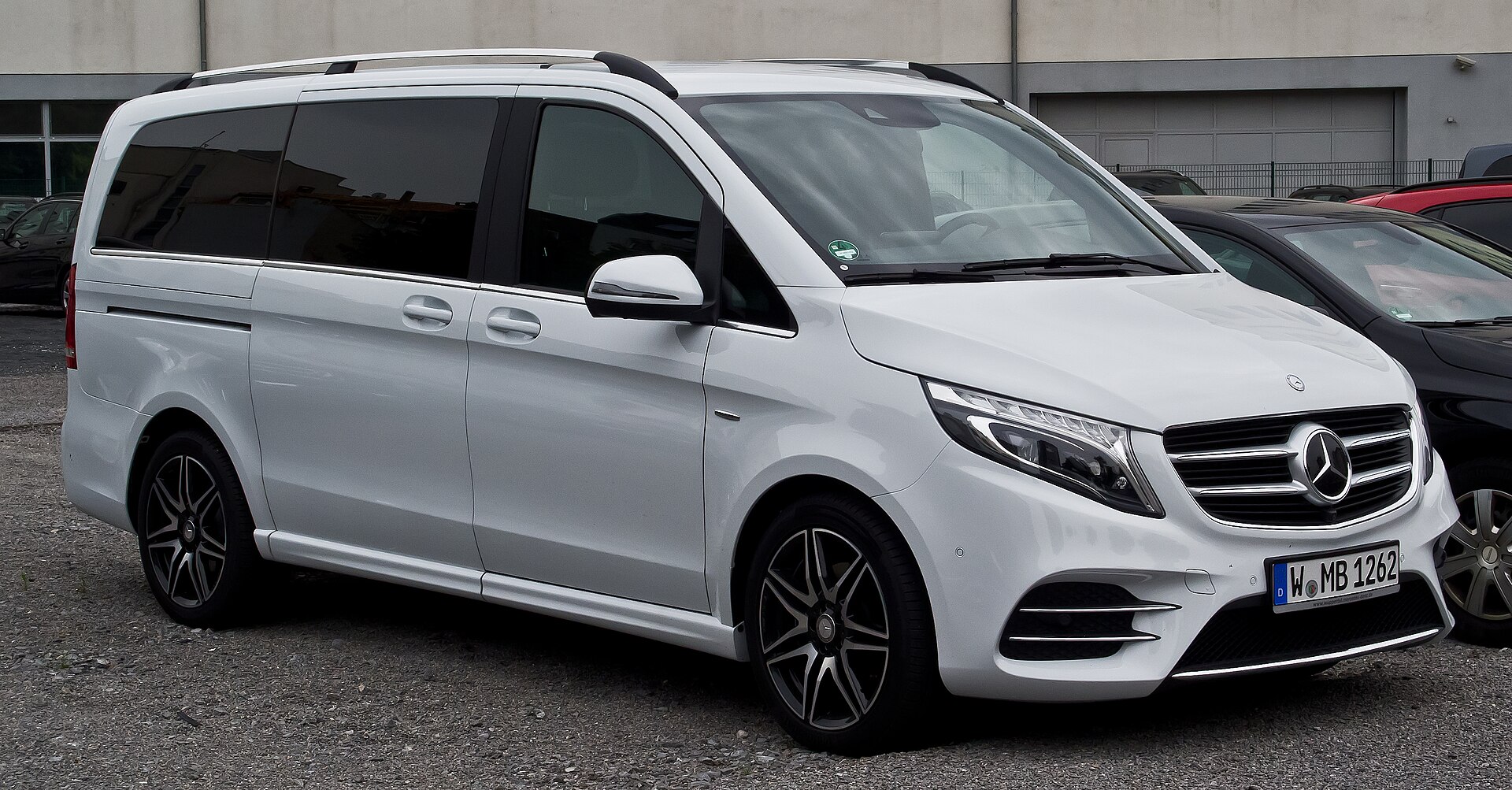
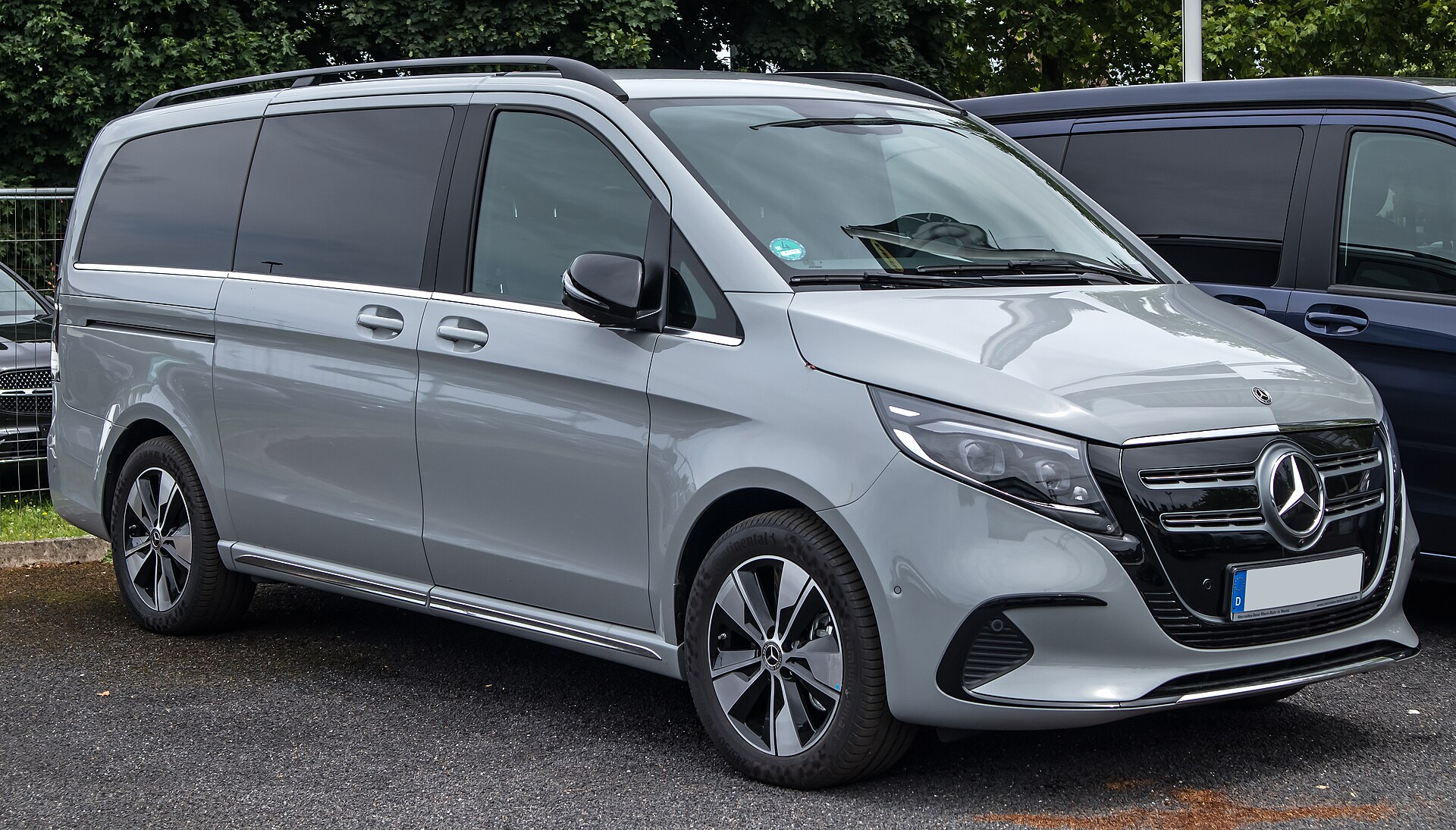
- V-Class W447 Current 2014–now · Minivan / MPV · 100–176 kW (136–239 PS)
Newest first · 3 generations since 1996
-
2014
-
2003
-
1996
All generations by year: V-Class W447 (2014–now) · Viano W639 (2003–2014) · V-Class W638 (1996–2003)
Which one is mine?
Pick the year of first registration to see which generation it is.
Check by VINWhich V-Class to buy: verdict
Our verdict · Felix Hartmann
- Best all-rounder: the V 250 d long, with 140 kW (190 PS) and the 9G-TRONIC.
- Most powerful: the V 300 d with up to 176 kW (239 PS), with 4MATIC if you tow or drive in snow.
- For travel: the Marco Polo with pop-up roof and galley.
- Used bargain: a Viano 2.2 CDI with 110 kW (150 PS) from after the 2010 facelift.
The Mercedes-Benz V-Class is the large passenger MPV built on the Vito van, with up to eight seats and three body lengths. The name was used for the front-wheel-drive W638 of 1996-2003, the car was sold as the Viano (W639) from 2003 to 2014, and the current rear-wheel-drive W447 has carried the V-Class name again since 2014. It comes mainly from Mercedes' van plant in Vitoria-Gasteiz, Spain.
In short
- Three generations: V-Class W638 (1996-2003), Viano W639 (2003-2014) and V-Class W447 (since 2014, facelifted in 2019 and 2024).
- The current V-Class: 2.0 diesel with 120-174 kW (163-237 PS) and a 2.0 petrol V 300 with 170 kW (231 PS); the electric version is the EQV.
- Three lengths: 4,895 mm (compact), 5,140 mm (long) and 5,370 mm (extra-long).
- In Germany the 2024 V-Class starts at EUR 52,330 (V 220 d compact) and reaches EUR 103,714 for a V 300 d extra-long Exclusive 4MATIC (ADAC, 2025).
Specs by version
| Version | Engine | Power | Gearbox | Drive | Production years |
|---|---|---|---|---|---|
| W447 · 2014–present | |||||
| W447 · V 220 d | Diesel | 120 kW 163 PS161 hp | 9-sp Automatic | Rear-wheel drive | 2024 |
| W447 · V 250 d | Diesel | 140 kW 190 PS188 hp | 9-sp Automatic | Rear-wheel drive | 2024 |
| W447 · V 300 d | Diesel | 174 kW 237 PS233 hp | 9-sp Automatic | Rear-wheel drive | 2024 |
Verified Manufacturer and type-approval data from our catalog · Sources and methodology
Mercedes-Benz V-Class at a glance
| Specification | V-Class W447 (2014-) |
|---|---|
| Segment | large MPV, van-based |
| Seats | up to eight |
| Body | minivan with sliding doors; compact, long and extra-long |
| Drive | rear-wheel drive, 4MATIC all-wheel drive optional |
| Plants | Vitoria-Gasteiz (Spain); for other markets also Fuzhou (China) and further sites |
| Engines | 2.0 diesel; 2.0 petrol (V 300); electric as EQV |
| Gearbox | 9G-TRONIC nine-speed automatic in current German versions |
| Related models | Vito, EQV, Marco Polo camper |
The V-Class is the passenger version of the Vito; panel vans and crew buses keep the Vito name. The rest of the range is on our Mercedes-Benz brand page.
Generations
| Generation | Code | Years | Body styles | Engines | Power (kW / hp) |
|---|---|---|---|---|---|
| V-Class I | W638 | 1996-2003 | MPV | 2.3 and 2.8 petrol; 2.2 and 2.3 diesel | 72-128 kW (98-174 PS) |
| Viano | W639 | 2003-2014 | MPV, three lengths | 3.0-3.5 V6 petrol; 2.0-3.0 diesel | 80-190 kW (109-258 PS) |
| V-Class II | W447 | 2014- | MPV, three lengths | 2.0 petrol; 2.0 and 2.2 diesel | 100-176 kW (136-239 PS) |
Power ranges are German versions listed by ADAC. The Viano is listed with the V-Class here because it filled the gap between the two V-Class generations; Mercedes-Benz itself returned to the V-Class name for its successor.
V-Class W638 (1996-2003)
The first V-Class was the luxury passenger version of the first Vito. Unlike its successors it had front-wheel drive. German sales started in September 1996. The petrol engines were a 2.3-litre four-cylinder (V 230, 105 kW (143 PS)) and Volkswagen's 2.8-litre VR6 (V 280, 128 kW (174 PS)). Diesel buyers began with a 2.3 turbodiesel with 72 kW (98 PS); from June 1999 the common-rail V 200 CDI with 75 kW (102 PS) and the V 220 CDI with 90 kW (122 PS) took over. ADAC lists the last versions until September 2003.

Viano W639 (2003-2014)
The Viano switched to rear-wheel drive and arrived in Germany in July 2003. It came in compact, long and extra-long versions on two wheelbases, with a six-speed manual or a five-speed automatic. Diesels ranged from the 2.0 CDI with 80 kW (109 PS) to the 3.0 CDI V6 with 150 kW (204 PS) and 440 Nm; petrol V6 engines of 3.0, 3.2 and 3.5 litres gave 140-190 kW (190-258 PS). On the four-cylinder diesels 4MATIC all-wheel drive was available: it splits torque 35:65 front to rear, uses electronic traction control instead of locking differentials, adds about 80 kg and raises the body.
A facelift in September 2010 brought new lights and bumpers, diesel engines from the Sprinter and a revised interior and suspension. Mercedes built the Viano in Vitoria-Gasteiz and, from April 2010, also in Fuzhou for China. ANCAP scored it 32.66 out of 37 and called it the only five-star van in Australasia at the time.

V-Class W447 (2014-)
The current V-Class went on sale in Germany in May 2014. The three lengths are 4,895 mm (compact), 5,140 mm (long) and 5,370 mm (extra-long), and the long wheelbase measures 3,430 mm. At launch the V 200 CDI, V 220 CDI and V 250 BlueTEC had 100, 120 and 140 kW (136, 163 and 190 PS), all from the 2.2-litre OM651 diesel.
The first facelift reached Germany in May 2019 with the 2.0-litre OM654 diesel, the nine-speed 9G-TRONIC automatic and a new top version, the V 300 d with 174 or 176 kW (237 or 239 PS). The second update, sold in Germany from January 2024, gave the V-Class a new front end, MULTIBEAM LED headlights, the latest MBUX infotainment and two 12.3-inch displays. With it came the V 300 petrol with 170 kW (231 PS), offered only in the long and extra-long bodies.
The W447 is also the base of the battery-electric EQV, which uses a 90 kWh usable battery and a 150 kW (204 PS) motor with 362 Nm, and is limited to 160 km/h. The Marco Polo camper, developed with Westfalia, adds a galley with gas stove, sink and 40-litre fridge, a rear bench that converts into a bed and a pop-up roof, with sleeping space for up to four.


Engines and performance
| Version (W447, Germany) | Fuel | Power | Years |
|---|---|---|---|
| V 200 CDI / V 200 d | diesel | 100 kW (136 PS) | 2014-2019 |
| V 220 CDI / V 220 d | diesel | 120 kW (163 PS) | 2014- |
| V 250 BlueTEC / V 250 d | diesel | 140 kW (190 PS) | 2014- |
| V 300 d | diesel | 174-176 kW (237-239 PS) | 2019- |
| V 300 | petrol | 170 kW (231 PS) | 2024- |
| EQV 300 | electric | 150 kW (204 PS) | 2020- |
Gearboxes were a six-speed manual or the seven-speed 7G-TRONIC PLUS automatic before 2019 and the nine-speed 9G-TRONIC afterwards. The power converter converts any of these outputs.
Dimensions, space and boot
| Parameter (W447) | Metric | Imperial |
|---|---|---|
| Length, compact | 4,895 mm | 192.7 in |
| Length, long | 5,140 mm | 202.4 in |
| Length, extra-long | 5,370 mm | 211.4 in |
| Wheelbase, long | 3,430 mm | 135.0 in |
| Interior width | 1,685 mm | 66.3 in |
| Width with mirrors folded / unfolded | 2,057 / 2,249 mm | 81.0 / 88.5 in |
At well over two metres wide with the mirrors out, the V-Class needs a big garage; check yours with the garage fit tool. Luggage volume depends heavily on the length and the seat layout, and our sources do not give official figures, so we leave them out.
Running costs and prices
ADAC lists these German starting prices: EUR 28,392 for the W638 V 230 Turbodiesel (1996), EUR 32,584 for the Viano 2.0 CDI compact (2003), EUR 34,990 for the W447 V 200 d compact Rise (2017-2019), EUR 37,947 for the V 220 d compact Rise after the 2019 facelift and EUR 52,330 for the V 220 d compact from January 2024. Our sources give no official consumption figures for the current engines.
Trims and equipment
The 2024 V-Class comes with the MBUX system and two 12.3-inch screens, MULTIBEAM LED headlights and, in the extra-long body, seating for up to eight. The German price list runs up to the Exclusive trim; earlier W447 cars started with the Rise trim. 4MATIC all-wheel drive is available on the diesel versions, as the top V 300 d 4MATIC shows.

Safety
Euro NCAP tested the V-Class in 2014 (a V-Class 2.2 diesel with eight seats, 2,205 kg) and gave it five stars, with 93% for adult occupants, 87% for child occupants, 67% for pedestrians and 85% for safety assist. The side barrier test earned maximum points, but chest protection in the side pole test was marginal and the stiff windscreen pillars scored poorly for pedestrians. In 2020 Euro NCAP confirmed that the rating also applies to the EQV and the passenger Vito. More results are on our safety page.
Reliability and known issues
Our sources contain no fault statistics or recall lists for any of the three generations, so we do not repeat forum claims. As with any van-based MPV, service history and the condition of the sliding doors and seat rails are worth checking on used cars.
Rivals
| Model | Engines | Power (hp) | Boot (l) | Price from (EUR) |
|---|---|---|---|---|
| Mercedes-Benz V-Class (2024) | 2.0 diesel, 2.0 petrol | 120-174 kW (163-237 PS) | not published | 52,330 (Germany, 2024) |
| Volkswagen Multivan | petrol, diesel, PHEV | not verified | not verified | not verified |
| Toyota Proace Verso | diesel, electric | not verified | not verified | not verified |
| Citroën SpaceTourer | diesel, electric | not verified | not verified | not verified |
Use the comparison tool for exact versions and prices.
Mercedes-Benz V-Class evolution in numbers
Did you know?
- The Mercedes-Benz V-Class has been around for 30 years: 3 generations in our catalog since 1996.
- The longest-running generation is the V-Class W447 (2014–present): 12 years and counting.
- The biggest jump in power came with the Viano W639: up to 190 kW (258 PS), 62 kW more than the V-Class W638.
- The most powerful Mercedes-Benz V-Class is not the newest: the Viano W639 (2003–2014) offered up to 190 kW (258 PS), the V-Class W447 up to 176 kW (239 PS).
Most powerful version, kW
Figures from the 1cars catalog: power is the strongest version of each generation; generations without the figure are left out.
Mercedes-Benz V-Class: first vs latest generation
| Spec | V-Class W638 | V-Class W447 | Change |
|---|---|---|---|
| Years | 1996–2003 | 2014–present | 18 years apart |
| Most powerful version | 128 kW (174 PS) | 176 kW (239 PS) | +48 kW (+38%) |
Oldest and newest generation in the 1cars catalog. Power is the strongest version of each; other rows are shown only when both generations have the figure.
Mercedes-Benz V-Class in our rankings
- No. 7 of 26 · Most powerful minivans and MPVs (190 kW)
- No. 77 of 1082 · Longest-running car nameplates (30 years · top 8%)
- No. 61 of 379 · Oldest car models still on sale (30 years · top 17%)
- No. 40 of 175 · Most powerful diesel cars (174 kW · top 23%)
- No. 578 of 1011 · Most powerful cars (190 kW · top 58%)
- No. 189 of 411 · Cars with the most generations (3 generations · top 64%)
In production longer than 92% of ranked nameplates in the 1CARS catalog (No. 77 of 1082).
FAQ
What is the difference between the Mercedes V-Class and the Vito?
They share the body and mechanicals. The V-Class is the passenger MPV with a car-like interior; the Vito name is used for panel vans and crew and passenger buses.
How many seats does the V-Class have?
Up to eight, depending on body length and seat layout. Euro NCAP tested an eight-seat V-Class in 2014.
Is there an electric V-Class?
Yes, the EQV, which uses the same body with a 90 kWh usable battery and a 150 kW (204 PS) motor.
Was the Viano a V-Class?
In practice, yes. The Viano (W639) replaced the first V-Class in 2003 and was itself replaced by the second V-Class in 2014.
Data sources
Data checked by an editor against the sources below.
- Wikipedia - Mercedes Benz V Class
- ADAC
- ADAC - 447 Facelift 2