 Mercedes-Benz T2
All generations, specs and history
Published Sources (1) Report an error
By Felix Hartmann, Automotive Technology & EV Contributor
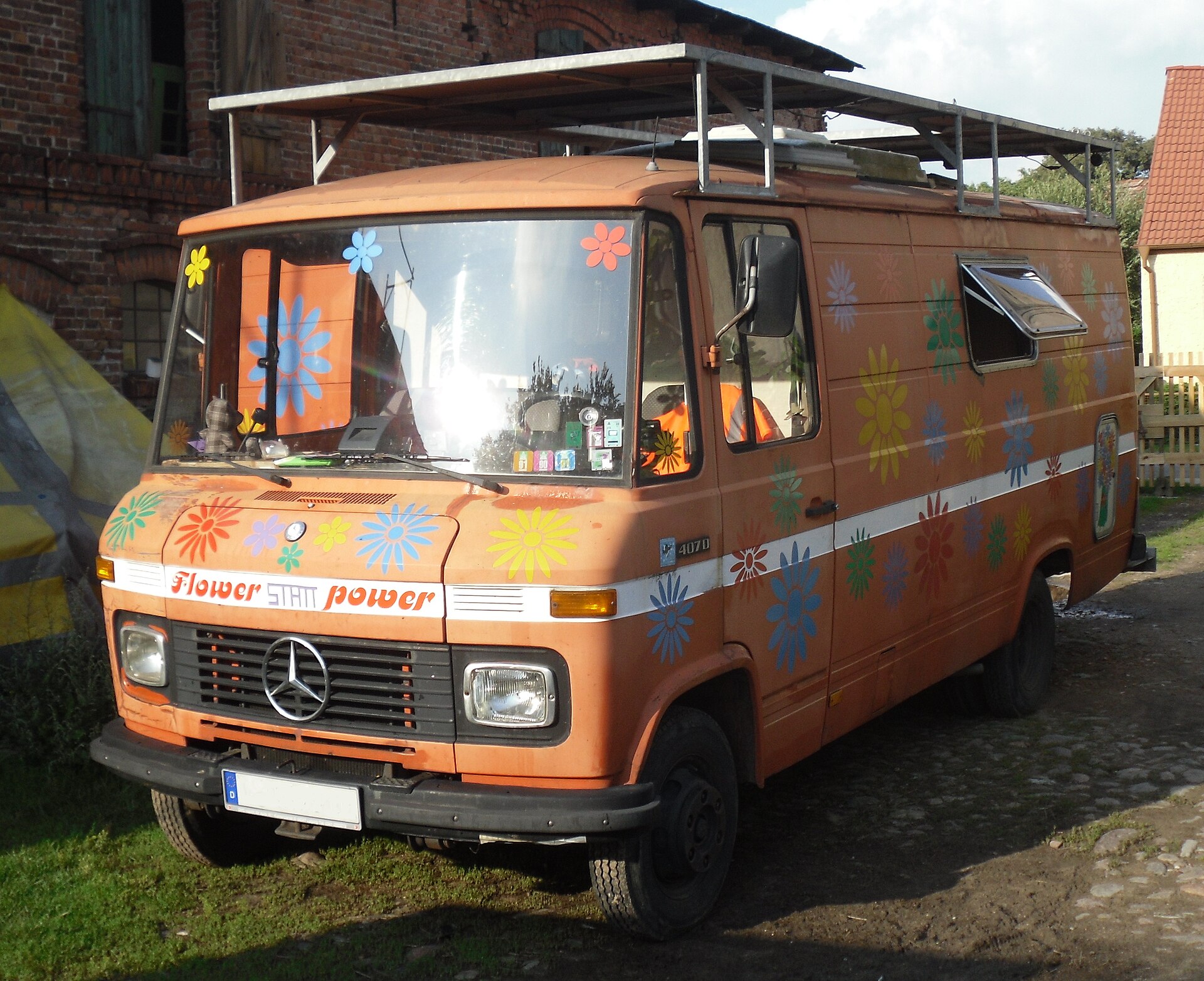
- Built
- 1967–1996
- Generations
- 2 · T2 to T2
Timeline
T2 generations
Click a generation for its own page


Newest first · 2 generations since 1967
All generations by year: T2 T2 (1986–1996) · T2 T2 (1967–1986)
Which one is mine?
Pick the year of first registration to see which generation it is.
Check by VINThe Mercedes-Benz T2 is the semi-bonneted light truck and van range that Daimler-Benz built from 1967 to 1996, first in Düsseldorf and later in Ludwigsfelde. Known in Germany as the "Düsseldorfer Transporter" or simply "Düdo", it filled the gap between Mercedes' small vans and its heavier trucks, and it served as parcel van, minibus, fire engine, ambulance, police carrier and motorhome. Two generations were built in Germany and under licence on four continents before the Vario took over in 1996.
In short
- First generation 1967–1986 (buses slightly longer), second generation 1986–1996, then the Vario.
- Gross weights from 3.5 tonnes at launch to 6.8 tonnes for the heaviest versions; payload 1 to 2.6 tonnes.
- Engines from the 40 kW (55 PS) OM 621 diesel to the 95 kW (130 PS) OM 352; the OM 314 diesel was the most common.
- Built in Germany, Spain, Argentina, Iran, Egypt and Venezuela; 496,447 first-generation vehicles according to Wikipedia.
Mercedes-Benz T2 at a glance
| Specification | Mercedes-Benz T2 |
|---|---|
| Maker | Daimler-Benz |
| Production | 1967–1996 |
| Nicknames | Düsseldorfer Transporter, Düdo |
| Purpose | light commercial vehicle: van, minibus, light truck, chassis cab |
| Layout | front engine under a short bonnet, rear-wheel drive (814 DA: all-wheel drive) |
| Main plants | Düsseldorf (1967–1991), Ludwigsfelde (1991–1996) |
| Gross vehicle weight | 3.5–4.6 t at launch, up to 6.8 t later |
| Payload | 1–2.6 t |
| Wheelbase | 2,950–4,100 mm |
| Predecessor / successor | Mercedes-Benz L 319 and L 406 / Mercedes-Benz Vario |
The T2 belongs to our Mercedes-Benz catalogue. Mercedes' smaller vans of today are covered in our guides to the Mercedes-Benz Sprinter and the Mercedes-Benz Vito.
Mercedes-Benz T2 production timeline
| Year | Event |
|---|---|
| 1967 | First-generation T2 launched as successor to the L 319 / L 406 |
| 1968 | OM 314 diesel of 3,780 cc becomes available |
| 1968–1971 | Assembly starts in Egypt, Argentina, Venezuela, Iran and Spain |
| early 1970s | Rebadged Hanomag-Henschel version sold for a few years |
| 1977 | Update: new dashboard, rubber-protected bumpers, new rear lights; wider "Breitmaul" van body |
| 1981 | Facelift with black plastic grille and wide plastic bumper; key ignition standard |
| 1986 | Second generation for vans and trucks; first-generation buses continue a little longer |
| 1991–1992 | Production moves from Düsseldorf to Ludwigsfelde |
| 1996 | Vario replaces the T2 at Ludwigsfelde |
Development and production history
Daimler-Benz introduced the T2 in 1967 as the successor to the L 319 and L 406 vans. The launch models weighed between 3.5 and 4.6 tonnes gross, only a little more than their predecessors. Like them, the T2 was a semi-bonneted design, with the engine in front of the cab under a short bonnet. The name T2 came later, after Mercedes introduced the smaller T1, and placed the range between the T1 and the light forward-control trucks.
The first generation stayed in production for 19 years. Wikipedia counts 496,447 vehicles; German Wikipedia gives about 540,000 vans and pickups up to 1986. In the early 1970s, after Daimler-Benz had taken over the truck business of Hanomag-Henschel, the T2 was also sold for a few years under the Hanomag-Henschel brand, differing only in grille and headlamps.
In 1986 a completely new second generation arrived, with a longer bonnet and a more angular shape. It was built in Düsseldorf until 1991 and then in Ludwigsfelde, where the East German IFA W50 and L60 trucks had been built until 1990. In 1996 the third generation took the name Vario, and the Vario was built in Ludwigsfelde until 2013. Because the second-generation T2 and the Vario look alike, enthusiasts often call both "Vario".

Design and engineering
At launch the T2 had two wheelbases, 2,950 mm and 3,500 mm, a fully synchronised four-speed gearbox and long, relatively soft leaf springs, with an anti-roll bar at the front. Up to three rear-axle ratios were used per model over the years. Later versions grew to wheelbases of up to 4,100 mm and lengths of up to 6,996 mm.
The body range covered almost every light commercial need: a panel or glazed van, a better-equipped minibus, a single- or double-cab light truck and a chassis cab for outside body builders. From the factory, drop-side and tipper beds and standard or insulated box bodies, with or without refrigeration, were available. From 1977 the van and minibus could be ordered with a wider body, nicknamed "Breitmaul".
The 1977 update modernised the cab with a new dashboard, a padded steering wheel, wind-down windows instead of sliding ones and hinged quarter-lights. The 1981 facelift added the black plastic grille and a wide plastic bumper; it also made key ignition standard, replacing the old cylindrical pin key that also switched the lights.

Engine and drivetrain
| Engine | Type | Displacement | Power | Typical models |
|---|---|---|---|---|
| OM 621 | four-cylinder diesel | - | 40 kW (55 PS) | launch versions |
| M 121 | four-cylinder petrol | - | 59 kW (80 PS); 50 kW (68 PS) low-compression | 408 |
| OM 615 / OM 616 | four-cylinder diesels from the W 115 car | - | - | some 406 D and 407 D |
| OM 314 | four-cylinder diesel, from 1968 | 3,780 cc | 59 kW (80 PS), later 63 kW (86 PS) | 408 D, 508 D, 608 D, O 309 |
| OM 352 | six-cylinder diesel | - | 95 kW (130 PS) | 613 D, last years |
| M 102 | four-cylinder petrol | - | - | 510 (second generation) |
| Second-generation diesels | diesel | 2.3–4.0 l | 53–103 kW | 609 D to 814 D |
The petrol engines came from contemporary Mercedes cars, as did the early diesels; the OM 314 became the standard engine of most first-generation T2s. In Brazil and other South American markets a turbodiesel was used. The second generation was sold mainly with diesel engines; the petrol 510 was popular when diesel was expensive, because it could be converted to run on LPG.
Mercedes-Benz T2 specifications
| Parameter | Metric | Imperial |
|---|---|---|
| Wheelbase | 2,950–4,100 mm | 116.1–161.4 in |
| Length | 5,065–6,996 mm | 199.4–275.4 in |
| Width | 2,100–2,450 mm | 82.7–96.5 in |
| Height | 2,385–2,750 mm | 93.9–108.3 in |
| Gross vehicle weight | 3.5–6.8 t | 7,716–14,991 lb |
| Payload | 1.0–2.6 t | 2,205–5,732 lb |
| Engine power | 40–103 kW | 55–140 PS |
Mercedes-Benz T2 variants and derivatives
| Variant | Years | Body / purpose | Engine | Notes |
|---|---|---|---|---|
| 406 D / 407 D | first generation | van, truck, double cab | OM 615 / 616 diesel in some | 407 D double-cab truck 1967–1981 |
| 408 D / 508 D / 608 D | first generation | van, truck, chassis cab | OM 314 diesel | the most common versions |
| O 309 / 410 | first generation | minibus | OM 314 diesel / petrol | bus continued after 1986 |
| 613 D | first generation | six-tonne chassis | OM 352 diesel, 95 kW | heaviest first-generation model |
| 609 D to 814 D | 1986–1996 | van, minibus, truck | diesels 53–103 kW | 814 DA with all-wheel drive |
| 510 | 1986–1996 | van, municipal vehicles | M 102 petrol | often converted to LPG |
| Hanomag-Henschel T2 | early 1970s | van and truck | as Mercedes | different grille and headlamps |
| Licence and CKD builds | 1968–1997 | all bodies | various | Spain, Argentina, Iran, Egypt, Venezuela |
Related vehicles include the Tata 407 in India and the Steyr 590, 591, 690 and 691 in Austria.
In service: from parcel van to minibus
The T2 became one of the standard working vehicles of West Germany. The Deutsche Bundespost used it for parcels, usually with sliding doors on both sides of the cab. Fire brigades, ambulance services (a Malteser rescue vehicle entered service in 1973), the Bundeswehr and the police all ran T2s; the Berlin police troop carriers became known as the "Berliner Wanne". Councils used it for street cleaning, and many old vans were converted into motorhomes.
Abroad, second-generation chassis were sold in large numbers as minibuses in the UK and Ireland during the so-called minibus revolution. In Australia the LO 812 bus was sold from the early 1990s: Westbus bought 26 in 1992, and the National Bus Company 45 in 1994–1995.

Preservation and collecting today
Original first-generation vans and minibuses have become rare, and many survivors are motorhome conversions. Buyers should check the condition of the chassis frame, the cab floor and the body mountings under the camper box, and confirm which engine is fitted, since several diesel and petrol families were used over the years. Period vehicles of all kinds are collected in our classic car section.
Photo gallery


Image credits · Photos from Wikimedia Commons under free licences
- Mercedes-Benz T2 T2 · Photo: Spanish Coches / Wikimedia Commons, CC BY 2.0
FAQ
When was the Mercedes-Benz T2 produced, and where?
From 1967 to 1996, in Düsseldorf until 1991 and then in Ludwigsfelde, with licence or assembly plants in Spain, Argentina, Iran, Egypt and Venezuela.
How many Mercedes-Benz T2 were built?
Wikipedia gives 496,447 first-generation vehicles; German Wikipedia speaks of about 540,000 vans and pickups up to 1986. No total for the second generation is given.
What engine does the Mercedes-Benz T2 have?
Most first-generation T2s have the 3,780 cc OM 314 diesel with 59–63 kW (80–86 PS); the range ran from 40 kW (55 PS) to the 95 kW (130 PS) OM 352.
Why is the T2 called "Düdo"?
The nickname is short for "Düsseldorfer Transporter", after the Düsseldorf plant where it was built until 1991.
What replaced the Mercedes-Benz T2?
The Mercedes-Benz Vario, built in Ludwigsfelde from 1996 to 2013.
Data sources
Data checked by an editor against the sources below.