
 Mercedes-Benz Vito
All generations, specs and history
Updated Published Sources (4) Report an error
By Felix Hartmann, Automotive Technology & EV Contributor Reviewed by Oleksandr Hnatiuk

- Built
- 1996–present
- Generations
- 3 · W638 to W447
- Top power
- 160 kW (218 PS)
- New price
- from about €30,119 (2014)
Timeline
Vito generations
Click a generation for its own page


- Vito W638 1996–2003 · Van, Minibus
- Vito W639 2003–2014 · Minivan / MPV, Van · 65–160 kW (88–218 PS)
- Vito W447 Current 2014–now · Minivan / MPV, Van · 65–140 kW (88–190 PS)
Newest first · 3 generations since 1996
-
2014

-
2003

-
1996

All generations by year: Vito W447 (2014–now) · Vito W639 (2003–2014) · Vito W638 (1996–2003)
Which one is mine?
Pick the year of first registration to see which generation it is.
Check by VINWhich Mercedes-Benz Vito to buy
Our verdict · Felix Hartmann
For a used van, the W447 116 CDI or 119 CDI with the 7G-Tronic is the most versatile choice, and 4×4 suits towing and winter work. The W639 after the 2010 facelift is a cheaper alternative. When buying, check corrosion on older W639 vans (wheel arches, sills and door bottoms), the timing chain and injectors on high-mileage diesels, the sliding-door mechanisms and evidence of heavy commercial use.
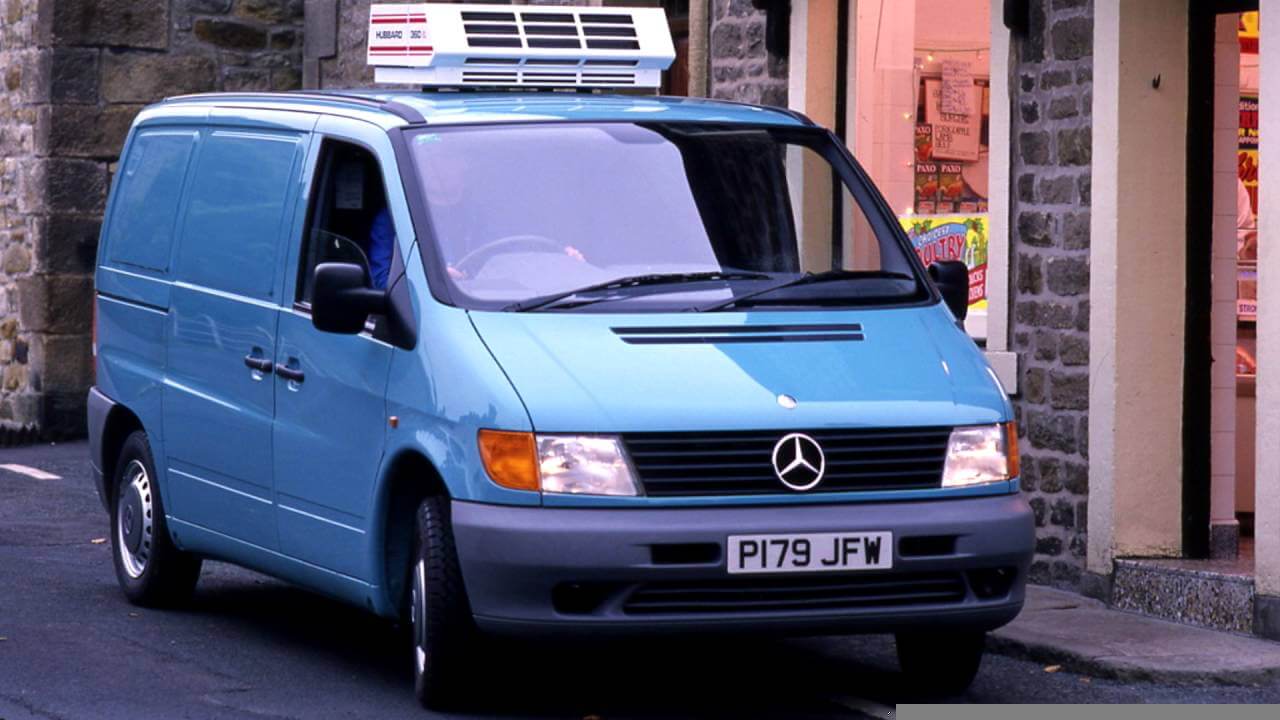
The Mercedes-Benz Vito is a mid-size van and minibus built mainly in Vitoria-Gasteiz, Spain, since 1996. The first generation (W638) was front-wheel drive; the second (W639, 2003–2014) switched to rear-wheel drive with optional 4MATIC; and the third (W447, from 2014) offers front, rear and all-wheel drive and the electric eVito. Its passenger sister is the V-Class, sold as the Viano from 2003 to 2014.
In short
- W638 (1996–2003): replaced the MB 100, transverse engine, front-wheel drive, CDI common-rail diesels from 1999.
- W639 (2003–2014): longitudinal engines and rear-wheel drive, three lengths, two wheelbases (3,200 and 3,430 mm), facelift in September 2010.
- W447 (2014 to today): three lengths up to 5,370 mm, cargo volume up to 6.6 m³, 7G-Tronic and later 9G-Tronic automatics, facelifts in 2020 and 2023–2024.
- eVito: from 2018, with batteries growing to 90 kWh and a claimed 480 km range in 2025.
Running cost
Fuel · Vito W447 120 kW (163 PS)
about 1,800 EUR fuel a year at 15,000 km
7.3 l/100 km · diesel at 1.65 EUR/l · change mileage, fuel price or version
Specs by version
Engines
| Version | Engine | Power |
|---|---|---|
| Diesel · 4 versions | ||
| W447 · 1.6 65 kW (88 PS) | 1.6 l · Diesel 1,600 cc | 65 kW 88 PS87 hp |
| W447 · 84 kW (114 PS) | Diesel | 84 kW 114 PS113 hp |
| W447 · 2.1 100 kW (136 PS) | 2.1 l · Diesel 2,100 cc | 100 kW 136 PS134 hp |
| W447 · 120 kW (163 PS) | Diesel | 120 kW 163 PS161 hp |
| Petrol · 2 versions | ||
| W639 · 140 kW (190 PS) | 6 cyl · Petrol | 140 kW 190 PS188 hp |
| W639 · 160 kW (218 PS) | 6 cyl · Petrol | 160 kW 218 PS215 hp |
| Other · 1 version | ||
| W447 · 2.1 140 kW (190 PS) | 2.1 l 2,100 cc | 140 kW 190 PS188 hp |
Performance
Show all 2 versions
| Version | Fuel consumption | CO₂ |
|---|---|---|
| W447 · 2014–present | ||
| W447 · 2.1 100 kW (136 PS) | - | 197 g/km |
| W447 · 120 kW (163 PS) | 7.3 l/100 km32.2 mpg US · 38.7 mpg UK | 191 g/km |
Dimensions and weight
Show all 2 versions
| Version | Kerb weight |
|---|---|
| W447 · 2014–present | |
| W447 · 2.1 100 kW (136 PS) | 2,005 kg4,420 lb |
| W447 · 120 kW (163 PS) | 2,029 kg4,473 lb |
Verified Manufacturer and type-approval data from our catalog · Sources and methodology
Mercedes-Benz Vito at a glance
The Vito sits between Mercedes' small Citan van and the large Mercedes-Benz Sprinter. It is sold as a panel van, as the Mixto crew van with a second row of seats, and as the Vito Tourer minibus for up to nine people, while the V-Class, Viano and Marco Polo camper share its body with more luxurious interiors. Mercedes-Benz's wider story is told in the history of Mercedes-Benz, and the range is in the Mercedes-Benz catalogue.

| Generation | Code | Years | Drive | Engines (power) |
|---|---|---|---|---|
| 1st | W638 | 1996–2003 | Front-wheel drive | 58–128 kW petrol and diesel |
| 2nd | W639 | 2003–2014 | Rear-wheel drive, optional 4MATIC | 65–190 kW diesel and V6 petrol |
| 3rd | W447 | 2014– | FWD, RWD or 4×4 | 65–176 kW diesel, electric eVito |
First generation W638 (1996–2003)
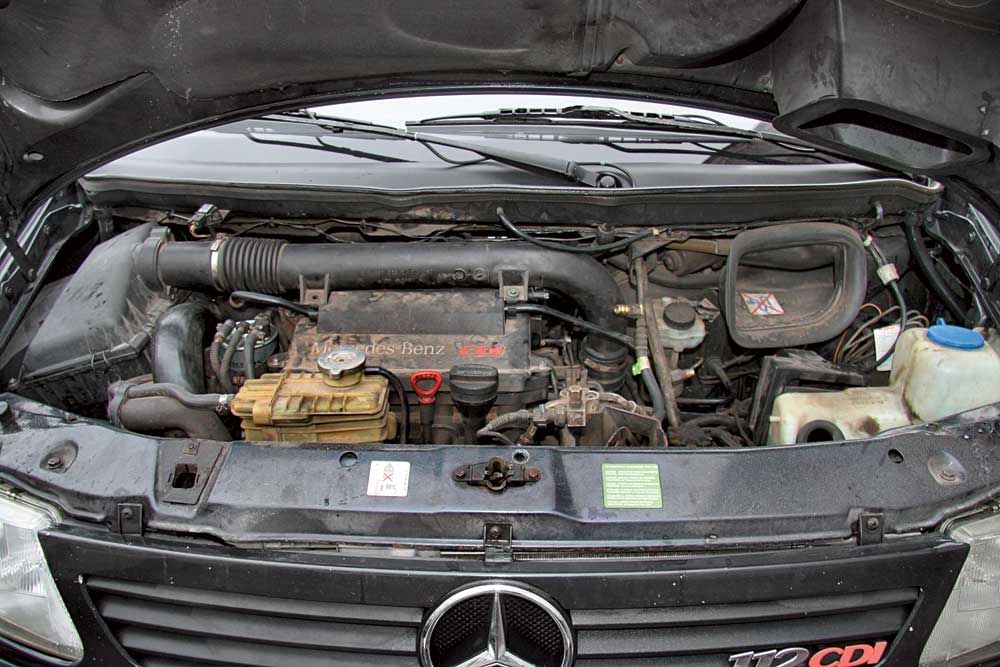
The first Vito replaced the MB 100 and went on sale in 1996. It had a transverse engine and front-wheel drive, a layout borrowed from passenger cars that gave a low load floor. Engines ranged from the 2.3 OM601 diesel with 58 kW (78 PS) to the V 280's VR6 petrol with 128 kW (172 PS). From 1999 the CDI common-rail diesels arrived: the 108 CDI with 60 kW (80 PS), the 110 CDI with 75 kW (101 PS) and the 112 CDI with 90 kW (121 PS) and 300 Nm.

In 1996 Mercedes also showed the passenger version as the V-Class at the Geneva Motor Show, with better sound insulation, a higher-quality interior and extra trim panels. An experimental Vito 108 E of 1996 had a 40 kW electric motor and a 35.6 kWh sodium-nickel-chloride battery, giving a claimed range of up to 170 km.
Second generation W639 (2003–2014)
A new layout
The W639 was a completely new design. Mercedes turned the engine lengthways and switched to rear-wheel drive for two reasons: front-drive vans with powerful engines sent vibrations through the steering, and a longitudinal engine slides under the floor in a frontal crash instead of entering the cabin. Rear drive also gives better traction when loaded. 4MATIC all-wheel drive, with a 35:65 front-to-rear torque split, was available with the four-cylinder diesels.

Bodies, lengths and loads
The W639 came in three lengths (Compact, Long and Extra-long), two wheelbases (3,200 and 3,430 mm) and with low, medium (from 2005) and high roofs. The panel van offered up to 6.49 m³ of cargo space and up to 1,140 kg of payload, and the six-seat Mixto combined a crew cabin with a 970-litre load area. Sliding doors on both sides, rear doors opening up to 270° or a lift-up tailgate, and a 1,277 mm load width between the wheel arches made loading easy. Braked towing capacity is 2,500 kg, and the turning circle is 11.8 m (12.5 m for the extra-long version).
Engines and gearboxes
| Engine | Power | Torque | Notes |
|---|---|---|---|
| 2.0 CDI (109–111 CDI) | 65–85 kW (88–116 PS) | up to 290 Nm | Early four-cylinder diesel |
| 2.2 CDI (115 CDI) | 110 kW (150 PS) | 330 Nm | – |
| 3.0 V6 CDI | 150 kW (204 PS) | 440 Nm | Top diesel before the facelift |
| 3.2 V6 petrol | 160 kW (218 PS) | – | – |
| 3.5 V6 petrol | 190 kW (258 PS) | 340 Nm | – |
| 2.2 CDI (2010 facelift) | 120 kW (163 PS) | 360 Nm | Sprinter-derived, Euro 5 |
| 3.0 V6 CDI (2010 facelift) | 165 kW (224 PS) | 440 Nm | Euro 5 |
A 6-speed manual was standard, and the 5-speed TouchShift automatic was fitted to the V6 petrols and available with the diesels.
Chassis, cabin and facelift
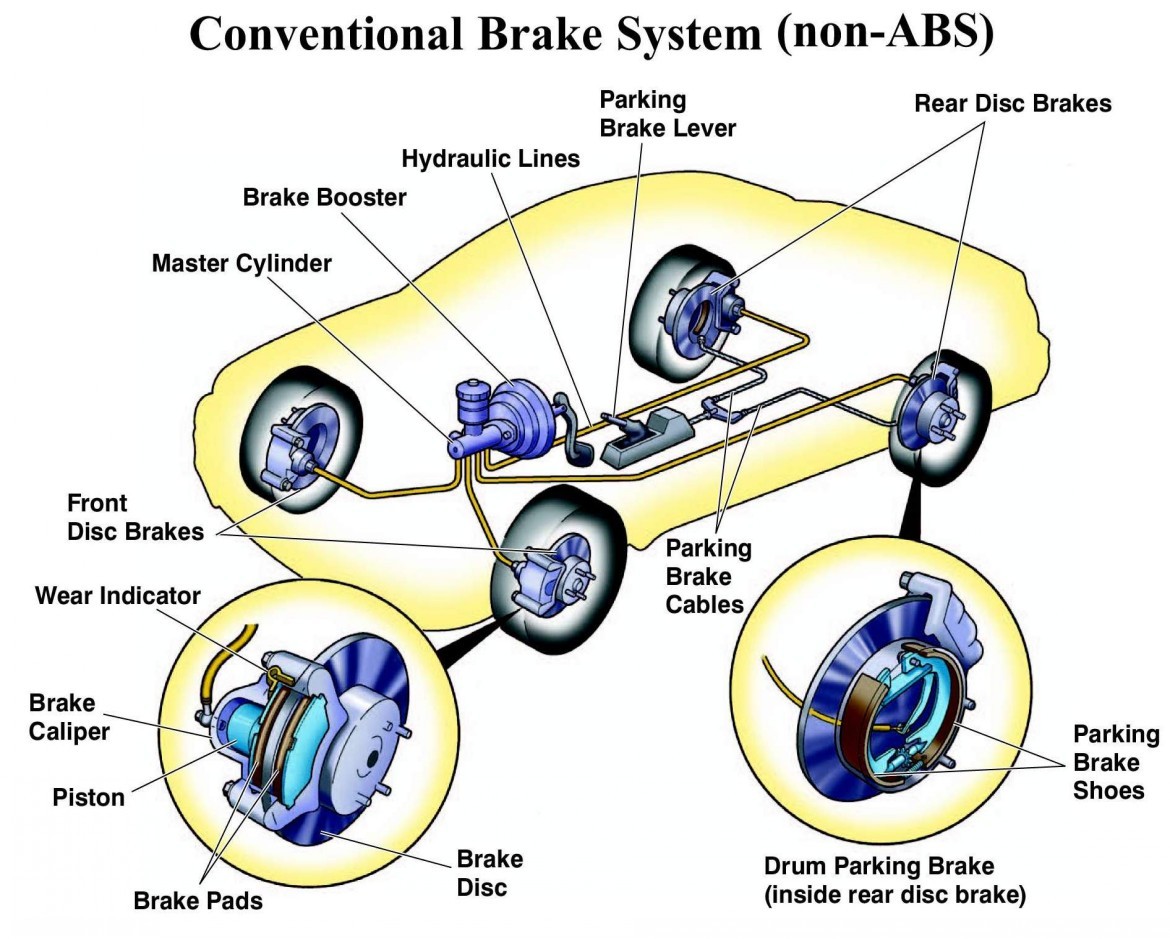
Suspension is independent all round, with MacPherson struts and an anti-roll bar at the front. All four wheels have disc brakes, ventilated at the front, with Brake Assist. The cabin brought a car-like dashboard with a shelf for an A4 folder, an 11-litre glovebox and storage under the front seats.
In September 2010 the W639 was facelifted with new lights and bumpers, a revised interior and suspension, and Sprinter-derived diesels that met Euro 5. Owners and testers noted weaknesses: thick A-pillars that hinder visibility in turns, instruments that are hard to read in sunlight, and corrosion on older vans. An early electric version, the Vito E-Cell (2010–2012), had a 36 kWh lithium-ion battery, a 60 kW motor and a real range of about 90–100 km.
Third generation W447 (2014 to today)
Launch and layout
The W447 Vito was shown in 2014 and went on sale in Europe in October 2014, following the related V-Class launched earlier that year. It is the first Vito offered with a choice of front-wheel drive (with the small diesel), rear-wheel drive and 4×4, and it borrows styling cues from Mercedes' passenger cars. The drag coefficient is 0.32. It is built in Vitoria-Gasteiz and Alcobendas (Spain) and has also been built in the US (as the Metris), Argentina, Mexico, China and India.

Engines and gearboxes
| Model | Engine | Power | Torque | Drive |
|---|---|---|---|---|
| 109 CDI | 1.6 diesel | 65 kW (88 PS) | 230 Nm | FWD |
| 111 CDI | 1.6 diesel | 84 kW (114 PS) | 270 Nm | FWD |
| 114 CDI | 2.1 (later 1.7) diesel | 100 kW (136 PS) | 330 Nm | RWD (FWD with 1.7) |
| 116 CDI | 2.1 (later 2.0) diesel | 118–120 kW (160–163 PS) | 360–380 Nm | RWD or 4×4 |
| 119 CDI / BlueTEC | 2.1 diesel | 140 kW (190 PS) | 440 Nm | RWD or 4×4 |
| 124 CDI | 2.0 bi-turbo diesel (from 2020) | 176 kW (239 PS) | 500 Nm | RWD or 4×4 |
Gearboxes are a 6-speed manual, the 7G-Tronic Plus automatic and, from 2020, the 9G-Tronic. All diesels meet Euro 6, and start/stop helped reduce consumption by about 20% compared with the W639; the 109 CDI uses around 7 L/100 km in town.
Dimensions and versions
| Parameter | Value |
|---|---|
| Lengths | 4,895 / 5,140 / 5,370 mm (192.7 / 202.4 / 211.4 in) |
| Wheelbases | 3,200 / 3,430 mm (126.0 / 135.0 in) |
| Cargo volume (panel van) | 5.5 / 6.0 / 6.6 m³ (194 / 212 / 233 cu ft) |
| Seats (Tourer) | 8–9 including the driver |
The panel van and Mixto have rails for securing a Euro pallet and lashing points on the floor and sides. The Vito Tourer seats eight or nine, and its second and third rows fold or can be removed. Passenger versions have softer springs and comfort dampers, but noise insulation is below the level of the V-Class.
Safety
In the 2014 test aligned with Euro NCAP, the W447 scored 93% for adult occupants, 87% for child occupants, 67% for pedestrians and 85% for safety assist, falling to 76% for adult protection without side curtain airbags. Equipment includes Crosswind Assist, Attention Assist, a seat-belt warning and, on top versions, blind-spot and lane-keeping assistants. The 2024 versions scored 90% in ANCAP testing.
Facelifts and the eVito
A mild styling update came in 2020. A larger facelift, revealed on 27 July 2023 for the 2024 model year, brought a new front, MBUX infotainment and new assistance systems. The electric eVito panel van arrived in 2018 with 85 kW (116 PS) and a 35 kWh net battery for about 150 km; later batteries of 60 and 66 kWh gave about 260 km, and in March 2025 a 90 kWh battery with a claimed 480 km was added. The eVito Tourer of 2020 has a 150 kW (204 PS) motor and a 90 kWh usable battery, with 421 km of WLTP range; the electric V-Class, the Mercedes-Benz EQV, uses the same drive.
Rivals: how the Vito compares
The Vito competes with the Volkswagen Transporter, Ford Transit Custom, Renault Trafic and its Opel, Nissan and Fiat sisters, and the Toyota Proace family. It stands out with rear-wheel drive and strong diesels for towing, a 4×4 option and the premium badge; it is usually more expensive to buy and maintain. More commercial vehicles are listed among vans.

Mercedes-Benz Vito evolution in numbers
Did you know?
- The Mercedes-Benz Vito has been around for 30 years: 3 generations in our catalog since 1996.
- The longest-running generation is the Vito W447 (2014–present): 12 years and counting.
Rivals
Compare with…
Compare Mercedes-Benz Vito with
- Volkswagen Transporter full comparison
- Renault Trafic quick spec comparison
- Opel Zafira Life quick spec comparison
-
EV version
In production
- Years
- 1950–present
- Body
- Van, Minibus
- Fuel
- Petrol, Diesel, Electric
- Power
- 18–173 kW (24–235 PS)
7 generations
- T2
- T3
- T4
- T5
- T6
- T7
- +1 earlier
-
EV version
In production
- Years
- 1980–present
- Body
- Pickup, Van
- Fuel
- Diesel, Petrol, Electric
- Power
- 35–125 kW (48–170 PS)
3 generations
- I
- II
- III


Popular comparisons
Mercedes-Benz Vito photos 25


Mercedes-Benz Vito videos 2

Mercedes-Benz Vito video 1

Mercedes-Benz Vito video 2
FAQ
Is the Mercedes-Benz Vito front- or rear-wheel drive?
The first Vito (W638) was front-wheel drive, the W639 rear-wheel drive with optional 4MATIC, and the current W447 offers front-wheel drive with the small diesel, rear-wheel drive or 4×4 with the bigger engines.
What engines does the Mercedes-Benz Vito have?
The current W447 uses four-cylinder diesels from 65 kW (88 PS) to 176 kW (239 PS) and the electric eVito. Earlier generations also offered V6 diesel and petrol engines up to 190 kW.
What is the difference between the Vito and the V-Class?
They share the body and running gear. The Vito is the commercial van and Tourer minibus, while the V-Class (Viano from 2003 to 2014) is the passenger MPV with a more luxurious interior.
How much can the Mercedes-Benz Vito carry?
The W447 panel van offers 5.5 to 6.6 m³ of cargo space depending on length. The W639 panel van carried up to 1,140 kg, and the Tourer seats up to nine people including the driver.
What is the range of the electric eVito?
The first eVito of 2018 managed about 150 km. Larger batteries raised this to about 260 km, and the 90 kWh eVito of 2025 has a claimed 480 km; the eVito Tourer is rated at 421 km.
Data sources
Data checked by an editor against the sources below.
- The text of this article (1cars archive)
- Wikipedia - Mercedes Benz Vito
- Wikipedia - Mercedes Benz W638
- EEA CO₂ monitoring (European Environment Agency, CC BY 4.0)


