
 Mercedes-Benz GLK
Specs, engines and history
Updated Published Sources (4) Report an error
By Felix Hartmann, Automotive Technology & EV Contributor Reviewed by Oleksandr Hnatiuk

- Built
- 2008–2015
- Top power
- 225 kW (306 PS)
Which GLK to buy
Our verdict · Felix Hartmann
The best all-round choice is a post-facelift GLK 220 or 250 BlueTEC 4MATIC from 2012–2015: it has the modern assistance systems, Euro 6 emissions and low fuel use. Drivers who want more pull for towing should look for the GLK 350 CDI with 620 Nm. The V6 petrol GLK 350 suits low-mileage owners who value smoothness over fuel costs. More models are in the Mercedes-Benz catalogue, and the brand's story is in Mercedes-Benz history.
The Mercedes-Benz GLK (model code X204) is a compact premium SUV built from 2008 to June 2015 on the platform of the W204 C-Class. It was offered with four-cylinder diesels and petrol engines and V6 units from 105 to 225 kW, mostly with 4MATIC all-wheel drive. Mercedes built 540,089 before the GLC replaced it.
In short
- Shown as the Vision GLK concept in Detroit and in production form at the Beijing show in April 2008; European sales from 30 June 2008.
- Built in Bremen, and from December 2011 also in Beijing; facelift shown in New York in March 2012.
- Best-known versions: GLK 220 CDI and 250 CDI/BlueTEC diesels; V6 petrol GLK 350 with up to 225 kW (306 PS).
- Euro NCAP: five stars, with 32 points for adult occupant protection.

Size at a glance
| Dimensions | Mercedes-Benz GLK X204 |
|---|---|
| Length | 4,536 mm178.6 in |
| Width | 1,840 mm72.4 in |
| Height | 1,669 mm65.7 in |
| Boot | 450 L15.9 cu ft |
Specs by version
Engines
Performance
Show all 1 versions
| Version | 0–100 km/h |
|---|---|
| 125 kW (170 PS) SUV | 8.8 s 0–62 mph |
Dimensions and weight
Show all 3 versions
Verified Manufacturer and type-approval data from our catalog · Sources and methodology
Mercedes-Benz GLK at a glance
The GLK was Mercedes' first compact SUV, created to compete with the BMW X3 and the Audi Q5. Its upright, angular body was a deliberate echo of the G-Class off-roader, while the chassis, cabin layout and most engines came from the C-Class. At its debut in 2008 the shape stood out against the softer lines of its rivals.

Mercedes first showed the idea at the 2008 Detroit Auto Show as two concepts: the Vision GLK Freeside, prepared for light off-road use, and the road-oriented Townside. The production GLK followed at the Beijing Auto Show in April 2008. By November 2008, 25,000 orders had been taken in Western Europe.
| Parameter | Metric | Imperial |
|---|---|---|
| Model code | X204 | – |
| Length | 4,526–4,536 mm | 178.2–178.6 in |
| Width (without mirrors) | 1,840 mm | 72.4 in |
| Height | 1,669–1,699 mm | 65.7–66.9 in |
| Wheelbase | 2,755 mm | 108.5 in |
| Ground clearance | 201 mm | 7.9 in |
| Boot | 450 l, up to 1,550 l with seats folded | 15.9 / 54.7 cu ft |
| Drive | 4MATIC all-wheel drive or rear-wheel drive | – |
Diesel, petrol and V6 engines
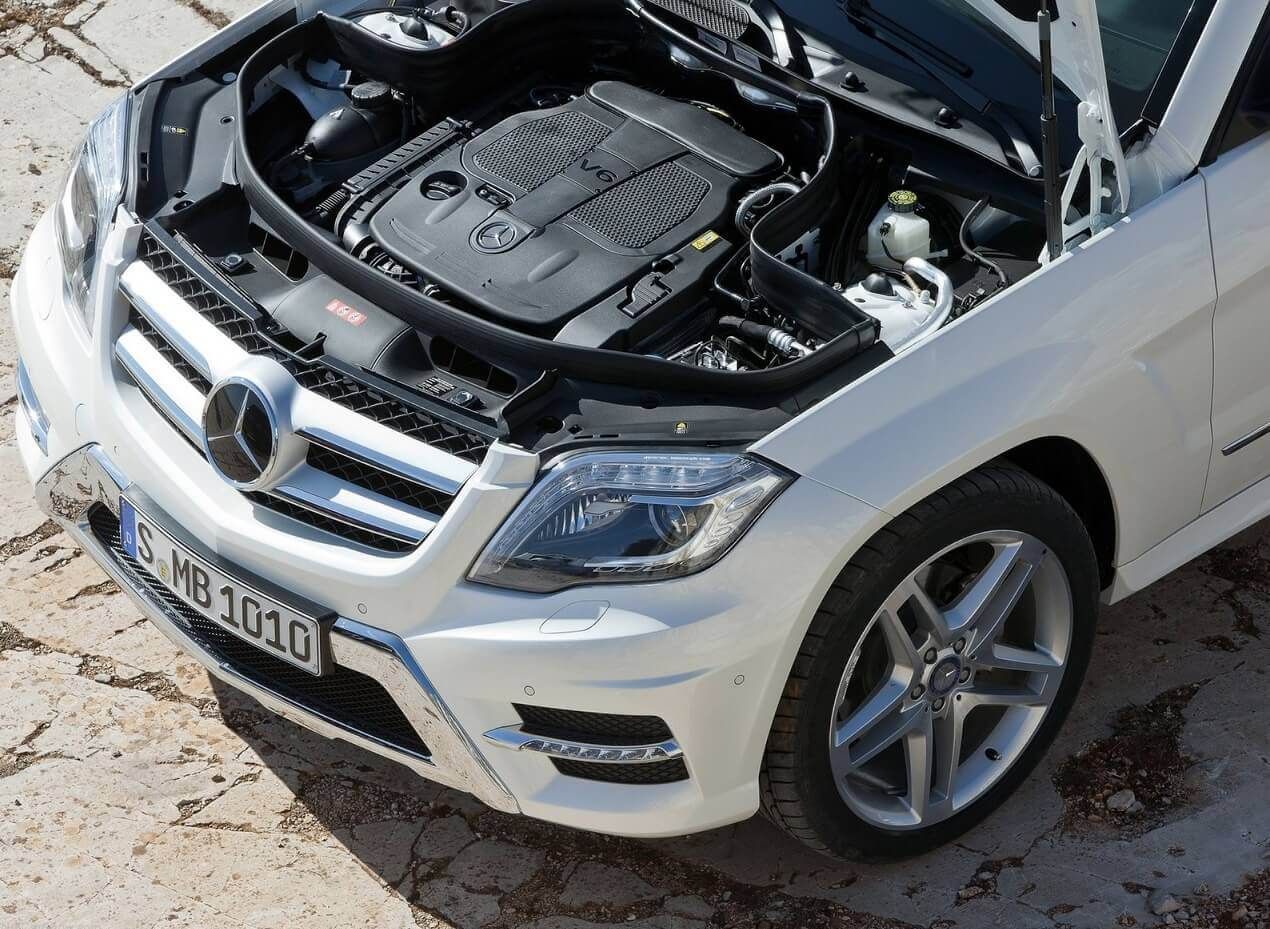
The GLK range changed several times. At launch the main engines were the 3.0 V6 petrol GLK 280 (later GLK 300), the 3.5 V6 GLK 350 and the 3.0 V6 diesel GLK 320 CDI. Four-cylinder 2.1-litre diesels then became the core of the range, and after the 2012 facelift they were joined by Euro 6 BlueTEC versions with SCR exhaust treatment.

| Version | Engine | Power | Years |
|---|---|---|---|
| GLK 200 CDI | 2.1 I4 diesel | 105 kW (143 PS) | 2010–2015 |
| GLK 220 CDI / 220 BlueTEC | 2.1 I4 diesel | 125 kW (170 PS) | 2008–2015 |
| GLK 250 CDI / 250 BlueTEC | 2.1 I4 twin-turbo diesel | 150 kW (204 PS) | 2009–2015 |
| GLK 320 CDI | 3.0 V6 diesel | 165 kW (224 PS) | 2008–2009 |
| GLK 350 CDI | 3.0 V6 diesel | 170 kW (231 PS), from 2012 195 kW (265 PS) | 2010–2015 |
| GLK 280 / 300 | 3.0 V6 petrol | 170 kW (231 PS) | 2008–2012 |
| GLK 350 | 3.5 V6 petrol | 200 kW (272 PS), from April 2011 225 kW (306 PS) | 2008–2015 |
| GLK 200 / 250 | 2.0 I4 turbo petrol | 135 kW (184 PS) / 155 kW (211 PS) | 2013–2015 |
Most versions use the seven-speed 7G-Tronic automatic; a six-speed manual was available on some four-cylinder diesels. After the facelift, automatic cars had their gear selector moved to a stalk on the steering column, freeing space on the centre console. The 350 CDI of 2012 produced 620 Nm, enough to give the GLK the pulling power of a much larger SUV.
In Mercedes figures of the facelift period, the GLK 220 CDI 4MATIC reached 100 km/h in about 8.8 seconds and 205 km/h, while the 211 PS petrol four-cylinder needed about 7.9 seconds. With 8.8 seconds, the GLK sits eleventh in the 1cars quickest SUVs ranking, just behind the diesel BMW X3.
4MATIC drive and off-road ability
The 4MATIC system splits torque 45:55 between the front and rear axles as standard and can shift the balance when a wheel slips, using brake interventions rather than mechanical locks. Rear-wheel-drive versions were added to the range after the launch; launch models in Germany and North America were all-wheel drive only.

With 201 mm of ground clearance, the GLK handles gravel tracks, snow and grass parking better than most cars. The optional Off-Road Technology Package adds an off-road driving programme, downhill speed regulation (DSR) and underbody protection. Approach and departure angles of about 25 and 23 degrees, quoted in old 1cars data, are typical for a road-oriented SUV, so serious off-road driving is better left to the G-Class.
Cabin, space and the 2012 facelift
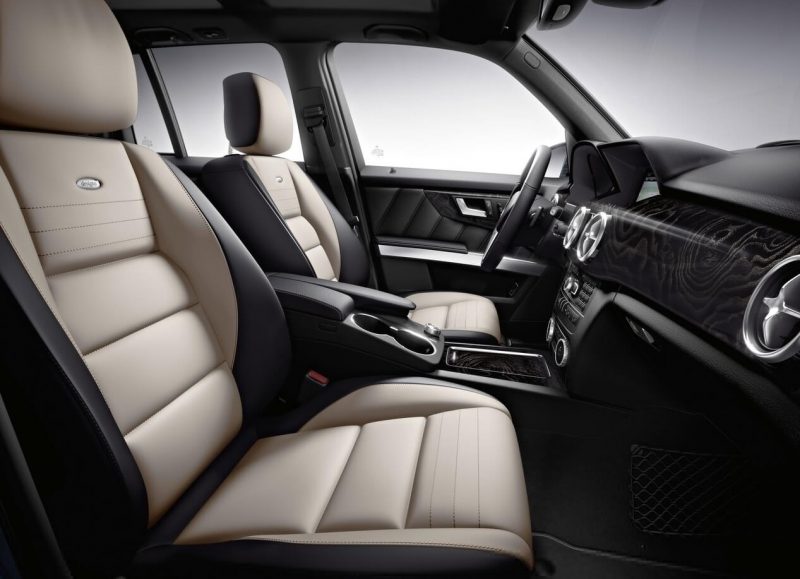
The cabin follows the C-Class of its time, with clear dials, wood or aluminium trim and an upright driving position. There is room for three adults on the rear bench, and the backrest folds 40:60. The 450-litre boot grows to about 1,550 litres with the seats folded, which is reasonable but not class-leading.
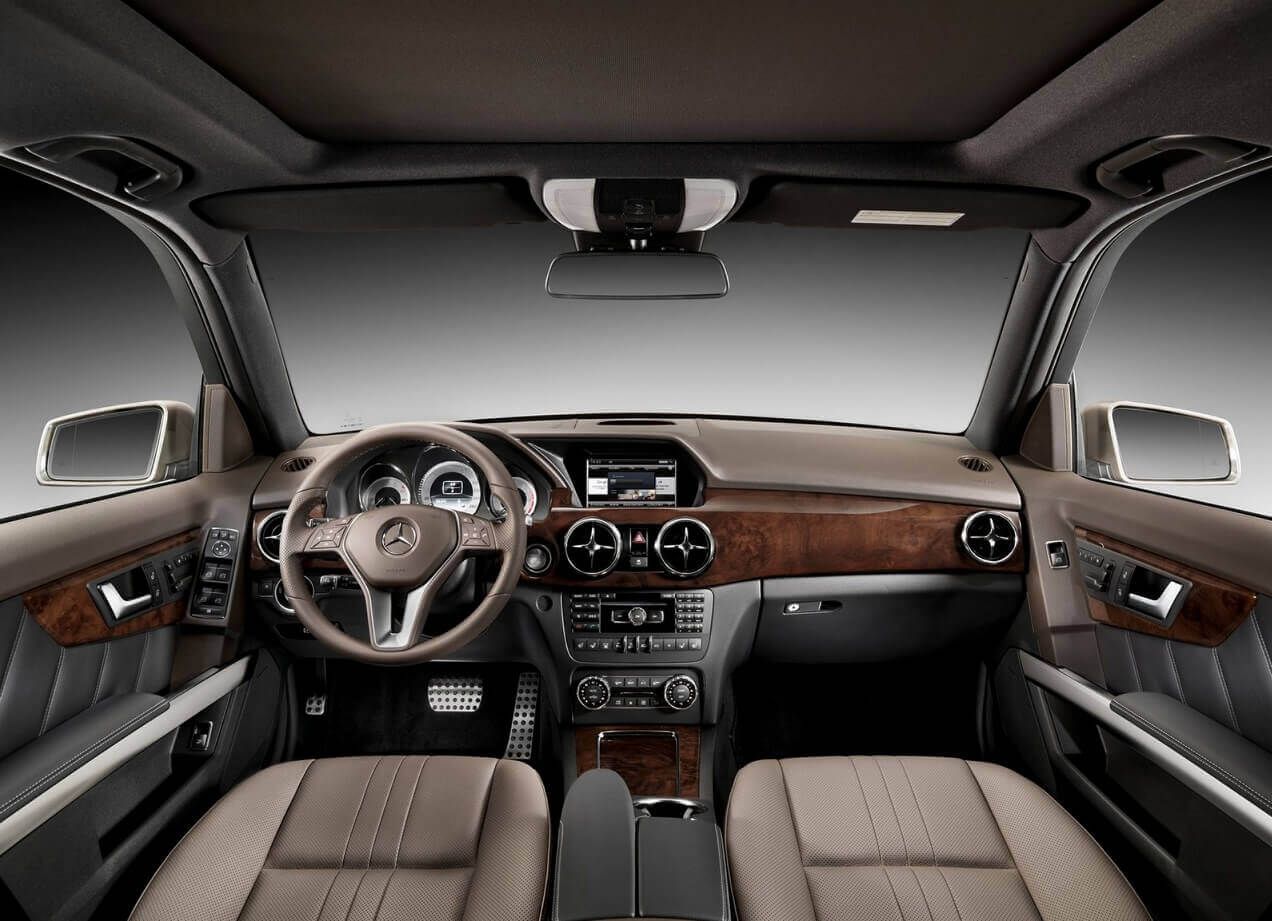
The facelift, presented at the New York show in March 2012 and on sale from 30 June 2012, softened the headlamp corners, enlarged the grille and added LED tail lamps with exhausts integrated into the bumper. Inside it brought a CLS-style steering wheel, round aluminium air vents with cross-shaped grilles and an updated COMAND infotainment system. New assistance systems included adaptive Distronic Plus cruise control, Active Blind Spot Assist, Lane Keeping Assist and adaptive high beam, with a 360-degree Surround View camera from early 2013.
Fuel economy and running costs
The four-cylinder diesels are the economical choice: the GLK 220 CDI was quoted at about 6.5 l/100 km in the combined cycle after the facelift, and the BlueTEC versions meet the Euro 6 standard. The V6 petrol GLK 350 is far thirstier, and the V6 diesel sits between the two. Servicing follows Mercedes' flexible service schedule; a used GLK with a complete history at a Mercedes or specialist workshop is worth a premium. To compare yearly fuel costs at your own mileage, try the fuel cost calculator.
Euro NCAP and safety
Euro NCAP awarded the GLK five stars, with 32 points (89%) for adult occupant protection, 37 points (76%) for child occupant protection, 16–17 points (about 47%) for pedestrian protection and 86% for safety assist. In the United States, the IIHS rated the 2015 GLK "Good" in the moderate overlap front, side, roof strength and head restraint tests. All versions have stability control, multiple airbags and brake assist; the facelift added the radar-based assistance systems listed above.

Production and reliability by version
Mercedes built 540,089 GLKs in total, at Bremen in Germany and, from December 2011, at Beijing Benz in China. The GLK was also assembled in Egypt and Vietnam. In 2011 and 2012 alone, 93,836 and 109,813 cars were built.
For used buyers, the 2.1 diesels are the most common and well understood. Check the service history, the diesel particulate filter on cars used mainly for short trips and, on BlueTEC versions, the AdBlue system with its tank and dosing parts. On every version, a test drive should confirm smooth shifts from the 7G-Tronic and a quiet 4MATIC drivetrain.
Rivals: how the GLK compares
| Model | Years | Engines | Key difference |
|---|---|---|---|
| Mercedes-Benz GLK | 2008–2015 | I4 and V6, petrol and diesel | Boxy design, rear-biased 4MATIC |
| BMW X3 (F25) | 2010–2017 | I4 and I6, petrol and diesel | Sportier drive |
| Audi Q5 | 2008–2017 | I4, V6, hybrid | Larger boot, quattro |
| Volvo XC60 | 2008–2017 | I4, I5, I6 | Safety focus |
The GLK was replaced in summer 2015 by the Mercedes-Benz GLC, which is larger, has a much bigger boot and a softer, more rounded design. To put a GLK side by side with an X3 or Q5, use the 1cars comparison tool. The bigger and sportier GLE Coupé and the C-Class that donated the platform are also covered on 1cars.

Mercedes-Benz GLK in our rankings
- No. 95 of 222 · Smallest SUVs and crossovers (4,536 mm · top 43%)
- No. 514 of 1133 · Most powerful cars (225 kW · top 46%)
- No. 157 of 348 · Biggest boot: cars (450 l · top 46%)
- No. 132 of 278 · Most powerful SUVs and crossovers (225 kW · top 49%)
- No. 306 of 609 · Smallest cars (4,536 mm · top 51%)
- No. 296 of 581 · Widest cars (1,840 mm · top 52%)
Shorter than 57% of ranked SUVs and crossovers in the 1CARS catalog (No. 95 of 222).
Mercedes-Benz GLK photos 21


Mercedes-Benz GLK videos 2

Mercedes-Benz GLK video 1

Mercedes-Benz GLK video 2
FAQ
What is the fuel consumption of the Mercedes-Benz GLK?
The GLK 220 CDI was quoted at about 6.5 l/100 km in the combined cycle, and the 200 CDI and BlueTEC diesels are similar. The V6 petrol GLK 350 uses much more, especially in town.
Is the GLK always four-wheel drive?
No. Most GLKs have 4MATIC all-wheel drive with a 45:55 front-rear split, but rear-wheel-drive versions were added after launch in some markets. There was no hybrid GLK.
When was the Mercedes GLK made?
From 2008 to June 2015. It was revealed in Beijing in April 2008, went on sale in Europe on 30 June 2008, was facelifted in 2012 and was replaced by the GLC in summer 2015. In total, 540,089 were built.
What are the main rivals of the GLK?
The BMW X3, Audi Q5 and Volvo XC60. The GLK was the most upright and compact of the group, while the Q5 offered a bigger boot and the X3 a sportier drive.
What replaced the Mercedes GLK?
The Mercedes-Benz GLC, launched in summer 2015. It is based on the W205 C-Class, offers more interior and boot space, and later added plug-in hybrid and coupé versions.
Data sources
Data checked by an editor against the sources below.
- The text of this article (1cars archive)
- Wikipedia - Mercedes Benz GLK Class
- Wikipedia - Mercedes Benz X 204
- Euro NCAP - 2009 Safety Defying Brand Expectation


