 Ford Sierra
Specs, engines and history
Published Report an error
By Felix Hartmann, Automotive Technology & EV Contributor
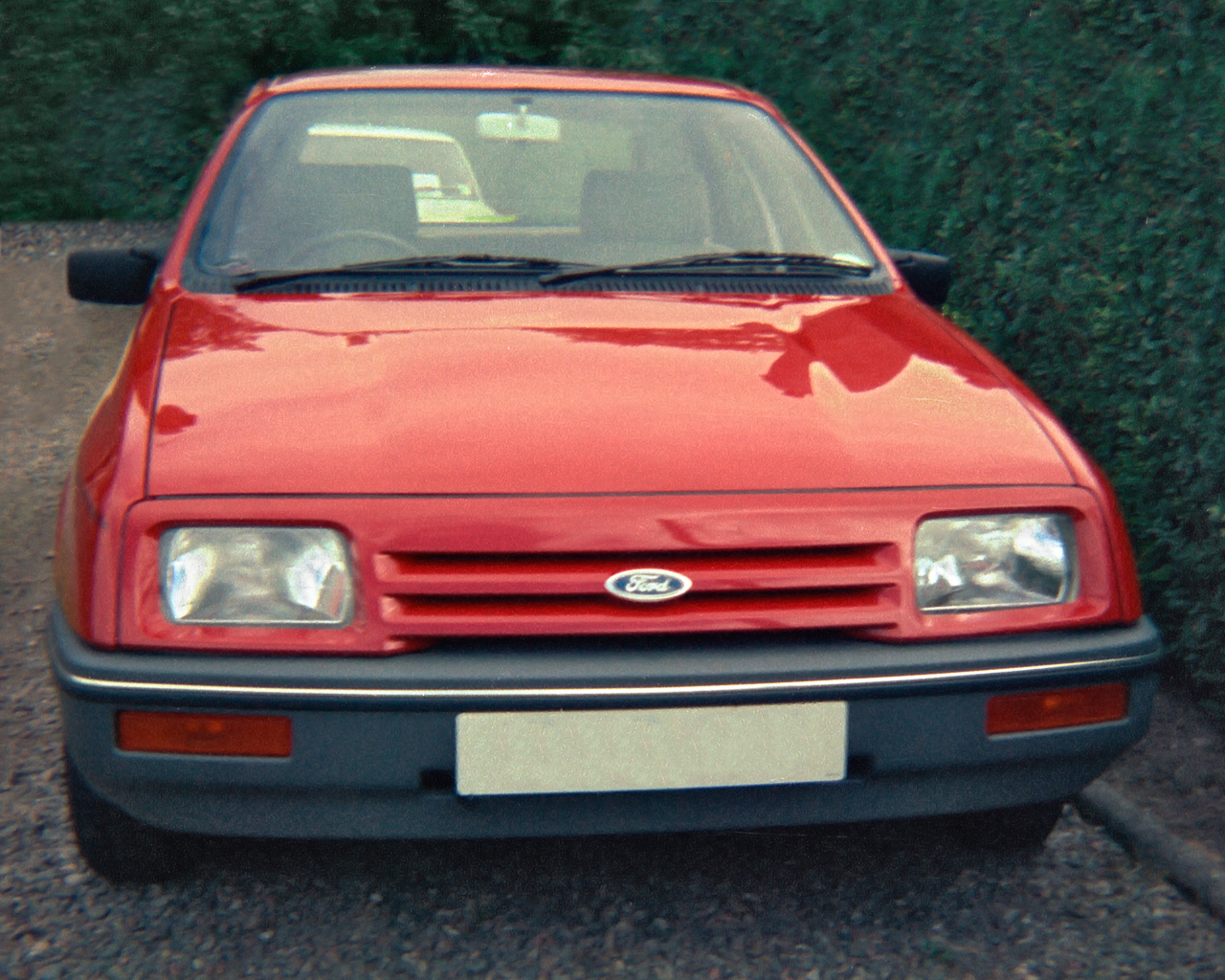
Which Sierra to choose
Our verdict · Felix Hartmann
- For a usable classic: a post-1987 Sapphire or hatchback with the 2.0i DOHC engine and 88 kW (120 PS).
- For smooth six-cylinder power: a 2.8i or 2.9i V6 with 110 kW (150 PS), including the XR4x4.
- For collectors: an RS Cosworth (5,545 built) or the RS500 developed with Tickford.
- For practicality: the five-door estate or, from 1987, the Sapphire saloon with its separate boot.
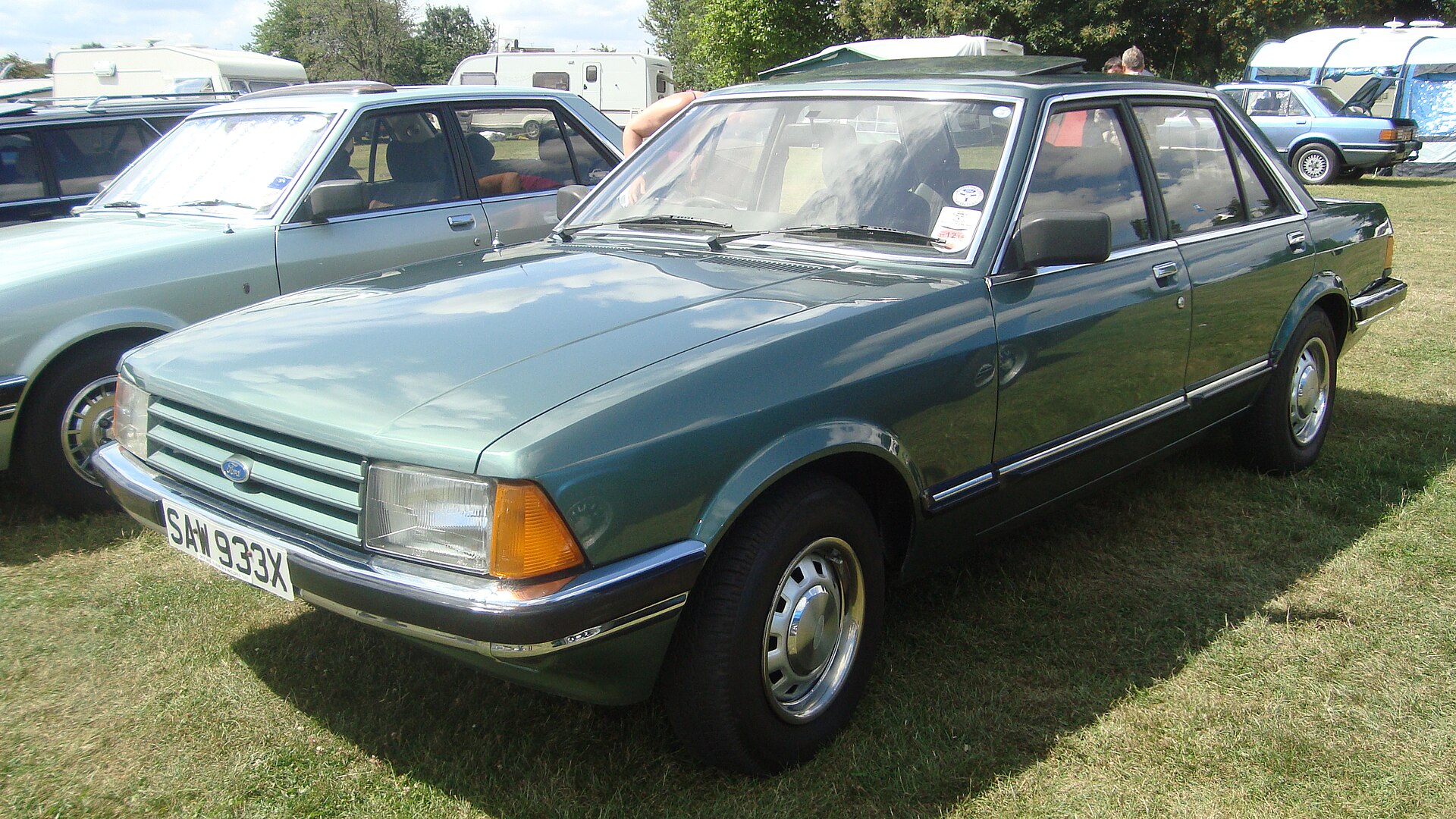
The Ford Sierra was Ford of Europe's mid-size family car from 1982 to 1993, the successor to the Cortina and Taunus and the predecessor of the Mondeo. Its rounded, aerodynamic body shocked buyers used to boxy saloons and earned it the nickname "jellymould", but it went on to sell 1,299,993 cars in Britain alone. It kept rear-wheel drive to the end, and its Cosworth versions became some of the most successful touring and rally cars of the 1980s.
In short
- On sale from 15 October 1982; the last European Sierra was built in December 1992, and the Mondeo replaced it in 1993.
- Three- and five-door hatchbacks, estate, van and, from 1987, the Sierra Sapphire saloon; rear-wheel drive, four-wheel drive on the XR4x4 and Sapphire Cosworth 4x4.
- Engines from the 44 kW (60 PS) 1.3 to the 167 kW (227 PS) RS500 Cosworth; diesels of 49 and 55 kW.
- Drag coefficient 0.34, against about 0.45 for the Taunus/Cortina it replaced.
Sierra at a glance
| Specification | Ford Sierra |
|---|---|
| Production | 1982–1993 (Europe to December 1992) |
| Plants | Dagenham (UK), Genk (Belgium), Cork (Ireland), General Pacheco (Argentina), Valencia (Venezuela), Lower Hutt (New Zealand), South Africa |
| Designers | Uwe Bahnsen, Bob Lutz, Patrick Le Quément ("Project Toni") |
| Body styles | 3- and 5-door hatchback, 5-door estate, van, 4-door Sapphire saloon (from 1987) |
| Layout | front engine, rear-wheel drive; four-wheel drive on XR4x4 and Sapphire RS Cosworth 4x4 |
| Power range | 44–167 kW (60–227 PS) in Europe |
| Gearboxes | 4- and 5-speed manual, 3-speed automatic |
| Drag coefficient | 0.34 |
| Predecessor / successor | Taunus TC3 and Cortina Mk V / Ford Mondeo |
All Ford models with their generations are in our Ford catalogue. The Sierra's smaller stablemate is covered in our guide to Escort generations from Mk1 to Mk6, and the company itself in the history of Ford.
Design: the "jellymould" of 1982
Ford developed the Sierra under the code name "Project Toni". The design team of Uwe Bahnsen, Bob Lutz and Patrick Le Quément gave it a smooth, rounded body with a drag coefficient of 0.34 and a fully independent suspension: MacPherson struts at the front and trailing arms with coil springs at the rear. After the square Cortina, the shape divided opinion, and the press called it "the jellymould".
The dimensions were typical of the class: a wheelbase of 2,609 mm, a length of 4,531 mm, a width of 1,727 mm and a height of 1,367 mm. In the 1983 European Car of the Year vote the Sierra finished second, behind the Audi 100. In a 1982 comparison test, Germany's auto motor und sport ranked it ahead of the VW Passat and the Opel Ascona.

Early problems and how sales recovered
The first cars were sensitive to crosswinds. Ford fixed this in 1985 with small rear spoilers known as "nolders". Rumours that the plastic bumpers could hide crash damage also hurt the car's image.
In Britain the Sierra sold about 160,000 cars in 1983, second only to the Escort, but the Vauxhall Cavalier outsold it in 1984 and 1985. By 1986 it was back at the top of its sector. It was Britain's second best-selling car in 1983, 1988 and 1989, and its best year was 1989, with more than 175,000 sales. By the end, 1,299,993 had been sold in Britain, which makes it the tenth most popular car ever sold there.
The 1987 facelift and the Sapphire
The February 1987 facelift, for the 1988 model year, brought new front and rear styling and a new body: the four-door Sierra Sapphire saloon. A 1.8 "lean burn" petrol engine appeared the same year. In 1990 the Sierra received smoked rear lamps and fuel injection as standard, and catalytic converters followed for the 1991 model year. The non-catalysed 1.6 Pinto engine was dropped in 1992.

Ford Sierra engines
| Engine | Type | Power |
|---|---|---|
| 1.3 Pinto | petrol I4 | 44 kW (60 PS) |
| 1.6 Pinto | petrol I4 | 55 kW (75 PS) |
| 1.8 CVH | petrol I4 | 64 kW (87 PS) |
| 1.8 Pinto | petrol I4 | 66 kW (90 PS) |
| 2.0 Pinto | petrol I4 | 77 kW (105 PS) |
| 2.0i Pinto | petrol I4, injection | 85 kW (115 PS) |
| 2.0i DOHC | petrol I4, injection | 88 kW (120 PS) |
| 2.0 Cologne V6 | petrol V6 | 66 kW (90 PS) |
| 2.3 Cologne V6 | petrol V6 | 84 kW (114 PS) |
| 2.8i / 2.9i Cologne V6 | petrol V6, injection | 110 kW (150 PS) |
| 2.3 Indenor diesel (1982–1989) | diesel I4 | 49 kW (67 PS) |
| 1.8 turbodiesel (from 1990) | diesel I4 | 55 kW (75 PS) |
| 2.0 16V turbo (RS Cosworth) | petrol I4 turbo | 150 kW (204 PS) |
| 2.0 16V turbo (RS500) | petrol I4 turbo | 167 kW (227 PS) |
A four-speed manual was standard on basic versions, with a five-speed manual optional or standard on others, plus a three-speed automatic. South Africa had its own range with the 1.6 Kent, 2.3 and 3.0 Essex V6 and a 5.0 V8 in the XR8, rated at 154 kW (209 PS).
Key specifications: Sierra RS Cosworth (1986)
| Parameter | Metric | Imperial |
|---|---|---|
| Engine | 2.0-litre 16-valve turbo four | 2.0-litre turbo |
| Power | 150 kW (204 PS) | 150 kW (201 hp) |
| Drive | rear-wheel drive | rear-wheel drive |
| Built | 5,545 cars | 5,545 cars |
| Length | 4,531 mm (Sierra hatchback) | 178.4 in |
| Wheelbase | 2,609 mm | 102.7 in |
| Width | 1,727 mm | 68.0 in |

XR4i, XR4x4 and the Cosworths
The sporty Sierras built the car's reputation. The XR4i (1983–1985) used the 2.8 V6 and rear-wheel drive; the XR4x4 (1985–1987) added four-wheel drive, and 23,540 had been built by the end of 1990. In North America the car was sold from 1985 to 1989 as the Merkur XR4Ti with a 2.3 turbo four rated at 130 kW (175 hp).
The RS Cosworth of July 1986 used a 2.0-litre 16-valve turbo engine with 150 kW (204 PS). Group A rules required 500 road cars, but Ford built 5,545. The RS500 of 1987, developed with Tickford, had 167 kW (227 PS) on the road, and its racing engines were reported to reach up to about 410 kW (550 bhp). The Sapphire RS Cosworth followed (13,140 built from 1988 to 1990), as did a four-wheel-drive Sapphire RS Cosworth 4x4 (12,250 built). Our power converter turns these PS and hp figures into kW for comparison with modern cars.


Motorsport
Andy Rouse won the 1985 British Touring Car Championship in an XR4Ti. The RS500 helped Ford take the manufacturers' title in the 1987 World Touring Car Championship, and in 1988 Didier Auriol won his first World Rally Championship event in a Sierra, in Corsica.
End of production and the Mondeo
The last European-built Sierra left the line in December 1992; the Venezuelan plant continued until 1994. Its successor, the front-wheel-drive Ford Mondeo, went on sale in Europe in March 1993 (some sources say April). The later Mondeo is covered in our Ford Mondeo overview.
Photo gallery

Ford Sierra in our rankings
In production longer than 61% of ranked nameplates in the 1CARS catalog (No. 385 of 1082).
FAQ
What years was the Ford Sierra made?
From 1982 to 1993. Sales began on 15 October 1982 and the last European car was built in December 1992.
Why was the Ford Sierra called the jellymould?
Its rounded, aerodynamic body, with a drag coefficient of 0.34, looked very different from the square Cortina it replaced.
How many Ford Sierra RS Cosworths were built?
5,545 RS Cosworths, 13,140 Sapphire RS Cosworths and 12,250 Sapphire RS Cosworth 4x4s. Group A homologation required 500 road cars.
Was the Ford Sierra front-wheel drive?
No. All Sierras had rear-wheel drive; the XR4x4 and the Sapphire RS Cosworth 4x4 had four-wheel drive.
What replaced the Ford Sierra?
The front-wheel-drive Ford Mondeo, launched in Europe in March 1993.