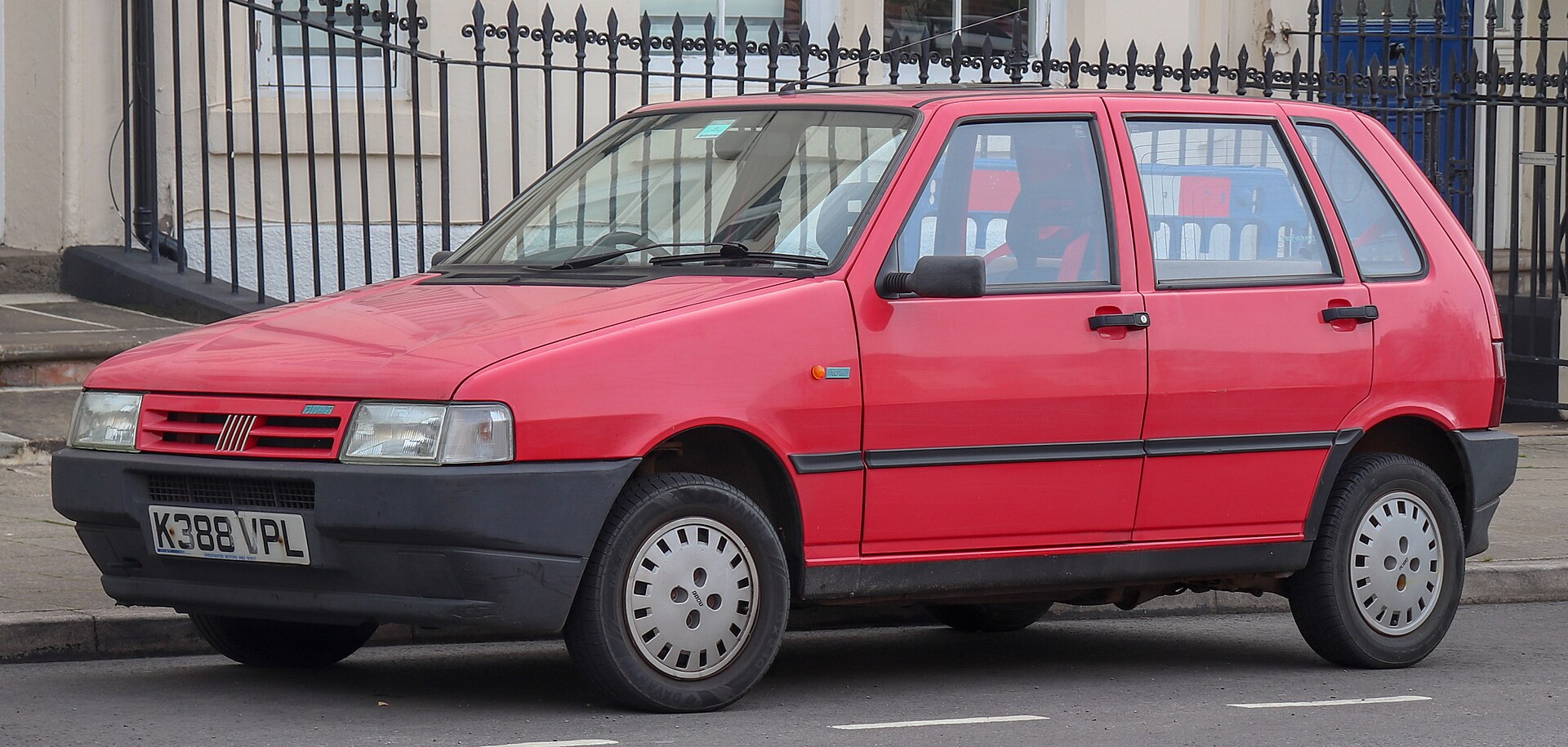
 Fiat Uno
All generations, specs and history
Published Sources (1) Report an error
By Felix Hartmann, Automotive Technology & EV Contributor
- Built
- 1983–2021
- Generations
- 3
Timeline
Uno generations
Click a generation for its own page


Newest first · 3 generations since 1983
-
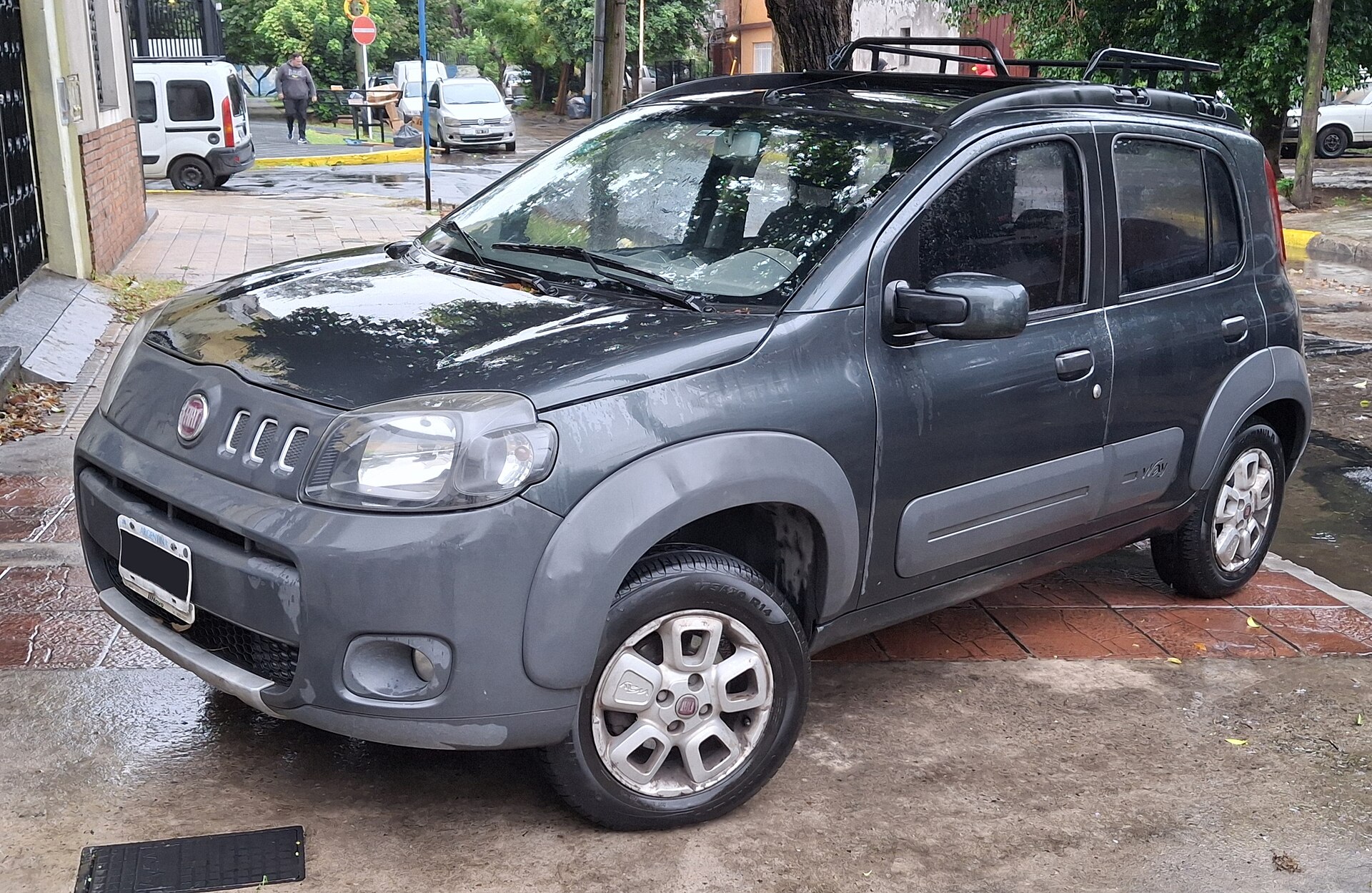
2010
-
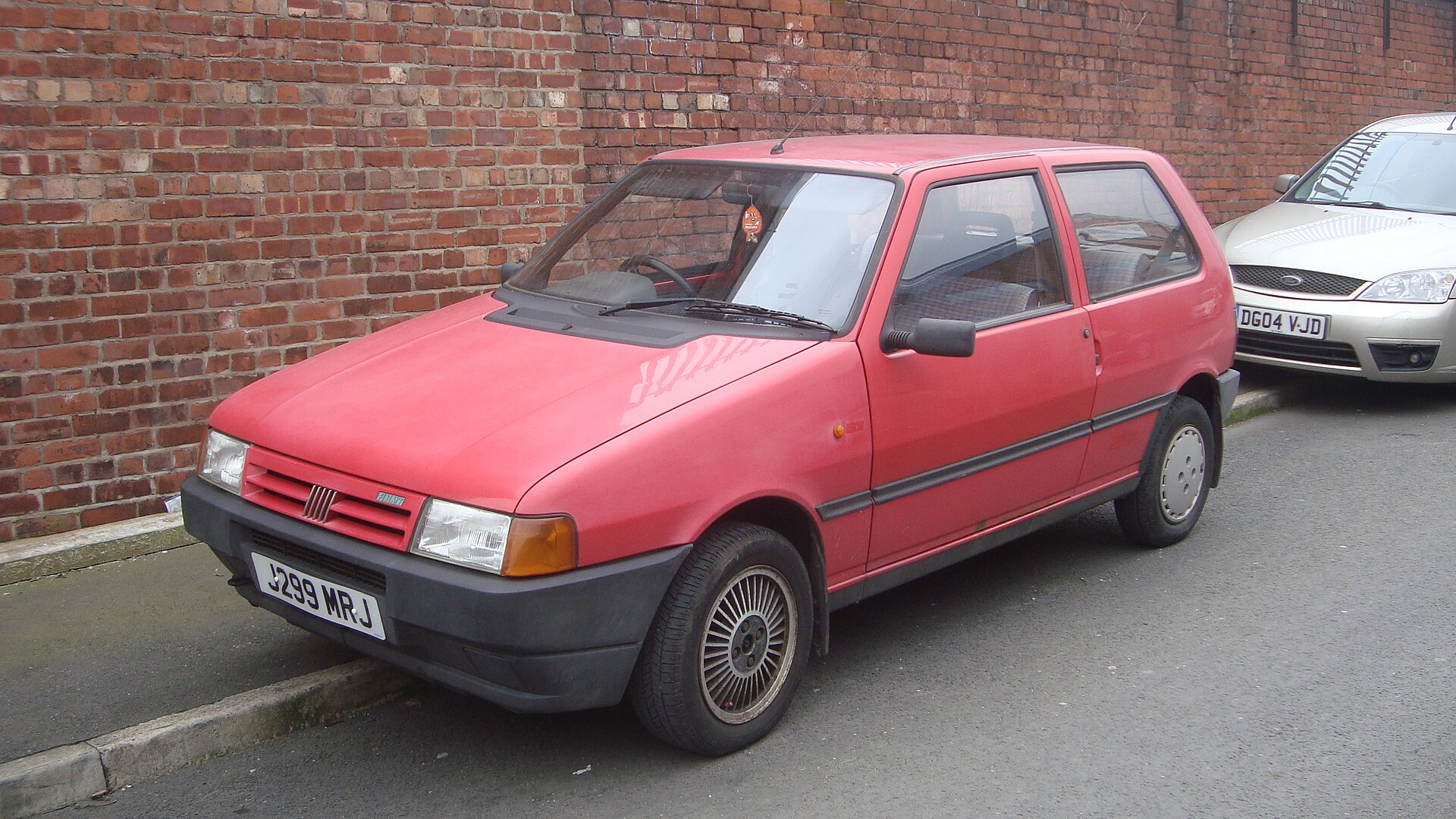
1989
-
1983
All generations by year: Uno (2010–2021) · Uno II (1989–1995) · Uno I (1983–1989)
Which one is mine?
Pick the year of first registration to see which generation it is.
Check by VINWhich Fiat Uno to choose
Our verdict · Felix Hartmann
In Europe the Uno is now a classic. The Turbo i.e. is the most powerful European version, from the early 77 kW (105 PS) car to the final 1.4. For everyday classic use, a facelifted Uno II with a FIRE engine, fuel injection and the better aerodynamics of the 1989 body is the simplest choice. The Novo Uno was never sold in Europe; buyers there should look at the Fiat Punto or the Fiat Panda instead. To compare an Uno with a Peugeot 205 or a Volkswagen Polo figure by figure, use our car comparison tool.
The Fiat Uno is the supermini Fiat launched in January 1983 to replace the 127, designed by Giorgetto Giugiaro's Italdesign. It was European Car of the Year 1984 and one of Europe's best-selling cars of the 1980s. Italian production ended in 1995, but the Uno lived on in Brazil until 2014, and a second, Brazilian-designed Uno (Type 327) was built there from 2010 to 2021.
In short
- Two different cars carry the name: the original Uno, Type 146 (1983–2014), and the Brazilian Novo Uno, Type 327 (2010–2021).
- More than 8.8 million first-generation Unos were built, 6,032,911 of them in Italy.
- European engines ranged from the 33 kW (45 PS) 903 cc unit to the 1.4-litre Turbo i.e. with up to 87 kW (118 PS).
- Built or assembled in at least eleven countries, from Brazil and Argentina to Poland, Turkey, South Africa and India.
Fiat Uno at a glance
| Specification | Fiat Uno |
|---|---|
| Production | 1983–1995 in Italy; 1984–2014 in Brazil (Type 146); 2010–2021 in Brazil (Type 327) |
| Designer | Giorgetto Giugiaro, Italdesign |
| Segment | supermini (B segment) |
| Body | three- and five-door hatchback; van versions in some markets |
| Layout | front engine, front-wheel drive |
| Engines | 0.9 to 1.5 petrol, 1.3 and 1.4 turbo petrol, 1.3 and 1.7 diesel, 1.4 turbodiesel; FIRE and Evo flex-fuel engines in Brazil |
| Drag coefficient | 0.34 at launch, 0.30 after the 1989 facelift |
| Predecessor / successor | Fiat 127 / Fiat Punto (Europe, 1993) |
The Uno is listed with Fiat's other models in our Fiat catalogue; the wider story of the Turin company is told in Fiat: history of the Italian car maker.
Fiat Uno generations
| Generation | Code | Years | Body styles | Engines | Power (kW) |
|---|---|---|---|---|---|
| Uno I | Type 146 | 1983–1989 (Italy) | 3- and 5-door hatchback | 0.9, 1.1, 1.3, 1.5 petrol; 1.3 Turbo i.e.; 1.3/1.7 diesel; 1.4 TD | 33–77 |
| Uno II (facelift) | Type 146 | 1989–1995 (Italy); to 2014 in Brazil | 3- and 5-door hatchback | 1.0 FIRE, 1.1, 1.4, 1.5 petrol; 1.3/1.4 Turbo i.e.; 1.7 diesel | 33–87 |
| Novo Uno | Type 327 | 2010–2021 (Brazil) | 3- and 5-door hatchback, van | 1.0 Fire flex, 1.4 Evo flex, later Firefly | 53–64 |
Uno I (1983–1989): Giugiaro's tall supermini
Fiat presented the Uno in January 1983 as the successor to the 127. Giugiaro's tall, boxy shape still had a drag coefficient of only 0.34. The Uno was also designed for largely automated assembly: according to German Wikipedia, about 200 welding robots and 20 painting robots were used, and 172 parts were joined by 2,700 spot welds, only 30 of them by hand. A single-arm windscreen wiper was another detail of the design. In December 1983 the Uno was voted European Car of the Year 1984, narrowly ahead of the Peugeot 205.
At launch the range ran from the 45 with the 903 cc engine of the 127, 33 kW (45 PS), through the 1.1-litre 55 to the 1.3-litre 70 S with 50 kW (68 PS). A 1.3-litre diesel with 33 kW (45 PS) followed in 1983, and a 1.7-litre diesel and a CVT automatic in 1986. In 1985 Fiat introduced the FIRE (Fully Integrated Robotized Engine), a 999 cc four-cylinder designed for robotic production, which replaced the old 903 cc unit. The 75 i.e. with a 1.5-litre fuel-injected engine and 55 kW (75 PS), and a 1.4-litre turbodiesel with 52 kW (71 PS), completed the range.
Uno Turbo i.e.: the hot hatch
The Uno Turbo i.e. arrived in April 1985. Its 1,301 cc turbocharged engine with electronic fuel injection produced 77 kW (105 PS). From 1987 a revised engine with 73–74 kW (99–101 PS) was fitted, in part with a catalytic converter.
The facelifted Uno II brought a 1,372 cc Turbo i.e. in 1990. Sources disagree on its output: German Wikipedia gives 82 kW (111 PS) for the Racing version of 1991–1995, while English Wikipedia lists 87 kW (118 PS). Either way it was the most powerful Uno sold in Europe, and it stayed in production until 1995.

Uno II (1989–1995): facelift, FIRE engines and the end in Italy
The facelift was shown at the Frankfurt Motor Show in September 1989. It brought a smoother front, a new dashboard and a lower drag coefficient of 0.30. FIRE engines with 1.0 and 1.1 litres, the latter with 37 kW (50 PS), and a 1.4-litre with 51 kW (69 PS) were added, and more versions received fuel injection and a catalytic converter. Kerb weights stayed low: from 740 kg for the 1.0 FIRE to 775 kg for the 1.1 i.e.
The Fiat Punto took over in September 1993, and most Uno versions left the European range that autumn. Production at Mirafiori and Rivalta near Turin ended in October 1995, after 6,032,911 Italian-built Unos. Fiat Auto Poland continued to build the car at its Polish plants from 1995 to 2002, adding 173,382 cars.

The Uno around the world
The Uno became one of Fiat's most international models. Besides Turin, it was built or assembled at Betim (Brazil), Córdoba (Argentina, 179,767 cars from 1989 to 2000), Bursa (Turkey, by Tofaş), Kragujevac (Yugoslavia, by Zastava), Casablanca (Morocco), Jakarta (Indonesia), Makati (Philippines) and Manta (Ecuador). In South Africa Nissan assembled it from 1990 to 1998 and Fiat from 1998 to 2006; about 110,000 were built there between 1990 and 2002. In India a 50-50 joint venture between Fiat and Tata built it from January 1997, and in Pakistan Raja Motor assembled kits from 2001 to 2004.
Brazil was the most important market after Italy. Betim built the Uno from 1984, and from 1990 the simple Uno Mille with a 1.0-litre engine became the country's entry-level car. English Wikipedia counts 4,379,356 Unos built at Betim across all generations. Production of the Brazilian Uno and Mille ended in early 2014, after about 30 years.

Novo Uno (Type 327, 2010–2021)
The second-generation Uno, developed in Brazil and launched there in 2010, shares only its name and boxy character with the original. Built at Betim for South America and other emerging markets, it is roughly the size of a Fiat Punto but offers more interior space. It came as a five-door, from 2011 also as a three-door, and as a van without rear seats or rear side windows.
The engines are flex-fuel units that run on petrol or ethanol: a 1.0-litre Fire with 53 kW (73 PS) on petrol and 55 kW (75 PS) on ethanol, and a 1.4-litre Evo with 62 kW (85 PS) and 64 kW (88 PS). A five-speed manual was standard, and the 1.4 could have an automated gearbox with paddle shifters; later model lists also include a 1.3 Firefly engine. Versions ranged from the basic Vivace and the comfort-oriented Attractive to the raised, crossover-styled Way and the lowered Sporting. A revised Uno followed in 2014 and start-stop became available later. Production ended in late 2021 with the Uno Ciao, a farewell edition of 250 cars.

Engines and performance
| Version | Engine | Power | Years |
|---|---|---|---|
| Uno 45 | 903 cc petrol | 33 kW (45 PS) | 1983–1985 |
| Uno 45 Fire / 1.0 i.e. | 999 cc FIRE petrol | 33 kW (45 PS) | 1985–1995 |
| Uno 70 S | 1.3-litre petrol | 50 kW (68 PS) | from 1983 |
| Uno 75 i.e. / 1.5 i.e. | 1,498 cc petrol | 55 kW (75 PS) | 1985–1995 |
| Uno Turbo i.e. | 1,301 cc turbo petrol | 77 kW (105 PS) | 1985–1987 |
| Uno Turbo i.e. (Uno II) | 1,372 cc turbo petrol | 82–87 kW (111–118 PS) | 1990–1995 |
| Uno D / 60 D | 1.3 / 1.7 diesel | 33–44 kW (45–60 PS) | 1983–1995 |
| Uno Turbo D | 1.4 turbodiesel | 52 kW (71 PS) | 1985–1994 |
| Novo Uno 1.4 Evo flex | 1,368 cc petrol/ethanol | 62–64 kW (85–88 PS) | 2010–2021 |
Photo gallery


Fiat Uno evolution in numbers
Did you know?
- The Fiat Uno ran for 38 years, from 1983 to 2021, over 3 generations in our catalog.
- The longest-running generation is the Uno (2010–2021): 11 years.
Image credits · Photos from Wikimedia Commons under free licences
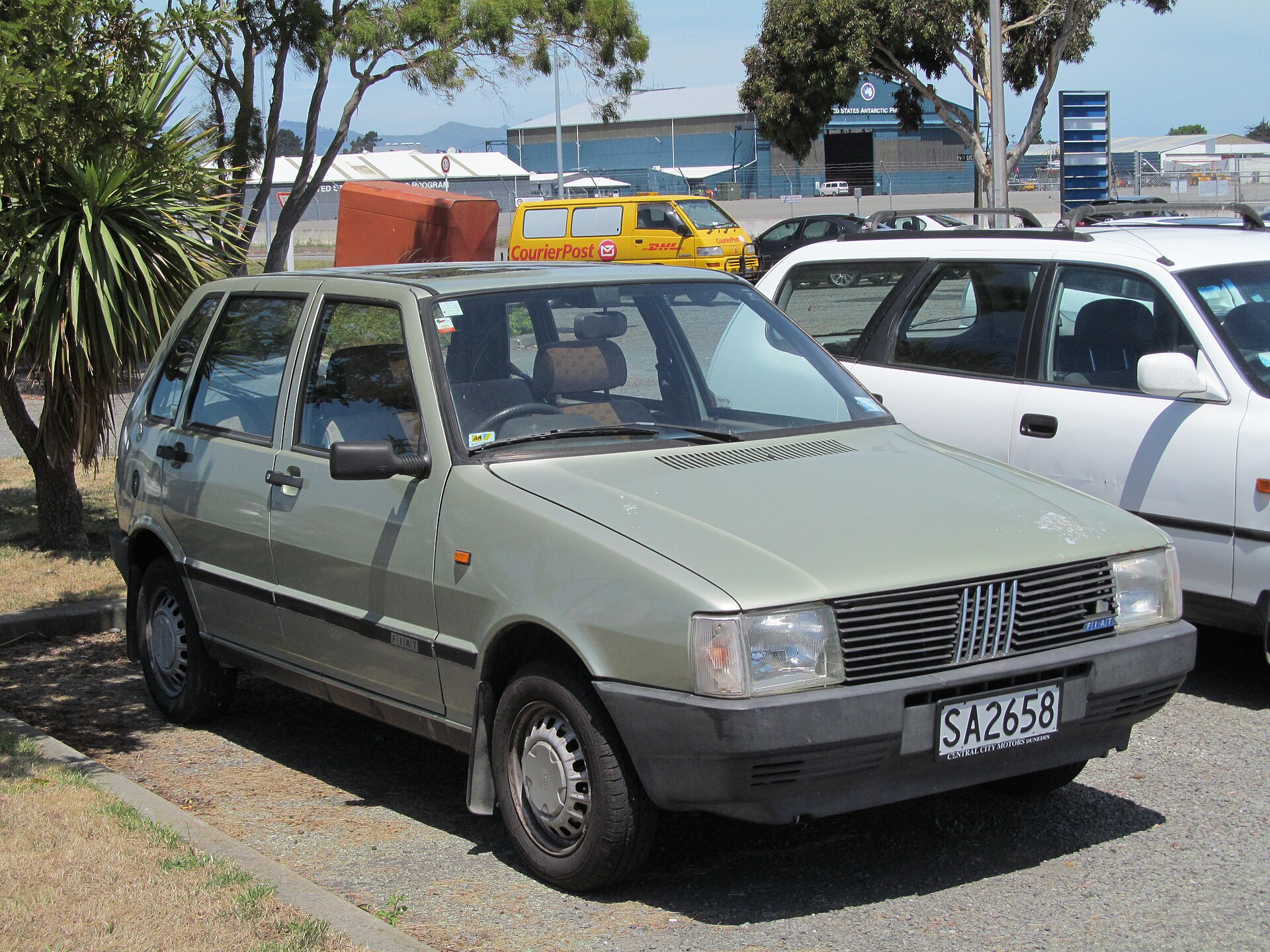
- Fiat Uno I · Photo: Riley from Christchurch, New Zealand / Wikimedia Commons, CC BY 2.0
Fiat Uno in our rankings
- No. 398 of 1082 · Longest-running car nameplates (11 years · top 39%)
- No. 251 of 411 · Cars with the most generations (3 generations · top 64%)
In production longer than 61% of ranked nameplates in the 1CARS catalog (No. 398 of 1082).
FAQ
How many generations of the Fiat Uno are there?
Two cars carry the name: the original Type 146 (1983–1995 in Italy, facelifted in 1989, built in Brazil until 2014) and the Brazilian Type 327 Novo Uno (2010–2021).
Who designed the Fiat Uno?
Giorgetto Giugiaro and his company Italdesign. The car was voted European Car of the Year 1984.
How many Fiat Unos were built?
More than 8.8 million of the original car, including 6,032,911 in Italy. Totals for Brazil differ by source.
How powerful was the Fiat Uno Turbo i.e.?
The first 1.3-litre Turbo i.e. of 1985 had 77 kW (105 PS). The later 1.4-litre version had 82 kW (111 PS) according to German Wikipedia and 87 kW (118 PS) according to English Wikipedia.
What replaced the Fiat Uno?
The Fiat Punto, launched in September 1993, in Europe. In Brazil the Novo Uno replaced the old car in stages from 2010.
Data sources
Data checked by an editor against the sources below.