
 Fiat Cinquecento
All generations, specs and history
Published Sources (1) Report an error
By Felix Hartmann, Automotive Technology & EV Contributor
- Built
- 1991–1998
- Generations
- 2
Timeline
Cinquecento generations
Click a generation for its own page
- Cinquecento I 1991–1993
- Cinquecento II 1993–1994
Newest first · 2 generations since 1991
-
1993
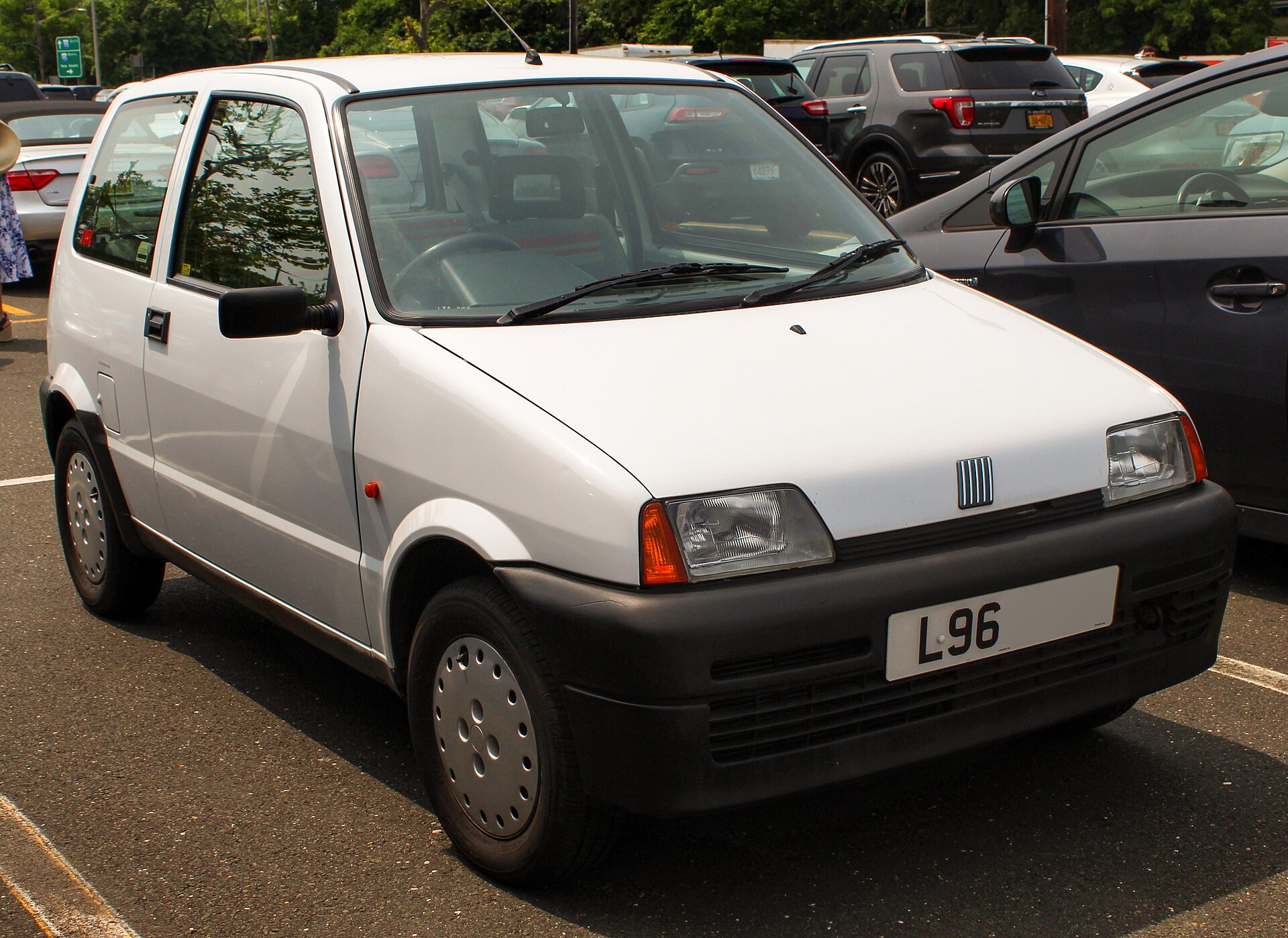
- 1991 I 1991–1993

All generations by year: Cinquecento II (1993–1994) · Cinquecento I (1991–1993)
Which one is mine?
Pick the year of first registration to see which generation it is.
- Cinquecento II 1993–1994
- Cinquecento I 1991–1993
Which Cinquecento to choose
Our verdict · Felix Hartmann
The Sporting is the most powerful version, with about 38% more power than the 899 cc car and a better-equipped interior. Cars from late 1994 onwards have the revised interior and, in some markets, an airbag. The 704 cc two-cylinder was sold only in Poland and is a curiosity rather than a practical choice. As with any small car of the early 1990s, rust and crash protection should be judged against today's standards; for modern safety the newer Fiat Panda is the better city car. Our car comparison tool shows how the Cinquecento's size and output compare with later city cars.
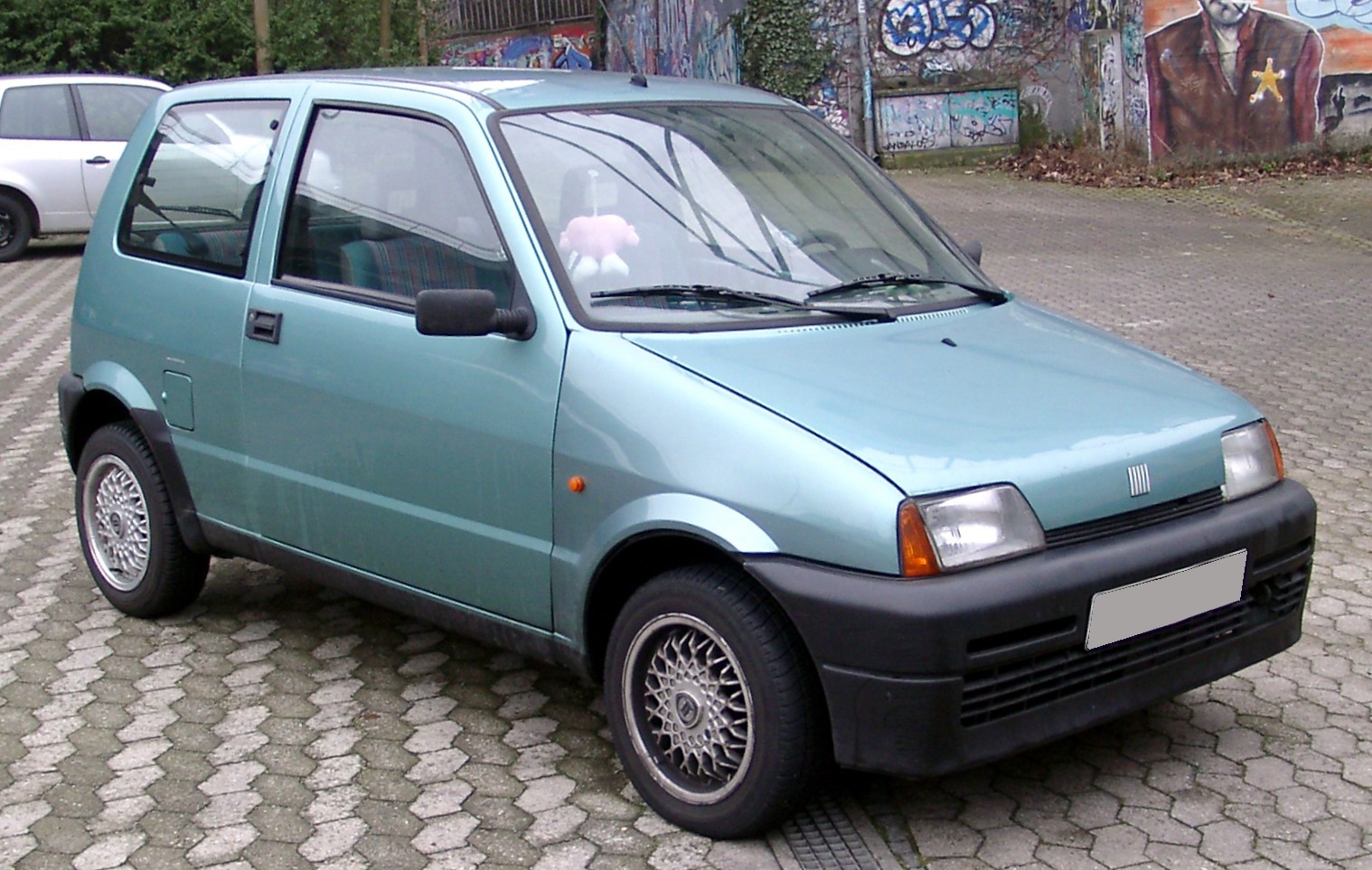
The Fiat Cinquecento is the city car Fiat built in Tychy, Poland, from December 1991 to 1998 as the replacement for the rear-engined Fiat 126. Unlike the 126, it had a transverse front engine and front-wheel drive, and its platform was carried over to the Seicento, built until 2010. In total 1,164,525 were made, and the Sporting with the 1.1-litre FIRE engine became the basis of a rally trophy and a Group A kit car.
In short
- Built at Tychy, Poland, by FSM and then Fiat Auto Poland: 1,164,525 cars from December 1991 to 1998.
- Three engines: a 704 cc two-cylinder for Poland (22–23 kW), an 899/903 cc four-cylinder (29 kW) and the 1,108 cc FIRE of the Sporting (40 kW).
- Independent suspension front and rear, side-impact beams, crumple zones and galvanised body panels.
- Succeeded by the Seicento in 1998; an Italdesign concept based on the Cinquecento led to the Daewoo Matiz.
Fiat Cinquecento at a glance
| Specification | Fiat Cinquecento |
|---|---|
| Production | December 1991 – 1998 |
| Plant | Tychy, Poland (FSM, from 1992/1993 Fiat Auto Poland) |
| Design | Centro Stile Fiat: Ermanno Cressoni with Antonio Piovano |
| Segment | city car (A segment) |
| Body | three-door hatchback |
| Layout | transverse front engine, front-wheel drive |
| Engines | 704 cc two-cylinder, 899/903 cc four-cylinder, 1,108 cc FIRE |
| Length / wheelbase | 3,230 mm / 2,200 mm |
| Kerb weight | 675–727 kg |
| Boot | 170 litres, up to 810 litres with the rear seat folded |
| Predecessor / successor | Fiat 126 / Fiat Seicento |
The Cinquecento is listed in our Fiat catalogue. Its name, Italian for "five hundred", recalls the Fiat Nuova 500 of 1957.
Cinquecento development and launch
Work on a successor to the 126 had started in the early 1980s. Research at the Consiglio Nazionale delle Ricerche in Rome produced the X1/72 to X1/79 prototypes, and FSM's research centre in Poland developed the Beskid 106 concept. After Fiat took over FSM, the project moved to a design that drew on the X1/7 studies. The final car was styled at Centro Stile Fiat by Ermanno Cressoni and Antonio Piovano.
The Cinquecento went into production at Tychy in December 1991. Unlike the 126, it had a transverse engine at the front driving the front wheels, independent suspension at both ends, front disc brakes and unassisted rack-and-pinion steering. It also had side-impact beams, crumple zones and galvanised body panels. Cars built in Poland were first marketed as FSM; sales outside Poland began in 1993.
Engines and performance
| Engine | Power | Torque | Notes |
|---|---|---|---|
| 704 cc two-cylinder OHV (ED) | 23 kW (31 PS), 22 kW (30 PS) with catalytic converter | - | Poland only, from the 126; four-speed gearbox |
| 903 cc four-cylinder OHV | 29–30 kW (39–41 PS) | - | early cars, carburettor or single-point injection |
| 899 cc four-cylinder OHV | 29 kW (39 PS) | 65 Nm | from 1993, five-speed gearbox, Euro 2 from 1995 |
| 1,108 cc FIRE SOHC (Sporting) | 40 kW (54 PS) | 86 Nm | from 1994 |
The two-cylinder engine was inherited from the Polish 126p and offered only in Poland. The 903 cc four-cylinder was reduced to 899 cc in 1993 for tax reasons and gained hydraulic tappets. German Wikipedia gives 18 seconds from 0 to 100 km/h, a top speed of 140 km/h and 6.1 l/100 km for the 899 cc car. The Sporting needed 12.8 seconds and reached 150 km/h, using 6.2 l/100 km.
Cinquecento Sporting, rally trophy and tuning
The Cinquecento Sporting arrived in 1994 with the 1.1-litre FIRE engine and a close-ratio gearbox. It was lowered, had firmer dampers, a front anti-roll bar and 13-inch alloy wheels with 165/55 R13 tyres, colour-coded bumpers and mirrors, a rev counter, sports seats, red seat belts and a leather steering wheel and gear knob. An optional Abarth styling kit added aprons with fog lamps, side skirts, a rear spoiler with a third brake light and Speedline alloy wheels, but no extra power.
The Sporting also became the basis of a one-make rally trophy and a Group A kit car. German tuners such as Novitec, Hörmann, G-Tech and Merkur sold turbo kits with 74 kW (101 PS), and some Novitec cars reached 82 kW (111 PS); fewer than 1,000 cars are estimated to have been converted.


Equipment and updates
The car is 3,230 mm long, 1,490 mm wide and 1,435 mm high on a 2,200 mm wheelbase, and it weighs 675–727 kg; the Sporting is 3,226 mm long and, according to German Wikipedia, weighs 725 kg. Standard Cinquecentos were basic but practical: the boot held 170 litres, and up to 810 litres with the rear seat folded. The SX added electric windows, side protection strips and body-coloured bumpers, and some versions had a Webasto folding roof or air conditioning. From late 1994 a mechanically triggered airbag was available in some markets, and the interior was revised with new instruments, illuminated switches, new trim and two steering-column stalks.
Cinquecento Elettra
From 1992 to 1996 Fiat also offered the Cinquecento Elettra. Its batteries were split between the engine bay and the space under the rear seat, where the fuel tank would normally be. With lead-acid batteries the range was about 100 km; with nickel-cadmium batteries about 150 km. The idea continued in the later Seicento Elettra.
Concepts and the road to the Daewoo Matiz
Several design houses used the Cinquecento as a base for concept cars in the 1990s. The best known came from Fabrizio Giugiaro at Italdesign: the Italdesign Cinquecento of 1992 and the Lucciola of 1993. Fiat did not build them, but a version of the design became the Daewoo Matiz in 1998.
Production
| Year | Event |
|---|---|
| 1991 | production starts at Tychy in December |
| 1993 | sales outside Poland; 903 cc engine reduced to 899 cc |
| 1994 | Sporting with the 1.1 FIRE; interior update and optional airbag |
| 1995–1996 | peak output of about 205,000 cars a year |
| 1998 | replaced by the Seicento after 1,164,525 cars |
Photo gallery

Image credits · Photos from Wikimedia Commons under free licences
- Fiat Cinquecento II · Photo: Kevauto / Wikimedia Commons, CC BY-SA 4.0
Fiat Cinquecento in our rankings
- No. 918 of 1082 · Longest-running car nameplates (3 years · top 89%)
- No. 285 of 411 · Cars with the most generations (2 generations)
In production longer than 11% of ranked nameplates in the 1CARS catalog (No. 918 of 1082).
FAQ
When was the Fiat Cinquecento built?
From December 1991 to 1998 at Fiat's plant in Tychy, Poland.
What engines did the Fiat Cinquecento have?
A 704 cc two-cylinder with 22–23 kW for Poland, a 903 cc and later 899 cc four-cylinder with 29 kW (39 PS) and the 1,108 cc FIRE with 40 kW (54 PS) in the Sporting.
How fast is the Cinquecento Sporting?
German Wikipedia gives 0–100 km/h in 12.8 seconds and a top speed of 150 km/h.
How many Fiat Cinquecento were built?
1,164,525 between December 1991 and 1998.
What replaced the Fiat Cinquecento?
The Fiat Seicento of 1998, which was built in the same plant and closely based on it.
Data sources
Data checked by an editor against the sources below.


