
 Alfa Romeo 159
Specs, engines and history
Published Sources (1) Report an error
By Felix Hartmann, Automotive Technology & EV Contributor
- Built
- 2005–2011
- Top power
- 191 kW (260 PS)
Which 159 to buy
Our verdict · Felix Hartmann
- For the best all-round engine: a 1.9 JTDM 16V or a 2.0 JTDM with 125 kW (170 PS), with the lowest fuel use in the range.
- For petrol performance: the 1.75 TBi of 2009-2011, which matches the 2.4 diesel's 147 kW and is much lighter than the V6.
- For the full Alfa experience: the 3.2 V6, ideally a car from 2008 or later with the 45 kg weight cut and the Q2 differential.
- For space: the Sportwagon, available with every main engine from 2006.
Later cars benefit from the 2008 changes, so a 2008-2011 159 is the safer used buy. Put any shortlist side by side with our comparison tool.
The Alfa Romeo 159 is a front-engined compact executive car, sold as a four-door saloon and, from 2006, as the Sportwagon estate. It replaced the Alfa Romeo 156, was shown at the 2005 Geneva Motor Show and was built at Pomigliano d'Arco near Naples until November 2011, when 247,661 cars had been made. Its successor, after a gap of several years, was the Giulia.
In short
- One generation (type 939), 2005-2011, saloon and Sportwagon, built at Pomigliano d'Arco, Italy.
- Petrol engines from 103 kW (140 PS) to 191 kW (260 PS); diesels from 88 kW (120 PS) to 154 kW (210 PS).
- Front-wheel drive as standard; Q4 four-wheel drive with a Torsen centre differential on the 3.2 V6 and the 2.4 JTDM.
- Its main weakness was weight: kerb weights run from 1,385 to 1,695 kg.
Size at a glance
| Dimensions | Alfa Romeo 159 (939) |
|---|---|
| Length | 4,660 mm183.5 in |
| Width | 1,828 mm72.0 in |
| Height | 1,417 mm55.8 in |
| Wheelbase | 2,700 mm106.3 in |
Specs by version
Engines
| Version | Engine | Power | Torque | Gearbox | Drive | Production years |
|---|---|---|---|---|---|---|
| Diesel · 2 versions | ||||||
| 2.0 JTDM 170 | 2.0 l · 4 cyl · Diesel 1,956 cc | 125 kW 170 PS168 hp | 360 Nm266 lb-ft | 6-sp Manual | Front-wheel drive | 2009–2011 |
| 2.4 JTDM 210 | 2.4 l · 5 cyl · Diesel 2,387 cc | 154 kW 209 PS207 hp | 400 Nm295 lb-ft | 6-sp Manual | Front-wheel drive | 2007–2010 |
| Petrol · 2 versions | ||||||
| 1.75 TBi | 1.7 l · 4 cyl · Petrol 1,742 cc | 147 kW 200 PS197 hp | 320 Nm236 lb-ft | 6-sp Manual | Front-wheel drive | 2009–2011 |
| 3.2 V6 JTS Q4 | 3.2 l · 6 cyl · Petrol 3,195 cc | 191 kW 260 PS256 hp | 322 Nm237 lb-ft | 6-sp Manual | All-wheel drive | 2005–2010 |
Performance
Show all 4 versions
| Version | 0–100 km/h | Top speed |
|---|---|---|
| Diesel · 2 versions | ||
| 2.0 JTDM 170 | 8.8 s 0–62 mph | 218 km/h135 mph |
| 2.4 JTDM 210 | 8.1 s 0–62 mph | 231 km/h144 mph |
| Petrol · 2 versions | ||
| 1.75 TBi | 7.7 s 0–62 mph | 235 km/h146 mph |
| 3.2 V6 JTS Q4 | 7.0 s 0–62 mph | 244 km/h152 mph |
Dimensions and weight
Show all 4 versions
| Version | Wheelbase |
|---|---|
| Diesel · 2 versions | |
| 2.0 JTDM 170 | 2,700 mm106.3 in |
| 2.4 JTDM 210 | 2,700 mm106.3 in |
| Petrol · 2 versions | |
| 1.75 TBi | 2,700 mm106.3 in |
| 3.2 V6 JTS Q4 | 2,700 mm106.3 in |
Verified Manufacturer and type-approval data from our catalog · Sources and methodology
Alfa Romeo 159 at a glance
| Specification | Alfa Romeo 159 |
|---|---|
| Segment | D-segment compact executive car |
| Body styles | four-door saloon, five-door Sportwagon estate |
| Production | 2004-2011 at Pomigliano d'Arco, Italy |
| Platform | GM/Fiat Premium, shared with the Brera and Spider |
| Layout | front engine, front-wheel drive or Q4 four-wheel drive |
| Designer | Giorgetto Giugiaro (Italdesign) with Centro Stile Alfa Romeo |
| Total built | 247,661 |
| Predecessor / successor | Alfa Romeo 156 / Alfa Romeo Giulia (952) |
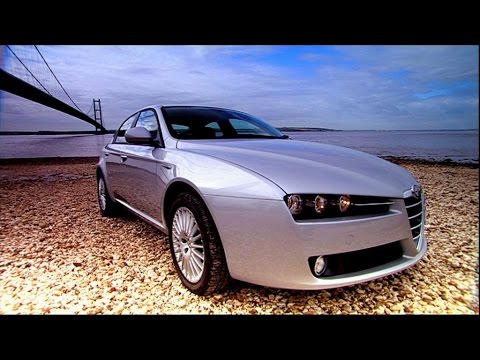
The 159 was a deliberate step up in size and ambition. It is 225 mm longer and 85 mm wider than the 156, and Alfa Romeo used better interior materials to take on BMW, Mercedes-Benz and Audi. The front end, with the traditional V-shaped grille and cylindrical headlamp clusters, borrows from the Brera concept that Giugiaro showed in 2002. You will find every other model of the brand in our Alfa Romeo catalogue.
Generations and model history
There was only one generation of the 159, but the car changed a good deal over its seven years. The table below shows the main steps.
| Generation | Code | Years | Body styles | Engines | Power (kW / hp) |
|---|---|---|---|---|---|
| 159 | 939 | 2005-2011 | saloon, Sportwagon estate | 1.75 TBi, 1.8, 1.9 JTS, 2.2 JTS, 3.2 V6; 1.9, 2.0 and 2.4 JTDM diesels | 88-191 kW (120-260 PS) |
- 2005: launch at Geneva with 1.9 JTS, 2.2 JTS and 3.2 V6 petrol engines and 1.9 and 2.4 JTDM diesels.
- March 2006: the Sportwagon estate is unveiled at Geneva. A six-speed automatic arrives for the 2.4 JTDM and is later offered on other versions.
- 2007: the 2.4 JTDM rises to 154 kW (210 PS) and becomes available with Q4 four-wheel drive. The Ti (Turismo Internazionale) package returns as an option.
- 2008 model year: a revised range shown at Geneva in March 2008. New aluminium parts and changes to the dashboard and instruments cut 45 kg, every version gets the electronic Q2 limited-slip differential, and the 3.2 V6 is also sold with front-wheel drive.
- 2009 model year: the 1.75 TBi turbo petrol with 147 kW (200 PS) and the 2.0 JTDM with 125 kW (170 PS) arrive. The TBi was meant to replace the GM-derived 1.9 and 2.2 JTS units.
- 2010-2011: a 100 kW (136 PS) 2.0 JTDM is added. UK sales stop on 8 July 2011 and production ends in November 2011.
Engines, gearboxes and performance
All petrol engines except the 1.8 used direct injection (JTS), and all diesels were common-rail JTDM units. The table uses the figures from the Wikipedia engine list.
| Engine | Years | Power | Torque | 0-100 km/h | Top speed |
|---|---|---|---|---|---|
| 1.8 (petrol) | 2007-2010 | 103 kW (140 PS) | 175 Nm | 10.2 s | 208 km/h |
| 1.9 JTS | 2005-2007 | 118 kW (160 PS) | 190 Nm | 9.7 s | 212 km/h |
| 2.2 JTS | 2005-2010 | 136 kW (185 PS) | 230 Nm | 8.7-8.8 s | 222-224 km/h |
| 1.75 TBi | 2009-2011 | 147 kW (200 PS) | 320 Nm | 7.7 s | 235 km/h |
| 3.2 V6 JTS | 2005-2010 | 191 kW (260 PS) | 322 Nm | 7.0-7.2 s | 240-250 km/h |
| 1.9 JTDM 8V | 2005-2010 | 88 kW (120 PS) | 280 Nm | 10.7-11.0 s | 191-193 km/h |
| 1.9 JTDM 16V | 2005-2010 | 110 kW (150 PS) | 320 Nm | 9.2-9.5 s | 209-212 km/h |
| 2.0 JTDM | 2010-2011 | 100 kW (136 PS) | 350 Nm | 9.9 s | 202 km/h |
| 2.0 JTDM | 2009-2011 | 125 kW (170 PS) | 360 Nm | 8.8 s | 218 km/h |
| 2.4 JTDM (five-cylinder) | 2005-2007 | 147 kW (200 PS) | 400 Nm | 8.4 s | 224-228 km/h |
| 2.4 JTDM (five-cylinder) | 2007-2010 | 154 kW (210 PS) | 400 Nm | 8.1-8.4 s | 226-231 km/h |
The 3.2 V6 is not the old Busso engine of the 156 GTA and the GT. It combines a General Motors-designed block with Alfa Romeo cylinder heads and induction. With Q4 it reached 100 km/h in 7.0 seconds with the manual gearbox; the front-wheel-drive version added from 2008 was the fastest 159, at 250 km/h.
Gearboxes were a five-speed manual on the 1.8 and a six-speed manual on most other versions. The Q-Tronic six-speed automatic, an Aisin unit, was offered on the 1.9 and 2.4 diesels and the 3.2 petrol, and some markets had the Selespeed automated manual with the 2.2. The Q4 system uses a Torsen Type-C unit that combines the front and centre differentials. For kW and hp conversions, use our power converter.
Dimensions, space and practicality
| Parameter | Metric | Imperial |
|---|---|---|
| Length | 4,660 mm | 183.5 in |
| Width | 1,828 mm | 72.0 in |
| Height | 1,417 mm | 55.8 in |
| Wheelbase | 2,700 mm | 106.3 in |
| Kerb weight | 1,385-1,695 kg | 3,053-3,737 lb |
The body is stiff: Wikipedia quotes a torsional rigidity of 180,000 daNm/rad. Some of the styling was meant to make the car look larger for the United States, where it was never sold. The extra length over the 156 also had a downside, because many 156 owners did not see the bigger, heavier car as a direct replacement. Luggage capacity is not given in the sources we used, so we do not quote a boot figure.
Fuel economy and running costs
Combined consumption figures were measured to EU Directive 1999/100/EC:
- Diesels: 5.1 l/100 km for the 100 kW 2.0 JTDM, 5.4 l/100 km for the 125 kW 2.0 JTDM, 5.9 l/100 km for the 1.9 JTDM manual and 6.8 l/100 km for the front-wheel-drive 2.4 JTDM.
- Four-cylinder petrols: 7.6-7.7 l/100 km for the 1.8, 8.1 l/100 km for the 1.75 TBi, 8.7 l/100 km for the 1.9 JTS and 9.2-9.4 l/100 km for the 2.2 JTS.
- 3.2 V6: 11.0 l/100 km with front-wheel drive, and 11.4-12.2 l/100 km with Q4, depending on year and gearbox.
The automatic always costs fuel: the 1.9 JTDM uses 7.1 l/100 km with Q-Tronic against 5.9 l/100 km with the manual. To turn these figures into a yearly bill, try our fuel cost calculator.
Trims and equipment
Most markets had four trim levels: Progression, Distinctive, Exclusive and Ti. In the UK they were called Turismo, Lusso and Ti. The Ti returned as an option package in 2007, and the Blue&Me system was available for phones and music. Seven airbags were standard, knee airbags were optional, and the seats were designed to reduce whiplash.
Safety
Euro NCAP tested the Alfa Romeo 159 in 2006. The ANCAP test of the same year scored it 15.47 out of 16 points in the frontal offset test, 14.36 out of 16 in the side impact test and 2 out of 2 in the pole test, with 2 of 3 points for seat-belt reminders; pedestrian protection was rated poor. Electronic stability control was standard. The British insurers' research centre Thatcham also reported good results in rear-impact testing. Compare these numbers with newer cars in our safety section.
Reliability and known issues
The documented criticism of the 159 is about weight and size rather than a specific fault. Wikipedia notes that the Premium platform was developed late, partly as a base for larger E-segment cars, and that the extra weight carried over to the Brera and Spider. The 2008 update took off 45 kg, but the heaviest versions still weigh close to 1.7 tonnes. We found no sourced list of common mechanical faults, so we do not repeat forum claims here.
Rivals
| Model | Body | Why it competes |
|---|---|---|
| BMW 3 Series | saloon, estate | the benchmark Alfa Romeo aimed the 159's interior quality at |
| Audi A4 | saloon, estate | premium German rival, also offered with four-wheel drive |
| Mercedes-Benz C-Class | saloon, estate | the third German brand named as a target |
| Alfa Romeo 156 | saloon, Sportwagon | the lighter, smaller predecessor, often the alternative on the used market |
Alfa Romeo 159 in our rankings
- No. 47 of 174 · Most powerful diesel cars (154 kW · top 28%)
- No. 18 of 60 · Fastest sedans (244 km/h · top 30%)
- No. 118 of 375 · Fastest cars (244 km/h · top 32%)
- No. 56 of 141 · Biggest engines: sedans (3,195 cc · top 40%)
- No. 28 of 71 · Quickest diesel cars, 0–100 (8.1 s · top 41%)
- No. 42 of 101 · Smallest sedans (4,660 mm · top 42%)
More powerful than 72% of ranked diesel cars in the 1CARS catalog (No. 47 of 174).
FAQ
When was the Alfa Romeo 159 made?
It was presented at the Geneva Motor Show in 2005 and built at Pomigliano d'Arco until November 2011. In total 247,661 cars were made.
Which is the most powerful Alfa Romeo 159?
The 3.2 V6 JTS, with 191 kW (260 PS) and 322 Nm. The front-wheel-drive version from 2008 reaches 250 km/h.
Does the Alfa Romeo 159 have four-wheel drive?
Yes, as an option. The Q4 system with a Torsen differential was available with the 3.2 V6 petrol and, from 2007, with the 2.4 JTDM diesel.
Is the 159 related to the Brera?
Yes. Both use the GM/Fiat Premium platform, and the 159's front was inspired by the 2002 Brera concept by Giugiaro.
How heavy is the Alfa Romeo 159?
Between 1,385 and 1,695 kg depending on engine, body and drive, which is why the weight is its most criticised point.
Data sources
Data checked by an editor against the sources below.