 Volkswagen Karmann Ghia
All generations, specs and history
Published Sources (1) Report an error
By Felix Hartmann, Automotive Technology & EV Contributor
- Built
- 1955–1974
- Generations
- 2 · Type 14 to Type 34
- Top power
- 45 kW (61 PS)
Timeline
Karmann Ghia generations
Click a generation for its own page
Type 14 and Type 34 overlapped in 1962–1974, so Type 34 sits on a second lane
- Karmann Ghia Type 14 1955–1974 · Coupe, Convertible · 25–45 kW (34–61 PS)
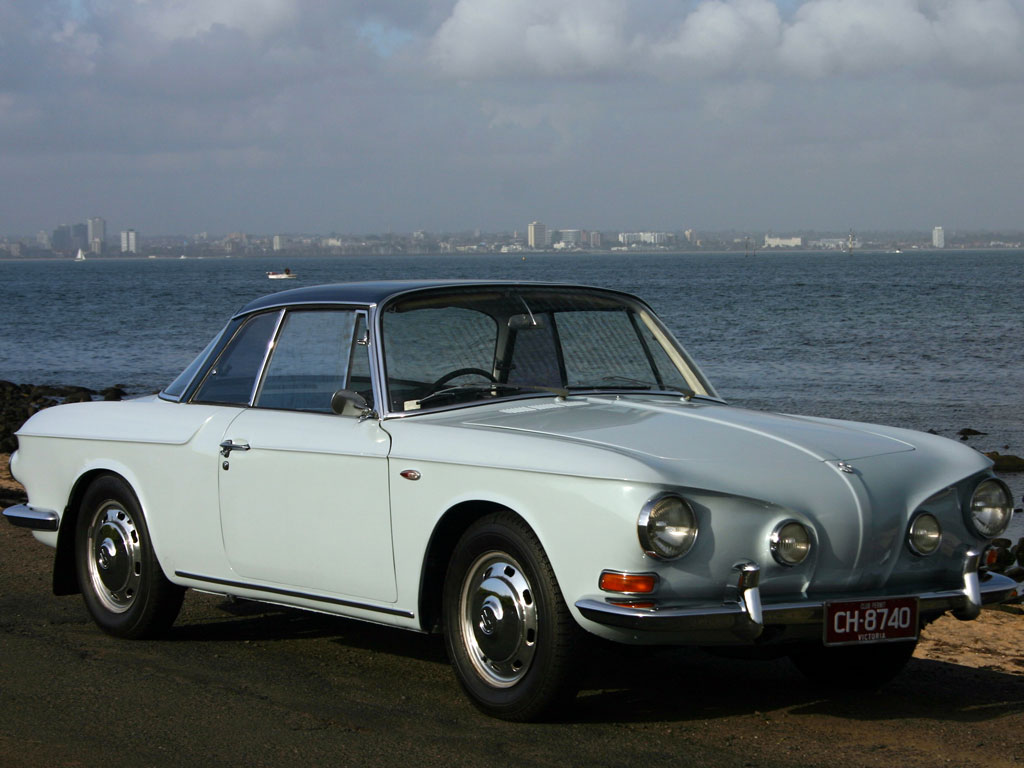
- Karmann Ghia Type 34 1962–1969 · Coupe
Newest first · 2 generations since 1955
-
1962
-
1955
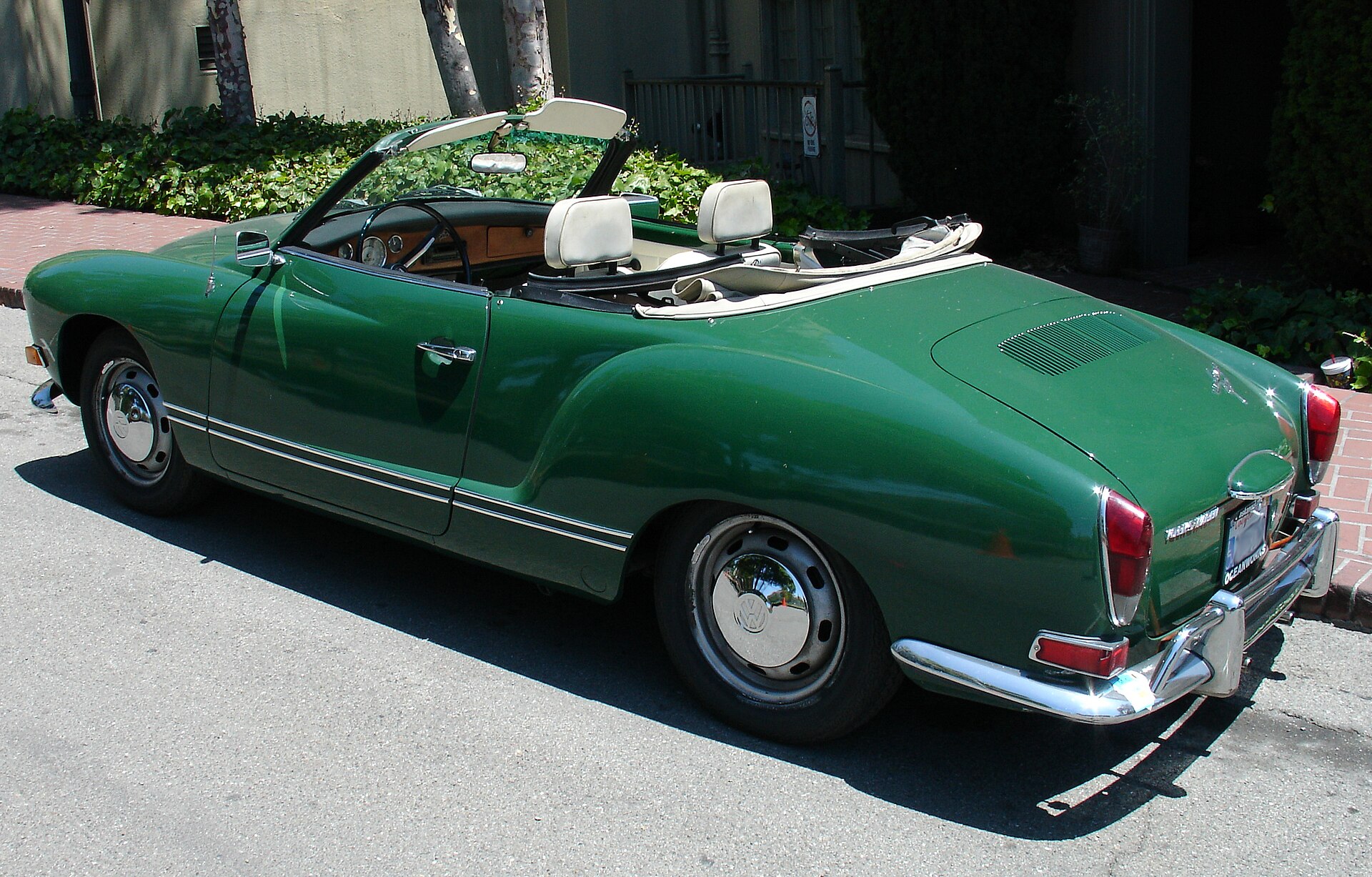


All generations by year: Karmann Ghia Type 34 (1962–1969) · Karmann Ghia Type 14 (1955–1974)
Which one is mine?
Pick the year of first registration to see which generation it is.
Check by VINWhich Karmann Ghia to choose
Our verdict · Felix Hartmann
- For the classic shape: a Type 14 coupé, the most common version with 364,401 built.
- For open-air driving: a Type 14 cabriolet (80,837 built in Germany).
- For more power: a late Type 14 with the 1,584 cc engine and 45 kW (61 PS).
- For rarity: a Type 34 "Razor Edge", ideally with the electric sliding sunroof, or a Brazilian TC.
Hand-finished bodies differ from car to car, so originality of the panels matters as much as the drivetrain, which is shared with the Beetle. Other Volkswagens are in the Volkswagen catalogue, and more cars of the period under 1960s classics.
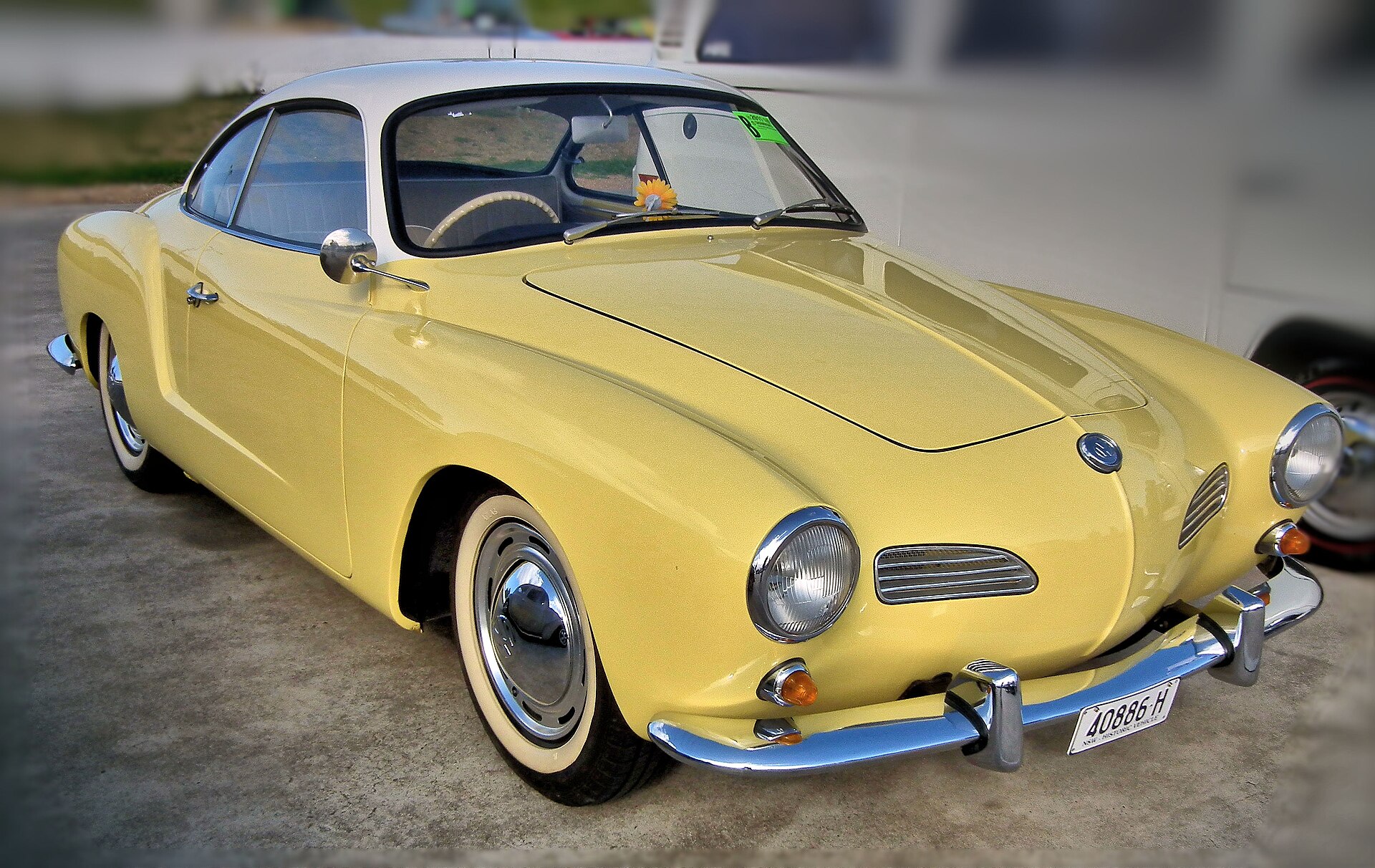
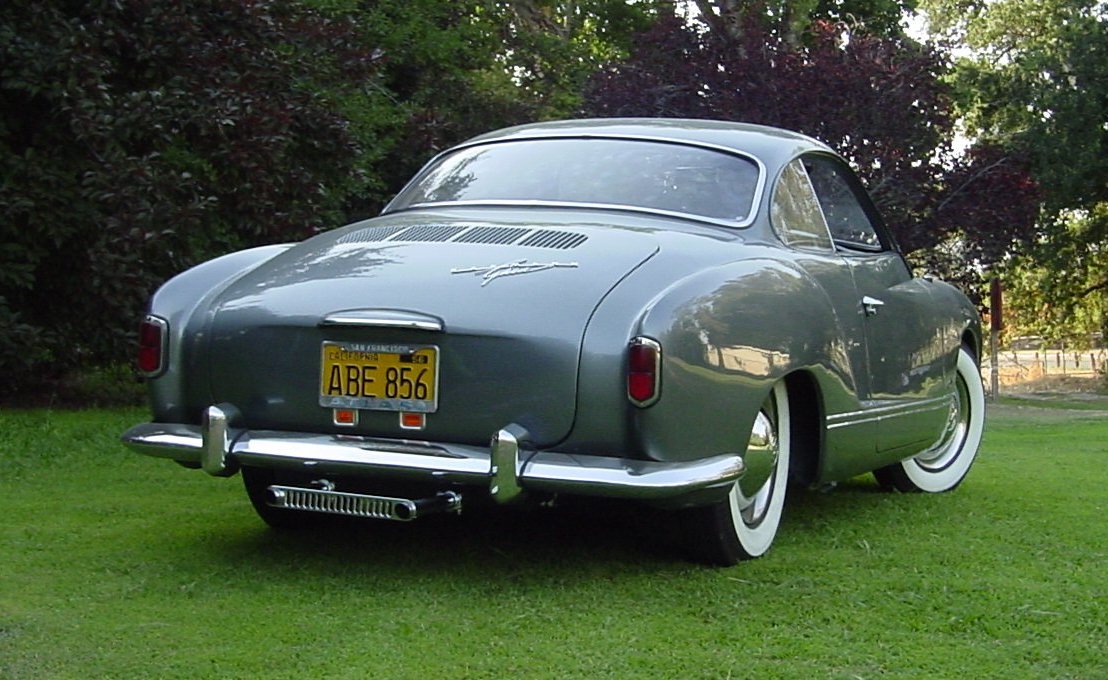
The Volkswagen Karmann Ghia is the 2+2 coupé and convertible that Karmann built in Osnabrück on Volkswagen mechanicals from 1955 to 1974. Italian design studio Ghia shaped it on a Beetle chassis, Karmann welded and finished the bodies by hand, and Volkswagen sold it as the stylish member of its range. The original Type 14 was joined by the larger Type 34 from 1962 to 1969, and Brazil built its own versions until 1975.
In short
- Type 14 coupé and cabriolet 1955–1974: 445,238 built in Germany, of which 80,837 cabriolets.
- Type 34 "Razor Edge" coupé 1962–1969: 42,505 built, never officially sold in the United States.
- Air-cooled rear flat-fours from 1,192 cc with 25 kW (34 PS) to 1,584 cc with 45 kW (61 PS).
- Replaced in late 1974 by the Golf-based Scirocco.
Size at a glance
| Dimensions | Volkswagen Karmann Ghia Type 14 |
|---|---|
| Length | 4,140 mm163.0 in |
| Width | 1,630 mm64.2 in |
| Height | 1,330 mm52.4 in |
| Wheelbase | 2,400 mm94.5 in |
Specs by version
Engines
| Version | Engine | Power | Gearbox | Drive | Production years |
|---|---|---|---|---|---|
| Type 14 · 1955–1974 | |||||
| Type 14 · 1200 (1192 cc) | 1.2 l · 4 cyl · Petrol 1,192 cc | 25 kW 34 PS34 hp | Manual | Rear-wheel drive | 1955 |
| Type 14 · 1600 (1584 cc) | 1.6 l · 4 cyl · Petrol 1,584 cc | 45 kW 61 PS60 hp | Manual | Rear-wheel drive | - |
| Type 34 · 1962–1969 | |||||
| Type 34 · 1500 | 4 cyl · Petrol | - | - | Rear-wheel drive | 1962–1969 |
Performance
Show all 1 versions
| Version | Top speed |
|---|---|
| Type 14 · 1955–1974 | |
| Type 14 · 1200 (1192 cc) | 120 km/h75 mph |
Dimensions and weight
Show all 2 versions
| Version | Length | Width | Height | Wheelbase | Kerb weight |
|---|---|---|---|---|---|
| Type 14 · 1955–1974 | |||||
| Type 14 · 1200 (1192 cc) | 4,140 mm163.0 in | 1,630 mm64.2 in | 1,330 mm52.4 in | 2,400 mm94.5 in | 820 kg1,808 lb |
| Type 14 · 1600 (1584 cc) | - | - | - | 2,400 mm94.5 in | - |
Verified Manufacturer and type-approval data from our catalog · Sources and methodology
Volkswagen Karmann Ghia at a glance
| Parameter | Value |
|---|---|
| Maker | Volkswagen; bodies and assembly by Karmann, Osnabrück |
| Production | Type 14 1955–1974; Type 34 1962–1969; Brazil 1962–1975 |
| Built | 445,238 in Germany (Type 14); 42,505 Type 34; 41,689 in Brazil |
| Body styles | 2+2 coupé, cabriolet |
| Platform | Beetle floorpan, widened (Type 14); Type 3 floorpan (Type 34) |
| Engines | 1.2–1.6 l air-cooled flat-four, rear-mounted |
| Power | 25 kW (34 PS) to 45 kW (61 PS) |
| Design | Ghia (Luigi Segre, with Mario Boano, Sergio Coggiola, Giovanni Savonuzzi) |
| Successor | Volkswagen Scirocco (1974) |
Development and production history
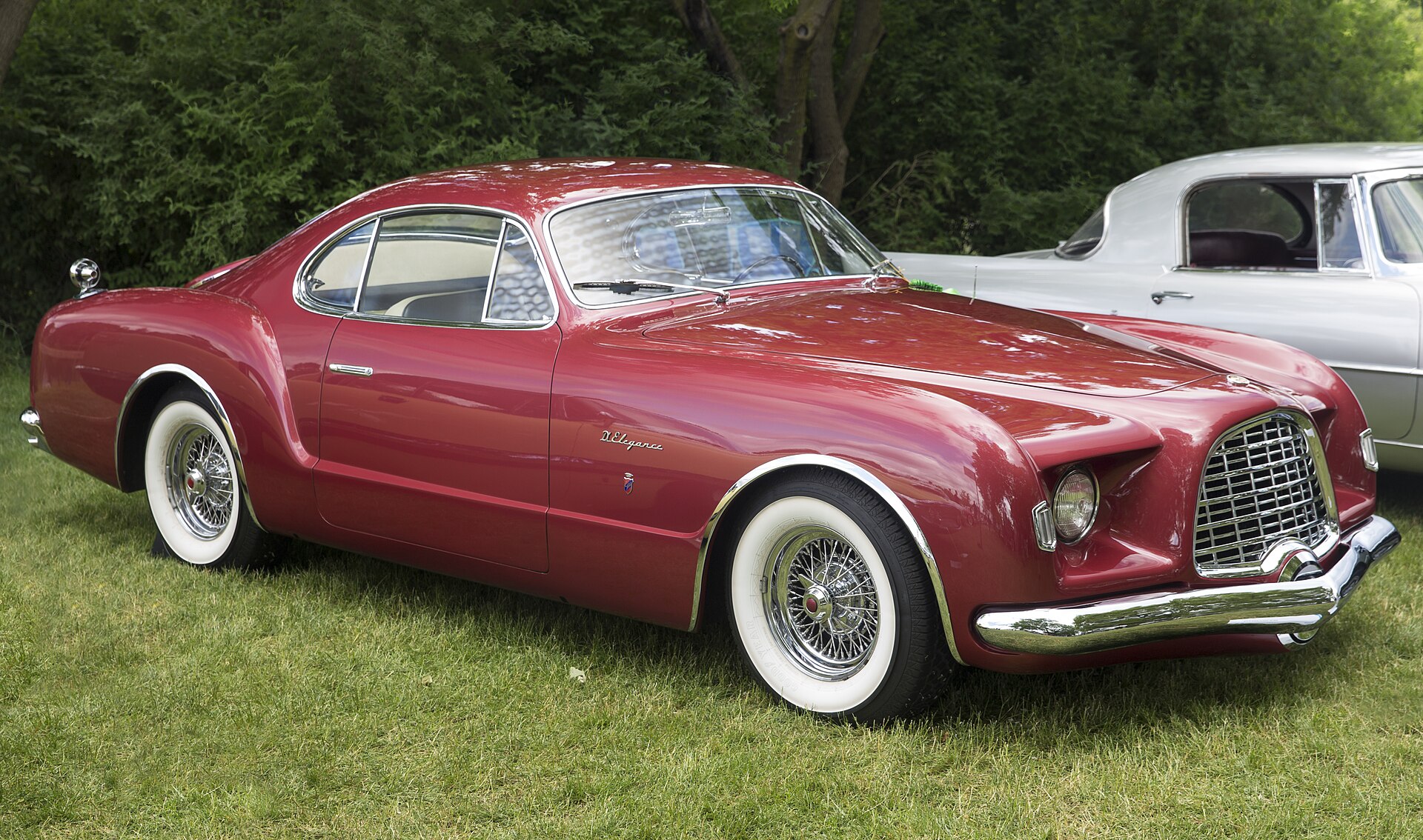
The idea came from outside Volkswagen. Luigi Segre of the Turin coachbuilder Ghia led the design of a coupé prototype built on a Beetle and showed it to Wilhelm Karmann in Paris in late 1953. The design was presented as a concept at the October 1953 Paris Auto Show. Volkswagen approved the project in November 1953. Styling credit is shared between Segre, Mario Boano, Sergio Coggiola and Giovanni Savonuzzi, and English Wikipedia notes that the shape was heavily inspired by Virgil Exner's Chrysler D'Elegance and K-310 concepts.
The car was shown at the 1955 Frankfurt show and at an event in Westphalia on 14 July 1955, and the first Type 14 was built at Osnabrück in August 1955. Unlike the Beetle, whose panels were joined on automated lines, the Karmann Ghia's bodies were butt-welded, shaped and finished by hand. A cabriolet joined the coupé, and the 1,500 cc engine arrived in 1967.
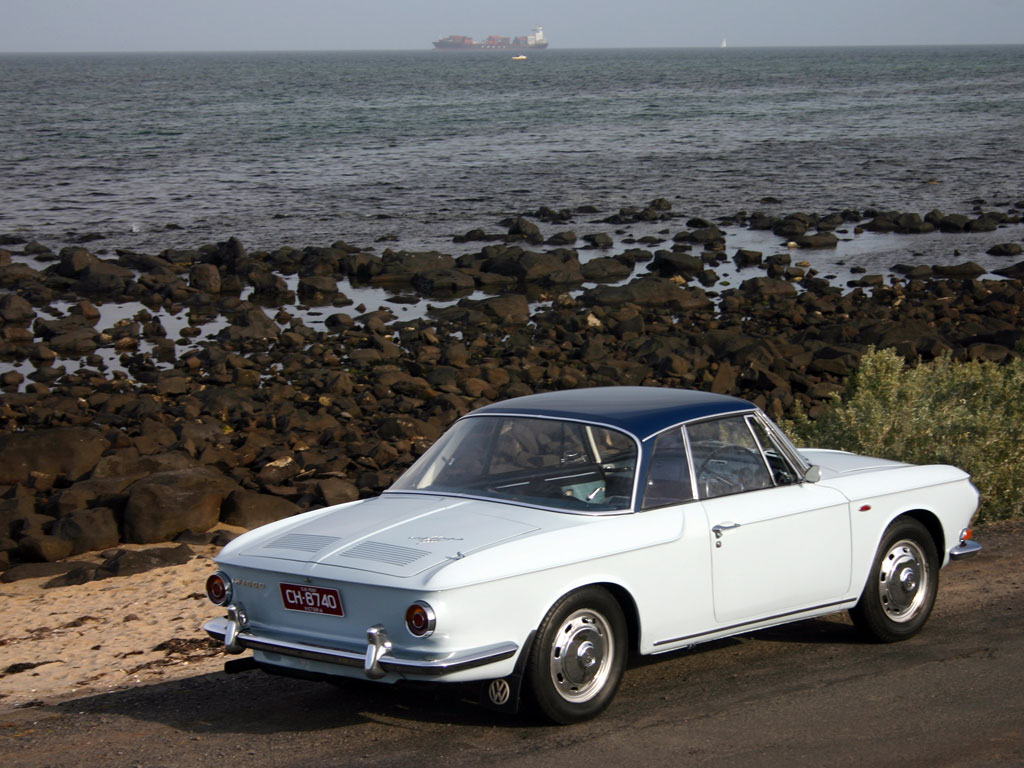
In 1962 Volkswagen added the Type 34, a larger and more angular coupé on the Type 3 floorpan, called the "Razor Edge Ghia" in the UK and "Der Große Karmann" in Germany. It was the fastest Volkswagen of its day and cost up to twice as much as a Beetle in many markets. But it was not officially sold in the United States, and 42,505 were built before it was dropped in 1969. The Type 14 continued until the 1974 model year; that year, rear seats were removed from North American cars. Late in 1974 the Golf-based Scirocco took its place.
| Year | Event |
|---|---|
| October 1953 | Ghia concept shown at the Paris Auto Show |
| November 1953 | Volkswagen approves the project |
| 14 July 1955 | Public presentation in Westphalia; also shown at Frankfurt |
| August 1955 | First Type 14 built in Osnabrück |
| 1962 | Type 34 launched; Brazilian production begins |
| 1967 | 1,500 cc engine for the Type 14 |
| 1969 | End of the Type 34 |
| 1972 | Brazilian Karmann-Ghia TC (Type 145) |
| 1974 | Last Type 14; Scirocco takes over |
| 1975 | End of the TC in Brazil |


Design and engineering
The Type 14 is based on the Beetle chassis with a wider floorpan, and its air-cooled drivetrain comes from the Beetle. With the first 1,192 cc engine the car weighed 820 kg and measured 4.14 m long, 1.63 m wide and 1.33 m high on a 2,400 mm wheelbase.
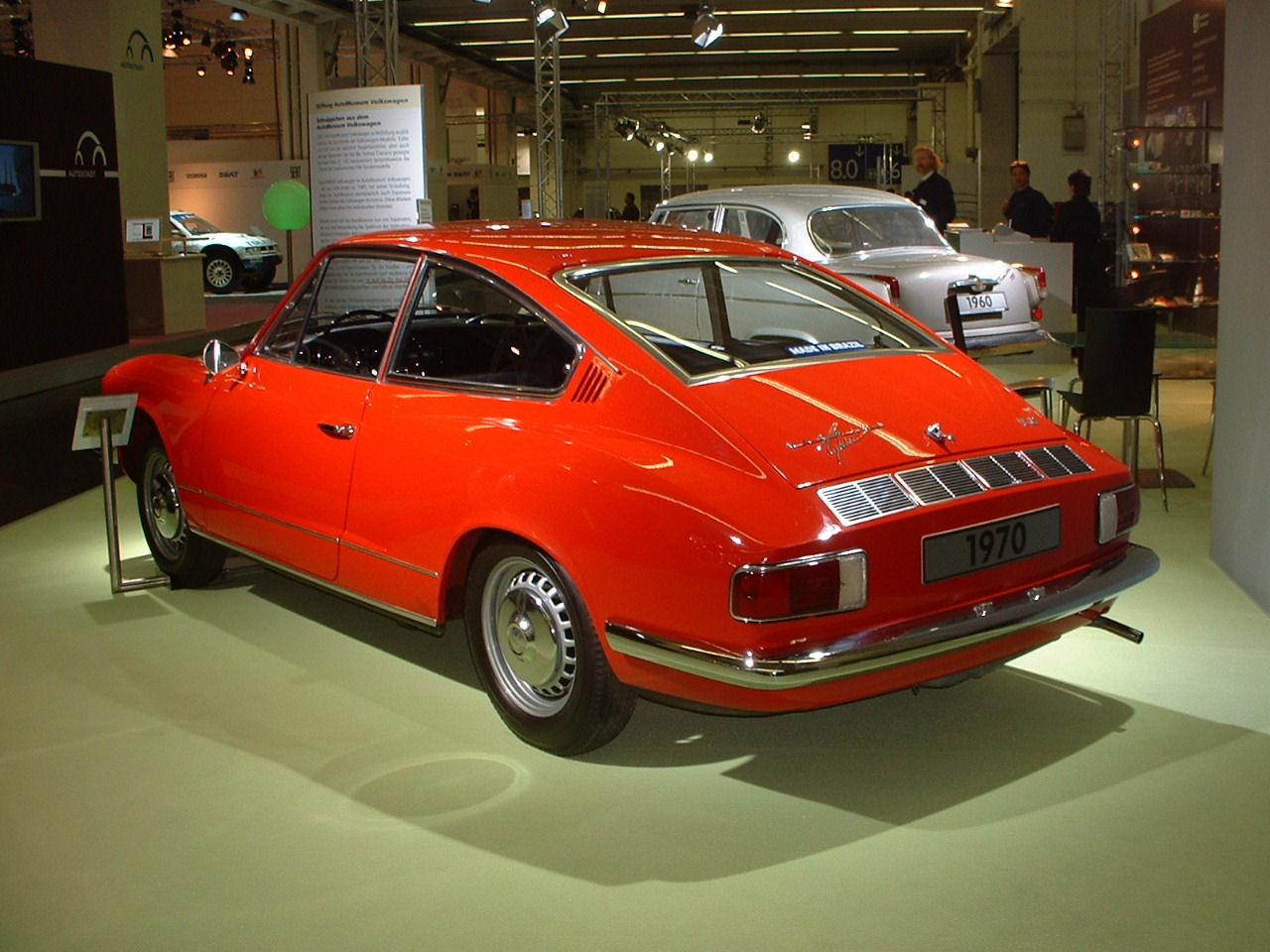
The Type 34 used the floorpan and drivetrain of the Volkswagen Type 3 instead. Its sharp-edged body earned its British nickname, and from 1962 it offered an electric sliding steel sunroof, one of the first cars in the world with this option. A convertible Type 34 never reached production; only 17 prototypes were built. The Brazilian TC (Touring Coupé, Type 145) of 1972–1975 was a third design, styled at Ghia by Giorgetto Giugiaro on the Type 3 / Variant platform.

Engines and drivetrain
| Engine | Model | Power | Notes |
|---|---|---|---|
| 1,192 cc flat-four | Type 14 | 25 kW (34 PS) at 3,600 rpm | 120 km/h, 820 kg |
| 1,295 cc flat-four (modified) | Type 14 | 37 kW (50 PS) at 4,200 rpm | 150 km/h, as listed in the source |
| 1,500 cc flat-four | Type 14 (from 1967), Type 34 | - | - |
| 1,584 cc flat-four | Type 14 (final) | 45 kW (61 PS) | - |
| 1,584 cc flat-four | TC (Brazil) | 48 kW (65 hp) at 4,600 rpm | 138 km/h |
All engines are air-cooled flat-fours mounted at the rear and driving the rear wheels. The Karmann Ghia was never fast: with the first engine it reached 120 km/h, and English Wikipedia compares the Brazilian TC's 138 km/h with 116 km/h for a Type 14. Our power converter translates the PS figures into kW and hp.
Karmann Ghia specifications
| Parameter | Metric | Imperial |
|---|---|---|
| Length × width × height (Type 14, 1.2) | 4,140 × 1,630 × 1,330 mm | 163.0 × 64.2 × 52.4 in |
| Wheelbase | 2,400 mm | 94.5 in |
| Kerb weight (Type 14, 1.2) | 820 kg | 1,808 lb |
| Engine | air-cooled flat-four, rear | - |
| Power | 25–45 kW (34–61 PS) | - |
| Top speed (1.2) | 120 km/h | 75 mph |
| Platform | Beetle (Type 14), Type 3 (Type 34, TC) | - |
Production numbers
| Model | Place | Years | Built |
|---|---|---|---|
| Type 14 coupé | Germany | 1955–1974 | 364,401 |
| Type 14 cabriolet | Germany | to 1974 | 80,837 |
| Type 34 coupé | Germany | 1962–1969 | 42,505 (+ 17 prototype convertibles) |
| Type 14 coupé | Brazil | 1962–1971 | 23,393 |
| Type 14 cabriolet | Brazil | - | 177 |
| TC (Type 145) | Brazil | 1972–1975 | 18,119 |
The German Type 14 accounts for 445,238 cars, the bulk of all Karmann Ghias. Of the 529,432 cars in the three groups of the table, about 84% are German Type 14s, 8% Type 34s and 8% Brazilian cars. Over roughly nineteen years, Osnabrück averaged more than 22,000 Type 14s a year. Coupés outnumbered cabriolets by about four and a half to one. English Wikipedia also mentions a figure of 41,600 Type 34s for South America, which conflicts with the Brazilian table; the table is used here.

The Karmann Ghia in numbers
The figures in the source also show how modest the car's performance was, and how much it changed. Engine power grew from 25 kW (34 PS) to 45 kW (61 PS), an increase of 80% over the life of the Type 14. With the first engine and a weight of 820 kg, each kilowatt had to move about 33 kg, and with the 1,584 cc engine the ratio improved considerably.
The Type 34, the fastest Volkswagen of its day and up to twice the price of a Beetle, sold barely a tenth as many cars as the German Type 14. In Brazil the later TC was almost as successful as the original Type 14 coupé there: 18,119 against 23,393. Our power-to-weight calculator compares such figures with any other car.

Legacy
The infobox of English Wikipedia lists the Porsche 914, the Scirocco and the Brazilian SP2 as successors. The Scirocco, which arrived in late 1974, is covered in our Volkswagen Scirocco article. The car underneath the Karmann Ghia is described in the Volkswagen Beetle article, and the company's wider story in our history of Volkswagen.
Photo gallery


Image credits · Photos from Wikimedia Commons under free licences
- Volkswagen Karmann Ghia Type 14 · Photo: Oxyman / Wikimedia Commons, CC BY 2.5
Volkswagen Karmann Ghia in our rankings
- No. 1 of 79 · Lightest coupes (820 kg)
- No. 7 of 304 · Lightest cars (820 kg)
- No. 8 of 89 · Smallest coupes (4,140 mm)
- No. 68 of 420 · Smallest cars (4,140 mm · top 17%)
- No. 172 of 912 · Longest-running car nameplates (19 years · top 21%)
- No. 361 of 420 · Longest cars (4,140 mm · top 86%)
Lighter than 98% of ranked coupes in the 1CARS catalog (No. 1 of 79).
Volkswagen Karmann Ghia photos 6
FAQ
When was the Volkswagen Karmann Ghia produced?
The Type 14 from 1955 to 1974 in Osnabrück, the Type 34 from 1962 to 1969, and Brazilian versions from 1962 to 1975.
How many Karmann Ghias were built?
445,238 Type 14s in Germany (364,401 coupés and 80,837 cabriolets), 42,505 Type 34s and 41,689 cars in Brazil.
What engine does the Karmann Ghia have?
The Beetle's air-cooled rear flat-four: 1,192 cc with 25 kW (34 PS) at first, up to 1,584 cc with 45 kW (61 PS).
Who designed the Karmann Ghia?
Luigi Segre's team at Ghia, with Mario Boano, Sergio Coggiola and Giovanni Savonuzzi; the shape drew heavily on Virgil Exner's Chrysler concepts.
What replaced the Karmann Ghia?
The Golf-based Volkswagen Scirocco, from late 1974.
Data sources
Data checked by an editor against the sources below.