 Plymouth AAR Cuda
Specs, engines and history
Published Sources (1) Report an error
By Sarah Whitmore, Senior Automotive Writer
- Built
- 1970
- Top power
- 216 kW (294 PS)
Which AAR to choose
Our verdict · Sarah Whitmore
- For driving: a four-speed car, closest to the racing idea.
- For easy use: a TorqueFlite automatic with power steering.
- For the most power of the same year: a Hemi 'Cuda instead.
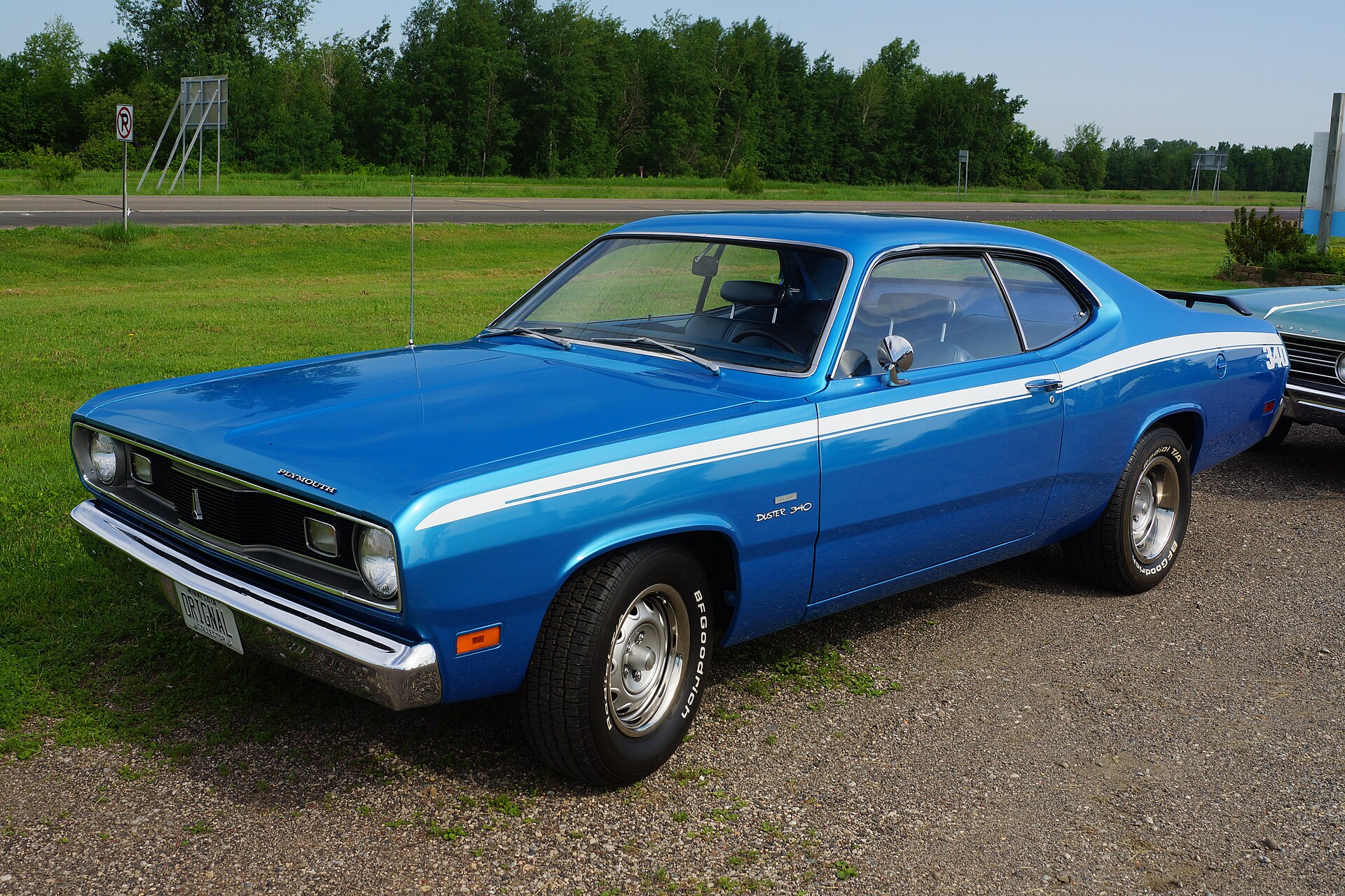
Plymouth's other small-block muscle car of 1970 was the Duster 340. All versions are in the Plymouth catalogue, and the American muscle car guide and car rankings compare the 'Cuda with its rivals.
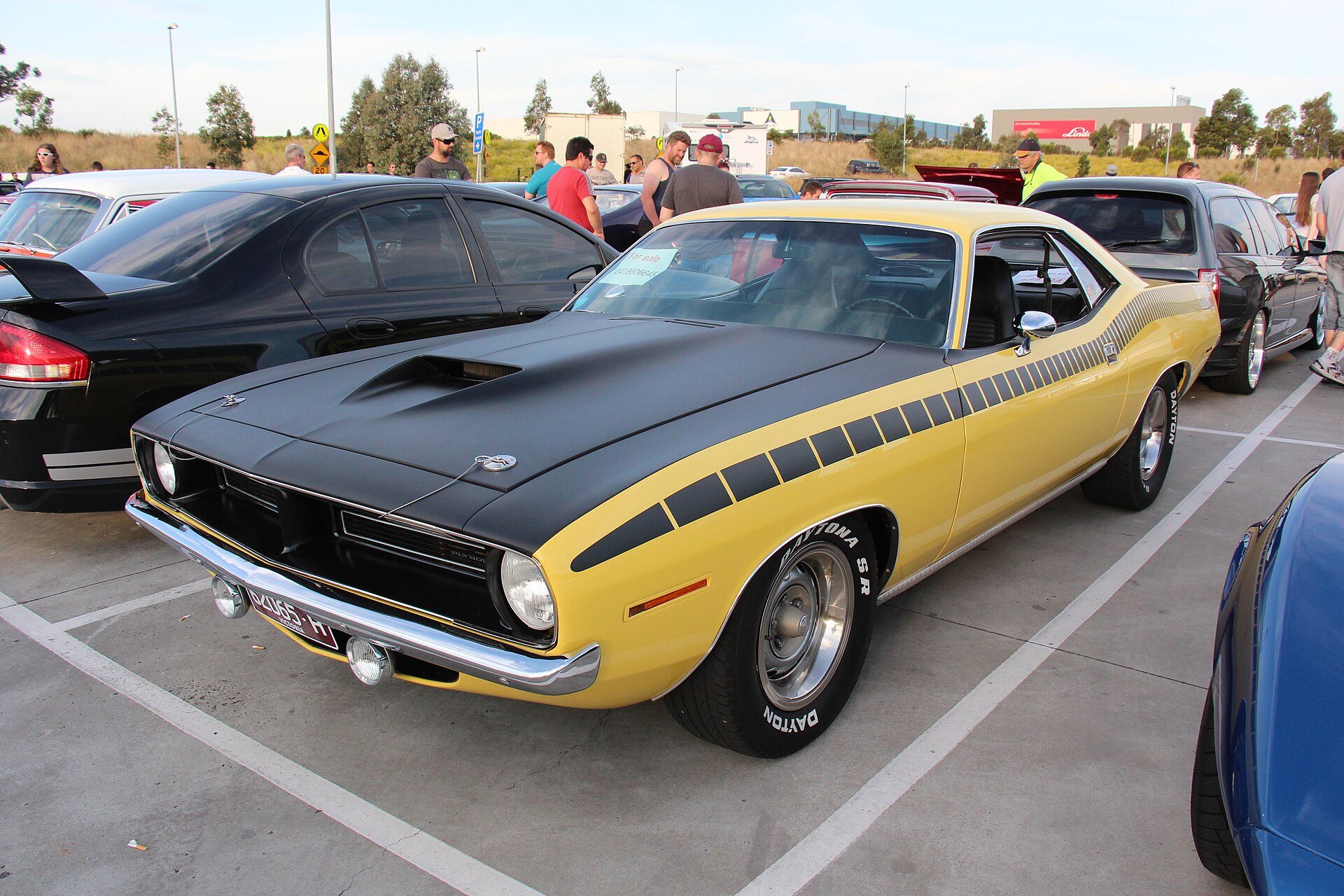
The Plymouth AAR 'Cuda was a 1970 version of the Barracuda built to qualify Plymouth's Trans-Am racing cars. AAR stands for All American Racers, Dan Gurney's team, which ran the factory 'Cudas that season. The road car had a 340 V8 with three two-barrel carburettors rated at 216 kW (290 hp, SAE gross), a strobe stripe, a glass-fibre bonnet and side exhausts. According to Street Muscle, Plymouth built 2,724 of them in March and April 1970.
In short
- One model year, one engine: the 340 "Six Barrel" V8 with a special block and heads.
- Street Muscle quotes 0–60 mph in 5.8 seconds and a quarter mile of 14.4 seconds for a car weighing just over 1,540 kg (3,400 lb).
- In the 1970 Trans-Am, Dan Gurney and Swede Savage took three pole positions but no wins; the best result was second at Road America.
- Its twin at Dodge was the Challenger T/A, built 2,399 times.
Specs by version
| Version | Engine | Power | Drive | Production years |
|---|---|---|---|---|
| 340 Six Barrel V8 (SAE gross) | 5.6 l · 8 cyl · Petrol 5,572 cc | 216 kW 294 PS290 hp | Rear-wheel drive | 1970 |
Verified Manufacturer and type-approval data from our catalog · Sources and methodology
AAR 'Cuda at a glance
| Specification | Plymouth AAR 'Cuda (1970) |
|---|---|
| Production | March–April 1970 (Street Muscle) |
| Built | 2,724 (Street Muscle); Wikipedia gives no separate figure |
| Body | two-door hardtop coupé |
| Platform | Chrysler E-body, wheelbase 2 in shorter than the Challenger's 110 in (about 2,743 mm) |
| Engine | 340 cu in (5.6 l) V8, three Holley two-barrel carburettors, Edelbrock intake |
| Power | 216 kW (290 hp, SAE gross) |
| Gearboxes | A-833 four-speed manual or three-speed TorqueFlite automatic |
| Rear axle | 8.75-inch Sure-Grip, 3.55:1 (3.91:1 at no cost) |
| Weight | just over 1,540 kg (3,400 lb) |
The AAR 'Cuda is a version of the third-generation Plymouth Barracuda, the E-body car of 1970–1974; the catalogue lists it on its own.
Why Plymouth built it
The Trans-Am Series began in 1966, and its rules obliged manufacturers to sell limited road versions of the cars they raced. For 1970 Chrysler joined with two brands: Dodge with the Challenger and Plymouth with the 'Cuda. Plymouth's racing programme went to Dan Gurney's All American Racers, and the road car took the team's initials.
The race cars had to stay under the series limit of 305 cubic inches, so their 340 was destroked to 303.8 cubic inches; Street Muscle puts its output at more than 343 kW (460 hp). The road car kept the full 340 displacement, but with the special block and cylinder heads.

Engine and drivetrain
The street 340 used its own block and heads, an Edelbrock intake manifold and three Holley two-barrel carburettors. Wikipedia calls the set-up "Six Barrel", Plymouth's name for it; Street Muscle uses Dodge's term, "Six Pack". The official rating was 216 kW (290 hp, SAE gross), and Street Muscle notes that estimates ran to more than 239 kW (320 hp).
Buyers could choose the A-833 four-speed manual or the three-speed TorqueFlite automatic. The rear axle was an 8.75-inch Sure-Grip unit with a 3.55:1 ratio as standard and 3.91:1 as a no-cost option.
| AAR 'Cuda drivetrain | Street car | Race car (1970 Trans-Am) |
|---|---|---|
| Displacement | 340 cu in (5.6 l) | 303.8 cu in (5.0 l) |
| Induction | three two-barrel carburettors | not given in the sources |
| Output | 216 kW (290 hp, gross) | more than 343 kW (460 hp), per Street Muscle |

Chassis, body and the strobe stripe
Street Muscle lists a chassis set-up that went well beyond a regular 'Cuda: stiffer dampers, heavy-duty front torsion bars, stronger rear leaf springs and larger anti-roll bars, with power front disc brakes and bigger rear drums. The wheels were 15 × 7-inch Rallye rims with Goodyear Polyglas GT tyres. Manual steering was standard; power assistance with a quicker ratio cost extra.
The look was pure race car:
- a matte black glass-fibre bonnet, whatever the body colour, with a central NACA-style scoop feeding the carburettors;
- the AAR strobe stripe along the side;
- a ducktail rear spoiler and front spoilers;
- side exhausts exiting just ahead of the rear wheels.
With all that, the AAR 'Cuda weighed just over 1,540 kg (3,400 lb). Street Muscle quotes 0–60 mph in 5.8 seconds and a quarter mile in 14.4 seconds.

Racing: Gurney, Savage and the 1970 Trans-Am
Dan Gurney and Swede Savage drove identical factory-backed AAR 'Cudas in the 1970 Trans-Am Series. The cars took three pole positions, but Street Muscle notes that mechanical problems held them back, and they won no races. The best finish was second place at Road America. Chrysler withdrew from the Trans-Am after that one season, and Wikipedia records that no 1971 AAR 'Cuda was built.
AAR 'Cuda and Challenger T/A
| Specification | Plymouth AAR 'Cuda | Dodge Challenger T/A |
|---|---|---|
| Wheelbase | about 2,743 mm (108 in) | 2,794 mm (110 in) |
| Engine | 340 Six Barrel V8 | 340 Six Pack V8 |
| Power (SAE gross) | 216 kW (290 hp) | 216 kW (290 hp) |
| Race team | All American Racers (Gurney, Savage) | Autodynamics (Posey, Adamowicz) |
| Built | 2,724 (Street Muscle) | 2,399 (Street Muscle) |
| Best 1970 race result | second, Road America | top-three finishes, per Wikipedia |
The two cars shared the three-carburettor 340 and the same purpose, on two different wheelbases.
The AAR 'Cuda in the 1970 range
Plymouth built 48,867 Barracudas of all versions in 1970. The AAR was the only 'Cuda with Trans-Am bodywork; the most powerful version of the year was the Hemi 'Cuda.

Buying an AAR 'Cuda
- Engine: the three-carburettor 340 with the special block and heads should be present; a regular 340 four-barrel car with stripes is not an AAR.
- Bonnet: glass-fibre with a central scoop, finished in matte black on every car.
- Exhaust: side outlets in front of the rear wheels.
- Date: production ran only in March and April 1970, per Street Muscle.
- Transmission and axle: four-speed A-833 or TorqueFlite, 8.75-inch Sure-Grip axle.
Photo gallery

Plymouth AAR Cuda in our rankings
- No. 114 of 557 · Biggest engines: cars (5,572 cc · top 21%)
- No. 70 of 173 · Biggest engines: coupes (5,572 cc · top 41%)
- No. 41 of 88 · Most powerful cars of the 1970s (216 kW · top 47%)
- No. 450 of 859 · Most powerful cars (216 kW · top 53%)
- No. 103 of 154 · Most powerful American cars (216 kW · top 67%)
- No. 232 of 313 · Most powerful coupes (216 kW · top 75%)
Bigger engine than 79% of ranked cars in the 1CARS catalog (No. 114 of 557).
FAQ
What does AAR mean on the 'Cuda?
All American Racers, Dan Gurney's racing team, which ran Plymouth's Trans-Am cars in 1970.
How many AAR 'Cudas were built?
2,724, according to Street Muscle; Wikipedia gives no separate figure.
How much power did the AAR 'Cuda have?
216 kW (290 hp, SAE gross) from a 340 V8 with three two-barrel carburettors; Street Muscle notes estimates of more than 239 kW (320 hp).
Did the AAR 'Cuda win in the Trans-Am?
No. It took three pole positions in 1970, and its best finish was second at Road America.
Was there a 1971 AAR 'Cuda?
No. Chrysler left the Trans-Am Series after 1970, and no 1971 AAR 'Cuda was built.
Data sources
Data checked by an editor against the sources below.