 Ford Ka
All generations, specs and history
Published Sources (2) Report an error
By Sarah Whitmore, Senior Automotive Writer
- Built
- 1996–2021
- Generations
- 3
- Top power
- 70 kW (95 PS)
Timeline
Ka generations
Click a generation for its own page


II and + overlapped in 2014–2016, so + sits on a second lane
- Ka I 1996–2008 · Hatchback, Roadster · 36–70 kW (49–95 PS)
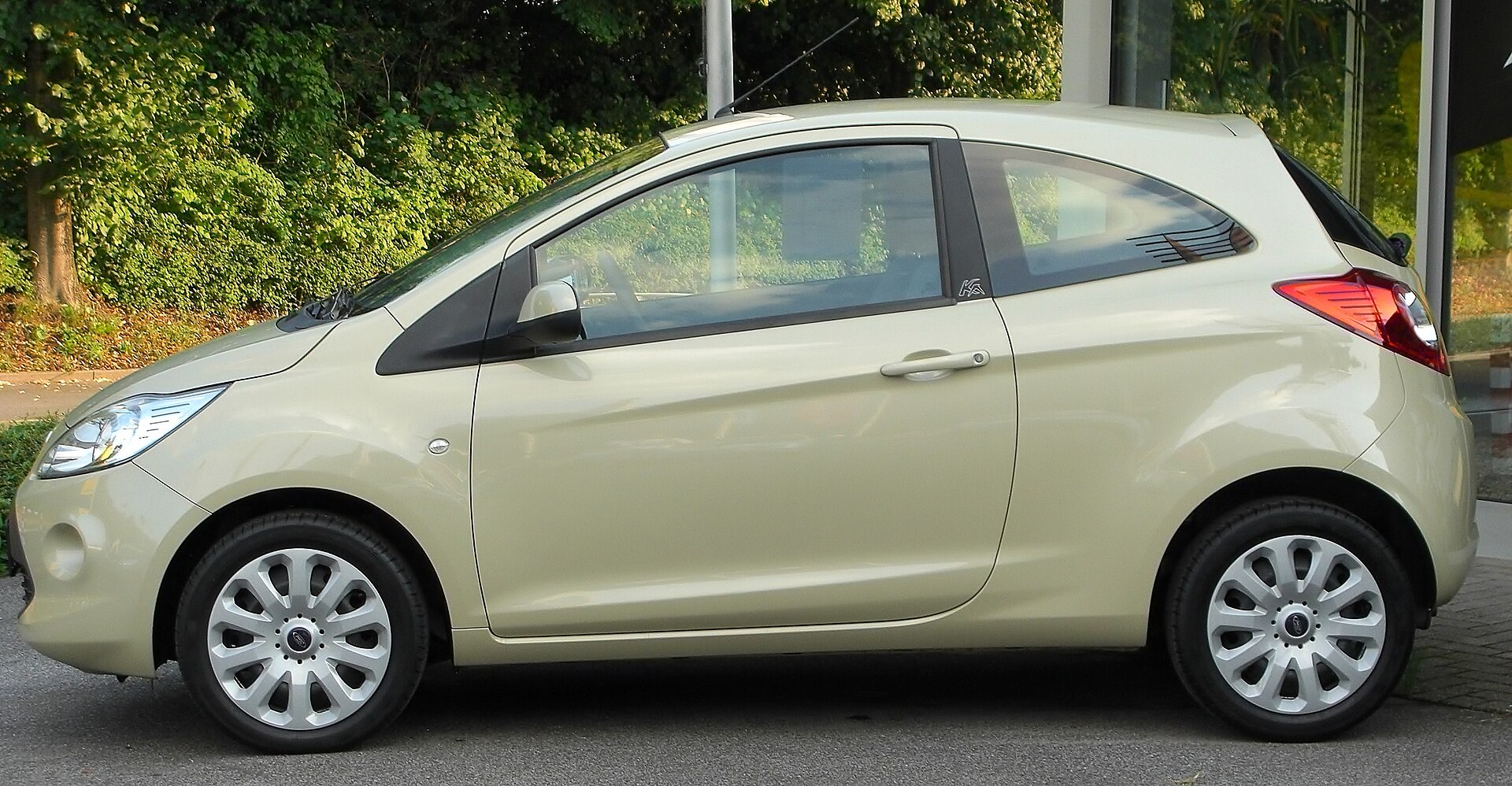
- Ka II 2008–2016 · Hatchback · 51–55 kW (69–75 PS)
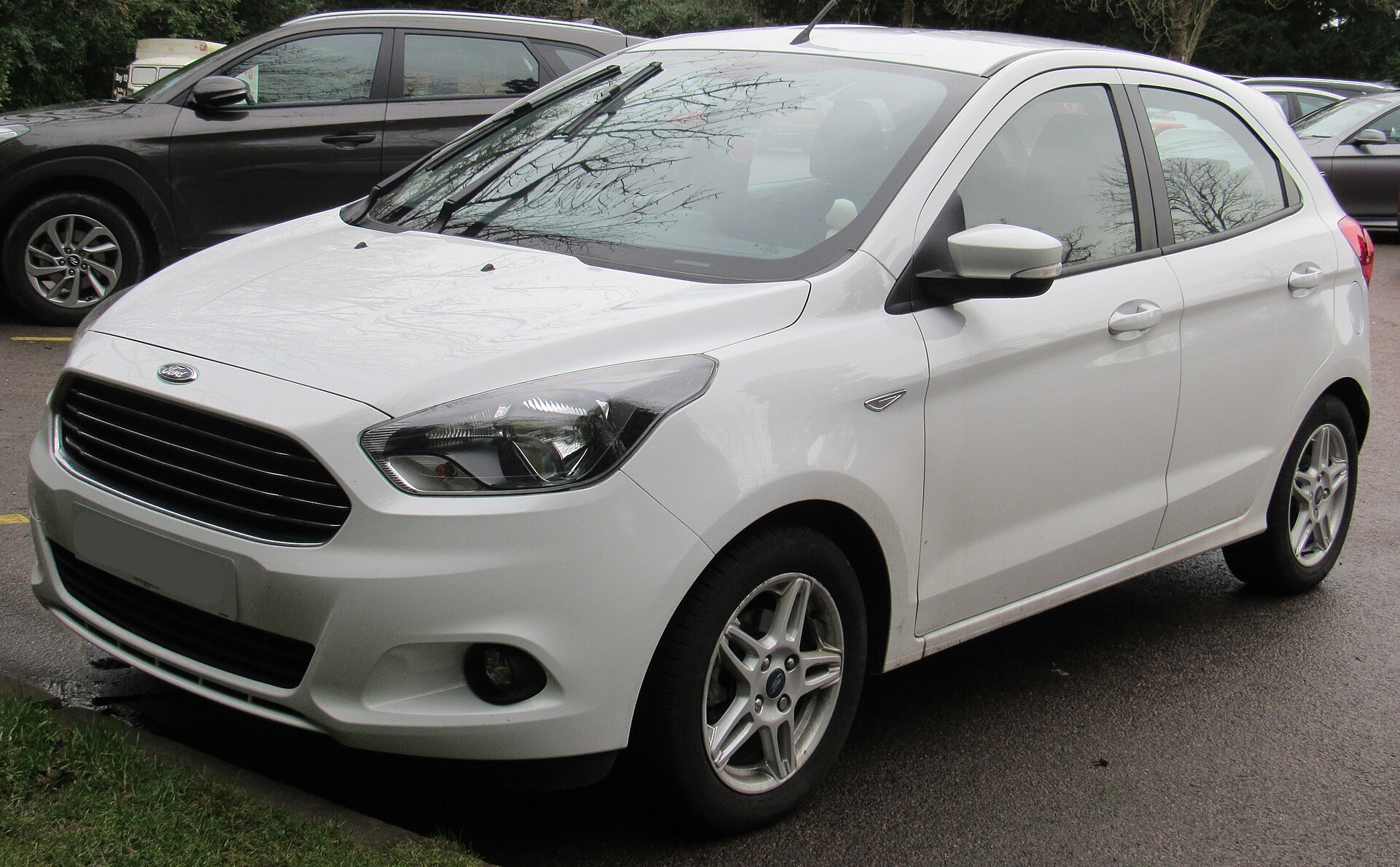
- Ka+ 2014–2021 · Hatchback · 51–70 kW (69–95 PS)
Newest first · 3 generations since 1996
-
2014
-
2008
-
1996
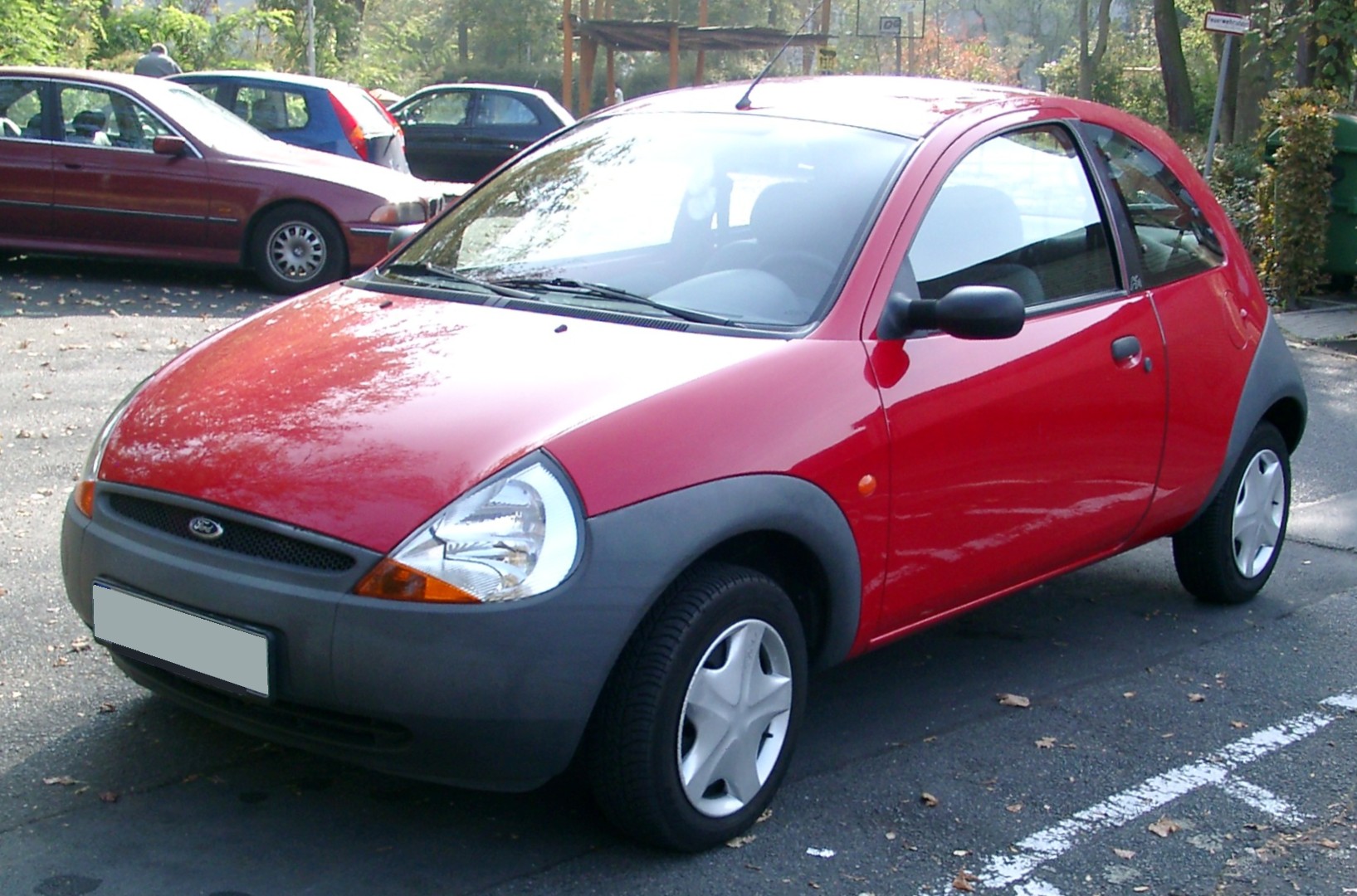
All generations by year: Ka+ (2014–2021) · Ka II (2008–2016) · Ka I (1996–2008)
Which one is mine?
Pick the year of first registration to see which generation it is.
Check by VINWhich Ka to choose
Our verdict · Sarah Whitmore
- For the lowest price: a second-generation 1.2 with 51 kW, mechanically close to the Fiat 500 and with four Euro NCAP stars.
- For a classic with character: a late first-generation car with the 1.3 Duratec, or a SportKa with 70 kW.
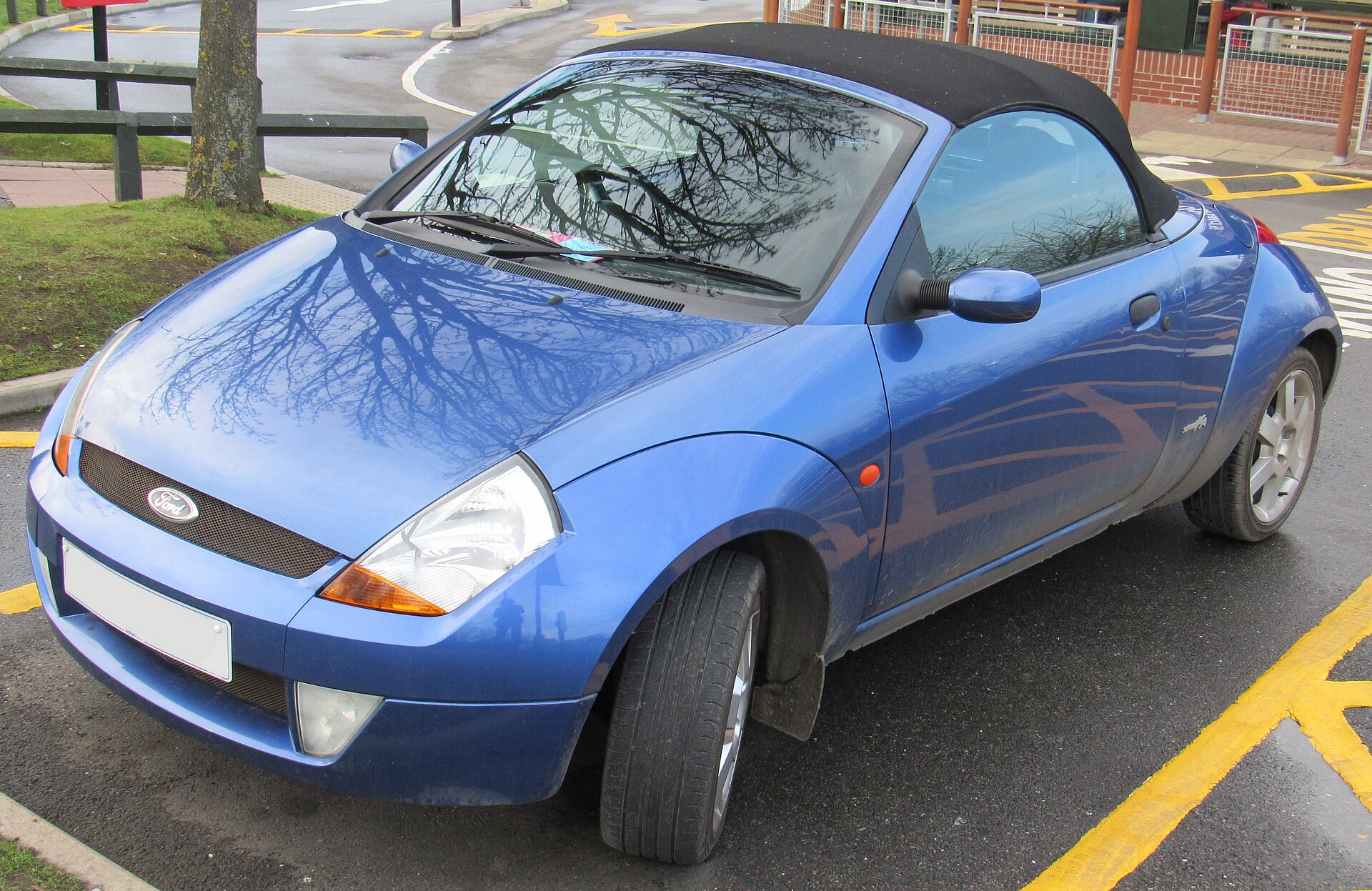
- For open-air driving: the StreetKa roadster, of which 37,076 were built.
- For space: the five-door Ka+, the only Ka with rear doors and a 1.5 TDCi diesel option.
Other small Fords and the rest of the range are listed in the Ford catalogue. The power converter gives PS and hp for every kW figure above.
The Ford Ka is Ford's smallest European car, sold from 1996 to 2020 in three quite different generations. The first, built in Valencia, introduced Ford's New Edge styling. The second, from 2008, was built by Fiat in Poland alongside the Fiat 500. The third, the five-door Ka+, came from India from 2016. Power ranged from 36 to 70 kW, and a German Ka cost from 18,150 Deutschmarks (about €9,280) at its 1996 launch.
In short
- Ka I (1996–2008): Fiesta-based three-door hatch from Almussafes, about 1.5 million sold; SportKa and Pininfarina-built StreetKa.
- Ka II (2008–2016): developed with Fiat on the Fiat 500 base and built in Tychy, Poland; 51 kW petrol and 55 kW diesel.
- Ka+ (2016–2020 in Europe): five-door hatchback from Sanand, India, with 51–70 kW.
- Euro NCAP: three stars (2000), four stars (2008) and three stars (2017).
Size at a glance
Ford Ka II
The Ford Ka+ is 321 mm longer, 46 mm wider and 18 mm taller than the Ford Ka II.
| Dimensions | Ford Ka+ | Ford Ka II | Difference |
|---|---|---|---|
| Length | 3,941 mm155.2 in | 3,620 mm142.5 in | +321 mm+12.6 in |
| Width | 1,704 mm67.1 in | 1,658 mm65.3 in | +46 mm+1.8 in |
| Height | 1,524 mm60.0 in | 1,506 mm59.3 in | +18 mm+0.7 in |
| Wheelbase | 2,489 mm98.0 in | 2,300 mm90.6 in | +189 mm+7.4 in |
| Boot | 270 L9.5 cu ft | 224 L7.9 cu ft | +46 L+1.6 cu ft |
Specs by version
Engines
| Version | Engine | Power | Drive | Production years |
|---|---|---|---|---|
| Diesel · 2 versions | ||||
| Ka II · 1.3 TDCi | 4 cyl · Diesel | 55 kW 75 PS74 hp | Front-wheel drive | 2008–2013 |
| Ka+ · 1.5 TDCi | 4 cyl · Diesel | 70 kW 95 PS94 hp | Front-wheel drive | 2018–2019 |
| Petrol · 11 versions | ||||
| Ka I · 1.3 Endura-E 37 kW | 1.3 l · 4 cyl · Petrol 1,300 cc | 37 kW 50 PS50 hp | Front-wheel drive | 1996–1999 |
| Ka I · 1.3 Duratec 44 kW | 4 cyl · Petrol | 44 kW 60 PS59 hp | Front-wheel drive | 2002–2008 |
| Ka I · 1.3 Endura-E 44 kW | 1.3 l · 4 cyl · Petrol 1,300 cc | 44 kW 60 PS59 hp | Front-wheel drive | 1996–2002 |
| Ka I · 1.3 Duratec 51 kW | 4 cyl · Petrol | 51 kW 69 PS68 hp | Front-wheel drive | 2002–2008 |
| Ka I · SportKa 1.6 Duratec | 4 cyl · Petrol | 70 kW 95 PS94 hp | Front-wheel drive | 2003–2008 |
| Ka I · StreetKa 1.6 Duratec | 4 cyl · Petrol | 70 kW 95 PS94 hp | Front-wheel drive | 2003–2005 |
| Ka II · 1.2 | 4 cyl · Petrol | 51 kW 69 PS68 hp | Front-wheel drive | 2008–2016 |
| Ka+ · 1.2 Ti-VCT 70 | 4 cyl · Petrol | 51 kW 69 PS68 hp | Front-wheel drive | 2016–2018 |
| Ka+ · 1.2 three-cylinder 52 kW | 3 cyl · Petrol | 52 kW 71 PS70 hp | Front-wheel drive | 2018 |
| Ka+ · 1.2 Ti-VCT 85 | 4 cyl · Petrol | 63 kW 86 PS84 hp | Front-wheel drive | 2016–2018 |
| Ka+ · 1.2 three-cylinder 63 kW | 3 cyl · Petrol | 63 kW 86 PS84 hp | Front-wheel drive | 2018 |
Performance
Show all 5 versions
| Version | CO₂ |
|---|---|
| Diesel · 1 version | |
| Ka+ · 1.5 TDCi | 124 g/km |
| Petrol · 4 versions | |
| Ka+ · 1.2 Ti-VCT 70 | 130 g/km |
| Ka+ · 1.2 three-cylinder 52 kW | 130 g/km |
| Ka+ · 1.2 Ti-VCT 85 | 133 g/km |
| Ka+ · 1.2 three-cylinder 63 kW | 133 g/km |
Dimensions and weight
Show all 6 versions
| Version | Length | Width | Height | Wheelbase | Kerb weight | Boot |
|---|---|---|---|---|---|---|
| Diesel · 1 version | ||||||
| Ka+ · 1.5 TDCi | - | - | - | - | 1,198 kg2,641 lb | - |
| Petrol · 5 versions | ||||||
| Ka II · 1.2 | 3,620 mm142.5 in | 1,658 mm65.3 in | 1,506 mm59.3 in | 2,300 mm90.6 in | 1,015 kg2,238 lb | 224 l7.9 cu ft |
| Ka+ · 1.2 Ti-VCT 70 | 3,941 mm155.2 in | 1,704 mm67.1 in | 1,524 mm60.0 in | 2,489 mm98.0 in | 1,055 kg2,326 lb | 270 l9.5 cu ft |
| Ka+ · 1.2 three-cylinder 52 kW | - | - | - | - | 1,135 kg2,502 lb | - |
| Ka+ · 1.2 Ti-VCT 85 | - | - | - | - | 1,141 kg2,515 lb | - |
| Ka+ · 1.2 three-cylinder 63 kW | - | - | - | - | 1,144 kg2,522 lb | - |
Verified Manufacturer and type-approval data from our catalog · Sources and methodology
Ford Ka at a glance
| Parameter | Ka I | Ka II | Ka+ |
|---|---|---|---|
| Production | 09/1996–08/2008 | 07/2008–spring 2016 | 2016–2020 (Europe) |
| Plant | Almussafes, Valencia, Spain | Fiat plant, Tychy, Poland | Sanand, India |
| Base | Fiesta Mk3 platform | Fiat 500 | own five-door design |
| Body | three-door hatchback | three-door hatchback | five-door hatchback |
| Petrol engines | 1.3 Endura-E / Duratec, 1.6 (SportKa) | 1.2 Fire | 1.2 Ti-VCT, later 1.2 three-cylinder |
| Power | 36–70 kW | 51–55 kW | 51–70 kW |
| Euro NCAP | three stars (2000) | four stars (2008) | three stars (2017) |
First generation (1996–2008): New Edge city car
Ford introduced the Ka on 11 September 1996. It used the platform of the third Fiesta and was built on the existing Fiesta line at Almussafes near Valencia. The styling, overseen by Jack Telnack and drawn by Claude Lobo, was the first example of Ford's New Edge design. The styling drew mixed reactions at first.
At launch the only engine was a 1.3-litre Endura-E overhead-valve four-cylinder with 37 or 44 kW. The weaker version dropped to 36 kW in October 1998 and left the range in August 1999. At the end of 2002 a 1.3 Duratec overhead-cam engine with 44 or 51 kW took over. In Germany the 44 kW car cost 18,150 DM (about €9,280) in 1996, the 37 kW version 16,750 DM (about €8,560).
The Ka stayed in production for an unusually long twelve years. Ford built the millionth car in 2002 and sold about 1.5 million in total. In the UK alone, 17,000 Kas found buyers in 2006, and it led its class there for several years. The 2006 German base price was €9,300, rising to €9,600 in 2007; a Ka Student edition of January 2005 cost €7,990. Euro NCAP awarded three stars in October 2000. The tested European car had no passenger or side airbags.
| Engine | Years | Power |
|---|---|---|
| 1.3 Endura-E | 1996–1999 | 37 kW, later 36 kW |
| 1.3 Endura-E | 1996–2002 | 44 kW |
| 1.3 Duratec | 2002–2008 | 44 or 51 kW |
| 1.6 Duratec (SportKa, StreetKa) | 2003–2008 | 70 kW (95 PS) |

SportKa and StreetKa
Two derivatives used a 1.6-litre Duratec with 70 kW (95 PS). The SportKa was a sportier three-door, advertised as "the Ka's evil twin". The StreetKa was a two-seat roadster, first shown as a study in 2000. Pininfarina built 37,076 StreetKas between 2003 and 2005. Advertising for both cars caused controversy at the time.
Second generation (2008–2016): built with the Fiat 500
For the second Ka, Ford joined forces with Fiat. Production began on 18 July 2008 at Fiat's plant in Tychy, Poland, on the same line as the Fiat 500. Each model was built at a rate of about 120,000 cars a year. The Ka shares the 500's technical base. More on the Italian twin is in our Fiat 500 article.
| Engine | Power | Notes |
|---|---|---|
| 1.2 petrol (Fiat Fire) | 51 kW (69 PS) | petrol, 2008–2016 |
| 1.3 TDCi diesel | 55 kW (75 PS) | with particulate filter, dropped at the end of 2013 |
German prices at launch started at €9,750 for the Trend petrol and €10,750 for the Titanium, with the diesel costing €2,000 more. In 2012 the Trend cost €10,900. A price cut at the end of 2013 brought the range to €9,140 for the Ambiente, €9,640 for the Trend and €11,140 for the Titanium. Euro NCAP gave four stars in November 2008; the tested car had no side airbags. A sporty Ka ST and a Ka CC convertible were announced but never built.
Production ended in spring 2016: on 20 May according to English Wikipedia, in April according to the German article.


Ka+ (2016–2020): the five-door from India
The third car was a larger five-door hatchback, built in Brazil and India and sold in Europe as the Ka+. Europe received cars from a purpose-built plant in Sanand, Gujarat, India. The Ka+ was presented in June 2016 and delivered from mid-October 2016. German prices started at €9,990 in 2016, or €11,400 for the Cool&Sound version with air conditioning and Ford Sync.
- 2016 launch: 1.2 Ti-VCT Duratec petrol with 51 kW (70 PS) or 63 kW (85 PS).
- 2018 facelift: a new 1.2 three-cylinder with 52 or 63 kW, a 1.5 TDCi diesel with 70 kW (until April 2019) and the crossover-styled Ka+ Active. The diesel's 70 kW was 33 kW more than the 37 kW of the 1996 base Ka.
Euro NCAP tested the Ka+ in March 2017 and gave three stars. It scored 73 % for adult occupants, 61 % for children, 57 % for pedestrians and 29 % for safety assistance; Euro NCAP called the result mediocre. Ford ended European sales of the Ka+ in January 2020, while Brazilian production went on into 2021. Our garage-fit tool helps to compare the three generations' dimensions with a parking space.

The Ka in South America
South American Kas of the first generation came from São Bernardo in Brazil. The Brazilian Ka launched in December 2007 was still based on the first-generation chassis and had 1.0 and 1.6 flex-fuel engines. The Brazilian version of the third generation was built at Camaçari until 13 January 2021, with a 59 kW (80 PS) 1.0 three-cylinder and a 77 kW (105 PS) 1.5.
Photo gallery

Ford Ka evolution in numbers
Did you know?
- The Ford Ka ran for 25 years, from 1996 to 2021, over 3 generations in our catalog.
- The longest-running generation is the Ka I (1996–2008): 12 years.
- The biggest jump in power came with the Ka+: up to 70 kW (95 PS), 15 kW more than the Ka II.
Most powerful version, kW
Figures from the 1cars catalog: power is the strongest version of each generation; generations without the figure are left out.
Ford Ka: first vs latest generation
| Spec | Ka I | Ka+ | Change |
|---|---|---|---|
| Years | 1996–2008 | 2014–2021 | 18 years apart |
| Most powerful version | 70 kW (95 PS) | 70 kW (95 PS) | same (0%) |
Oldest and newest generation in the 1cars catalog. Power is the strongest version of each; other rows are shown only when both generations have the figure.
Image credits · Photos from Wikimedia Commons under free licences
- Ford Ka+ · Photo: Vauxford / Wikimedia Commons, CC BY-SA 4.0
Ford Ka in our rankings
- No. 7 of 67 · Smallest hatchbacks (3,620 mm)
- No. 7 of 53 · Lightest hatchbacks (1,015 kg)
- No. 9 of 420 · Smallest cars (3,620 mm)
- No. 24 of 304 · Lightest cars (1,015 kg · top 8%)
- No. 104 of 912 · Longest-running car nameplates (25 years · top 13%)
- No. 164 of 345 · Cars with the most generations (3 generations · top 68%)
Shorter than 97% of ranked cars in the 1CARS catalog (No. 9 of 420).
FAQ
Is the Ford Ka based on the Fiat 500?
Only the second generation (2008–2016). It was built alongside the Fiat 500 in Tychy, Poland, and shares its technical base.
How many Ford Ka were made?
About 1.5 million of the first generation were sold from 1996 to 2008. Totals for the later generations are not published.
Where was the Ford Ka built?
The first generation in Almussafes, Spain, the second in Tychy, Poland, and the European Ka+ in Sanand, India.
When did Ford stop selling the Ka in Europe?
In January 2020, when sales of the Ka+ ended. The Brazilian Ka was built until January 2021.
What engine does the SportKa have?
A 1.6-litre Duratec four-cylinder with 70 kW (95 PS), also used in the StreetKa.
Data sources
Data checked by an editor against the sources below.
- Wikipedia - Ford Ka
- EEA CO₂ monitoring (European Environment Agency, CC BY 4.0)