
 Hyundai i30
All generations, specs and history
Published Sources (1) Report an error
By Felix Hartmann, Automotive Technology & EV Contributor
- Built
- 2007–present
- Generations
- 3
- New price
- from about €17,450 (2016)
- Used price today
- about €9,000–17,000 (AutoScout24, Nov 2026)
Timeline
i30 generations
Click a generation for its own page


- i30 I 2007–2011 · Hatchback, Station wagon
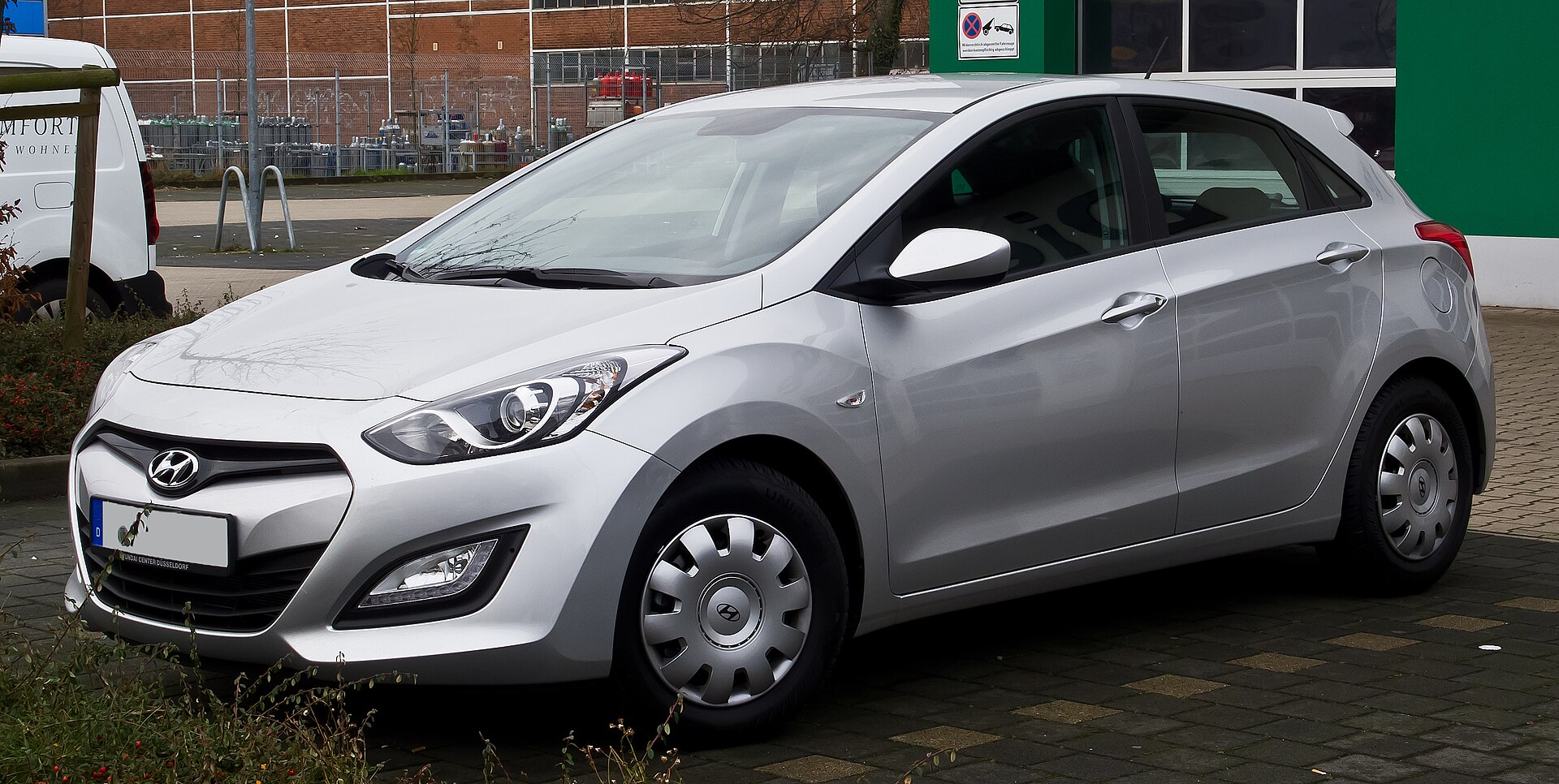
- i30 II 2011–2016 · Hatchback, Station wagon
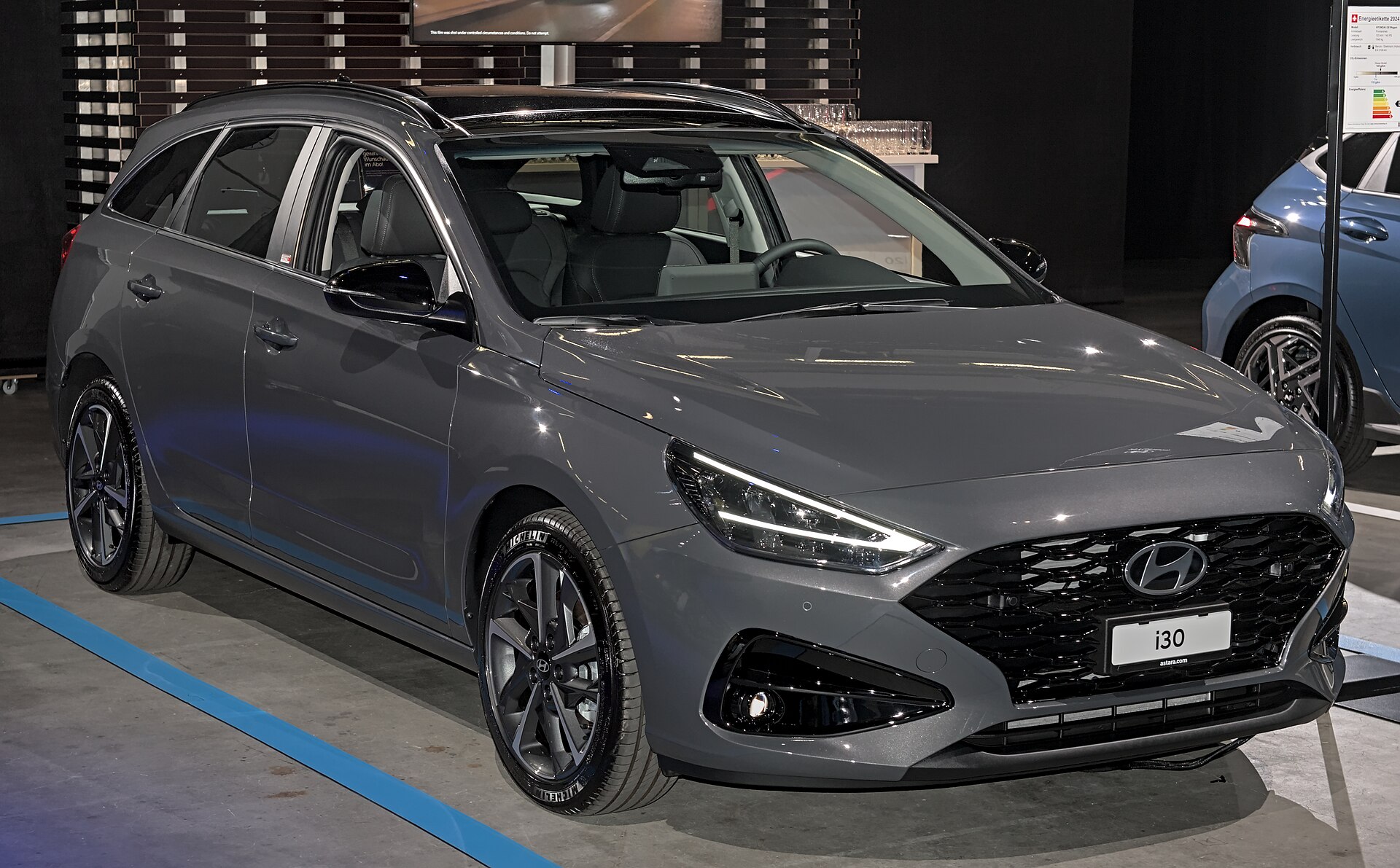
- i30 III Current 2016–now · Hatchback, Liftback
Newest first · 3 generations since 2007
-
2016
-
2011
-
2007
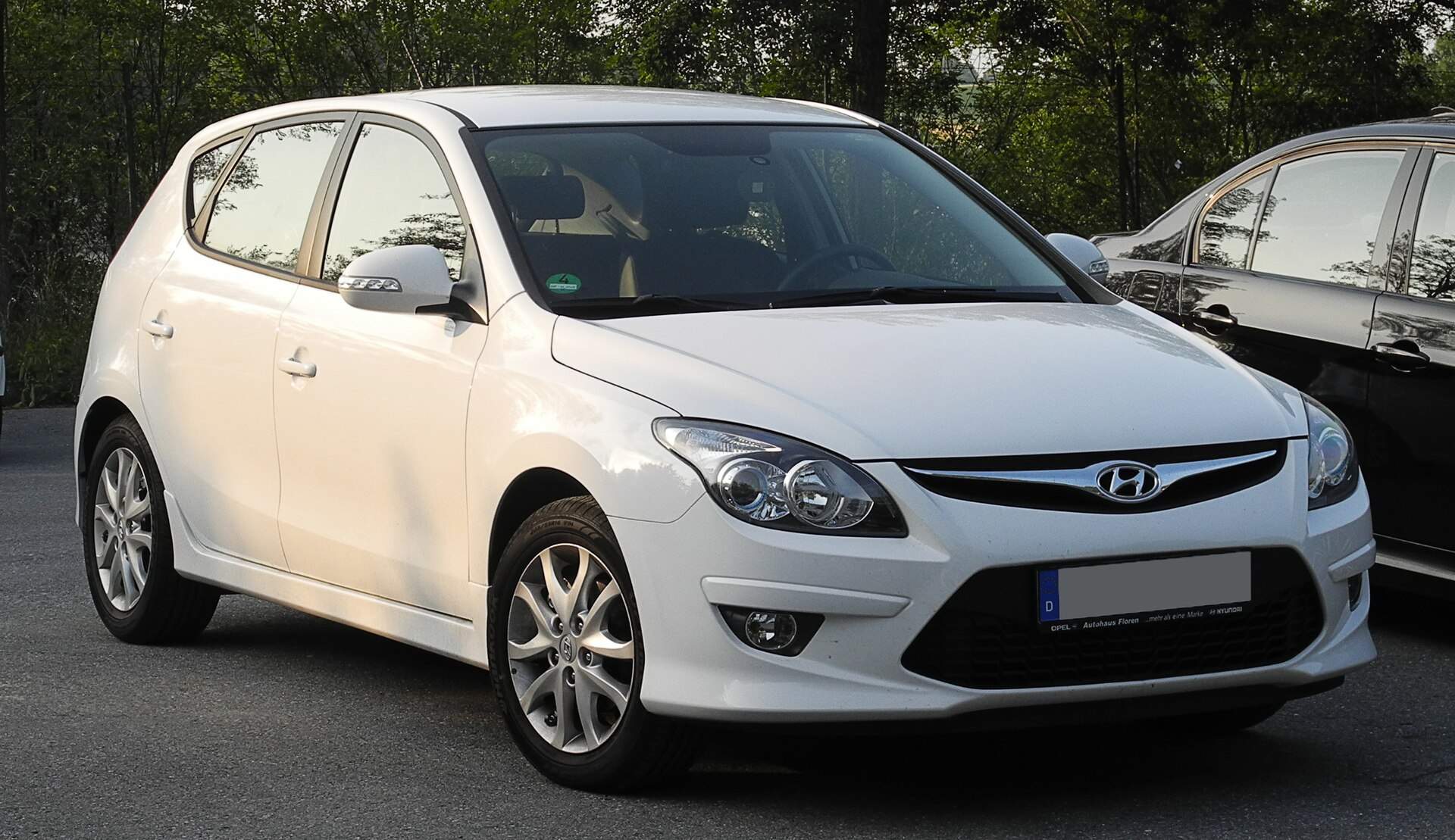
All generations by year: i30 III (2016–now) · i30 II (2011–2016) · i30 I (2007–2011)
Which one is mine?
Pick the year of first registration to see which generation it is.
- i30 III 2016–present
- i30 II 2011–2016
- i30 I 2007–2011
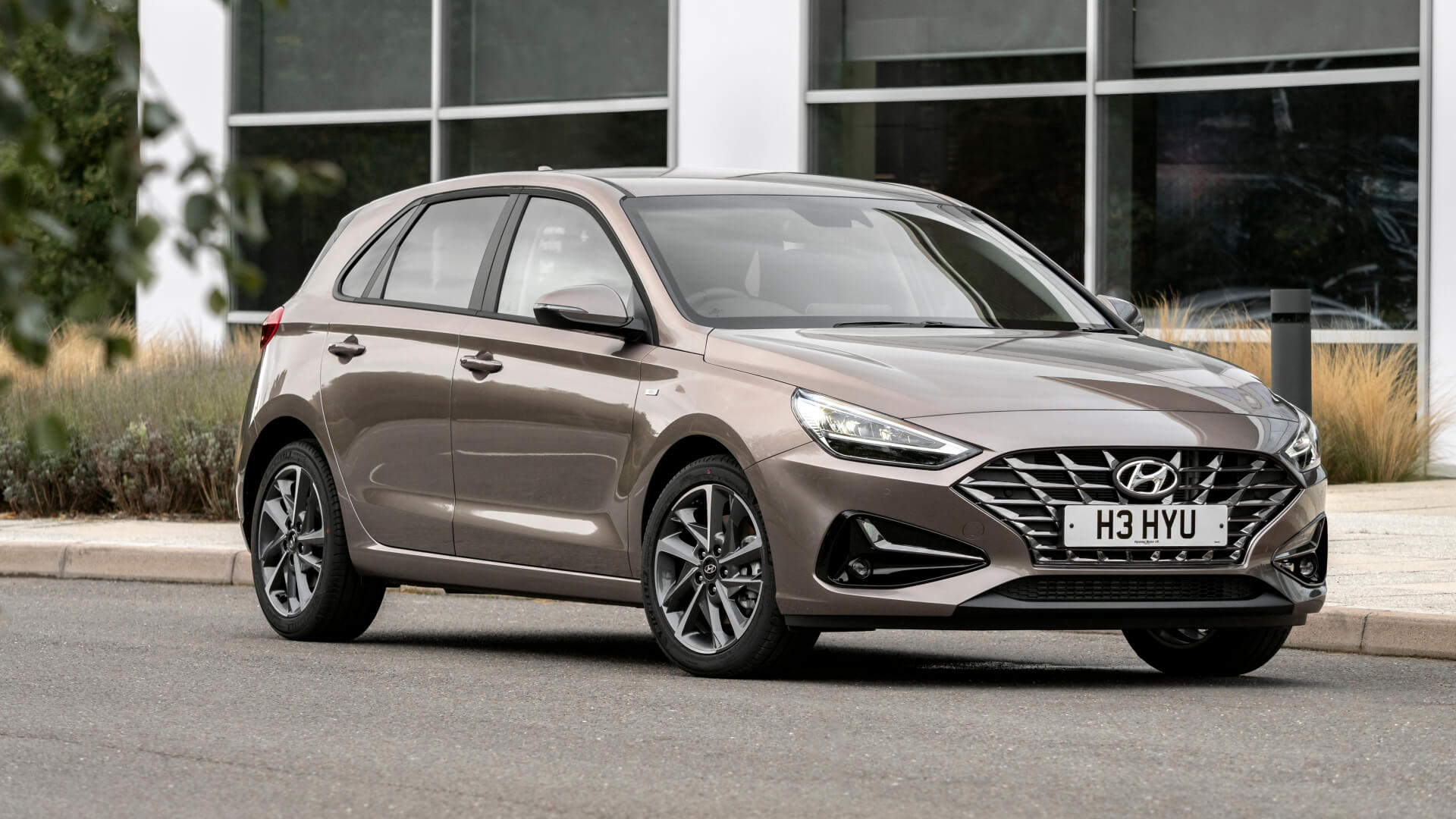
The Hyundai i30 is a compact car in the Volkswagen Golf class, built by Hyundai as a hatchback, estate and, in its third generation, a five-door liftback called the Fastback. It was conceived at Hyundai's design and technical centre in Rüsselsheim, Germany, and European cars are built at Hyundai's plant in Nošovice, Czech Republic. The first generation made its public debut at the Geneva motor show in March 2007, the second at Frankfurt in September 2011 and the third at the Paris motor show in September 2016. The third generation was facelifted in February 2020, when Hyundai set out to challenge the Golf and Toyota Corolla more directly.
In short
- Three generations since 2007, all developed with a strong European focus.
- Hatchback, estate (Wagon/Tourer), a three-door Coupe in the second generation and the Fastback liftback in the third.
- Since the 2020 facelift: 1.0 T-GDi and 1.5 T-GDi petrols with optional or standard 48 V mild-hybrid technology and 1.6 CRDi diesels.
- Sold in North America as the Elantra Touring and Elantra GT.
Known problems
-
Critical i30 III (2016–present)
Vacuum pump filter blocked by belt fibres (1.6 CRDi, Oct 2018-Jul 2020) 2018–2020
Hard brake pedal from brake booster failure; in the worst case engine damage.
Fix: Recall work cleans or replaces the filter sieve and checks the pump.
Verified Source: Gebrauchtwagenberater: Hyundai i30 III PD problems and weak points -
High i30 III (2016–present)
Sunroof motor disables anti-pinch protection (2018 builds) 2018
The glass sunroof can close on a hand or object without reversing.
Fix: Recall from April 2019: the dealer replaces the electric motor if needed.
Verified Source: ADAC Gebrauchtwagen-Info: Hyundai i30 (since 2016) -
Medium i30 III (2016–present)
Jerky changes and clutch wear (7-speed DCT) all years
Jerky pull-away and gear changes, occasional refusal to shift up or down, mostly on older cars.
Fix: Software update and clutch adaptation; worn clutch packs are replaced.
Verified Source: Gebrauchtwagenberater: Hyundai i30 III PD problems and weak points -
Medium i30 III (2016–present)
Brake disc wear at the TÜV test (all engines) all years
Scored or corroded discs and brake advisories from the second inspection onward.
Fix: New discs and pads on the affected axle. Typical cost: €410–510
Verified Source: ADAC Gebrauchtwagen-Info: Hyundai i30 (since 2016) -
Medium i30 III (2016–present)
Exhaust system defects and failed emissions tests all years
Exhaust rattles or leaks and a failed emissions test at the inspection.
Fix: Leaking or corroded exhaust sections are replaced after diagnosis. Typical cost: €1,600–1,600
Verified Source: ADAC Gebrauchtwagen-Info: Hyundai i30 (since 2016) -
Low i30 III (2016–present)
Flat starter battery (2015-2019 registrations) 2016–2019
The engine cranks slowly or not at all, especially in winter.
Fix: Battery test and replacement.
Verified Source: ADAC Pannenstatistik 2025 -
Low i30 III (2016–present)
Carbon deposits on direct-injection petrols (T-GDI) all years
Gradual loss of power and higher fuel use.
Fix: The intake and injectors are cleaned.
Verified Source: Gebrauchtwagenberater: Hyundai i30 III PD problems and weak points -
High i30 II (2011–2016)
Timing chain failure (early GD petrols, 2012) 2012–2013
Rattle on cold start, engine warning light, in the worst case breakdown.
Fix: Chain, tensioner and guides are replaced; Hyundai revised the chain in 2013.
Verified Source: Gebrauchtwagenberater: Hyundai i30 II GD 2011-2017 problems and weak points -
High i30 II (2011–2016)
Power steering assistance can drop out (built Oct 2013-Jun 2014) 2013–2014
Brief loss of steering assistance; the car stays steerable but needs more effort.
Fix: Recall software update of the MDPS steering control unit.
Verified Source: Gebrauchtwagenberater: Hyundai i30 II GD 2011-2017 problems and weak points -
Medium i30 II (2011–2016)
Manual gearbox oil leak and crunching fourth gear (GD) all years
Oil drips under the gearbox and a crunch when engaging fourth gear.
Fix: The leaking shaft seal or worn synchro ring is replaced.
Verified Source: Gebrauchtwagenberater: Hyundai i30 II GD 2011-2017 problems and weak points
Hyundai i30 at a glance
The i30 is a monocoque compact car with a transverse front engine and front-wheel drive. More Hyundai models are listed in our Hyundai catalogue.
Hyundai i30 generations
| Generation | Years | Debut | Bodies | Engines |
|---|---|---|---|---|
| First | 2007–2011 | Geneva, March 2007 | Hatchback, estate (i30cw) | 1.4–2.0 petrol, 1.6 and 2.0 CRDi; 66–105 kW (90–143 PS) |
| Second | 2011–2016 | Frankfurt, September 2011 | Hatchback, estate, three-door Coupe | 1.4–2.0 petrol, 1.4 and 1.6 CRDi; up to 137 kW (186 PS) in the 1.6 T-GDi |
| Third | 2016 onwards | Paris, September 2016 | Hatchback, estate, Fastback | 1.0–2.0 petrol, 1.6 CRDi; i30 N up to 206 kW (280 PS) |
The first i30 was previewed by the Arnejs concept at the 2006 Paris show and went on sale in Europe and Australia in mid-2007; its estate became the Elantra Touring in North America. The second generation, designed and engineered in Rüsselsheim, added a 2.0 GDI and a 1.6 T-GDi hot hatch with 137 kW (186 PS), and was facelifted at the end of 2014. The third generation added the Fastback, shown at the 2017 Frankfurt show, and the high-performance i30 N, whose 2.0 turbo engine was shared with the Veloster N.
Third generation after the 2020 facelift
Exterior
The facelifted hatchback looks very similar to the estate shown earlier, but on closer inspection both the front and the rear have been revised. The front is dynamic and aggressive, with sporty headlights and a new grille that is narrower at the bottom and wider at the top, framed in chrome, with a mesh texture or an optional chrome finish. Depending on version, the headlights use halogen or LED technology, and all have additional indicator lighting. Dark backgrounds and black surrounds emphasise the headlight design. The revised bumper has a lower grille with black side inserts, round fog lights and LED daytime running lights, and the bonnet's raised edges look like aggressive "eyelashes".
The profile is distinctive, with raised lines above both wheel arches and a crease running from the front to the rear lights. Door handles are body-coloured or optionally chrome, there is chrome around the side windows, and the B-pillars are black. The mirrors are slightly smaller; even base versions have power adjustment, folding and heating, while higher versions add LED indicators. Basic cars have a solid roof with a shark-fin antenna, while premium versions offer a powered sunroof or a panoramic roof with a sliding front section. Wheels range from 15 to 17 inches, and ground clearance is a modest 140 mm according to published figures.
The rear changed considerably. The tailgate opens together with its window, making it easy to load bulky items. Elongated LED tail lights sit on a dark background, a small curved spoiler tops the tailgate, and the handle is hidden in a recess. The elegant rear bumper has a large black plastic insert, chrome exhaust trims and LED fog lights.
Interior
The cabin changed less and now follows Hyundai's corporate style, looking more businesslike, with improved ergonomics. The driver faces a comfortable three-spoke multifunction steering wheel and an optional 7-inch digital instrument display, and the seat offers good side support. Base versions have an 8-inch screen, while higher versions have a 10.25-inch touchscreen with the Bluelink connected services, which looks more like a tablet than a control unit. Apple CarPlay, Android Auto and voice control are supported. Below the vents sit the airbag and seat-belt indicators and the climate controls, and a panel linking the dashboard and the tunnel holds Qi wireless charging, a 12-volt socket, a 3.5 mm audio jack and USB ports.
Next to the gear lever are buttons for the heated steering wheel and seats, the parking assistant and stability control, along with two cupholders and an electric parking brake. The large central armrest is a storage box in base versions and a cooled compartment in more expensive ones. Rear passengers have a socket, USB ports and air vents. The front seats suit people up to about 190 cm tall, with manual adjustment in base versions and power adjustment in higher trims, and upholstery ranges from cloth to leather and Alcantara. Three adults fit in the rear, though two are more comfortable. The hatchback's boot holds 378 litres, rising to 1,316 litres with the rear seats folded, according to published figures.
Engines and transmissions (2020 facelift)
| Fuel | Engine | Power (kW / PS) | Torque |
|---|---|---|---|
| Petrol | 1.5 DPi, naturally aspirated | 81 kW / 110 PS | 144 Nm |
| Petrol | 1.0 T-GDi, three-cylinder (optional 48 V mild hybrid) | 88 kW / 120 PS | 171–172 Nm |
| Petrol | 1.5 T-GDi with 48 V mild hybrid | 118 kW / 160 PS | 253 Nm |
| Diesel | 1.6 CRDi | 85 kW / 115 PS | 280–300 Nm |
| Diesel | 1.6 CRDi | 100 kW / 136 PS | 280–320 Nm |
The facelift dropped the 1.4 MPi and 1.4 T-GDi petrols and the 70 kW (95 PS) diesel. According to published figures, the 1.0 T-GDi uses about 5.2 l/100 km, reaches 100 km/h in 11.5 seconds and tops out at 188 km/h; the mild-hybrid system keeps the output the same while reducing consumption and emissions. A six-speed manual gearbox is standard, a seven-speed dual-clutch gearbox is optional, and mild-hybrid versions use a six-speed intelligent manual transmission (iMT). Diesel torque is higher with the dual-clutch gearbox. All versions are front-wheel drive.
Chassis
The third-generation i30 uses fully independent suspension, with MacPherson struts at the front and a multi-link rear axle. All four brakes are discs, ventilated at the front. The sporty N Line versions, with the 118 kW (160 PS) petrol or 100 kW (136 PS) diesel, have their own suspension and steering settings for a livelier drive.
Safety and equipment
Safety equipment includes the updated SmartSense package with lane following assist, rear-collision protection, blind-spot monitoring and autonomous emergency braking that detects pedestrians and cyclists, as well as large front airbags, side and curtain airbags, ABS and ESC, hill-start assist, ISOFIX anchors, an immobiliser, automatic battery disconnection in a crash, driver attention monitoring, adaptive headlights with automatic high beam and a leading-vehicle departure alert. Even base versions offer a turbocharged engine, airbags, ABS and ESC, hill descent control, push-button start, driver monitoring, a rear camera with guidelines and 15-inch alloy wheels.
Strengths and weaknesses
Owners praise the i30's attractive styling, roomy cabin, punchy engines, build and material quality, good safety, performance and modern interior. Complaints include high consumption with the automatic, an interior that shows dirt, firm suspension, a lack of storage pockets in the boot, modest ground clearance and paint quality. Its prices compare favourably with the Golf and Corolla. Rivals include the Volkswagen Golf, Ford Focus, Opel Astra, Kia ProCeed, Skoda Octavia, Citroën C4, Peugeot 308 and Mazda3.
Hyundai i30 evolution in numbers
Did you know?
- The Hyundai i30 has been around for 19 years: 3 generations in our catalog since 2007.
- The longest-running generation is the i30 III (2016–present): 10 years and counting.
Owning a Hyundai i30
Common problems, best and worst years, maintenance and running costs - only data checked by our editors, with sources.
Best years
- 2021–2023 i30 III (2016–present) - Cars after the July 2020 update have the lowest ADAC breakdown figures, 8.1 per 1,000 for 2021 falling to 2.7 for 2023 registrations. Verified Source: ADAC Gebrauchtwagen-Info: Hyundai i30 (since 2016)
- 2015–2016 i30 II (2011–2016) - Facelifted GD cars have Euro 6 engines and far fewer breakdowns than early ones (17.1 per 1,000 for 2015, 11.2 for 2016). Verified Source: ADAC Gebrauchtwagen-Info: Hyundai i30 (2012-2017)
Years to avoid
- 2018–2019 i30 III (2016–present) - These registrations have the PD's highest ADAC breakdown rates (15.6 and 16 per 1,000) and fall into the sunroof and diesel vacuum pump recalls. Verified Source: ADAC Gebrauchtwagen-Info: Hyundai i30 (since 2016)
- 2012 i30 II (2011–2016) - ADAC records 26.2 breakdowns per 1,000 for 2012 cars, including timing chain and starter failures, before Hyundai revised the chain in 2013. Verified Source: ADAC Gebrauchtwagen-Info: Hyundai i30 (2012-2017)
Questions and answers
What are the most common Hyundai i30 problems?
Vacuum pump filter blocked by belt fibres (1.6 CRDi, Oct 2018-Jul 2020) (2018–2020): Hard brake pedal from brake booster failure; in the worst case engine damage.; Sunroof motor disables anti-pinch protection (2018 builds) (2018): The glass sunroof can close on a hand or object without reversing.; Jerky changes and clutch wear (7-speed DCT) (all years): Jerky pull-away and gear changes, occasional refusal to shift up or down, mostly on older cars.; Brake disc wear at the TÜV test (all engines) (all years): Scored or corroded discs and brake advisories from the second inspection onward.; Exhaust system defects and failed emissions tests (all years): Exhaust rattles or leaks and a failed emissions test at the inspection..
What are the best years for the Hyundai i30?
2021–2023: Cars after the July 2020 update have the lowest ADAC breakdown figures, 8.1 per 1,000 for 2021 falling to 2.7 for 2023 registrations.; 2015–2016: Facelifted GD cars have Euro 6 engines and far fewer breakdowns than early ones (17.1 per 1,000 for 2015, 11.2 for 2016)..
Which Hyundai i30 years should you avoid?
2018–2019: These registrations have the PD's highest ADAC breakdown rates (15.6 and 16 per 1,000) and fall into the sunroof and diesel vacuum pump recalls.; 2012: ADAC records 26.2 breakdowns per 1,000 for 2012 cars, including timing chain and starter failures, before Hyundai revised the chain in 2013..
Data checked November 12, 2026 Used Hyundai i30 buying guide
Image credits · Photos from Wikimedia Commons under free licences
- Hyundai i30 I · Photo: M 93 / Wikimedia Commons, CC BY-SA 3.0 de
- Hyundai i30 II · Photo: M 93 / Wikimedia Commons, CC BY-SA 3.0 de
- Hyundai i30 III · Photo: Alexander-93 / Wikimedia Commons, CC BY-SA 4.0
Hyundai i30 in our rankings
- No. 225 of 1190 · Longest-running car nameplates (19 years · top 20%)
- No. 129 of 413 · Oldest car models still on sale (19 years · top 32%)
- No. 250 of 463 · Cars with the most generations (3 generations · top 61%)
In production longer than 80% of ranked nameplates in the 1CARS catalog (No. 225 of 1190).
FAQ
Where is the Hyundai i30 designed and built?
It was conceived at Hyundai's centre in Rüsselsheim, Germany, and European cars are built in Nošovice, Czech Republic.
What body styles does the Hyundai i30 have?
A five-door hatchback, an estate and, in the third generation, the Fastback liftback; the second generation also had a three-door Coupe.
Is the Hyundai i30 a hybrid?
Since the 2020 facelift the 1.5 T-GDi has 48 V mild-hybrid technology as standard, and it is optional on the 1.0 T-GDi.
What is the most powerful Hyundai i30?
The i30 N, with a 2.0 turbo engine producing up to 206 kW (280 PS).
Data sources
Data checked by an editor against the sources below.
- Wikipedia - Hyundai I30


