 Peugeot Traveller
Specs, engines and history
Published Sources (1) Report an error
By Felix Hartmann, Automotive Technology & EV Contributor
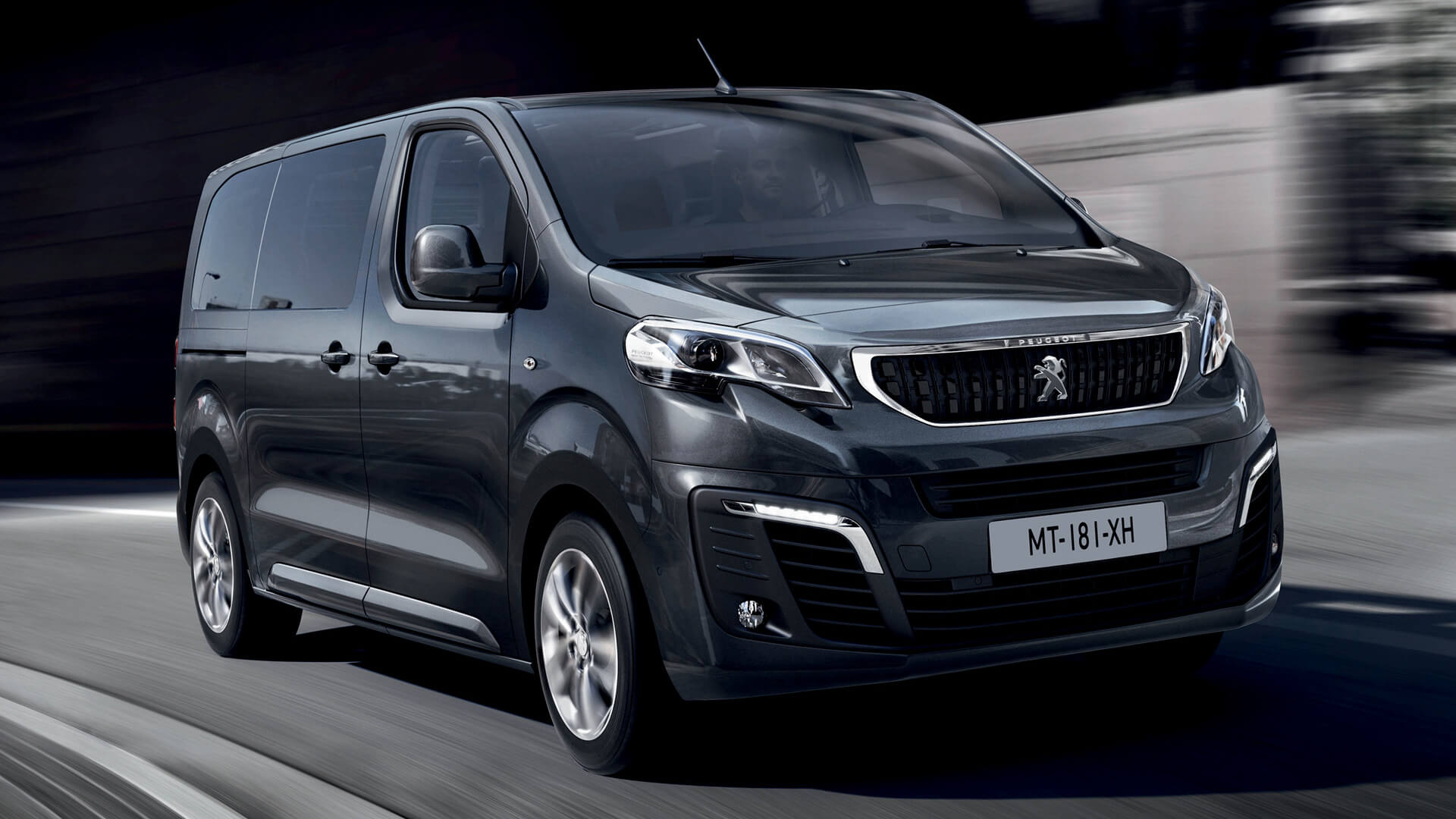
The Peugeot Traveller is a people carrier with up to nine seats, presented at the Geneva motor show in March 2016 after a first preview in December 2015. It is the passenger version of the third-generation Peugeot Expert van, developed jointly by PSA and Toyota and sold in parallel as the Citroën SpaceTourer, Toyota ProAce Verso and Opel/Vauxhall Zafira Life. Built on the modular EMP2 platform, it combines Peugeot's family styling with modern diesel engines, and sales in Europe began in 2016.
In short
- Revealed in Geneva in March 2016; passenger version of the third-generation Peugeot Expert.
- BlueHDi diesels: 1.6 with 70 or 85 kW (95 or 115 PS) and 2.0 with 110 or 132 kW (150 or 180 PS).
- Front-wheel drive with Advanced Grip Control, or four-wheel drive developed by Dangel; an electric e-Traveller followed.
- Five to nine seats and 520 to 4,200 litres of luggage space.
Peugeot Traveller at a glance
The Traveller is a monocoque van with a transverse front engine. It is built at the Sevel Nord plant in Hordain near Valenciennes, France, and offered in several lengths. More Peugeot models are listed in our Peugeot catalogue.
Exterior
The Traveller attracts attention in traffic — unusual for this class. The short bonnet leads to a large grille with vertical chrome-trimmed slats, unusually shaped headlights and a bumper dominated by the cooling system, narrow in the centre and widening towards the sides. The side is modest, with new square mirrors and a large glass area that gives every passenger a good view, plus distinctive wheel-arch surfacing; some see a resemblance to the Volkswagen Multivan. Ground clearance is 175 mm, or 200 mm on four-wheel-drive versions, and wheels are 17-inch steel or alloy. The upright rear has a large window — which can be opened separately so the whole tailgate need not be raised — big vertical tail lights and a small step in the bumper. The top-hinged tailgate provides shelter from rain or sun, though it is not power-operated. Eight colours are offered, including Brun Rich Oak and Rouge Tourmaline.
Interior
The cabin is modern and well assembled, although most plastics are hard, as expected in this class. A concise instrument panel with a rev counter, speedometer and trip-computer display sits behind a comfortable three-spoke steering wheel with audio controls. A 7-inch infotainment screen and a stylish climate panel occupy the centre of the dashboard, with a manual gear lever or, on automatic versions, a rotary selector. The driver's seat offers a wide range of adjustment, and the front passenger seat can be single or double. The cupholders at the sides of the dashboard are awkward and too small for large mugs. Options include soft leather, power sliding doors, keyless entry, a premium infotainment system with navigation, a head-up display and a driver's seat with memory and massage.
The well-shaped front seats remain comfortable on long trips. Depending on version, the Traveller seats five to nine; the VIP version offers four individual rear seats facing each other. Rear passengers can have separate climate controls, a two-section panoramic roof and many storage compartments. Luggage space ranges from 520 to 4,200 litres depending on length and seating.
Engines and transmissions
| Engine | Power (kW / PS) | Torque | Gearbox |
|---|---|---|---|
| 1.6 BlueHDi | 70 kW / 95 PS | 210 Nm | 5-speed manual or 6-speed automated manual |
| 1.6 BlueHDi | 85 kW / 115 PS | 300 Nm | 6-speed manual |
| 2.0 BlueHDi | 110 kW / 150 PS | 370 Nm | 6-speed manual |
| 2.0 BlueHDi | 132 kW / 180 PS | 400 Nm | 6-speed automatic |
All are turbocharged four-cylinder common-rail diesels with 16 valves. 0–100 km/h takes 11–15.9 seconds, top speed is 145–170 km/h and combined consumption is 5.2–5.8 l/100 km. Front-wheel-drive automatic versions can have Advanced Grip Control, an electronic traction system with Snow/Ice, Mud and Sand modes. A four-wheel-drive version uses a system developed by the French company Dangel, which sends torque to the rear wheels through a long propshaft and viscous coupling.
An electric version, the e-Traveller, was added later, sharing its drivetrain with the e-Expert van, with a battery of up to 75 kWh. From January 2022, Stellantis stopped selling combustion-engined passenger versions in most of Europe, and a 2023 facelift brought a 10-inch infotainment screen and Level 2 driver assistance.
Chassis
The Traveller uses the front-wheel-drive EMP2 platform with independent suspension: MacPherson struts at the front and a coil-spring trailing-arm rear. Rack-and-pinion steering has electric assistance. The suspension uses high-strength steel and has proved durable.
Safety and equipment
The top Traveller offers ABS, EBD, stability control, emergency brake assist and hill-start assist, traction control, front airbags and curtain airbags for the second and third rows, driver fatigue monitoring, three-point belts with pretensioners, ISOFIX, tyre deflation warning, front and rear parking sensors, blind-spot monitoring, a 180-degree rear camera, cruise control, lane and traffic-sign recognition, a head-up display and disc brakes (ventilated all round as an option). The body uses modern high-strength steels and designed crumple zones. Typical equipment includes four airbags, an eight-speaker audio system, climate control with separate rear air conditioning, heated front seats, cruise control and heated power mirrors; richer versions add a rear camera, two individual second-row seats, a touchscreen, leather, xenon headlights, power sliding doors, 17-inch alloys and push-button start.
Key specifications
| Parameter | Value |
|---|---|
| Presented | March 2016, Geneva |
| Platform | EMP2 |
| Seats | 5 to 9 |
| Power (diesel) | 70–132 kW / 95–180 PS |
| Ground clearance | 175 mm (200 mm 4x4) |
| Luggage space | 520–4,200 l |
| Wheels | 17 in |
Strengths and weaknesses
Owners praise the Traveller's unusual, modern styling, value for money, suitability for large families and travel, good economy, strong diesels, spacious and versatile cabin and large luggage area. Base versions are sparsely equipped, and there is noticeable body roll. Rivals include the Volkswagen Caravelle and Multivan, Mercedes-Benz V-Class, Ford Tourneo Custom and Renault Trafic Passenger, as well as its own twins, the Citroën SpaceTourer, Opel Zafira Life and Toyota ProAce Verso.
FAQ
Which cars are related to the Peugeot Traveller?
The Citroën SpaceTourer, Toyota ProAce Verso and Opel/Vauxhall Zafira Life share its design and engineering.
How many seats does the Peugeot Traveller have?
Between five and nine, depending on version; the VIP version has four individual rear seats.
What engines does the Peugeot Traveller have?
1.6 and 2.0 BlueHDi diesels with 70–132 kW (95–180 PS); an electric e-Traveller was added later.
Is there a four-wheel-drive Peugeot Traveller?
Yes, with a system developed by Dangel; front-wheel-drive versions can have Advanced Grip Control.
Data sources
Data checked by an editor against the sources below.