
McLaren P1 vs LaFerrari: hybrid hypercars compared
Updated Report an error By Felix Hartmann

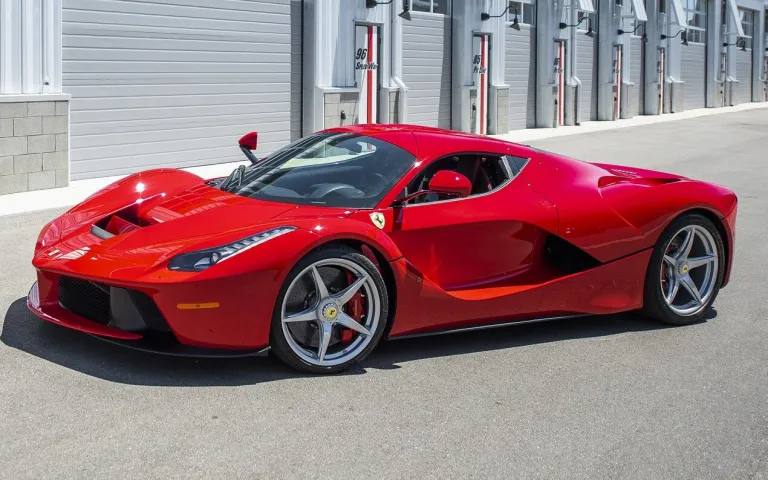
Ferrari · 2013–2018
LaFerrari
Price from €1,190,000 (2013)
- Power
- 708 kW963 PS
- 0–100 km/h
- 2.6 s
- Top speed
- 350 km/h
- Kerb mass
- 1,585 kg

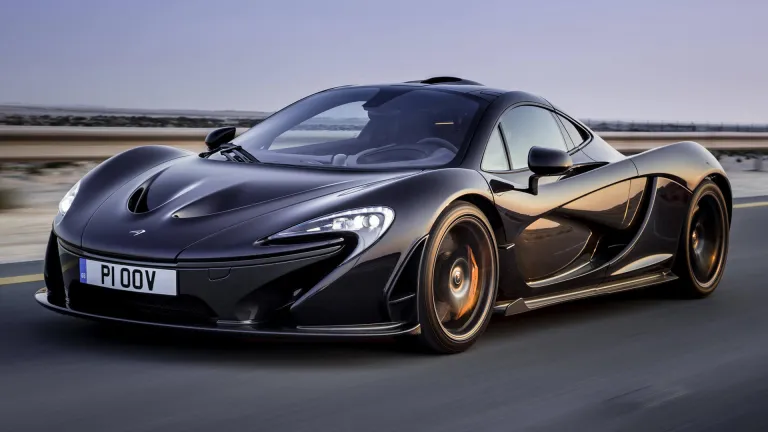
McLaren · 2013–2015
P1
Price from €1,070,000 (2013)
- Power
- 674 kW916 PS
- 0–100 km/h
- 2.8 s
- Top speed
- 350 km/h
- Kerb mass
- 1,490 kg
At a glance
Who suits what, worked out from the catalog figures of the versions above.
Categories won: LaFerrari 1 P1 2
- City P1 Length: 4,588 mm vs 4,702 mm; Width: 1,946 mm vs 1,992 mm
- Performance LaFerrari 0–100 km/h: 2.6 s vs 2.8 s
- Value P1 Price: €1,070,000 vs €1,190,000
Verdict Opinion
The LaFerrari is the more powerful car and the more emotional one: its naturally aspirated V12 sets it apart from the turbocharged McLaren, and the electric motor only adds to it. The P1 is the more technical design, with turbocharged torque, a short electric-only range and race-car aerodynamics aimed squarely at the circuit.
Both are collector cars now. The decision comes down to whether the V12 or the more advanced aero and hybrid strategy matters more to you.
— Felix Hartmann
The McLaren P1 and the LaFerrari both reached production in 2013 and, together with the Porsche 918 Spyder, became known as the hybrid hypercar trinity. Both pair a mid-mounted petrol engine with an electric motor, both send all their power to the rear wheels through a seven-speed dual-clutch gearbox.
McLaren built 375 road-going P1s between October 2013 and December 2015, plus 58 track-only P1 GTRs. Ferrari made 499 LaFerrari coupés from 2013 and a 500th car for charity in 2016, followed by the open LaFerrari Aperta, of which about 210 were built until 2018. Each coupé cost more than one million euros.
McLaren P1 vs LaFerrari: technology compared
Two hybrid philosophies
The P1 uses a 3,799 cc twin-turbocharged V8, the M838TQ, with 542 kW (737 PS) and 720 Nm, assisted by a 132 kW (179 PS) electric motor. Together they deliver 674 kW (916 PS) and 900 Nm. Its 4.7 kWh battery also lets the car run on electricity alone for a short distance, about 11 km on the NEDC cycle. The LaFerrari, successor to the Enzo, keeps a naturally aspirated 6,262 cc V12. On its own it produces 588 kW (800 PS) at 9,000 rpm and 700 Nm. The HY-KERS electric motor adds 120 kW (163 PS) for a combined 708 kW (963 PS) and 900 Nm. Ferrari's system is tuned to boost the engine rather than to drive the car electrically.
Performance claims
McLaren quotes 2.8 s to 100 km/h, 6.8 s to 200 km/h, 16.5 s to 300 km/h and an electronically limited 350 km/h. Ferrari quotes 2.6 s to 100 km/h, under 6.9 s to 200 km/h and more than 350 km/h, plus a lap of 1:19.70 at its Fiorano test track. Ferrari's original 0–300 km/h figure has been disputed, so we leave it out of the comparison.
Aerodynamics, weight and size
The P1 is the more aerodynamically extreme car, with an active rear wing that has a drag reduction system and 600 kg of downforce at 257 km/h. McLaren gives a dry weight of 1,395 kg; Ferrari claims about 1,255 kg dry for the LaFerrari, while Wikipedia lists 1,585 kg at the kerb. Using the makers' dry weights, the Ferrari carries 1.8 kg per kW and the McLaren 2.1 kg. The Ferrari is 4,702 mm long and 1,992 mm wide.
Race Stats side by side
Each figure is a 0–100 score from the catalog numbers, the same as on the 1CARS Race cards. PI is the overall performance index (100–999) and its class D–S.
| Stat | LaFerrari | P1 |
|---|---|---|
| PI | S · 867 | S · 875 |
| Power | 96 | 97 |
| Grip | 66 | 67 |
| Handling | 73 | 75 |
| Top speed | 96 | 96 |
| Launch | 89 | 89 |
Grip and handling are estimates from drive type, weight, height and body (hover a figure to see where it comes from). 1CARS Race
Who wins a race?
Quarter-mile (402 m) drag from a standing start, dry road, no reaction time — the 1CARS Race physics on the catalog figures of these versions.
- 1 LaFerrariLaFerrari · hybrid · 708 kW (963 PS) 9.37 sat 299 km/h
- 2 P1P1 · hybrid · 674 kW (916 PS) 9.38 sat 297 km/h · +0.01 s
Size and weight
Side view to scale, all cars from the front bumper.
| LaFerrari | P1 | |
|---|---|---|
| Length | 4,702 mm185.1 in | 4,588 mm180.6 in −114 mm −4.5 in −2.4% |
| Width | 1,992 mm78.4 in | 1,946 mm76.6 in −46 mm −1.8 in −2.3% |
| Height | 1,116 mm43.9 in | 1,188 mm46.8 in +72 mm +2.8 in +6.5% |
| Wheelbase | 2,650 mm104.3 in | 2,670 mm105.1 in +20 mm +0.8 in +0.8% |
| Kerb weight | 1,585 kg3,494 lb | 1,490 kg3,285 lb −95 kg −209 lb −6.0% |
| Fits a standard garage? | Too wide | Too wide |
Difference vs LaFerrari (±). Garage check: a standard single garage takes a car up to about 5.0 m (16 ft 5 in) long and 1.9 m (6 ft 3 in) wide (width as listed in the catalog; some makers include the mirrors). Leave about 0.6 m (2 ft) to open the doors.
Full specifications
| Ferrari LaFerrari | McLaren P1 | |
|---|---|---|
| General | ||
| Version | LaFerrari · hybrid · 708 kW (963 PS) | P1 · hybrid · 674 kW (916 PS) |
| Production years | 2013–2018 | 2013–2015 |
| Body | Coupe | Coupe |
| Class | Supercar | No data |
| Country | Italy | United Kingdom |
| Performance | ||
| Power Why it matters: More power means stronger acceleration and easier overtaking, especially with a full load. | 708 kW (963 PS) 949 hp Better | 674 kW (916 PS) 904 hp |
| Torque Why it matters: Torque is the pulling force you feel when accelerating from low revs, towing or climbing hills. | 900 Nm 664 lb-ft | 900 Nm 664 lb-ft |
| 0–100 km/h Why it matters: A shorter 0–100 km/h time means quicker getaways and safer merging onto fast roads. | 2.6 s Better | 2.8 s |
| Top speed Why it matters: Top speed hints at how relaxed the car is at motorway speeds, even if you never reach it. | 350 km/h 217 mph | 350 km/h 217 mph |
| Power per tonne | 447 kW/t 543 hp/ton calculated | 452 kW/t 550 hp/ton calculated |
| Engine and transmission | ||
| Fuel | Hybrid | Hybrid |
| Engine | 6,262 cc · 12 cyl 6.3 l | 3,799 cc · 8 cyl 3.8 l |
| Gearbox | 7-speed dual-clutch | 7-speed dual-clutch |
| Drive | Rear-wheel drive | Rear-wheel drive |
| Dimensions and weight | ||
| Length | 4,702 mm 185.1 in | 4,588 mm 180.6 in |
| Width | 1,992 mm 78.4 in | 1,946 mm 76.6 in |
| Height | 1,116 mm 43.9 in | 1,188 mm 46.8 in |
| Wheelbase | 2,650 mm 104.3 in | 2,670 mm 105.1 in |
| Kerb weight Why it matters: A lighter car is usually more agile and uses less energy. | 1,585 kg 3,494 lb | 1,490 kg 3,285 lb Better |
| Price | ||
| Price | from €1,190,000 (2013) | from €1,070,000 (2013) Better |
These cars do not differ in the data we have.
Equal rows hidden (6): Body, Torque, Top speed, Fuel, Gearbox, Drive.
Better marks the stronger figure — only for measurable specs (power, torque, 0–100 km/h, consumption, boot, weight).
In plain words
Ferrari LaFerrari is quicker: 0–100 km/h in 2.6 s against 2.8 s for McLaren P1. Ferrari LaFerrari is 114 mm longer than McLaren P1 (4,702 mm vs 4,588 mm). McLaren P1 is lighter by 95 kg (1,490 kg vs 1,585 kg). On the catalog figures, the McLaren P1 is the pick for city and value; the Ferrari LaFerrari is the pick for performance.
Which one to choose
Choose the McLaren P1 if you want the more track-focused hypercar, with active aerodynamics, a drag reduction system and the ability to move silently on electric power for a few kilometres.
Choose the Ferrari LaFerrari if you want the highest output of the two, a naturally aspirated V12 that revs to 9,000 rpm, or the open-top Aperta.
Frequently asked questions
Which is more powerful, the McLaren P1 or the LaFerrari?
The LaFerrari: 708 kW (963 PS) combined, against 674 kW (916 PS) for the P1. Both quote about 900 Nm of combined torque.
How many were built?
375 McLaren P1 road cars plus 58 P1 GTRs; 499 LaFerrari coupés, one extra coupé for charity and about 210 LaFerrari Apertas.
Can the P1 or the LaFerrari drive on electric power alone?
The P1 can, for roughly 11 km on the NEDC cycle, thanks to its 4.7 kWh battery. The LaFerrari's HY-KERS system is designed to boost the V12.
Which one is faster?
On factory figures the LaFerrari is quicker to 100 km/h (2.6 s against 2.8 s), and both reach about 350 km/h; the P1 is limited at that speed.