
Audi A8 vs BMW 7 Series: luxury saloons compared
Updated Report an error By Sarah Whitmore
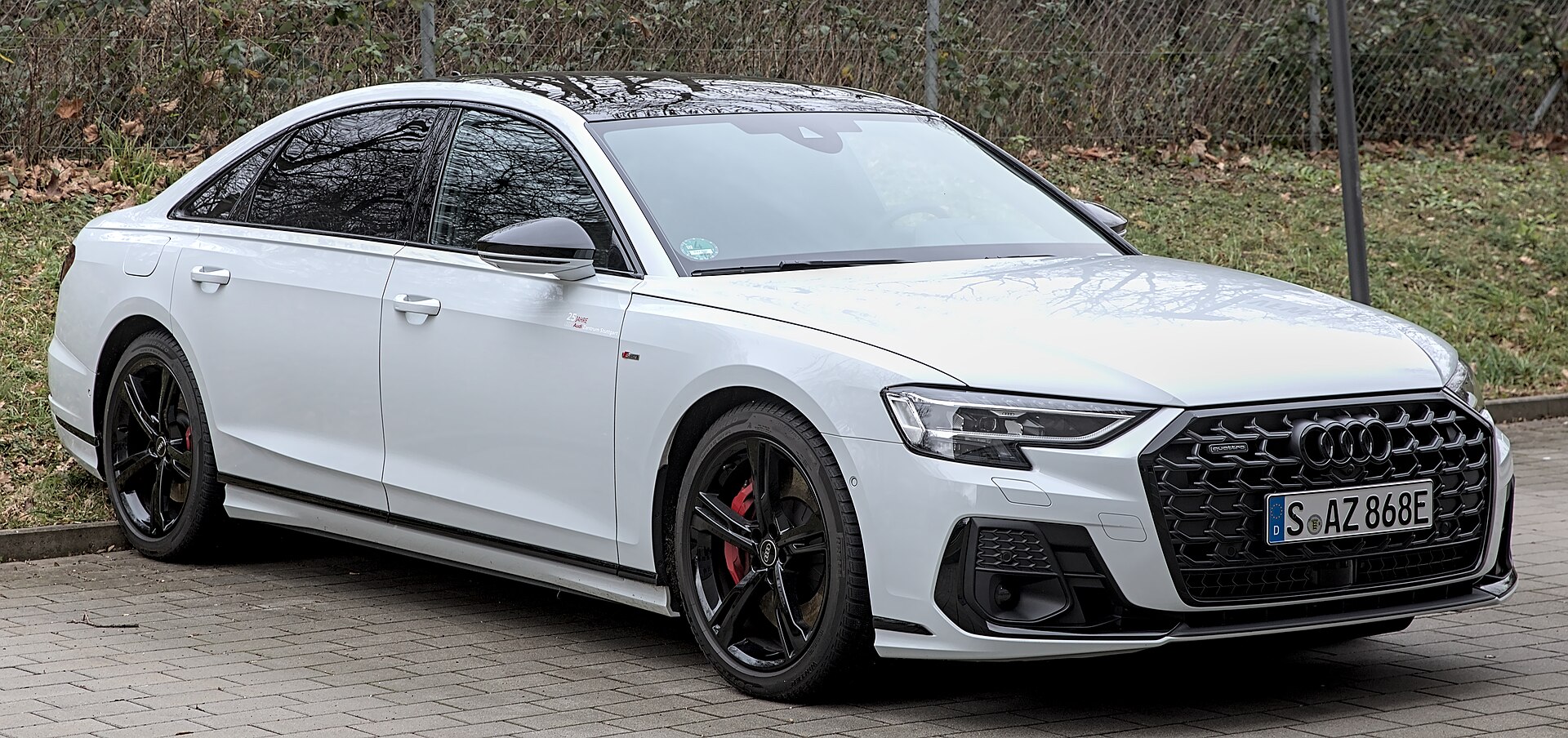
Audi · 2017–2026
A8 D5
- Power
- 330 kW449 PS
- 0–100 km/h
- —
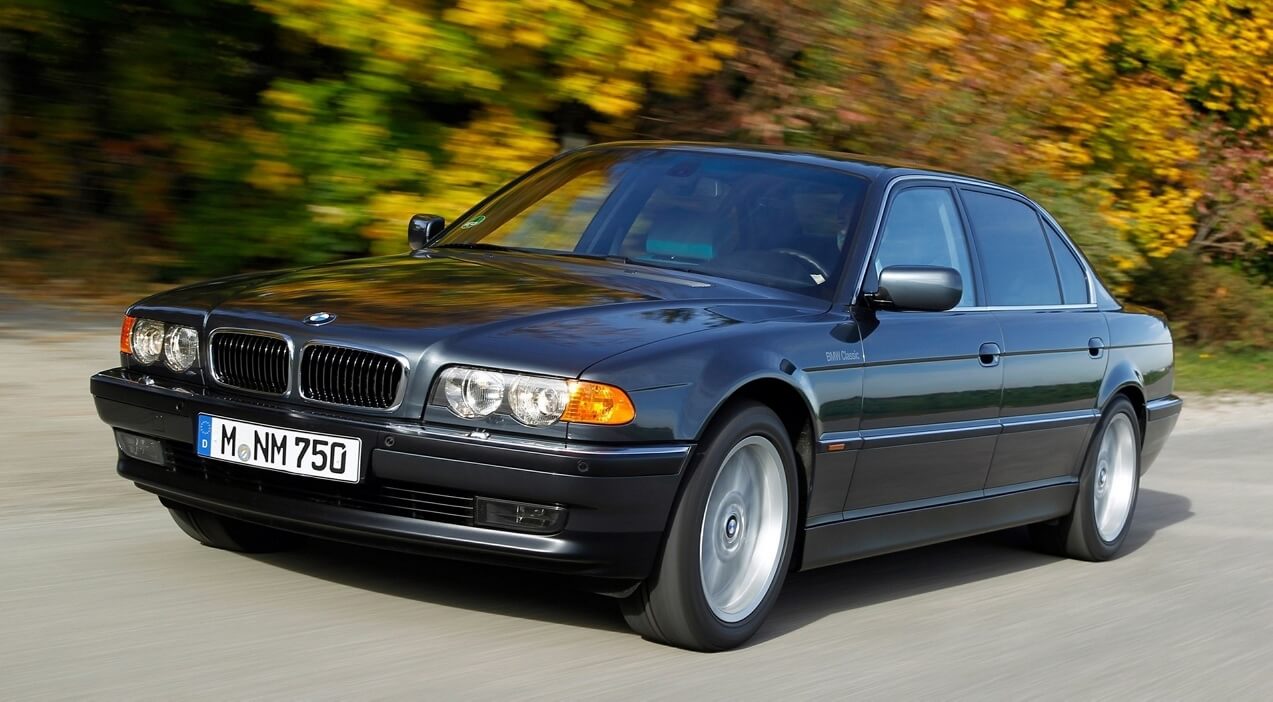
BMW · 2022–present
7 Series G70
- Power
- 360 kW489 PS
- 0–100 km/h
- 4.8 s
At a glance
Who suits what, worked out from the catalog figures of the versions above.
- City A8 D5 Length: 5,172 mm vs 5,391 mm
Verdict Opinion
The BMW is the more modern choice in 2026. It is in production, it offers a plug-in hybrid with more power than the Audi's, a fully electric i7 and rear-seat entertainment such as the Theatre Screen. The A8 remains a strong used buy, with its aluminium body and quattro on most versions. A new D4 was listed in Germany from €145,200 in late November 2015, which puts the price of a used one into perspective.
Collectors have their own pair: the W12 A8 L, of which only 650 to 750 D2 cars were built, depending on the source, and the E38 750i with its V12.
— Sarah Whitmore
BMW entered the full-size luxury class first. The E23 7 Series appeared in 1977 as a direct rival to the Mercedes-Benz S-Class, and in 1987 the E32 750i brought the first German V12 car since the 1930s. Audi arrived in 1994 with the A8, which replaced the Audi V8 and introduced its defining feature: a body built on the aluminium Audi Space Frame, developed with Alcoa.
Every new generation of one has since been judged against the other. The current BMW, the G70, was revealed on 20 April 2022 and has been built at Dingolfing since 1 July 2022; the electric i7 belongs to the same model range. The A8 is at the end of its fourth generation, the D5; German orders closed on 18 February 2026, and Audi says a successor is under development. The background of each brand is told in our history of Audi and history of BMW.
Audi A8 vs BMW 7 Series: construction, engines and size
Construction and drive
Audi's argument has always been the body and the drivetrain. Every A8 since 1994 uses the aluminium space frame, combined in the D5 with more high-strength steel, and most versions have quattro all-wheel drive. The 7 Series was a rear-wheel-drive car in its first generations; most versions of the current G70, including the 750e, the 760i and the i7 xDrive60, have xDrive all-wheel drive.
Twelve cylinders
Both makers built twelve-cylinder flagships. BMW's V12 began with 220 kW (300 PS) in the 1987 750i and reached 240 kW (326 PS) in the E38. Audi's W12 arrived in 2001 with 309 kW and ended in the D4 with 6.3 litres and 368 kW after the 2018 model year. The G70 no longer offers a V12; its place at the top is taken by the M760e plug-in hybrid.
Plug-in hybrids
Today the most direct match is between the plug-ins. Audi rates the A8 60 TFSI e at 330 kW (449 PS) combined; BMW's 750e xDrive delivers 360 kW (490 PS) and 700 Nm, 30 kW more. Every D5 engine also works with a 48-volt starter-generator, so even the 50 TDI with 210 kW can coast with the engine switched off.
The electric option
Only BMW sells an all-electric version of its flagship. The i7 xDrive60 has 400 kW (544 PS) and a battery with 101.7 kWh of usable capacity, good for 591–625 km in the WLTP test. The i7 M70 raises output to 485 kW and torque to 1,100 Nm.
Length and cabin
The G70 is 5,391 mm long on a 3,215 mm wheelbase and is built in one length only, unlike its predecessors. Audi has offered the long-wheelbase A8 L in every generation; in the D2 it added 127 mm of rear legroom. BMW's rear passengers can order the Theatre Screen, a 31.3-inch (800 mm) rear display.
Technology firsts
Each line has industry firsts to its name. The E38 7 Series was the first car with curtain airbags and the first European car with satellite navigation. The D4 A8 was the first production car with Matrix LED headlights, a digitally controlled high beam that does not dazzle oncoming drivers.
Size and weight
Side view to scale, all cars from the front bumper.
| A8 D5 | 7 Series G70 | |
|---|---|---|
| Length | 5,172 mm203.6 in † | 5,391 mm212.2 in +219 mm +8.6 in +4.2% |
| Width | 1,945 mm76.6 in † | 1,950 mm76.8 in +5 mm +0.2 in +0.3% |
| Height | 1,473 mm58.0 in † | 1,544 mm60.8 in +71 mm +2.8 in +4.8% |
| Wheelbase | 2,998 mm118.0 in † | 3,215 mm126.6 in +217 mm +8.5 in +7.2% |
| Fits a standard garage? | Too long and too wide | Too long and too wide |
Difference vs A8 D5 (±). Garage check: a standard single garage takes a car up to about 5.0 m (16 ft 5 in) long and 1.9 m (6 ft 3 in) wide (width as listed in the catalog; some makers include the mirrors). Leave about 0.6 m (2 ft) to open the doors. † from another version of this generation.
Full specifications
| Audi A8 | BMW 7 Series | |
|---|---|---|
| General | ||
| Version | A8 D5 · 60 TFSI e quattro · plug-in hybrid · 330 kW (449 PS) | 750e xDrive · plug-in hybrid · 360 kW (489 PS) |
| Production years | 2017–2026 | 2022–present |
| Body | Sedan | Sedan |
| Country | Germany | Germany |
| Performance | ||
| Power Why it matters: More power means stronger acceleration and easier overtaking, especially with a full load. | 330 kW (449 PS) 443 hp | 360 kW (489 PS) 483 hp Better |
| Power, all versions | 110–445 kW (150–605 PS) 148–597 hp | 360–400 kW (489–544 PS) 483–536 hp |
| Torque Why it matters: Torque is the pulling force you feel when accelerating from low revs, towing or climbing hills. | No data | 700 Nm 516 lb-ft |
| 0–100 km/h Why it matters: A shorter 0–100 km/h time means quicker getaways and safer merging onto fast roads. | No data | 4.8 s |
| Engine and transmission | ||
| Fuel | Plug-in hybrid | Plug-in hybrid |
| Engine | 3,000 cc · 6 cyl 3.0 l | No data |
| Gearbox | No data | automatic |
| Drive | All-wheel drive | All-wheel drive |
| Dimensions and weight | ||
| Length | 5,172 mm 203.6 in † | 5,391 mm 212.2 in |
| Width | 1,945 mm 76.6 in † | 1,950 mm 76.8 in |
| Height | 1,473 mm 58.0 in † | 1,544 mm 60.8 in |
| Wheelbase | 2,998 mm 118.0 in † | 3,215 mm 126.6 in |
| Boot Why it matters: A bigger boot fits more luggage, shopping or a pram. | 505 l 17.8 cu ft † | No data |
These cars do not differ in the data we have.
Equal rows hidden (4): Body, Country, Fuel, Drive.
Better marks the stronger figure — only for measurable specs (power, torque, 0–100 km/h, consumption, boot, weight).
† from another version of this generation.
In plain words
BMW 7 Series has more power: 360 kW (489 PS) against 330 kW (449 PS) for Audi A8. BMW 7 Series is 219 mm longer than Audi A8 (5,391 mm vs 5,172 mm). BMW 7 Series is the older design (from 1977); Audi A8 arrived in 1994. BMW 7 Series is still in production; Audi A8 is not. On the catalog figures, the Audi A8 is the pick for city. Our catalog has no 0–100 km/h for the Audi A8 yet, so some checks above leave it out.
Which one to choose
Choose the Audi A8 if you want all-wheel drive as standard on most versions, value the aluminium body, or are buying a used W12 or V8 TDI for long distances.
Choose the BMW 7 Series if you are buying new, want the electric i7 or the more powerful plug-in hybrid, or prefer the rear-seat technology of the G70.
Both cars, and their long-time rival the Mercedes-Benz S-Class, can be explored further in the Audi catalogue and the BMW catalogue.
Frequently asked questions
Is the Audi A8 still made?
Audi stopped taking new orders for the D5 A8 in Germany on 18 February 2026 and said a successor is in development.
Does the BMW 7 Series still have a V12?
No. The G70 generation dropped the V12; the M760e plug-in hybrid with 418 kW took its place as the top combustion-based model.
Which plug-in hybrid is stronger?
The BMW 750e xDrive with 360 kW (490 PS). The Audi A8 60 TFSI e has 330 kW (449 PS).
Is there an electric A8 or 7 Series?
BMW sells the i7 as part of the 7 Series range, with up to 485 kW in the M70. Audi has no electric A8.
Is there a long-wheelbase 7 Series?
Earlier generations offered long versions, but the G70 is built in one length: 5,391 mm on a 3,215 mm wheelbase.