
 Porsche Cayenne Electric
Specs, engines and history
Published Sources (4) Report an error
By Oleksandr Hnatiuk, Automotive Editor & Used Car Specialist
- Built
- 2025–present
- Top power
- 630 kW (857 PS)
- Euro NCAP
- 5 stars · 2025
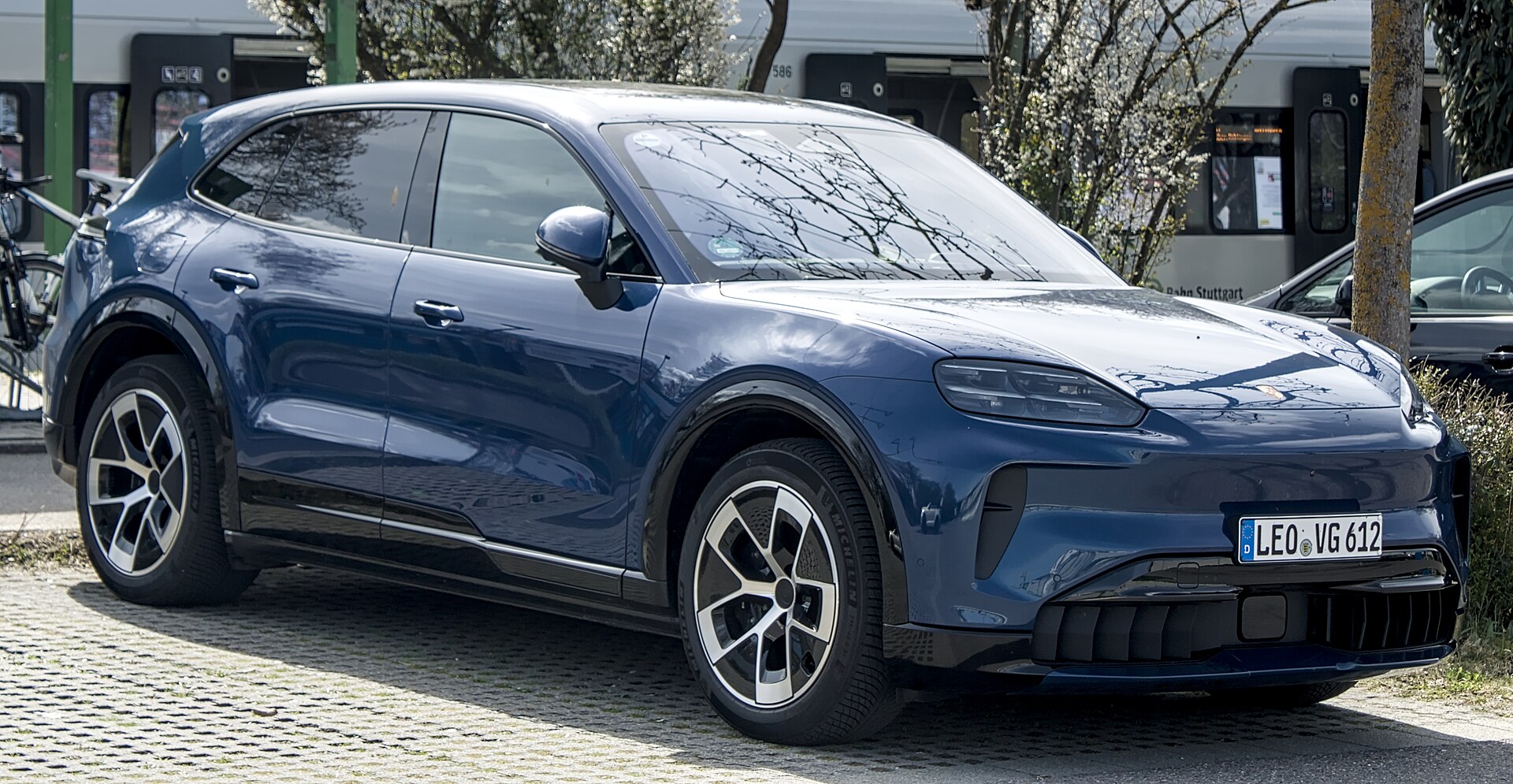
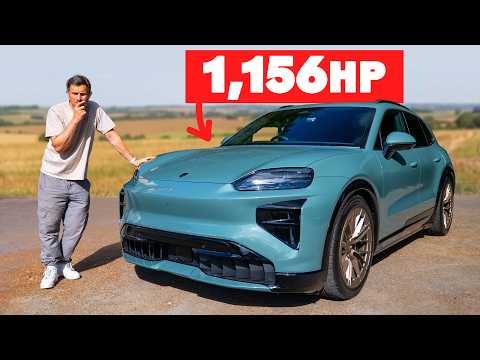
The Porsche Cayenne Electric is the battery-electric fourth-generation Cayenne, revealed on 19 November 2025 and built in Bratislava, Slovakia, since February 2026. It uses an 800-volt evolution of the Premium Platform Electric (PPE) with a 113 kWh battery, and the range runs from the 300 kW Cayenne Electric to the Turbo Electric with up to 850 kW (1,156 PS), the most powerful Porsche production model so far.
In short
- Three SUV versions: Cayenne Electric, Cayenne S Electric (added in March 2026) and Cayenne Turbo Electric; a Coupé Electric followed in April 2026.
- WLTP range up to 642 km (base), 653 km (S) and 623 km (Turbo); up to 669 km for the Coupé.
- DC charging at up to 400 kW: 10-80% in under 16 minutes; optional 11 kW wireless charging.
- From USD 109,000 in the US (excluding delivery); the Coupé Electric starts at EUR 109,000 in Germany.
Size at a glance
| Dimensions | Porsche Cayenne Electric (E4) |
|---|---|
| Length | 4,985 mm196.3 in |
| Width | 1,980 mm78.0 in |
| Height | 1,674 mm65.9 in |
| Wheelbase | 3,023 mm119.0 in |
| Boot | 534 L18.9 cu ft |
Specs by version
Engines
| Version | Engine | Power | Torque | Gearbox | Drive | Production years |
|---|---|---|---|---|---|---|
| Cayenne Electric | Electric | 300 kW 408 PS402 hp | 835 Nm616 lb-ft | Single-speed | All-wheel drive | 2025 |
| Cayenne Coupé Electric | Electric | 300 kW 408 PS402 hp | - | Single-speed | All-wheel drive | 2026 |
| Cayenne S Electric | Electric | 400 kW 544 PS536 hp | - | Single-speed | All-wheel drive | 2026 |
| Cayenne S Coupé Electric | Electric | 400 kW 544 PS536 hp | - | Single-speed | All-wheel drive | 2026 |
| Cayenne Turbo Electric | Electric | 630 kW 857 PS845 hp | 1,500 Nm1,106 lb-ft | Single-speed | All-wheel drive | 2025 |
| Cayenne Turbo Coupé Electric | Electric | 630 kW 857 PS845 hp | - | Single-speed | All-wheel drive | 2026 |
Performance
Show all 6 versions
| Version | 0–100 km/h | Top speed | Fuel consumption | Range |
|---|---|---|---|---|
| Cayenne Electric | 4.8 s 0–62 mph | 230 km/h143 mph | 20.9 kWh/100 km33.6 kWh/100 mi | 642 km399 mi |
| Cayenne Coupé Electric | 4.8 s 0–62 mph | 230 km/h143 mph | 20.3 kWh/100 km32.7 kWh/100 mi | - |
| Cayenne S Electric | 3.8 s 0–62 mph | 250 km/h155 mph | 20.6 kWh/100 km33.2 kWh/100 mi | 653 km406 mi |
| Cayenne S Coupé Electric | 3.8 s 0–62 mph | 250 km/h155 mph | 20.1 kWh/100 km32.3 kWh/100 mi | - |
| Cayenne Turbo Electric | 2.5 s 0–62 mph | 260 km/h162 mph | 21.5 kWh/100 km34.6 kWh/100 mi | 623 km387 mi |
| Cayenne Turbo Coupé Electric | 2.5 s 0–62 mph | 260 km/h162 mph | 21.0 kWh/100 km33.8 kWh/100 mi | - |
Dimensions and weight
Show all 6 versions
| Version | Length | Width | Height | Wheelbase | Kerb weight | Boot | Battery |
|---|---|---|---|---|---|---|---|
| Cayenne Electric | 4,985 mm196.3 in | 1,980 mm78.0 in | 1,674 mm65.9 in | 3,023 mm119.0 in | 2,525 kg5,567 lb | 781 l27.6 cu ft | 108 kWh |
| Cayenne Coupé Electric | 4,985 mm196.3 in | 1,980 mm78.0 in | 1,650 mm65.0 in | - | - | 534 l18.9 cu ft | 108 kWh |
| Cayenne S Electric | 4,985 mm196.3 in | 1,980 mm78.0 in | 1,674 mm65.9 in | 3,023 mm119.0 in | - | - | 108 kWh |
| Cayenne S Coupé Electric | 4,985 mm196.3 in | 1,980 mm78.0 in | 1,650 mm65.0 in | - | - | 534 l18.9 cu ft | 108 kWh |
| Cayenne Turbo Electric | 4,985 mm196.3 in | 1,980 mm78.0 in | 1,674 mm65.9 in | 3,023 mm119.0 in | 2,645 kg5,831 lb | 781 l27.6 cu ft | 108 kWh |
| Cayenne Turbo Coupé Electric | 4,985 mm196.3 in | 1,980 mm78.0 in | 1,650 mm65.0 in | - | - | 534 l18.9 cu ft | 108 kWh |
Verified Manufacturer and type-approval data from our catalog · Sources and methodology
Safety
-
Euro NCAP 2025
Full Euro NCAP result
Stars from different years and organisations are not directly comparable: test protocols change every few years.
Porsche Cayenne Electric at a glance
| Specification | Porsche Cayenne Electric |
|---|---|
| Body and segment | five-door large luxury SUV; Coupé Electric from 2026 |
| Production | from February 2026, Volkswagen plant Bratislava, Slovakia |
| Platform | evolved Premium Platform Electric (PPE), 800 volts |
| Drive | dual-motor all-wheel drive |
| Power | 300-630 kW; 325-850 kW (442-1,156 PS) with Launch Control |
| Battery | 113 kWh gross, 108 kWh net |
| WLTP range | up to 623-653 km (SUV), up to 669 km (Coupé) |
| WLTP consumption | 19.4-22.5 kWh/100 km by version |
| Charging | up to 400 kW DC; 11 kW wireless optional |
| Length and wheelbase | 4,985 mm; 3,023 mm |
| Boot | 781-1,588 litres plus 90-litre front boot |
| Euro NCAP | five stars (2025) |
| Price from | USD 109,000 in the US in 2025 (excluding USD 2,350 delivery) |
Where the Cayenne Electric sits in the range
The Cayenne Electric does not replace the combustion Cayenne. Porsche presents it as a third drive type next to the petrol and plug-in hybrid versions of the third-generation car, which stays in production with a separate update announced; Porsche speaks of a trio of drive systems and says the current combustion generation will continue to be developed with significant technical investment. Autocar describes the electric car, internally codenamed E4, as sitting alongside or slightly above the combustion model in the hierarchy. The earlier petrol, diesel and hybrid cars are covered in our guide to the Porsche Cayenne generations.
The Cayenne was already Porsche's best-selling model, with 102,889 deliveries in 2024, before this version arrived. Porsche presented the car on 19 November 2025. By early February 2026 production had started in Bratislava on the same line that builds the combustion and hybrid Cayennes.
PPE platform, battery and production
The car uses an evolved version of the PPE architecture that also underpins the electric Porsche Macan and, according to Autocar, the Audi Q6 e-tron, lengthened for the larger body. Its wheelbase of 3,023 mm is 13 cm longer than that of the previous model.
The battery holds 113 kWh gross and 108 kWh net, has six modules, weighs about 600 kg and has double-sided cooling, which Porsche calls a world first. Its modules use LG Energy Solution pouch cells and are assembled by the Porsche Smart Battery Shop at Horná Streda, about 100 km north-east of Bratislava, which electrive reports builds 132 modules an hour on two shifts before Webasto integrates them into the battery frame. Energy recovery reaches up to 600 kW, and the electric motors handle about 97% of all braking.
Cayenne Electric versions and performance
| Version | Power (Launch Control) | 0-100 km/h | Top speed | WLTP range | WLTP consumption |
|---|---|---|---|---|---|
| Cayenne Electric | 300 kW (325 kW, 442 PS) | 4.8 s | 230 km/h | up to 642 km | 22.0-19.7 kWh/100 km |
| Cayenne S Electric | 400 kW (490 kW, 666 PS) | 3.8 s | 250 km/h | up to 653 km | 21.7-19.4 kWh/100 km |
| Cayenne Turbo Electric | 630 kW (850 kW, 1,156 PS) | 2.5 s | 260 km/h | up to 623 km | 22.5-20.4 kWh/100 km |
The base Cayenne Electric produces 300 kW (408 PS) and 835 Nm with Launch Control and weighs 2,525 kg (DIN). The S Electric, announced on 10 March 2026, adds an optional Push-to-Pass function worth 90 kW for ten seconds. The Turbo Electric makes 630 kW (857 PS) in normal driving, 130 kW more for ten seconds on Push-to-Pass and 1,500 Nm with Launch Control; it reaches 200 km/h in 7.4 seconds. At 2,645 kg it is, according to Motor1, the heaviest Porsche ever built. Adaptive air suspension with PASM is standard, rear-axle steering of up to 5 degrees is optional, and the Turbo can be ordered with Porsche Active Ride.
Charging, range and towing
The 800-volt system charges at up to 390 kW, and up to 400 kW under specific conditions. Porsche quotes 10-80% in under 16 minutes and up to 325 km of range added in ten minutes, or 315 km for the Turbo. US cars have a NACS (J3400) DC port on one rear fender and a J1772 AC port on the other. The Cayenne Electric was the first Porsche offered with Porsche Wireless Charging: a ground pad transfers up to 11 kW at about 90% efficiency across an air gap of 12-18 cm. From the September 2026 model-year update it can be ordered in Germany and other European markets, with a staged roll-out elsewhere and no availability in China.
The SUV has a drag coefficient of 0.25 and 781-1,588 litres of boot space plus a 90-litre front compartment. It can tow up to 3,500 kg (7,716 lb), depending on equipment.
Cayenne Coupé Electric
Porsche unveiled the Coupé Electric on 24 April 2026 at Auto China in Beijing. Its roof follows the 911 "flyline", the drag coefficient falls to 0.23 and the WLTP range rises to up to 669 km, 18 km more than the SUV in the best case. It is 24 mm lower at 1,650 mm, its boot holds 534-1,347 litres plus the same 90-litre front boot, and the rear can have two seats or a 2+1 layout. The three versions mirror the SUV, from 300 kW to 850 kW with Launch Control, and a Lightweight Sport package with a carbon roof saves up to 17.6 kg.
Prices by market
| Market | Version | Price (date) |
|---|---|---|
| United States | Cayenne Electric | USD 109,000 (November 2025) |
| United States | Cayenne Turbo Electric | USD 163,000 (November 2025) |
| United States | Coupe Electric / S / Turbo | USD 113,800 / 131,200 / 168,000 (April 2026) |
| Germany | Coupé Electric / S / Turbo | EUR 109,000 / 130,300 / 168,500 (April 2026) |
US prices exclude the USD 2,350 delivery, processing and handling fee, taxes and potential tariffs; US deliveries were due to begin at the end of summer 2026. The German Coupé prices come from Porsche's German newsroom and include 19% VAT.
Safety rating and equipment
Euro NCAP awarded the Cayenne Electric five stars in 2025, with 91% for adult occupants, 89% for child occupants, 81% for vulnerable road users and 79% for safety assist. The rating covers the S and Turbo versions too. Euro NCAP marked driver chest protection in the full-width test as marginal and the driver-monitoring system as weak because it detects drowsiness but not distraction.
Inside, a curved OLED Flow Display joins a 14.25-inch OLED instrument cluster, an optional 14.9-inch passenger screen and an augmented-reality head-up display that projects an 87-inch image about 10 metres ahead. The September 2026 update added electrically operated doors, massage seats with sound actuators and 92 Paint to Sample colours, for 105 shades in total.

Cayenne Electric against other electric SUVs
Weight is the clearest comparison Motor1 drew: at 2,645 kg the Turbo Electric is lighter than the Lucid Gravity (2,766 kg), the Mercedes EQS SUV (3,081 kg), the Mercedes G580 with EQ Technology (3,084 kg), the Rivian R1S (3,205 kg) and the Cadillac Escalade IQ (4,143 kg). Inside the Porsche range, the S Electric has the longest SUV range at 653 km, while the Turbo gives up 19 km of WLTP range against the base car and is 2.3 seconds quicker to 100 km/h. The full range is in the Porsche catalogue.
Photo gallery


Porsche Cayenne Electric in our rankings
- No. 1 of 267 · Most torque: SUVs and crossovers (1,500 Nm)
- No. 1 of 183 · Quickest SUVs and crossovers, 0–100 (2.5 s)
- No. 1 of 28 · Biggest boot: coupes (534 l)
- No. 3 of 208 · Power-to-weight: SUVs and crossovers (238 kW/t)
- No. 3 of 187 · Most powerful German cars (630 kW)
- No. 3 of 130 · Quickest electric cars, 0–100 (2.5 s)
More torque than 99% of ranked SUVs and crossovers in the 1CARS catalog (No. 1 of 267).
FAQ
What is the range of the Porsche Cayenne Electric?
Up to 642 km WLTP for the Cayenne Electric, 653 km for the Cayenne S Electric and 623 km for the Turbo Electric. The Coupé Electric reaches up to 669 km. Combined WLTP consumption is 19.4-22.5 kWh/100 km depending on version.
How much does the Cayenne Electric cost?
In the US the Cayenne Electric costs USD 109,000 and the Turbo Electric USD 163,000, excluding the USD 2,350 delivery fee (November 2025). In Germany the Coupé Electric starts at EUR 109,000 and the Turbo Coupé Electric at EUR 168,500 (April 2026).
How fast does the Cayenne Electric charge?
At up to 400 kW DC under specific conditions, 10-80% takes under 16 minutes, and ten minutes adds up to 325 km. Porsche also offers an optional wireless charging pad with up to 11 kW.
Where is the Porsche Cayenne Electric made?
In the Volkswagen plant in Bratislava, Slovakia, on the same line as the combustion and hybrid Cayennes; series production started in February 2026. Battery modules come from Porsche's Smart Battery Shop in Horná Streda, Slovakia.
Is the petrol Cayenne discontinued?
No. Porsche sells the Cayenne Electric next to the petrol and plug-in hybrid Cayenne, and says the current combustion generation will continue to be developed with significant technical investment.
Data sources
Data checked by an editor against the sources below.
- Wikipedia - Porsche Cayenne
- Porsche - Cayenne Electric Technological Milestone 41128
- Porsche - Der Neue Cayenne S Electric 41862
- Porsche - The New Cayenne Coupe Electric 42213


