
 Chrysler Valiant Pacer
All generations, specs and history
Published Sources (3) Report an error
By Felix Hartmann, Automotive Technology & EV Contributor
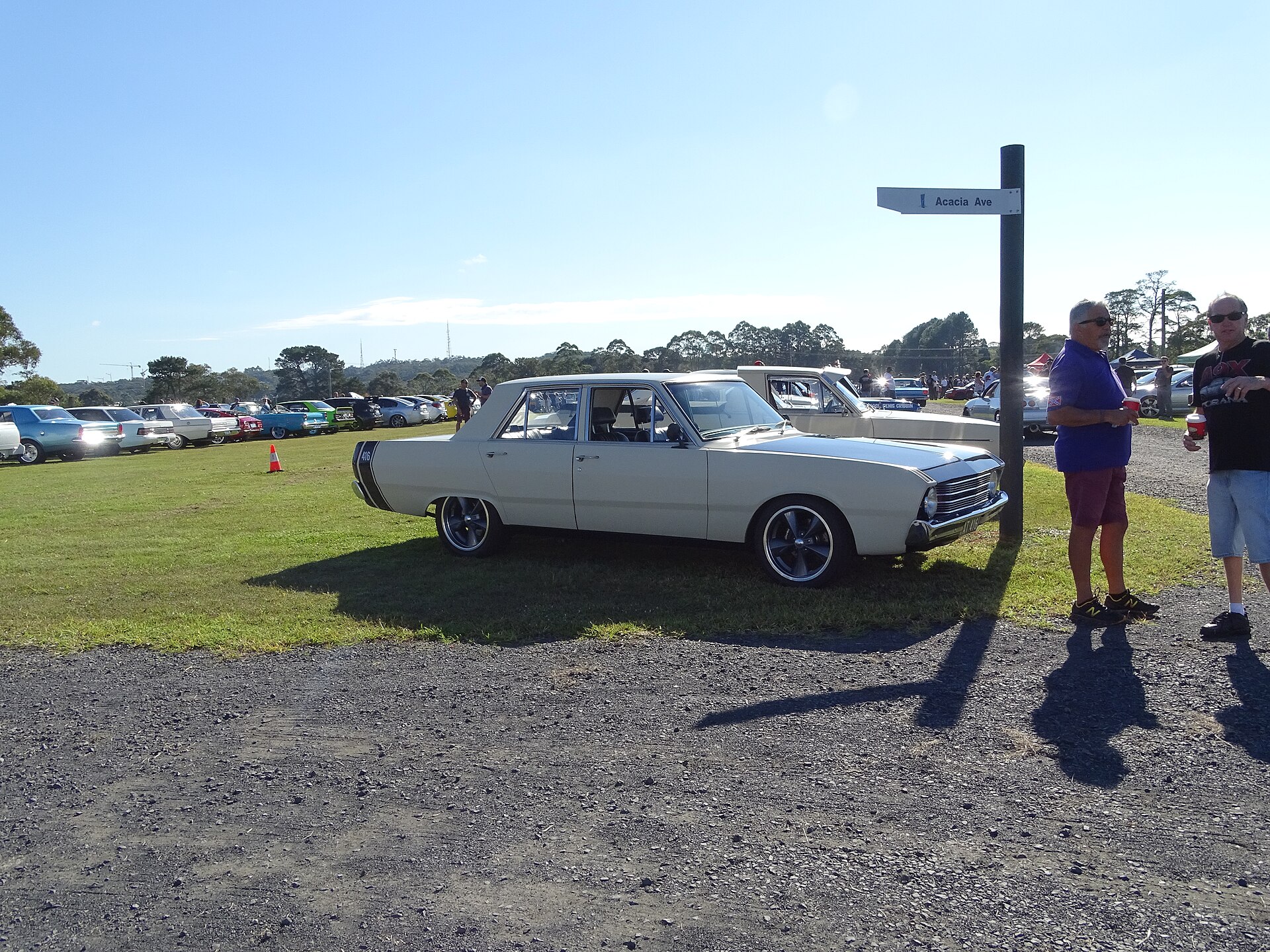
- Built
- 1969–1971
- Generations
- 2 · VF to VG
- Top power
- 175 kW (238 PS)
Timeline
Valiant Pacer generations
Click a generation for its own page
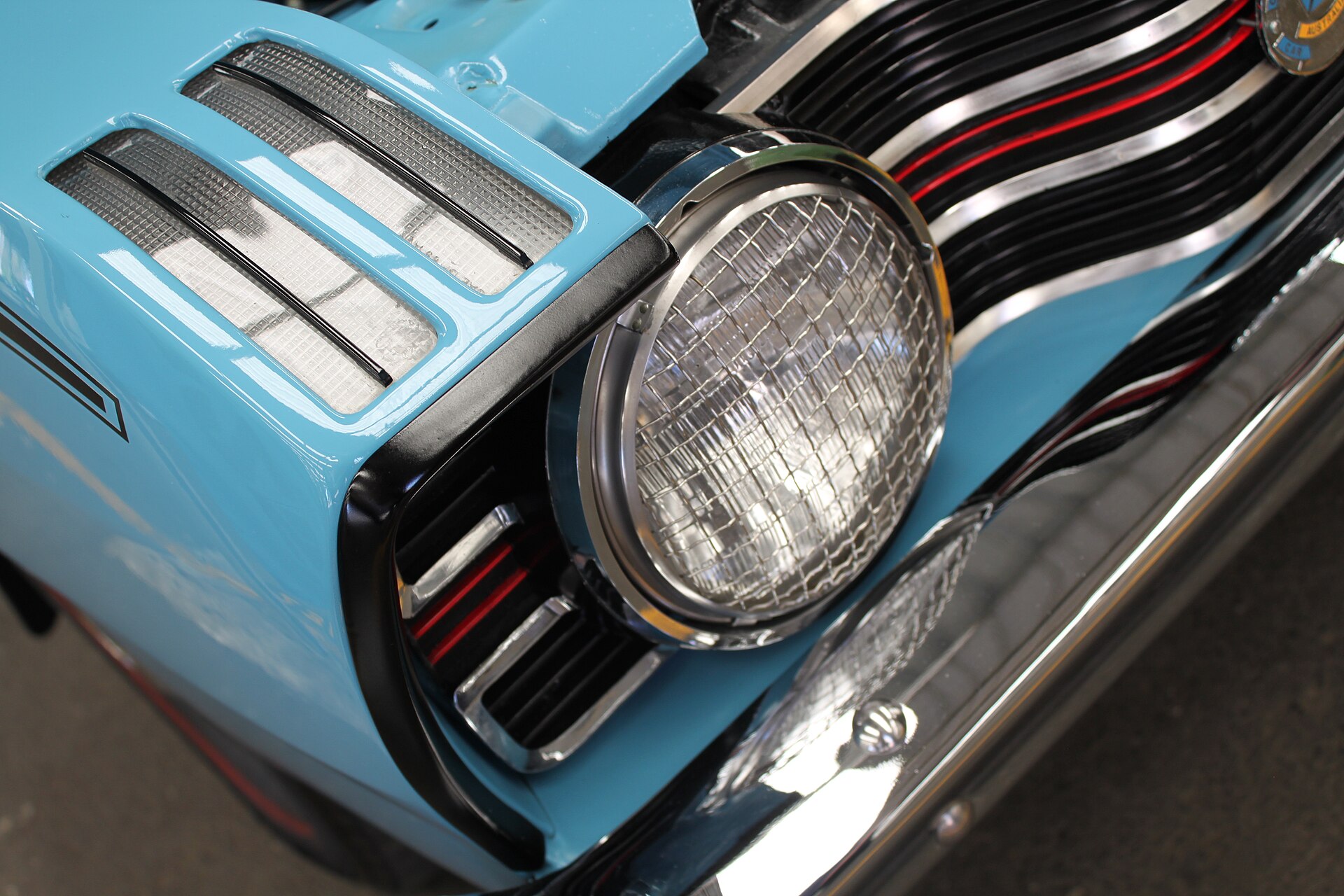
- Valiant Pacer VF 1969–1970 · Sedan · 130 kW (177 PS)
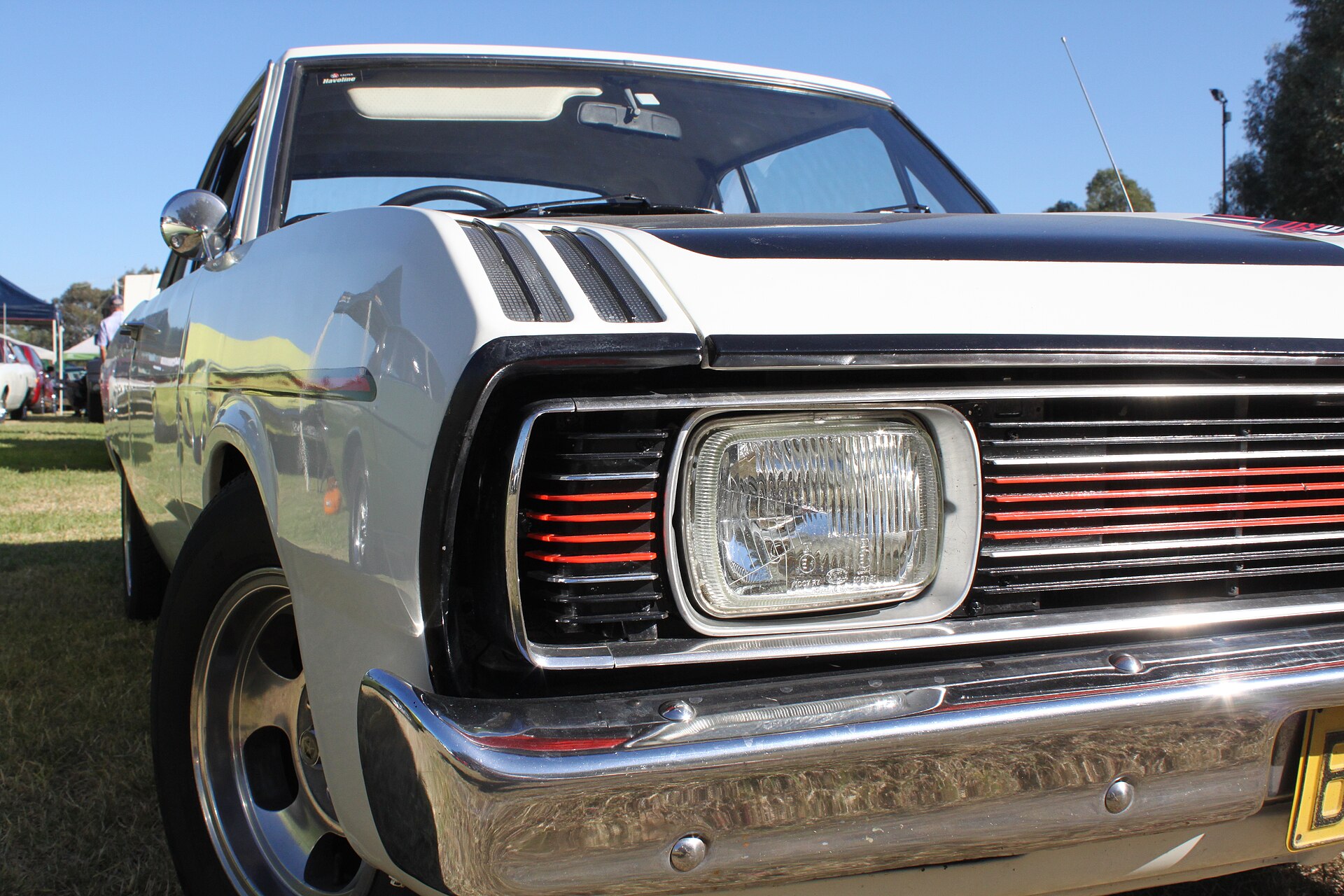
- Valiant Pacer VG 1970–1971 · Sedan, Coupe · 138–175 kW (188–238 PS)
Newest first · 2 generations since 1969
-
1970
-
1969


All generations by year: Valiant Pacer VG (1970–1971) · Valiant Pacer VF (1969–1970)
Which one is mine?
Pick the year of first registration to see which generation it is.
Check by VINThe Valiant Pacer was Chrysler Australia's first performance Valiant, a sports version of the VF and VG ranges built from March 1969 to 1971. The VF Pacer used a high-compression 3.7-litre slant six rated at 130 kW (175 bhp). The VG Pacer of April 1970 switched to the new 4.0-litre Hemi-6 with 138 to 175 kW (185 to 235 bhp) and added a two-door hardtop.
In short
- VF Pacer (1969-1970): 4,012 built, 11 % of VF Valiant sales, priced at A$2,798 (1969).
- VG Pacer (1970-1971): 4,547 built, 3,385 sedans and 1,162 hardtops.
- Three-speed floor-shift manual only, because no Australian maker produced a four-speed.
- 1970 Hardie-Ferodo 500 at Bathurst: two-barrel Pacers finished fourth and fifth outright.
Specs by version
Engines
| Version | Engine | Power | Gearbox | Drive | Production years |
|---|---|---|---|---|---|
| VF · 1969–1970 | |||||
| VF · 225 slant six (high compression), three-speed manual | 3.7 l · 6 cyl · Petrol 3,687 cc | 130 kW 177 PS174 hp | 3-sp Manual | Rear-wheel drive | 1969–1970 |
| VG · 1970–1971 | |||||
| VG · 245 Hemi-6 two-barrel, three-speed manual | 4.0 l · 6 cyl · Petrol 4,018 cc | 138 kW 188 PS185 hp | 3-sp Manual | Rear-wheel drive | 1970–1971 |
| VG · 245 Hemi-6 E31 two-barrel, three-speed manual | 4.0 l · 6 cyl · Petrol 4,018 cc | 145 kW 197 PS194 hp | 3-sp Manual | Rear-wheel drive | 1970–1971 |
| VG · 245 Hemi-6 E34 four-barrel, three-speed manual | 4.0 l · 6 cyl · Petrol 4,018 cc | 175 kW 238 PS235 hp | 3-sp Manual | Rear-wheel drive | 1970–1971 |
Performance
Show all 2 versions
| Version | 0–100 km/h | Top speed |
|---|---|---|
| VF · 1969–1970 | ||
| VF · 225 slant six (high compression), three-speed manual | 9.6 s 0–62 mph | 174 km/h108 mph |
| VG · 1970–1971 | ||
| VG · 245 Hemi-6 two-barrel, three-speed manual | - | 178 km/h111 mph |
Dimensions and weight
Show all 1 versions
| Version | Kerb weight |
|---|---|
| VF · 1969–1970 | |
| VF · 225 slant six (high compression), three-speed manual | 1,340 kg2,954 lb |
Verified Manufacturer and type-approval data from our catalog · Sources and methodology
Valiant Pacer at a glance
| Specification | Chrysler Valiant Pacer |
|---|---|
| Maker | Chrysler Australia |
| Series and years | VF from March 1969; VG from April 1970 to mid-1971 |
| Built | 8,559 (VF 4,012; VG 4,547) |
| Bodies | four-door sedan; two-door hardtop (VG only) |
| Engines | 225 slant six, 3.7 L (VF); 245 Hemi-6, 4.0 L (VG) |
| Power (maker's figures) | 130 kW (175 bhp) VF; 138 kW (185 bhp) VG; 145 kW (195 bhp) E31; 175 kW (235 bhp) E34 |
| Gearbox | Borg Warner three-speed manual, floor shift |
| Kerb weight | 1,340 kg (2,954 lb), VF |
| Top speed | 174 km/h (108 mph) VF; 178 km/h (111 mph) VG |
| Acceleration | 0-100 km/h 9.6 s (VF), 8.5 s (VG); 400 m 17.4 s (VF), 15.7 s (VG E34) |
| Price new | A$2,798 (VF, 1969); A$2,978 (VG sedan, 1970); A$3,178 (VG hardtop, 1970) |
Why Chrysler Australia built the Pacer
The VF Valiant range arrived in March 1969 with two new models, the Regal 770 and the Pacer. The Pacer was a budget four-door aimed at young drivers, and its price kept it inside the A$2,251-3,100 bracket of Class C in the Bathurst 500 production car race. Engineer John Ellis later explained the thinking: "We did not have the resources to go head-to-head with Ford's Falcon GT." Ford's Falcon GT raced in a dearer class, and the Pacer aimed at the cheaper one. With 4,012 cars built, the VF Pacer accounted for 11 % of VF Valiant sales.
VF Pacer 225: the slant six with 175 bhp
The VF Pacer used the RG 225 cu in (3.7-litre) slant six with compression raised from 8.4:1 to 9.2:1, a Carter two-barrel downdraught carburettor and a dual-outlet extractor exhaust. Period sources give 130 kW (175 bhp) and describe it as the most powerful six then built in Australia. Unique Cars and Parts notes that Chrysler never published an official power figure for the Pacer.
Power went through a Borg Warner three-speed with a floor shift, reverse above first and no lock-out. First gear was 2.95:1, which made standing starts harder. The suspension was lowered by about 13 mm (0.5 in) on the torsion bars and gained a front anti-roll bar; finned drums were standard, with power front discs and a Sure-Grip differential with a 3.23:1 ratio as options.
The look was loud. Buyers chose from three colours, Wild Red, Wild Blue and Wild Yellow, with a black and red grille, imitation mag wheel covers, a waist-high stripe and "Pacer 225" decals. Inside were high-back reclining seats and a tachometer on top of the dashboard; early publicity photos show it outside the windscreen, a sign of a late change. Period testers recorded 174 km/h (108 mph), 0-100 km/h in 9.6 seconds and the standing 400 m in 17.4 seconds.

VG Hemi Pacer and the E-options
The VG Pacer of April 1970 introduced the Hemi-6, a 245 cu in (4,018 cc) six with a bore and stroke of 96 x 93 mm. With it the VG became the first Valiant with almost 100 % local content. The standard Pacer engine had a two-barrel carburettor and 138 kW (185 bhp), and two performance options sat above it.
| VG Pacer engine | Carburettor | Power | Main parts |
|---|---|---|---|
| Standard 245 | two-barrel | 138 kW (185 bhp) | sedan and hardtop |
| E31 | two-barrel | 145 kW (195 bhp) | hotter camshaft, windage tray, smaller fan |
| E34 | four-barrel | 175 kW (235 bhp) | long ram intake manifold, dual-plate clutch; sedan only |
| E35 | four-barrel | no figure published | heavy-duty bearings, dual-plate clutch, engine torque strut |
The VG added a pillarless two-door hardtop at A$3,178 (1970), fractionally heavier than the A$2,978 (1970) sedan. Production reached 4,547: 3,385 sedans and 1,162 hardtops. Only three hardtops received the E31 package and three the E35, and none had the E34. Wheels headlined its first test "Hemi Pacer: Family Racer"; the E34 covered 400 m in 15.7 seconds and a regular Pacer reached 178 km/h (111 mph). The three-speed stayed, because Chrysler Australia's local-content policy left no local four-speed to fit.

Pacers at Bathurst, 1969 and 1970
Leo Geoghegan gave the Pacer its race debut at Catalina Park on 15 June 1969. Two Eiffeltower Pacers finished first and second in Class C of the 1969 Datsun 3-Hour at Sandown. At the 1969 Hardie-Ferodo 500 the only Pacer on the grid, driven by Graham Ryan and Mike Kable, was fourth in Class C and 18th outright.
The VG did better. At the 1970 Hardie-Ferodo 500 Geoghegan's Sporty Cars ran two-barrel Pacers in Class C: Doug Chivas and Graham Ryan finished fourth outright, one lap behind the winner, with Geoghegan and Nick Ledingham fifth. Ahead of them were two Falcon GT-HO Phase IIs and Don Holland's Torana GTR XU-1. Peter Brown and Des West brought a four-barrel Pacer home seventh outright, running in Class D.
From Pacer to Charger R/T
The VH Valiant replaced the VG in June 1971. A VH Pacer sedan continued with the 265 six, rated at 163 kW (218 bhp) and priced at A$3,235 (1972). Chrysler's performance effort moved to the shorter two-door Valiant Charger, whose R/T took over the racing programme; the old VF racer served as a development car for the VG and the Charger R/T. Holden's answer in the same years was the V8 Monaro.
Valiant Pacer today: what to check
Model codes help to confirm a car: VF-S41 for the VF Pacer sedan, VG-S41 for the VG sedan and VG-S23 for the VG hardtop. A real VF Pacer has the high-compression 225, which was not offered in other VF models, and the dashboard tachometer.
- VG hardtops: 1,162 were built, and only six had an E-option engine.
- E-option sedans: the E31 and E34 parts are specific, so a standard Hemi-6 with an added four-barrel is a different car.
- Wagons: sources differ; Unique Cars and Parts mentions two pre-production cars, Wikipedia about 20 VF Pacer wagons.
- Gearbox: every Pacer left the factory with the three-speed manual.
The Pacer is listed in the Chrysler catalogue and belongs to the Australian muscle cars, the local performance sedans and coupés built between 1967 and 1979.
Chrysler Valiant Pacer: first vs latest generation
| Spec | Valiant Pacer VF | Valiant Pacer VG | Change |
|---|---|---|---|
| Years | 1969–1970 | 1970–1971 | 1 years apart |
| Most powerful version | 130 kW (177 PS) | 175 kW (238 PS) | +45 kW (+35%) |
| Top speed | 174 km/h | 178 km/h | +4 km/h |
Oldest and newest generation in the 1cars catalog. Power is the strongest version of each; other rows are shown only when both generations have the figure.
Chrysler Valiant Pacer in our rankings
- No. 8 of 15 · Fastest cars of the 1960s (174 km/h)
- No. 10 of 17 · Fastest cars of the 1970s (178 km/h)
- No. 40 of 144 · Biggest engines: sedans (4,018 cc · top 28%)
- No. 196 of 640 · Biggest engines: cars (4,018 cc · top 31%)
- No. 130 of 394 · Lightest cars (1,340 kg · top 34%)
- No. 22 of 62 · Lightest sedans (1,340 kg · top 36%)
Bigger engine than 72% of ranked sedans in the 1CARS catalog (No. 40 of 144).
FAQ
What engine did the Valiant Pacer have?
The VF Pacer of 1969 had a high-compression 3.7-litre 225 slant six with 130 kW (175 bhp). The VG Pacer of 1970 used the 4.0-litre 245 Hemi-6 with 138 to 175 kW (185 to 235 bhp).
How many Valiant Pacers were made?
Muscle Car Mag gives 4,012 VF Pacers and 4,547 VG Pacers, the latter 3,385 sedans and 1,162 hardtops, for 8,559 VF and VG cars in total.
Did the Valiant Pacer have a four-speed gearbox?
No. Every VF and VG Pacer had a three-speed floor-shift manual, because Chrysler Australia used local components and no Australian maker built a four-speed at the time.
How did the Pacer do at Bathurst?
In 1970 the E31 Pacers of Doug Chivas and Graham Ryan and of Leo Geoghegan and Nick Ledingham finished fourth and fifth outright in the Hardie-Ferodo 500, behind two Falcon GT-HOs and a Torana XU-1.
Data sources
Data checked by an editor against the sources below.
- Wikipedia - Chrysler Valiant (VF)
- Com - Top 5 Are These The Best Chryslers Ever Made In Australia 575102
- Gregwapling - Valiant Vg


