 Ford Falcon GT
All generations, specs and history
Published Sources (3) Report an error
By Sarah Whitmore, Senior Automotive Writer
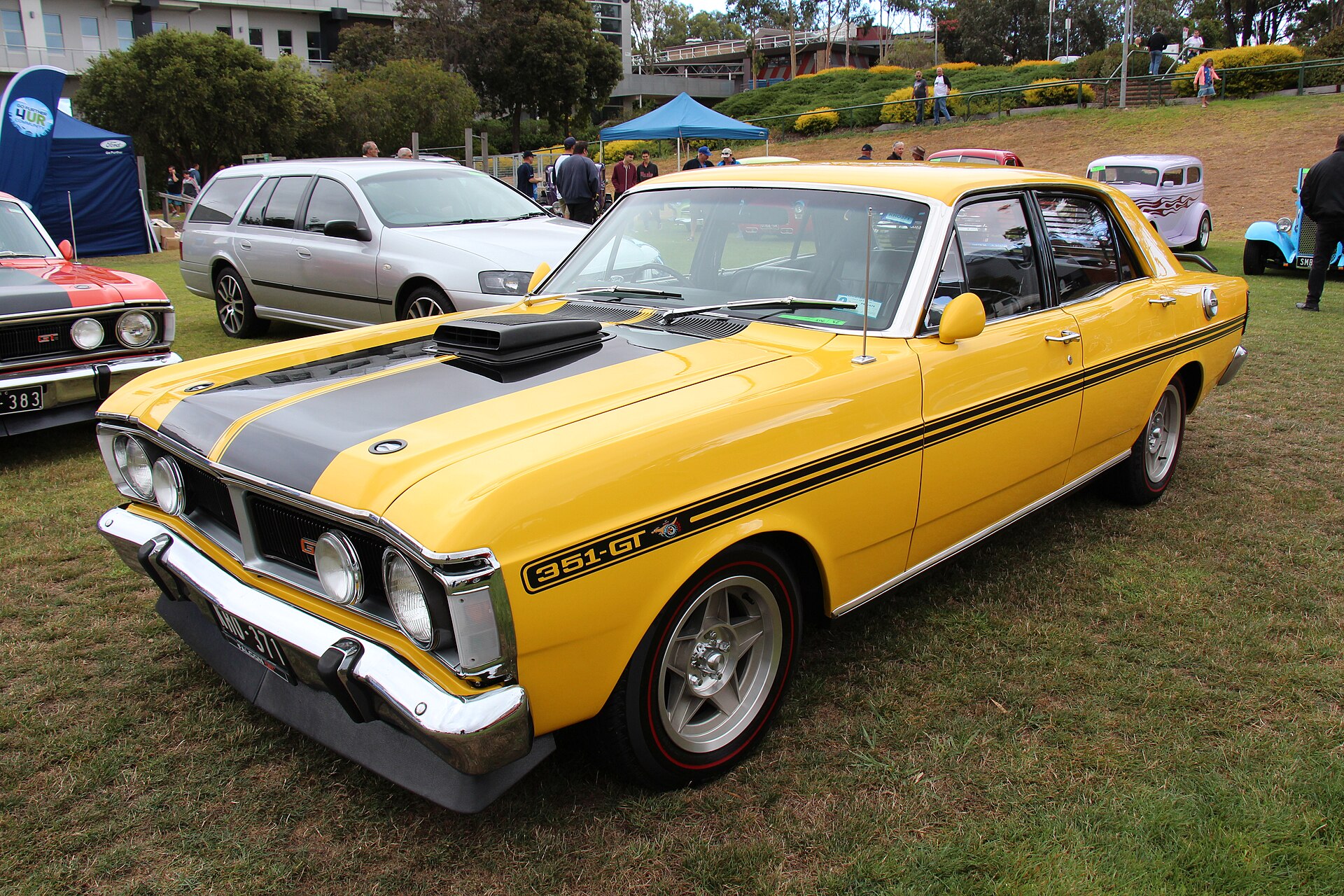
- Built
- 1967–2014
- Generations
- 8
- Top power
- 335 kW (455 PS)
Timeline
Falcon GT generations
Click a generation for its own page
- Falcon XR GT 1967–1968 · Sedan · 168 kW (228 PS)
- Falcon XT GT 1968–1969 · Sedan · 172 kW (234 PS)
- Falcon XW GT and GT-HO 1969–1970 · Sedan · 216–224 kW (294–305 PS)
- Falcon XY GT and GT-HO Phase III 1970–1971 · Sedan · 224 kW (305 PS)
- Falcon XA GT 1972–1973 · Sedan, Coupe · 224 kW (305 PS)
- Falcon XB GT 1973–1976 · Sedan, Coupe
- Falcon EB II and EL GT 1992–1997 · Sedan · 200 kW (272 PS)
- FPV GT 2003–2014 · Sedan · 335 kW (455 PS)
Newest first · 8 generations since 1967
- 2003 FPV GT 2003–2014 · Sedan · 335 kW (455 PS)
- 1992 Falcon EB II and EL GT 1992–1997 · Sedan · 200 kW (272 PS)
- 1973 Falcon XB GT 1973–1976 · Sedan, Coupe
- 1972 Falcon XA GT 1972–1973 · Sedan, Coupe · 224 kW (305 PS)
- 1970 Falcon XY GT and GT-HO Phase III 1970–1971 · Sedan · 224 kW (305 PS)
- 1969 Falcon XW GT and GT-HO 1969–1970 · Sedan · 216–224 kW (294–305 PS)
- 1968 Falcon XT GT 1968–1969 · Sedan · 172 kW (234 PS)
-
1967
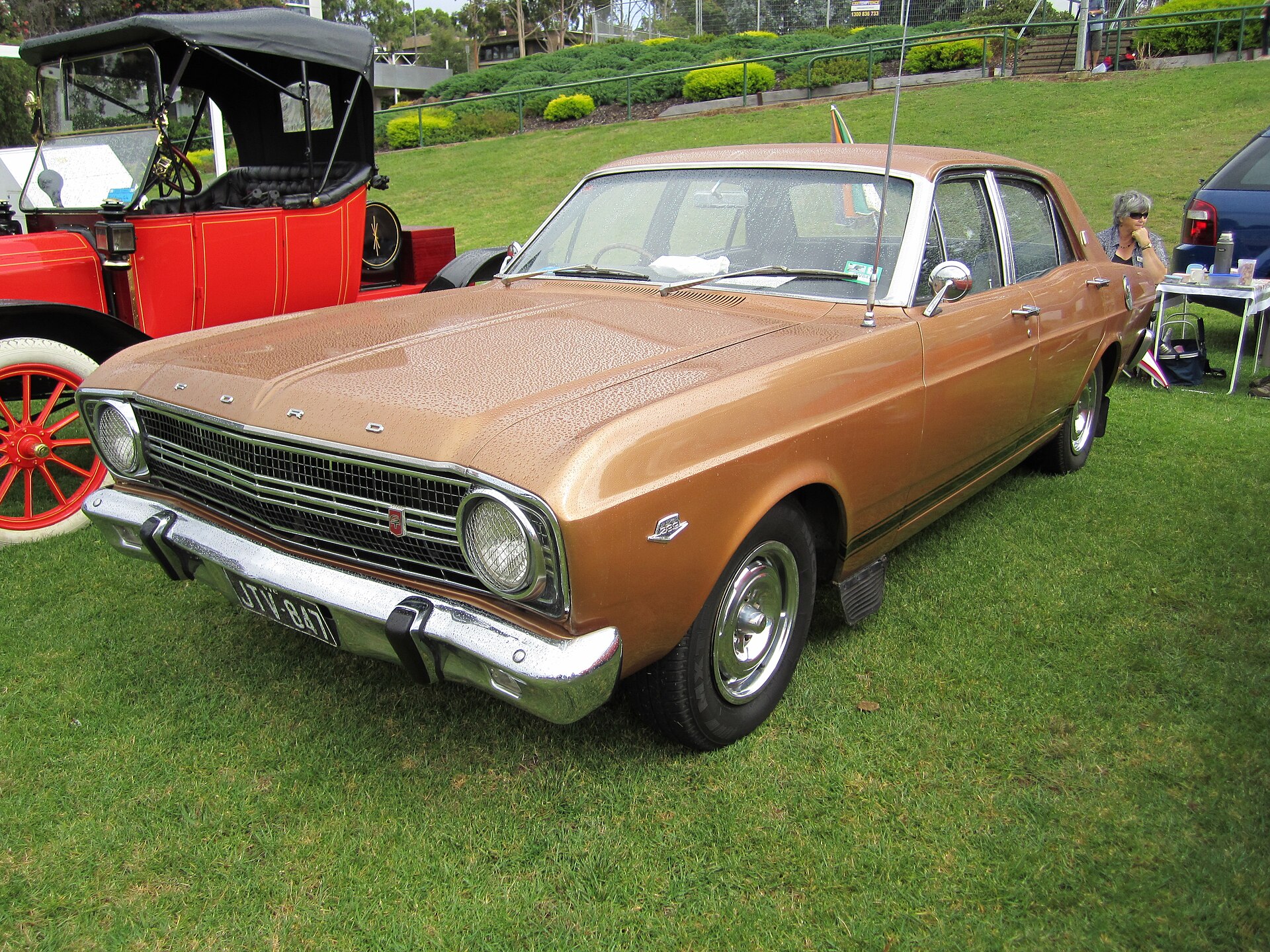

All generations by year: FPV GT (2003–2014) · Falcon EB II and EL GT (1992–1997) · Falcon XB GT (1973–1976) · Falcon XA GT (1972–1973) · Falcon XY GT and GT-HO Phase III (1970–1971) · Falcon XW GT and GT-HO (1969–1970) · Falcon XT GT (1968–1969) · Falcon XR GT (1967–1968)
Which one is mine?
Pick the year of first registration to see which generation it is.
- FPV GT 2003–2014
- Falcon EB II and EL GT 1992–1997
- Falcon XB GT 1973–1976
- Falcon XA GT 1972–1973
- Falcon XY GT and GT-HO Phase III 1970–1971
- Falcon XW GT and GT-HO 1969–1970
- Falcon XT GT 1968–1969
- Falcon XR GT 1967–1968
Which Falcon GT to choose
Our verdict · Sarah Whitmore
- For the legend: an XY GT-HO Phase III, the Bathurst winner of 1971 and the fastest classic GT.
- For the first V8 Bathurst win: an XR GT in GT Gold, the car that started the line.
- For a two-door: an XA or XB GT hardtop, the only classic GTs with two doors.
- For a more available car: an XB GT sedan, the most common classic GT.
- For modern performance: an FG GT with the supercharged 335 kW V8.
This Australian Falcon GT is a different car from the North American Ford Falcon of 1960–1970. The Ford catalogue lists the Falcon GT generations and versions, and the classic GTs are part of the Australian block of our muscle car section; compare their figures with other cars in the car rankings.
The Ford Falcon GT was the V8 performance version of the Falcon that Ford Australia built from 1967 to 1976. Its GT-HO homologation specials won the Bathurst 500 in 1970 and 1971, and WhichCar calls the 1971 GT-HO Phase III the ultimate Aussie muscle car. The GT badge returned on anniversary models in 1992 and 1997 and on Ford Performance Vehicles sedans from 2003 to 2014.
In short
- Classic series: XR GT (1967), XT GT (1968), XW GT and GT-HO (1969–1970), XY GT and GT-HO Phase III (1970–1971), XA GT (1972–1973) and XB GT (1973–1976).
- V8s grew from the 289 with 168 kW (225 bhp) to the 351 Cleveland, rated by Ford at 224 kW (300 bhp) in the GT-HO; estimates for the real output of the Phase III run from 260 to 280 kW.
- Wheels magazine measured 228 km/h in a Phase III in October 1971; Ford built 300 of them.
- The 1972 Supercar scare stopped the GT-HO Phase IV after four cars.
Specs by version
Engines
| Version | Engine | Power | Torque | Gearbox | Drive | Production years |
|---|---|---|---|---|---|---|
| Falcon XR GT · GT 4.7 V8 289 (XR) | 8 cyl · Petrol | 168 kW 228 PS225 hp | — | 4-sp Manual | Rear-wheel drive | 1967–1968 |
| Falcon XW GT and GT-HO · GT 5.8 V8 351 Windsor (XW) | 8 cyl · Petrol | 216 kW 294 PS290 hp | 522 Nm385 lb-ft | — | Rear-wheel drive | 1969–1970 |
| Falcon XW GT and GT-HO · GT-HO Phase I 5.8 V8 351 Windsor (XW) | 8 cyl · Petrol | 224 kW 305 PS300 hp | — | — | Rear-wheel drive | 1969–1970 |
| Falcon XY GT and GT-HO Phase III · GT 5.8 V8 351 Cleveland (XY) | 5.8 l · 8 cyl · Petrol 5,763 cc | 224 kW 305 PS300 hp | 515 Nm380 lb-ft | — | Rear-wheel drive | 1970–1971 |
| Falcon XY GT and GT-HO Phase III · GT-HO Phase III 5.8 V8 351 Cleveland (XY) | 5.8 l · 8 cyl · Petrol 5,763 cc | 224 kW 305 PS300 hp | 515 Nm380 lb-ft | 4-sp Manual | Rear-wheel drive | 1971 |
Performance
Show all 1 versions
| Version | 0–100 km/h | Top speed |
|---|---|---|
| Falcon XY GT and GT-HO Phase III · GT-HO Phase III 5.8 V8 351 Cleveland (XY) | 6.9 s 0–62 mph | 228 km/h142 mph |
Dimensions and weight
Show all 1 versions
| Version | Kerb weight |
|---|---|
| Falcon XY GT and GT-HO Phase III · GT 5.8 V8 351 Cleveland (XY) | 1,325 kg2,921 lb |
Verified Manufacturer and type-approval data from our catalog · Sources and methodology
Ford Falcon GT at a glance
| Specification | Falcon GT (1967–1976) |
|---|---|
| Maker | Ford Australia, Broadmeadows |
| Production | 1967–1976; later GTs 1992, 1997 and 2003–2014 |
| Bodies | four-door sedan; two-door hardtop from the XA (1972) |
| Layout | front engine, rear-wheel drive |
| Engines | 289, 302 and 351 cu in V8 (4.7 to 5.8 litres) |
| Power | 168 kW (225 bhp) to 224 kW (300 bhp), factory ratings |
| Fastest version | XY GT-HO Phase III, 228 km/h (Wheels test, 1971) |
| Bathurst wins | 1967 (XR GT), 1970 (XW GT-HO Phase II), 1971 (XY GT-HO Phase III) |
| Most built | XB GT, 2,899 cars |
| Last car | GT-F, 2014 |
Classic Falcon GT series
| Series | Introduced | Engine | Power | Built |
|---|---|---|---|---|
| XR GT | 1967 | 289 Windsor V8 (4.7 l) | 168 kW (225 bhp) | 596 |
| XT GT | May 1968 | 302 Windsor V8 (5.0 l) | 172 kW (230 bhp) | not published |
| XW GT | 1969 | 351 Windsor V8 (5.8 l) | 216 kW (290 bhp) | 2,287 |
| XW GT-HO Phase I | 1969 | 351 Windsor V8 | 224 kW (300 bhp) | 662 XW GT-HOs in all |
| XW GT-HO Phase II | 24 August 1970 | 351 Cleveland V8 | not published | included above |
| XY GT | 1970 | 351 Cleveland V8 | 224 kW (300 bhp) | about 1,557 |
| XY GT-HO Phase III | May 1971 | 351 Cleveland V8 | 224 kW (300 bhp) | 300 |
| XA GT | March 1972 (hardtop August 1972) | 351 Cleveland V8 | 224 kW (300 bhp) | not published; 250 with RPO 83 |
| XB GT | September 1973 | 351 V8 | not published | 2,899 |
The power ratings are Ford Australia's own figures of the time, and the kW values follow the sources. Where a series has no published figure, the table says so rather than repeating the rating of a neighbour.
XR and XT GT: the V8 Falcon arrives (1967–1969)
Ford Australia introduced the GT in 1967 as the fast version of the XR Falcon, which had been on sale since September 1966. It started from the Police Interceptor Pack and added the 289 cu in Windsor V8 also used in the Ford Mustang, suspension lowered and firmed by 5 cm, stronger shock absorbers, charcoal seats, wood-grain trim and Stewart-Warner instruments. Every car had a four-speed manual and nearly all were painted GT Gold; eight Gallaher Silver cars were made to promote the tobacco brand. Ford built 596 XR GTs.
The car went straight to Mount Panorama. At the 1967 Gallaher 500, Harry Firth and Fred Gibson won for the factory team by 11 seconds from the Geoghegan brothers in a second XR GT. It was the first Bathurst victory for a V8-powered car.
The XT GT of May 1968 took a 302 cu in V8 with 172 kW (230 bhp), a wider colour range and roughly doubled the sales of its predecessor. Three XT GTs also won the Teams Prize in the 1968 London–Sydney Marathon.

XW GT-HO Phase I and II (1969–1970)
The XW Falcon arrived in June 1969, and two months later Ford added the GT-HO, for "handling option", above the GT. Both used the 351 cu in Windsor V8: in the GT it was rated at 216 kW (290 bhp) and 522 Nm (385 lb-ft), while the GT-HO got 224 kW (300 bhp) from a larger carburettor, a different camshaft and intake, stiffer springs and dampers and thicker anti-roll bars.
In 1970 the new 351 Cleveland V8 replaced the Windsor. A few early GT-HOs with the Cleveland engine are known as "Phase 1.5" cars. The GT-HO Phase II followed on 24 August 1970 with a 700 cfm carburettor instead of the 600 cfm unit. Ford built 2,287 XW GTs and 662 XW GT-HOs.
At Bathurst the privately entered XW GT-HO of Bruce McPhee and Barry Mulholland finished second in 1969. In 1970 Allan Moffat won the race in a Phase II, with McPhee second, a one-two for the Ford works team.

XY GT-HO Phase III (1971)
The XY GT gained a "shaker" bonnet scoop borrowed from the Mustang Mach 1. The Phase III, released in May 1971, was the last and fastest of the GT-HO homologation specials. Ford built 300 between May and November 1971 at Broadmeadows, against about 1,557 XY GTs from September 1970 to December 1971.
| Specification | XY GT-HO Phase III |
|---|---|
| Engine | 351 Cleveland V8, 5,763 cc, 10.3:1 compression |
| Factory rating | 224 kW (300 bhp) at 5,400 rpm, 515 Nm (380 lb-ft) at 3,400 rpm |
| Estimated real output | 260–280 kW (350–380 bhp), per Wikipedia |
| Gearbox | four-speed top-loader manual |
| Rear axle | nine-inch with Detroit locker |
| Fuel tank | 164 litres (36 imperial gallons) |
| Weight | 1,325 kg (XY GT, manual) |
| Top speed | 228 km/h at 6,150 rpm, Wheels test, October 1971 |
| 0–100 km/h | 6.9 s (Wikipedia); 0–97 km/h 6.4 s in the Wheels test |
The carburettor is described differently by the sources: Wikipedia lists a 600 cfm Autolite four-barrel for the XY GT, while WhichCar names a larger 780 cfm Holley for the Phase III. Early cars had an electrical rev limiter that cut in at 6,150 rpm. According to Wikipedia, the 224 kW (300 bhp) rating was understated to satisfy insurers, and the same source notes that the popular claim of the "world's fastest four-door production car" is doubtful: a 1969 Dodge Polara police car had been timed at 147 mph by the Michigan State Police.
Allan Moffat won the 1971 Hardie-Ferodo 500 in a Phase III, and the cars kept winning until 1973. Vermillion Fire was the most common colour, with 68 cars, according to WhichCar.

Phase IV and the Supercar scare (1972)
Ford planned about 200 GT-HO Phase IV cars on the new XA body for the 1972 Bathurst race. On 25 June 1972 The Sun-Herald published a front-page article by Evan Green, "160 MPH 'Super Cars' Soon", and the New South Wales transport minister Milton Morris called the cars "bullets on wheels" and asked for a national ban. CAMS ended Group E series-production racing on 29 June, and Ford cancelled the Phase IV on 2 July.
Four cars had already been started. Three became race cars, and one road car was sold to the public the next year through Jack Brabham Ford, repainted from Calypso Green to Zircon Green. From 1973 CAMS ran Group C, which let race cars be modified separately from the road cars.
XA and XB GT: hardtops and the end (1972–1976)
The Australian-designed XA arrived in March 1972, and from August 1972 the GT was also sold as a two-door hardtop, the first GT with two doors. It had its own front wings with dummy vents and a bonnet with NACA-style ducts, and kept the 351 V8 rated at 224 kW (300 bhp). Between April and August 1973 Ford built 250 XA GTs with the RPO 83 package, 130 sedans and 120 hardtops, with a 780 Holley carburettor and 2.25-inch exhaust headers.
The XB GT of September 1973 had a twin-nostril bonnet in the style of the 1971–1973 Mustang Mach 1. With 2,899 cars, 1,950 sedans and 949 hardtops, it was the best-selling Falcon GT. The XB also became a film car: the black Pursuit Special of Mad Max is a 351 version of a 1973 XB GT hardtop. Production of the XB ended in July 1976, and the GT name was then absent until 1992.
The GT name after 1976
| Model | Years | Engine | Power |
|---|---|---|---|
| EB II 25th Anniversary GT | October 1992 | V8, developed by Tickford | 200 kW at 5,700 rpm, 420 Nm |
| EL 30th Anniversary GT | 1997 | V8, developed by Tickford | 200 kW |
| FPV BF GT Cobra | 2006 | V8 | 302 kW, 540 Nm |
| FPV FG GT Black and R-Spec | 2011–2012 | supercharged 5.0 V8 (Boss 335) | 335 kW, 570 Nm |
| FPV GT-F "351" | June 2014 | supercharged 5.0 V8 | the last Falcon GT |
Ford Performance Vehicles, a joint venture of Ford Australia and Prodrive from 2003, made the GT a permanent model. The final GT-F of 2014, 550 sedans and 120 utes, carried a "351" badge as a tribute to the XW to XB cars. FPV closed in 2014 as Ford Australia prepared to stop local manufacturing by 2016.

Photo gallery

Ford Falcon GT evolution in numbers
Did you know?
- The Ford Falcon GT ran for 47 years, from 1967 to 2014, over 8 generations in our catalog.
- The longest-running generation is the FPV GT (2003–2014): 11 years.
- The biggest jump in power came with the FPV GT: up to 335 kW (455 PS), 135 kW more than the Falcon EB II and EL GT.
Most powerful version, kW
Figures from the 1cars catalog: power is the strongest version of each generation; generations without the figure are left out.
Ford Falcon GT: first vs latest generation
| Spec | Falcon XR GT | FPV GT | Change |
|---|---|---|---|
| Years | 1967–1968 | 2003–2014 | 36 years apart |
| Most powerful version | 168 kW (228 PS) | 335 kW (455 PS) | +167 kW (+99%) |
Oldest and newest generation in the 1cars catalog. Power is the strongest version of each; other rows are shown only when both generations have the figure.
Ford Falcon GT in our rankings
- No. 1 of 16 · Fastest cars of the 1970s (228 km/h)
- No. 9 of 52 · Power-to-weight: sedans (169 kW/t)
- No. 17 of 345 · Cars with the most generations (8 generations · top 6%)
- No. 19 of 131 · Biggest engines: sedans (5,763 cc · top 15%)
- No. 101 of 557 · Biggest engines: cars (5,763 cc · top 19%)
- No. 32 of 149 · Most powerful sedans (335 kW · top 22%)
More generations than 94% of ranked nameplates in the 1CARS catalog (No. 17 of 345).
FAQ
What does GT-HO stand for?
"HO" means "handling option". The GT-HO was the homologation version of the Falcon GT with a stronger engine and suspension, built so that Ford could race those parts in series-production events such as Bathurst.
How fast was the Falcon GT-HO Phase III?
Wheels magazine measured 228 km/h in October 1971. Wikipedia gives 6.9 seconds from 0 to 100 km/h.
How many GT-HO Phase IIIs were built?
300, between May and November 1971. Wikipedia says fewer than 100 are believed to remain.
Why was the Phase IV cancelled?
After the Sun-Herald's "Super Cars" article of 25 June 1972, politicians called for a ban, CAMS dropped the series-production rules and Ford stopped the project on 2 July 1972 with four cars built.
When was the last Ford Falcon GT made?
The GT-F of 2014, built by Ford Performance Vehicles, was the last Falcon GT.
Data sources
Data checked by an editor against the sources below.
- Wikipedia — Ford Falcon GT
- Wikipedia — Ford Falcon (XR)
- Wikipedia — Ford XY Falcon GT