 Holden Torana
All generations, specs and history
Published Sources (2) Report an error
By Sarah Whitmore, Senior Automotive Writer
- Built
- 1967–1979
- Generations
- 6
- Top power
- 179 kW (243 PS)
Timeline
Torana generations
Click a generation for its own page
- Torana HB 1967–1969 · Sedan · 42–59 kW (57–80 PS)
- Torana LC 1969–1972 · Sedan · 42–119 kW (57–162 PS)
- Torana LJ 1972–1974 · Sedan · 142 kW (193 PS)
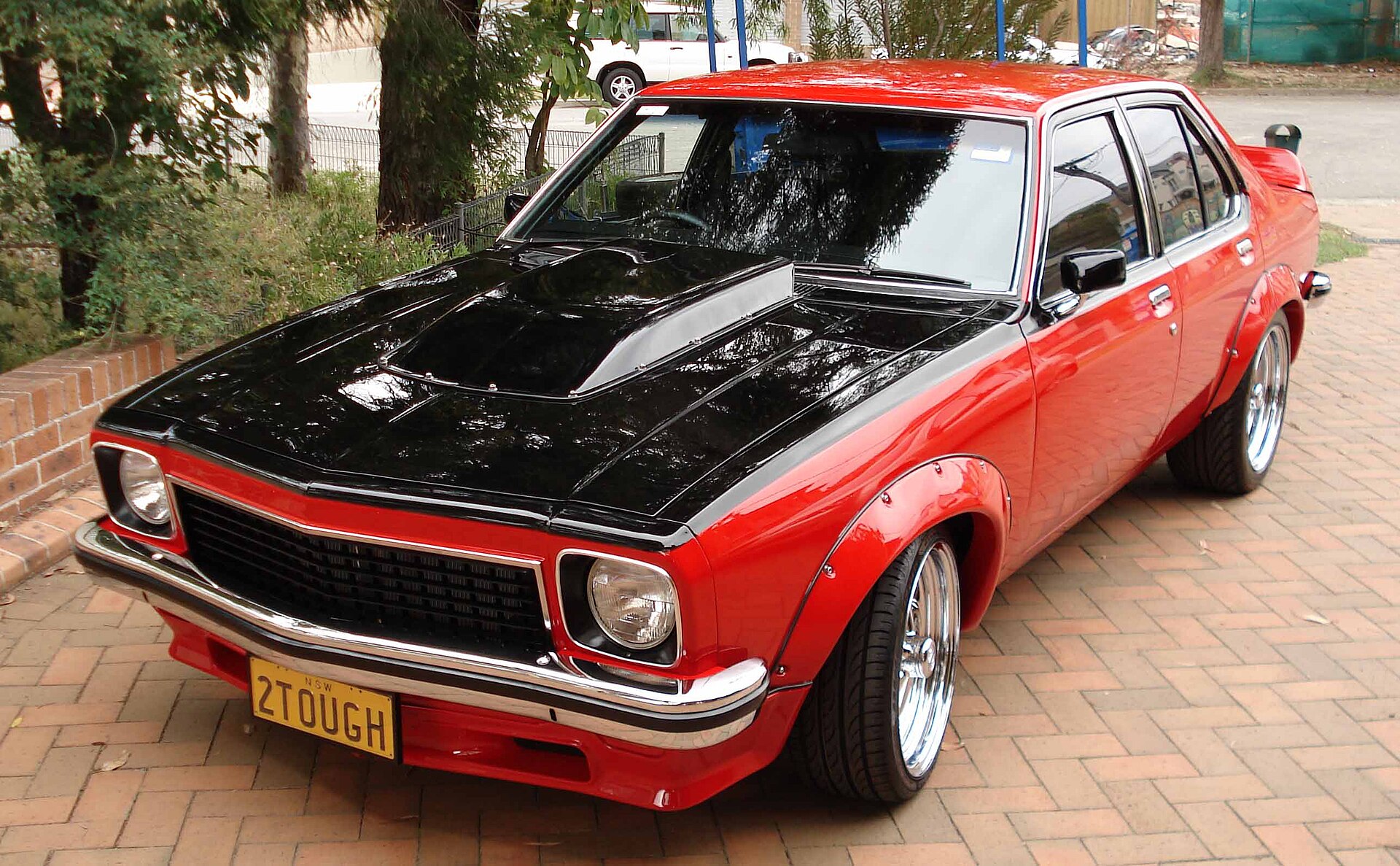
- Torana LH 1974–1976 · Sedan · 179 kW (243 PS)
- Torana LX 1976–1978 · Sedan, Hatchback · 58–179 kW (79–243 PS)
- Torana UC 1978–1979 · Sedan, Hatchback · 58–64 kW (79–87 PS)
Newest first · 6 generations since 1967
- 1978 UC 1978–1979 · Sedan, Hatchback · 58–64 kW (79–87 PS)
- 1976 LX 1976–1978 · Sedan, Hatchback · 58–179 kW (79–243 PS)
-
1974
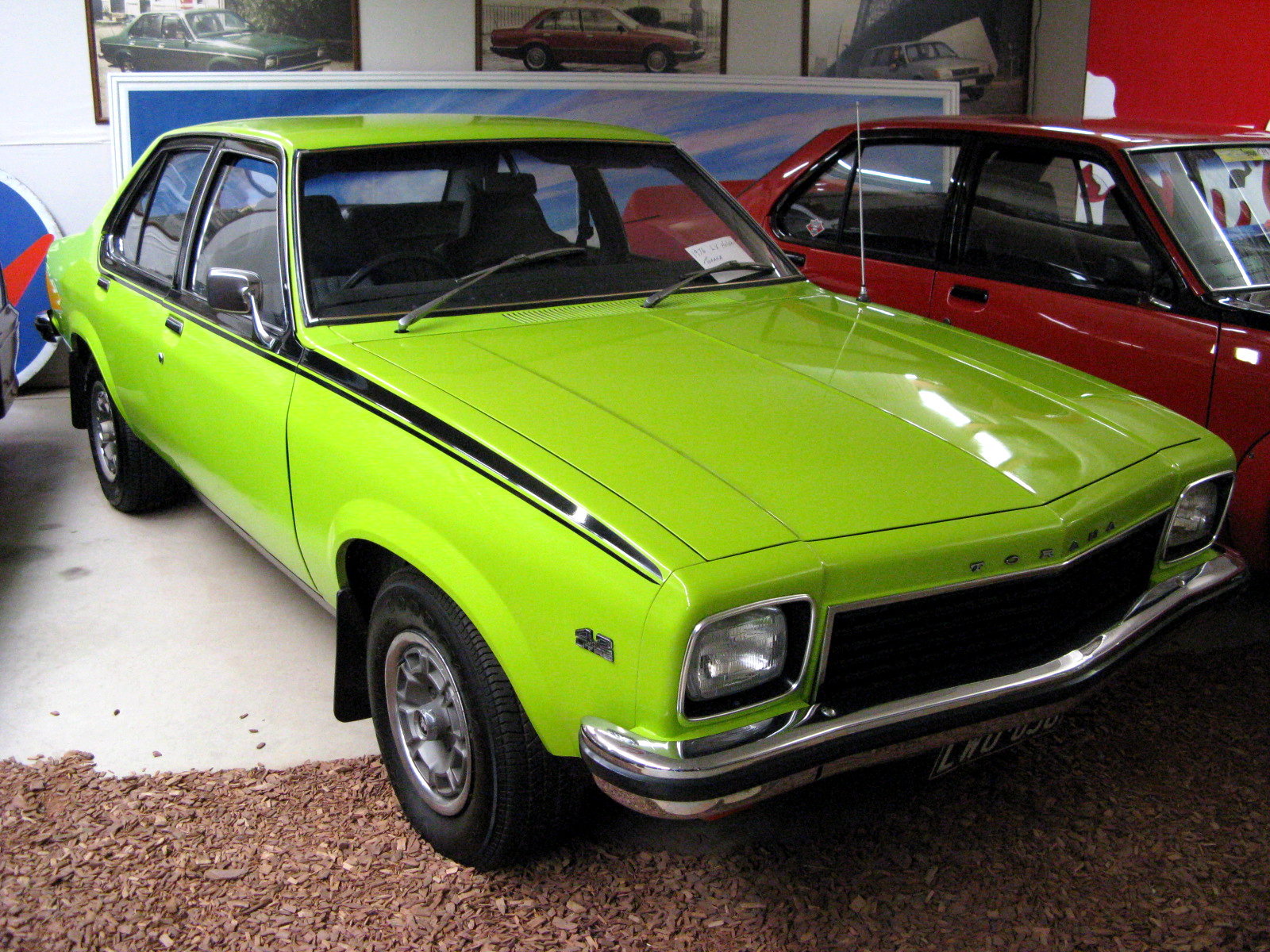
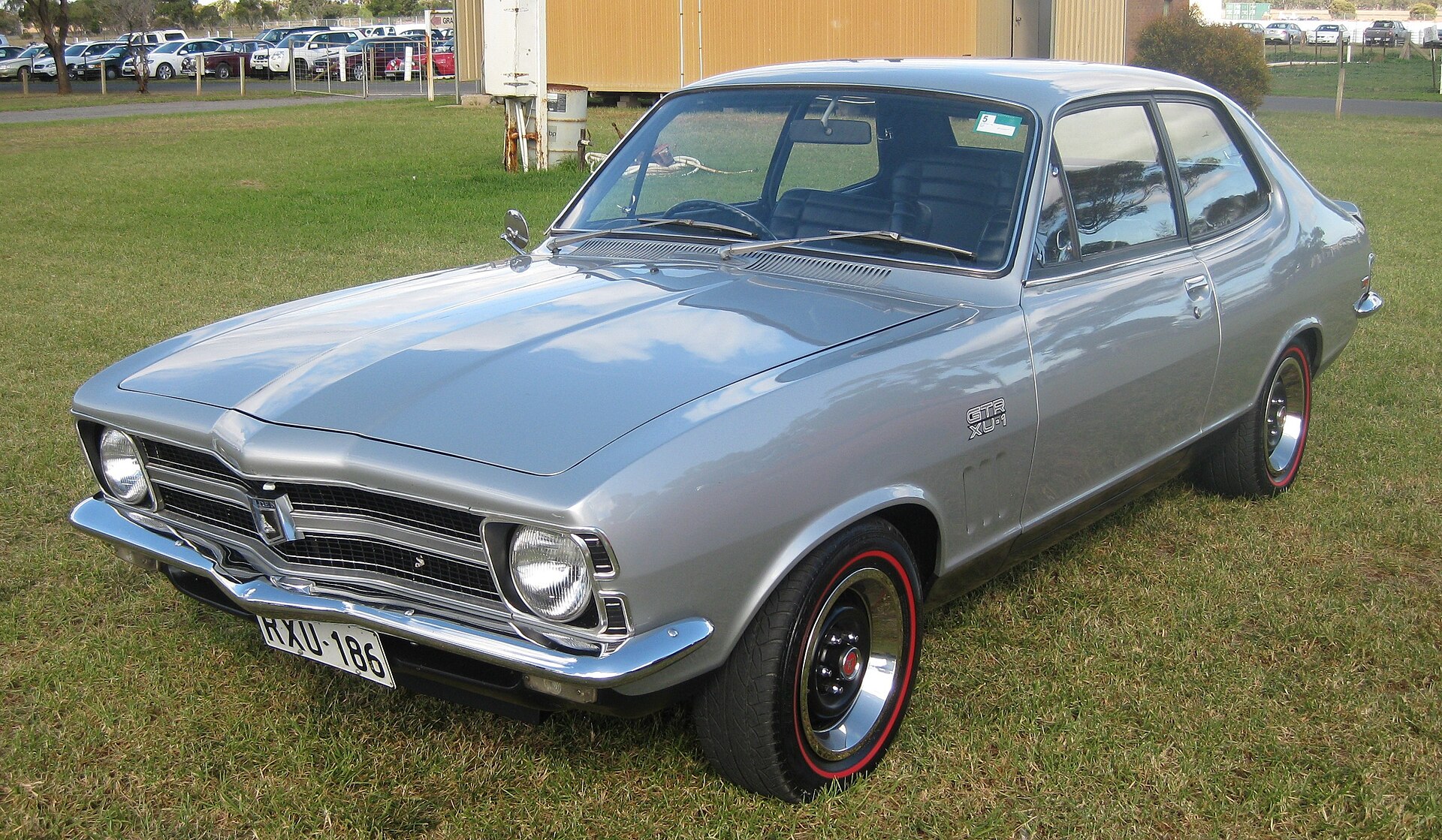
- 1972 LJ 1972–1974 · Sedan · 142 kW (193 PS)
-
1969
-
1967


All generations by year: Torana UC (1978–1979) · Torana LX (1976–1978) · Torana LH (1974–1976) · Torana LJ (1972–1974) · Torana LC (1969–1972) · Torana HB (1967–1969)
Which one is mine?
Pick the year of first registration to see which generation it is.
Check by VINWhich Torana to choose
Our verdict · Sarah Whitmore
- For racing history: an LJ GTR XU-1, Brock's 1972 Bathurst winner and the strongest six-cylinder Torana.
- For V8 performance: an LH SL/R 5000, with the full 179 kW before the 1976 emission rules.
- For the rarest road car: an L34, of which 263 were built.
- For the last word: an A9X, the Torana that won Bathurst twice and two championships.
- For an affordable classic: a six-cylinder LH or LX sedan with the same body.
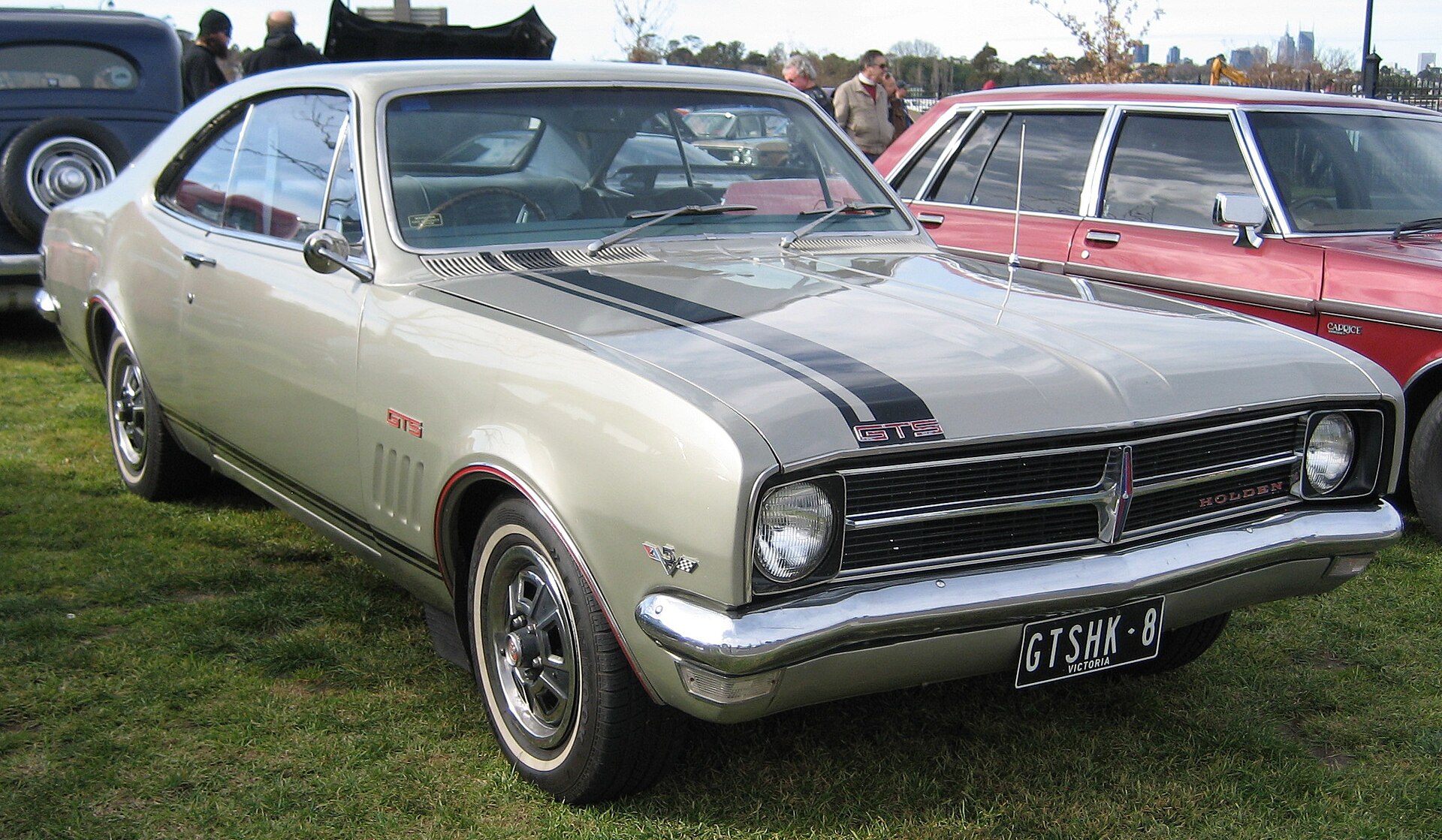
The Holden catalogue lists the Torana series and versions; the bigger Holden V8 coupé of the period is described in our article on the Holden HJ Monaro GTS. The performance Toranas are part of the Australian block of our muscle car section, and the car rankings compare figures across the catalogue.
The Holden Torana was Holden's smaller car from 1967 to 1979, built in Adelaide and Brisbane. It started as a locally assembled version of the Vauxhall Viva and grew into a mid-size sedan with six-cylinder and V8 engines. Its performance versions, the GTR XU-1, the SL/R 5000 with the L34 option and the A9X, won at Bathurst five times between 1972 and 1979.
In short
- Seven series: HB (1967), LC (1969), LJ (1972), TA (1974), LH (1974), LX (1976) and UC (1978); the four-cylinder cars became the Sunbird from November 1976.
- The LJ GTR XU-1 had a 3.3-litre six with 142 kW (190 bhp) and reached 217 km/h with the "Bathurst Special" final drive.
- The LH SL/R 5000 brought the 5.0-litre Holden V8 with 179 kW (240 hp) in 1974; the A9X option of 1977 added rear disc brakes and a heavy-duty rear axle.
- Peter Brock won Bathurst in an XU-1 in 1972 and, with Jim Richards, in an A9X in 1978 and 1979.
Specs by version
Engines
| Version | Engine | Power | Torque | Drive | Production years |
|---|---|---|---|---|---|
| Torana LC · GTR XU-1 3.0 I6 (LC) | 6 cyl · Petrol | 119 kW 162 PS160 hp | - | Rear-wheel drive | 1970–1972 |
| Torana LJ · GTR XU-1 3.3 I6 (LJ) | 6 cyl · Petrol | 142 kW 193 PS190 hp | - | Rear-wheel drive | 1972–1974 |
| Torana LH · SL/R 5000 5.0 V8 (LH) | 8 cyl · Petrol | 179 kW 243 PS240 hp | 427 Nm315 lb-ft | Rear-wheel drive | 1974–1976 |
Performance
Show all 2 versions
| Version | Top speed |
|---|---|
| Torana LJ · GTR XU-1 3.3 I6 (LJ) | 217 km/h135 mph |
| Torana LH · SL/R 5000 5.0 V8 (LH) | 208 km/h129 mph |
Verified Manufacturer and type-approval data from our catalog · Sources and methodology
Holden Torana at a glance
| Specification | Holden Torana |
|---|---|
| Maker | Holden, Elizabeth (Adelaide) and Acacia Ridge (Brisbane) |
| Production | 1967–1979 (Sunbird to September 1980) |
| Bodies | two-door and four-door sedan, two-door hatchback (from 1976) |
| Layout | front engine, rear-wheel drive |
| Engines | 1.2 to 1.9-litre fours, 2.25 to 3.3-litre sixes, 4.2 and 5.0-litre V8s |
| Strongest six | GTR XU-1 (LJ), 142 kW (190 bhp) |
| Strongest V8 | 308 (5.0 l), 179 kW (240 hp) |
| Bathurst wins | 1972, 1975, 1976, 1978, 1979 |
| Award | Wheels Car of the Year 1969 (LC) |
| Successor | Sunbird (four-cylinder), Commodore (sixes and V8s) |
Torana series and production
| Series | Introduced | Bodies | Performance version | Built |
|---|---|---|---|---|
| HB | May 1967 | two-door, four-door from 1968 | Brabham, 59 kW (79 bhp) | 36,561 |
| LC | October 1969 | two-door, four-door | GTR XU-1, 119 kW (160 hp) | 74,627 |
| LJ | February 1972 | two-door, four-door | GTR XU-1 3.3, 142 kW (190 bhp) | 81,813 |
| TA | February 1974 | four-cylinder only | - | 11,304 |
| LH | March 1974 | four-door | SL/R 5000, L34 | 70,184 |
| LX | February 1976 | four-door, hatchback | SL/R 5000, SS, A9X | 65,977 |
| UC | March 1978 | four-door, hatchback | none (V8 and SL/R dropped) | just over 55,000 |
The HB figure is the sum of 16,318 cars with imported panels and 20,243 with locally made bodies. Together the series add up to about 395,000 Toranas, by our calculation from the Wikipedia figures.
HB (1967–1969): a Viva made in Australia
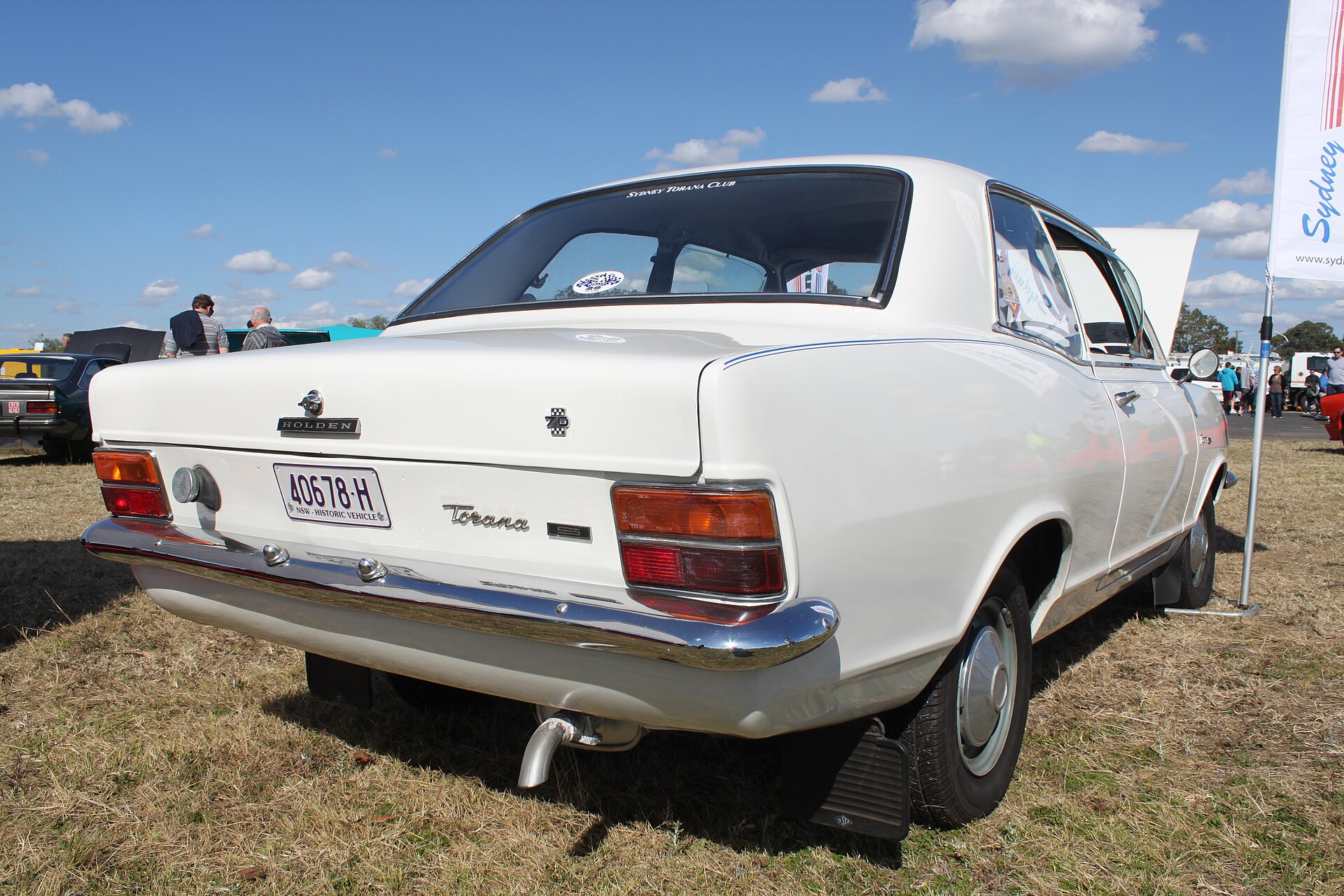
The first Torana replaced the Vauxhall Viva HA in May 1967. It was a small two-door on 12-inch wheels, with a 1.2-litre four of 42 kW (56 bhp), a four-speed manual and an optional Borg-Warner three-speed automatic. In October 1967 the Brabham option added twin carburettors and 59 kW (79 bhp). The "'69 Torana" of September 1968 had locally built bodies and a four-door sedan, and the Brabham became a model of its own.

LC and LJ GTR XU-1 (1969–1974)
The LC of October 1969 turned the Torana into a family of cars. Four-cylinder models kept the short body, while the six-cylinder cars got a longer wheelbase and engines of 138 and 161 cu in, replaced by a 173 cu in six in July 1971. Wheels magazine named the LC its Car of the Year for 1969.
The sporting GTR and the GTR XU-1 arrived in August 1970. The XU-1 was developed with Harry Firth and had a 186 cu in (3.0-litre) six with 119 kW (160 hp). For the LJ facelift of February 1972 the GTR switched to a 3.3-litre six, and the XU-1 version was race-bred: three CD-175 carburettors, a close-ratio gearbox and 142 kW (190 bhp). The "Bathurst Special" had a 3.08:1 final drive instead of 3.36:1 and a top speed of 217 km/h (135 mph).
Peter Brock drove an XU-1 alone to win the wet 1972 Hardie-Ferodo 500, the first of the Torana's five Bathurst victories. Holden also built a GTR XU-1 prototype with the 308 V8 and about 224 kW (300 bhp), but the 1972 Supercar scare, which started with a newspaper story about 160 mph road cars, killed the project. The V8 Torana had to wait until 1974.
The short-lived TA of February 1974 was a facelifted four-cylinder LJ for Australia only, sold for 11 months. LJ-based cars were also built in South Korea as the Chevrolet 1700 and the Saehan Camina.

LH SL/R 5000 and L34 (1974–1976)
The LH of March 1974 was a new, larger four-door sedan, and for the first time a Torana could have a V8. Engines included sixes from 2,262 to 3,298 cc and the Holden 253 (4,143 cc) and 308 (5,044 cc) V8s. In the SL/R 5000 the 308 was rated at 179 kW (240 hp) at 4,800 rpm and 427 Nm at 2,400 rpm, and the car reached 208 km/h (129 mph).
| Version | Engine | Power | Top speed |
|---|---|---|---|
| LC GTR XU-1 (1970) | 186 six, 3.0 l | 119 kW (160 hp) | - |
| LJ GTR XU-1 (1972) | 202 six, 3.3 l | 142 kW (190 bhp) | 217 km/h |
| LH SL/R 5000 (1974) | 308 V8, 5.0 l | 179 kW (240 hp) | 208 km/h |
| LX 308 after July 1976 | 308 V8, 5.0 l | 126 kW (169 hp) | - |
The L34 option of 1975 was aimed at racing. Holden built 263 cars with wheel arch extensions and a higher-compression engine developed with Repco, and sold them only to licensed CAMS competitors. L34 Toranas won Bathurst in 1975 with Peter Brock and Brian Sampson and in 1976 with Bob Morris and John Fitzpatrick.

LX and the A9X (1976–1978)
The LX facelift of February 1976 brought round headlights and a two-door hatchback. From July 1976 the engines had to meet the ADR27A emission rules, and outputs fell sharply: the 308 dropped to 126 kW (169 hp), the 3.3-litre six to 64 kW and the 2.85-litre six to 58 kW.
The A9X option of 1977 was available on the SL/R 5000 sedan and on the SS hatchback. It added rear disc brakes, heavy-duty axles and a 10-bolt differential; road cars used the L31 5.0-litre V8, while the race cars ran the L34 engine. Brock won the 1977 Hang Ten 400 at Sandown on the car's debut, although Ford took Bathurst that year. The A9X then took the big titles: Brock won the 1978 Australian Touring Car Championship, Bob Morris the 1979 title, and Brock and Jim Richards won Bathurst in 1978 and 1979, the second time by a record six laps.

The Torana at Bathurst
| Year | Car | Drivers | Note |
|---|---|---|---|
| 1972 | LJ GTR XU-1 | Peter Brock | driven solo, in the wet |
| 1975 | LH SL/R 5000 L34 | Peter Brock, Brian Sampson | first V8 Torana win |
| 1976 | LH SL/R 5000 L34 | Bob Morris, John Fitzpatrick | second L34 win |
| 1978 | LX A9X | Peter Brock, Jim Richards | after Ford's 1977 victory |
| 1979 | LX A9X | Peter Brock, Jim Richards | winning margin of six laps, a record |
The list follows the road cars. The six-cylinder XU-1 won before Holden offered a V8 Torana, and both the L34 and the A9X were sold as road-car options before they raced. The only year from 1975 to 1979 without a Torana win was 1977, the A9X's debut season, when Allan Moffat and Colin Bond won for Ford.
UC and the end (1978–1979)
The UC of March 1978 had square headlights and a new dashboard, but the V8 and the SL/R were gone. Only the 2.85 and 3.3-litre sixes remained, alongside the four-cylinder Sunbird. With the VB Commodore on sale from November 1978, Holden dropped the Torana in 1979; the last Australian Sunbird was built in September 1980.
Photo gallery


Holden Torana evolution in numbers
Did you know?
- The Holden Torana ran for 12 years, from 1967 to 1979, over 6 generations in our catalog.
- The longest-running generation is the Torana LC (1969–1972): 3 years.
- The biggest jump in power came with the Torana LC: up to 119 kW (162 PS), 60 kW more than the Torana HB.
- The most powerful Holden Torana is not the newest: the Torana LH (1974–1976) offered up to 179 kW (243 PS), the Torana UC up to 64 kW (87 PS).
Most powerful version, kW
Figures from the 1cars catalog: power is the strongest version of each generation; generations without the figure are left out.
Holden Torana: first vs latest generation
| Spec | Torana HB | Torana UC | Change |
|---|---|---|---|
| Years | 1967–1969 | 1978–1979 | 11 years apart |
| Most powerful version | 59 kW (80 PS) | 64 kW (87 PS) | +5 kW (+8%) |
Oldest and newest generation in the 1cars catalog. Power is the strongest version of each; other rows are shown only when both generations have the figure.
Holden Torana in our rankings
- No. 5 of 16 · Fastest cars of the 1970s (217 km/h)
- No. 34 of 345 · Cars with the most generations (6 generations · top 16%)
- No. 292 of 912 · Longest-running car nameplates (12 years · top 35%)
- No. 19 of 48 · Fastest sedans (217 km/h · top 42%)
- No. 31 of 68 · Most torque: sedans (427 Nm · top 46%)
- No. 69 of 149 · Most powerful sedans (179 kW · top 47%)
More generations than 84% of ranked nameplates in the 1CARS catalog (No. 34 of 345).
FAQ
What does XU-1 mean on a Torana?
It is the name of the race-bred GTR version of the LC and LJ Torana, developed with Harry Firth: a tuned six-cylinder engine, triple carburettors on the 3.3-litre LJ and a close-ratio gearbox.
Did the Torana have a V8?
Yes, from the LH series of 1974 to the LX: the Holden 253 and 308 V8s, the latter with 179 kW (240 hp) before the 1976 emission rules.
How many Bathurst races did the Torana win?
Five: 1972 (LJ GTR XU-1), 1975 and 1976 (LH L34), 1978 and 1979 (LX A9X).
What is an A9X Torana?
A 1977 option for the LX SL/R 5000 sedan and SS hatchback with rear disc brakes, heavy-duty axles and a 10-bolt differential, built to homologate those parts for racing.
When did Holden stop making the Torana?
In 1979, after the UC series; the four-cylinder Sunbird continued until September 1980.
Data sources
Data checked by an editor against the sources below.
- Wikipedia - Holden Torana
- Wikipedia - Holden V8 engine