 Holden Monaro
All generations, specs and history
Published Sources (2) Report an error
By Sarah Whitmore, Senior Automotive Writer
- Built
- 1968–2006
- Generations
- 3
- Top power
- 260 kW (354 PS)
Timeline
Monaro generations
Click a generation for its own page
- Monaro HK/HT/HG 1968–1971 · Coupe · 224 kW (305 PS)
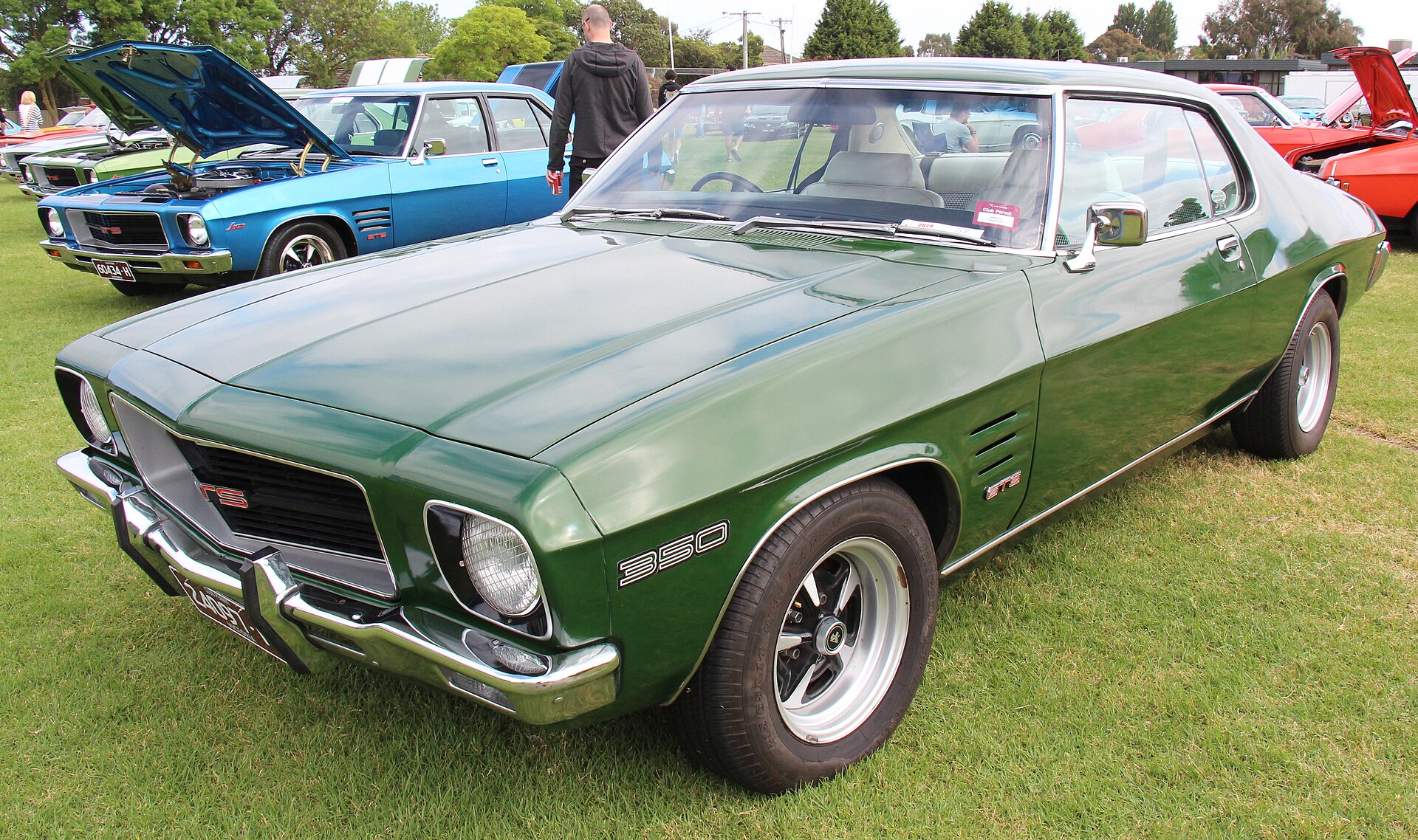
- Monaro HQ/HJ/HX/HZ 1971–1979 · Sedan, Coupe · 205 kW (279 PS)
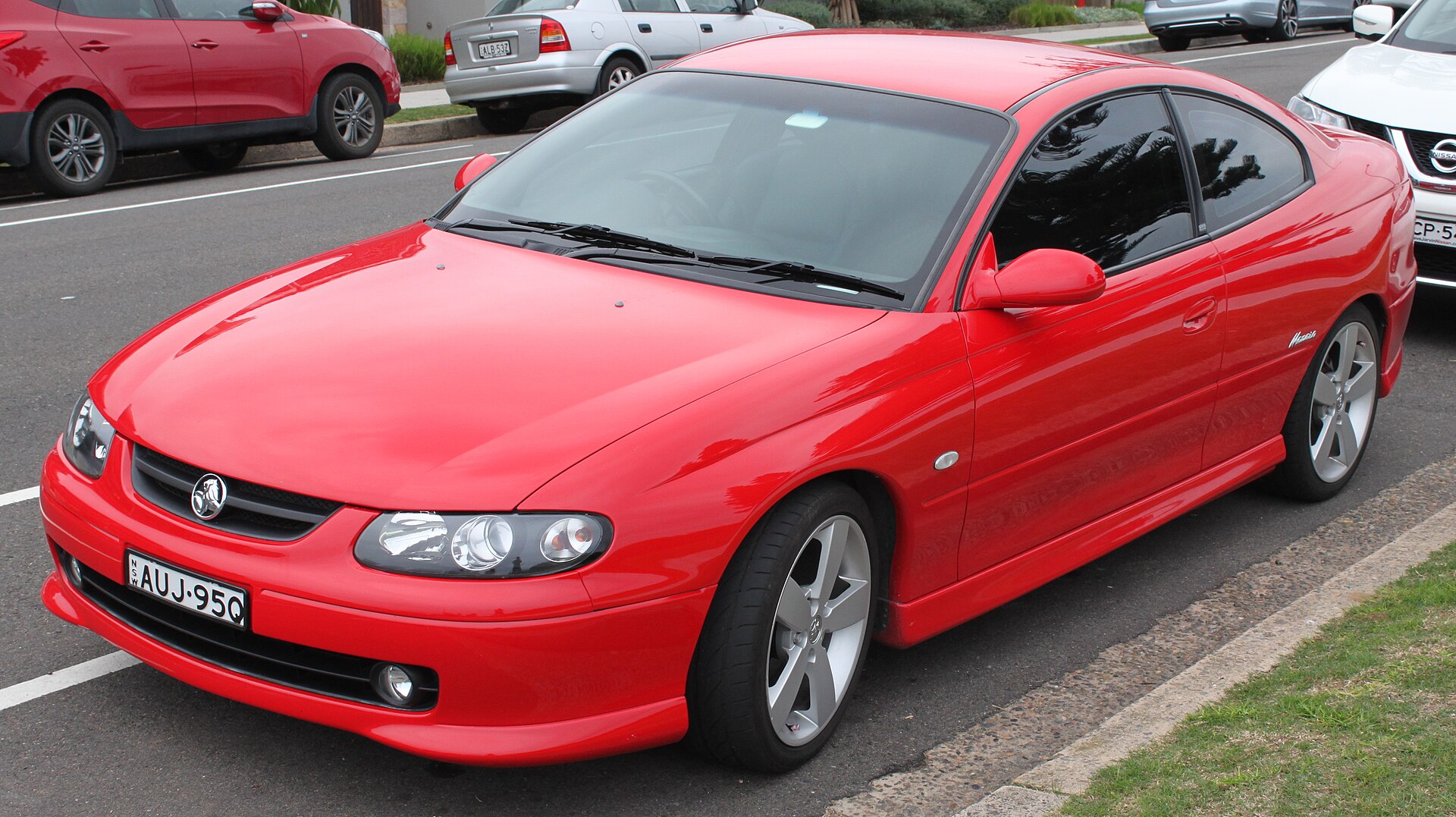
- Monaro V2/VZ 2001–2006 · Coupe · 171–260 kW (232–354 PS)
Newest first · 3 generations since 1968
-
2001
-
1971
-
1968
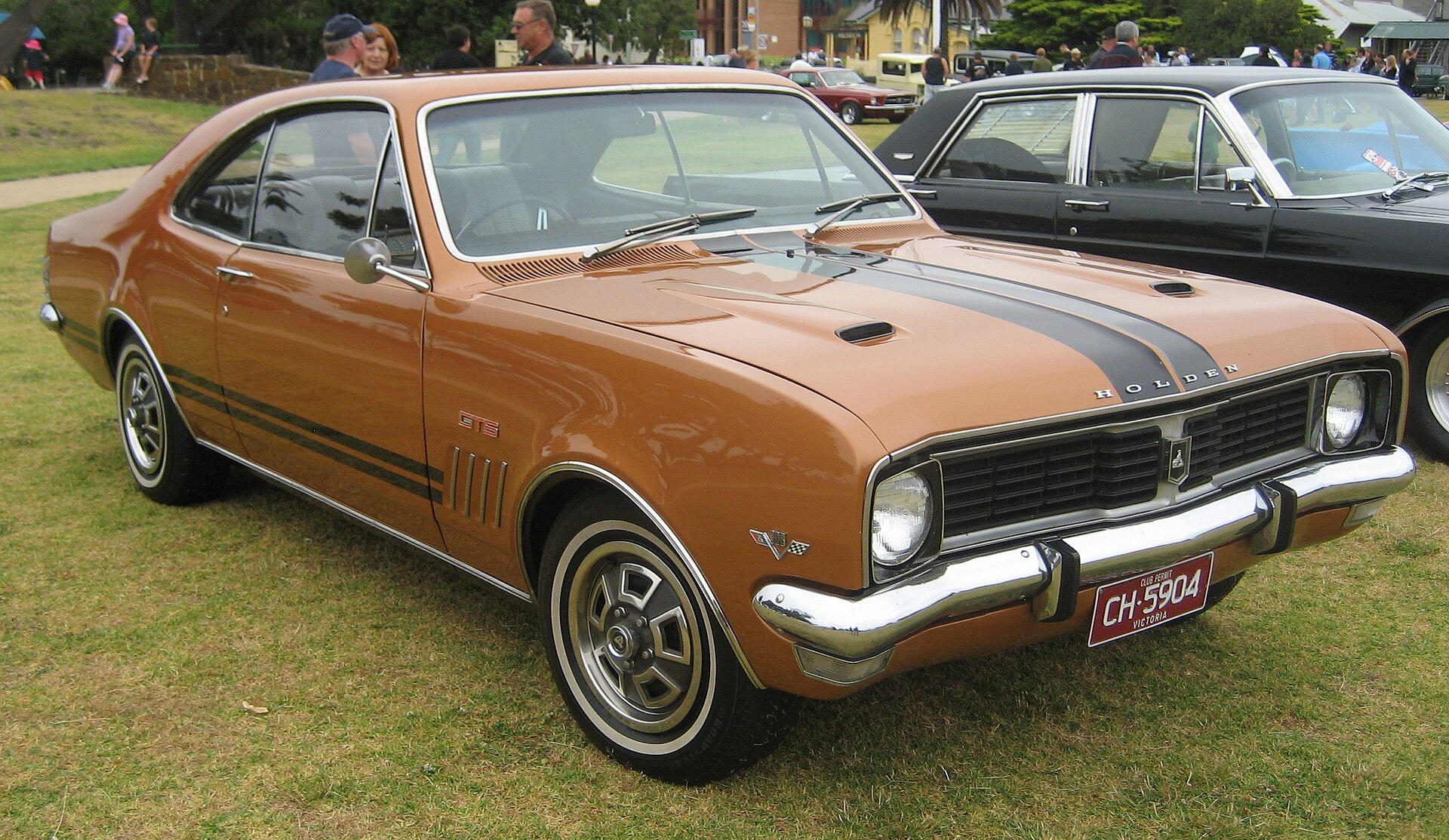


All generations by year: Monaro V2/VZ (2001–2006) · Monaro HQ/HJ/HX/HZ (1971–1979) · Monaro HK/HT/HG (1968–1971)
Which one is mine?
Pick the year of first registration to see which generation it is.
- Monaro V2/VZ 2001–2006
- Monaro HQ/HJ/HX/HZ 1971–1979
- Monaro HK/HT/HG 1968–1971
Which Monaro to choose
Our verdict · Sarah Whitmore
- For Bathurst history: an HK GTS 327, the car that gave Holden its first win at Mount Panorama.
- For the strongest classic engine: an HT or HG GTS 350 with 224 kW (300 hp).
- For rarity: an HJ LS coupé (337 built) or an HX Limited Edition (580 built).
- For daily use: a VZ CV8 with 260 kW and modern equipment, the most powerful Monaro sold by Holden.
The Holden catalogue lists the Monaro generations with their versions. The classic Monaro appears among the Australian cars of our muscle car section, and the car rankings put its figures in context.
The Holden Monaro was the two-door performance coupé of Holden, General Motors' Australian division. The first Monaro arrived in July 1968, won at Bathurst in its first year and lasted, with a four-door GTS sedan added later, until January 1979. The name came back on a Commodore-based V8 coupé from 2001 to 2006, which was also exported as the Pontiac GTO and the Vauxhall Monaro.
In short
- Three coupé generations: HK/HT/HG (1968–1971), HQ/HJ/HX (1971–1976, GTS sedan to 1979) and V2/VZ (2001–2006).
- Fastest classic versions: the HK GTS 327 with 186 kW (250 hp), the HT and HG GTS 350 with 224 kW (300 hp) and the HQ GTS350 with 205 kW and 488 Nm.
- An HK GTS 327 won the 1968 Hardie-Ferodo 500, Holden's first Bathurst victory; Norm Beechey's HT GTS 350 gave Holden its first Australian Touring Car Championship in 1970.
- The modern CV8 used a 5.7-litre V8 with 225 to 260 kW; the 40,808th Pontiac GTO was the last Monaro-based car Holden built.
Specs by version
| Version | Engine | Power | Torque | Drive | Production years |
|---|---|---|---|---|---|
| Monaro HK/HT/HG · GTS 327 5.4 V8 (HK) | 8 cyl · Petrol | 186 kW 253 PS249 hp | - | Rear-wheel drive | 1968–1969 |
| Monaro HK/HT/HG · GTS 350 5.7 V8 (HT/HG) | 8 cyl · Petrol | 224 kW 305 PS300 hp | - | Rear-wheel drive | 1969–1971 |
| Monaro HQ/HJ/HX/HZ · GTS 5.0 V8 308 (HQ/HJ) | 8 cyl · Petrol | 179 kW 243 PS240 hp | 427 Nm315 lb-ft | Rear-wheel drive | 1971–1976 |
| Monaro HQ/HJ/HX/HZ · GTS350 5.7 V8 (HQ) | 8 cyl · Petrol | 205 kW 279 PS275 hp | 488 Nm360 lb-ft | Rear-wheel drive | 1971–1974 |
| Monaro V2/VZ · CV8 5.7 V8 (VZ) | 8 cyl · Petrol | 260 kW 354 PS349 hp | - | Rear-wheel drive | 2004–2006 |
Verified Manufacturer and type-approval data from our catalog · Sources and methodology
Holden Monaro at a glance
| Specification | Holden Monaro |
|---|---|
| Maker | Holden (General Motors), Australia |
| Production | coupé 1968–1976 and 2001–2006; GTS sedan 1973–1979 |
| Bodies | two-door pillarless hardtop / coupé, four-door sedan |
| Layout | front engine, rear-wheel drive |
| Classic engines | 2.6 to 3.3-litre sixes, 4.1 to 5.7-litre V8s |
| Classic top output | 224 kW (300 hp), GTS 350 (HT/HG) |
| Modern engines | 3.8-litre supercharged V6, 5.7-litre LS1 V8 |
| Modern top output | 260 kW (349 hp), VZ CV8 |
| Award | Wheels Car of the Year 1968 |
| Exported as | Chevrolet SS (South Africa), Pontiac GTO (USA), Vauxhall Monaro (UK), Chevrolet Lumina Coupé (Middle East) |
Monaro series by year
| Series | Introduced | Bodies | Notable versions |
|---|---|---|---|
| HK | July 1968 | hardtop | base, GTS, GTS 327 |
| HT | June 1969 | hardtop | GTS 350 with the Chevrolet 350 V8 |
| HG | 26 July 1970 | hardtop | last car on the original body, front discs on GTS and V8s |
| HQ | July 1971 | coupé, sedan from 1973 | LS, GTS, GTS350 |
| HJ | October 1974 | coupé, sedan | LS coupé, GTS with 253 or 308 V8 |
| HX | July 1976 | sedan; Limited Edition coupé | GTS sedan, LE |
| HZ | 5 October 1977 | sedan | sold as the Holden GTS |
| V2 Series I–III | November 2001 | coupé | CV6, CV8, CV8-R |
| VZ | 12 September 2004 | coupé | CV8, CV8-Z |
HK, HT and HG: the first Monaro (1968–1971)
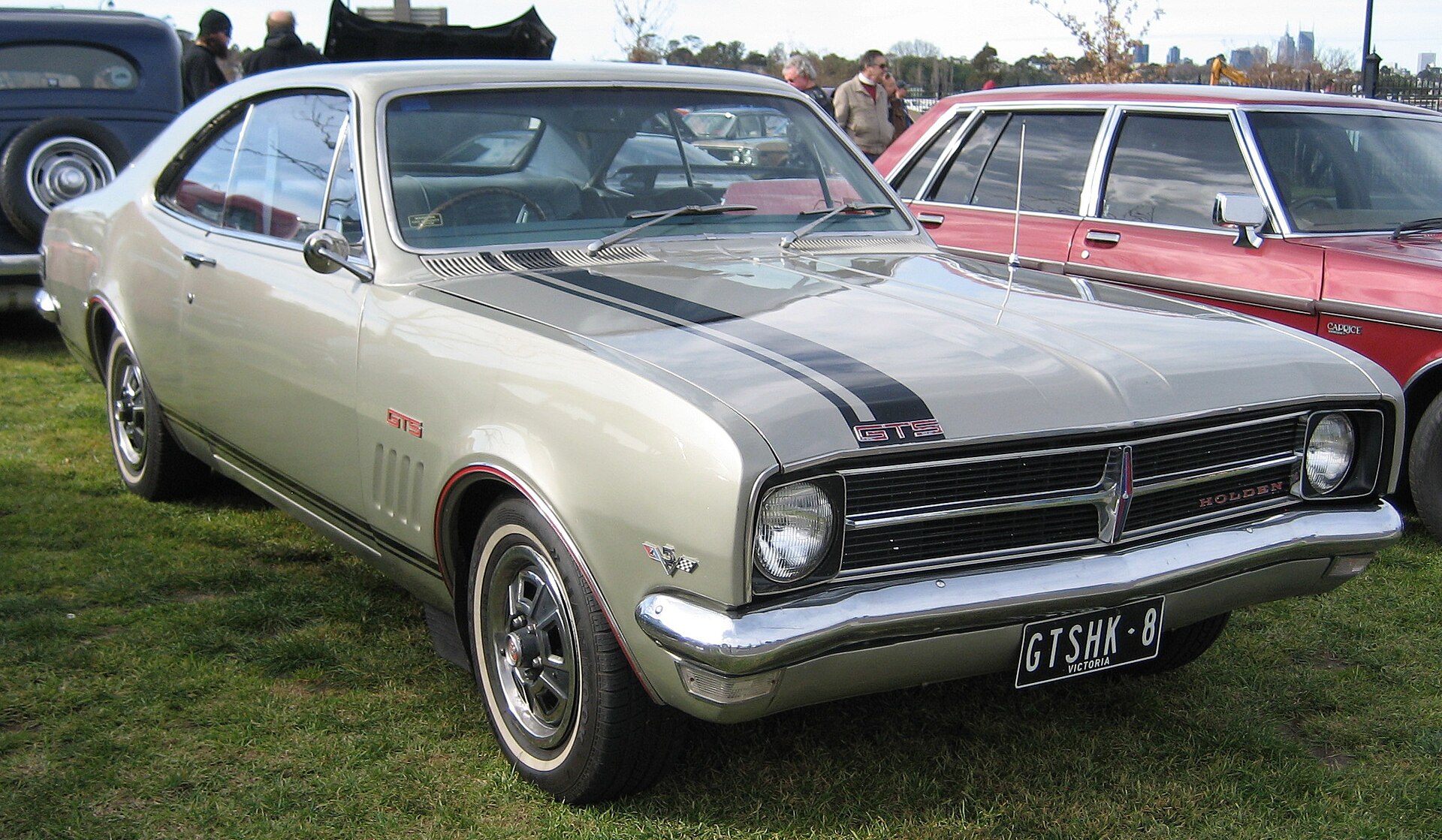
Holden launched the HK Monaro in July 1968 as a pillarless two-door hardtop, in base, GTS and GTS 327 forms. The base car used the 161 cu in (2.6-litre) Holden "Red" six; the GTS could have the uprated 186S (3.0-litre) six or a V8, and the list of V8s ran from 253 and 307 cu in units to the 327 and 350 from Chevrolet. The 327 had nearly not happened: Holden first said the engine bay was too small for it, until the measurements turned out to be wrong.
The GTS 327 put out 186 kW (250 hp) and came only with a four-speed manual. Wheels magazine named the HK range its Car of the Year for 1968, and the award was presented early in 1969.
The HT facelift of June 1969 replaced the GTS 327 with the GTS 350, whose 5.7-litre Chevrolet V8 delivered 224 kW (300 hp). An automatic GTS 350 was offered with the two-speed Powerglide and a milder engine, and late in the HT run the three-speed Trimatic automatic arrived for the other models. The HT also brought Holden's own V8s, the 253 and the 308, which pushed the 5.0-litre Chevrolet engine out of the range.
The HG, unveiled on 26 July 1970, was the last Monaro on the original body. Power front disc brakes became standard on every V8 and on the six-cylinder GTS, and the non-350 GTS got a softer ride. In South Africa, General Motors assembled the HT GTS from kits from 1970 and sold the HG as the Chevrolet SS until 1973: 1,828 Monaros and 1,182 SS models found buyers there.


Bathurst and the touring car championship
The Monaro's reputation was made on the track. At the 1968 Hardie-Ferodo 500, Bruce McPhee and Barry Mulholland won in an HK GTS 327; McPhee also took pole position and fastest lap. The Holden Dealer Team won the race again in 1969 with Colin Bond and Tony Roberts, and the same pair won the Series Production class of the Rothmans 12 Hour at Surfers Paradise in January 1970.
| Year | Event | Result |
|---|---|---|
| 1968 | Hardie-Ferodo 500, Bathurst | win, HK GTS 327 (McPhee/Mulholland) |
| 1969 | Australian Touring Car Championship | Norm Beechey third, HK GTS 327 |
| 1969 | Hardie-Ferodo 500, Bathurst | win, Holden Dealer Team Monaro (Bond/Roberts) |
| 1970 | Australian Touring Car Championship | Norm Beechey champion, HT GTS 350 |
| 2002 and 2003 | Bathurst 24 Hour | wins for the GRM Monaro 427 |
Beechey's 1970 title, with three wins from seven rounds, was Holden's first in the championship. Beechey kept racing the Monaro in 1971, finishing fifth with a round win at Calder.
HQ to HZ: new body and a four-door GTS (1971–1979)
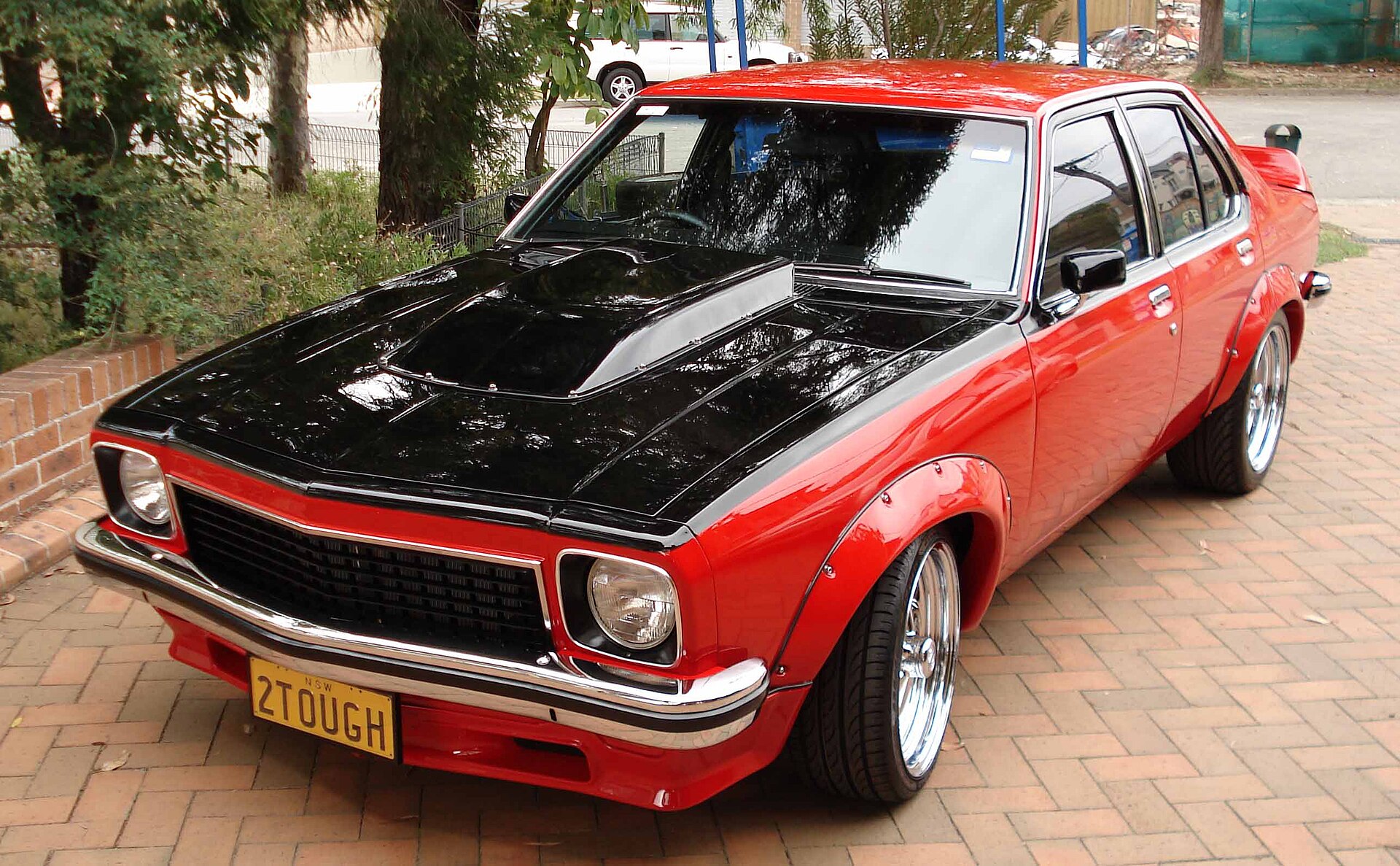
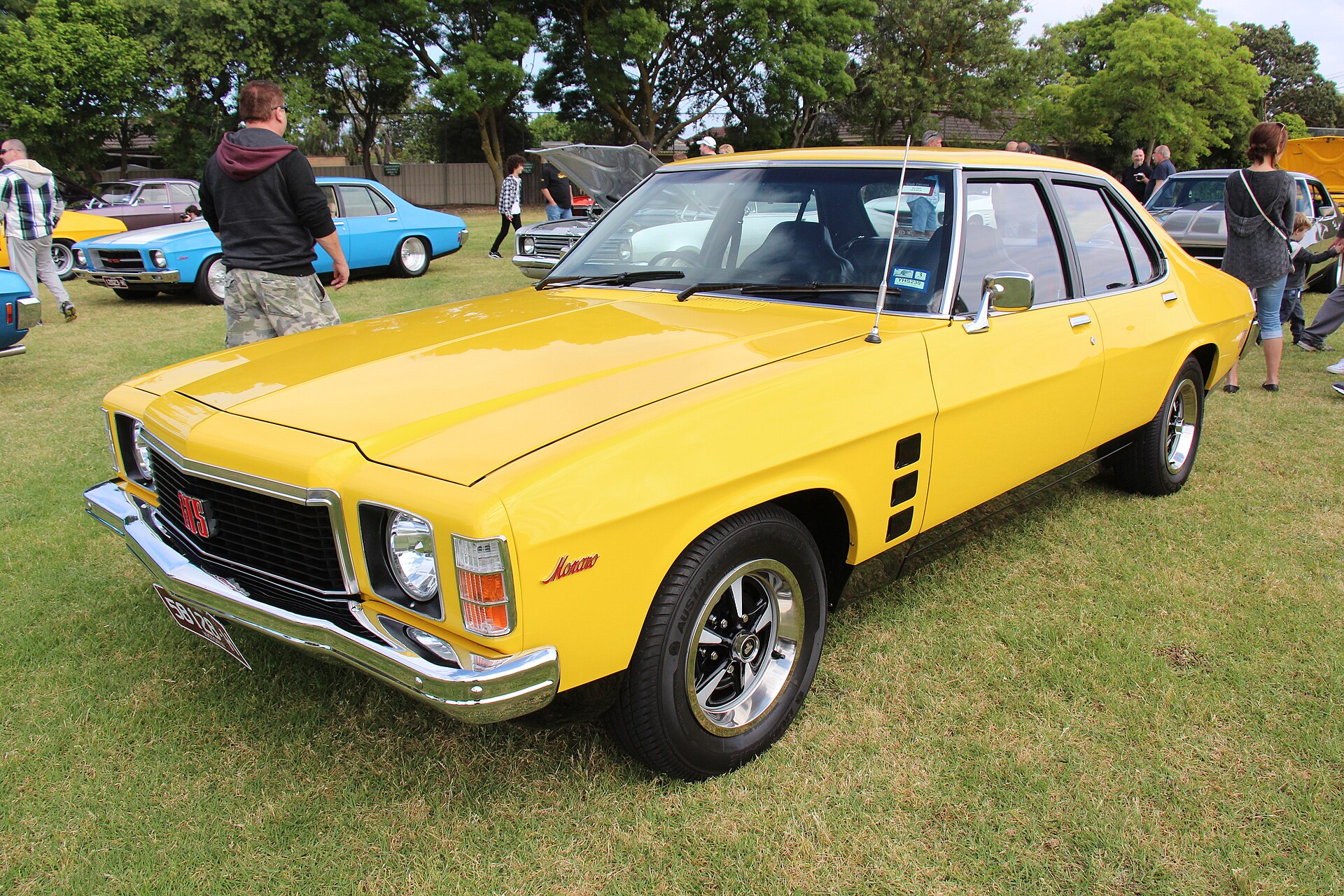
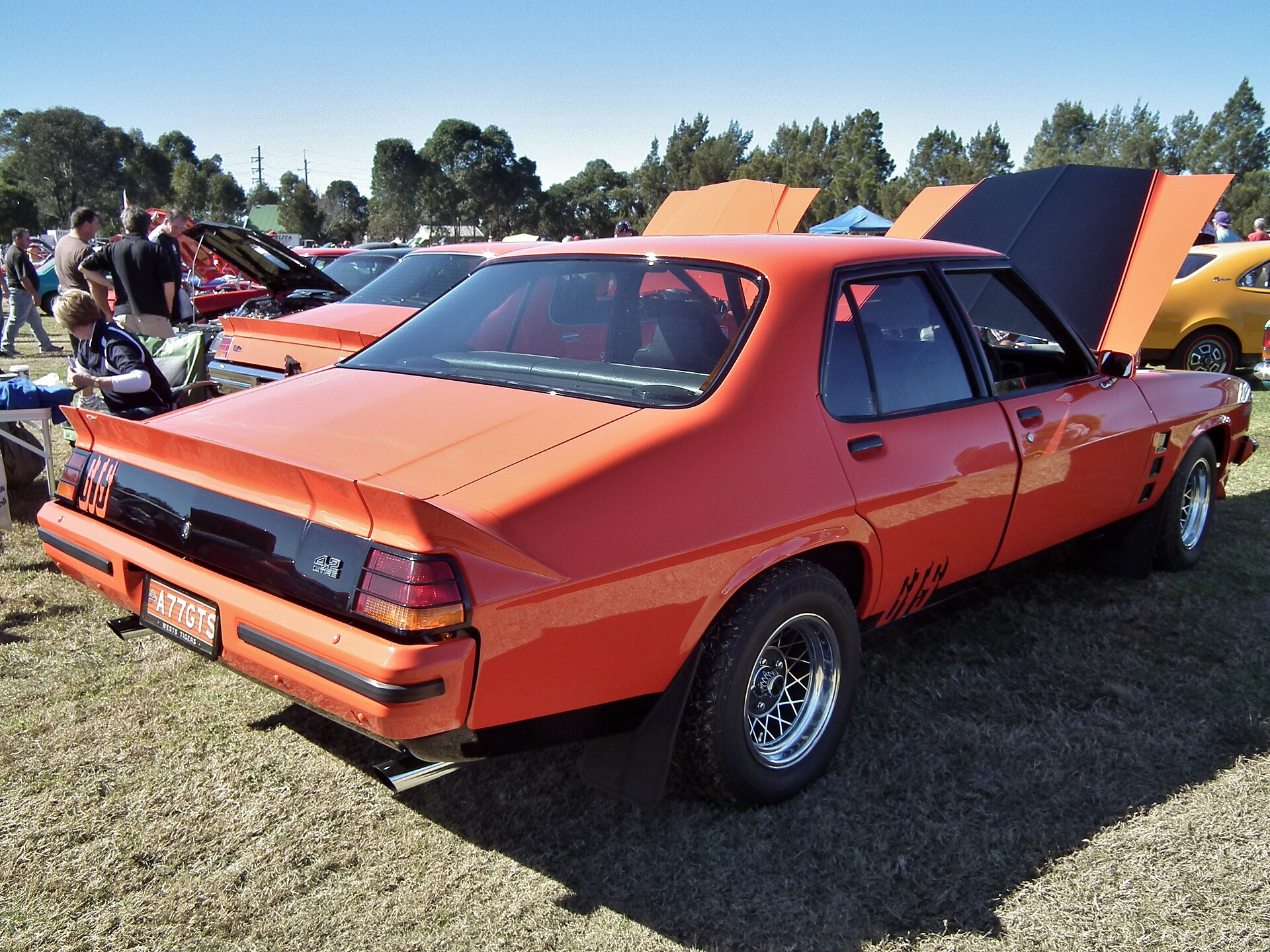
The HQ Monaro of July 1971 had an all-new body and a luxury LS model with four headlights. Engines ran from the 173 cu in (2.8-litre) six to the 308 V8 in the GTS and the 350 in the GTS350, which produced 205 kW (275 hp) at 4,800 rpm and 488 Nm at 3,200 rpm. The three-speed Turbo-Hydramatic 400 automatic was an option. In 1973 Holden added a four-door GTS sedan with painted-out bonnet and boot lid; the 350 decals disappeared after that year and the manual GTS350 was dropped in 1974.
The HJ of October 1974 removed the 350 and the base coupé. The GTS was now a coupé or sedan with the Holden 253 or 308 V8, the LS coupé kept a 3.3-litre six, and spoilers became optional for the first time. Only 337 LS coupés were built, and the GTS coupé ended in 1976 after 606 cars. The HJ GTS has its own page: our article on the Holden HJ Monaro GTS describes it in detail.
New emission rules shaped the HX of July 1976, a GTS sedan with black paint-outs. The Limited Edition coupé was built at the Pagewood plant in Sydney from surplus HJ panel sets, painted in LE Red metallic and released on 27 September 1976; Holden made 580 and marketed it outside the Monaro range. The HZ of 5 October 1977 dropped the Monaro name altogether. Sold as the Holden GTS, it came with four headlights, air dams, disc brakes on all four wheels and a 4.2-litre V8, with the 5.0-litre standard from June 1978. About 1,438 were built before production ended in January 1979.

Monaro engines and power
| Engine | Series | Power | Torque |
|---|---|---|---|
| 327 V8 (5.4 l, Chevrolet) | HK GTS 327 | 186 kW (250 hp) | - |
| 350 V8 (5.7 l, Chevrolet) | HT/HG GTS 350 | 224 kW (300 hp) | - |
| 350 V8 (5.7 l) | HQ GTS350 | 205 kW (275 hp) at 4,800 rpm | 488 Nm at 3,200 rpm |
| 308 V8 (5.0 l, Holden) | HQ and HJ GTS | 179 kW (240 hp) at 4,800 rpm | 427 Nm at 3,000 rpm |
| 308 V8 (5.0 l, Holden) | HX and HZ | 161 kW (216 hp) at 4,800 rpm | 400 Nm at 3,100 rpm |
| 3.8 V6 supercharged | CV6, 2001–2004 | 171 kW (229 hp) | - |
| 5.7 LS1 V8 | CV8, 2001–2006 | 225 to 260 kW (302–349 hp) | - |
The classic figures are the ratings Holden published at the time. The Holden V8 engine figures show the effect of the 1976 emission rules: the 308 lost 18 kW between the HJ and the HX.
The 2001–2006 Monaro: CV6 and CV8
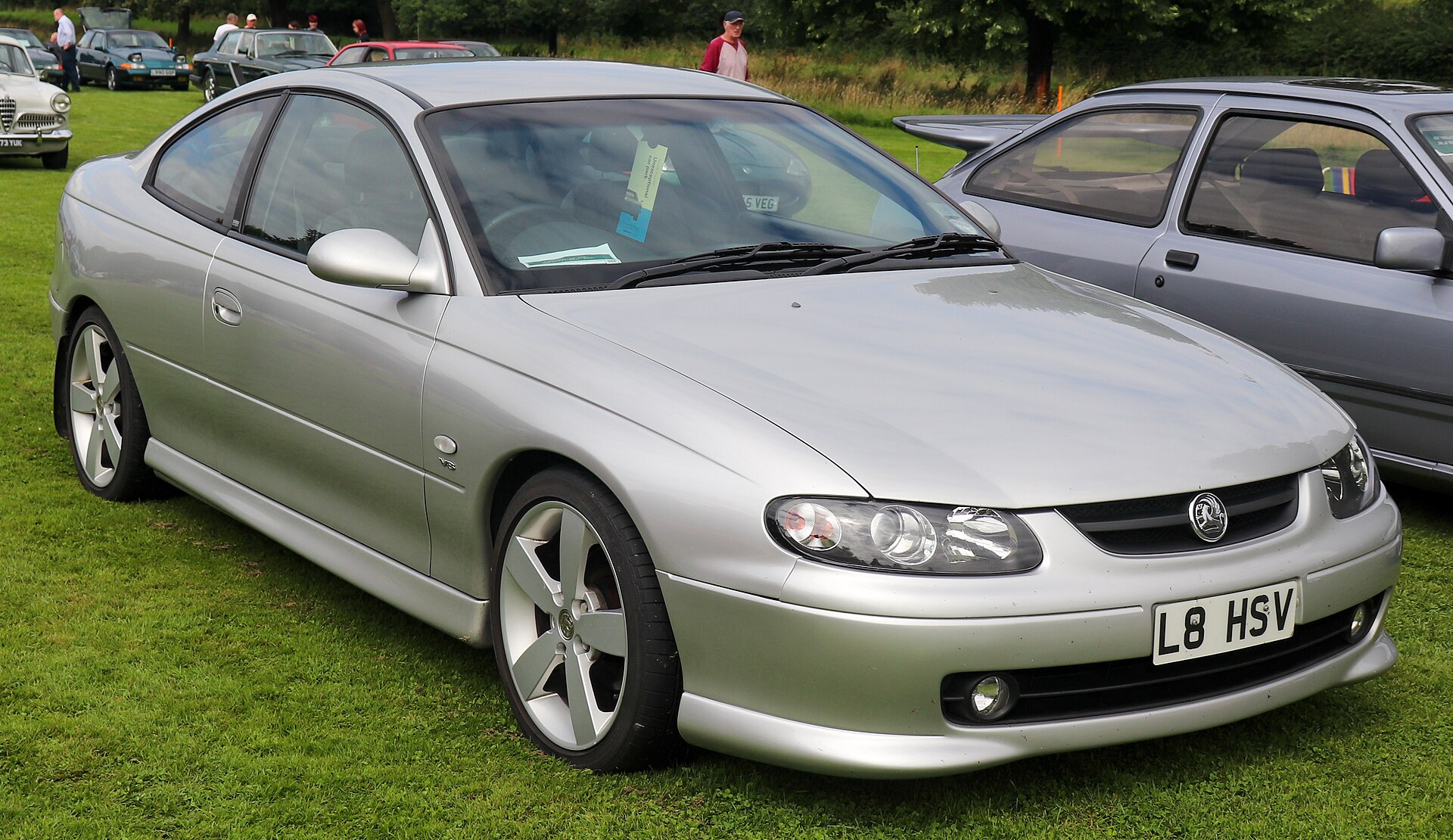
The name returned in November 2001 on a coupé based on the VX Commodore. It grew out of the "Monica" concept shown at the 1998 Sydney motor show, and development took 22 months instead of the planned 12 to 18. The CV6 had a supercharged 3.8-litre V6 with 171 kW and a four-speed automatic; it sold about a tenth as well as the V8 and was dropped in August 2004.
The CV8 used the 5.7-litre LS1 V8 with a six-speed manual or four-speed automatic, and its output rose in steps:
| Series | Introduced | Power |
|---|---|---|
| V2 Series I | November 2001 | 225 kW (302 hp) |
| V2 Series II | January 2003 | 235 kW (315 hp) |
| V2 Series III | 2004 | 245 kW (329 hp) |
| VZ | 12 September 2004 | 260 kW (349 hp) |
Limited CV8-R editions followed in July 2003 (350 cars) and May 2004 (320 cars). The farewell CV8-Z, announced in July 2005, was built 1,605 times. In 2004 ANCAP rated the CV8 coupé at one star overall.

Exports: Pontiac GTO, Vauxhall Monaro and Chevrolet Lumina
In the United States it became the Pontiac GTO, launched in 2004 and fitted from 2005 with the 6.0-litre LS2 V8 of 298 kW (400 hp); Wikipedia calls it a sales flop, and it was withdrawn in 2006. The 40,808th GTO was the last Monaro-based car Holden built. The name links it to the 1964 car described in our article on the Pontiac GTO.
In Britain the Vauxhall Monaro won Top Gear's best muscle car award in 2004, and the VXR 500 with a Harrop supercharger reached 373 kW (500 hp). Middle Eastern buyers got the Chevrolet Lumina Coupé in S and SS forms from 2003 to 2006. Holden Special Vehicles built its own coupés from the same body, the GTO, GTS and all-wheel-drive Coupé4, but they did not carry the Monaro name.
Photo gallery


Holden Monaro evolution in numbers
Did you know?
- The Holden Monaro ran for 38 years, from 1968 to 2006, over 3 generations in our catalog.
- The longest-running generation is the Monaro HQ/HJ/HX/HZ (1971–1979): 8 years.
- The biggest jump in power came with the Monaro V2/VZ: up to 260 kW (354 PS), 55 kW more than the Monaro HQ/HJ/HX/HZ.
Most powerful version, kW
Figures from the 1cars catalog: power is the strongest version of each generation; generations without the figure are left out.
Holden Monaro: first vs latest generation
| Spec | Monaro HK/HT/HG | Monaro V2/VZ | Change |
|---|---|---|---|
| Years | 1968–1971 | 2001–2006 | 33 years apart |
| Most powerful version | 224 kW (305 PS) | 260 kW (354 PS) | +36 kW (+16%) |
Oldest and newest generation in the 1cars catalog. Power is the strongest version of each; other rows are shown only when both generations have the figure.
Holden Monaro in our rankings
- No. 63 of 170 · Most powerful cars of the 2000s (260 kW · top 38%)
- No. 345 of 859 · Most powerful cars (260 kW · top 41%)
- No. 169 of 368 · Most torque: cars (488 Nm · top 46%)
- No. 44 of 88 · Most powerful cars of the 1970s (205 kW · top 52%)
- No. 49 of 94 · Most powerful cars of the 1960s (224 kW · top 53%)
- No. 187 of 313 · Most powerful coupes (260 kW · top 60%)
More powerful than 62% of ranked cars of the 2000s in the 1CARS catalog (No. 63 of 170).
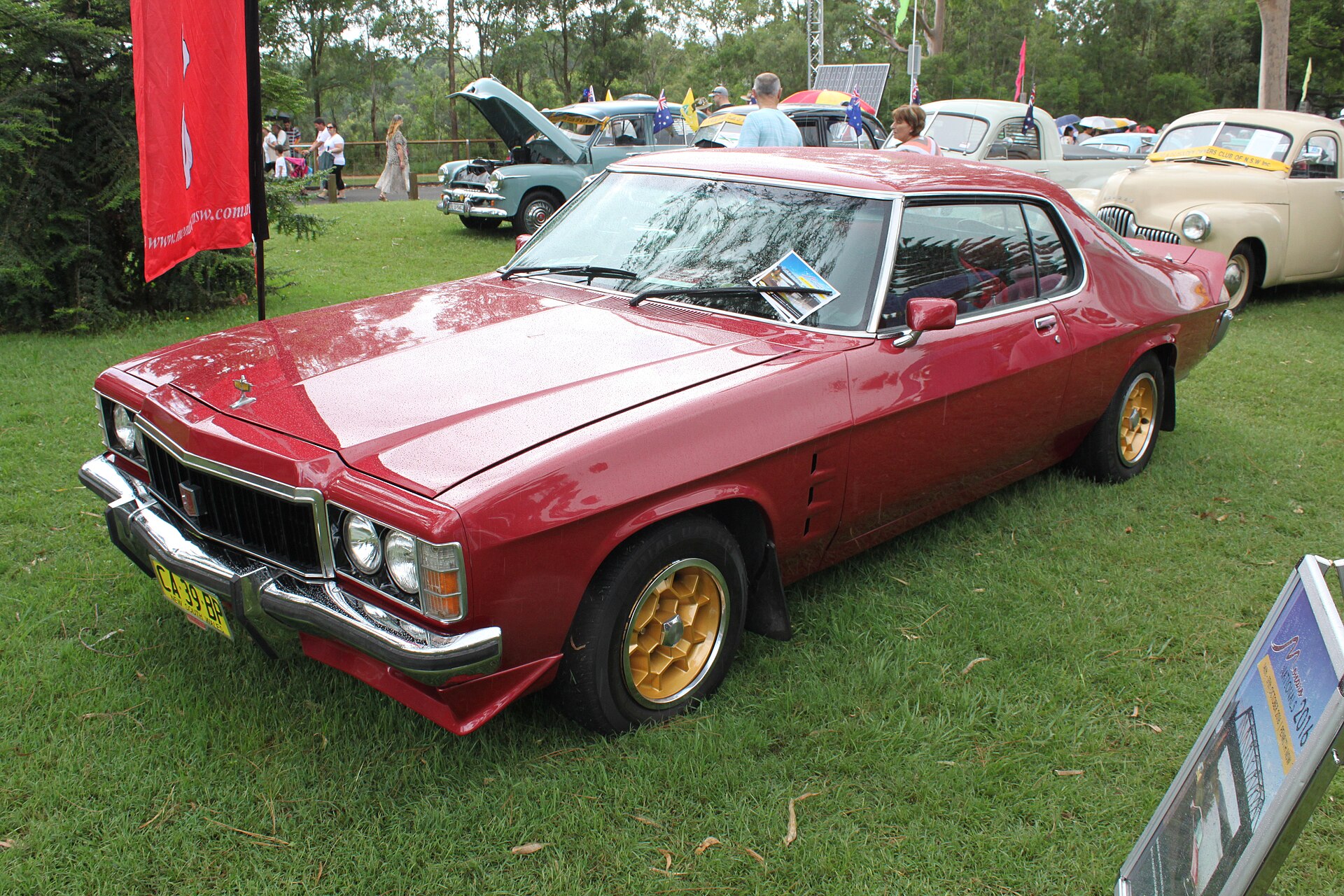
Holden Monaro photos 6
FAQ
What does Monaro mean?
Holden took the name from the Monaro region of New South Wales.
Was the Holden Monaro a muscle car?
Yes, the classic GTS versions are counted as Australian muscle cars: a two-door body from a mass-production Holden with V8 engines up to the 5.7-litre 350, raced with success at Bathurst.
How powerful was the Monaro GTS 350?
The HT and HG GTS 350 had 224 kW (300 hp); the HQ GTS350 was rated at 205 kW and 488 Nm.
When did the Monaro stop production?
The original coupé ended in 1976 and the GTS sedan in January 1979. The modern Monaro was built from 2001 to 2006.
Was the Pontiac GTO a Monaro?
The 2004–2006 Pontiac GTO was the Monaro built in Australia for the US market, from 2005 with a 6.0-litre V8 of 298 kW.
Data sources
Data checked by an editor against the sources below.
- Wikipedia - Holden Monaro
- Wikipedia - Holden V8 engine