
 Chrysler Imperial
Specs, engines and history
Published Report an error
By Felix Hartmann, Automotive Technology & EV Contributor
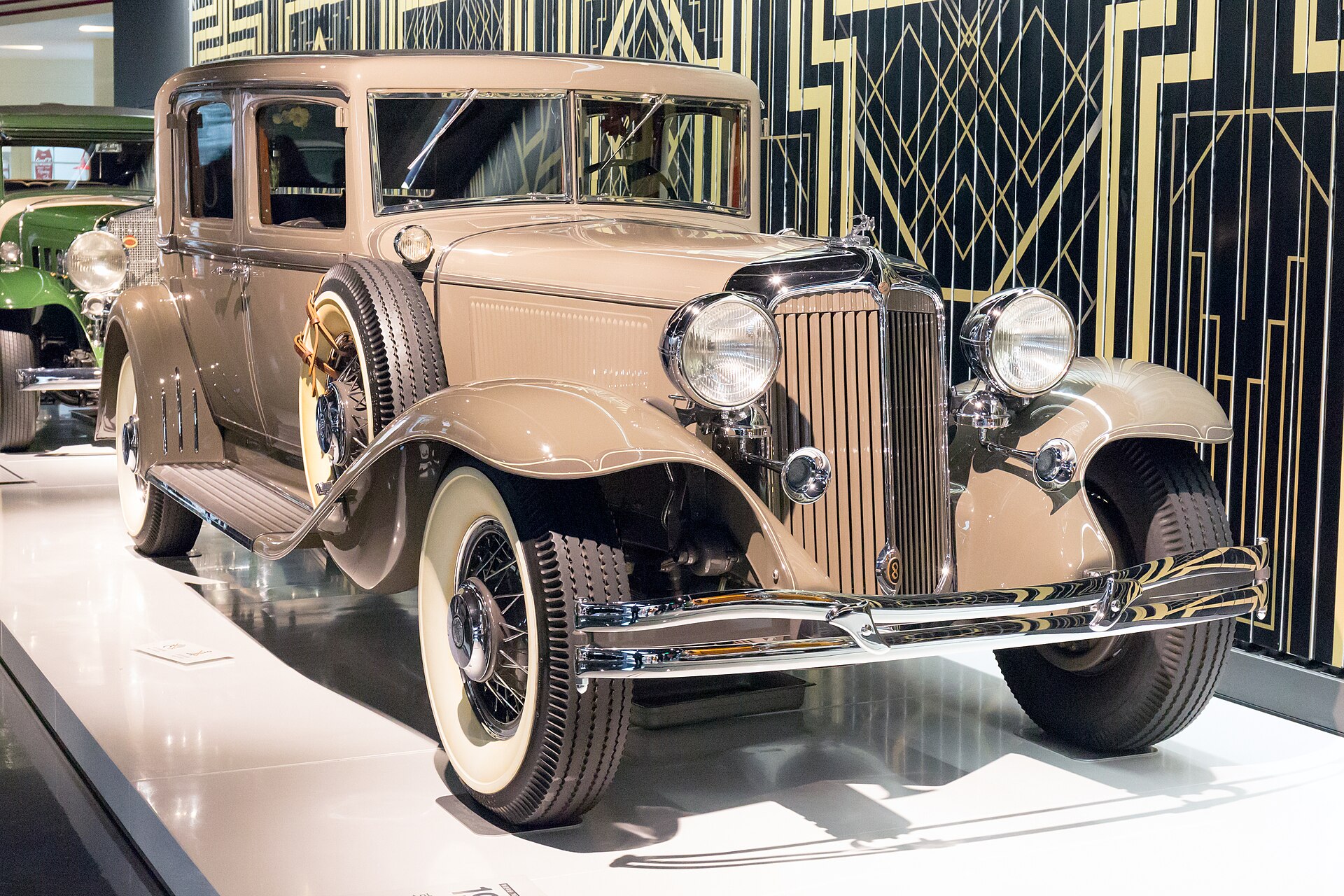
The Chrysler Imperial was Chrysler's flagship luxury car, introduced in 1926 to take on Cadillac, Lincoln and Packard. It was built as a Chrysler model until 1954, became the separate Imperial marque from 1955 to 1975 and returned as a Chrysler for 1990–1993. Along the way it introduced the Airflow streamlined body, Hemi V8 power and some of the first factory air conditioning and power steering in American cars.
In short
- Chrysler model 1926–1954 and 1990–1993; separate Imperial brand 1955–1975 and 1981–1983.
- Engines: a 4.7-litre six (1926), 6.3-litre straight-eight (1931), 5.4-litre FirePower Hemi V8 (1951) and 3.3/3.8-litre V6s with front-wheel drive (1990).
- Firsts claimed by Chrysler and recorded by Wikipedia include Hydraguide power steering (1951) and the all-transistor car radio with Philco (1955).
- The last Imperials (1990–1993) totalled 41,276 cars.
Chrysler Imperial at a glance
| Item | Details |
|---|---|
| Maker | Chrysler Corporation, Detroit (USA) |
| Production | 1926–1954 and 1990–1993 as a Chrysler; Imperial marque 1955–1975, 1981–1983 |
| Class | full-size luxury car |
| Layout | front engine, rear-wheel drive to 1983; front-wheel drive 1990–1993 |
| Bodies | roadster, coupe, sedan, phaeton, town car, limousine; sedan only in 1990–1993 |
| Engines | I6, straight-eight, Hemi V8, 318 V8 (1981), V6 (1990) |
| Rivals | Cadillac, Lincoln, Packard, Pierce-Arrow, Duesenberg |
| Successor | Chrysler LHS (as flagship, 1994) |
More cars of the group are listed in the Chrysler catalogue on 1cars, and the history of Chrysler gives the company background.
Imperial production timeline
| Year | Event |
|---|---|
| 1926 | Imperial E-80 launched; pace car at the Indianapolis 500 |
| 1931 | CG Imperial with a 6.3-litre straight-eight; a roadster starts at Le Mans |
| 1934 | Airflow Imperial with a streamlined, unit-type body |
| 1937 | return to body-on-frame cars; independent front suspension |
| 1940 | Crown Imperial becomes the only car with the Imperial name |
| 1942 | production halted in February for the war |
| 1946 | Crown Imperial limousine returns |
| 1951 | 331 cu in FirePower Hemi V8 and Hydraguide power steering |
| 1955 | Imperial registered as a separate make |
| 1975 | last car of the first separate Imperial brand |
| 1981–1983 | Imperial coupe built in Windsor, Ontario |
| 1990 | Chrysler Imperial returns with front-wheel drive |
| 1993 | last Imperial |
The Imperial 80 and Chrysler's move upmarket: 1926–1930
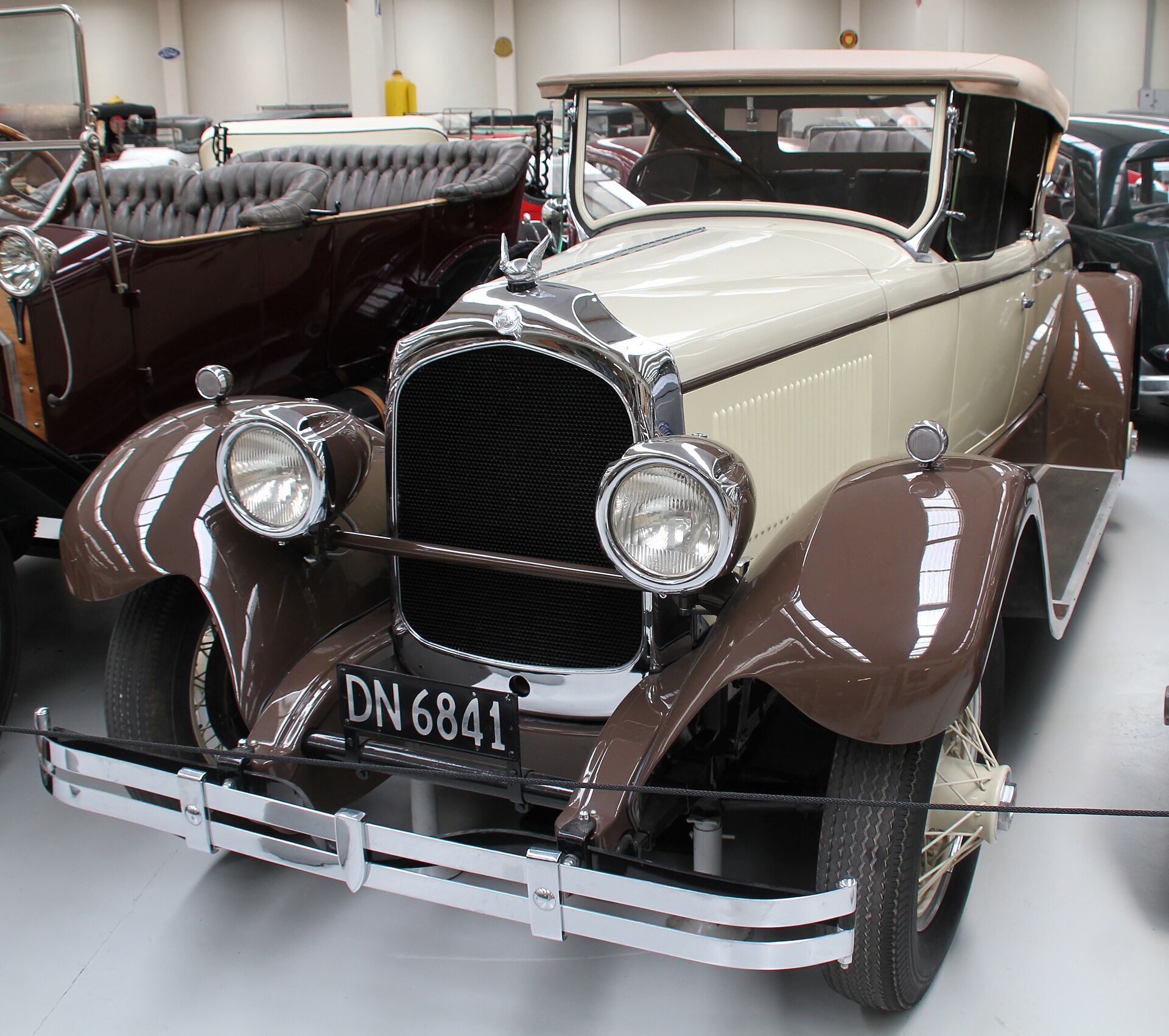
Walter P. Chrysler led the development of the Imperial E-80, the car that took his young company into the luxury class. The figure in the name stood for a guaranteed all-day cruising speed of 80 mph (129 km/h). The engine was a 288.6 cu in (4.7-litre) straight-six with seven main bearings and pressure lubrication, rated at 69 kW (92 bhp) according to Wikipedia. Wheelbases ran from 120 in (3,048 mm) up to 136 in (3,454 mm) for the 1928 Series 80L.
Chrysler sold roadsters, coupes, sedans, phaetons and seven-seat limousines, many with coachwork by Briggs, LeBaron, Derham, Locke and Dietrich. A 1926 Berline limousine listed at US$3,595, and a 1928 Dietrich convertible sedan cost US$6,795. The car paced the 1926 Indianapolis 500, set a transcontinental record of more than 10,460 km (6,500 miles) in a week, and in 1927 drove 10,824 km (6,726 miles) from San Francisco to New York and on to Los Angeles at an average of 64 km/h (40 mph). A four-speed manual gearbox was added in 1930.

Straight-eights, CG Imperial and Le Mans: 1931–1933
The CG Imperial of 1931 brought a new 384.4 cu in (6.3-litre) straight-eight, a long, straight bonnet and a vee radiator. Chrysler's "Floating Power" rubber engine mounts, safety glass and Lockheed hydraulic brakes were part of the package. A LeBaron dual-cowl phaeton cost US$3,575. Wikipedia counts 3,228 CGs, including chassis delivered to coachbuilders.
In 1932 the range split into the junior CH and the Imperial Custom CL. Production remained small: in 1933 Chrysler built 3,838 CQ cars but only 151 CL Imperials. In motorsport, a CG roadster started the 1931 24 Hours of Le Mans and retired with radiator failure, and Harry Hartz set speed records at Daytona Beach in a 1933 Imperial sedan.
Airflow and the Crown Imperial: 1934–1948
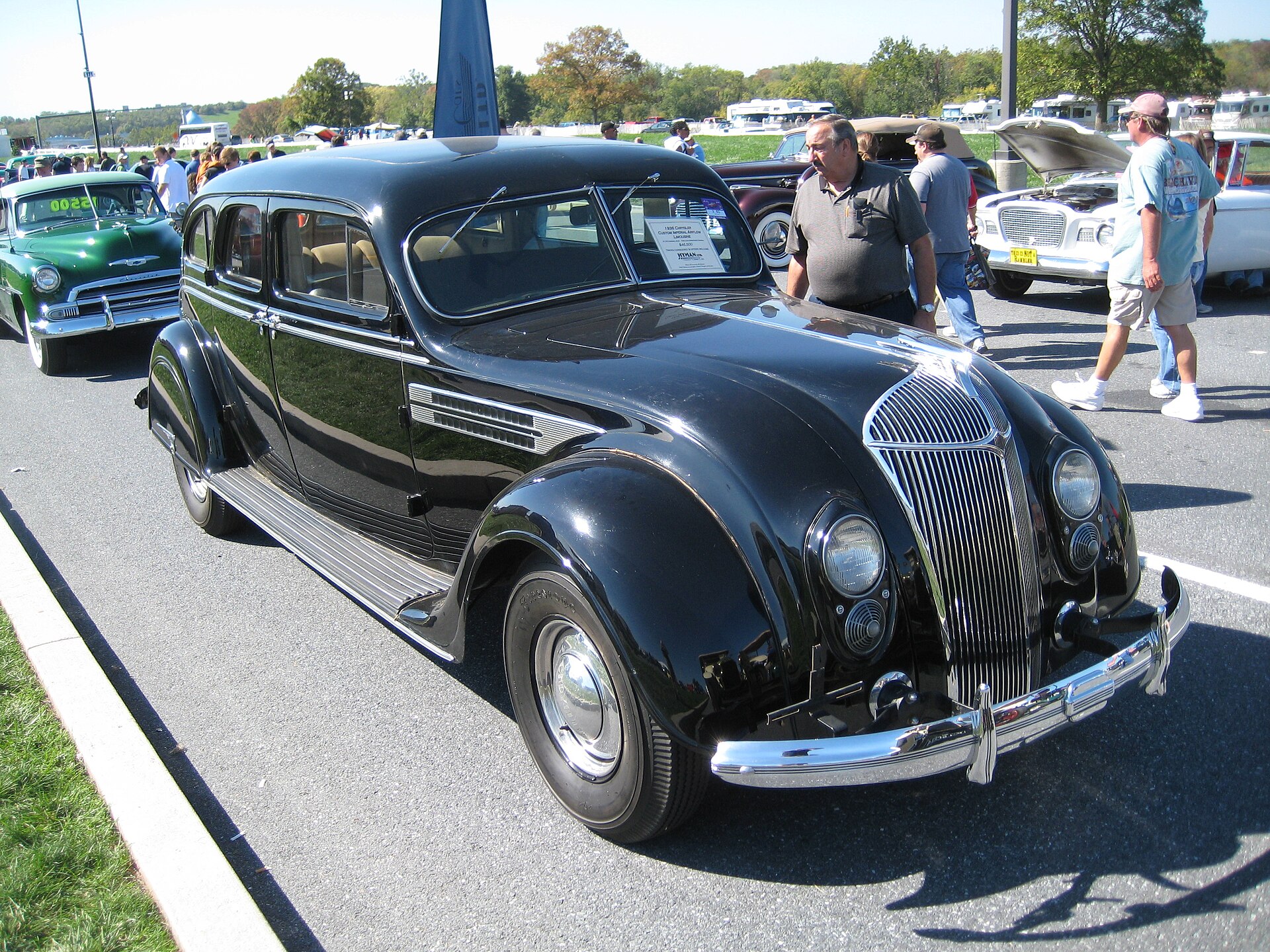
For 1934 the Imperial adopted the Airflow body. The engine and passenger cabin moved forward, the body used an early form of unit construction and the one-piece curved windscreen was among the first of its kind. Wikipedia calls the Airflow the first car designed in a wind tunnel. Buyers were not convinced: Chrysler's conventional Airstream outsold the Airflow by about three to one. Production of the top CW Airflow was tiny, with 67 cars in 1934 at a price of about US$5,000 each.
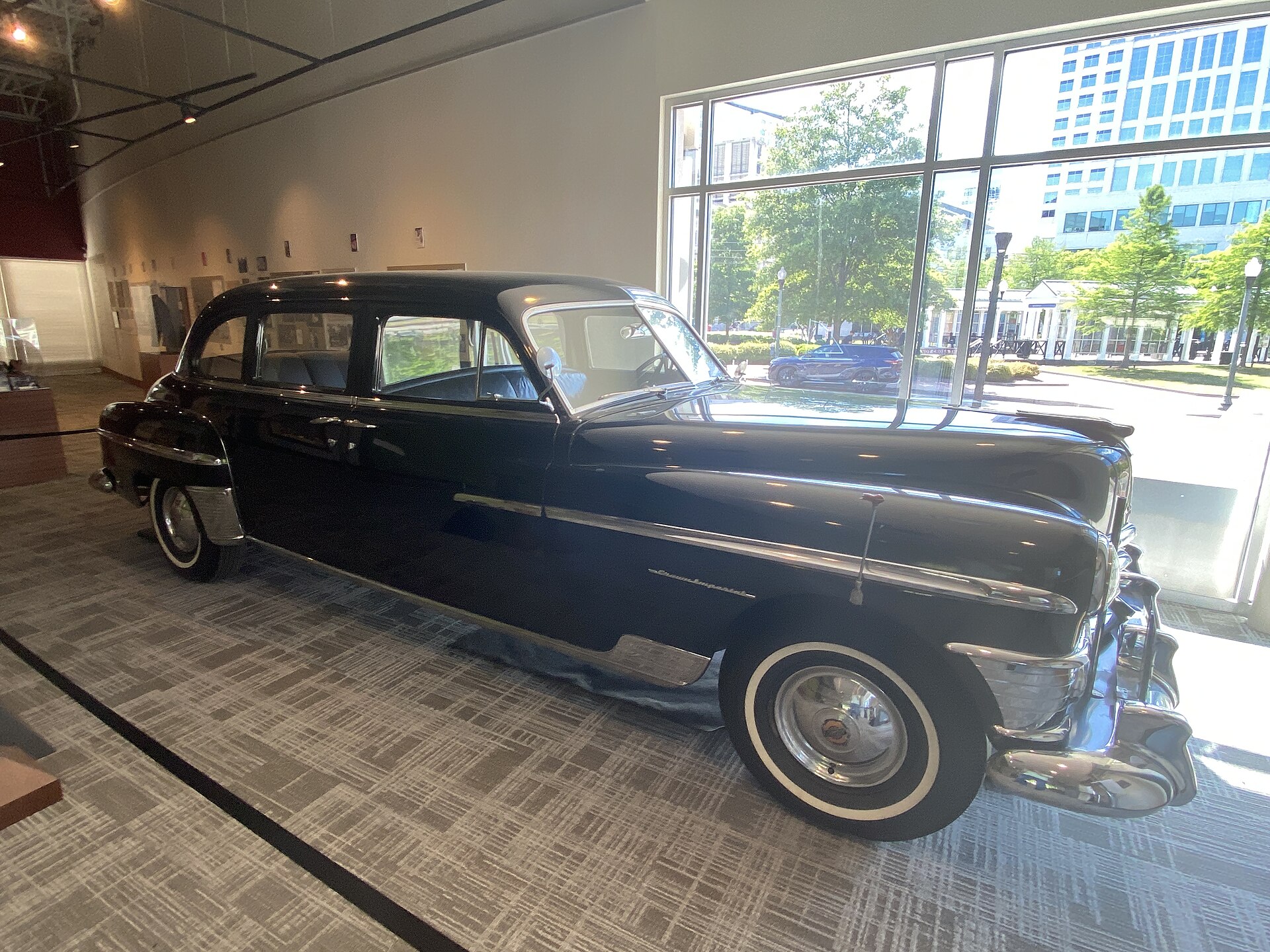
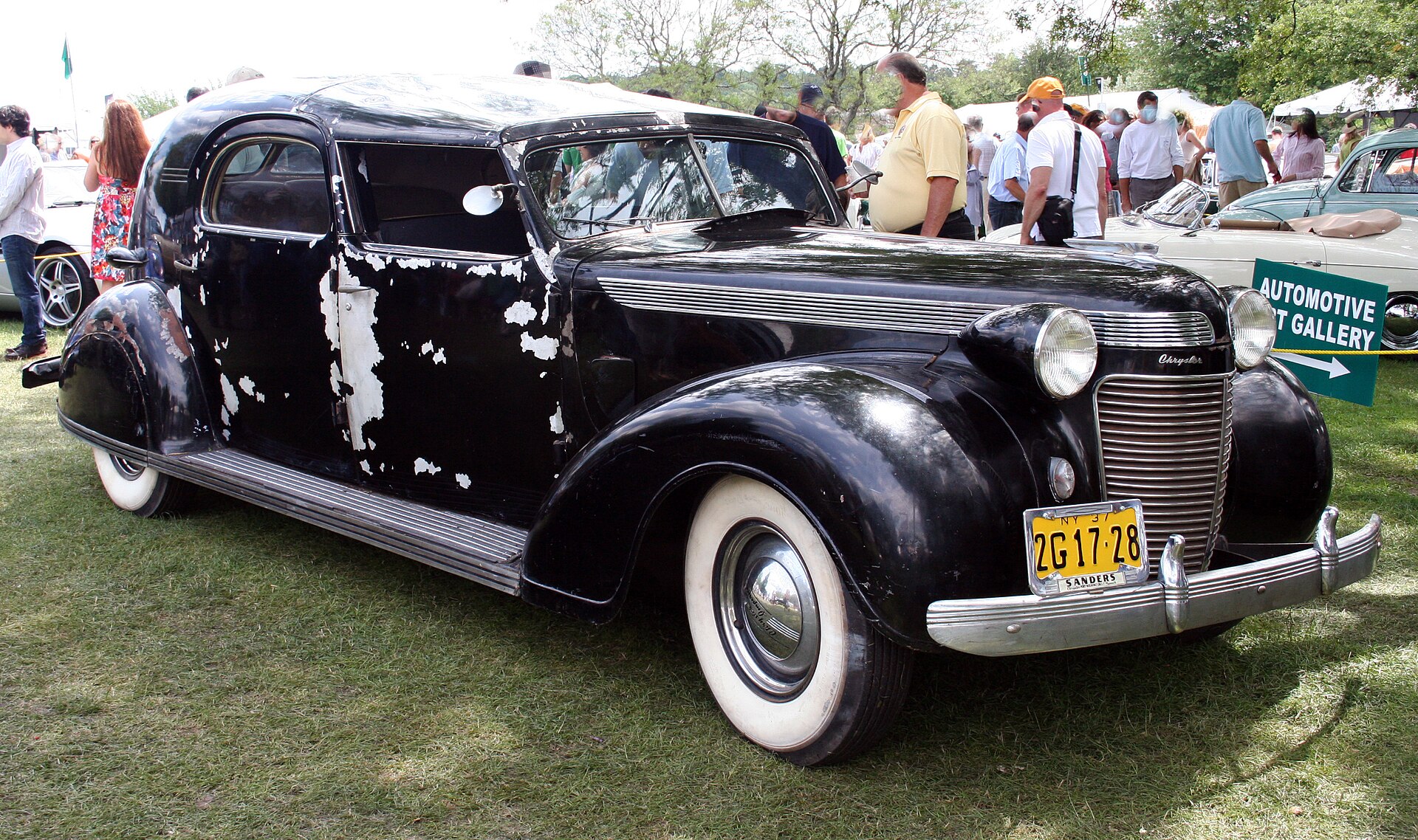
From 1937 the Imperial returned to a separate chassis with independent front suspension and traditional styling. Walter Chrysler ordered a C-15 town car for himself, and a Derham convertible town car carried King George VI and Queen Elizabeth on their 1939 tour of Canada. From 1940 the Crown Imperial limousine was the only car to carry the name. After the war it returned in small numbers: 165 cars in 1946, 740 in 1947 and 495 in 1948, at US$3,875 to US$4,767.

Hemi V8 and the postwar Imperial: 1949–1954
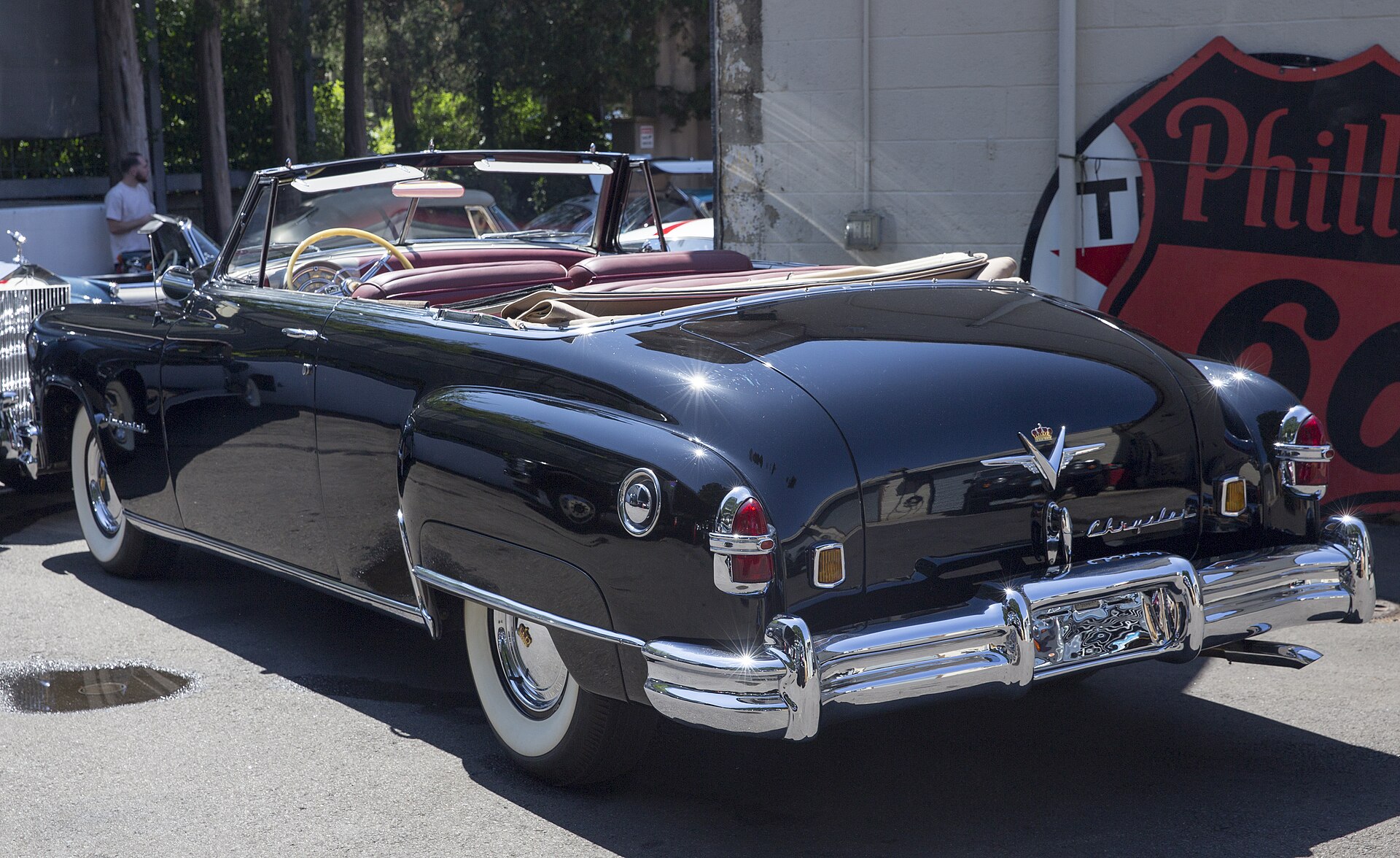
The Imperial returned as a sedan in 1949, alongside the Crown limousine. According to Wikipedia, the 1949 Crown Imperial was the first car with four-wheel disc brakes (Ausco-Lambert) as standard, although the Crosley Hot Shot is often credited as the first production car with disc brakes. Chrysler's 331 cu in (5.4-litre) FirePower Hemi V8 arrived in 1951, together with Hydraguide power steering, an industry first for production cars at US$226. That year two-door club coupes, hardtops and a convertible were offered; 650 convertibles were sold before the body was dropped for 1952.
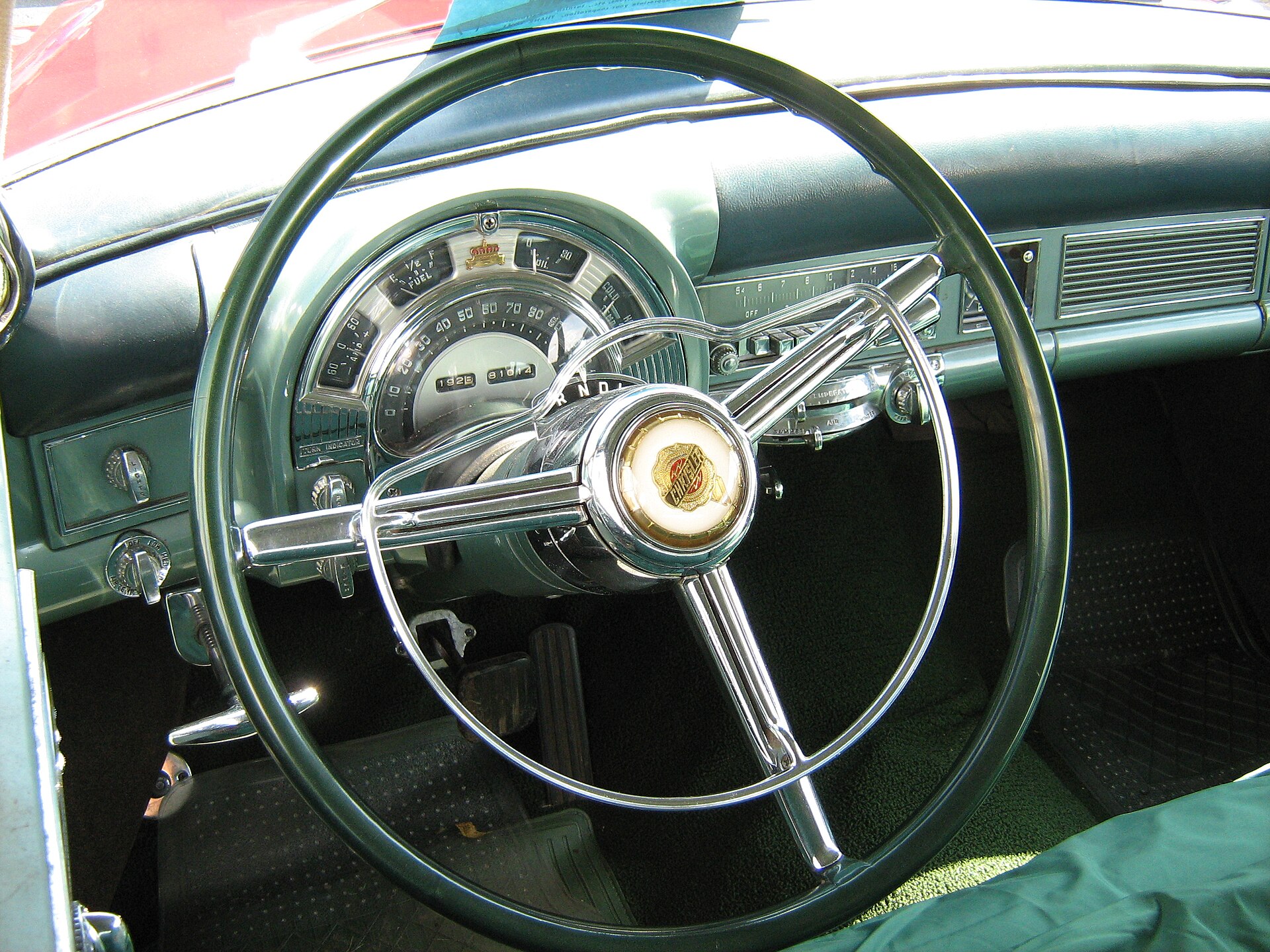
The 1953 Imperial Custom received power brakes and windows, a padded dashboard and an optional Airtemp air-conditioning system. The PowerFlite two-speed automatic, Chrysler's first fully automatic gearbox, arrived late in 1953 in limited numbers. The Crown limousine had a 12-volt electrical system and, in 1954, centre-opening rear doors. The 1957 Chrysler 300C shows where Chrysler took the Hemi V8 next.

A separate marque: Imperial 1955–1975
From 1955 Chrysler registered the Imperial as a separate make to compete directly with Cadillac and Lincoln. The cars were sold through Chrysler dealers, so most buyers still called them "Chrysler Imperials", and the cars carried no Chrysler badge until 1971. In April 1955 Chrysler and Philco announced the world's first all-transistor car radio, the Mopar 914HR, offered as a US$150 option on the Imperial.
The Imperial kept its own body-on-frame construction until 1967, when it moved to Chrysler's unit body with a 127 in (3,226 mm) wheelbase. Hidden headlamps followed in 1969, optional anti-lock brakes in 1971 and standard four-wheel disc brakes in 1974–1975. After 1975 the brand was dropped; the 1981–1983 Imperial was a two-door coupe built in Windsor with a fuel-injected 318 cu in (5.2-litre) V8 of 104 kW (140 hp). Its electronic fuel injection proved unreliable, and many dealers converted cars to carburettors.
The front-wheel-drive Imperial of 1990–1993
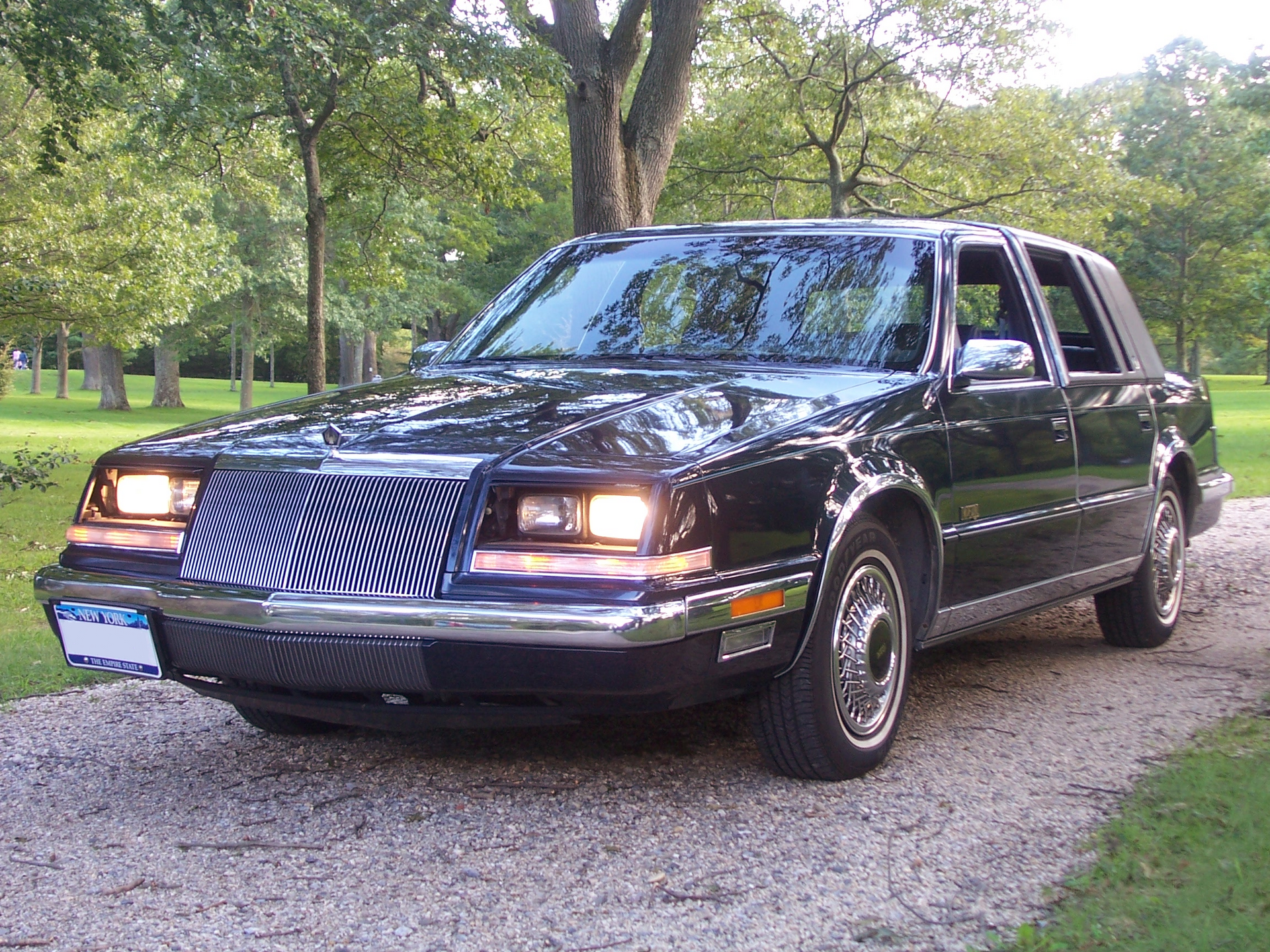
The last Imperial was again a Chrysler model, placed above the New Yorker Fifth Avenue on the stretched Y platform with front-wheel drive. It had a wedge-shaped nose, hidden headlamps, full-width tail lamps and a landau vinyl roof. The first engine was a 3.3-litre V6 with 110 kW (147 hp) and 251 Nm; from 1991 a 3.8-litre V6 gave 112 kW (150 hp) and 292 Nm, always with a four-speed automatic. Anti-lock brakes, a driver's airbag and automatic climate control were standard, and Mark Cross leather, air suspension and a digital instrument cluster were options.
| Year | Built | US list price |
|---|---|---|
| 1990 | 14,968 | US$25,655 |
| 1991 | 11,601 | US$27,119 |
| 1992 | 7,643 | US$28,453 |
| 1993 | 7,064 | US$29,481 |
Sales fell every year, and the Imperial and the New Yorker were dropped after 1993. Chrysler showed an Imperial concept on the long-wheelbase LY platform at the 2006 Detroit show but cancelled it on 17 July 2007, citing fuel costs.


Chrysler Imperial specifications
| Parameter | Metric | Imperial |
|---|---|---|
| Engine, Imperial 80 (1926) | 4.7 l straight-six, 69 kW | 288.6 cu in, 92 bhp |
| Cruising speed claimed (1926) | 129 km/h | 80 mph |
| Engine, CG Imperial (1931) | 6.3 l straight-eight | 384.4 cu in |
| Wheelbase, CW Airflow (1934–1936) | 3,721 mm | 146.5 in |
| Engine, FirePower Hemi (1951–1954) | 5.4 l V8 | 331 cu in |
| Engine, Imperial (1981–1983) | 5.2 l V8, 104 kW | 318 cu in, 140 hp |
| Engine, Imperial (1991–1993) | 3.8 l V6, 112 kW, 292 Nm | 150 hp, 215 lb-ft |
| Wheelbase, Imperial LY concept (2006) | 3,124 mm | 123 in |
Imperial variants and derivatives
| Variant | Years | Body / purpose | Engine | Notes |
|---|---|---|---|---|
| Imperial E-80 / 80L | 1926–1930 | roadster to limousine | 4.7 I6 | coachwork by Briggs, LeBaron, Dietrich, Locke |
| CG / CL Imperial Custom | 1931–1933 | phaeton, sedan, limousine | 6.3 I8 | 3,228 CG built |
| Airflow Imperial CV / CX / CW | 1934–1936 | streamlined sedan, limousine | I8 | CW: 67 built in 1934 |
| Crown Imperial | 1940–1954 | eight-seat sedan, limousine | I8, later Hemi V8 | 12-volt system in 1953–1954 |
| Imperial Custom Newport | 1953 | two-door hardtop | Hemi V8 | added 10 March 1953 |
| Imperial (separate make) | 1955–1975 | sedan, hardtop, convertible | V8 | Custom, Crown and LeBaron lines |
| Imperial coupe | 1981–1983 | two-door coupe | 5.2 V8 EFI | built in Windsor, Ontario |
| Chrysler Imperial | 1990–1993 | six-seat sedan | 3.3 / 3.8 V6 | 41,276 built |
Collecting Chrysler Imperials today
The Classic Car Club of America recognises the Imperial Custom Airflows as classics, and the coachbuilt cars of 1926–1933 with bodies by LeBaron, Dietrich or Derham are the best-known pre-war Imperials. Several Crown Imperials have documented histories: Portugal's prime minister Salazar used an armoured car, and a 1937 CW built for Philippine president Manuel Quezon is still maintained by the government. The 1990–1993 cars are the easiest to own, with modern parts shared with other Chrysler models; for the 1981–1983 coupe, check whether the original fuel injection is still fitted. To compare an Imperial with a Cadillac or Lincoln of the same years, the 1cars comparison tool lists the catalogue data side by side, and more pre-war cars can be found in the classics section.
Photo gallery


Chrysler Imperial in our rankings
In production longer than 17% of ranked nameplates in the 1CARS catalog (No. 842 of 1082).
Chrysler Imperial photos 7
FAQ
When was the Chrysler Imperial produced?
As a Chrysler from 1926 to 1954 and from 1990 to 1993; from 1955 to 1975 and in 1981–1983 Imperial was a separate make.
Was Imperial a separate brand?
Yes. From 1955 Chrysler registered Imperial as its own make, though the cars were sold by Chrysler dealers.
What engine did the Chrysler Imperial have?
A 4.7-litre six in 1926, straight-eights from 1931, the 331 cu in Hemi V8 from 1951 and, in 1990–1993, 3.3- and 3.8-litre V6s.
How many 1990–1993 Imperials were built?
41,276 in four model years, from 14,968 in 1990 down to 7,064 in 1993.
What does the 80 in Imperial 80 mean?
It referred to the guaranteed cruising speed of 80 mph (129 km/h).


