 Ford Fairlane Thunderbolt
Specs, engines and history
Published Sources (1) Report an error
By Sarah Whitmore, Senior Automotive Writer
- Built
- 1964
- Top power
- 317 kW (431 PS)
Which early Ford drag car to choose
Our verdict · Sarah Whitmore
- For the purest 1964 factory racer: the Thunderbolt, 100 cars with documented race history.
- For a road-legal Fairlane with big-block power: the 1966–1967 Fairlane GT and GTA covered in the Fairlane article.
- For a later NASCAR special: the Torino Talladega of 1969.
The Thunderbolt is listed in the golden-age muscle car guide, and the muscle car hub ranks it with the other cars of the era.
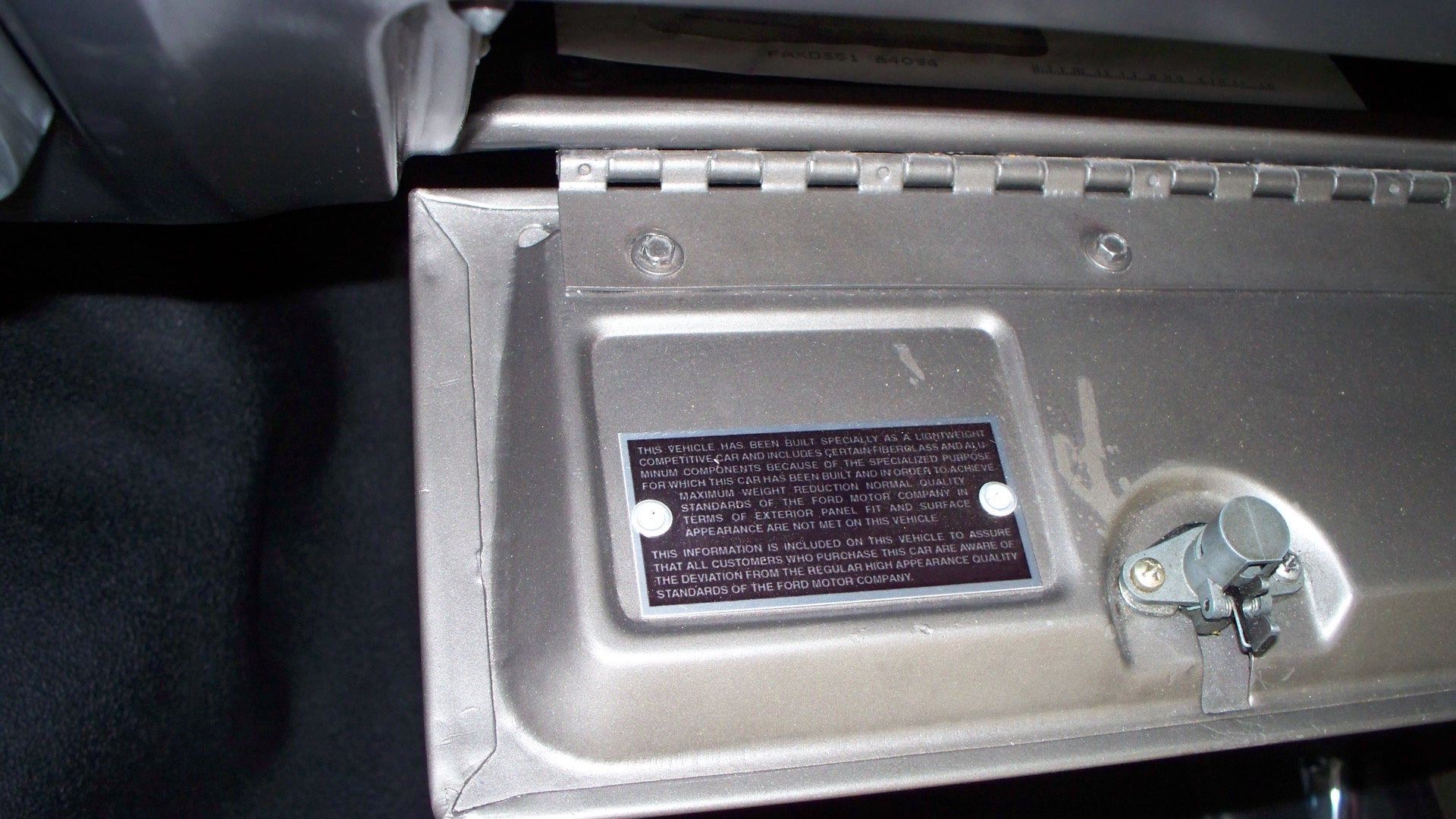
The Ford Fairlane Thunderbolt was a factory lightweight drag car built for the 1964 model year only. Ford put its 427 cu in (7.0-litre) high-riser V8 with two four-barrel carburettors into the mid-size Fairlane 500 two-door sedan, removed every kilogram it could and sold the result to drag racers. Officially rated at 317 kW (425 hp, SAE gross), the 100 Thunderbolts won Ford the 1964 NHRA Super Stock championship.
In short
- 100 cars built for 1964: 49 with a four-speed manual and 51 with an automatic, finished by Dearborn Steel Tubing.
- 427 FE V8 with 13.5:1 compression: 317 kW (425 hp) at 6,000 rpm and 651 Nm (480 lb-ft) at 3,700 rpm on paper; Wikipedia cites estimates of about 403 kW (540 hp), Ford Racing of nearly 447 kW (600 hp).
- Kerb weight 1,453 kg (3,203 lb) thanks to glass-fibre panels and Plexiglas windows.
- Gas Ronda won the 1964 NHRA Winternationals in one, with 11.78 seconds at 123.40 mph (198.6 km/h) over the quarter mile.
Specs by version
| Version | Engine | Power | Torque | Drive | Production years |
|---|---|---|---|---|---|
| 427 FE V8, 2 × 4V (SAE gross) | 7.0 l · 8 cyl · Petrol 6,997 cc | 317 kW 431 PS425 hp | 651 Nm480 lb-ft | Rear-wheel drive | 1964 |
Verified Manufacturer and type-approval data from our catalog · Sources and methodology
Fairlane Thunderbolt at a glance
| Specification | Ford Fairlane Thunderbolt |
|---|---|
| Model year | 1964 |
| Built | 100 (49 four-speed, 51 automatic) |
| Finished by | Dearborn Steel Tubing, Dearborn, Michigan |
| Body | Fairlane 500 two-door sedan |
| Engine | 427 cu in (7.0 l) FE V8, two four-barrel Holley carburettors |
| Compression | 13.5:1 (claimed) |
| Power | 317 kW (425 hp) at 6,000 rpm, SAE gross |
| Torque | 651 Nm (480 lb-ft) at 3,700 rpm |
| Final drive | 4.57:1 with the four-speed, 4.44:1 with the automatic |
| Kerb weight | 1,453 kg (3,203 lb) |
| Price | US$3,780 from Ford dealers in 1964, according to Barrett-Jackson |
The Thunderbolt is a version of the Ford Fairlane, whose hub article covers the road-going GT, GTA and Cobra.
Why Ford built a drag car
In 1962 and 1963 Ford's drag racers, Ed Martin among them, campaigned factory-supported full-size Galaxies, according to Ford Racing. The intermediate Fairlane offered a lighter base: according to Wikipedia it was about 318 kg (700 lb) lighter than a Galaxie, so the same 427 engine would push less mass. The project took its name from an experimental Fairlane of 1963.
Ford ran a factory drag team. Ford Racing lists its original members of 1962 as Ed Martin, Gas Ronda, Les Ritchey, Mickey Thompson, Phil Bonner and Dick Brannan. Ford had made Ed Martin a dealer in Indianapolis, required a detailed report after every event and, for 1964, gave the team its Thunderbolts. Ed Martin's crew collected their four-speed car in Dearborn in October 1963.
How the Thunderbolt was built
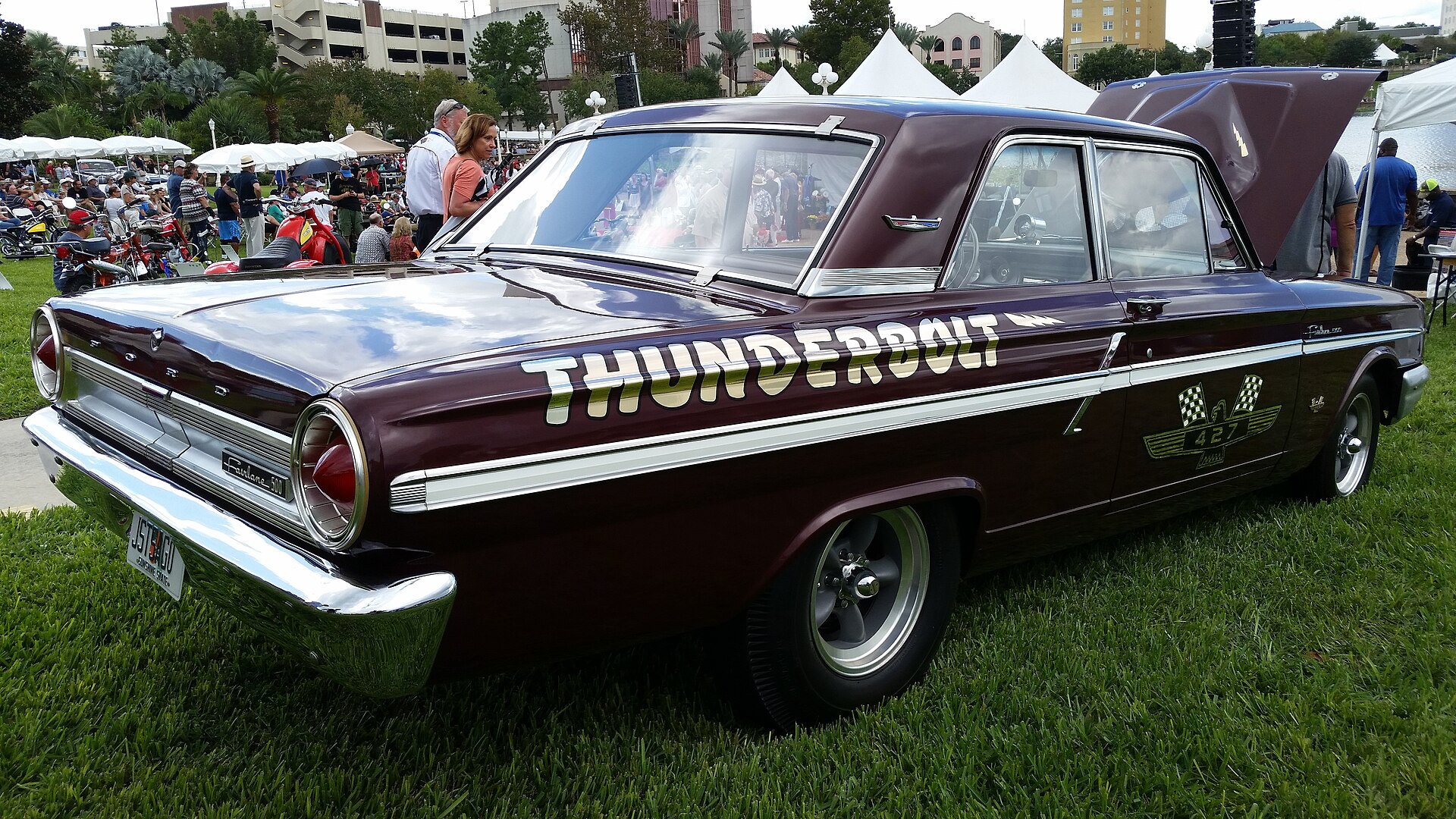
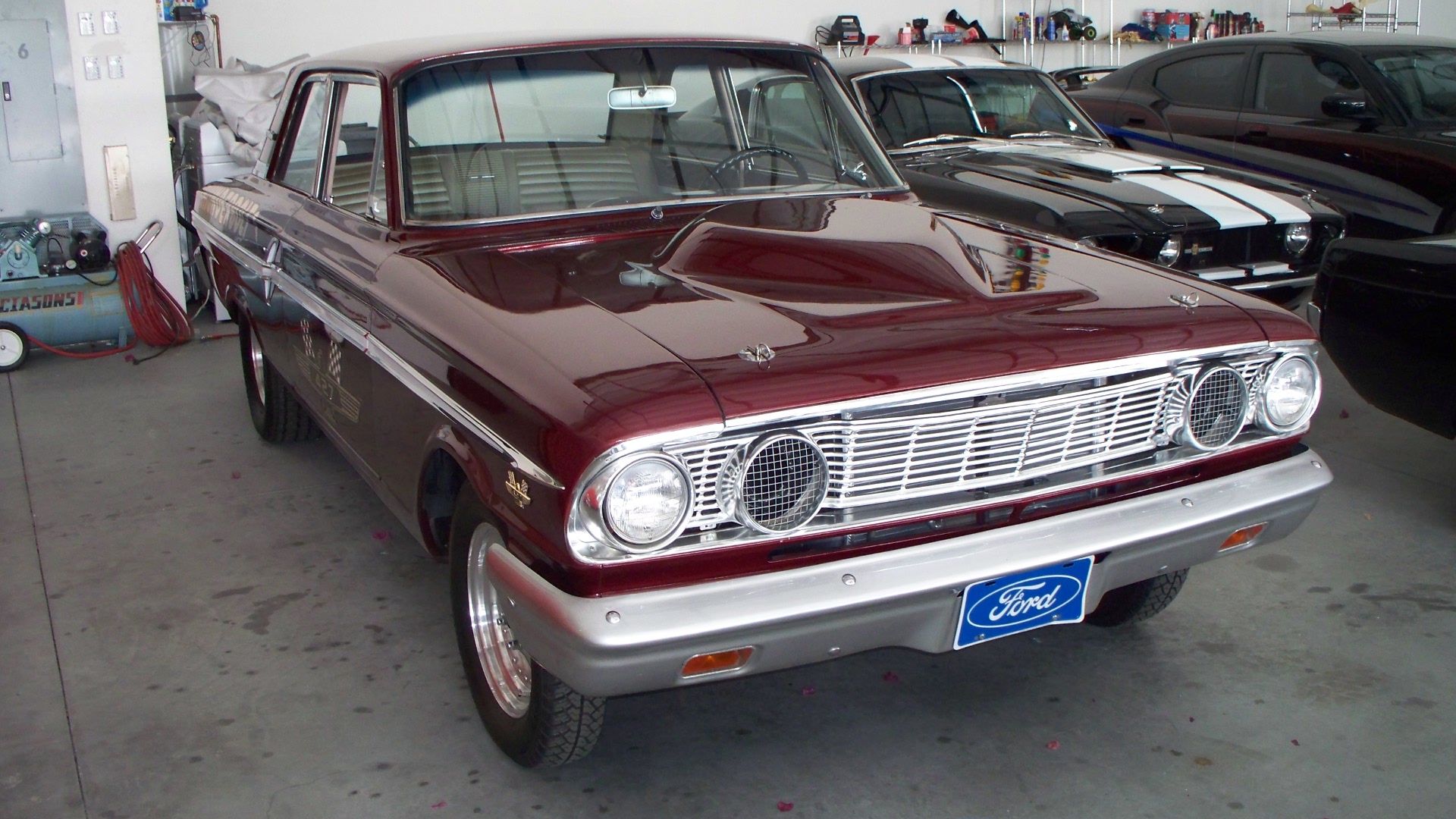
The Thunderbolt did not come off a normal assembly line. Partly built Fairlane 500 bodies went to Dearborn Steel Tubing, where Andy Hotton's company installed the engine, gearbox and racing parts. Ford Racing reports that the first 11 cars, made for Ford Drag Team members, were painted Vintage Burgundy, and that the dealers involved were invoiced US$1 for each of them for the 1964 season. The other 89 were Wimbledon White.
Weight was cut wherever the rules allowed:
- glass-fibre doors, bonnet and front wings, and on early cars a glass-fibre front bumper;
- Plexiglas side and rear windows;
- a bonnet held by pins, with no hinges or latch;
- aluminium bumpers on later cars, after a change in the racing rules;
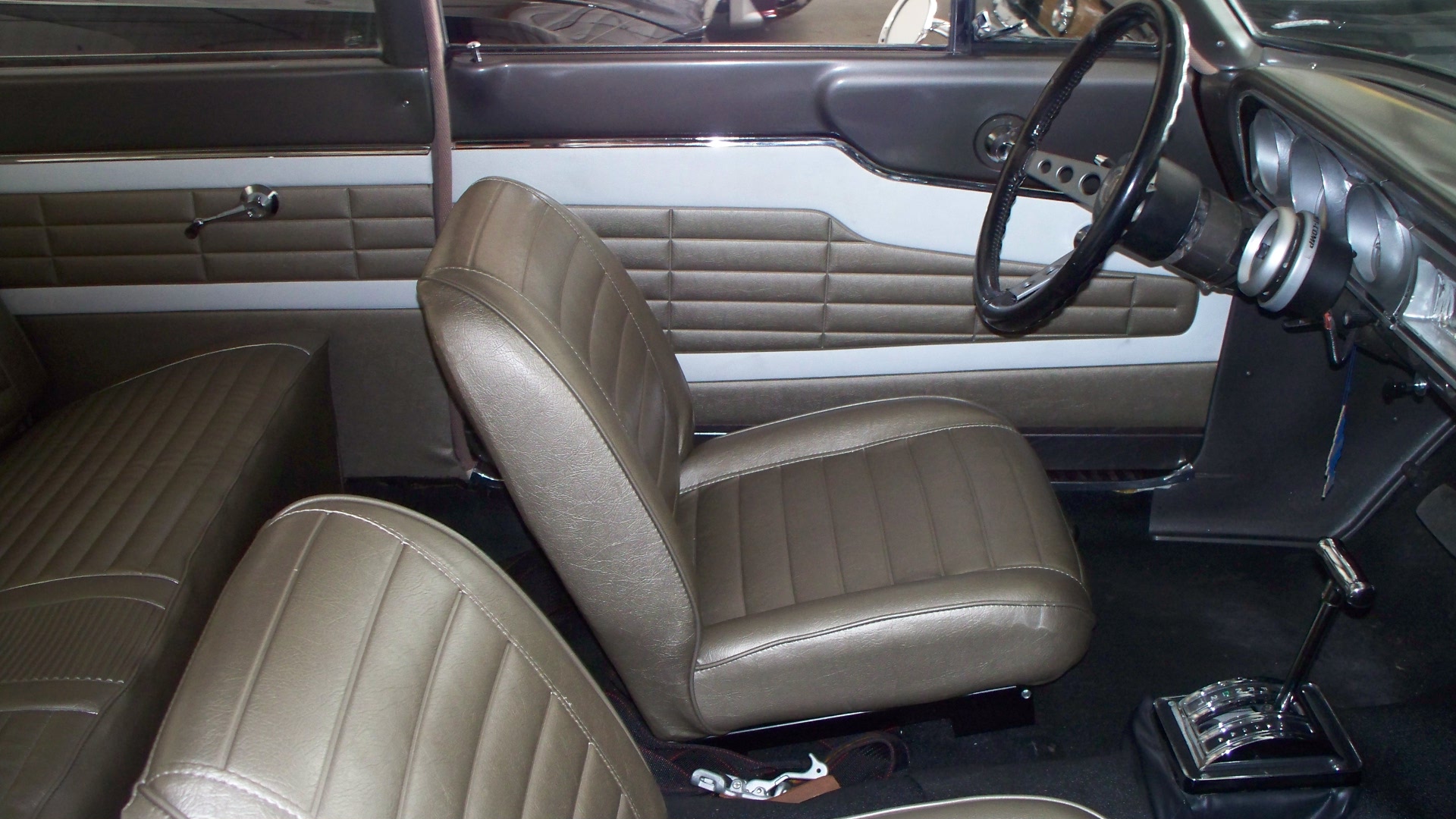
- lightweight seats from the police package or the Econoline van, and a rubber mat instead of carpet;
- no sun visors, radio, heater, wheel covers, passenger wiper, armrests, rear window cranks, mirrors, sound deadening, jack or spare wheel.
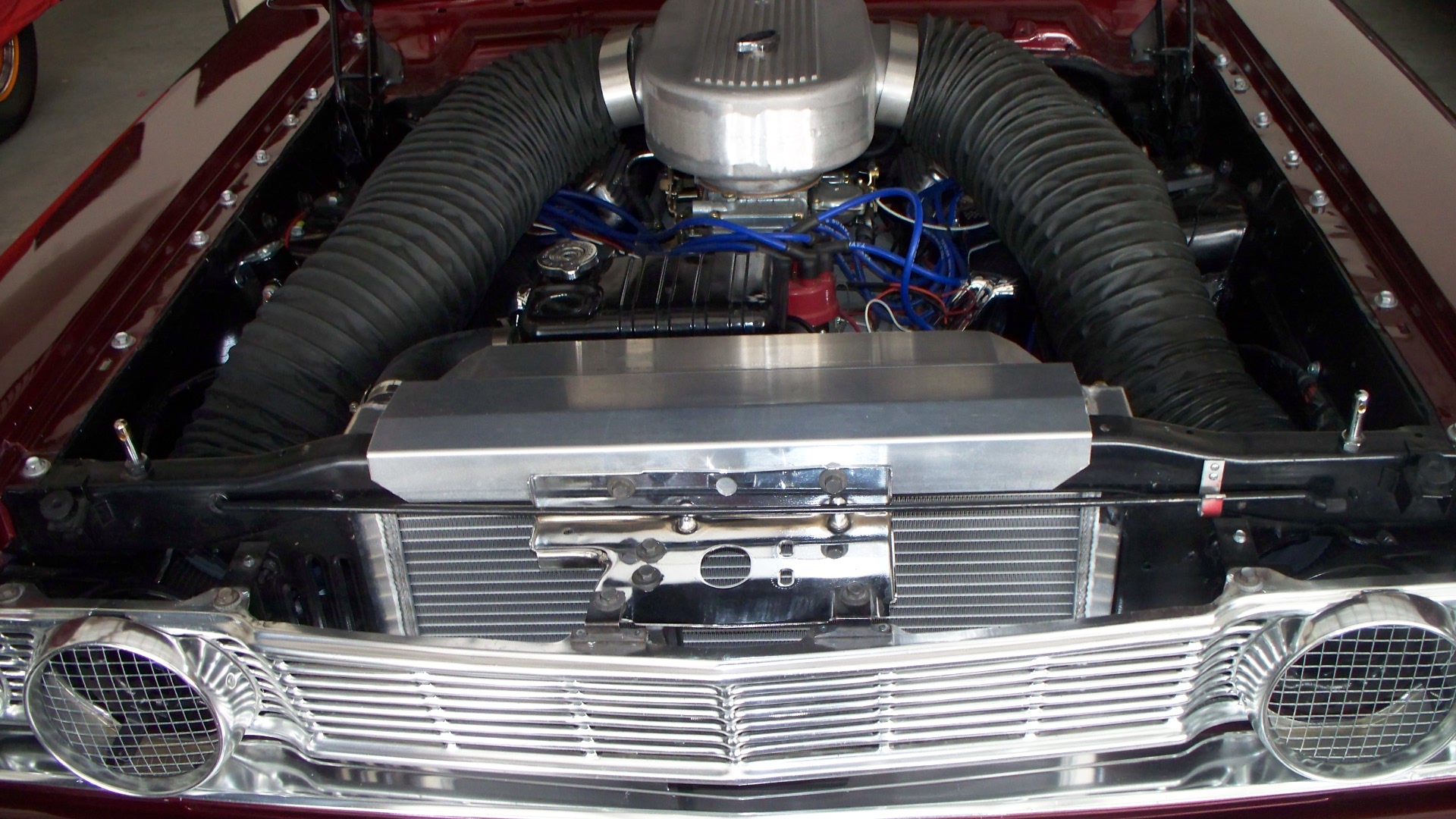
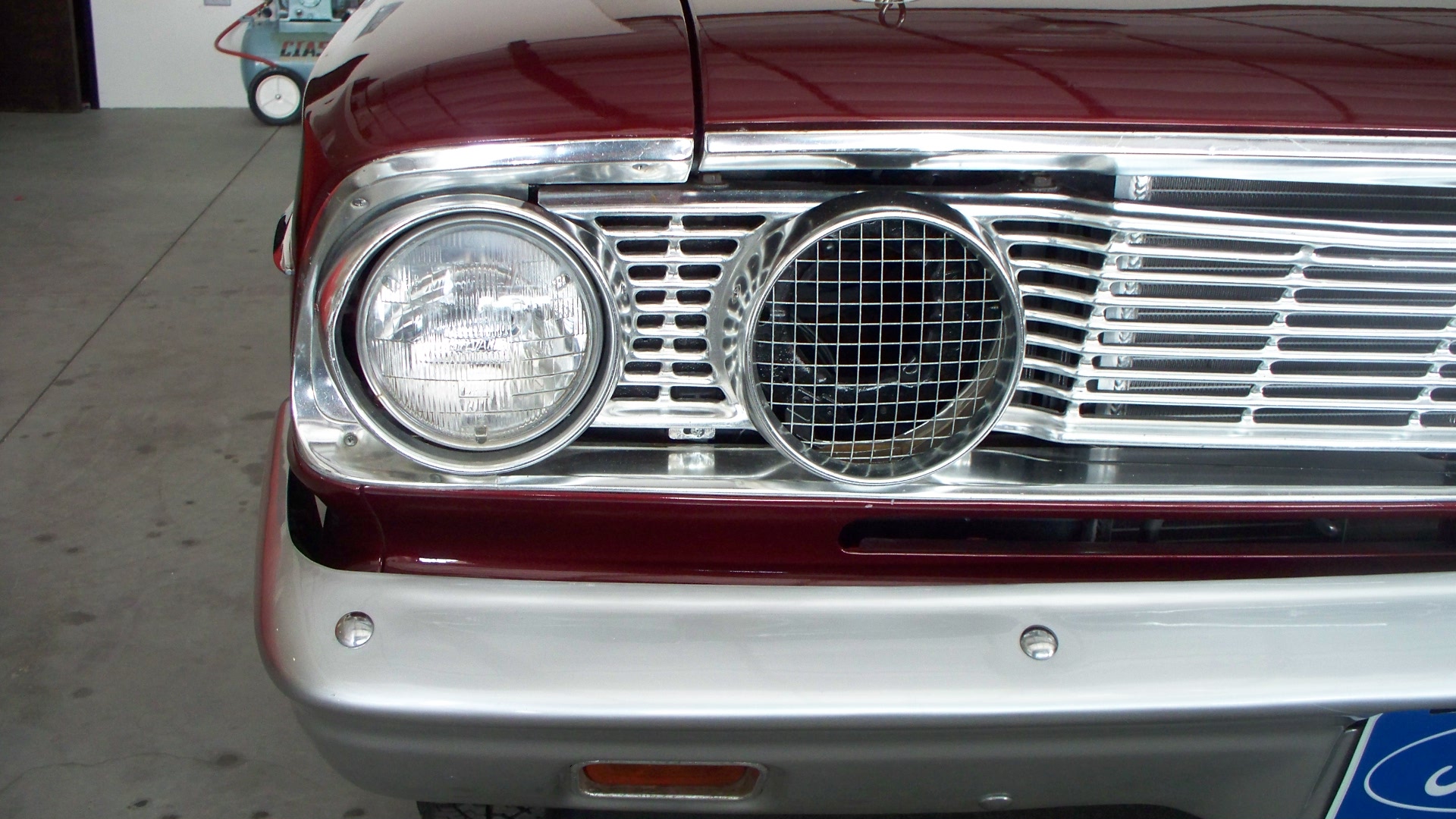
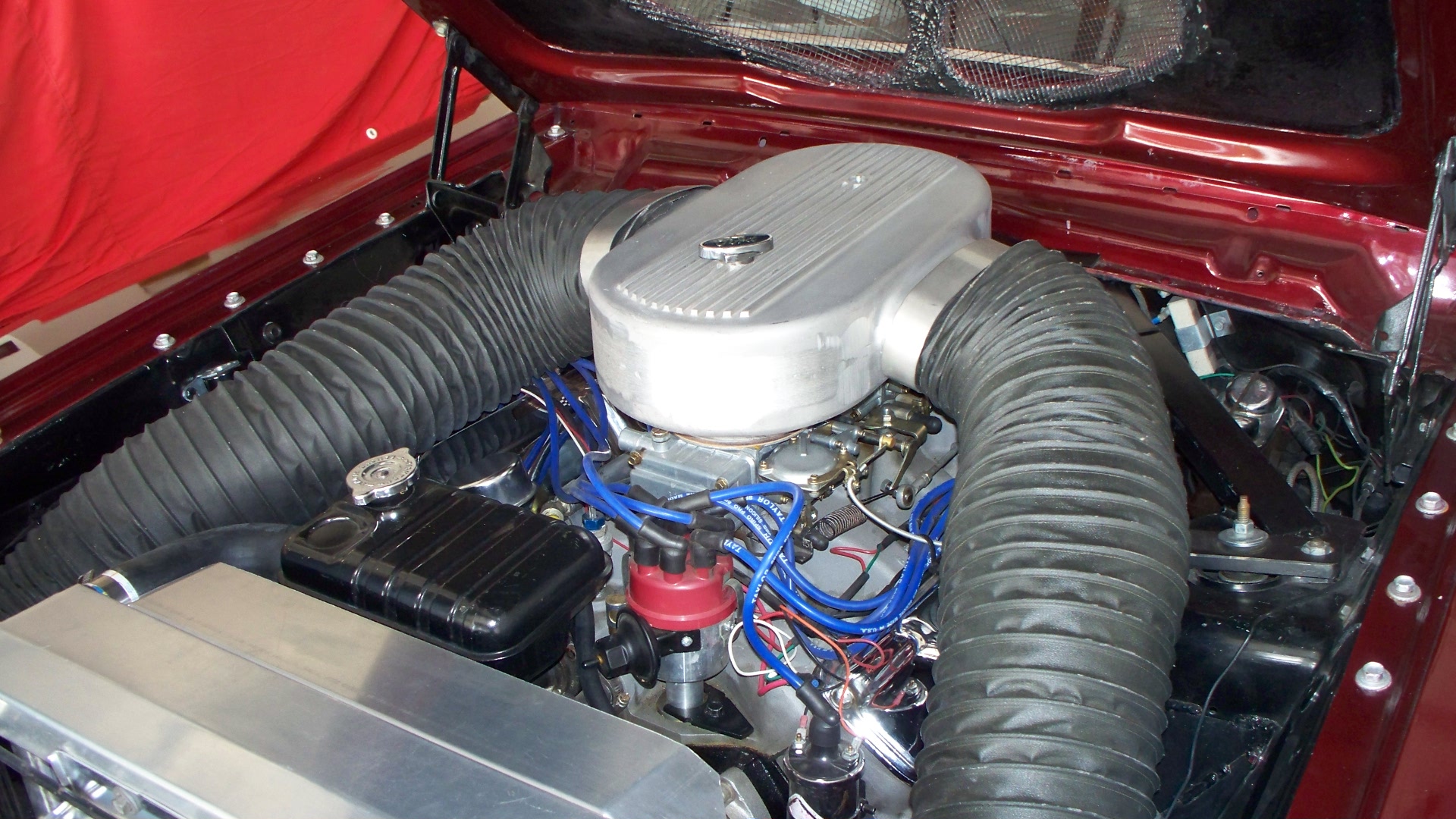
The high-beam headlights were removed and replaced by ram-air intakes.


Engine and drivetrain
The engine was the 427 cu in version of Ford's FE V8, with two four-barrel Holley carburettors and a claimed compression ratio of 13.5:1. Against Ford's rating of 317 kW (425 hp) at 6,000 rpm, Wikipedia cites calculations from elapsed times and weights of about 403 kW (540 hp) at the flywheel, and Ford Racing mentions estimates near 447 kW (600 hp).
Racing hardware was part of the package:
| Part | Thunderbolt equipment |
|---|---|
| Exhaust | tubular headers (Holman-Moody supplied the headers for Ed Martin's car) |
| Fuel | electric fuel pump |
| Suspension | heavy-duty springs and traction bars |
| Rear axle | locking differential, 4.57:1 or 4.44:1 |
| Battery | mounted in the boot |
| Safety | aluminium clutch scatter shield |
Buyers could choose a four-speed manual or an automatic, and the split was almost even: 49 manual cars and 51 automatics.

Racing results in 1964
The car was fast before the season began. In November 1963 a four-speed test car ran the quarter mile in 11.61 seconds at 124.8 mph (200.8 km/h) at Lions Drag Strip in California.
| Event | Result |
|---|---|
| Lions Drag Strip test, November 1963 | 11.61 s at 124.8 mph (200.8 km/h) |
| NHRA Winternationals 1964, final | Gas Ronda beat Butch Leal: 11.78 s at 123.40 mph (198.6 km/h) |
| NHRA 1964 season | Ronda won the national Top Stock title |
| NHRA U.S. Nationals 1964 | a four-speed Thunderbolt won the manual-gearbox class |
| NHRA Super Stock, 1964 | championship for Ford |
The Thunderbolt remained a one-year car, built for the 1964 season only.

The Thunderbolt in numbers
These figures are calculated by 1CARS from the sourced weight and power ratings, so they show the order of magnitude rather than a measured value.
| Measure | Rated 317 kW | Estimated 403 kW | Estimated 447 kW |
|---|---|---|---|
| Weight per kW (1,453 kg) | 4.6 kg | 3.6 kg | 3.3 kg |
| kW per litre (7.0 l) | 45 | 58 | 64 |
Even at the official rating, the Thunderbolt carried less than 5 kg per kW. The 318 kg weight advantage over a Galaxie with the same engine was the whole idea of the project. In the ranking of the most powerful muscle cars, which uses the official SAE gross figures, it appears with its rated 317 kW.
How many Thunderbolts survive
Wikipedia and Ford Racing give 100 cars; Barrett-Jackson's auction description gives a range of 100 to 127 and says roughly 60 remain. Individual cars are traced by their history: Ed Martin's was the third of the first eleven, and Ford Racing reported in 2025 that the Ed Martin dealer family had been reunited with it in December 2024 after it was shown at the Ford Fairlane Club of America's national meet in Dearborn. Bob Glidden, later an NHRA champion with 85 wins, started as a line mechanic at Ed Martin Ford.
The Thunderbolt is also a popular model: Hot Wheels and Ertl make miniatures, and Revell sells a 1/25 scale kit.

Thunderbolt buying notes
- Documents first: with about 100 cars built and drag-racing lives behind most of them, provenance from the Ford team or a known racer matters more than paint.
- Check the build: genuine cars have the glass-fibre panels, Plexiglas windows, the battery in the boot and the ram-air intakes in place of the high-beam headlights; the first 11 were burgundy, the rest white.
- Expect modifications: many cars were raced for years, and some engines changed; Barrett-Jackson offered a car fitted with a one-off aluminium-head 427.
- Know what you want: for a road car with the same engine family, the Ford Galaxie 427 or a later Fairlane GT is easier to live with.
Photo gallery


Ford Fairlane Thunderbolt in our rankings
- No. 6 of 131 · Biggest engines: sedans (6,997 cc)
- No. 44 of 557 · Biggest engines: cars (6,997 cc · top 8%)
- No. 12 of 94 · Most powerful cars of the 1960s (317 kW · top 15%)
- No. 13 of 68 · Most torque: sedans (651 Nm · top 20%)
- No. 36 of 149 · Most powerful sedans (317 kW · top 25%)
- No. 99 of 368 · Most torque: cars (651 Nm · top 27%)
Bigger engine than 95% of ranked sedans in the 1CARS catalog (No. 6 of 131).
Ford Fairlane Thunderbolt photos 6
FAQ
How many Ford Thunderbolts were made?
100 for the 1964 model year, according to Wikipedia and Ford Racing: 49 with a four-speed manual and 51 with an automatic. Some auction descriptions give up to 127.
How much horsepower did the Thunderbolt have?
Ford rated the 427 at 317 kW (425 hp, SAE gross); estimates of the real output range from about 403 kW (540 hp) to 447 kW (600 hp).
How fast was the Fairlane Thunderbolt?
A test car ran 11.61 seconds at 124.8 mph in November 1963, and Gas Ronda won the 1964 Winternationals with 11.78 seconds.
What did a Thunderbolt cost new?
US$3,780 from Ford dealers in 1964, according to Barrett-Jackson; the first 11 team cars of 1964 were invoiced to dealers at US$1 each.
Was the Thunderbolt a street car?
No. It was built for NHRA Super Stock drag racing and stripped of road equipment such as the heater, radio and spare wheel.
Data sources
Data checked by an editor against the sources below.