 NSU Ro 80
Specs, engines and history
Published Sources (1) Report an error
By Felix Hartmann, Automotive Technology & EV Contributor
- Built
- 1967–1977
- Top power
- 85 kW (116 PS)
NSU was a German maker from Neckarsulm, and the name is an abbreviation of the town. Christian Schmidt founded the company in 1873 in Riedlingen on the Danube to make knitting machines; it moved to Neckarsulm in 1880, built bicycles from 1886 and its first motorcycle in 1901. In 1955 NSU was the world's largest motorcycle producer, with 350,000 motorcycles in its peak year. Its cars began with the small Prinz of 1957, and in 1964 the Wankel Spider became the first car offered with a Wankel rotary engine. In 1969 Volkswagen bought NSU and merged it with Auto Union into Audi NSU Auto Union AG, the company renamed Audi AG in 1985.
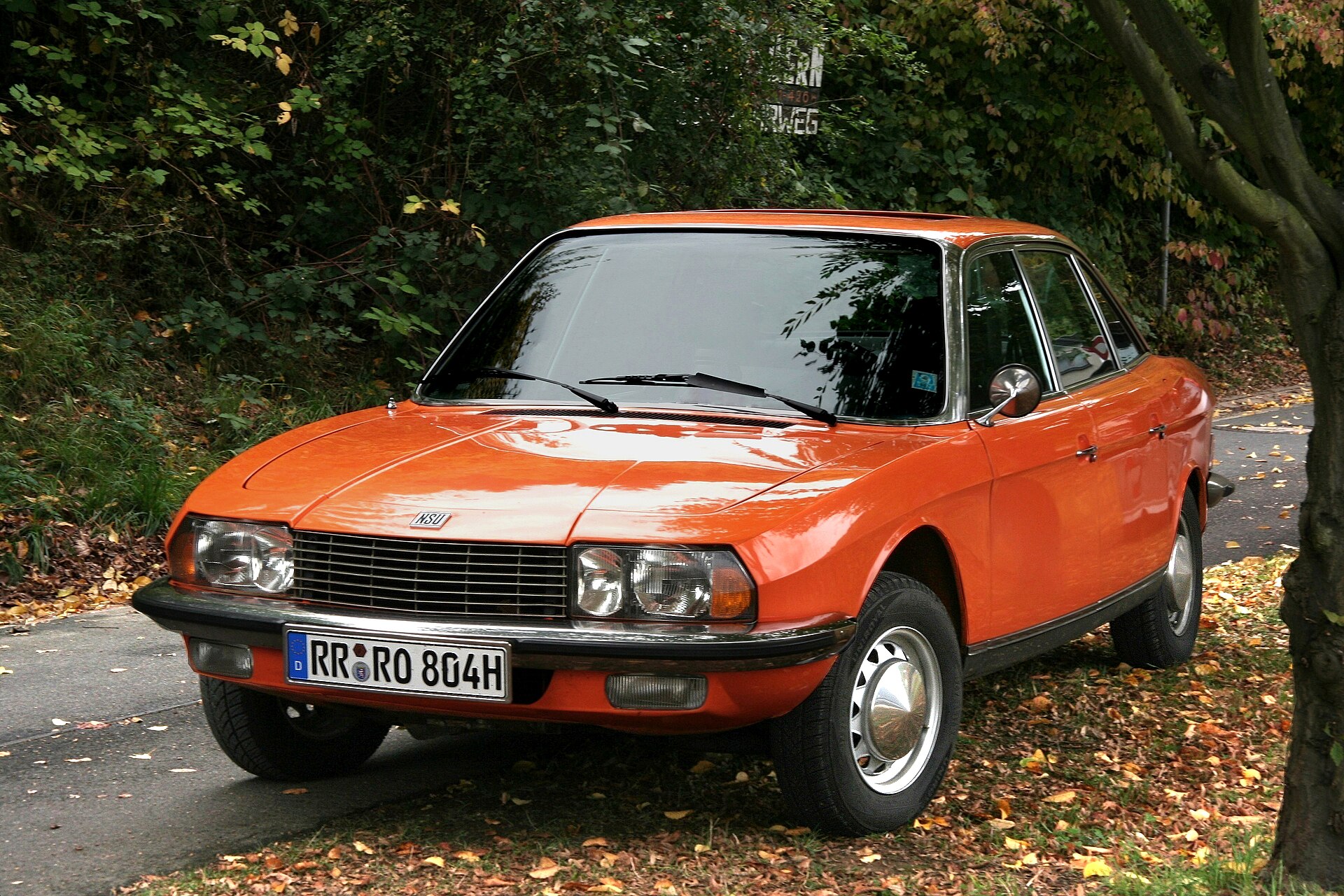
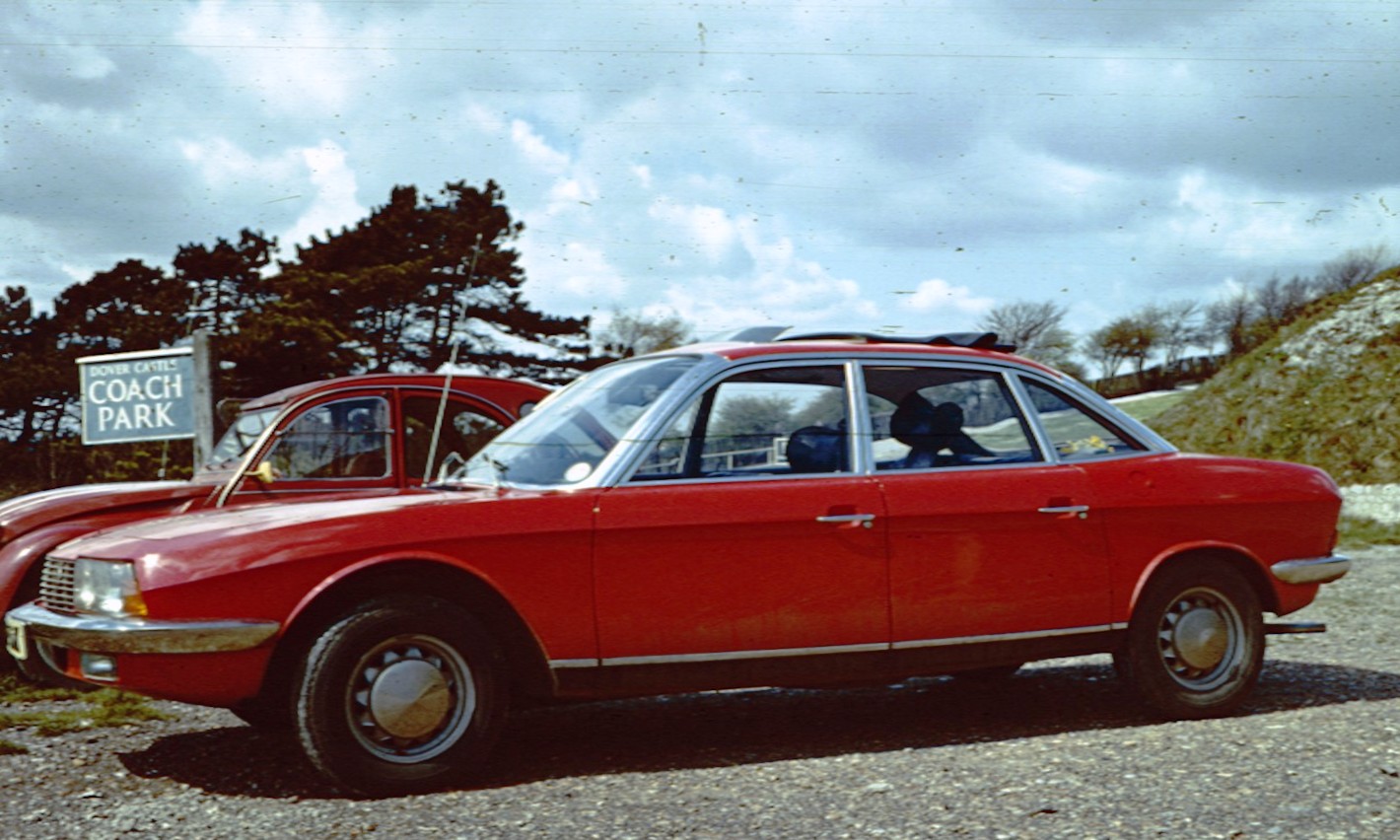
The Ro 80 is the car NSU is remembered for. Shown at the Frankfurt motor show (IAA) in September 1967 and built in Neckarsulm until 1977, this four-door executive saloon combined a twin-rotor Wankel engine of 85 kW (115 PS) with front-wheel drive, four-wheel disc brakes and a semi-automatic gearbox. Claus Luthe's body had a drag coefficient of about 0.36, and the car was named European Car of the Year for 1968. Early engine failures and high fuel use hurt sales, and only 37,398 were built.
Specs by version
Engines
Performance
Show all 1 versions
| Version | Top speed |
|---|---|
| Wankel 995 cc | 180 km/h112 mph |
Verified Manufacturer and type-approval data from our catalog · Sources and methodology
In short
- Built in Neckarsulm from 1967 to April 1977; 37,398 cars (English Wikipedia), 37,406 by July 1977 (German Wikipedia).
- Twin-rotor Wankel engine KKM 612, 2 × 497.5 cc, 85 kW (115 PS) at 5,500 rpm, front-wheel drive.
- Three-speed semi-automatic gearbox: no clutch pedal, the clutch opens when the driver touches the gear lever.
- European Car of the Year 1968; price in West Germany in 1973: 17,990 DM.
NSU Ro 80 at a glance: maker, production years (1967–1977), purpose
| Parameter | Value |
|---|---|
| Maker | NSU Motorenwerke (1967–1969), then Audi NSU Auto Union AG (1969–1977) |
| Plant | Neckarsulm, West Germany |
| Production | 1967 – April 1977 |
| Built | 37,398 (English Wikipedia); 37,406 (German Wikipedia) |
| Purpose | executive four-door saloon |
| Layout | front engine, front-wheel drive |
| Engine | twin-rotor Wankel KKM 612, 2 × 497.5 cc (995 cc equivalent) |
| Power | 85 kW (115 PS) at 5,500 rpm |
| Gearbox | three-speed with torque converter and automatic clutch (Fichtel & Sachs) |
| Wheelbase | 2,860 mm |
| Length × width × height | 4,780 × 1,760 × 1,410 mm (4,795 mm after the 1975 facelift) |
| Kerb weight | 1,251–1,292 kg |
| Designer | Claus Luthe (body); development led by Ewald Praxl |
| Successor | Audi 100 (C2) |
Development and production history
NSU had worked on the Wankel engine for years before the Ro 80. The Sport Prinz served as a development platform, and the Wankel Spider of 1964 was the first car offered with a Wankel engine. The Ro 80 followed with two rotors and a large, modern saloon body. German Wikipedia says the main lines of the design were already set in a 1963 model. The car was presented at the 43rd IAA in Frankfurt in September 1967 and won the Car of the Year award for 1968.
Sales started well and then fell. English Wikipedia gives 5,986 cars in 1968, a peak of 7,811 in 1969 and 7,200 in 1970. Output then dropped to about 3,000–4,000 a year in 1971–1973 and to well below 2,000 a year in 1974–1976. The last NSU-badged car, a Ro 80, was sold in April 1977, and the NSU brand ended with it. Volkswagen's takeover in 1969 and the success of the Audi 100 meant that the Neckarsulm plant went on building Audi models. The background is in the history of Audi, and the Ro 80's successor is covered in the Audi 100 generations article.
Design and engineering
The Ro 80's styling was praised as modern when new. English Wikipedia gives a drag coefficient of 0.355, the NSU company article 0.36 and German Wikipedia 0.38, noting that published values vary a lot between sources. Comparisons have often been drawn with the 1982 Audi 100 (C3), built in the same factory about 15 years later. The Ro 80 has also been shown in gallery exhibitions of modern industrial design.
The chassis was as advanced as the engine. All four wheels had disc brakes, with the front brakes mounted inboard. The front suspension used MacPherson struts and the rear semi-trailing arms, and the rack-and-pinion steering was power-assisted. Claus Luthe, NSU's head of design, later worked at BMW.

Engine and drivetrain: the Wankel and the clutchless gearbox
The KKM 612 engine has two rotors, each with a chamber volume of 497.5 cc. German Wikipedia gives a compression ratio of 9, 85 kW (115 PS) at 5,500 rpm and 162 Nm at 4,500 rpm. English Wikipedia gives a lower torque figure of 137 Nm at 3,000 rpm and calls all its figures approximate. A Solex carburettor fed the engine; from March 1972 a Solex 32 DDITS downdraught unit with automatic choke replaced the earlier flat type.
The gearbox is a three-speed unit with a Fichtel & Sachs torque converter and a single-plate clutch worked electro-pneumatically. There is no clutch pedal. When the driver touches the gear-lever knob, a switch opens the clutch through a vacuum system, and the lever then moves through a normal H pattern. German Wikipedia lists the ratios as 2.056, 1.208 and 0.788, with a final drive of 4.857.
Fuel use was the car's weak point. English Wikipedia gives about 13–16 l/100 km; a 1968 test by auto motor und sport measured 19.6 l/100 km. At today's prices the fuel cost calculator shows what that means over a year. A later rotary-engined car on 1cars is the Mazda RX-7.
NSU Ro 80 specifications
| Data | Value |
|---|---|
| Engine | KKM 612 twin-rotor Wankel, 2 × 497.5 cc |
| Compression ratio | 9:1 |
| Power | 85 kW (115 PS) at 5,500 rpm |
| Torque | 162 Nm at 4,500 rpm (German Wikipedia); 137 Nm at 3,000 rpm (English Wikipedia) |
| Gearbox ratios | 2.056 / 1.208 / 0.788; final drive 4.857 |
| Top speed | about 180 km/h |
| 0–100 km/h | 14 s (German Wikipedia) |
| Fuel use | 13–16 l/100 km; 19.6 l/100 km in a 1968 test |
| Brakes | discs on all four wheels, front inboard |
| Suspension | MacPherson struts front, semi-trailing arms rear |
| Steering | power-assisted rack and pinion |
| Drag coefficient | 0.355–0.38 depending on source |
Variants and changes year by year
The Ro 80 was built as one four-door saloon throughout its life. The changes were technical and in detail:
| Date | Change |
|---|---|
| September 1967 | presentation at the IAA, Frankfurt |
| 1969 | single-plug thyristor ignition replaces the twin-plug coil system; twin halogen headlights |
| early 1970 | new Ferro-TiC apex seal strips; plastic grille |
| autumn 1971 | audible over-rev warning, fuel-pump cut-off at high revs, Bosch HKZ ignition, revised oil pump |
| March 1972 | Solex 32 DDITS downdraught carburettor with automatic choke |
| May 1975 | facelift: rubber bumper inserts and larger rear lights; length 4,795 mm |
| April 1977 | end of production |
In 1973 the Ro 80 cost 17,990 DM in West Germany. Head restraints cost 110 DM extra, automatic seat belts 185 DM and metallic paint 425 DM.

In service: reliability and legacy
The early engines were the Ro 80's undoing. The original three-piece apex seals wore fastest in the centre section during cold starts, and some cars needed a rebuilt engine before 50,000 km, with problems seen as early as 24,000 km. A redesign of the seals using a "ferrotic" material solved the problem. NSU replaced engines under a generous warranty policy, which damaged its finances. German Wikipedia adds that more than 35% of the engines returned as faulty turned out to be sound and were reissued as exchange engines. The reputation stuck, and with the high fuel use it held sales back.
The car's influence outlasted it. Most major car makers took licences for NSU's rotary engine, and the shape of the Ro 80 is often compared with the Audi 100 of 1982. The NSU name disappeared with the last Ro 80 in 1977, but the Neckarsulm factory went on as part of Audi.

Preservation and collecting today
Few cars survive. German Wikipedia counts at least 679 Ro 80s registered with the German Federal Motor Transport Authority (KBA) on 1 January 2015, and other sources gave fewer than 3,000 in Germany around the car's 50th anniversary in 2017. Late cars have the improved seals of 1970, the over-rev warning of 1971 and the 1975 facelift. No reliable public price data was found for this article, so no market values are given.
Which Ro 80 to choose:
- For the purest design: an early car (1967–1969) with the original grille and bumpers.
- For durability: a car from 1971 or later with the improved seals, over-rev warning and revised oil pump.
- For the most refined version: a 1975–1977 car after the last facelift.
More cars of the period are in the 1960s classics, the 1970s classics and the classic cars section. NSU models are listed in the NSU catalogue.
Photo gallery

NSU Ro 80 in our rankings
- No. 356 of 912 · Longest-running car nameplates (10 years · top 43%)
- No. 30 of 48 · Fastest sedans (180 km/h · top 63%)
- No. 112 of 149 · Most powerful sedans (85 kW · top 76%)
- No. 217 of 281 · Fastest cars (180 km/h · top 82%)
- No. 78 of 94 · Most powerful cars of the 1960s (85 kW · top 83%)
- No. 759 of 859 · Most powerful cars (85 kW · top 89%)
In production longer than 57% of ranked nameplates in the 1CARS catalog (No. 356 of 912).
FAQ
How many NSU Ro 80s were built?
37,398 according to English Wikipedia; German Wikipedia counts 37,406 by July 1977.
What engine does the NSU Ro 80 have?
A twin-rotor Wankel engine, the KKM 612, with 2 × 497.5 cc and 85 kW (115 PS) at 5,500 rpm.
Why did the Ro 80 get a bad reputation?
Early apex seals wore quickly, and some engines needed rebuilding before 50,000 km; the warranty replacements damaged NSU's finances. A new seal material from 1970 solved the problem.
Did the NSU Ro 80 have an automatic gearbox?
It had a three-speed semi-automatic: a torque converter and an automatic clutch that opens when the driver touches the gear lever, with no clutch pedal.
What replaced the NSU Ro 80?
No direct NSU successor was built; the Audi 100 (C2) is listed as its successor, and the Neckarsulm plant went on to build Audi models.
Data sources
Data checked by an editor against the sources below.