NSU — The Neckarsulm Maker That Bet on the Wankel Engine
NSU was a German maker of bicycles, motorcycles and cars from Neckarsulm in Württemberg. It began as a knitting-machine workshop in 1873, became the largest motorcycle producer in the world in the 1950s and returned to cars with the small Prinz in 1957. NSU then staked its future on Felix Wankel's rotary engine: the Spider of 1964 was the first series-production car with a Wankel, and the Ro 80 of 1967 won Car of the Year. The cost of that engine broke the company, which Volkswagen merged with Auto Union in 1969 to form what is now Audi.
Key takeaways
- Founded in 1873 in Riedlingen as a knitting-machine maker; moved to Neckarsulm in 1880, where the NSU name appeared in 1892.
- The world's biggest motorcycle maker in its peak year of 1955, with 350,000 motorcycles.
- Built the first series-production Wankel car, the Spider (1964), and the twin-rotor Ro 80 (1967–1977).
- Taken over by Volkswagen in 1969 and merged with Auto Union; the NSU name was last used in April 1977.
NSU at a glance
| Fact | Value |
|---|---|
| Founded | 1873, Riedlingen; Neckarsulm from 1880 |
| Founder | Christian Schmidt |
| First motorcycle | 1901, with a Swiss Zedel engine |
| First car | Sulmobil three-wheeler, 1905 |
| Best-known products | Quickly moped, Max motorcycle, Prinz, Wankel Spider, Ro 80 |
| Engineering signature | Wankel rotary engine |
| Merger | 1969, with Auto Union into Audi NSU Auto Union AG |
| Last NSU car | Ro 80, April 1977 |
Origins: knitting machines and bicycles
Christian Schmidt founded a workshop for knitting machines in Riedlingen on the Danube in 1873. In 1880 the business moved to Neckarsulm, at the meeting of the Neckar and Sulm rivers, which later gave the company its name. Bicycle making began in the 1880s with a high wheeler sold as the Germania, and by 1892 bicycles had replaced knitting machines completely and the NSU brand appeared on the frames.
Motorcycles came next. The first NSU motorcycle of 1901 used a Swiss Zedel single-cylinder engine, and by 1904 the company employed 1,000 people. Its riders were soon racing: Martin Geiger finished fifth in the first Isle of Man TT in 1907, and an NSU V-twin ran in the Ormond-Daytona beach races of 1908.
Before 1945: cars, trucks and the Heilbronn sale
The first NSU car was the Sulmobil of 1905, a single-cylinder three-wheeler with 451 cc and 2.6 kW (3.5 PS). In the same years NSU built the larger NSU-Pipe models under licence from the Belgian firm Pipe. A range of four-wheel cars followed, from the 6/10 PS with 1,420 cc to the 10/30 PS with 2,608 cc (1911–1916) and the 8/24 PS (1911–1918). In the First World War the company supplied motorcycles and trucks to the German army, and after it built the 14/40 PS of 1921–1925 with 3,606 cc.
Cars did not make the company rich. In 1932, under pressure from Dresdner Bank, it sold its car factory in Heilbronn to Fiat, which used it to assemble Fiat models for Germany. Neckarsulm went back to two-wheelers. In 1939 it designed the Kettenkrad, a half-tracked motorcycle tractor with the engine of the Opel Olympia, and from 1940 it was the main producer of this vehicle. After the war a new board took over in July 1946. It was led by general director Walter Egon Niegtsch, who had spent 17 years at Opel, and by December the factory was building bicycles and motorcycles again.

The 1950s: the world's largest motorcycle maker
The Fox of 1949 was the first post-war model, offered with two-stroke and four-stroke engines. It was followed by the Lux, the 250 cc overhead-camshaft Max of 1953 and the Quickly, a 50 cc two-stroke moped built from 1953 to 1966 in more than a million examples. In 1955 NSU was the largest motorcycle producer in the world: it built 350,000 motorcycles in its peak year.
Racing and records gave the brand its fame. The factory set world speed records in 1951, 1953, 1954 and 1955, and in August 1956 Wilhelm Herz became the first rider to pass 200 mph (322 km/h) on a motorcycle, at Bonneville. Motorcycle production ended in 1968 with the Quick 50.
The Prinz family (1957–1973)
The company returned to cars at the 1957 Frankfurt Motor Show with the Prinz, a rear-engined small car with an air-cooled two-cylinder engine of about 600 cc and 15 kW (20 PS). Volume production began in March 1958. The Prinz II added better trim and an all-synchromesh gearbox, and the Prinz III of 1960 the 22 kW (30 PS) engine. The Fiat-built cars from the former NSU plant in Heilbronn were sold from 1957 under a separate name, Neckar.
The Prinz 4, shown in September 1961, had styling that resembled a smaller Chevrolet Corvair and stayed in production until 1973. The two-seat Sport Prinz coupé, designed by Franco Scaglione at Bertone, was built from 1958 to 1968 (20,831 cars). The larger Prinz 1000 of 1963 had a four-cylinder engine with 29 kW (40 PS). Its sporting versions did well in saloon racing: the 1.2-litre TT had 48 kW (65 PS) and sold 49,327 copies, while the one-litre TTS had 51 kW (70 PS) and 2,402 were built between 1967 and 1971. The family car Typ 110 of 1965 became the NSU 1200 in 1967.

Wankel Spider and Ro 80
The company worked with the engineer Felix Wankel on his rotary engine and was the first to put it into series production. The NSU Wankel Spider, a two-door cabriolet by Bertone based on the Sport Prinz, was sold from 1964 to 1967. Its 996 cc single-rotor engine first produced 37 kW (50 PS), later 40 kW (54 PS), and 2,375 were built. With a kerb weight of 700 kg, the later engine gave about 57 W per kg, a figure the power-to-weight calculator works out for any car. In 1964 the company also formed a partnership with Citroën on Wankel engines, which became the joint company Comotor in 1967.
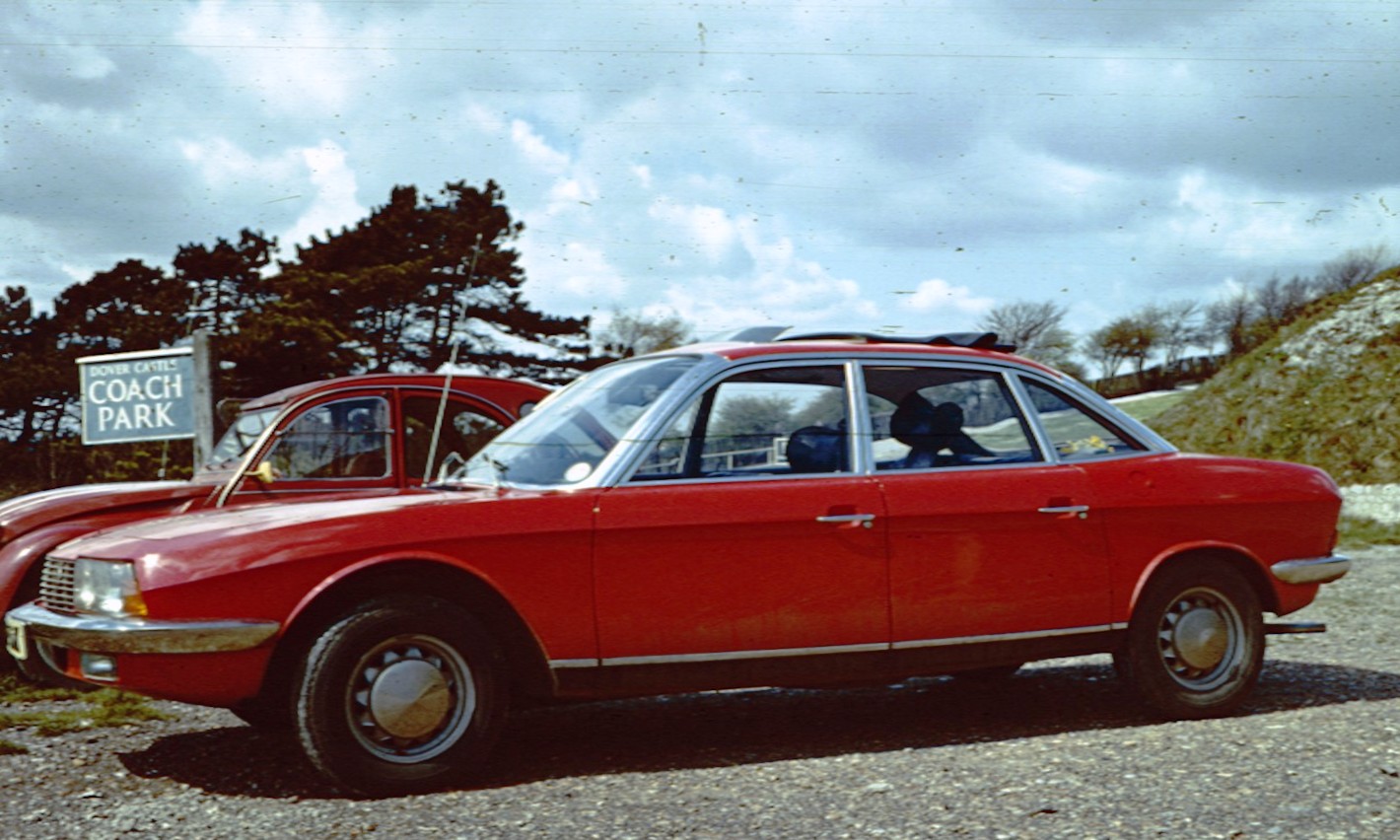
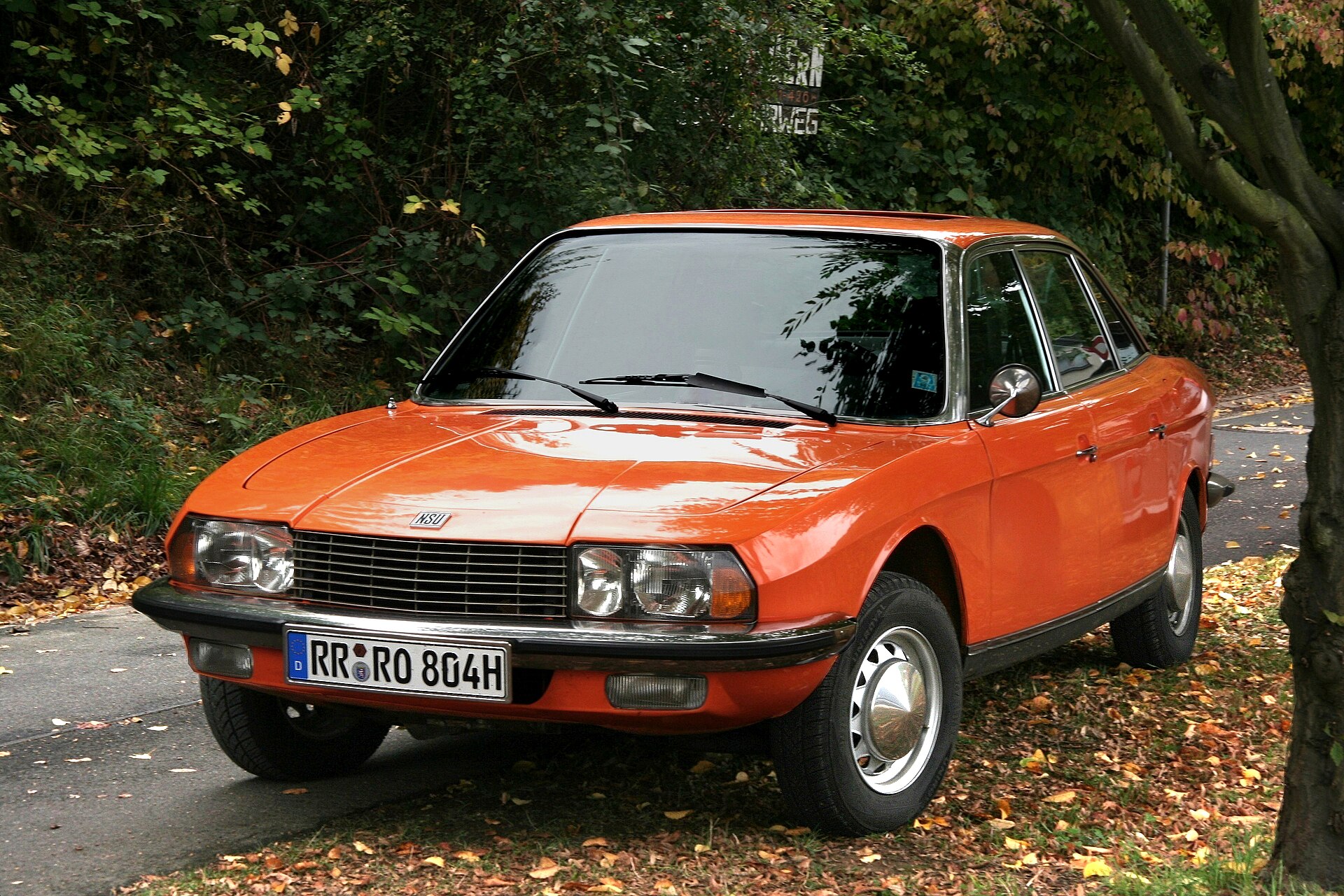
The NSU Ro 80 was far more ambitious. Claus Luthe, head of design, styled a four-door saloon with a drag coefficient of 0.36. It had a twin-rotor engine of 995 cc with 85 kW (115 PS) and a three-speed semi-automatic gearbox with a vacuum-operated clutch. Series production began in October 1967 and the car was voted Car of the Year 1968.
The engine let it down. The original three-piece rotor tip seals wore quickly on cold starts, and some early engines needed rebuilding before 50,000 km, with problems reported as early as 24,000 km. A redesigned seal cured the fault. The generous warranty and the damage to the car's reputation, however, left the company's finances beyond repair. Annual output peaked at 7,811 in 1969, and in total 37,398 Ro 80s were built.

Volkswagen, Audi and the end of the name
In 1969 Volkswagenwerk AG took over the company and merged it with Auto Union, which it had owned since 1964, to form Audi NSU Auto Union AG. The K70 was a front-wheel-drive saloon with a conventional piston engine, designed by chief engineer Ewald Praxl and styled by Luthe. It was due to appear at the 1969 Geneva show, but Volkswagen removed it from the stand on the eve of the show. Only 23 NSU-badged pre-series cars were built. The car went into production at Salzgitter in August 1970 as the Volkswagen K70. About 210,000 were made until January 1975.
The Prinz 4, 1000 and 1200 were phased out in 1973, which left the Ro 80 as the last car with the badge. The Citroën GS Birotor, a product of the Comotor partnership, did not succeed. Audi never used the NSU name again after the last Ro 80 was sold in April 1977, and in 1985 the company was renamed Audi AG and moved its head office to Ingolstadt. The Neckarsulm plant remains part of Audi and builds the A6, A8 and R8. The wider story of the four rings, including Auto Union, is told in the history of Audi. The models in the catalogue are listed under NSU cars, and more cars of the period are in the classic cars section.
NSU timeline
| Year | Event |
|---|---|
| 1873 | Christian Schmidt founds a knitting-machine workshop in Riedlingen |
| 1880 | Move to Neckarsulm |
| 1892 | Bicycles replace knitting machines; NSU name appears |
| 1901 | First NSU motorcycle |
| 1905 | First car, the Sulmobil three-wheeler |
| 1932 | Heilbronn car factory sold to Fiat |
| 1953 | Max motorcycle and Quickly moped |
| 1955 | World's largest motorcycle producer (350,000 machines) |
| 1956 | Wilhelm Herz passes 322 km/h at Bonneville |
| 1957 | Prinz shown at Frankfurt |
| 1964 | Wankel Spider, first series-production Wankel car |
| 1967 | Ro 80 enters production |
| 1969 | Volkswagen takeover; merger with Auto Union |
| 1977 | Last Ro 80 sold (April); end of the NSU name |
Landmark NSU models
| Model | Years | Why it matters |
|---|---|---|
| Sulmobil | 1905 | First NSU car, a three-wheeler |
| Quickly | 1953–1966 | Moped built in more than a million examples |
| Max | 1953 onwards | 250 cc overhead-camshaft motorcycle of the record era |
| Prinz 4 | 1961–1973 | Rear-engined small car that carried the brand |
| 1000 TT / TTS | 1965–1972 | Small saloons with a strong racing record |
| Wankel Spider | 1964–1967 | First series-production car with a Wankel engine |
| Ro 80 | 1967–1977 | Twin-rotor saloon, Car of the Year 1968 |
Photo gallery

FAQ
What does NSU stand for?
The name comes from Neckarsulm, the town where the company was based from 1880; it is formed from the rivers Neckar and Sulm.
Was NSU the first to build a Wankel car?
Yes. The NSU Wankel Spider, sold from 1964, was the first series-production car with a Wankel rotary engine.
Why did NSU fail?
Early Ro 80 engines suffered from rotor tip seal wear. Warranty costs and the loss of reputation ruined NSU's finances, and Volkswagen took over the company in 1969.
Is NSU part of Audi?
Yes. In 1969 NSU was merged with Auto Union to form Audi NSU Auto Union AG, renamed Audi AG in 1985. Audi still builds cars in Neckarsulm.
When was the last NSU built?
The last NSU-badged car was the Ro 80; the last one was sold in April 1977.
Sources
- Wikipedia — NSU Motorenwerke (accessed 24 Oct 2026)
- Wikipedia — NSU Prinz (accessed 24 Oct 2026)
- Wikipedia — NSU Spider (accessed 24 Oct 2026)
- Wikipedia — NSU Ro 80 (accessed 24 Oct 2026)
- Wikipedia — Volkswagen K70 (accessed 24 Oct 2026)
Found a mistake? Report an error