 Ford Puma
All generations, specs and history
Published Sources (2) Report an error
By Felix Hartmann, Automotive Technology & EV Contributor
- Built
- 1997–present
- Generations
- 2
- Top power
- 147 kW (200 PS)
Timeline
Puma generations
Click a generation for its own page


- Puma coupé 1997–2002 · Coupe
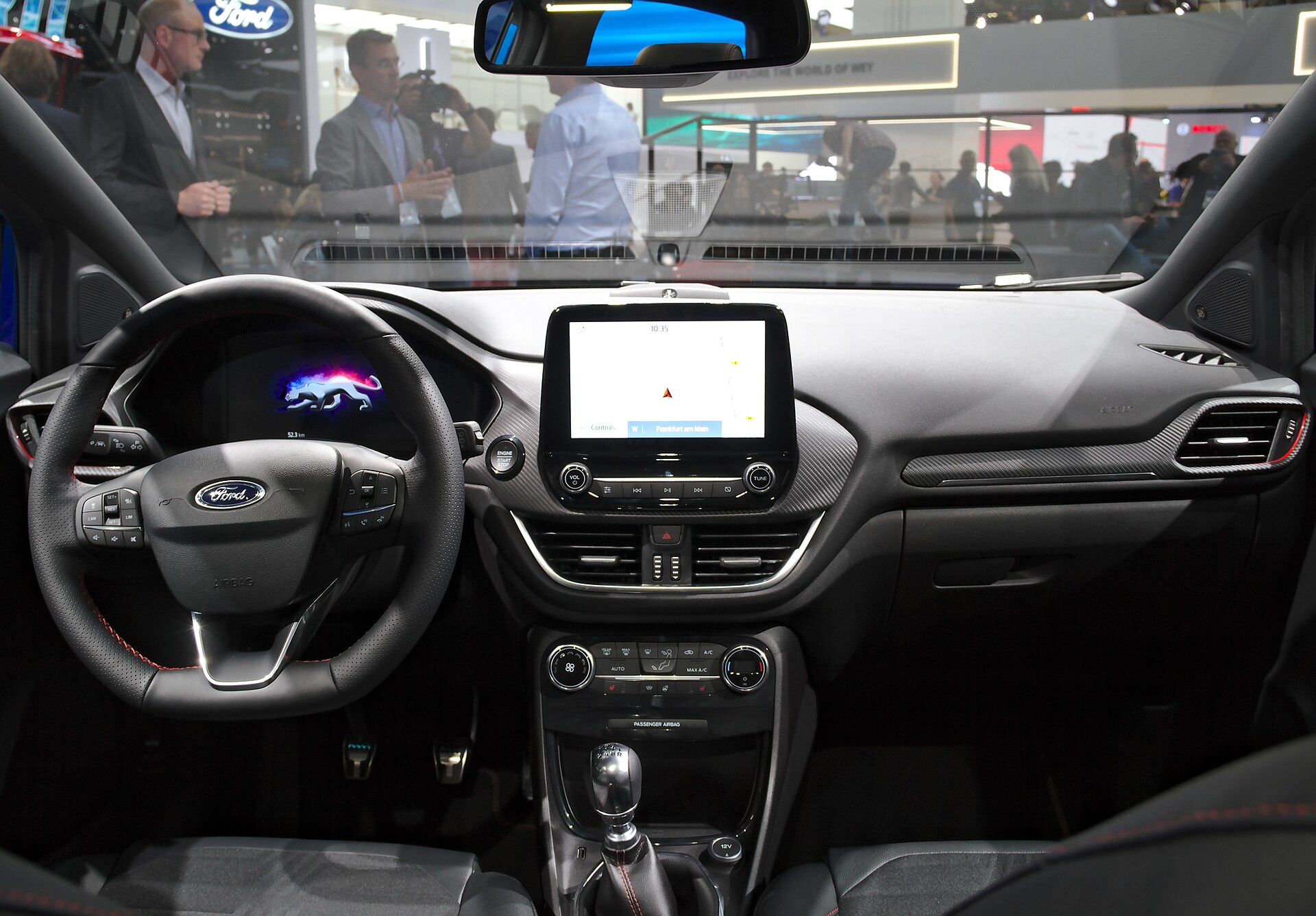
- Puma crossover Current 2019–now · Crossover · 70–147 kW (95–200 PS)
Newest first · 2 generations since 1997
-
2019
-
1997
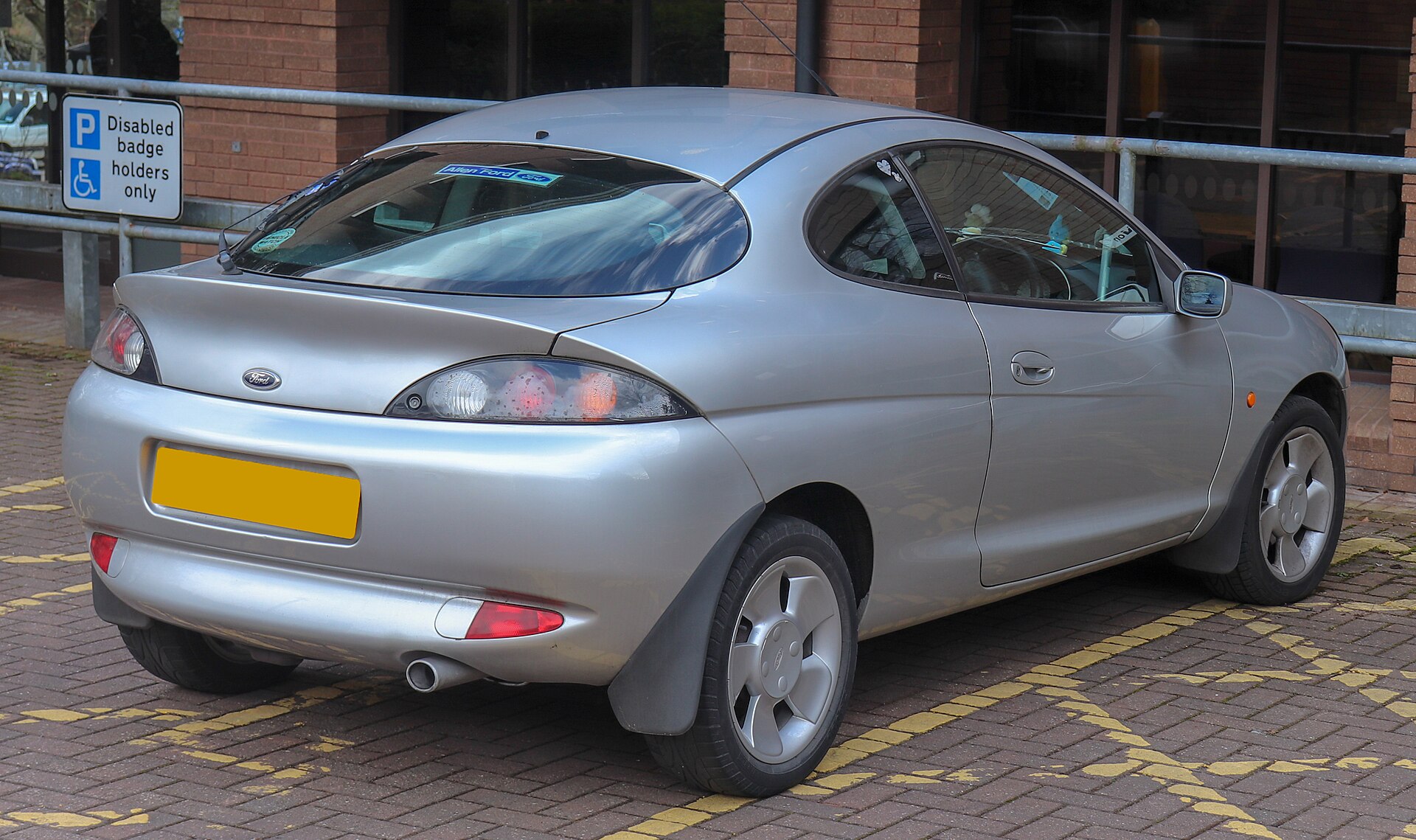
All generations by year: Puma crossover (2019–now) · Puma coupé (1997–2002)
Which one is mine?
Pick the year of first registration to see which generation it is.
- Puma crossover 2019–present
- Puma coupé 1997–2002
Which Puma to choose
Our verdict · Felix Hartmann
- For most buyers: the 1.0 EcoBoost Hybrid with 114 kW; the 48-volt starter-generator adds up to 50 Nm.
- For an automatic: the automatic 1.0 EcoBoost, priced from €30,900 in Germany in April 2025.
- For driving fun: the manual Puma ST with 147 kW, or the ST Powershift for an automatic.
- For zero local emissions: the Gen-E, with up to 376 km WLTP and the largest boot of the range.
- For collectors: a Ford Racing Puma, one of 500 coupés built.
The Puma sits below the Ford Kuga in Ford's SUV range alongside the earlier small crossover, the Ford EcoSport. The history of Ford covers the company behind it.
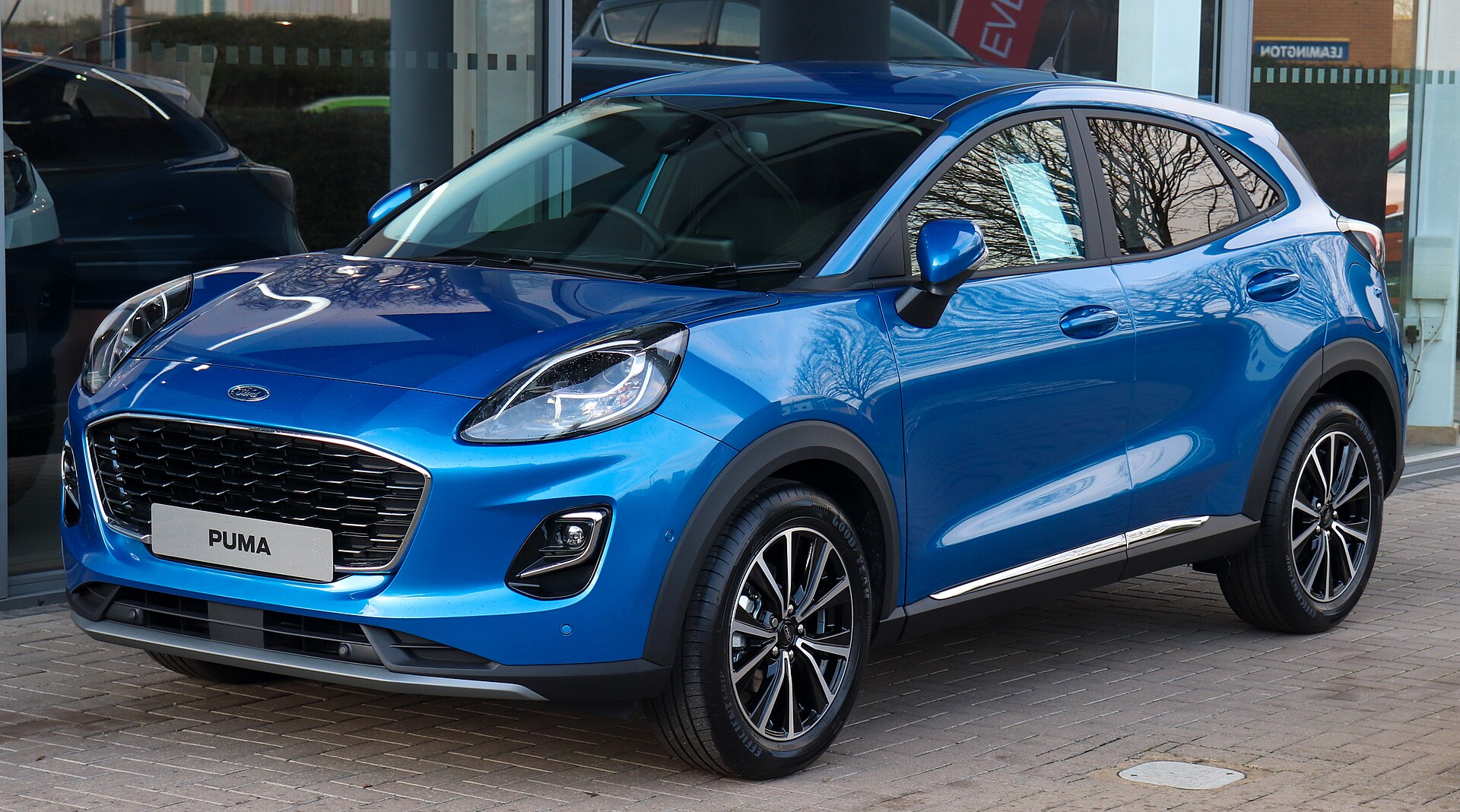
The Ford Puma is a small crossover built in Craiova, Romania, since October 2019. It shares Ford's Global B-car platform with the seventh-generation Fiesta. In the UK it was the best-selling new car in 2023, 2024 and 2025. Petrol mild hybrids, a 147 kW Puma ST and, since 2025, the electric Puma Gen-E make up the range. The name first appeared on a small Fiesta-based coupé built in Cologne from 1997 to 2002.
In short
- Crossover since 2019: 4,186 mm long, 456-litre boot, 1.0 EcoBoost three-cylinder petrol engines with or without a 48-volt mild hybrid.
- Puma ST: 1.5 EcoBoost with 147 kW (200 PS); ST Powershift with 125 kW (170 PS) and an automatic gearbox since 2023.
- Puma Gen-E (since 2025): 43.6 kWh usable battery, 123.5 kW (168 PS), 347 to 376 km WLTP.
- German prices in April 2025: from €28,900 (1.0 EcoBoost) and €36,900 (Gen-E).
Size at a glance
| Dimensions | Ford Puma crossover |
|---|---|
| Length | 4,186 mm164.8 in |
| Width | 1,805 mm71.1 in |
| Height | 1,537 mm60.5 in |
| Wheelbase | 2,588 mm101.9 in |
| Boot | 574 L20.3 cu ft |
Specs by version
Engines
| Version | Engine | Power | Torque | Production years |
|---|---|---|---|---|
| Electric · 1 version | ||||
| Puma crossover · Gen-E | Electric | 124 kW 169 PS166 hp | 290 Nm214 lb-ft | 2025 |
| Petrol · 3 versions | ||||
| Puma crossover · 1.0 EcoBoost Hybrid 155 | 3 cyl · Petrol | 114 kW 155 PS153 hp | 240 Nm177 lb-ft | 2019 |
| Puma crossover · ST Powershift 1.0 EcoBoost Hybrid | 3 cyl · Petrol | 125 kW 170 PS168 hp | - | 2023 |
| Puma crossover · ST 1.5 EcoBoost | 3 cyl · Petrol | 147 kW 200 PS197 hp | - | - |
Performance
Show all 1 versions
| Version | 0–100 km/h | Top speed | Range |
|---|---|---|---|
| Puma crossover · Gen-E | 8.0 s 0–62 mph | 160 km/h99 mph | 376 km234 mi |
Dimensions and weight
Show all 2 versions
| Version | Length | Width | Height | Wheelbase | Kerb weight | Boot | Battery |
|---|---|---|---|---|---|---|---|
| Electric · 1 version | |||||||
| Puma crossover · Gen-E | - | - | - | - | - | 574 l20.3 cu ft | 44 kWh |
| Petrol · 1 version | |||||||
| Puma crossover · 1.0 EcoBoost Hybrid 155 | 4,186 mm164.8 in | 1,805 mm71.1 in | 1,537 mm60.5 in | 2,588 mm101.9 in | 1,205 kg2,657 lb | 456 l16.1 cu ft | - |
Verified Manufacturer and type-approval data from our catalog · Sources and methodology
Ford Puma at a glance
| Specification | Ford Puma (crossover) |
|---|---|
| Production | since October 2019, Craiova (Romania) |
| Platform | Ford Global B-car (shared with the Fiesta Mk7) |
| Body | five-door crossover |
| Length / width / height | 4,186 / 1,805 / 1,537 mm |
| Wheelbase | 2,588 mm |
| Kerb weight | from 1,205 kg |
| Boot | 456 litres; Gen-E 574 litres plus a 43-litre front boot |
| Engines | 1.0 EcoBoost (also mild hybrid), 1.5 EcoBoost (ST), 1.5 EcoBlue diesel, electric |
| Gearboxes | six-speed manual, seven-speed dual-clutch |
| Euro NCAP | five stars (2019) |
The first Puma: Fiesta-based coupé (1997–2002)
The first Ford Puma was a small front-wheel-drive coupé built in Ford's Niehl plant in Cologne from June 1997 to July 2002. It used the Mark IV Fiesta underneath, with a new body, stiffer suspension and a wider track. Engines were 16-valve Zetec-SE units of 1.4, 1.6 and 1.7 litres; the 1.7 had variable valve timing. The launch advertising used footage of Steve McQueen from the film Bullitt.
The Ford Racing Puma was limited to 500 numbered cars, with a Tickford-tuned 1.7 that had about 22 kW (30 hp) more than the standard engine. About 133,000 Pumas were built in total. The coupé had no direct successor, and the name returned on the crossover 17 years later.
Crossover since 2019: design and engines
Ford announced the new Puma at its Go Further event in Amsterdam, alongside the third-generation Kuga, and production started in Craiova in October 2019. Sales in Europe began the same year. The body is 4,186 mm long and 1,537 mm tall, on a 2,588 mm wheelbase.
Most Pumas have the 1.0-litre EcoBoost three-cylinder turbo petrol engine. In the mild hybrid version, a belt-driven 11.5 kW starter-generator and a 0.48 kWh, 48-volt battery support it. In its 114 kW (155 PS) form the engine delivers 240 Nm, and the starter-generator adds up to 50 Nm. A 1.5-litre EcoBlue diesel was also offered.
| Version | Engine | Power | Torque | Gearbox |
|---|---|---|---|---|
| 1.0 EcoBoost Hybrid (mHEV) | 1.0 three-cylinder turbo, 48 V | 114 kW (155 PS) | 240 Nm + 50 Nm | - |
| Puma ST | 1.5 EcoBoost three-cylinder | 147 kW (200 PS) | - | - |
| Puma ST Powershift (from 2023) | 1.0 EcoBoost mild hybrid | 125 kW (170 PS) | - | dual-clutch automatic |
| Puma Gen-E (from 2025) | electric motor | 123.5 kW (168 PS) | 290 Nm | - |
Wikipedia lists outputs of 70, 88, 92, 114, 125 and 147 kW (95 to 200 PS) across the petrol and diesel range without assigning each to an engine. Only the clearly assigned figures appear in the table. All versions by year are in the Ford catalogue.

Puma ST
The Puma ST uses the 1.5-litre EcoBoost "Dragon" three-cylinder with 147 kW (200 PS). The Sunday Times measured it at 6.7 seconds from 0 to 62 mph. In 2021 What Car? named the ST 1.5 EcoBoost 200 Performance Pack its Sports SUV of the Year. In March 2023 Ford added the ST Powershift: it pairs the 1.0 mild hybrid, tuned to 125 kW (170 PS), with an automatic gearbox.

Facelift of 2024
The updated Puma appeared in February 2024. It has a revised grille, new headlights and slimmer bumpers. Inside there are better materials, a larger infotainment screen and improved connectivity. Ford also added new driver-assistance systems and revised the engines for better efficiency.

Puma Gen-E: the electric Puma
Ford presented the Puma Gen-E on 3 December 2024, and European deliveries began in spring 2025. It is built in Craiova alongside the petrol cars; its electric drive units come from Ford's plant in Halewood, England. The NMC battery from SK On holds 46.0 kWh gross and 43.6 kWh usable. The front motor delivers 123.5 kW (168 PS) and 290 Nm, enough for 0–100 km/h in 8.0 seconds and a top speed of 160 km/h.
| Puma Gen-E | Value |
|---|---|
| WLTP range | 347 to 376 km |
| Consumption (WLTP) | 13.1 to 13.7 kWh/100 km |
| DC charging | up to 100 kW, 10 to 80 percent in about 23 minutes |
| Boot | 574 litres ("GigaBox") plus 43-litre front boot |
| German price (April 2025) | €36,900; Premium €39,400 |
The Gen-E has more luggage space than the petrol Puma: 574 against 456 litres. Autonotizen.de lists 52 kW (71 PS) as the continuous output, against 124 kW at peak.


Safety
Euro NCAP awarded the Puma five stars in 2019: 94 percent for adult occupants, 84 for children, 77 for pedestrians and 74 for the assistance systems. A retest in 2022 gave four stars, with 75 percent for adults, 84 for children, 70 for vulnerable road users and 69 for safety assistance.
Sales and awards
The Puma was the best-selling new car in the UK in 2023, 2024 and 2025, after eighth place in 2021 and fourth in 2022. In Europe Ford sold 159,704 in 2023 and 149,112 in 2024; in 2023 it ranked eighth among Europe's best-selling cars. What Car? named it Car of the Year in January 2020 and Small SUV of the Year in January 2021.
Photo gallery

Image credits · Photos from Wikimedia Commons under free licences
- Ford Puma coupé · Photo: Vauxford / Wikimedia Commons, CC BY-SA 4.0
- Ford Puma crossover · Photo: Alexander Migl / Wikimedia Commons, CC BY-SA 4.0
Ford Puma in our rankings
- No. 17 of 146 · Smallest SUVs and crossovers (4,186 mm · top 12%)
- No. 11 of 99 · Lightest SUVs and crossovers (1,205 kg · top 13%)
- No. 37 of 243 · Biggest boot: cars (574 l · top 16%)
- No. 80 of 420 · Smallest cars (4,186 mm · top 20%)
- No. 63 of 304 · Lightest cars (1,205 kg · top 22%)
- No. 27 of 100 · Biggest boot: SUVs and crossovers (574 l · top 27%)
Shorter than 88% of ranked SUVs and crossovers in the 1CARS catalog (No. 17 of 146).
FAQ
Where is the Ford Puma built?
The crossover is built in Craiova, Romania, including the electric Gen-E. The 1997–2002 coupé was built in Cologne.
Is the Ford Puma a hybrid?
Most petrol versions are 48-volt mild hybrids. There is no full or plug-in hybrid, but the Puma Gen-E is fully electric.
What is the range of the Puma Gen-E?
347 to 376 km WLTP, from a 43.6 kWh usable battery.
How big is the Ford Puma boot?
456 litres in the petrol Puma. The Gen-E offers 574 litres plus a 43-litre front boot.
How powerful is the Puma ST?
The Puma ST has a 1.5 EcoBoost three-cylinder with 147 kW (200 PS); the ST Powershift has 125 kW (170 PS).
Data sources
Data checked by an editor against the sources below.
- Wikipedia - Ford Puma (crossover)
- Wikipedia - Ford Puma (sport compact)