 Nissan Pathfinder
All generations, specs and history
Published Sources (2) Report an error
By Sarah Whitmore, Senior Automotive Writer
- Built
- 1985–present
- Generations
- 5 · WD21 to R53
Timeline
Pathfinder generations
Click a generation for its own page


- Pathfinder WD21 1985–1995 · SUV
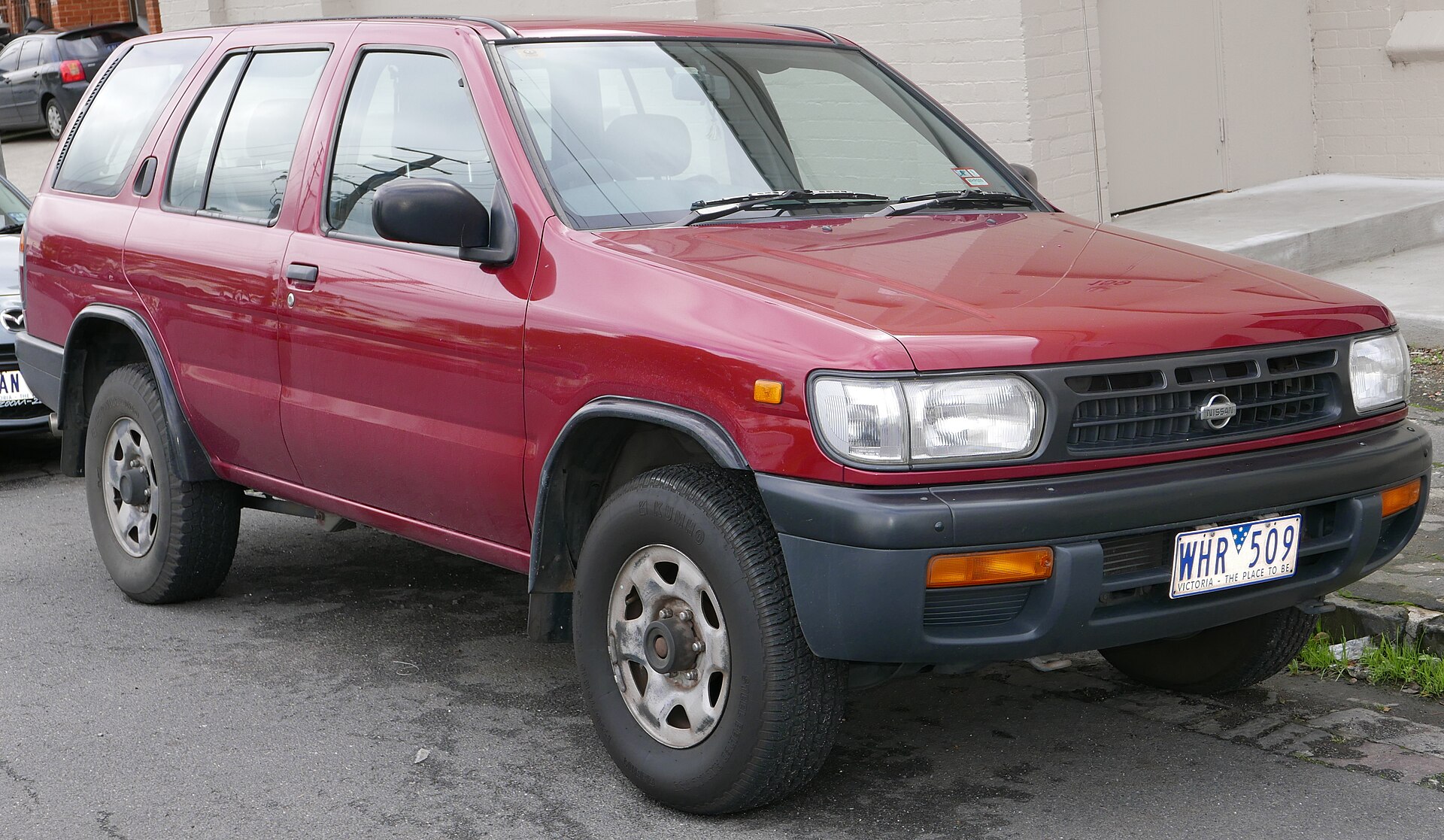
- Pathfinder R50 1995–2004 · SUV
- Pathfinder R51 2004–2013 · SUV
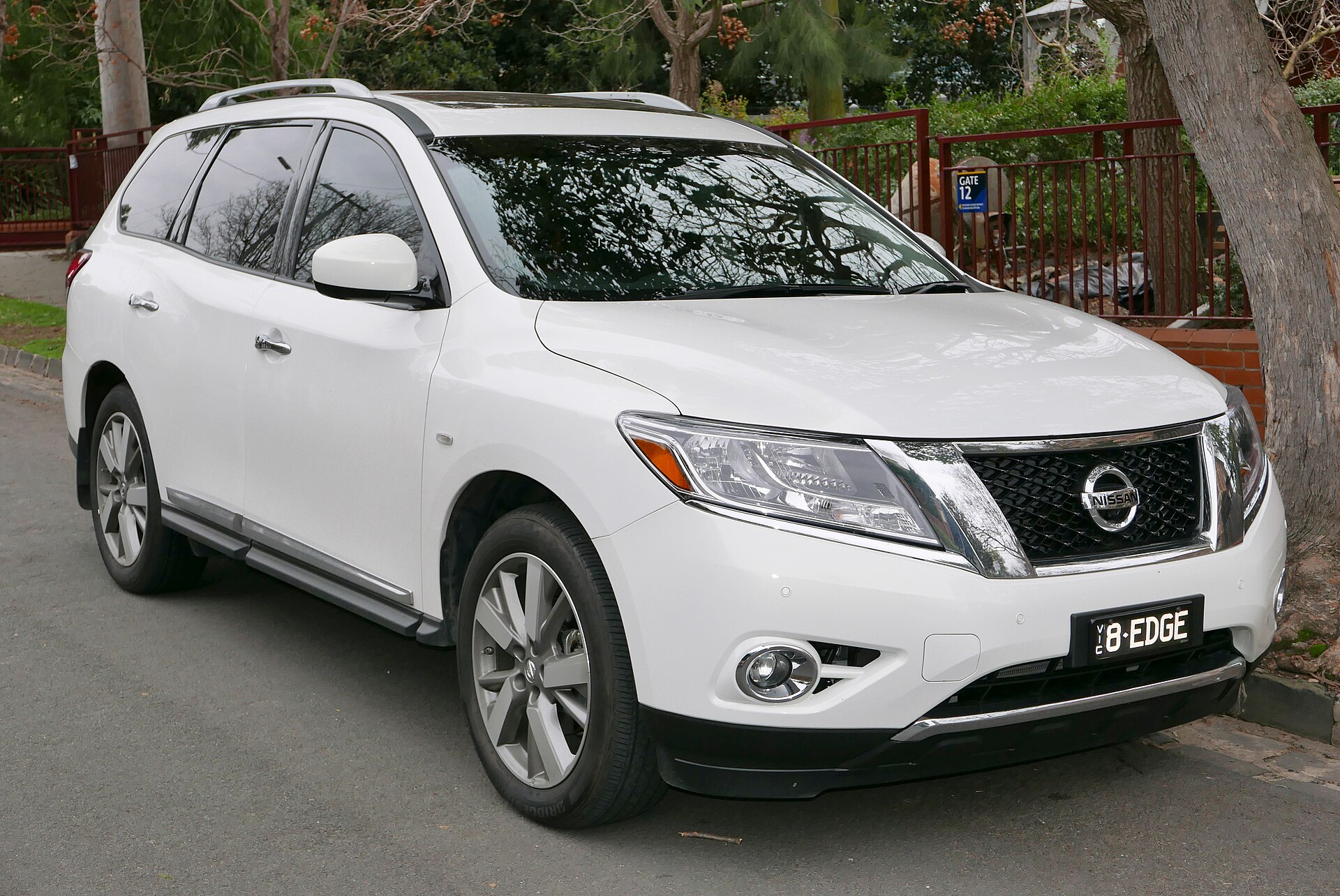
- Pathfinder R52 2013–2021 · SUV
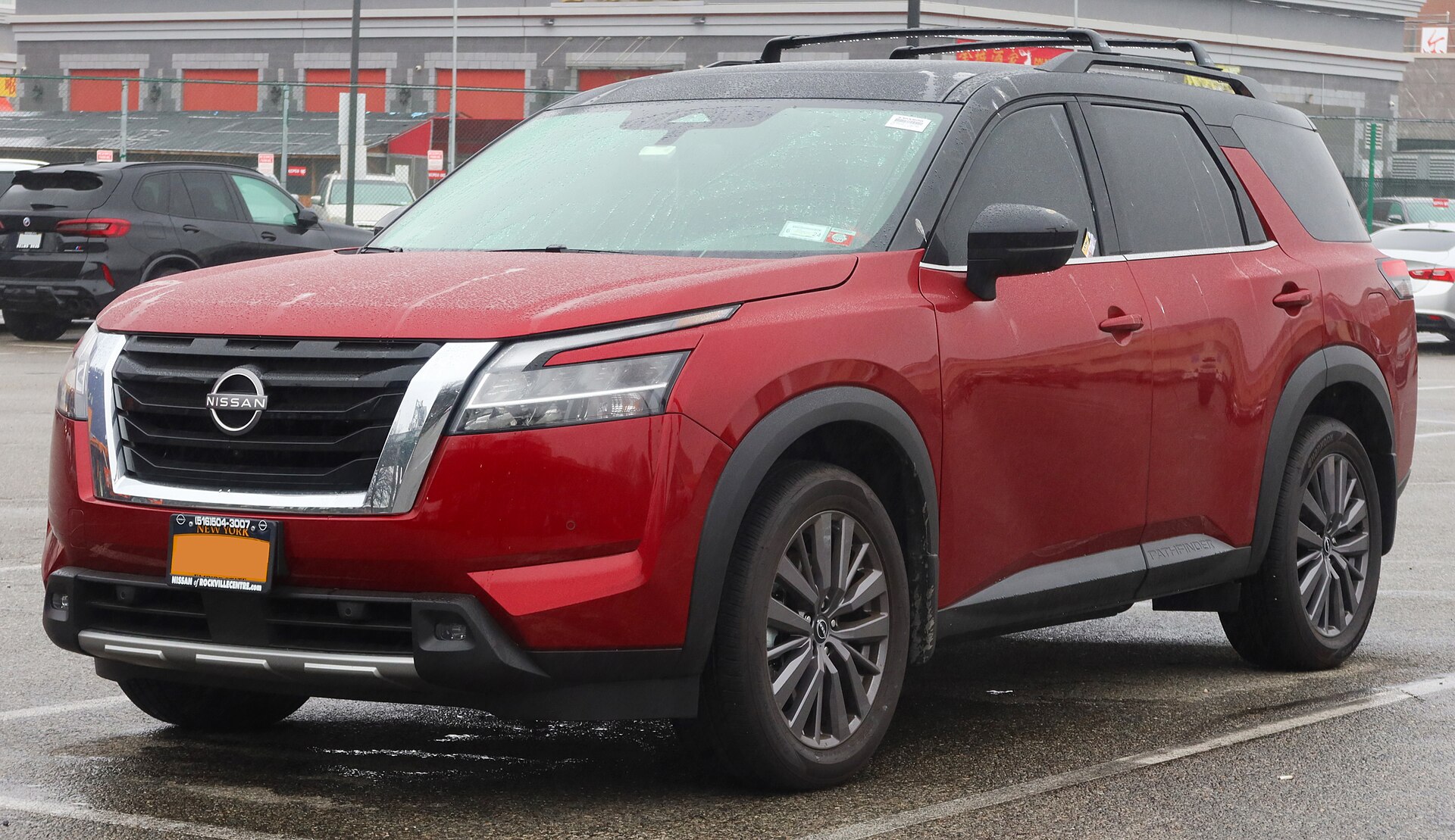
- Pathfinder R53 Current 2021–now · SUV
Newest first · 5 generations since 1985
-
2021
-
2013
-
2004
-
1995
-
1985
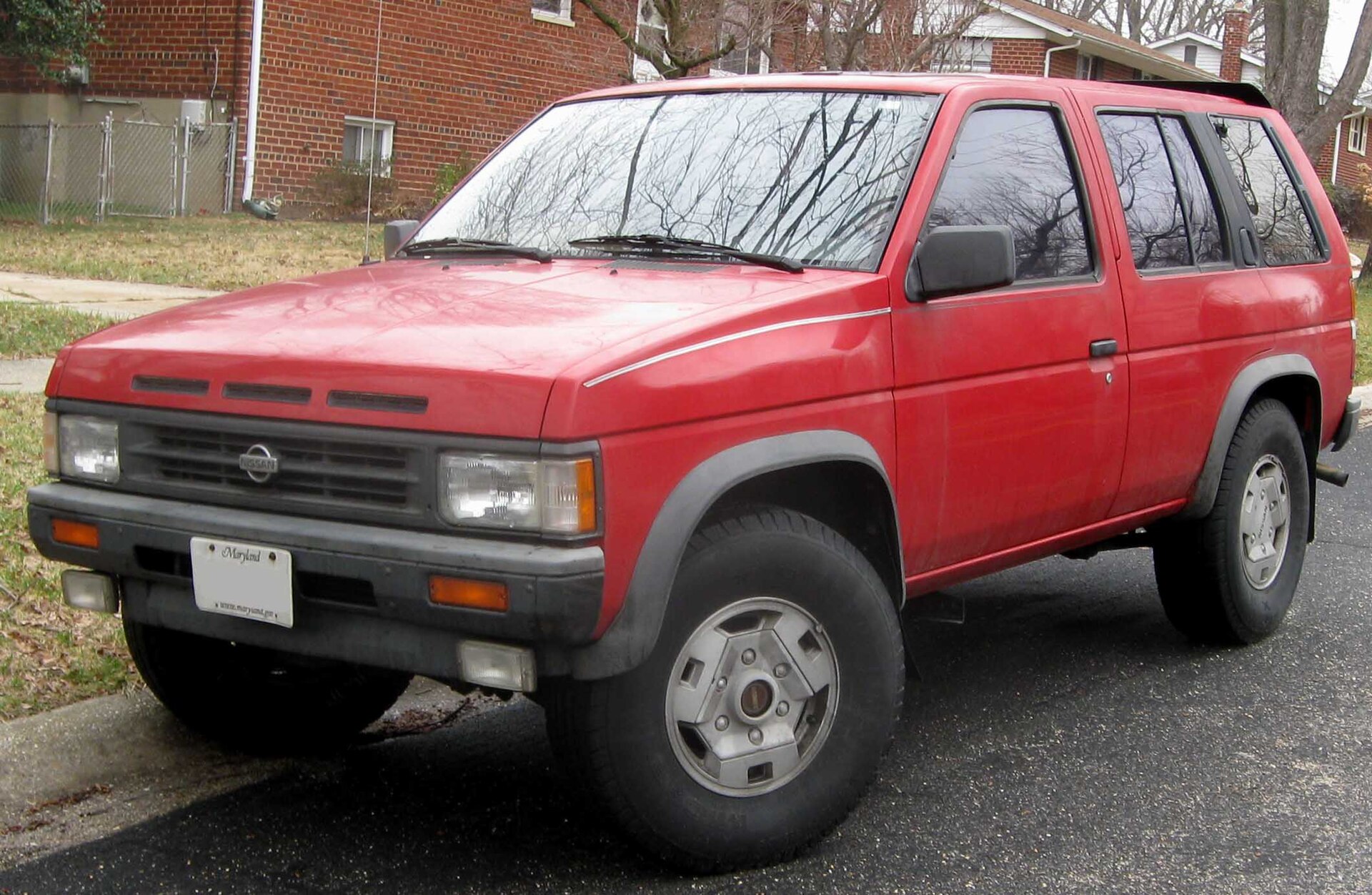
All generations by year: Pathfinder R53 (2021–now) · Pathfinder R52 (2013–2021) · Pathfinder R51 (2004–2013) · Pathfinder R50 (1995–2004) · Pathfinder WD21 (1985–1995)
Which one is mine?
Pick the year of first registration to see which generation it is.
- R53 2021–present
- R52 2013–2021
- R51 2004–2013
- R50 1995–2004
- WD21 1985–1995
Verdict
Our verdict · Sarah Whitmore
The new Pathfinder should help Nissan strengthen its position in many markets, as large crossovers have become very popular. It is not a serious off-roader and its ground clearance is modest; it is a family vehicle with a stylish, modern look. It suits city driving and occasional trips over rough terrain. In every other respect it is an excellent car, with an innovative, high-quality and well-thought-out interior and a high level of safety.
The Nissan Pathfinder is a large SUV built by Nissan. In today's line-up it sits between the Murano and the Armada or Patrol. It offers stylish design, high practicality and decent technical specifications, and it is mostly bought by families who value comfort and quiet. The fifth generation, coded R53, was unveiled online in the United States on 4 February 2021 after several postponements; production began in May 2021.
In short
- Five generations since 1985: body-on-frame off-roaders up to the R51, then a unibody crossover from the R52 of 2012.
- The R53 has a 3.5-litre V6 with 212 kW (288 PS) and 351 Nm and a ZF nine-speed automatic.
- Intelligent 4x4 with seven terrain modes; up to 50% of torque can go to the rear axle.
- Eight seats as standard, or seven with second-row captain's chairs; 470 litres behind the third row.
Safety
-
R53 · NHTSA 2025
US NCAP (NHTSA)
-
R52 · NHTSA 2020
US NCAP (NHTSA)
Stars from different years and organisations are not directly comparable: test protocols change every few years.
Nissan Pathfinder at a glance
The name means "trailblazer" or "scout", a hint at the model's intended abilities. More Nissan models are listed in our Nissan catalogue, and a smaller Nissan SUV is covered in our Nissan X-Trail article.
History
| Generation | Code | Years | Type |
|---|---|---|---|
| First | WD21 | 1985–1995 | Body-on-frame off-roader; two doors at first, four doors from about 1990 |
| Second | R50 | 1995–2004 | Unibody SUV with off-road gear |
| Third | R51 | 2004–2012 (to 2014 outside North America) | Body-on-frame off-roader, unveiled in Detroit in 2004 |
| Fourth | R52 | 2012–2020 | Unibody crossover; hybrid version from the 2014 model year |
| Fifth | R53 | 2021 onwards | Unibody crossover, eight seats |
The Pathfinder's career began in 1985 with a two-door body-on-frame off-roader, which later gained a four-door version. The second generation, R50, followed in 1995. The third, R51, was unveiled at the North American International Auto Show in Detroit in 2004 and was again a full body-on-frame off-roader. The fourth generation, R52, arrived in late 2012 and had become an ordinary unibody crossover without a separate frame. The fifth generation brought bold styling, a modern interior for seven or eight occupants and a naturally aspirated V6.
Fifth generation (R53): exterior
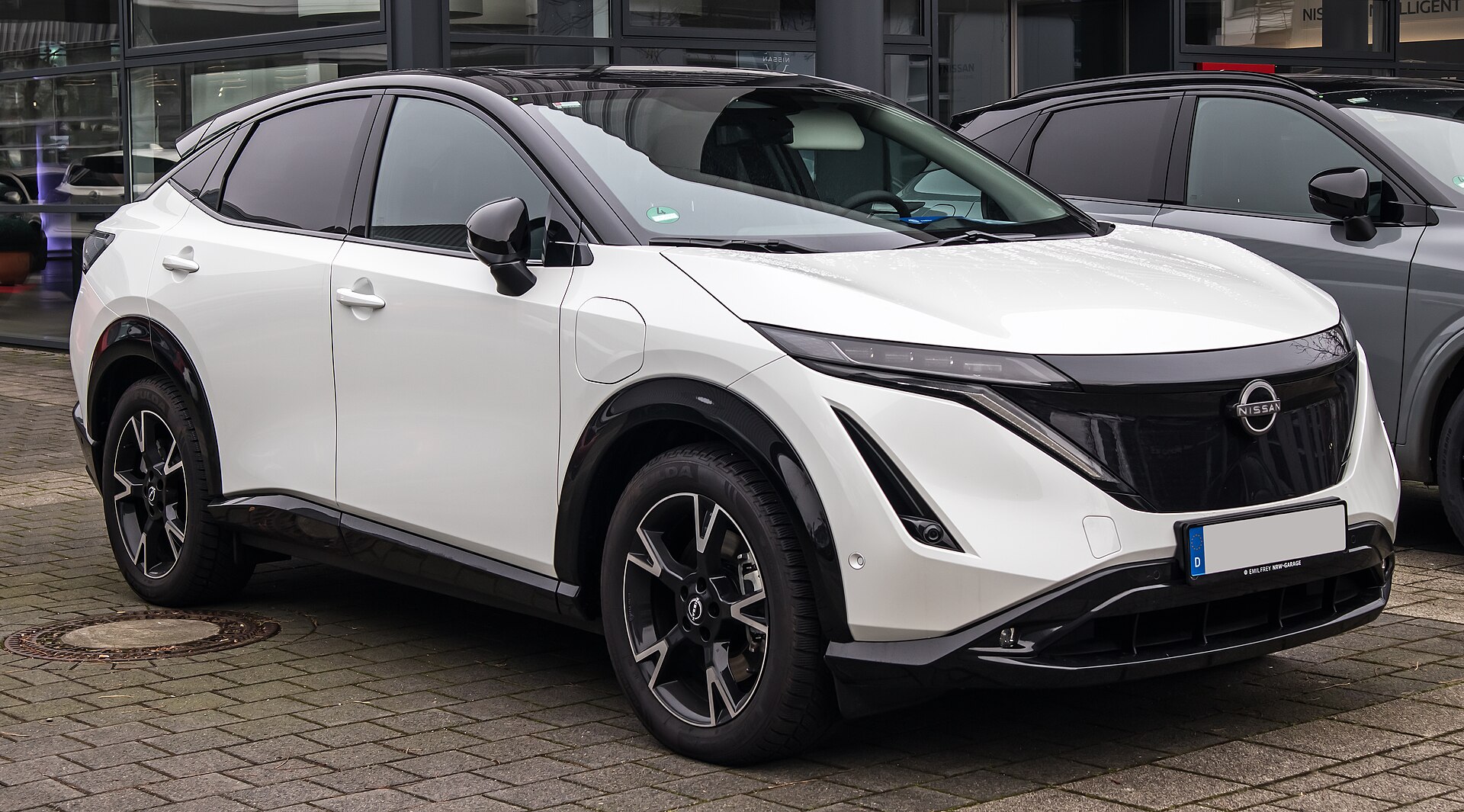
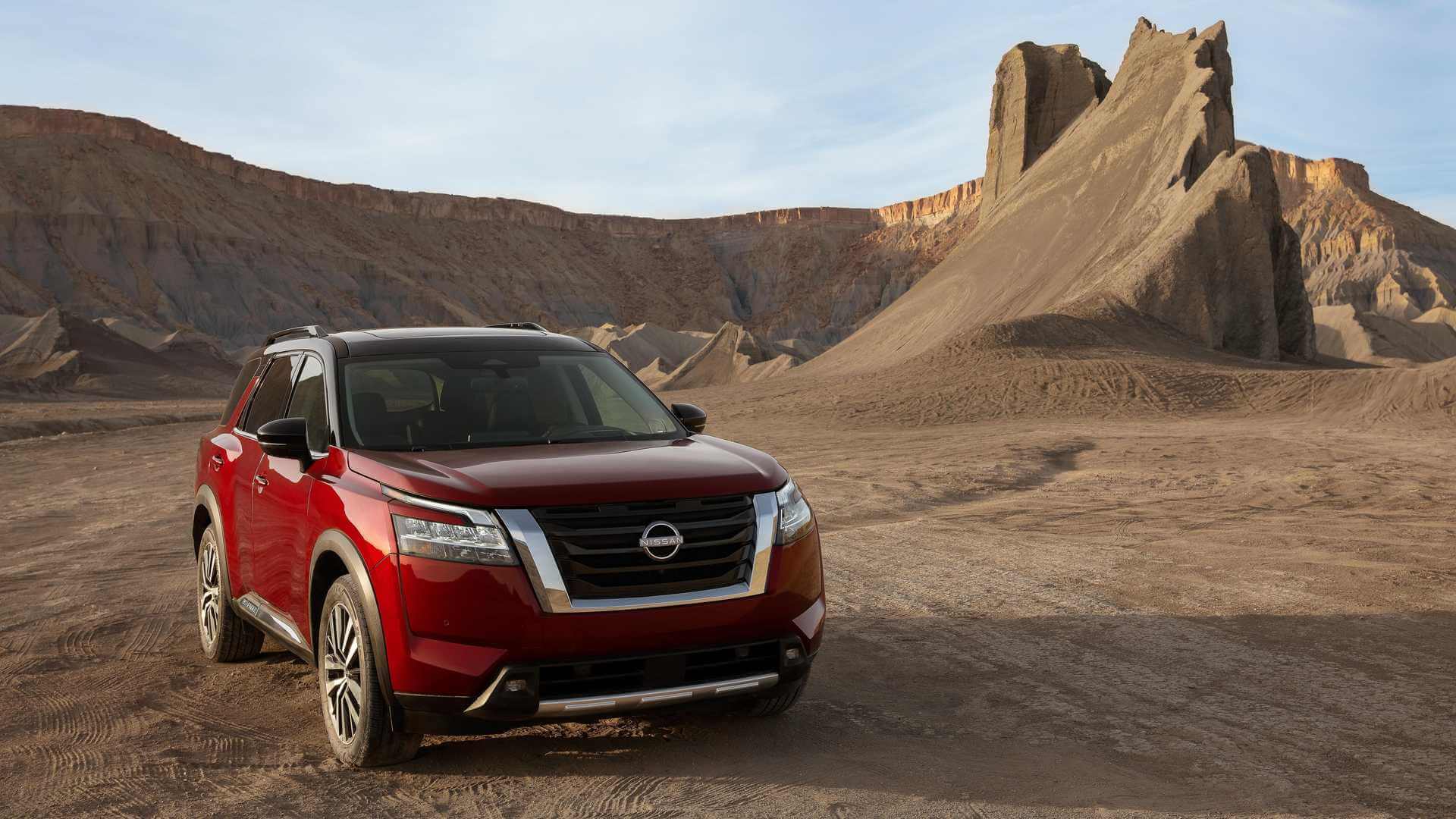
The 2021 Pathfinder looks completely different from its predecessor. Only the familiar chrome V-motion element in the lower part of the grille is recognisable - and compared with the fourth generation it is wider and thicker at the bottom. Buyers can choose a black grille or one with chrome inserts, with the Nissan badge in the centre.
The most striking elements at the front are the two-level, C-shaped lights. The slim upper section looks almost like eyelashes and serves as the LED daytime running light; the lower section holds the main headlights, which are fully LED. The front bumper takes up a lot of space, with bulging sides and a small lip at the bottom. Unusually, the fog lamps are placed on either side of a large secondary grille rather than at the outer corners of the bumper. There is plastic underbody protection and two towing hooks, and steel protection is available as an option. A massive, upright bonnet emphasises the front.
In profile, the length of the car makes the third row obvious. Semicircular plastic trims on the wheel arches add character, and chrome is used sparingly - a moulding along the bottom of the doors and a line below the windows. Nissan kept lines and creases to a minimum; the most noticeable are small recesses in the front and rear wings near the lights. The Pathfinder is offered in one-tone or two-tone paint, with 14 colours to choose from. Ground clearance is a modest 181 mm. The door-mounted mirrors look small on such a big body, but they have LED indicators, electric adjustment, memory, power folding and heating. Base versions ride on 18-inch alloy wheels and more expensive ones on 20-inch wheels.
At the rear, large "PATHFINDER" letters run across the full width of the tailgate. The LED tail lights stretch outwards and are linked by a horizontal line; part of each light is on the body and part on the tailgate. A small spoiler with an LED brake light adds a sporty touch. The two-piece bumper has a black or silver centre insert, and there are rear fog lamps, a rear camera, a number-plate recess and a black diffuser.
Interior
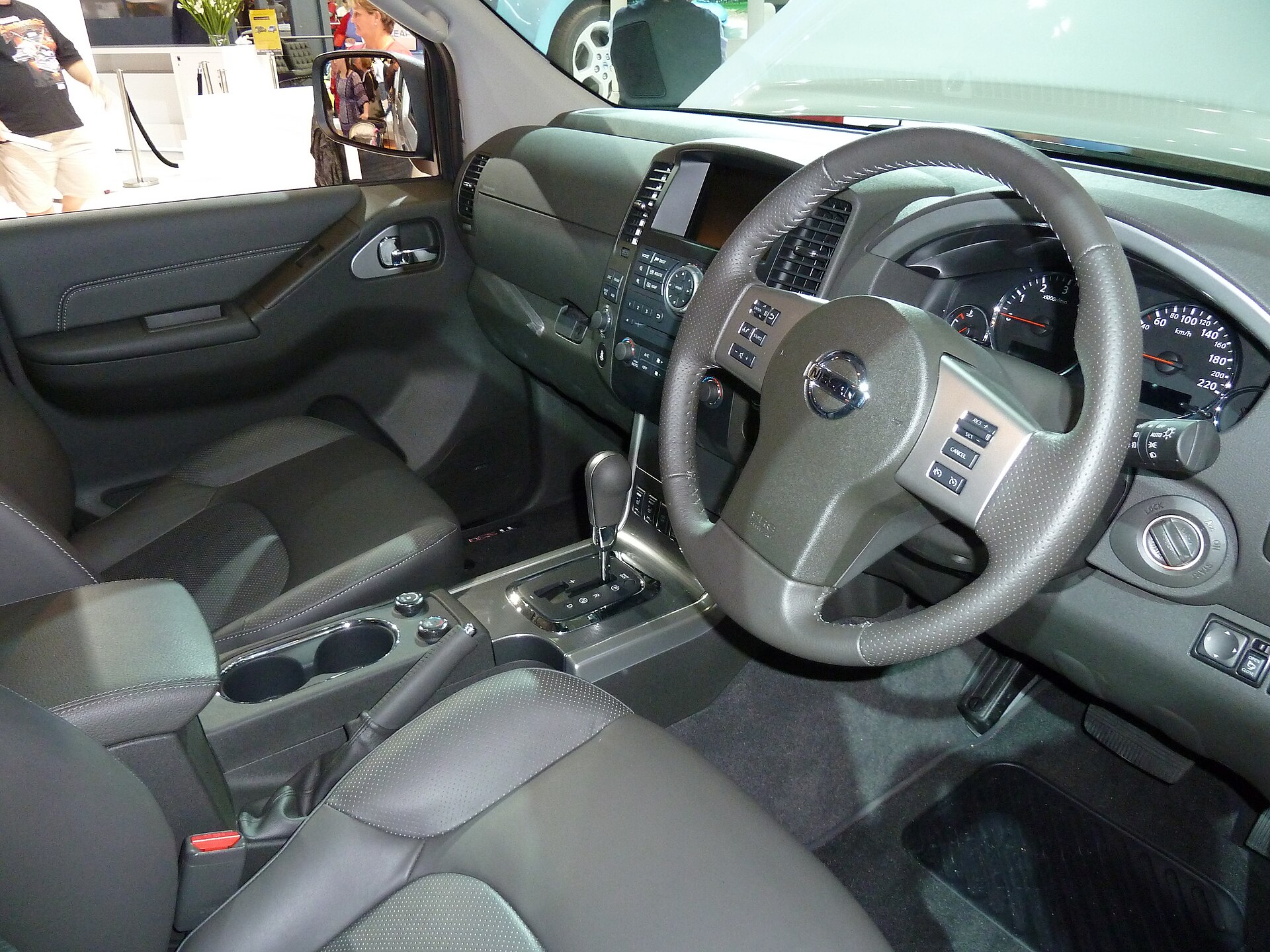
The cabin stands out for its materials, modern design, generous space and large luggage area. Upholstery is perforated leatherette or premium semi-aniline leather. Higher trims have a panoramic roof with a power sliding section.
The driver faces a handsome flat-bottomed three-spoke multifunction wheel and a 12.3-inch digital instrument cluster; more expensive versions add a 10.8-inch head-up display. Ergonomics, build quality and materials are good. Nissan also improved sound insulation with an acoustic laminated windscreen, thicker side glass and 60% more sound absorption in the engine bay.
Equipment includes adjustable ambient lighting, three-zone climate control and optional heated and ventilated seats in the first two rows. The NissanConnect infotainment system has an 8- or 9-inch screen with Android Auto and Apple CarPlay and can be paired with a 13-speaker Bose audio system. Options include an improved surround-view camera, Door-to-Door Navigation, a Wi-Fi hotspot and wireless charging.
Below the touchscreen are air vents and a model climate control panel with physical controls, which time has shown to be more practical than touch controls: two rotary knobs, an airflow button, a small monochrome screen and a heated-steering-wheel button, plus switches for seat heating and cooling. The two-tier tunnel carries a compact gear selector, the electric parking brake and the drive-mode selector on the upper level, with storage space and wireless charging below, two cupholders and a large armrest; higher trims can heat or cool its contents.
Getting into the back is much easier thanks to EZ Flex seats: a single button folds and slides the second-row outer seat (or the bench) forward, and the driver has a duplicate button. The Pathfinder now seats eight. The third row takes three passengers, although the wheel arches limit space - usable rather than luxurious. In the second row, two captain's chairs can replace the three-seat bench, and in that case a near full-size centre console with cupholders is fitted between them. The luggage area holds 470 litres behind the third row (SAE standard), 1,274 litres with the middle row folded and over 2,000 litres with both rear rows folded 60/40.
Engine and transmission
The R53 is powered by an aluminium, naturally aspirated 3.5-litre V6 petrol engine with direct injection, variable valve timing, forged steel connecting rods, a variable intake manifold and 24 valves. It produces 212 kW (288 PS) and 351 Nm. Fuel consumption is not low, as you would expect from a car of this size.
The V6 is paired with a ZF nine-speed automatic with paddle shifters, replacing the CVT used before - a change that may reassure buyers who disliked the CVT. The intelligent all-wheel-drive system uses a multi-plate clutch that can send up to 50% of torque to the rear wheels. There are seven drive modes: Standard, Eco, Sport, Snow, Mud/Rut, Sand and Tow.
Chassis
The new generation uses the Renault-Nissan D platform carried over from its predecessor, with a transverse engine and a reinforced unibody made largely of high-strength steel. Suspension is independent all round with anti-roll bars: MacPherson struts at the front and a multi-link rear axle. Despite its size the Pathfinder is easy to drive, thanks to a dual-pinion electric power steering system that Nissan says gives a sportier feel in different conditions. All four wheels have ventilated disc brakes, supported by ABS, EBD and other electronic systems.
Safety and equipment
Nissan Safety Shield 360 is standard, including automatic emergency braking with pedestrian detection, lane departure warning, automatic high beams, blind-spot warning, rear cross-traffic alert and rear automatic braking, together with ten airbags and rear-seat occupant monitoring. Higher versions add ProPILOT Assist adaptive cruise control with lane centring, a front centre airbag between the front seats, the digital instrument cluster, traffic-sign recognition and navigation.
In the United States the R53 was offered in four trim levels: S, SV, SL and Platinum. The base S already has ten airbags, 18-inch alloy wheels, a 7-inch digital instrument display, full LED lights, heated front seats, three-zone climate control, electric windows, stability control, blind-spot monitoring, automatic emergency braking and lane departure warning. The Platinum adds ProPILOT Assist, 20-inch wheels, a panoramic sunroof, leather upholstery, ventilated front seats, the head-up display, the 9-inch infotainment screen and the 12.3-inch digital instruments.
What owners say
Owners of earlier Pathfinder generations praise their reliability, rough-road ability, space and tall ride height. The car is often bought by people who like its rugged design, high driving position and all-wheel drive, and it is used for fishing, hunting and holidays. On the downside, maintenance can be expensive, there are occasional engine problems and fuel consumption is high; brake pads wear quickly because of the car's weight.
Rivals
The Pathfinder competes with the Honda Pilot, Toyota Highlander, Kia Telluride, Hyundai Palisade, Ford Explorer, Volvo XC90 and Toyota Land Cruiser Prado.
Nissan Pathfinder evolution in numbers
Did you know?
- The Nissan Pathfinder has been around for 41 years: 5 generations in our catalog since 1985.
- The longest-running generation is the Pathfinder WD21 (1985–1995): 10 years.
Image credits · Photos from Wikimedia Commons under free licences
- Nissan Pathfinder WD21 · Photo: IFCAR / Wikimedia Commons, Public domain
- Nissan Pathfinder R50 · Photo: OSX / Wikimedia Commons, Public domain
- Nissan Pathfinder R51 · Photo: OSX / Wikimedia Commons, Public domain
- Nissan Pathfinder R52 · Photo: OSX / Wikimedia Commons, Public domain
- Nissan Pathfinder R53 · Photo: Kevauto / Wikimedia Commons, CC BY-SA 4.0
Nissan Pathfinder in our rankings
- No. 30 of 912 · Longest-running car nameplates (41 years · top 4%)
- No. 25 of 305 · Oldest car models still on sale (41 years · top 9%)
- No. 62 of 345 · Cars with the most generations (5 generations · top 25%)
In production longer than 96% of ranked nameplates in the 1CARS catalog (No. 30 of 912).
FAQ
When was the fifth-generation Nissan Pathfinder revealed?
On 4 February 2021, with production starting in May 2021.
Is the new Nissan Pathfinder a body-on-frame SUV?
No. Since the fourth generation (R52) the Pathfinder has been a unibody crossover; the last body-on-frame version was the R51.
What engine does the Nissan Pathfinder R53 have?
A naturally aspirated 3.5-litre V6 with 212 kW (288 PS) and 351 Nm, paired with a ZF nine-speed automatic.
How many seats does the Nissan Pathfinder have?
Eight as standard, or seven with second-row captain's chairs.
Data sources
Data checked by an editor against the sources below.
- Wikipedia - Nissan Pathfinder
- NHTSA 5-Star Safety Ratings (US NCAP) — U.S. Government work, public domain