 Nissan Tiida
Specs, engines and history
Published Sources (1) Report an error
By Sarah Whitmore, Senior Automotive Writer
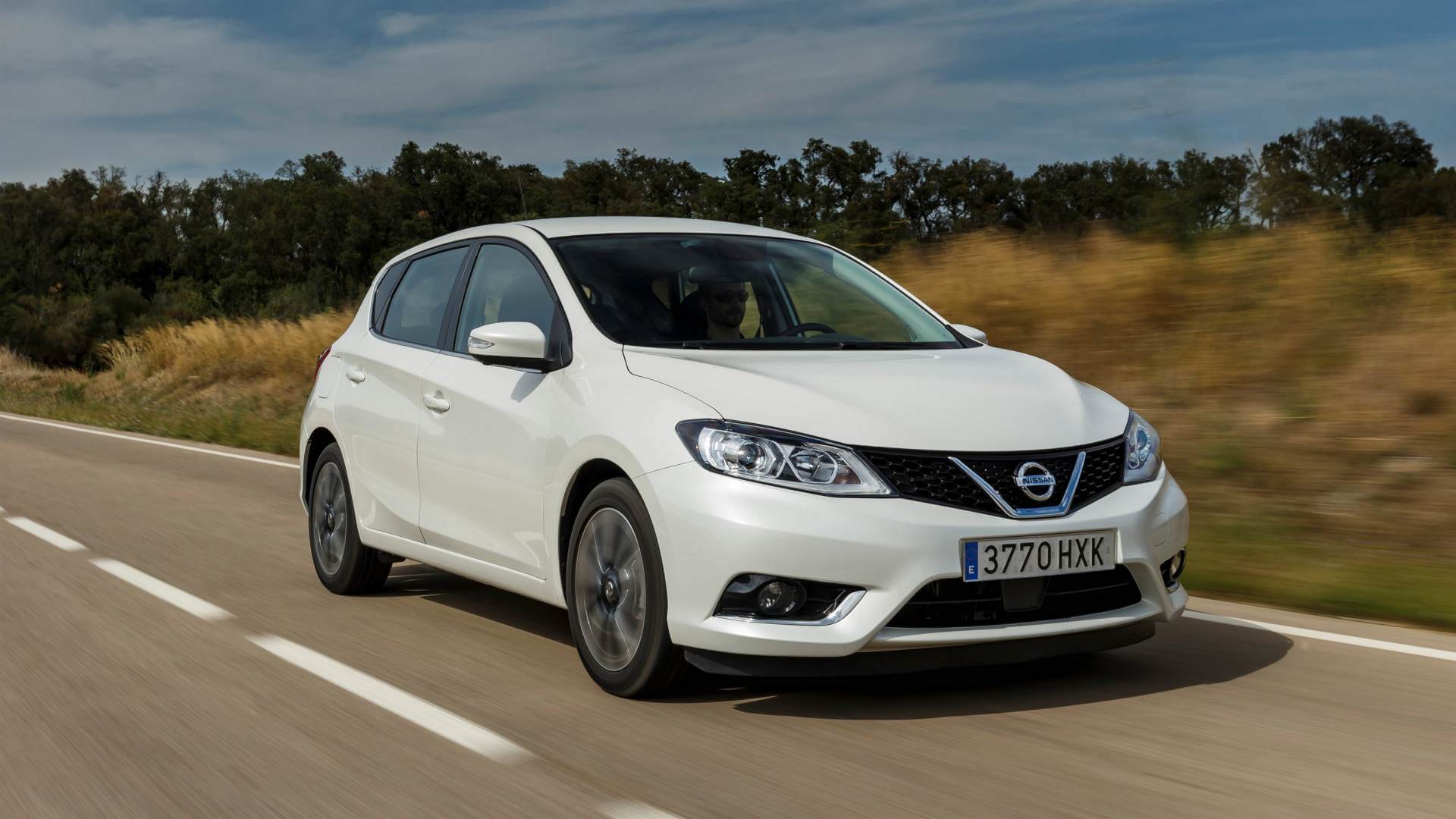
The Nissan Tiida is a front-wheel-drive compact car in the C segment, aimed at buyers who value comfort, modern technology and space. The first generation was previewed by the C-Note concept at the Tokyo motor show in October 2003 and went on sale in 2004 as a five-door hatchback and a four-door saloon. The second generation, a hatchback only, was unveiled at the Shanghai motor show in April 2011, and from 2015 a third Tiida appeared as a rebadged version of the European Nissan Pulsar. The name means "sun" in the Okinawan language, continuing the tradition of the Nissan Sunny.
In short
- C11 (2004 onwards): hatchback and saloon on a stretched B platform; sold as the Versa in North America and the Latio in parts of Asia.
- C12 (2011 onwards): hatchback on the V platform, sold as the Pulsar in Australia, New Zealand and Thailand and called "Big Tiida" in Taiwan.
- C13 (2015 onwards): a Pulsar-based hatchback on the CMF platform with a 1.6-litre petrol engine.
- Manual or Xtronic CVT gearboxes and front-wheel drive throughout.
Nissan Tiida at a glance
The Tiida is a monocoque compact car with a transverse front engine and front-wheel drive. More Nissan models are listed in our Nissan catalogue.
Nissan Tiida generations
| Generation | Years | Platform | Bodies | Main engines |
|---|---|---|---|---|
| C11 | 2004–2018 (by market) | Nissan B, stretched | Hatchback, saloon | 1.5, 1.6 and 1.8 petrol |
| C12 | 2011–2023 (by market) | Nissan V | Hatchback | 1.6, 1.8 petrol; 1.6 turbo (Pulsar SSS) |
| C13 | 2015 onwards | CMF | Hatchback | 1.6 petrol |
C11 (2004 onwards)
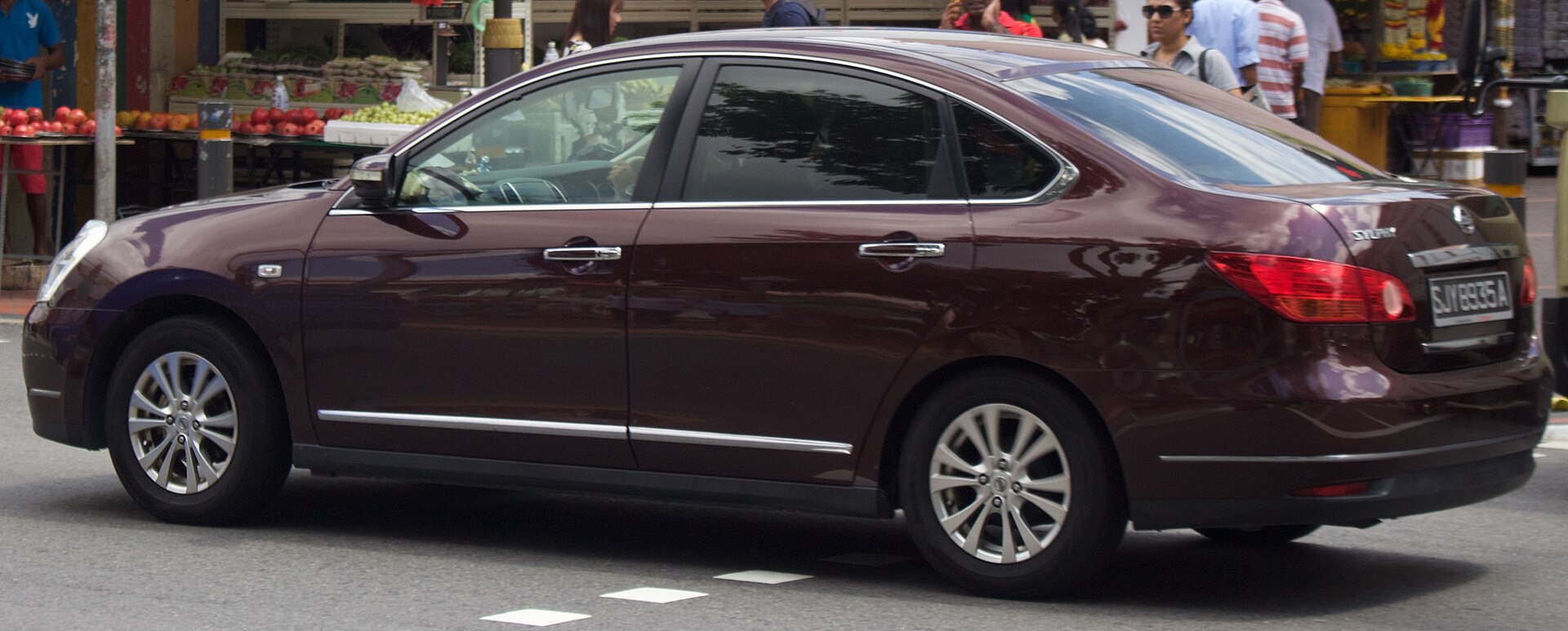
The first Tiida used a stretched-wheelbase version of the Nissan B platform, giving it an unusually roomy cabin for its class. It went on sale in Japan in 2004 and reached some European countries in 2007. Engines were 1.5, 1.6 and 1.8 four-cylinder petrols; in North America the 1.8 produced 91 kW (122 hp) and 170 Nm, and the 1.6 HR16DE in the saloon produced 80 kW (107 hp). Gearboxes included five- and six-speed manuals, a four-speed automatic and a CVT. A facelift arrived in January 2008. The car was built in Mexico, China and Taiwan, among other places, and in China a version was also sold under the Venucia brand from 2012 to 2016.
C12 (2011 onwards)
The second generation, previewed in Shanghai in April 2011 and on sale in China from June 2011, was a hatchback only and was not sold in Japan. It used the V platform shared with the Nissan Sylphy and was wider than its predecessor. In Australia, New Zealand and Thailand it was sold as the Pulsar, including an SSS version with a 1.6 turbocharged engine producing 140 kW (190 PS). Gearboxes were a six-speed manual or a CVT.
C13 (2015 onwards)
The third Tiida is a rebadged Nissan Pulsar, which Nissan revealed in May 2014 for Europe. It is built on the Renault-Nissan Common Module Family (CMF) platform. Production of the Tiida began in January 2015, and in China the C13 Tiida has been sold since 2016 with a 1.6-litre naturally aspirated engine.
Exterior
The C13 borrows its looks from the Nissan Pulsar and fits into Nissan's corporate style of the time. The sculpted bonnet leads to a chrome-edged grille with the Nissan badge, flanked by narrow projector headlights. The front bumper is sculpted too, with a chrome-trimmed plastic insert housing fog lights. In profile there are strongly flared wheel arches and pronounced creases at both sill and door-handle level, and the side windows have chrome trim along the bottom edge. Ground clearance is 155 mm, and higher trims have 17-inch alloy wheels. At the rear are slim lights, a simple tailgate with a convenient handle, a large roof spoiler and a plain bumper with a sculpted plastic insert. The overall look is bright and mildly sporty.
Interior
The cabin resembles that of the Nissan Sentra and is not cluttered with buttons. The simple instrument panel has two aluminium-ringed dials and a trip-computer display, behind a functional three-spoke steering wheel. Cloth upholstery and a hard plastic dashboard are standard, but build quality draws no complaints, and higher trims offer leather seats. The front seats have good side support, and the well-thought-out centre console flows into the tunnel, which holds two cupholders. A 5.8-inch touchscreen shows the rear camera and navigation and supports NissanConnect for calls, music and messages; below it sits a two-zone climate control panel.
The rear bench varies by version: basic cars have no centre armrest, while others have one with two cupholders. The rear backrest is well shaped and folds, although the floor is not flat. Luggage space is 307 litres with five people on board and 1,319 litres with the rear seats folded, with a full-size spare wheel under the floor.
Engines and transmissions (C13)
| Engine | Power (kW / PS) | Torque | Gearbox |
|---|---|---|---|
| 1.6 HR16DE, naturally aspirated | 86 kW / 117 PS | 158 Nm | 5-speed manual or Xtronic CVT |
The 1.6-litre HR16DE is an in-line four-cylinder with 16 valves, developed by the Renault-Nissan Alliance in the mid-2000s. According to published figures, combined consumption is about 6.4 l/100 km with either gearbox, and the engine meets Euro 5. With the manual gearbox the Tiida reaches 100 km/h in 10.6 seconds and 188 km/h; with the CVT it takes 0.7 seconds longer and tops out at 180 km/h.
Chassis
The C13 has MacPherson struts at the front and a torsion-beam rear axle. Electric power steering makes it light and easy to drive, and all four brakes are discs, ventilated at the front.
Safety and equipment
The closely related Nissan Pulsar was awarded five stars by Euro NCAP. The Tiida offers front and side airbags, curtain airbags, rain and light sensors, a rear camera, ABS, EBD and stability control, plus several electronic driver aids. Base versions have two airbags, a trip computer, ABS and ESP, heated power mirrors, a multifunction steering wheel, power windows all round and steel wheels with covers; mid-range versions add air conditioning, an audio system and heated front seats. Higher trims have dual-zone climate control, side airbags, navigation with a rear camera, cruise control, keyless entry and start, LED headlights, part-leather upholstery and 17-inch alloys.
Key specifications by generation
| Parameter | C11 | C12 | C13 |
|---|---|---|---|
| Unveiled | Tokyo, 2003 (concept) | Shanghai, April 2011 | 2014 (as Pulsar) |
| Bodies | Hatchback, saloon | Hatchback | Hatchback |
| Platform | B (stretched) | V | CMF |
| Gearboxes | Manual, 4AT, CVT | 6MT, CVT | 5MT, CVT |
| Other names | Versa, Latio | Pulsar | Pulsar |
Strengths and weaknesses
Owners rate the Tiida as good value for money, with good assembly and reliability, a modern look, an up-to-date electronic package, a quiet, comfortable and roomy cabin, high safety and decent sound insulation; the 1.6 is adequate for everyday driving. Drawbacks include budget-grade interior plastics, a modest boot and ground clearance that some would like to be higher. Rivals include the Opel Astra, Citroën C4, Toyota Auris, Kia Ceed, Mazda3 and Hyundai i30.
Nissan Tiida in our rankings
In production longer than 84% of ranked nameplates in the 1CARS catalog (No. 144 of 912).
FAQ
What does the name Tiida mean?
It means "sun" in Okinawan, continuing the Sunny naming tradition.
Is the Nissan Tiida the same as the Pulsar?
The C12 was sold as the Pulsar in Australia, New Zealand and Thailand, and the C13 Tiida is a rebadged European Pulsar.
What engine does the latest Nissan Tiida have?
A 1.6-litre HR16DE petrol four with 86 kW (117 PS) and 158 Nm in the C13 sold in China and other markets.
Is the Nissan Tiida sold in North America?
The first generation was sold there as the Nissan Versa.
Data sources
Data checked by an editor against the sources below.