
Peugeot 2008 vs Renault Captur: small SUVs compared
Updated Report an error By Oleksandr Hnatiuk
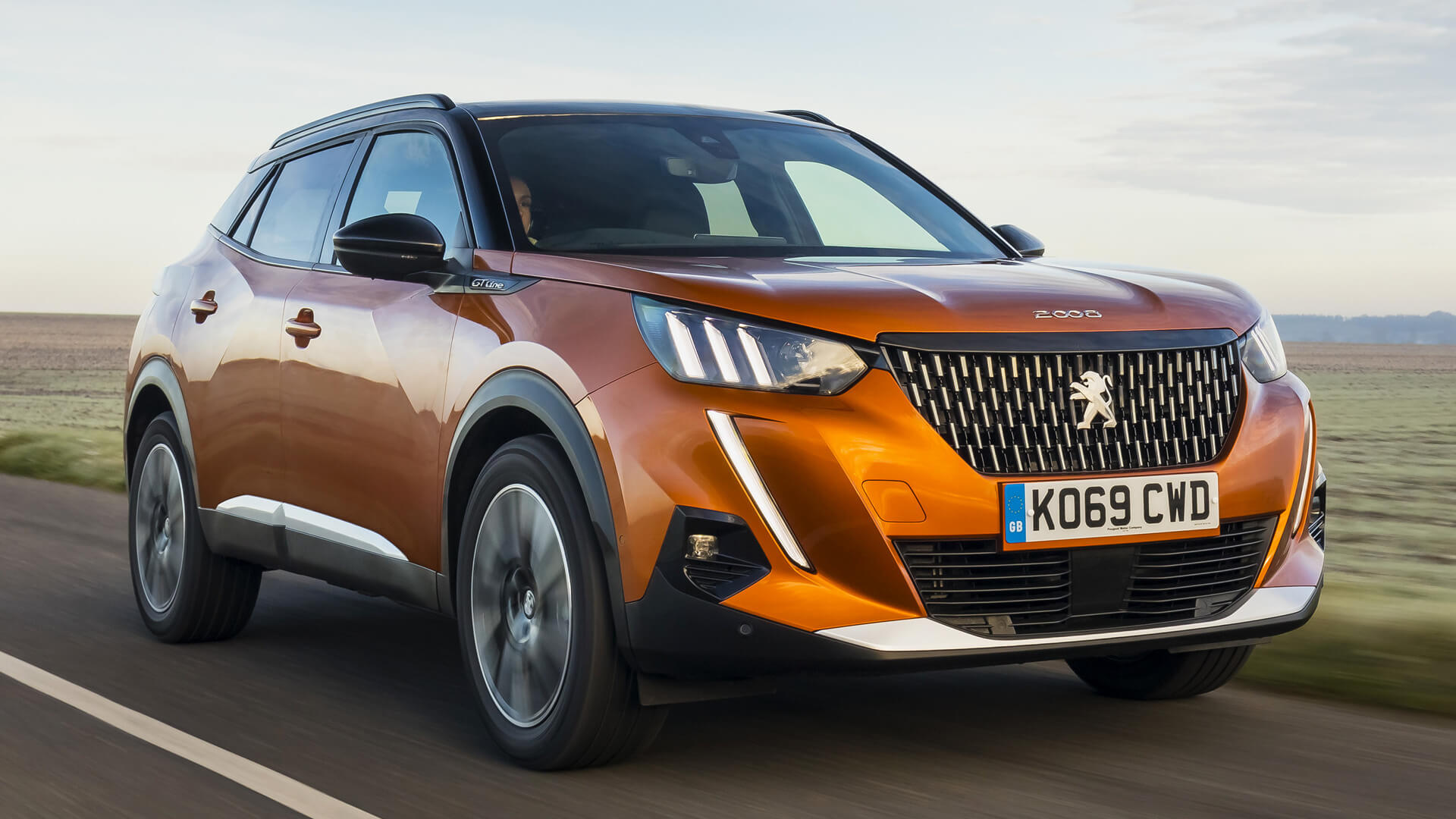
Peugeot · 2019–present
2008 II
- Power
- 96 kW131 PS
- 0–100 km/h
- 8.9 s
- Top speed
- 196 km/h
- Kerb mass
- 1,267 kg
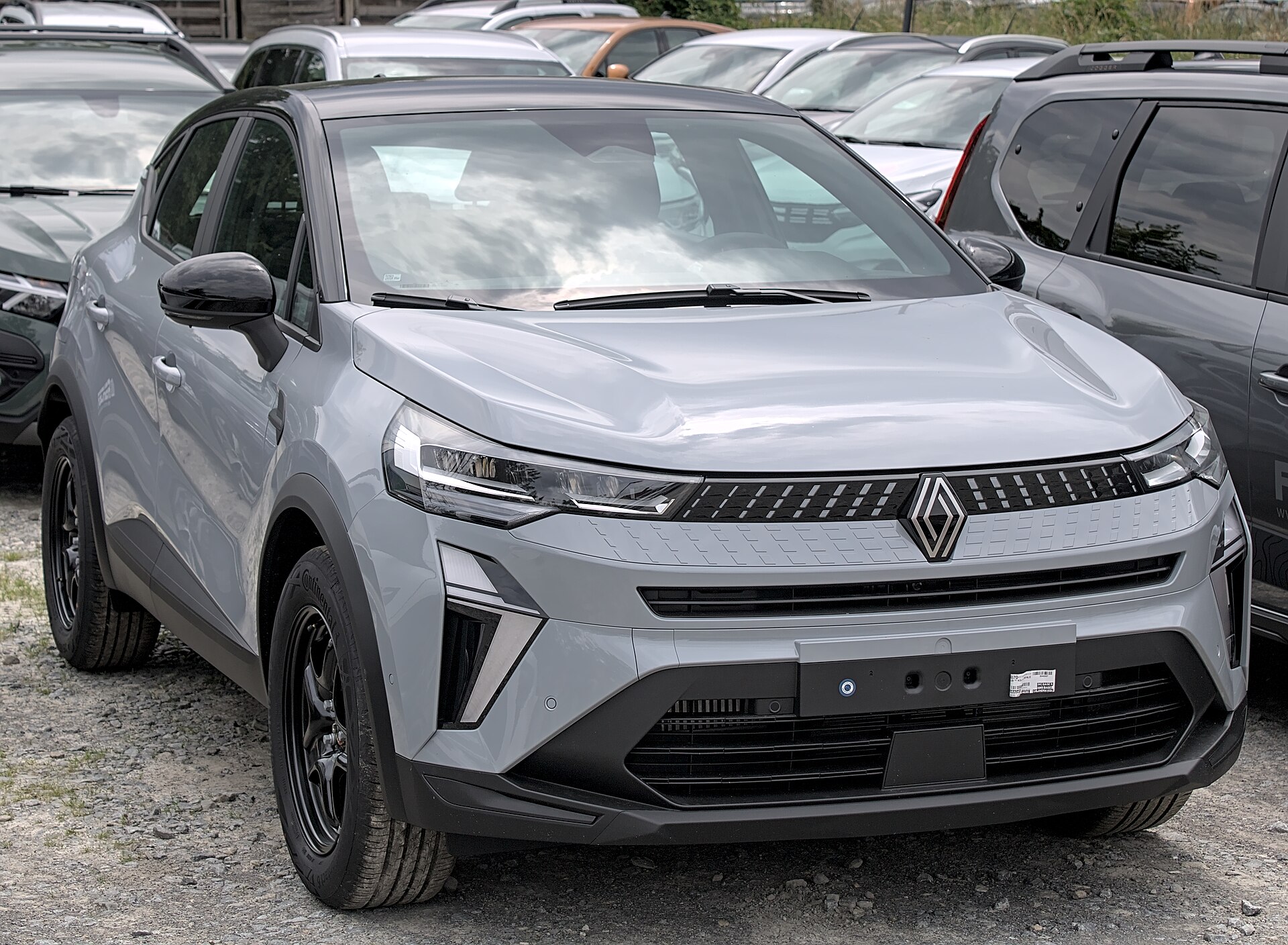
Renault · 2019–present
Captur II
- Power
- 105 kW143 PS
- 0–100 km/h
- —
- Top speed
- —
- Kerb mass
- —
At a glance
Who suits what, worked out from the catalog figures of the versions above.
Categories won: 2008 II 2 Captur II 1
- Family Captur II Boot: 422 l vs 405 l
- City 2008 II Width: 1,770 mm vs 1,797 mm
- Off-road 2008 II Drive and body: Front-wheel drive · SUV vs Front-wheel drive · Crossover
Verdict Opinion
The Captur is the better choice for buyers who want a hybrid without a plug. Its E-Tech 145 is the only full hybrid of the pair, there is an LPG version, and its 2019 Euro NCAP scores were higher in every area except child occupant protection.
The 2008 wins for anyone ready to go electric. The e-2008 now has 115 kW and 406 km of WLTP range, and the PureTech petrol and BlueHDi diesel cover the conventional buyer. Its boot of 434 litres in our catalogue is generous for the class.
— Oleksandr Hnatiuk
The Renault Captur and the Peugeot 2008 are France's two answers to the small-SUV boom, and both arrived in their second generation in the summer of 2019. Peugeot announced the new 2008 on 19 June 2019 on the Common Modular Platform (CMP) it shares with the 208 and the Opel Corsa, and facelifted it on 4 May 2023. The second Captur debuted in July 2019 on the Renault–Nissan CMF-B platform and was facelifted on 4 April 2024, when the Esprit Alpine replaced the RS Line as the top trim.
In short: the 2008 is the one with an electric version, the Captur the one with a full hybrid and an LPG engine. Both are in our catalogue: Peugeot 2008 and Renault Captur.
Peugeot 2008 vs Renault Captur: hybrids, electric and space
Hybrid: mild at Peugeot, full at Renault
The Captur E-Tech full hybrid 145 combines a petrol engine with electric motors and a clutchless multi-mode automatic. Our catalogue lists it at 107 kW and 205 Nm. Renault also offers mild-hybrid petrol versions with 103 kW (140 PS) and 260 Nm or, with the EDC dual-clutch gearbox, 118 kW and 270 Nm. Before the facelift there was a plug-in E-Tech with 117 kW (159 PS). Peugeot's hybrid in the 2008 is a 48-volt mild hybrid on its automatic petrol models.
Petrol, diesel and LPG
The 2008's 1.2 PureTech came with 74 kW (100 PS) and 205 Nm, 96 kW (130 PS) and 230 Nm, or, in the GT from 2019 to 2022, 114 kW (155 PS). The 100 needs 10.9 seconds to 100 km/h and the 155 needs 8.2 seconds. The 1.5 BlueHDi diesel offered 74 kW (100 PS), 81 kW (110 PS) or 96 kW (130 PS), the strongest with 300 Nm and an eight-speed automatic. The facelifted Captur starts with the TCe 90 at 67 kW and 160 Nm and adds a TCe 100 LPG with 74 kW, an option the 2008 does not have.
Electric e-2008
The e-2008 launched with a 100 kW (136 PS) motor and 46.2 kWh of usable battery, good for about 310 km on the WLTP cycle. The facelift brought 115 kW (156 PS), a 54 kWh battery and 406 km. It charges at up to 100 kW.
- 2008 PureTech 130: 96 kW, 230 Nm
- e-2008: 115 kW, 54 kWh, 406 km WLTP
- Captur E-Tech full hybrid 145: 107 kW
- Captur mild hybrid 160 EDC: 118 kW, 270 Nm
- Captur TCe 100 LPG: 74 kW
Size and boot
Our catalogue lists the facelifted Captur at 4,239 mm long, 1,797 mm wide and 1,575 mm tall on a 2,639 mm wheelbase; it grew by about 110 mm over the first generation. The 2008's European dimensions are not in our sources; the Chinese-market car measures 4,312 mm on a 2,612 mm wheelbase. Our catalogue lists 434 litres of boot space for the 2008.
Euro NCAP
Both were tested in 2019. The Captur 1.0 TCe received five stars with 96% for adult occupants, 83% for children, 75% for vulnerable road users and 74% for safety assist. The 2008 PureTech 130 scored 91%, 84%, 62% and 68%.
Size and weight
Side view to scale, all cars from the front bumper.
| 2008 II | Captur II | |
|---|---|---|
| Length | 4,300 mm169.3 in † | 4,239 mm166.9 in −61 mm −2.4 in −1.4% |
| Width | 1,770 mm69.7 in † | 1,797 mm70.7 in +27 mm +1.1 in +1.5% |
| Height | 1,530 mm60.2 in † | 1,575 mm62.0 in +45 mm +1.8 in +2.9% |
| Wheelbase | 2,605 mm102.6 in † | 2,639 mm103.9 in +34 mm +1.3 in +1.3% |
| Boot | 405 l14.3 cu ft | 422 l14.9 cu ft † +17 l +0.6 cu ft +4.2% |
| Fuel tank | 44 l11.6 gal US | 48 l12.7 gal US † +4 l +1.1 gal US +9.1% |
| Fits a standard garage? | Yes | Yes |
Difference vs 2008 II (±). Garage check: a standard single garage takes a car up to about 5.0 m (16 ft 5 in) long and 1.9 m (6 ft 3 in) wide (width as listed in the catalog; some makers include the mirrors). Leave about 0.6 m (2 ft) to open the doors. † from another version of this generation.
Full specifications
| Peugeot 2008 | Renault Captur | |
|---|---|---|
| General | ||
| Version | PureTech 130 · petrol · 96 kW (131 PS) | Captur II · E-Tech full hybrid 145 · 105 kW (143 PS) |
| Production years | 2019–present | 2019–present |
| Body | SUV | Crossover |
| Country | France | France |
| Performance | ||
| Power Why it matters: More power means stronger acceleration and easier overtaking, especially with a full load. | 96 kW (131 PS) 129 hp | 105 kW (143 PS) 141 hp Better |
| Power, all versions | 74–115 kW (101–156 PS) 99–154 hp | 66–116 kW (90–158 PS) 89–156 hp |
| Torque Why it matters: Torque is the pulling force you feel when accelerating from low revs, towing or climbing hills. | 230 Nm 170 lb-ft Better | 205 Nm 151 lb-ft |
| 0–100 km/h Why it matters: A shorter 0–100 km/h time means quicker getaways and safer merging onto fast roads. | 8.9 s | No data |
| Top speed Why it matters: Top speed hints at how relaxed the car is at motorway speeds, even if you never reach it. | 196 km/h 122 mph | No data |
| Power per tonne | 76 kW/t 92 hp/ton calculated | No data |
| Engine and transmission | ||
| Fuel | Petrol | Hybrid |
| Engine | No data | 4 cyl |
| Gearbox | No data | automatic |
| Drive | Front-wheel drive | Front-wheel drive |
| Dimensions and weight | ||
| Length | 4,300 mm 169.3 in † | 4,239 mm 166.9 in |
| Width | 1,770 mm 69.7 in † | 1,797 mm 70.7 in |
| Height | 1,530 mm 60.2 in † | 1,575 mm 62.0 in |
| Wheelbase | 2,605 mm 102.6 in † | 2,639 mm 103.9 in |
| Kerb weight Why it matters: A lighter car is usually more agile and uses less energy. | 1,267 kg 2,793 lb | No data |
| Boot Why it matters: A bigger boot fits more luggage, shopping or a pram. | 405 l 14.3 cu ft | 422 l 14.9 cu ft † Better |
| Fuel tank Why it matters: A larger tank means more distance between fuel stops. | 44 l 11.6 gal US | 48 l 12.7 gal US † Better |
| Economy and running costs | ||
| Fuel consumption Why it matters: Lower consumption cuts running costs and CO₂ emissions on every trip. | 4.5 l/100 km 52.3 mpg US | No data |
| CO₂ | 103 g/km | No data |
| Fuel cost per year | €1,180/year estimated | No data |
| Range on a full tank | 978 km 608 mi estimated | No data |
| Safety | ||
| Euro NCAP | No data | ★★★★★ (2019) |
These cars do not differ in the data we have.
Equal rows hidden (3): Production years, Country, Drive.
Better marks the stronger figure — only for measurable specs (power, torque, 0–100 km/h, consumption, boot, weight).
Estimated at 15,000 km a year with fuel at €1.75/l petrol. † from another version of this generation.
In plain words
Renault Captur has more power: 105 kW (143 PS) against 96 kW (131 PS) for Peugeot 2008. Peugeot 2008 is 61 mm longer than Renault Captur (4,300 mm vs 4,239 mm). Renault Captur has the bigger boot: 422 l against 405 l. On the catalog figures, the Renault Captur is the pick for family; the Peugeot 2008 is the pick for city and off-road. Our catalog has no 0–100 km/h for the Renault Captur yet, so some checks above leave it out.
Which one to choose
Choose the Peugeot 2008 if you want a battery-electric small SUV or a diesel with an eight-speed automatic gearbox.
Choose the Renault Captur if you want a full hybrid for town driving, an LPG engine or the stronger Euro NCAP result.
The 2008 also meets the Nissan Juke in Nissan Juke vs Peugeot 2008, and its hatchback sister faces the Clio in Peugeot 208 vs Renault Clio.
Frequently asked questions
Is there an electric Renault Captur?
No. The Captur is sold with petrol, mild-hybrid, LPG and E-Tech full-hybrid powertrains. The electric option of the pair is the e-2008, with 115 kW and 406 km of WLTP range after its 2023 facelift.
Is the Peugeot 2008 a full hybrid?
No. Peugeot's hybrid 2008 uses a 48-volt mild-hybrid system on its automatic petrol versions. The Captur E-Tech 145 is a full hybrid.
Which is safer?
In the 2019 Euro NCAP tests the Captur scored higher for adult occupants (96% against 91%), vulnerable road users (75% against 62%) and safety assist (74% against 68%). The 2008 scored 84% for children against 83%.
Which has a diesel?
The 2008, with the 1.5 BlueHDi in 74, 81 and 96 kW (100, 110 and 130 PS) versions. The facelifted Captur in our catalogue is petrol, LPG and hybrid only.