
Nissan Juke vs Peugeot 2008: small crossover rivals
Updated Report an error By Sarah Whitmore
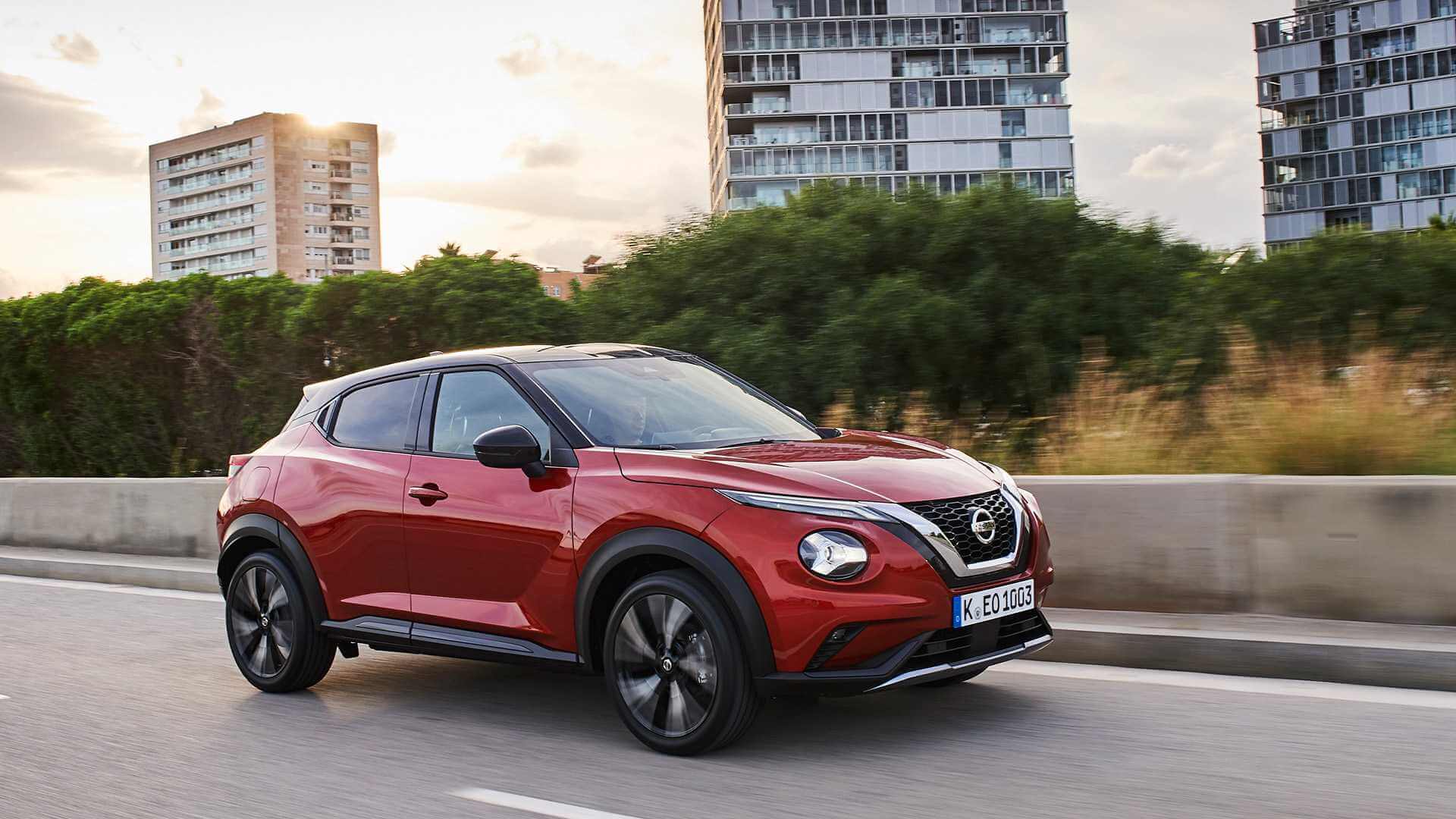
Nissan · 2019–present
Juke F16
- Power
- 86 kW117 PS
- 0–100 km/h
- 10.4 s
- Top speed
- 180 km/h
- Kerb mass
- 1,182 kg
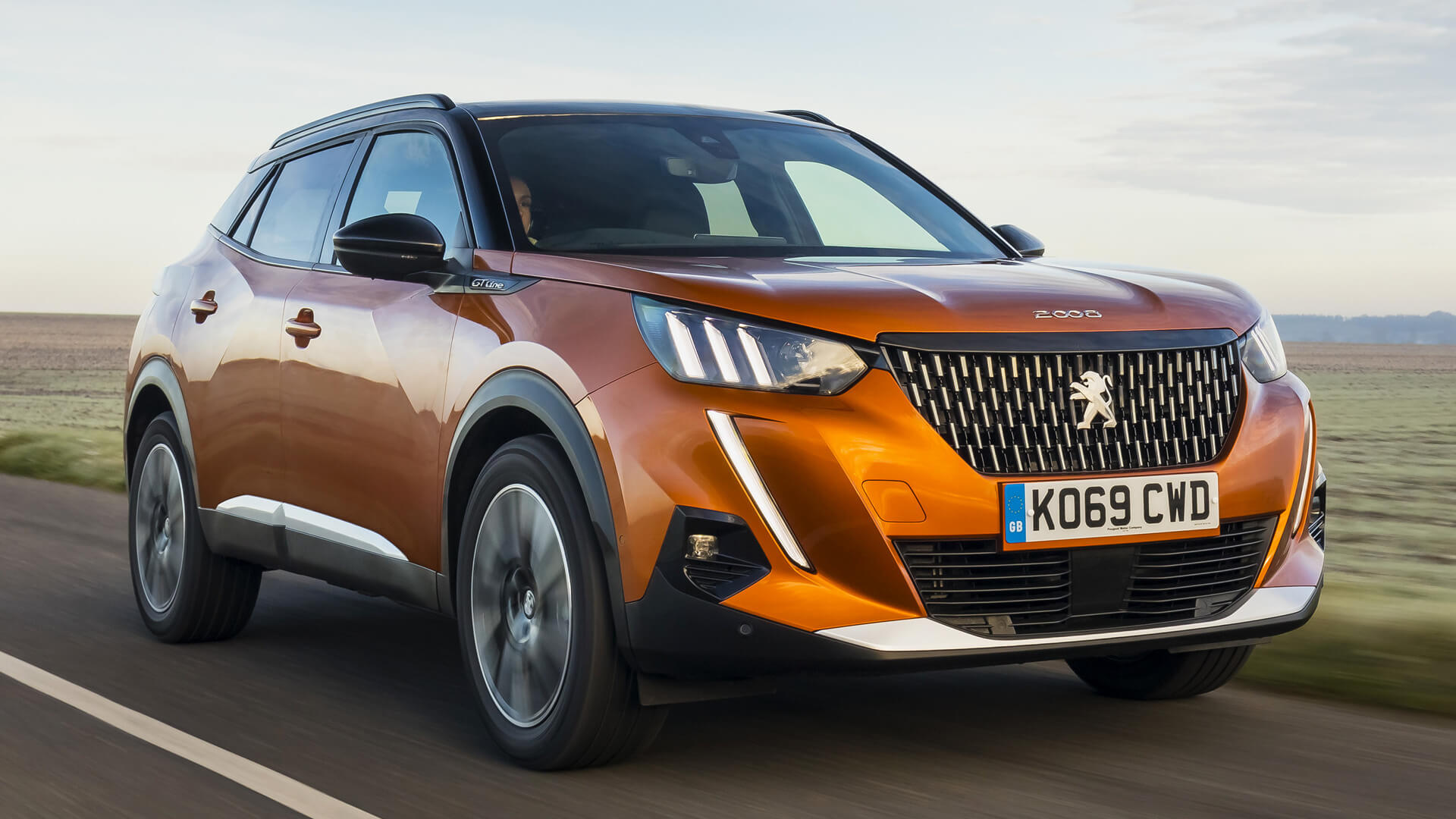
Peugeot · 2019–present
2008 II
- Power
- 96 kW131 PS
- 0–100 km/h
- 8.9 s
- Top speed
- 196 km/h
- Kerb mass
- 1,267 kg
At a glance
Who suits what, worked out from the catalog figures of the versions above.
Categories won: Juke F16 1 2008 II 2
- Family Juke F16 Boot: 422 l vs 405 l
- City Too close to call Length: 4,210 mm vs 4,300 mm
- Long trips Too close to call Range: 939 km vs 978 km (estimated)
- Performance 2008 II Power per tonne: 76 kW/t vs 73 kW/t; 0–100 km/h: 8.9 s vs 10.4 s
- Running costs 2008 II Fuel per year: €1,180 vs €1,290 (estimated)
- Off-road Too close to call Drive and body: Front-wheel drive · SUV vs Front-wheel drive · SUV
Verdict Opinion
The 2008 is the more complete small SUV. It has the bigger boot, more ground clearance and a choice of petrol, diesel, hybrid and electric drives that the Juke cannot match.
The Juke is the more individual car and good value. Its styling still stands out, the 2019 German entry price was low, and the full hybrid is designed to cut fuel use in town without a charging cable.
- Sarah Whitmore
The Nissan Juke is widely seen as the car that started the class of small urban crossovers when it appeared at Geneva in March 2010. The Peugeot 2008 followed at the same show in 2013 as Peugeot's first small SUV, replacing the 207 SW estate.
Both are in their second generation. Nissan revealed the F16 Juke on 3 September 2019 in five European cities at once and builds it in Sunderland. Peugeot presented the second 2008 online on 19 June 2019; it is built in Vigo, Spain, and in Wuhan, China, and was facelifted on 4 May 2023.
Nissan Juke vs Peugeot 2008: platforms, engines, space and prices
Platforms and design
The new Juke uses the CMF-B platform it shares with the Renault Clio V; it grew by 75 mm in length and 35 mm in width over its predecessor while losing 23 kg. The 2008 sits on Stellantis's CMP platform with the 208 and the Opel Corsa. Nissan kept the unusual shape of the original, with round headlights and hidden rear door handles; Peugeot gave the 2008 its fang-shaped daytime lights and the i-Cockpit with a small steering wheel.
Engines and electrification
The Juke launched with a single engine: a 1.0 DIG-T three-cylinder turbo with 86 kW (117 PS) and 180 Nm, according to Nissan's German price list of 2019. In March 2022 the Juke Hybrid added a 1.6-litre petrol engine with electric motors for 105 kW (143 PS). Peugeot offers a far wider choice: 1.2 PureTech petrols with 74, 96 and 114 kW and 1.5 BlueHDi diesels. A 48-volt hybrid arrived in late 2023 and was raised from 100 to 107 kW in March 2025, and the battery-electric e-2008 started with 100 kW; since 2023 it has 115 kW and a 54 kWh battery. The Juke has no battery-electric version in this generation.
The first generations
On the used market the older Juke offers something the 2008 never did: all-wheel drive. The F15 Juke had it as an option with the 1.6 DIG-T of 140 kW (190 PS), and the Nismo RS reached 160 kW. Peugeot has never offered four-wheel drive in the 2008; the first generation used PSA's PF1 platform, and the second relies on Grip Control on loose surfaces.
Space and ground clearance
Nissan quotes 422 litres of boot space for the F16, up from 354 litres in the F15. The 2008 holds 434 litres plus a 29-litre compartment under the floor, and 1,467 litres with the rear seats folded. Ground clearance is 180 mm for the Juke and 200–219 mm for the 2008, depending on version. For parking, our size comparison tool shows how much of a space each one fills.
Prices and safety
In Germany the second Juke started at €18,990 in the Visia trim in September 2019, and the top Tekna cost €25,790. Euro NCAP gave the F16 Juke five stars in 2019 with 94 % for adult occupants. Peugeot registered 64,178 second-generation 2008s in Germany from launch to the end of 2024.
Race Stats side by side
Each figure is a 0–100 score from the catalog numbers, the same as on the 1CARS Race cards. PI is the overall performance index (100–999) and its class D–S.
| Stat | Juke F16 | 2008 II |
|---|---|---|
| PI | C · 457 | C · 482 |
| Power | 40 | 41 |
| Grip | 35 | 35 |
| Handling | 60 | 62 |
| Top speed | 31 | 37 |
| Launch | 30 | 37 |
Grip and handling are estimates from drive type, weight, height and body (hover a figure to see where it comes from). 1CARS Race
Who wins a race?
Quarter-mile (402 m) drag from a standing start, dry road, no reaction time - the 1CARS Race physics on the catalog figures of these versions.
- 1 2008 IIPureTech 130 · petrol · 96 kW (131 PS) 16.52 sat 134 km/h
- 2 Juke F161.0 DIG-T · petrol · 86 kW (117 PS) 17.40 sat 126 km/h · +0.88 s
Size and weight
Side view to scale, all cars from the front bumper.
| Juke F16 | 2008 II | |
|---|---|---|
| Length | 4,210 mm165.7 in | 4,300 mm169.3 in † +90 mm +3.5 in +2.1% |
| Width | 1,800 mm70.9 in | 1,770 mm69.7 in † −30 mm −1.2 in −1.7% |
| Height | 1,595 mm62.8 in | 1,530 mm60.2 in † −65 mm −2.6 in −4.1% |
| Wheelbase | 2,636 mm103.8 in | 2,605 mm102.6 in † −31 mm −1.2 in −1.2% |
| Kerb weight | 1,182 kg2,606 lb | 1,267 kg2,793 lb +85 kg +187 lb +7.2% |
| Boot | 422 l14.9 cu ft | 405 l14.3 cu ft −17 l −0.6 cu ft −4.0% |
| Fuel tank | 46 l12.2 gal US | 44 l11.6 gal US −2 l −0.5 gal US −4.3% |
| Fits a standard garage? | Yes | Yes |
Difference vs Juke F16 (±). Garage check: a standard single garage takes a car up to about 5.0 m (16 ft 5 in) long and 1.9 m (6 ft 3 in) wide (width as listed in the catalog; some makers include the mirrors). Leave about 0.6 m (2 ft) to open the doors. † from another version of this generation.
Full specifications
| Nissan Juke | Peugeot 2008 | |
|---|---|---|
| General | ||
| Version | 1.0 DIG-T · petrol · 86 kW (117 PS) | PureTech 130 · petrol · 96 kW (131 PS) |
| Production years | 2019–present | 2019–present |
| Body | SUV | SUV |
| Country | Japan | France |
| Performance | ||
| Power Why it matters: More power means stronger acceleration and easier overtaking, especially with a full load. | 86 kW (117 PS) 115 hp | 96 kW (131 PS) 129 hp Better |
| Power, all versions | 86–105 kW (117–143 PS) 115–141 hp | 74–115 kW (101–156 PS) 99–154 hp |
| Torque Why it matters: Torque is the pulling force you feel when accelerating from low revs, towing or climbing hills. | 180 Nm 133 lb-ft | 230 Nm 170 lb-ft Better |
| 0–100 km/h Why it matters: A shorter 0–100 km/h time means quicker getaways and safer merging onto fast roads. | 10.4 s | 8.9 s Better |
| Top speed Why it matters: Top speed hints at how relaxed the car is at motorway speeds, even if you never reach it. | 180 km/h 112 mph | 196 km/h 122 mph Better |
| Power per tonne | 73 kW/t 89 hp/ton calculated | 76 kW/t 92 hp/ton calculated Better |
| Engine and transmission | ||
| Fuel | Petrol | Petrol |
| Drive | Front-wheel drive | Front-wheel drive |
| Dimensions and weight | ||
| Length | 4,210 mm 165.7 in | 4,300 mm 169.3 in † |
| Width | 1,800 mm 70.9 in | 1,770 mm 69.7 in † |
| Height | 1,595 mm 62.8 in | 1,530 mm 60.2 in † |
| Wheelbase | 2,636 mm 103.8 in | 2,605 mm 102.6 in † |
| Kerb weight Why it matters: A lighter car is usually more agile and uses less energy. | 1,182 kg 2,606 lb Better | 1,267 kg 2,793 lb |
| Boot Why it matters: A bigger boot fits more luggage, shopping or a pram. | 422 l 14.9 cu ft Better | 405 l 14.3 cu ft |
| Fuel tank Why it matters: A larger tank means more distance between fuel stops. | 46 l 12.2 gal US Better | 44 l 11.6 gal US |
| Economy and running costs | ||
| Fuel consumption Why it matters: Lower consumption cuts running costs and CO₂ emissions on every trip. | 4.9 l/100 km 48.0 mpg US | 4.5 l/100 km 52.3 mpg US Better |
| CO₂ | 112 g/km | 103 g/km Better |
| Fuel cost per year | €1,290/year estimated | €1,180/year estimated Better |
| Range on a full tank | 939 km 583 mi estimated | 978 km 608 mi estimated |
These cars do not differ in the data we have.
Equal rows hidden (4): Production years, Body, Fuel, Drive.
Better marks the stronger figure - only for measurable specs (power, torque, 0–100 km/h, consumption, boot, weight).
Estimated at 15,000 km a year with fuel at €1.75/l petrol. † from another version of this generation.
In plain words
Peugeot 2008 is quicker: 0–100 km/h in 8.9 s against 10.4 s for Nissan Juke. Peugeot 2008 is 90 mm longer than Nissan Juke (4,300 mm vs 4,210 mm). Nissan Juke is lighter by 85 kg (1,182 kg vs 1,267 kg). Nissan Juke has the bigger boot: 422 l against 405 l. At 15,000 km a year, fuel would cost about €1,290 (Nissan Juke), €1,180 (Peugeot 2008) (estimated). Nissan Juke is the older design (from 2010); Peugeot 2008 arrived in 2013. On the catalog figures, the Nissan Juke is the pick for family; the Peugeot 2008 is the pick for performance and running costs.
Which one to choose
Choose the 2008 if you want an electric small SUV, a diesel for long distances or the most practical boot in this pair.
Choose the Juke if you like its design, want a self-charging hybrid or a simple three-cylinder petrol at a lower price.
Looking for all-wheel drive? Only a used first-generation Juke with the 1.6 DIG-T offers it; neither current car has four-wheel drive.
Frequently asked questions
Which is bigger inside, the Nissan Juke or the Peugeot 2008?
The 2008 has the larger boot: 434 litres plus a 29-litre underfloor compartment, against 422 litres for the second-generation Juke.
Is there an electric Juke or 2008?
Peugeot sells the e-2008; since 2023 it has 115 kW and 54 kWh. The Juke is offered with a petrol engine or as a full hybrid, not as an electric car.
Do they have four-wheel drive?
Not in their current generations. The first-generation Juke offered all-wheel drive with the 1.6 DIG-T engine.
How safe is the Nissan Juke?
Euro NCAP gave the second-generation Juke five stars in 2019, with 94 % for adult occupant protection.