
Mini Cooper S vs VW Golf GTI: small hot hatch or big one?
Updated Report an error By Felix Hartmann
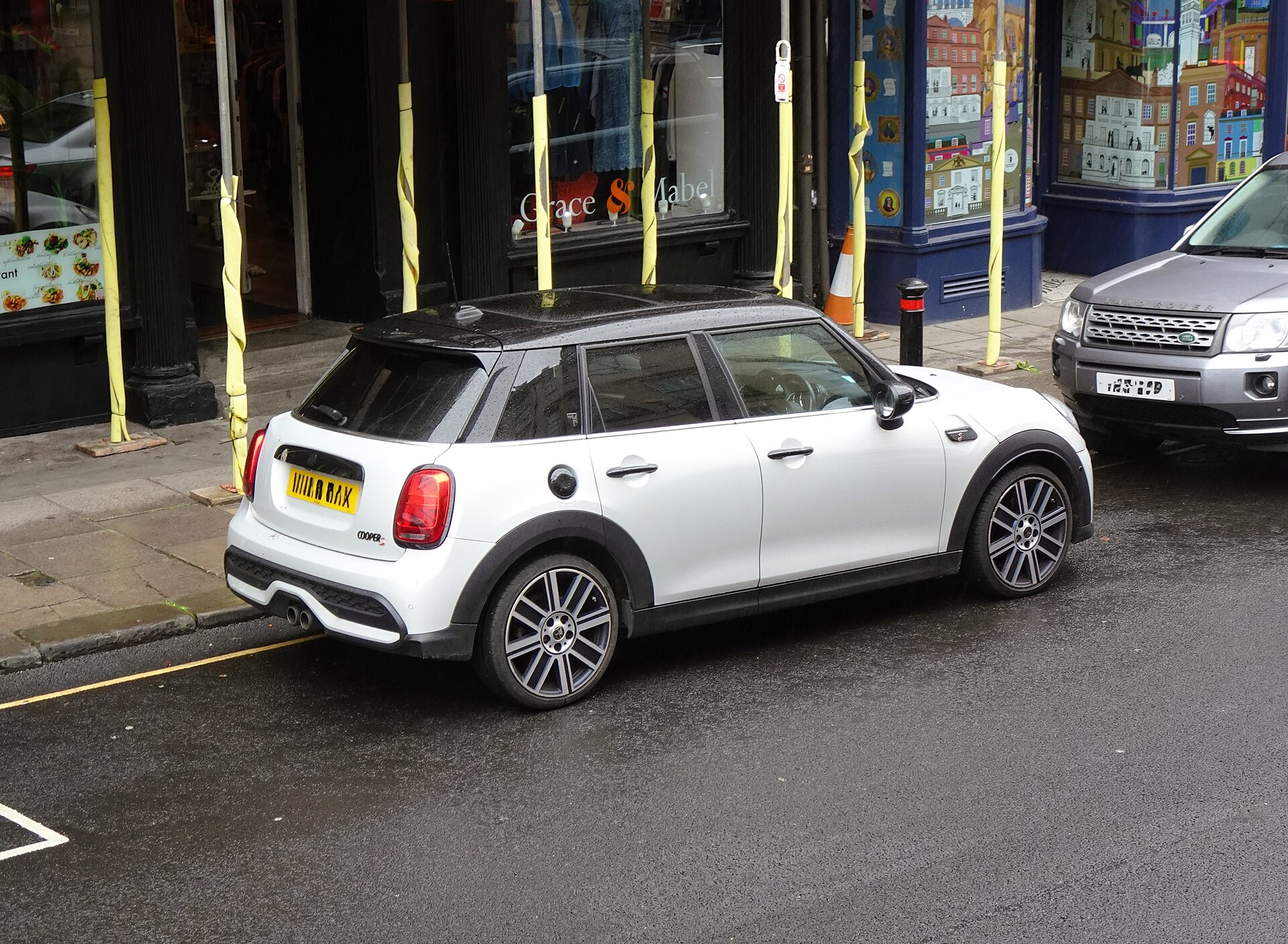
Mini · 2024–present
Cooper S F66
- Power
- 150 kW204 PS
- 0–100 km/h
- —
- Top speed
- —
- Kerb mass
- 1,413 kg

Volkswagen · 2019–present
Golf Mk8
- Power
- 180 kW245 PS
- 0–100 km/h
- 6.3 s
- Top speed
- 250 km/h
- Kerb mass
- —
At a glance
Who suits what, worked out from the catalog figures of the versions above.
- Off-road Too close to call Drive and body: Front-wheel drive · Hatchback vs Front-wheel drive · Hatchback
Verdict Opinion
The Golf GTI is the more complete car. It is faster in standard form, has more torque, more space and five doors, and it carries the name of the car that defined the class in 1976.
The Cooper S is the more characterful one. Its short body makes it feel nimble in town, and the older generations offer things the GTI does not: a supercharger in the R53 and a manual gearbox in every car up to the F56.
— Felix Hartmann
Few names carry as much hot-hatch history as these two. The Golf GTI of June 1976 combined a family hatchback body with an injected 1.6 that produced 81 kW (110 PS) and is widely credited with creating the class. The Cooper S badge is older still: it goes back to the BMC Mini of the 1960s, and BMW revived it in 2002 for the supercharged R53.
Today they sit a size apart. The Mini is a small three-door car, the Golf a five-door compact, so this is a choice between agility and everyday room. All Cooper S generations are described in the Mini catalogue; the eight Golf generations are on our Volkswagen Golf page.
Mini Cooper S vs VW Golf GTI: engines, gearboxes, space and price
Four Minis against one benchmark
The BMW-era Cooper S has gone through four generations. The R53 (2002–2006) used a supercharged 1.6 with 120 kW (163 bhp) and 210 Nm; at 1,215 kg that is 10.1 kg per kW, a sum our power-to-weight calculator does for any car. The R56 of 2006 replaced the supercharger with a twin-scroll turbocharger and 129 kW (175 PS). The F56 of 2014 moved to BMW's 2.0-litre B48, rated at 141 kW (192 PS) and 280 Nm, and the F66 of 2024 has 150 kW (204 PS) and 300 Nm. The current Golf GTI, from the Mk8 revealed in October 2019, has a 2.0 TSI with 180 kW (245 PS) and 370 Nm.
Pace
That 30 kW advantage shows on paper. The Mk8 GTI takes 6.3 seconds from rest to 100 km/h, with a 250 km/h maximum; Mini gave the F56 Cooper S 6.8 seconds and 235 km/h. The R53 needed 7.4 seconds to 62 mph and reached 217 km/h. At the top of each range the special editions are close: the 2020 John Cooper Works GP, based on the F56, had 225 kW (306 PS) and 450 Nm, the Mk8 GTI Clubsport 221 kW.
Manual or automatic
For enthusiasts this is a real difference between generations. A six-speed manual was available on every Cooper S up to and including the F56, and evo describes the F56 1to6 Edition as the last Mini with three pedals. The F66 comes only with a seven-speed dual-clutch gearbox. Golf buyers should check the specification of the exact car, because the GTI's gearbox choice has changed between generations and markets.
Space and doors
At 4,284 mm, on a 2,636 mm wheelbase, the Golf Mk8 is sold only as a five-door; Volkswagen dropped the three-door for lack of demand. The Cooper S on our page is the three-door hatch, a full class smaller, with a rear bench best kept for short trips. A five-door Mini exists, but the GTI remains the more practical car for a family.
Prices and collectability
The R53 went on sale in the UK in June 2002 at £14,500, about €23,000 at the time. Near the end of F56 production evo quoted £26,490 for the entry Mini in 2024, roughly €31,300. Limited editions hold the most interest: Mini built 2,000 each of the R53 and R56 GP and 3,000 of the F56 GP, which cost US$44,900 in the United States for 2020, about €39,300.
Race Stats side by side
Each figure is a 0–100 score from the catalog numbers, the same as on the 1CARS Race cards. PI is the overall performance index (100–999) and its class D–S.
| Stat | Cooper S F66 | Golf Mk8 |
|---|---|---|
| PI | B · 594 | A · 601 |
| Power | 52 | 52 |
| Grip | 47 | 48 |
| Handling | 73 | 71 |
| Top speed | 52 | 58 |
| Launch | 52 | 53 |
Grip and handling are estimates from drive type, weight, height and body (hover a figure to see where it comes from). 1CARS Race
Who wins a race?
Quarter-mile (402 m) drag from a standing start, dry road, no reaction time — the 1CARS Race physics on the catalog figures of these versions.
- 1 Golf Mk8Golf Mk8 · GTI 2.0 TSI · petrol · 180 kW (245 PS) 14.63 sat 159 km/h
- 2 Cooper S F66Cooper S F66 · 2.0 turbo · petrol · 150 kW (204 PS) 14.74 sat 155 km/h · +0.11 s
Full specifications
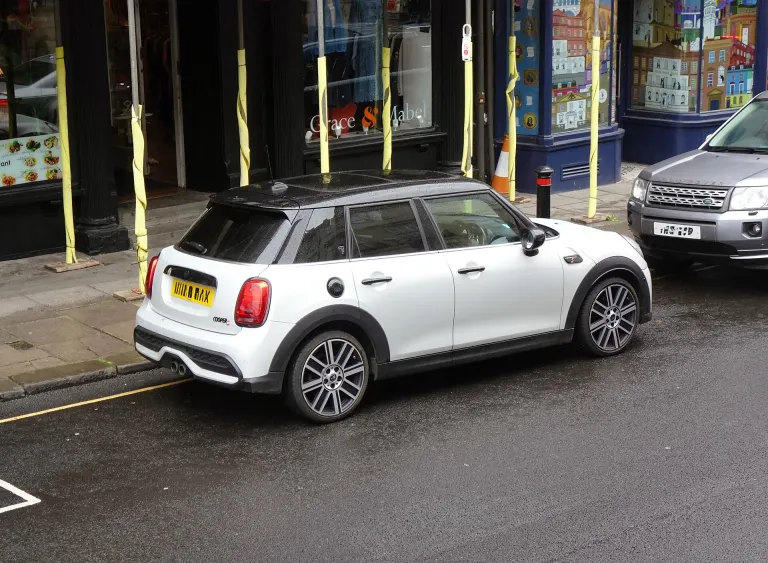
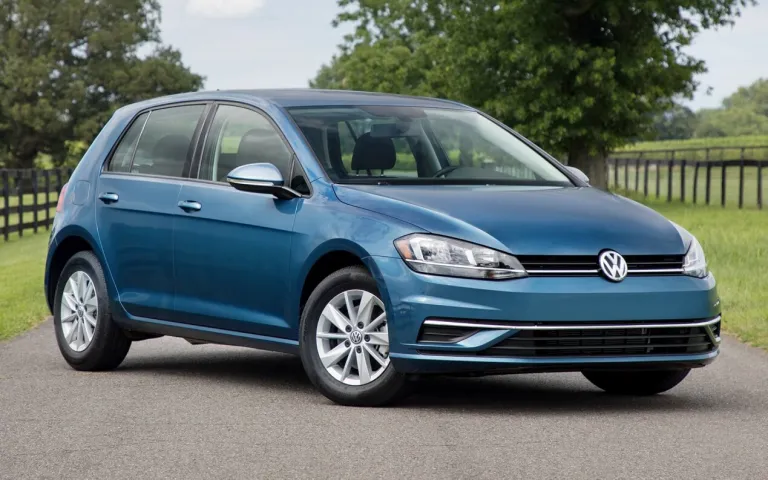
| Mini Cooper S | Volkswagen Golf | |
|---|---|---|
| General | ||
| Version | Cooper S F66 · 2.0 turbo · petrol · 150 kW (204 PS) | Golf Mk8 · GTI 2.0 TSI · petrol · 180 kW (245 PS) |
| Production years | 2024–present | 2019–present |
| Body | Hatchback | Hatchback |
| Country | United Kingdom | Germany |
| Performance | ||
| Power Why it matters: More power means stronger acceleration and easier overtaking, especially with a full load. | 150 kW (204 PS) 201 hp | 180 kW (245 PS) 241 hp Better |
| Power, all versions | 120–225 kW (163–306 PS) 161–302 hp | 37–235 kW (50–320 PS) 50–315 hp |
| Torque Why it matters: Torque is the pulling force you feel when accelerating from low revs, towing or climbing hills. | 300 Nm 221 lb-ft | 370 Nm 273 lb-ft Better |
| 0–100 km/h Why it matters: A shorter 0–100 km/h time means quicker getaways and safer merging onto fast roads. | No data | 6.3 s |
| Top speed Why it matters: Top speed hints at how relaxed the car is at motorway speeds, even if you never reach it. | No data | 250 km/h 155 mph |
| Power per tonne | 106 kW/t 129 hp/ton calculated | No data |
| Engine and transmission | ||
| Fuel | Petrol | Petrol |
| Engine | 4 cyl | 2,000 cc 2.0 l |
| Gearbox | 7-speed dual-clutch | No data |
| Drive | Front-wheel drive | Front-wheel drive |
| Dimensions and weight | ||
| Length | No data | 4,284 mm 168.7 in |
| Width | No data | 1,789 mm 70.4 in |
| Height | No data | 1,456 mm 57.3 in |
| Wheelbase | No data | 2,636 mm 103.8 in |
| Kerb weight Why it matters: A lighter car is usually more agile and uses less energy. | 1,413 kg 3,115 lb | No data |
| Boot Why it matters: A bigger boot fits more luggage, shopping or a pram. | No data | 381 l 13.5 cu ft † |
| Fuel tank Why it matters: A larger tank means more distance between fuel stops. | No data | 45 l 11.9 gal US † |
| Economy and running costs | ||
| Fuel consumption Why it matters: Lower consumption cuts running costs and CO₂ emissions on every trip. | 6.4 l/100 km 36.8 mpg US | No data |
| CO₂ | 144 g/km | No data |
| Fuel cost per year | €1,680/year estimated | No data |
| Safety | ||
| Euro NCAP | No data | ★★★★★ (2025) |
These cars do not differ in the data we have.
Equal rows hidden (3): Body, Fuel, Drive.
Better marks the stronger figure — only for measurable specs (power, torque, 0–100 km/h, consumption, boot, weight).
Estimated at 15,000 km a year with fuel at €1.75/l petrol. † from another version of this generation.
In plain words
Volkswagen Golf has more power: 180 kW (245 PS) against 150 kW (204 PS) for Mini Cooper S. Volkswagen Golf is the older design (from 1974); Mini Cooper S arrived in 2001. Our catalog has no 0–100 km/h for the Mini Cooper S yet, so some checks above leave it out.
Which one to choose
Pick the Golf GTI if the car must carry a family during the week and still entertain at the weekend.
Pick the Cooper S if you drive mostly alone or as a couple, want a small car for town and value its style.
Collectors should look at the GP editions; with 2,000 to 3,000 cars each they are the rarest quick Minis, while an early GTI from 1976 is a classic in its own right.
Frequently asked questions
Which is faster, the Mini Cooper S or the Golf GTI?
The Golf GTI. The Mk8 has 180 kW and reaches 100 km/h in 6.3 seconds; the F66 Cooper S has 150 kW, and the F56 needed 6.8 seconds.
Can I still get a Mini Cooper S with a manual gearbox?
Only on the used market. The F56 was the last generation with a manual; since 2024 the F66 comes only with a seven-speed dual-clutch.
Is the Golf GTI a three-door?
Not any more. The Mk8 Golf is sold only with five doors.
Which came first?
The Cooper S name dates from the 1960s Mini; the Golf GTI appeared in June 1976. BMW's modern Cooper S arrived in 2002.
Which are the strongest versions?
The F56 John Cooper Works GP with 225 kW among Minis; in the Golf range the all-wheel-drive Golf R with 235 kW, or the Mk8 GTI Clubsport with 221 kW among GTIs.