
Ford Focus III vs VW Golf VII: used hatchbacks compared
Updated Report an error By Sarah Whitmore

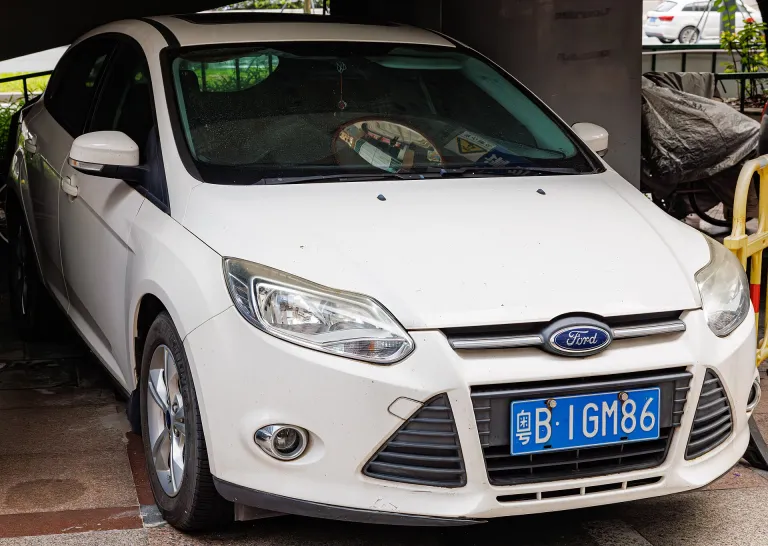
Ford · 2010–2018
Focus C346
- Power
- 92 kW125 PS
- 0–100 km/h
- -
- Top speed
- -
- Kerb mass
- -
Photo: Dinkun Chen / Wikimedia Commons, CC BY-SA 4.0

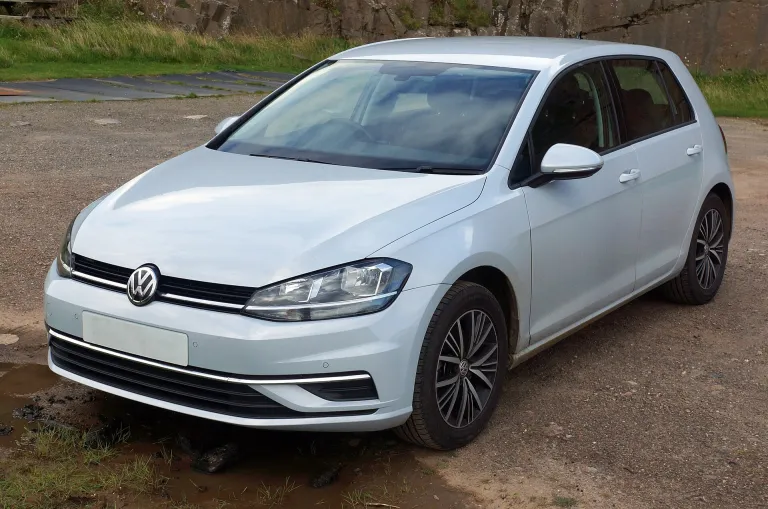
Volkswagen · 2012–2021
Golf Mk7
- Power
- 92 kW125 PS
- 0–100 km/h
- 9.1 s
- Top speed
- 204 km/h
- Kerb mass
- 1,225 kg
At a glance
Who suits what, worked out from the catalog figures of the versions above.
Categories won: Focus C346 1 Golf Mk7 1
- Family Focus C346 Boot: 476 l vs 380 l
- City Golf Mk7 Length: 4,255 mm vs 4,358 mm; Width: 1,791 mm vs 1,823 mm
Verdict Opinion
The Golf VII is the more complete used car. It is newer, it offers a very wide engine choice, including the GTE and the e-Golf, its 2019 Euro NCAP retest confirmed high occupant scores, and its double award in 2013 reflects how well it was received. A seven-speed DSG is available, but it needs the same care as any dual-clutch gearbox.
The Focus III is the sensible choice for a driver who wants a manual car. Its 1.0 EcoBoost and 1.6 Ti-VCT are widely available, the hatchback is slightly longer, and the ST and the all-wheel-drive RS remain strong performance buys. The PowerShift automatic is the main risk, so a manual Focus is the safer pick.
- Sarah Whitmore
The third-generation Ford Focus and the seventh-generation Volkswagen Golf are two of the most common used family hatchbacks in Europe. The Focus was shown at the 2010 North American International Auto Show on Ford's global C-car platform, and European production began in Saarlouis, Germany, in December 2010; it went on sale on 2 March 2011. The Golf VII was presented in Berlin on 4 September 2012, reached European showrooms in November 2012 and was replaced by the Golf VIII in December 2019.
In short: both earned five Euro NCAP stars in 2012 and both offer petrol, diesel, electric and high-performance versions. The Golf is the newer design on the MQB platform, with a plug-in hybrid and an award record; the Focus is the longer hatchback and is best bought with a manual gearbox. Both generations are in our catalogue: Ford Focus III and Volkswagen Golf.
Focus III vs Golf VII: engines, gearboxes, size and safety
Petrol engines
Ford's best-known engine of this generation is the 1.0 EcoBoost three-cylinder with 74 kW (100 PS) or 92 kW (125 PS). Buyers could also pick the naturally aspirated 1.6 Ti-VCT with 63, 77 or 92 kW (85, 105 or 125 PS), the 1.6 EcoBoost with 110 or 134 kW (150 or 182 PS) and, from the 2015 model year, the 1.5 EcoBoost with 110 or 132 kW. Volkswagen's range ran from the 1.2 TSI with 63 or 77 kW (85 or 105 PS) through the 1.4 TSI to the 1.0 TSI with 85 kW (115 PS) and, after the facelift, the 1.5 TSI evo with 110 kW (150 PS).
Diesels
The Focus offered a 1.6 diesel with 70 or 85 kW (95 or 115 PS), later replaced by a 1.5 TDCi, and a 2.0 TDCi of 110 kW (150 PS) or more. The Golf had the 1.6 TDI and 2.0 TDI, plus the sporty GTD.
- Focus III: 1.0 EcoBoost, 1.6 Ti-VCT, 1.5 and 1.6 EcoBoost, 1.5/1.6/2.0 diesels, ST, RS, Focus Electric
- Golf VII: 1.0/1.2/1.4/1.5 TSI, 1.6/2.0 TDI, GTD, GTI, R, GTE plug-in hybrid, e-Golf
- Euro NCAP: five stars for both in 2012
Automatic gearboxes: check carefully
The Focus's six-speed DPS6 PowerShift dual-clutch automatic drew many complaints about shuddering, which Wikipedia links to the dry clutches of petrol models, and led to several lemon-law claims in the United States. Ford's remedy was to replace the clutch pack when shudder exceeded a set level. The Golf offered a seven-speed DSG on many engines, as well as five- and six-speed manuals. Any used dual-clutch car should have a documented service history.
Size
The Focus hatchback is 4,358 mm long on a 2,648 mm wheelbase. The Golf VII hatchback is 4,255–4,280 mm long on a 2,631–2,637 mm wheelbase, so the Ford is the longer car. Volkswagen quotes 380 litres of boot space for the Golf hatchback and 605 litres for the estate. The Golf's kerb weight ranges from 1,205 to 1,500 kg.
Safety
Both cars received five Euro NCAP stars in 2012. The Focus scored 92% for adult occupants, 82% for children and 72% for pedestrians. A Golf 1.2 TSI was tested again in 2019, scoring 94% for adults, 89% for children and 65% for pedestrians.
Updates and fast versions
The Focus was facelifted at the 2014 Geneva show, with a new front end and an 8-inch touchscreen. The Golf facelift, revealed in November 2016, brought the 1.5 TSI, larger screens, an optional digital instrument panel and LED rear lights. At the top, the Focus ST has about 184 kW (250 PS) and the Focus RS of 2016 has 261 kW (350 hp) and all-wheel drive. The Golf GTI has 162 or 169 kW (220 or 230 PS) and the Golf R 221 or 228 kW (300 or 310 PS) with 4MOTION. The Golf VII was European Car of the Year and World Car of the Year in 2013.
Size and weight
Side view to scale, all cars from the front bumper.
| Focus C346 | Golf Mk7 | |
|---|---|---|
| Length | 4,358 mm171.6 in † | 4,255 mm167.5 in † −103 mm −4.1 in −2.4% |
| Width | 1,823 mm71.8 in † | 1,791 mm70.5 in † −32 mm −1.3 in −1.8% |
| Height | 1,484 mm58.4 in † | 1,435 mm56.5 in † −49 mm −1.9 in −3.3% |
| Wheelbase | 2,648 mm104.3 in † | 2,631 mm103.6 in † −17 mm −0.7 in −0.6% |
| Boot | 476 l16.8 cu ft | 380 l13.4 cu ft −96 l −3.4 cu ft −20.2% |
| Fits a standard garage? | Yes | Yes |
Difference vs Focus C346 (±). Garage check: a standard single garage takes a car up to about 5.0 m (16 ft 5 in) long and 1.9 m (6 ft 3 in) wide (width as listed in the catalog; some makers include the mirrors). Leave about 0.6 m (2 ft) to open the doors. † from another version of this generation.
Full specifications
| Ford Focus C346 | Volkswagen Golf Mk7 | |
|---|---|---|
| General | ||
| Version | 1.6 · 92 kW (125 PS) | 1.4 TSI · petrol · 92 kW (125 PS) |
| Production years | 2010–2018 | 2012–2021 |
| Body | Sedan, Hatchback | Hatchback |
| Country | United States | Germany |
| Performance | ||
| Power Why it matters: More power means stronger acceleration and easier overtaking, especially with a full load. | 92 kW (125 PS) 123 hp | 92 kW (125 PS) 123 hp |
| Power, all versions | 63–257 kW (86–349 PS) 84–345 hp | 63–228 kW (86–310 PS) 84–306 hp |
| Torque Why it matters: Torque is the pulling force you feel when accelerating from low revs, towing or climbing hills. | No data | 200 Nm 148 lb-ft |
| 0–100 km/h Why it matters: A shorter 0–100 km/h time means quicker getaways and safer merging onto fast roads. | No data | 9.1 s |
| Top speed Why it matters: Top speed hints at how relaxed the car is at motorway speeds, even if you never reach it. | No data | 204 km/h 127 mph |
| Power per tonne | No data | 75 kW/t 91 hp/ton calculated |
| Engine and transmission | ||
| Fuel | No data | Petrol |
| Engine | 1,600 cc · 3 cyl 1.6 l | 1,390 cc 1.4 l |
| Gearbox | 5-speed manual | No data |
| Drive | Front-wheel drive | Front-wheel drive |
| Dimensions and weight | ||
| Length | 4,358 mm 171.6 in † | 4,255 mm 167.5 in † |
| Width | 1,823 mm 71.8 in † | 1,791 mm 70.5 in † |
| Height | 1,484 mm 58.4 in † | 1,435 mm 56.5 in † |
| Wheelbase | 2,648 mm 104.3 in † | 2,631 mm 103.6 in † |
| Kerb weight Why it matters: A lighter car is usually more agile and uses less energy. | No data | 1,225 kg 2,701 lb |
| Boot Why it matters: A bigger boot fits more luggage, shopping or a pram. | 476 l 16.8 cu ft Better | 380 l 13.4 cu ft |
| Fuel tank Why it matters: A larger tank means more distance between fuel stops. | No data | 50 l 13.2 gal US |
| Economy and running costs | ||
| Fuel consumption Why it matters: Lower consumption cuts running costs and CO₂ emissions on every trip. | No data | 5.2 l/100 km 45.2 mpg US |
| CO₂ | No data | 120 g/km |
| Fuel cost per year | No data | €1,370/year estimated |
| Range on a full tank | No data | 962 km 598 mi estimated |
| Safety | ||
| Euro NCAP | ★★★★★ (2012) | ★★★★★ (2012) |
These cars do not differ in the data we have.
Equal rows hidden (3): Power, Drive, Euro NCAP.
Better marks the stronger figure - only for measurable specs (power, torque, 0–100 km/h, consumption, boot, weight).
Estimated at 15,000 km a year with fuel at €1.75/l petrol. † from another version of this generation.
In plain words
Ford Focus C346 is 103 mm longer than Volkswagen Golf Mk7 (4,358 mm vs 4,255 mm). Ford Focus C346 has the bigger boot: 476 l against 380 l. Ford Focus C346 is the older design (from 2010); Volkswagen Golf Mk7 arrived in 2012. On the catalog figures, the Ford Focus C346 is the pick for family; the Volkswagen Golf Mk7 is the pick for city. Our catalog has no 0–100 km/h for the Ford Focus C346 yet, so some checks above leave it out.
Which one to choose
Choose the Ford Focus III if you want a manual hatchback, a 1.0 EcoBoost or 1.6 petrol for mixed driving, or the RS with all-wheel drive as a performance car.
Choose the Volkswagen Golf VII if you prefer the newer MQB car, need a plug-in hybrid or electric option, or want a GTI or R, and can find a well-kept example with a full service history.
The current generations meet in Ford Focus vs Volkswagen Golf, and an earlier rivalry in Ford Escort vs Volkswagen Golf.
Frequently asked questions
Which is more reliable, a used Focus III or Golf VII?
No official reliability ranking is used here. The best-documented weak point is the Focus's PowerShift dual-clutch automatic, which drew many shudder complaints. Manual versions of both cars avoid the main gearbox risk.
Which is bigger?
The Focus hatchback is 4,358 mm long on a 2,648 mm wheelbase; the Golf VII hatchback is 4,255–4,280 mm long on 2,631–2,637 mm. The Golf has a 380-litre boot.
Are both cars safe?
Yes. Both earned five Euro NCAP stars in 2012. The Focus scored 92% for adult occupants; a Golf 1.2 TSI tested in 2019 scored 94%.
Is there an electric version?
Both had one. The Focus Electric used a 23 kWh battery, later 33.5 kWh. The e-Golf started with 24.2 kWh and was upgraded to 35.8 kWh. The Golf also came as the GTE plug-in hybrid.
What are the fastest versions?
The Focus RS with 261 kW (350 hp) and all-wheel drive, and the Golf R with 221 kW (300 PS), later 228 kW (310 PS), and 4MOTION all-wheel drive.