
Škoda Octavia vs VW Golf: one platform, two sizes
Updated Report an error By Sarah Whitmore
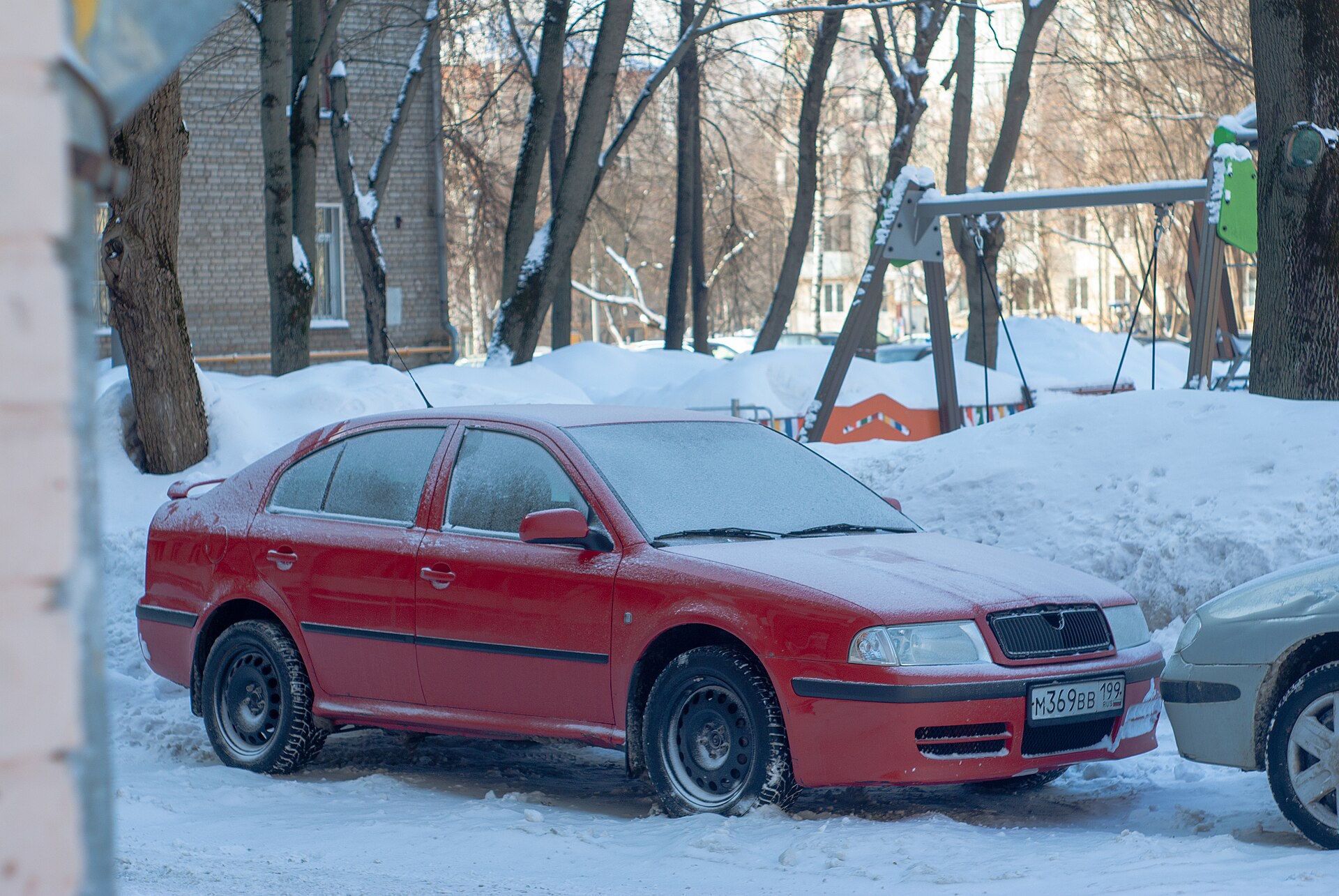
Skoda · 2019–present
Octavia Mk4
- Power
- 110 kW150 PS
- 0–100 km/h
- 8.2 s
- Top speed
- 230 km/h
- Kerb mass
- 1,338 kg

Volkswagen · 2019–present
Golf Mk8
- Power
- 110 kW150 PS
- 0–100 km/h
- 8.5 s
- Top speed
- 224 km/h
- Kerb mass
- 1,331 kg
At a glance
Who suits what, worked out from the catalog figures of the versions above.
Categories won: Octavia Mk4 2 Golf Mk8 3
- Family Octavia Mk4 Boot: 600 l vs 381 l
- City Golf Mk8 Length: 4,284 mm vs 4,689 mm; Width: 1,789 mm vs 1,829 mm
- Long trips Golf Mk8 Range: 909 km vs 804 km (estimated)
- Performance Octavia Mk4 0–100 km/h: 8.2 s vs 8.5 s
- Running costs Too close to call Fuel per year: €1,470 vs €1,440 (estimated)
- Off-road Golf Mk8 Drive and body: Front-wheel drive · Hatchback vs Front-wheel drive · Liftback
Verdict Opinion
The two share engines, electronics and much of their structure, so the decision comes down to body size, image and price. The Octavia is the obvious choice for families and high-mileage drivers: it is longer and has the bigger boot. British prices for the facelifted Octavia ran from £27,115 to £38,550 in late October 2024 (about €32,000–45,500).
The Golf is the more compact car, easier to park in town, and offers the plug-in hybrid with the longer electric range and the all-wheel-drive Golf R. Both are proven designs: Škoda had built almost 7.9 million Octavias by August 2026, and Volkswagen has sold over 37 million Golfs since 1974.
— Sarah Whitmore
The Škoda Octavia has been a member of the Volkswagen family from its first day. Škoda began developing it in 1992, one year after joining the group, and series production of the modern Octavia began on 3 September 1996. Every generation since then has used Volkswagen components; the second Octavia of 2004 even shared its PQ35 platform with the fifth Volkswagen Golf.
The current pair arrived within weeks of each other. Volkswagen revealed the eighth Golf in Wolfsburg on 24 October 2019, and Škoda presented the fourth Octavia in Prague on 11 November 2019, with deliveries from June 2020. Both were updated in 2024. The question is simple: does the larger Škoda give more for the money, or does the Golf justify its badge?
Škoda Octavia vs VW Golf: size, engines and safety
Body and size
The Golf is a five-door hatchback 4,284 mm long, with a Variant estate of 4,633 mm; both use a 2,636 mm wheelbase. The Octavia is a size larger and comes as a liftback or Combi estate. Wikipedia describes the Chinese Octavia Pro as 64 mm longer than the European car, with a 44 mm longer wheelbase. From those figures the European liftback measures about 4,689 mm on 2,686 mm. By our calculation that is about 405 mm more than the Golf hatchback, and 50 mm more between the axles.
Boot space: the Škoda's strong point
Space has been the Octavia's argument for a long time. Already the third generation carried 590 litres as a liftback and 610 litres as a Combi; Wikipedia notes that the liftback beat the 565 litres of the bigger Passat saloon. Our own Golf guide lists the modest boot compared with the Octavia among the Volkswagen's weaknesses.
Shared 1.5 TSI and the plug-in hybrids
The core petrol engine is the same 1.5 TSI with 110 kW (150 PS) in both. The Golf adds 48-volt eTSI versions with 96 and 110 kW, and the Octavia offered mild hybrids with 81 and 110 kW. After the 2024 updates the Golf eHybrid uses a 19.7 kWh battery for an electric range of up to about 132 km. The Octavia plug-ins of the 2019 car had 13 kWh and up to 55–60 km.
Sporting versions
The Golf GTI rose to 195 kW (265 PS) with the Mk8.5, exactly the output of the facelifted Octavia RS 2.0 TSI. The top Volkswagen is the all-wheel-drive Golf R, which had 235 kW (320 PS) before the update and 333 PS after it.
Euro NCAP 2019 and 2025
In the 2019 tests the Golf scored 95 percent for adult occupants and the Octavia 92 percent. The facelifted Octavia Combi was retested in 2025 under newer rules and received 85 percent for adults.
Race Stats side by side
Each figure is a 0–100 score from the catalog numbers, the same as on the 1CARS Race cards. PI is the overall performance index (100–999) and its class D–S.
| Stat | Octavia Mk4 | Golf Mk8 |
|---|---|---|
| PI | B · 533 | B · 532 |
| Power | 44 | 44 |
| Grip | 39 | 40 |
| Handling | 70 | 71 |
| Top speed | 50 | 48 |
| Launch | 41 | 40 |
Grip and handling are estimates from drive type, weight, height and body (hover a figure to see where it comes from). 1CARS Race
Who wins a race?
Quarter-mile (402 m) drag from a standing start, dry road, no reaction time — the 1CARS Race physics on the catalog figures of these versions.
- 1 Octavia Mk4Octavia Mk4 · 1.5 TSI (150 PS) · petrol · 110 kW (150 PS) 15.94 sat 141 km/h
- 2 Golf Mk8Golf Mk8 · 1.5 TSI · petrol · 110 kW (150 PS) 16.12 sat 137 km/h · +0.18 s
Size and weight
Side view to scale, all cars from the front bumper.
| Octavia Mk4 | Golf Mk8 | |
|---|---|---|
| Length | 4,689 mm184.6 in † | 4,284 mm168.7 in −405 mm −15.9 in −8.6% |
| Width | 1,829 mm72.0 in † | 1,789 mm70.4 in −40 mm −1.6 in −2.2% |
| Height | 1,470 mm57.9 in † | 1,456 mm57.3 in −14 mm −0.6 in −1.0% |
| Wheelbase | 2,686 mm105.7 in † | 2,636 mm103.8 in −50 mm −2.0 in −1.9% |
| Kerb weight | 1,338 kg2,950 lb | 1,331 kg2,934 lb −7 kg −15 lb −0.5% |
| Boot | 600 l21.2 cu ft | 381 l13.5 cu ft −219 l −7.7 cu ft −36.5% |
| Fuel tank | 45 l11.9 gal US | 50 l13.2 gal US +5 l +1.3 gal US +11.1% |
| Fits a standard garage? | Yes | Yes |
Difference vs Octavia Mk4 (±). Garage check: a standard single garage takes a car up to about 5.0 m (16 ft 5 in) long and 1.9 m (6 ft 3 in) wide (width as listed in the catalog; some makers include the mirrors). Leave about 0.6 m (2 ft) to open the doors. † from another version of this generation.
Full specifications
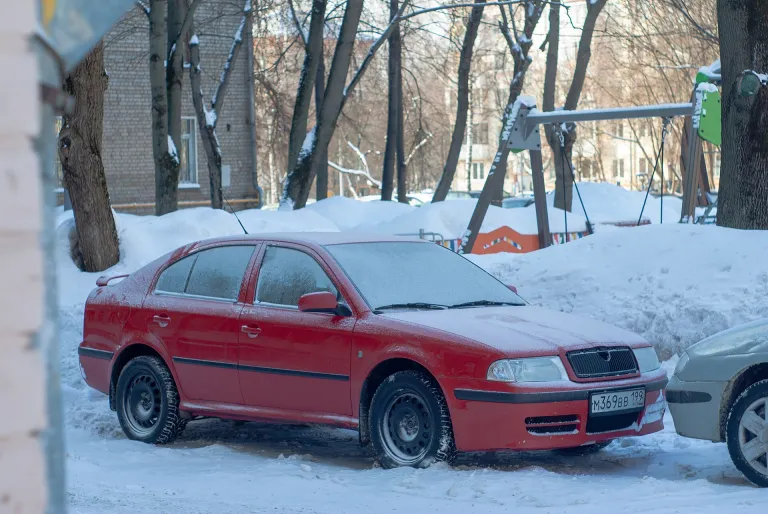
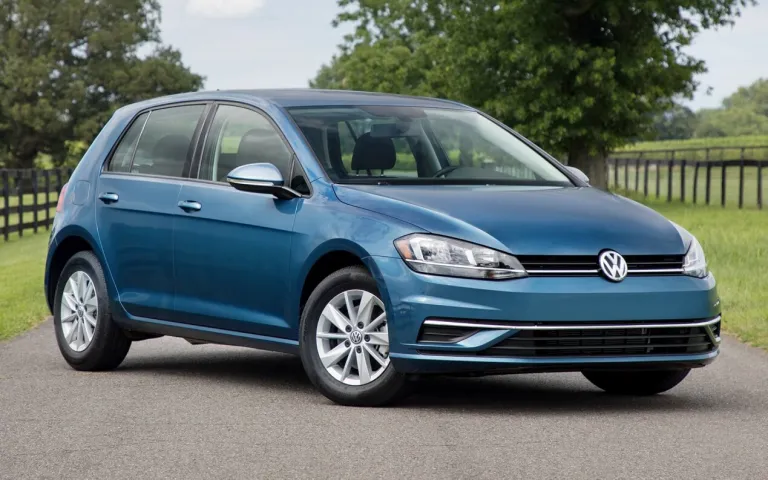
| Skoda Octavia | Volkswagen Golf | |
|---|---|---|
| General | ||
| Version | Octavia Mk4 · 1.5 TSI (150 PS) · petrol · 110 kW (150 PS) | Golf Mk8 · 1.5 TSI · petrol · 110 kW (150 PS) |
| Production years | 2019–present | 2019–present |
| Body | Liftback | Hatchback |
| Country | Czech Republic | Germany |
| Performance | ||
| Power Why it matters: More power means stronger acceleration and easier overtaking, especially with a full load. | 110 kW (150 PS) 148 hp | 110 kW (150 PS) 148 hp |
| Power, all versions | 44–195 kW (60–265 PS) 59–261 hp | 37–235 kW (50–320 PS) 50–315 hp |
| Torque Why it matters: Torque is the pulling force you feel when accelerating from low revs, towing or climbing hills. | 250 Nm 184 lb-ft | 250 Nm 184 lb-ft |
| 0–100 km/h Why it matters: A shorter 0–100 km/h time means quicker getaways and safer merging onto fast roads. | 8.2 s Better | 8.5 s |
| Top speed Why it matters: Top speed hints at how relaxed the car is at motorway speeds, even if you never reach it. | 230 km/h 143 mph Better | 224 km/h 139 mph |
| Power per tonne | 82 kW/t 100 hp/ton calculated | 83 kW/t 100 hp/ton calculated |
| Engine and transmission | ||
| Fuel | Petrol | Petrol |
| Engine | 1,500 cc · 4 cyl 1.5 l | 1,500 cc 1.5 l |
| Drive | Front-wheel drive | Front-wheel drive |
| Dimensions and weight | ||
| Length | 4,689 mm 184.6 in † | 4,284 mm 168.7 in |
| Width | 1,829 mm 72.0 in † | 1,789 mm 70.4 in |
| Height | 1,470 mm 57.9 in † | 1,456 mm 57.3 in |
| Wheelbase | 2,686 mm 105.7 in † | 2,636 mm 103.8 in |
| Kerb weight Why it matters: A lighter car is usually more agile and uses less energy. | 1,338 kg 2,950 lb | 1,331 kg 2,934 lb |
| Boot Why it matters: A bigger boot fits more luggage, shopping or a pram. | 600 l 21.2 cu ft Better | 381 l 13.5 cu ft |
| Fuel tank Why it matters: A larger tank means more distance between fuel stops. | 45 l 11.9 gal US | 50 l 13.2 gal US Better |
| Economy and running costs | ||
| Fuel consumption Why it matters: Lower consumption cuts running costs and CO₂ emissions on every trip. | 5.6 l/100 km 42.0 mpg US | 5.5 l/100 km 42.8 mpg US |
| CO₂ | 127 g/km | 125 g/km |
| Fuel cost per year | €1,470/year estimated | €1,440/year estimated |
| Range on a full tank | 804 km 500 mi estimated | 909 km 565 mi estimated Better |
| Safety | ||
| Euro NCAP | ★★★★★ (2025) | ★★★★★ (2025) |
These cars do not differ in the data we have.
Equal rows hidden (6): Production years, Power, Torque, Fuel, Drive, Euro NCAP.
Better marks the stronger figure — only for measurable specs (power, torque, 0–100 km/h, consumption, boot, weight).
Estimated at 15,000 km a year with fuel at €1.75/l petrol. † from another version of this generation.
In plain words
Skoda Octavia is quicker: 0–100 km/h in 8.2 s against 8.5 s for Volkswagen Golf. Skoda Octavia is 405 mm longer than Volkswagen Golf (4,689 mm vs 4,284 mm). Volkswagen Golf is lighter by 7 kg (1,331 kg vs 1,338 kg). Skoda Octavia has the bigger boot: 600 l against 381 l. At 15,000 km a year, fuel would cost about €1,470 (Skoda Octavia), €1,440 (Volkswagen Golf) (estimated). Volkswagen Golf is the older design (from 1974); Skoda Octavia arrived in 1996. On the catalog figures, the Skoda Octavia is the pick for family and performance; the Volkswagen Golf is the pick for city, long trips and off-road.
Which one to choose
Choose the Škoda Octavia if you need space for a family or luggage, want an estate at a sensible price, or are considering the 195 kW RS as a fast family car. Earlier versions are covered in our Octavia RS and Octavia Scout articles.
Choose the Volkswagen Golf if you want a shorter car for town, the eHybrid, which can cover over 100 km on electricity, or the GTI and R as classic performance hatchbacks.
Frequently asked questions
Are the Škoda Octavia and VW Golf the same car?
They are related. Both use Volkswagen Group MQB components and the same engines, such as the 110 kW 1.5 TSI, but the Octavia has a longer body and wheelbase.
Which is bigger?
The Octavia. By our calculation from Wikipedia figures, the European liftback is about 4,689 mm long, roughly 405 mm more than the 4,284 mm Golf hatchback.
Which did better in the Euro NCAP crash test?
The Volkswagen, narrowly: its adult-occupant score was three points higher than the Škoda's in the same 2019 test series.
Is the Octavia RS as fast as the Golf GTI?
On paper, yes: since the 2024 updates the RS and the GTI share a 195 kW (265 PS) rating.