
BMW X5 vs Porsche Cayenne: sporting luxury SUVs
Updated Report an error By Felix Hartmann
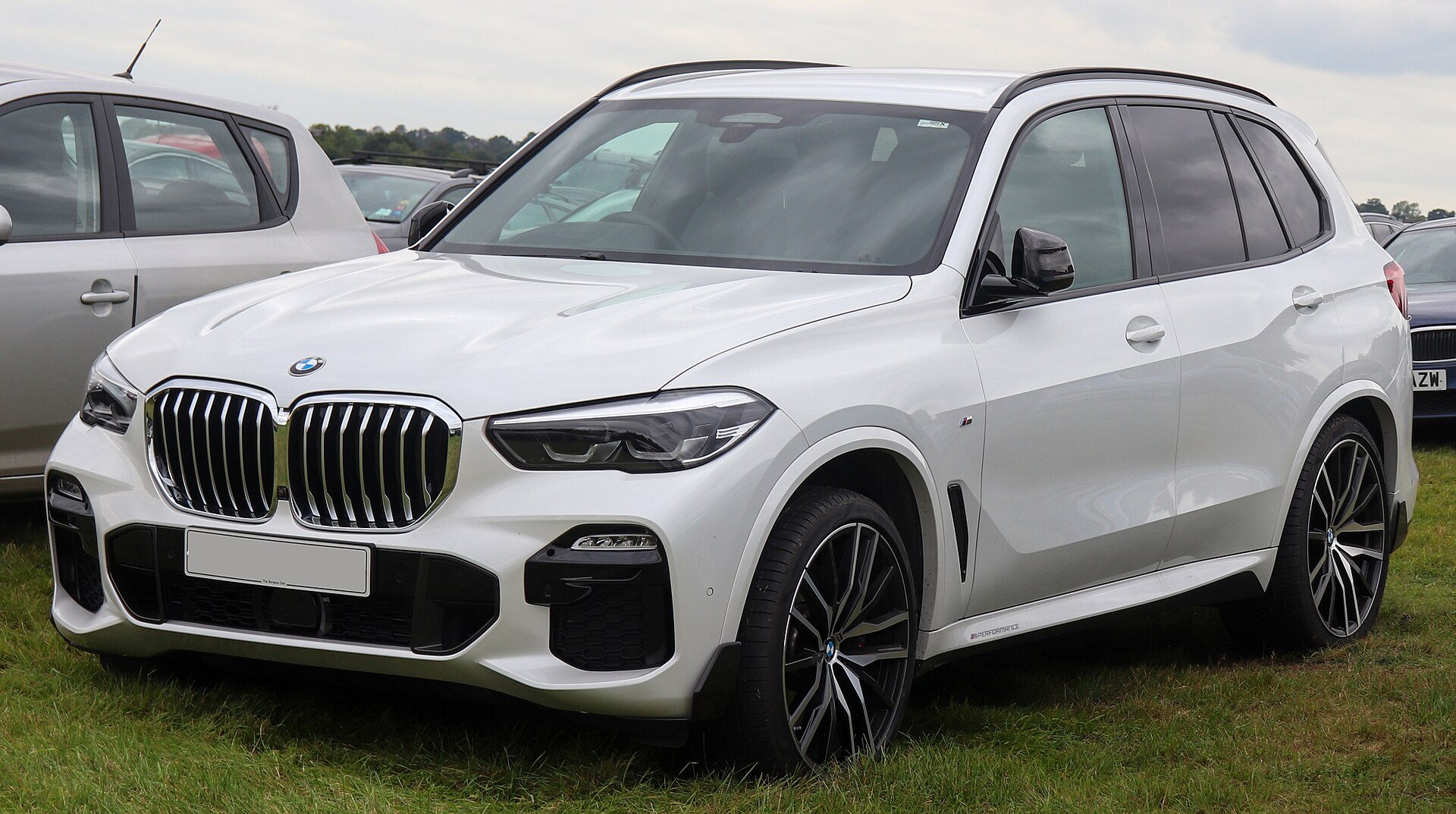
BMW · 2018–2026
X5 G05
- Power
- 280 kW381 PS
- 0–100 km/h
- 5.4 s
- Kerb mass
- 2,267 kg
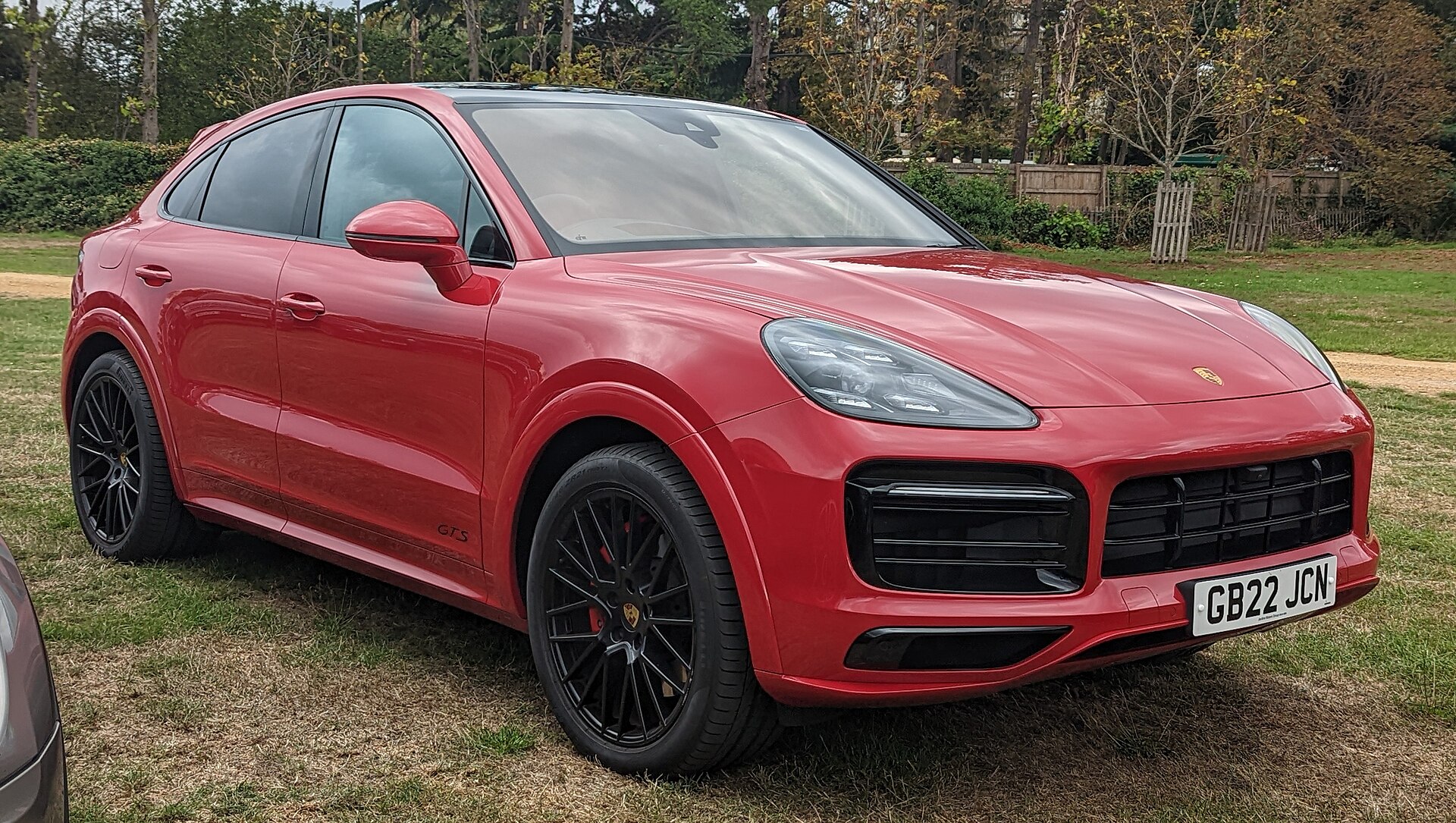
Porsche · 2018–present
Cayenne (9Y0)
- Power
- 260 kW354 PS
- 0–100 km/h
- 6.0 s
- Kerb mass
- 2,151 kg
At a glance
Who suits what, worked out from the catalog figures of the versions above.
Categories won: X5 G05 1 Cayenne (9Y0) 0
- City Too close to call Length: 4,935 mm vs 4,918 mm
- Performance X5 G05 0–100 km/h: 5.4 s vs 6.0 s
- Off-road Too close to call Drive and body: All-wheel drive · SUV vs All-wheel drive · SUV
Verdict Opinion
The X5 is the broader and more practical car. It offers diesels, a plug-in hybrid with 360 kW, seven seats and, in the new G65, an electric version within the same model. For a family that covers long distances it is the more logical choice.
The Cayenne is the more focused machine. Porsche's range goes higher, to 544 kW in the Turbo E-Hybrid, and the Turbo GT shows what the chassis can do on a circuit. Porsche delivered 102,889 Cayennes in 2024, 18 percent more than in 2023, so demand for that formula is strong.
— Felix Hartmann
The BMW X5 arrived in 1999 as BMW's first SUV, built at Spartanburg in South Carolina and using engines from the E39 5 Series. Porsche followed in August 2002 with the Cayenne, a car whose bodies were built and painted in Bratislava and finished in Leipzig. Both are now in their fourth or fifth generation.
The pair compared below is the G05 X5 (2018–2026) against the third-generation Cayenne (9Y0), revealed on 29 August 2017 and facelifted in April 2023. Both brands have already moved on: BMW's fifth X5 (G65) of 2026 includes a battery-electric iX5, and an electric Cayenne was shown in November 2025. More about the Porsche line is in our Cayenne GTS article.
BMW X5 vs Porsche Cayenne: G05 and 9Y0 compared
CLAR against MLB
The X5 uses BMW's CLAR platform. The Cayenne shares the MLB architecture with the Volkswagen Touareg, the Audi Q7, the Bentley Bentayga and the Lamborghini Urus, and it weighs roughly 65 kg less than its predecessor.
Six-cylinder petrol engines
The facelifted X5 xDrive40i has a straight-six with 280 kW and 520 Nm. The base Cayenne of the 2023 update uses a 3.0 V6 with 260 kW (353 PS) and reaches 100 km/h in 6.0 seconds; the BMW has 20 kW more. Above them, the Cayenne S returned to a 4.0 V8 with 349 kW (475 PS), while BMW offers the M50i with 390 kW in the X5.
Diesel and plug-in hybrids
Only BMW offers diesels in the current generations: the G05 was sold as the xDrive30d and the M50d. Porsche sold Cayenne diesels in the first two generations, but the 9Y0 has none. Both offer plug-in hybrids. BMW's xDrive50e produces 360 kW (490 PS) and is rated at roughly 64 km on electricity in the US test. Porsche gave the facelifted Cayenne E-Hybrid a 26 kWh battery and a WLTP electric range of as much as 90 km. Because the American and European cycles differ, the two numbers cannot be compared directly.
X5 M and Cayenne Turbo models
At the top of the BMW range sits the 460 kW X5 M Competition. Porsche goes further: its Turbo E-Hybrid has 544 kW, and the Turbo GT lapped the Nürburgring Nordschleife in 7:38.925 in June 2021.
Size, boot and seats
The G05 X5 is 4,935 mm long on a 2,975 mm wheelbase, and its boot holds 645 litres with five seats. A third seat row has been offered since 2019, which the Cayenne does not provide. Porsche also builds a Cayenne Coupé, whose roofline sits 20 mm lower.
X5 launch prices in Germany
In June 2018 the X5 started in Germany at €69,200 for the xDrive30d and €70,700 for the xDrive40i. The M50d cost €92,900.
Race Stats side by side
Each figure is a 0–100 score from the catalog numbers, the same as on the 1CARS Race cards. PI is the overall performance index (100–999) and its class D–S.
| Stat | X5 G05 | Cayenne (9Y0) |
|---|---|---|
| PI | B · 565 | B · 559 |
| Power | 57 | 56 |
| Grip | 47 | 49 |
| Handling | 35 | 40 |
| Top speed | 54 | 50 |
| Launch | 62 | 56 |
Grip and handling are estimates from drive type, weight, height and body (hover a figure to see where it comes from). 1CARS Race
Who wins a race?
Quarter-mile (402 m) drag from a standing start, dry road, no reaction time — the 1CARS Race physics on the catalog figures of these versions.
- 1 X5 G05X5 G05 · xDrive40i · petrol · 280 kW (381 PS) 13.78 sat 158 km/h
- 2 Cayenne (9Y0)Cayenne (9Y0) · 3.0 V6 · petrol · 260 kW (354 PS) 14.40 sat 152 km/h · +0.62 s
Size and weight
Side view to scale, all cars from the front bumper.
| X5 G05 | Cayenne (9Y0) | |
|---|---|---|
| Length | 4,935 mm194.3 in | 4,918 mm193.6 in † −17 mm −0.7 in −0.3% |
| Width | 2,004 mm78.9 in | 1,983 mm78.1 in † −21 mm −0.8 in −1.0% |
| Height | 1,765 mm69.5 in | 1,696 mm66.8 in † −69 mm −2.7 in −3.9% |
| Wheelbase | 2,975 mm117.1 in | 2,895 mm114.0 in † −80 mm −3.1 in −2.7% |
| Kerb weight | 2,267 kg4,998 lb | 2,151 kg4,742 lb −116 kg −256 lb −5.1% |
| Fits a standard garage? | Too wide | Too wide |
Difference vs X5 G05 (±). Garage check: a standard single garage takes a car up to about 5.0 m (16 ft 5 in) long and 1.9 m (6 ft 3 in) wide (width as listed in the catalog; some makers include the mirrors). Leave about 0.6 m (2 ft) to open the doors. † from another version of this generation.
Full specifications
| BMW X5 | Porsche Cayenne | |
|---|---|---|
| General | ||
| Version | X5 G05 · xDrive40i · petrol · 280 kW (381 PS) | Cayenne (9Y0) · 3.0 V6 · petrol · 260 kW (354 PS) |
| Production years | 2018–2026 | 2018–present |
| Body | SUV | SUV |
| Country | Germany | Germany |
| Performance | ||
| Power Why it matters: More power means stronger acceleration and easier overtaking, especially with a full load. | 280 kW (381 PS) 375 hp Better | 260 kW (354 PS) 349 hp |
| Power, all versions | 135–460 kW (184–625 PS) 181–617 hp | 177–544 kW (241–740 PS) 237–730 hp |
| Torque Why it matters: Torque is the pulling force you feel when accelerating from low revs, towing or climbing hills. | 520 Nm 384 lb-ft Better | 500 Nm 369 lb-ft |
| 0–100 km/h Why it matters: A shorter 0–100 km/h time means quicker getaways and safer merging onto fast roads. | 5.4 s Better | 6.0 s |
| Power per tonne | 124 kW/t 150 hp/ton calculated | 121 kW/t 147 hp/ton calculated |
| Engine and transmission | ||
| Fuel | Petrol | Petrol |
| Engine | 3,000 cc · 6 cyl 3.0 l | 2,995 cc · 6 cyl 3.0 l |
| Gearbox | automatic | 8-speed automatic |
| Drive | All-wheel drive | All-wheel drive |
| Dimensions and weight | ||
| Length | 4,935 mm 194.3 in | 4,918 mm 193.6 in † |
| Width | 2,004 mm 78.9 in | 1,983 mm 78.1 in † |
| Height | 1,765 mm 69.5 in | 1,696 mm 66.8 in † |
| Wheelbase | 2,975 mm 117.1 in | 2,895 mm 114.0 in † |
| Kerb weight Why it matters: A lighter car is usually more agile and uses less energy. | 2,267 kg 4,998 lb | 2,151 kg 4,742 lb Better |
| Boot Why it matters: A bigger boot fits more luggage, shopping or a pram. | No data | 770 l 27.2 cu ft † |
| Economy and running costs | ||
| Fuel consumption Why it matters: Lower consumption cuts running costs and CO₂ emissions on every trip. | No data | 11.0 l/100 km 21.4 mpg US |
| CO₂ | 333 g/km | 249 g/km Better |
| Fuel cost per year | No data | €2,890/year estimated |
| Safety | ||
| Euro NCAP | ★★★★★ (2018) | ★★★★★ (2017) |
These cars do not differ in the data we have.
Equal rows hidden (4): Body, Country, Fuel, Drive.
Better marks the stronger figure — only for measurable specs (power, torque, 0–100 km/h, consumption, boot, weight).
Estimated at 15,000 km a year with fuel at €1.75/l petrol. † from another version of this generation.
In plain words
BMW X5 is quicker: 0–100 km/h in 5.4 s against 6.0 s for Porsche Cayenne. BMW X5 is 17 mm longer than Porsche Cayenne (4,935 mm vs 4,918 mm). Porsche Cayenne is lighter by 116 kg (2,151 kg vs 2,267 kg). BMW X5 is the older design (from 1999); Porsche Cayenne arrived in 2002. On the catalog figures, the BMW X5 is the pick for performance.
Which one to choose
Choose the BMW X5 if you need seven seats, want a diesel for high mileage, or prefer the choice of petrol, diesel and plug-in drives.
Choose the Porsche Cayenne if driving dynamics matter most, you want a V8 or the most powerful hybrid in this pair, or you like the lower Coupé body.
For smaller alternatives from the same brands, look at the BMW X3 and the Porsche Macan.
Frequently asked questions
Which is more practical, the X5 or the Cayenne?
The X5 is the more practical of the two: the G05 is 4,935 mm long, has a 645-litre boot and can be ordered with a third seat row, which the Cayenne cannot.
Is there a diesel Cayenne?
Not in the current 9Y0 generation. Porsche offered V6 and V8 diesels in the first two generations; BMW still sells diesel X5s.
Which plug-in version drives further on electricity?
Porsche quotes as much as 90 km (WLTP) for the facelifted Cayenne E-Hybrid. The X5 xDrive50e is rated at about 64 km under the American cycle, so the figures are not directly comparable.
Are electric versions available?
Yes, as new models. Porsche unveiled the electric Cayenne in November 2025, and BMW's G65 range includes the iX5 60 xDrive with 425 kW from 2027.