
Range Rover Sport vs Porsche Cayenne: luxury SUV duel
Updated Report an error By Felix Hartmann
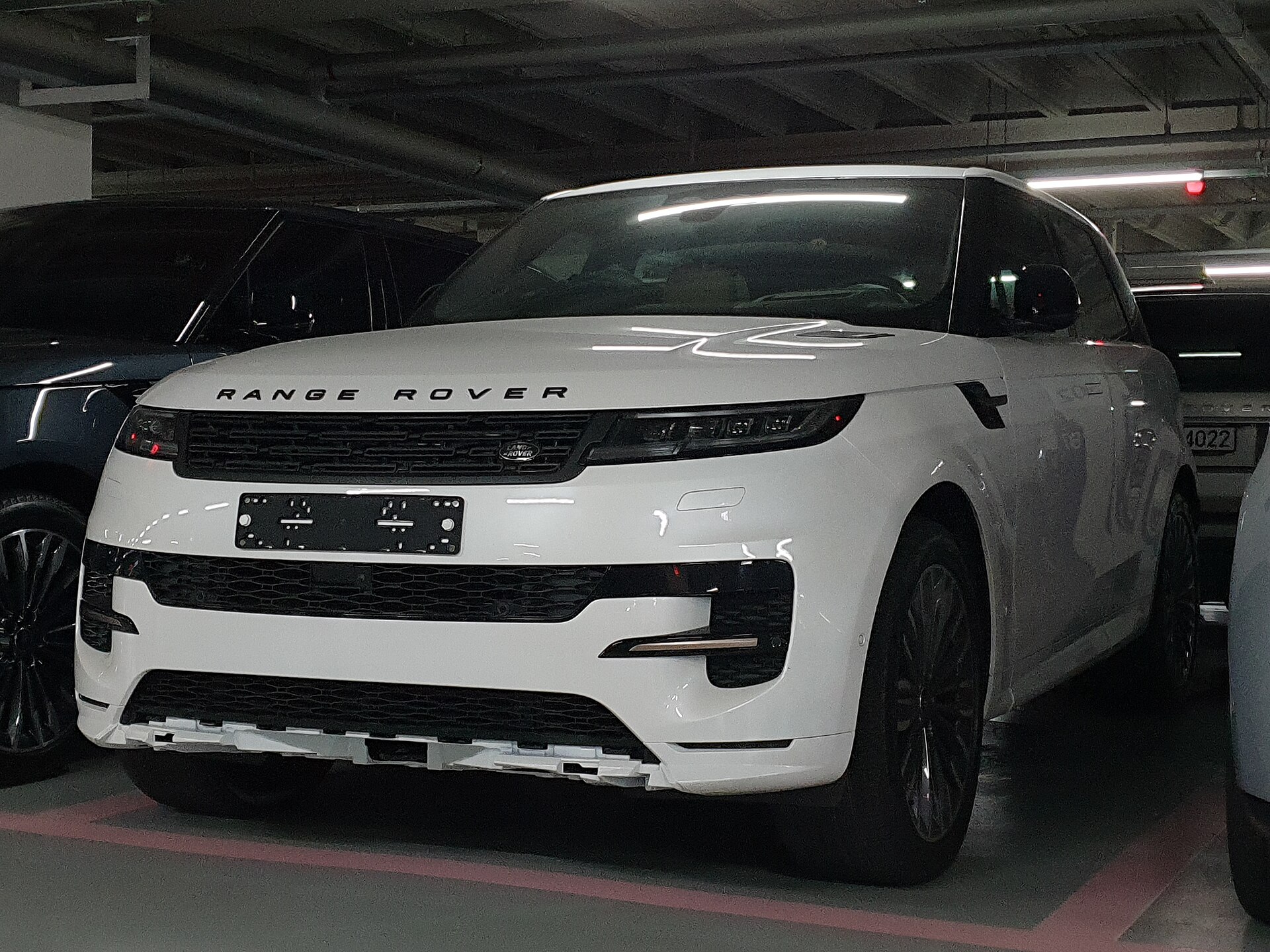
Land Rover · 2022–present
Range Rover Sport L461
- Power
- 324 kW441 PS
- 0–100 km/h
- -
- Top speed
- 225 km/h
- Kerb mass
- -
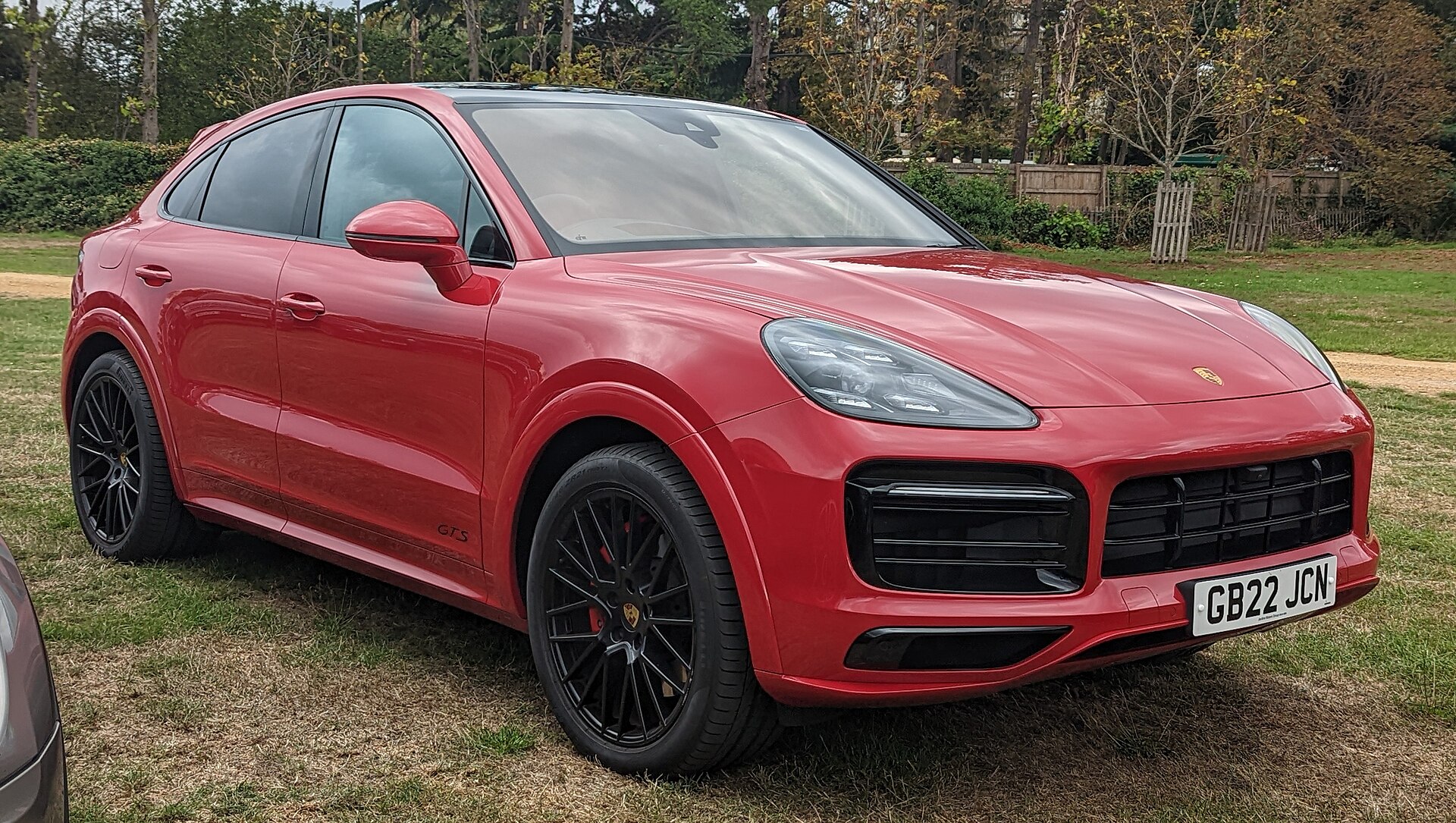
Porsche · 2018–present
Cayenne (9Y0)
- Power
- 340 kW462 PS
- 0–100 km/h
- 5.0 s
- Top speed
- -
- Kerb mass
- 2,370 kg
At a glance
Who suits what, worked out from the catalog figures of the versions above.
Categories won: Range Rover Sport L461 0 Cayenne (9Y0) 1
- City Cayenne (9Y0) Width: 1,983 mm vs 2,047 mm
- Off-road Too close to call Drive and body: Four-wheel drive (4×4) · SUV vs All-wheel drive · SUV
Verdict Opinion
The Cayenne is the driver's car. Its chassis, the range of V8 and hybrid outputs and the Turbo GT's lap time show where Porsche puts its effort, and the E-Hybrid has become the sensible choice in the range.
The Range Rover Sport is the more complete luxury SUV. It keeps genuine ability on rough tracks and in deep water, offers diesels in the current line-up and gives its plug-in hybrids the longer electric range.
- Felix Hartmann
The Range Rover Sport and the Porsche Cayenne arrived within three years of each other and have been compared ever since. Porsche started building the Cayenne in August 2002; Land Rover followed in 2005 with a shorter, sportier car placed below the full-size Range Rover. Both are now in their third generation, and both have a battery-electric version.
Their priorities still differ. The Land Rover was designed to keep real off-road ability, while the Porsche moved towards the road as it grew up, dropping its low-range transfer case with the 2010 generation. More of each family is listed in the Land Rover catalogue and the Porsche catalogue.
Range Rover Sport vs Porsche Cayenne: generations, engines and use
Three generations each
The Range Rover Sport went from the L320 (2005–2013), built on a shortened Discovery 3 body-frame, to the all-aluminium L494 (2013–2022) and the L461 on the MLA-Flex platform from 2022. The Cayenne moved from the 9PA (2002–2010) to the 92A (2010–2017), whose structure is shared with Audi's Q7 and Volkswagen's Touareg, and to the 9Y0 on the MLB platform from 2017. A coupé-roofed Cayenne joined in 2019; Land Rover has no equivalent.
Engines and outputs
The current L461 runs from the D250 diesel with 184 kW (250 PS) to the SV, rated at 467 kW (635 PS) from a twin-turbo 4.4 V8. The 9Y0 Cayenne starts with a 3.0 V6 of 260 kW (353 PS) since 2023 and peaks with the Turbo E-Hybrid at 544 kW (739 PS); our power converter turns any of these figures into hp. Porsche offered diesels in the first two generations, up to a 283 kW V8 with 850 Nm; the current Range Rover Sport keeps three straight-six mild-hybrid diesels.
Plug-in and electric
The plug-in hybrids of the L461 carry a 38.2 kWh battery and reach up to 113 km on electricity under WLTP. Porsche's facelifted E-Hybrid of 2023 manages up to 90 km from 26 kWh. The fully electric cars came late: the Cayenne Electric was unveiled on 19 November 2025 on the PPE platform, with outputs from 325 kW in the base car to 850 kW in launch-control mode for the Turbo. The battery-powered Range Rover Sport arrived on 30 September 2026 with 400 kW (550 PS) and up to 600 km WLTP.
Road and terrain
Porsche has the record that suits its brand: in June 2021 a Cayenne Turbo GT set an SUV lap time of 7:38.925 around the Nordschleife. Land Rover chose a mountain instead: in 2013 a Range Rover Sport climbed Pikes Peak in 12:36.61, a record for a production SUV. The L461 wades through 900 mm of water and can switch to rear-wheel drive between about 34 and 160 km/h; the Cayenne offers rear-wheel steering as an option.
Size, towing and price
The L461 is 4,946 mm long on a 2,997 mm wheelbase and weighs about 2.3 tonnes. ADAC lists 3,500 kg of towing capacity for the L461 D300, and FCP Euro gives the same figure for the 9Y0 Cayenne. German prices for the L461 opened at €93,000 (D250) in May 2022.
Size and weight
Side view to scale, all cars from the front bumper.
| Range Rover Sport L461 | Cayenne (9Y0) | |
|---|---|---|
| Length | 4,946 mm194.7 in † | 4,918 mm193.6 in † −28 mm −1.1 in −0.6% |
| Width | 2,047 mm80.6 in † | 1,983 mm78.1 in † −64 mm −2.5 in −3.1% |
| Height | 1,820 mm71.7 in † | 1,696 mm66.8 in † −124 mm −4.9 in −6.8% |
| Wheelbase | 2,997 mm118.0 in † | 2,895 mm114.0 in † −102 mm −4.0 in −3.4% |
| Fits a standard garage? | Too wide | Too wide |
Difference vs Range Rover Sport L461 (±). Garage check: a standard single garage takes a car up to about 5.0 m (16 ft 5 in) long and 1.9 m (6 ft 3 in) wide (width as listed in the catalog; some makers include the mirrors). Leave about 0.6 m (2 ft) to open the doors. † from another version of this generation.
Full specifications
| Land Rover Range Rover Sport | Porsche Cayenne | |
|---|---|---|
| General | ||
| Version | Range Rover Sport L461 · P440e plug-in hybrid · 324 kW (441 PS) | Cayenne (9Y0) · E-Hybrid · plug-in hybrid · 340 kW (462 PS) |
| Production years | 2022–present | 2018–present |
| Body | SUV | SUV |
| Country | United Kingdom | Germany |
| Performance | ||
| Power Why it matters: More power means stronger acceleration and easier overtaking, especially with a full load. | 324 kW (441 PS) 434 hp | 340 kW (462 PS) 456 hp Better |
| Power, all versions | 140–467 kW (190–635 PS) 188–626 hp | 177–544 kW (241–740 PS) 237–730 hp |
| Torque Why it matters: Torque is the pulling force you feel when accelerating from low revs, towing or climbing hills. | 620 Nm 457 lb-ft | 700 Nm 516 lb-ft Better |
| 0–100 km/h Why it matters: A shorter 0–100 km/h time means quicker getaways and safer merging onto fast roads. | No data | 5.0 s |
| Top speed Why it matters: Top speed hints at how relaxed the car is at motorway speeds, even if you never reach it. | 225 km/h 140 mph | No data |
| Power per tonne | No data | 144 kW/t 175 hp/ton calculated |
| Engine and transmission | ||
| Fuel | Plug-in hybrid | Plug-in hybrid |
| Engine | 6 cyl | 2,995 cc · 6 cyl 3.0 l |
| Gearbox | No data | 8-speed automatic |
| Drive | Four-wheel drive (4×4) | All-wheel drive |
| Dimensions and weight | ||
| Length | 4,946 mm 194.7 in † | 4,918 mm 193.6 in † |
| Width | 2,047 mm 80.6 in † | 1,983 mm 78.1 in † |
| Height | 1,820 mm 71.7 in † | 1,696 mm 66.8 in † |
| Wheelbase | 2,997 mm 118.0 in † | 2,895 mm 114.0 in † |
| Kerb weight Why it matters: A lighter car is usually more agile and uses less energy. | No data | 2,370 kg 5,225 lb |
| Boot Why it matters: A bigger boot fits more luggage, shopping or a pram. | No data | 770 l 27.2 cu ft † |
| Economy and running costs | ||
| Fuel consumption Why it matters: Lower consumption cuts running costs and CO₂ emissions on every trip. | No data | 3.3 l/100 km 71.3 mpg US |
| CO₂ | No data | 74 g/km |
| Fuel cost per year | No data | €870/year estimated |
| Electric | ||
| Battery Why it matters: A bigger battery usually gives more range, but takes longer to charge fully. | 38 kWh | No data |
| Energy use | No data | 25.5 kWh/100 km |
| Safety | ||
| Euro NCAP | ★★★★★ (2022) | ★★★★★ (2017) |
These cars do not differ in the data we have.
Equal rows hidden (2): Body, Fuel.
Better marks the stronger figure - only for measurable specs (power, torque, 0–100 km/h, consumption, boot, weight).
Estimated at 15,000 km a year with fuel at €1.75/l petrol. † from another version of this generation.
In plain words
Porsche Cayenne has more power: 340 kW (462 PS) against 324 kW (441 PS) for Land Rover Range Rover Sport. Land Rover Range Rover Sport is 28 mm longer than Porsche Cayenne (4,946 mm vs 4,918 mm). Porsche Cayenne is the older design (from 2002); Land Rover Range Rover Sport arrived in 2005. On the catalog figures, the Porsche Cayenne is the pick for city. Our catalog has no 0–100 km/h for the Land Rover Range Rover Sport yet, so some checks above leave it out.
Which one to choose
Choose the Cayenne if most of your kilometres are on roads, you value steering precision and you want a coupé body or the most powerful hybrid on offer.
Choose the Range Rover Sport if you tow, cross fords or unpaved roads, or prefer diesel power, or a plug-in hybrid whose battery covers over 100 km.
Considering a used V8? A thorough inspection matters with either car; an early 9PA Cayenne S or Turbo and an L320 supercharged V8 are cheap to buy but expensive to keep.
Frequently asked questions
Which is better off-road, the Range Rover Sport or the Cayenne?
The Range Rover Sport. The L461 can wade through 900 mm of water, while Porsche dropped the low-range transfer case with the second-generation Cayenne in 2010.
Which has the longer electric range as a plug-in hybrid?
The Range Rover Sport: up to 113 km WLTP from a 38.2 kWh battery, against up to 90 km from 26 kWh in the facelifted Cayenne E-Hybrid.
Are both available as electric cars?
Yes: the Cayenne Electric was unveiled in November 2025 and the electric Range Rover Sport followed in September 2026.
Which version of each is the most powerful?
Among combustion and hybrid models, the Cayenne Turbo E-Hybrid with 544 kW and the Range Rover Sport SV with 467 kW.