
BMW X5 vs Volvo XC90: large premium SUVs compared
Updated Report an error By Sarah Whitmore
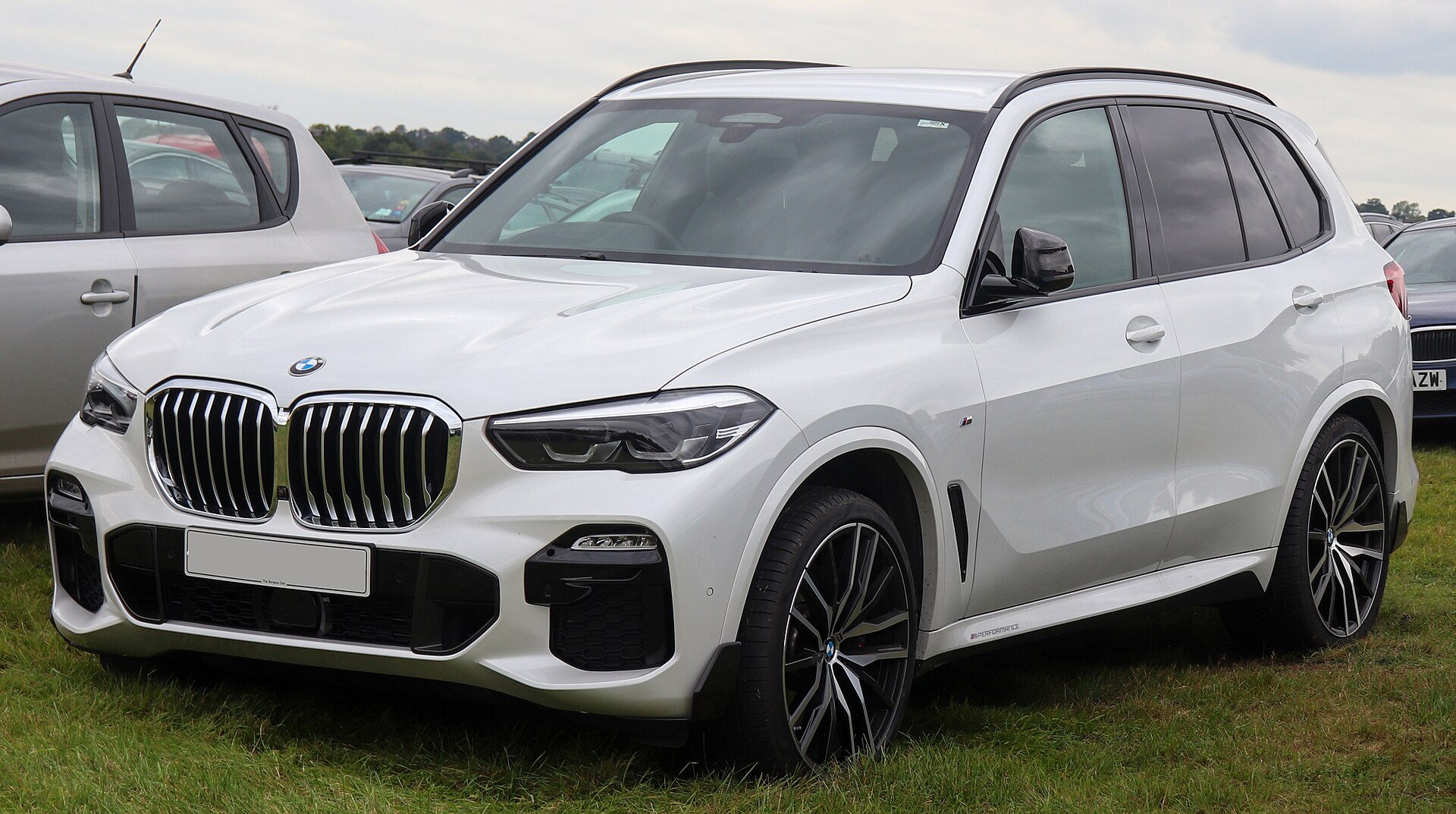
BMW · 2018–2026
X5 G05
- Power
- 360 kW489 PS
- 0–100 km/h
- 4.8 s

Volvo · 2015–present
XC90 II
- Power
- 335 kW455 PS
- 0–100 km/h
- -
At a glance
Who suits what, worked out from the catalog figures of the versions above.
- City XC90 II Width: 1,923 mm vs 2,004 mm
Verdict Opinion
The X5 is the stronger, faster and more modern-feeling car. Its plug-in hybrid has 360 kW and a 3.0-litre engine, the range has included diesels and a V8, and air suspension with four-wheel steering make it unusually agile for its size.
The XC90 wins on practicality and calm. Seven seats come as standard, all engines are efficient four-cylinders, Euro NCAP rated it best in class in 2015, and its UK safety record is exceptional.
- Sarah Whitmore
The X5 and the XC90 are two of the best-known large premium SUVs in Europe and North America, and they could hardly be more different in character. The second-generation XC90 was unveiled in Stockholm on 26 August 2014, built at Torslanda on Volvo's SPA platform, and won the 2016 North American Truck/Utility of the Year award. The fourth-generation BMW X5 (G05) was announced on 6 June 2018, built in Spartanburg, South Carolina, from August 2018, and updated in March 2023.
In short: the BMW X5 is the driver's car of the two, with larger engines and much more power. The Volvo XC90 is the family car, with seven seats as standard and an outstanding safety record. See also our BMW X5 and Volvo XC90 pages.
BMW X5 vs Volvo XC90: key differences
Plug-in hybrids: xDrive50e against T8
BMW's xDrive50e, introduced with the 2023 update, combines a 3.0-litre petrol engine with an electric motor for 360 kW and 700 Nm. It reaches 100 km/h in 4.8 seconds and has an EPA-rated electric range of 40 miles (64 km). Its predecessor, the xDrive45e, had 290 kW and a 24 kWh battery. The XC90 T8 Recharge pairs a 2.0-litre four-cylinder with an electric motor; our catalogue lists 335 kW, and since 2021 it has used an 18.8 kWh battery.
Engine philosophy
Every second-generation XC90 has a 2.0-litre four-cylinder Drive-E engine and an eight-speed Aisin automatic. The current mild hybrids are the B5 with 175 kW and the B6 with 221 kW. After the update the X5 xDrive40i has 280 kW and 520 Nm, and the xDrive30d diesel 195 kW and 620 Nm. Above them sat the M50i V8 with 390 kW and the X5 M Competition with 459 kW (625 PS). Volvo built its last diesel car, an XC90, in March 2024, while the G05 X5 range includes the xDrive30d and M50d diesels.
Seats and size
The XC90 has had a third row as standard since the 2018 model year, except in the Excellence trim. It is 4,950 mm long, 1,923 mm wide and 1,775 mm tall on a 2,984 mm wheelbase. The X5 is slightly shorter at 4,935 mm on a 2,975 mm wheelbase but wider, at 2,004 mm.
Chassis
The X5 can be ordered with air suspension that raises or lowers the body by 40 mm and with four-wheel steering. Its kerb weight ranges from 2,060 to 2,286 kg depending on the version.
Safety record
Euro NCAP rated the XC90 best in class in 2015, with 97% for adult occupants and 72% for pedestrians. By 2018, with more than 50,000 sold in the UK, no driver or passenger fatality had been recorded in an XC90 there. The X5 received five stars in 2018, with 89% for adults, 87% for children and 75% for pedestrians.
Updates and the electric future
Volvo facelifted the XC90 in September 2024, adding an 11.2-inch touchscreen and more storage, and will sell it alongside the electric EX90. BMW has already named the next X5 generation, the G65.
Size and weight
Side view to scale, all cars from the front bumper.
| X5 G05 | XC90 II | |
|---|---|---|
| Length | 4,935 mm194.3 in | 4,950 mm194.9 in +15 mm +0.6 in +0.3% |
| Width | 2,004 mm78.9 in | 1,923 mm75.7 in −81 mm −3.2 in −4.0% |
| Height | 1,765 mm69.5 in | 1,775 mm69.9 in +10 mm +0.4 in +0.6% |
| Wheelbase | 2,975 mm117.1 in | 2,984 mm117.5 in +9 mm +0.4 in +0.3% |
| Fits a standard garage? | Too wide | Too wide |
Difference vs X5 G05 (±). Garage check: a standard single garage takes a car up to about 5.0 m (16 ft 5 in) long and 1.9 m (6 ft 3 in) wide (width as listed in the catalog; some makers include the mirrors). Leave about 0.6 m (2 ft) to open the doors.
Full specifications
| BMW X5 | Volvo XC90 | |
|---|---|---|
| General | ||
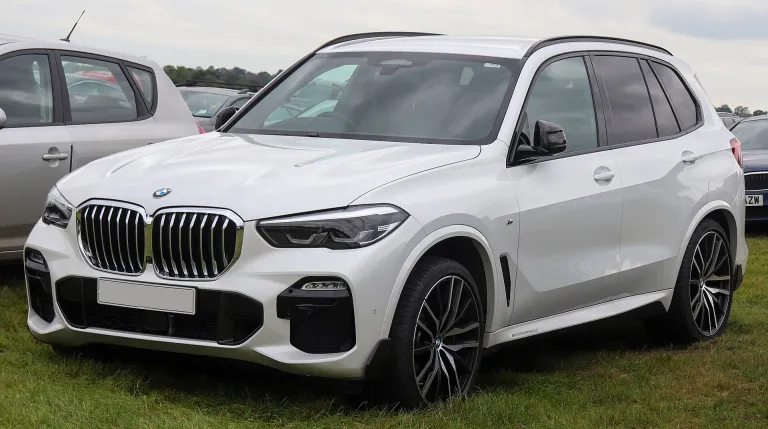
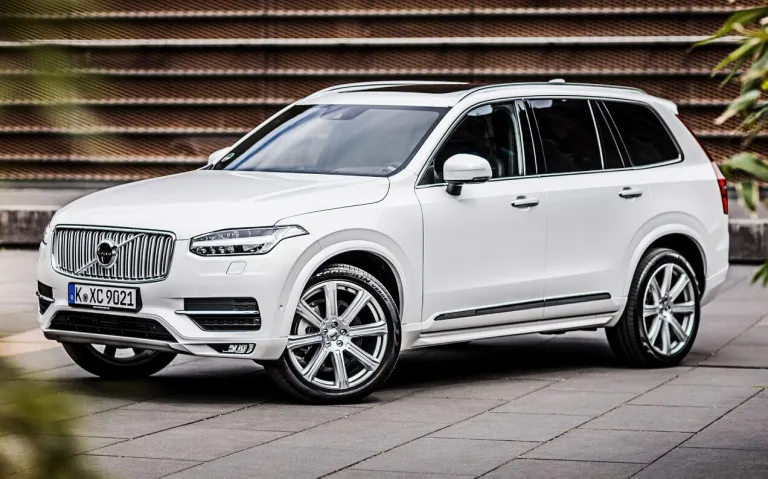
| Version | X5 G05 · xDrive50e · plug-in hybrid · 360 kW (489 PS) | XC90 II · T8 Recharge AWD · plug-in hybrid · 335 kW (455 PS) |
| Production years | 2018–2026 | 2015–present |
| Body | SUV | SUV |
| Class | No data | SUV / crossover |
| Country | Germany | Sweden |
| Performance | ||
| Power Why it matters: More power means stronger acceleration and easier overtaking, especially with a full load. | 360 kW (489 PS) 483 hp Better | 335 kW (455 PS) 449 hp |
| Power, all versions | 135–460 kW (184–625 PS) 181–617 hp | 140–335 kW (190–455 PS) 188–449 hp |
| Torque Why it matters: Torque is the pulling force you feel when accelerating from low revs, towing or climbing hills. | 700 Nm 516 lb-ft | No data |
| 0–100 km/h Why it matters: A shorter 0–100 km/h time means quicker getaways and safer merging onto fast roads. | 4.8 s | No data |
| Engine and transmission | ||
| Fuel | Plug-in hybrid | Plug-in hybrid |
| Engine | 3,000 cc · 6 cyl 3.0 l | 4 cyl |
| Engine code | B58 | No data |
| Gearbox | automatic | No data |
| Drive | All-wheel drive | All-wheel drive |
| Dimensions and weight | ||
| Length | 4,935 mm 194.3 in | 4,950 mm 194.9 in |
| Width | 2,004 mm 78.9 in | 1,923 mm 75.7 in |
| Height | 1,765 mm 69.5 in | 1,775 mm 69.9 in |
| Wheelbase | 2,975 mm 117.1 in | 2,984 mm 117.5 in |
| Boot Why it matters: A bigger boot fits more luggage, shopping or a pram. | No data | 613 l 21.6 cu ft † |
| Electric | ||
| Battery Why it matters: A bigger battery usually gives more range, but takes longer to charge fully. | No data | 19 kWh |
| Safety | ||
| Euro NCAP | ★★★★★ (2018) | ★★★★★ (2015) |
These cars do not differ in the data we have.
Equal rows hidden (3): Body, Fuel, Drive.
Better marks the stronger figure - only for measurable specs (power, torque, 0–100 km/h, consumption, boot, weight).
† from another version of this generation.
In plain words
BMW X5 has more power: 360 kW (489 PS) against 335 kW (455 PS) for Volvo XC90. Volvo XC90 is 15 mm longer than BMW X5 (4,950 mm vs 4,935 mm). BMW X5 is the older design (from 1999); Volvo XC90 arrived in 2002. On the catalog figures, the Volvo XC90 is the pick for city. Our catalog has no 0–100 km/h for the Volvo XC90 yet, so some checks above leave it out.
Which one to choose
Choose the BMW X5 if you want a 3.0-litre engine instead of a four-cylinder, a diesel with 620 Nm for towing and long trips, the 360 kW xDrive50e, or a high-performance V8.
Choose the Volvo XC90 if you need seven seats in every version, put safety first, or are happy with a four-cylinder hybrid in exchange for lower power and a calmer drive.
Each car has other rivals on 1cars: Audi Q7 vs BMW X5, BMW X5 vs Porsche Cayenne and Audi Q7 vs Volvo XC90.
Frequently asked questions
Does the BMW X5 or the Volvo XC90 have seven seats?
The XC90 has had a third row as standard since the 2018 model year, except in the Excellence version. Check the X5 specification for your market.
Which plug-in hybrid is more powerful?
The X5 xDrive50e, with 360 kW and 700 Nm and 4.8 seconds to 100 km/h. Our catalogue lists 335 kW for the XC90 T8 Recharge.
Which is bigger?
They are almost the same length: 4,950 mm for the XC90 and 4,935 mm for the X5. The X5 is wider, 2,004 mm against 1,923 mm.
Can I still buy a diesel XC90?
Not new. Volvo built its last diesel car, an XC90, in March 2024. The X5 xDrive30d diesel has 195 kW and 620 Nm.