
 Chevrolet Yenko Chevelle
Specs, engines and history
Published Sources (3) Report an error
By Felix Hartmann, Automotive Technology & EV Contributor
- Built
- 1969
- Top power
- 317 kW (431 PS)
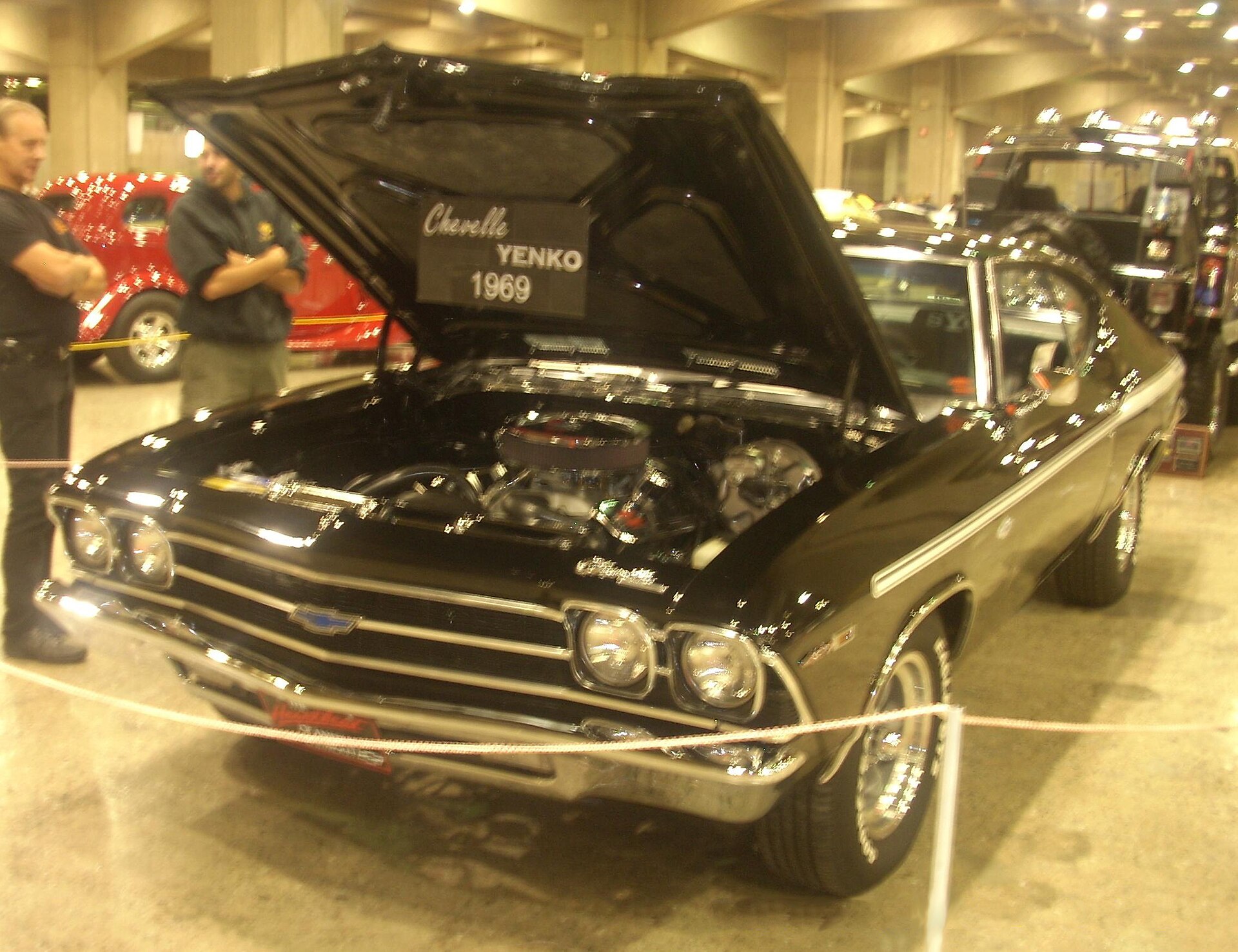
The Yenko Chevelle was a dealer-built 1969 Chevelle sold by Yenko Chevrolet of Canonsburg, Pennsylvania, as one of its Yenko Super Cars. Chevrolet installed the L72 427 V8 at the factory through Central Office Production Order 9562, rated at 317 kW (425 hp, SAE gross), and the dealership added stripes, badges and wheels. Yenko sold 99 of them, all in one model year.
In short
- 99 cars, all 1969 models, out of an estimated 323 Chevelles that received the L72 427 through COPO orders.
- L72 427 with 317 kW (425 hp) at 5,600 rpm and 624 Nm (460 lb-ft) at 4,000 rpm, SAE gross, on an 800 cfm Holley four-barrel.
- Muncie M21 four-speed or Turbo Hydra-Matic 400, with a 12-bolt axle, 4.10:1 gears and Positraction.
- One Butternut Yellow car sold for USD 187,000 at RM Sotheby's Auburn Fall auction in 2017.
Specs by version
| Version | Engine | Power | Torque | Gearbox | Drive | Production years |
|---|---|---|---|---|---|---|
| 427 L72 4-speed manual (SAE gross) | 7.0 l · 8 cyl · Petrol L72 | 317 kW 431 PS425 hp | 624 Nm460 lb-ft | 4-sp Manual | Rear-wheel drive | 1969 |
| 427 L72 Turbo Hydra-Matic 400 (SAE gross) | 7.0 l · 8 cyl · Petrol L72 | 317 kW 431 PS425 hp | 624 Nm460 lb-ft | 3-sp Automatic | Rear-wheel drive | 1969 |
Verified Manufacturer and type-approval data from our catalog · Sources and methodology
Yenko Chevelle at a glance
| Specification | Yenko Chevelle |
|---|---|
| Model year | 1969 only |
| Built | 99, the Yenko share of about 323 COPO 427 Chevelles |
| Body | two-door hardtop sport coupe |
| Platform | GM A-body intermediate (Chevelle) |
| Engine | 7.0 L (427 cu in) L72 V8, cast-iron block and heads, 11:1 compression |
| Power | 317 kW (425 hp, SAE gross) at 5,600 rpm |
| Torque | 624 Nm (460 lb-ft) at 4,000 rpm |
| Gearboxes | M21 four-speed manual; Turbo Hydra-Matic 400 three-speed automatic |
| Rear axle | 12-bolt, 4.10:1, Positraction |
| Weight | about 1,724 kg (3,800 lb), COPO Chevelle data sheet |
| Quarter mile | 13.3 s at 108 mph in stock trim, as quoted by RM Sotheby's |
| Price new | no Yenko list price in the sources; one data sheet gives about USD 3,800 for a COPO Chevelle |
Why Yenko needed a 427 Chevelle: the 400 cu in rule
Frank Yenko opened the family Chevrolet business in 1934 and moved it to Canonsburg, south-west of Pittsburgh, in 1949. His son Don, born in 1927, came back to the dealership after the Air Force and Penn State, set up a performance shop there in 1957 and won four SCCA national championships, partly in Corvettes. In 1965 the shop built 100 modified Corvairs in a month so the SCCA would accept the Yenko Stinger in D Production.
The Chevelle story starts with a corporate limit. General Motors kept engines above 400 cu in out of its intermediates and pony cars, so the biggest regular Chevelle option in 1969 was the 396. For 1967 and 1968 Yenko had worked around the rule on the Camaro by swapping in 427s himself, which produced the first cars of the Yenko Camaro series. For 1969 he used a quieter route: the Central Office Production Order system, normally used for fleet specifications, could ask the factory to fit the engine before the car left the plant.
COPO 9562: L72 427 engine and hardware
The order code that mattered was 9562. It deleted the regular big-block and specified the L72 427, the largest engine a Chevelle had carried since the model appeared in 1964. The engine had a cast-iron block and heads, 11:1 compression and a single Holley four-barrel of 800 cfm. Chevrolet rated it at 317 kW (425 hp) and 624 Nm (460 lb-ft).
Yenko orders also carried two further codes. COPO 9694 added front disc brakes with the J50 vacuum servo, and COPO 9737 was the "sports car conversion" with 15-inch tyres on Rally wheels. Every COPO Chevelle received a heavy-duty 12-bolt axle with heat-treated 4.10:1 gears and Positraction. Buyers chose between the M21 close-ratio four-speed and the Turbo Hydra-Matic 400; the engine assembly number differed between the two, 3964269 for manual cars and 3964268 for automatics.
The car sold by RM Sotheby's in 2017 shows a typical specification: M21 four-speed, KQ heavy-duty suspension, power front discs, a three-core Harrison radiator, dual exhausts with oval outlets, Strato bucket seats, an AM radio and a vinyl roof. It was one of 19 Yenko Chevelles in Butternut Yellow.
What Yenko added at the dealership
Chevrolet delivered a finished car, so the Canonsburg work was mostly visual. Yenko applied its own side and bonnet stripes, Yenko identification and 427 badges, and fitted Rally wheels with Yenko centre caps. The dealership marketed the result as the Yenko S/C, for Super Car, and the Yenko production records list every 1969 car under that heading.
That split of work separates the Chevelle from the 1967 and 1968 Camaros, where Yenko staff changed the engines themselves. In 1969 the hardware came from the assembly line, and the dealer's part was the order, the trim and the sales pitch.


The 1969 Yenko Super Car range
The Chevelle sat between the Camaro and the Nova in the 1969 programme. All three used the L72, and the Chevelle was the largest and heaviest of the group.
| Yenko model, 1969 | Base car | Engine | Built |
|---|---|---|---|
| Yenko Camaro | first-generation Camaro, COPO 9561 | L72 427, 317 kW (425 hp) | around 200 |
| Yenko Chevelle | Chevelle hardtop, COPO 9562 | L72 427, 317 kW (425 hp) | 99 |
| Yenko Nova | Nova coupe | L72 427 | 37 or 38, figures vary |
Hagerty puts Yenko's Chevelle order at about 100 of roughly 350 COPO 427 Chevelles, a little above the 323 most often quoted. Other dealers, among them Nickey, Berger and Scuncio, ordered the same factory package and sold it without Yenko trim. A broader account of these factory orders sits on the Camaro COPO page.

Why there was no 1970 Yenko Chevelle
The Yenko Chevelle lasted one season. For 1970 Chevrolet put the SS 454 on the regular Chevelle order form, and its LS6 version was rated at 336 kW (450 hp) and 678 Nm (500 lb-ft), more than the L72 offered. The 1970 Chevelle SS 454 made a special order unnecessary for buyers who wanted the biggest engine.
Hagerty names rising insurance rates and tighter emission rules as the forces that ended the Yenko Camaros and Chevelles. Yenko turned to a small-block Nova, the 1970 Deuce, then to the Stinger II based on the Vega, and from 1972 published a performance parts catalogue. Don Yenko died on 5 March 1987, aged 59, when the Cessna 210 he was flying crashed on landing near Charleston, West Virginia.
Yenko Chevelle today: values and how to spot a real one
Paperwork carries the value of these cars. Stripes, badges and Yenko caps are easy to reproduce on any 1969 Chevelle hardtop, while the factory order is not. Points to verify:
- COPO 9562 together with 9694 and 9737 on the original documents; non-Yenko COPO cars usually carried the 9566 codes instead.
- The engine assembly number against the gearbox: 3964269 with the M21, 3964268 with the Turbo 400.
- The 12-bolt with 4.10:1 gears and the heavy-duty case.
- A Yenko registry listing, the Protect-O-Plate and the dealer delivery schedule, as with the RM Sotheby's car.
- The VIN: Yenko Chevelles in Hagerty's sales records carry numbers beginning 136379, a 1969 Malibu-series V8 sport coupe and not an SS 396 body code.
Values are high and have moved down recently. The RM Sotheby's car made USD 187,000 in Auburn in 2017, and Hagerty's valuation tool showed USD 127,000 in January 2026, 12.4 percent lower than its previous figure, without stating the condition class. More Chevelle generations are covered in the Chevelle hub. The other dealer specials are ranked in our list of the best dealer-built muscle cars.
Chevrolet Yenko Chevelle in our rankings
- No. 10 of 157 · Most powerful cars of the 1960s (317 kW)
- No. 58 of 772 · Biggest engines: cars (6,997 cc · top 8%)
- No. 47 of 250 · Biggest engines: coupes (6,997 cc · top 20%)
- No. 172 of 640 · Most torque: cars (624 Nm · top 28%)
- No. 322 of 1190 · Most powerful cars (317 kW · top 29%)
- No. 65 of 224 · Most powerful American cars (317 kW · top 36%)
Bigger engine than 92% of ranked cars in the 1CARS catalog (No. 58 of 772).
FAQ
How many Yenko Chevelles were built?
Yenko Chevrolet sold 99 Yenko Chevelles, all in the 1969 model year. They came from an estimated 323 Chevelles that Chevrolet built with the L72 427 through COPO orders; Hagerty gives about 100 of roughly 350.
What engine did the Yenko Chevelle have?
The L72 427 cu in (7.0 L) V8 with iron block and heads, rated at 317 kW (425 hp) at 5,600 rpm and 624 Nm (460 lb-ft) at 4,000 rpm, SAE gross. Chevrolet installed it at the factory under COPO 9562.
Is every COPO 427 Chevelle a Yenko?
No. Of about 323 cars, 99 went to Yenko, 17 to Canada and the rest to other Chevrolet dealers such as Nickey, Berger and Scuncio. A Yenko car should carry the 9737 sports car conversion code and Yenko trim.
How much is a Yenko Chevelle worth?
Hagerty's valuation tool listed a 1969 Yenko Chevelle at USD 127,000 in January 2026, without naming the condition class. A documented Butternut Yellow car sold for USD 187,000 at RM Sotheby's Auburn Fall auction in 2017.
Was there a 1970 Yenko Chevelle?
No. Yenko built the Chevelle only for 1969. In 1970 the Chevelle SS 454 LS6 with 336 kW (450 hp) was available from any dealer, and Yenko moved to the small-block Nova Deuce.
Data sources
Data checked by an editor against the sources below.
- Wikipedia - Chevrolet Chevelle
- Rmsothebys - R0137 1969 Chevrolet Yenko Chevelle
- Chevellestuff - Copo


