
 Chevrolet Chevelle COPO
Specs, engines and history
Published Sources (3) Report an error
By Felix Hartmann, Automotive Technology & EV Contributor
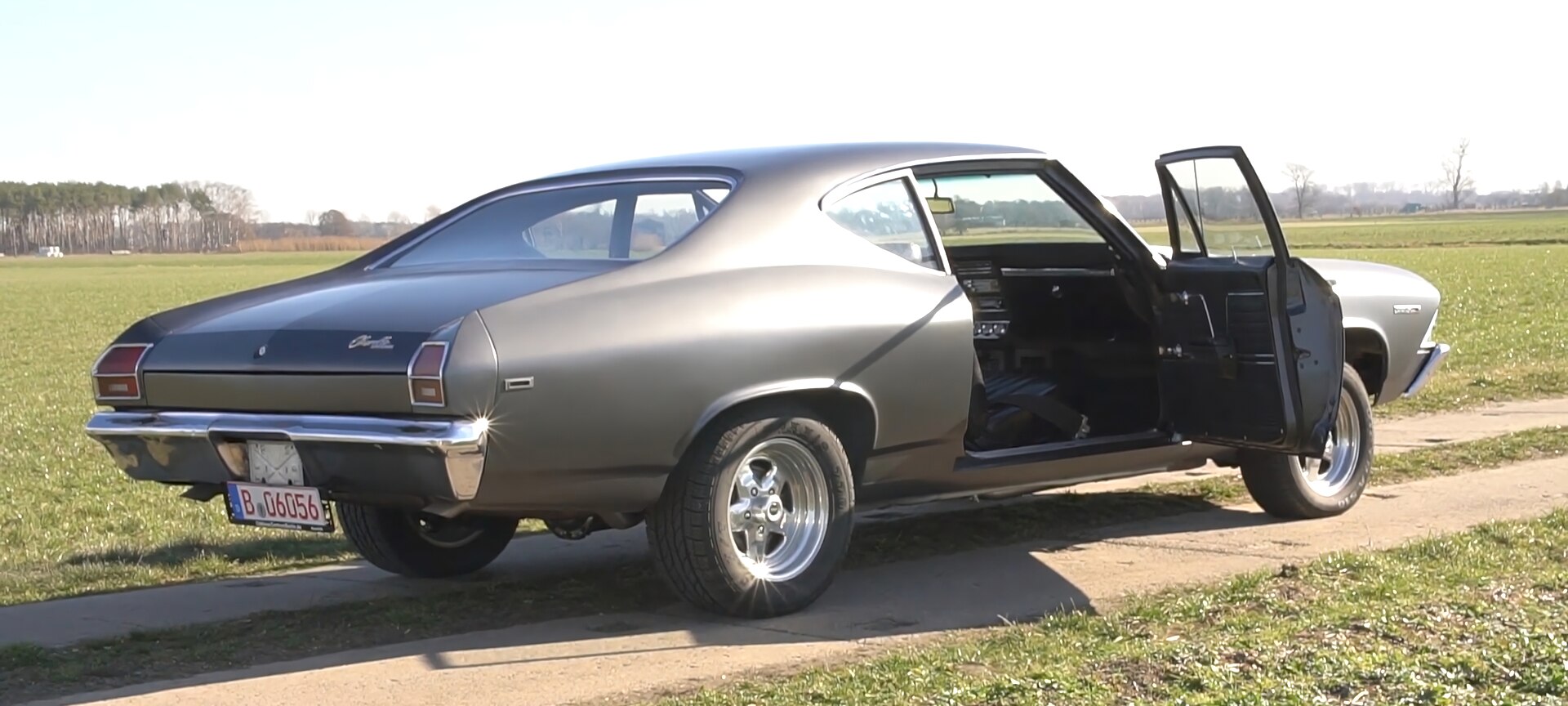
- Built
- 1969
- Top power
- 317 kW (431 PS)
The Chevrolet Chevelle COPO was the 1969 Chevelle hardtop that Chevrolet built with the L72 427 V8 on special order, outside the regular option list. Dealers requested it through Central Office Production Order 9562 or 9566, and the factory installed an engine rated at 317 kW (425 hp, SAE gross). The accepted total is 323 cars; Yenko took 99, and the rest went to other dealers and to Canada.
In short
- One model year, 1969; about 323 cars by the accepted count, Hagerty says roughly 350.
- L72 427 with 11:1 compression and an 800 cfm Holley, 317 kW (425 hp) and 624 Nm (460 lb-ft), SAE gross.
- Every car had a heavy-duty 12-bolt axle with heat-treated 4.10:1 gears and Positraction.
- 99 cars went to Yenko Chevrolet, 17 to Canada and the remainder to any dealer that placed an order.
Specs by version
Engines
| Version | Engine | Power | Torque | Gearbox | Drive | Production years |
|---|---|---|---|---|---|---|
| 427 L72 4-speed manual (SAE gross) | 7.0 l · 8 cyl · Petrol L72 | 317 kW 431 PS425 hp | 624 Nm460 lb-ft | 4-sp Manual | Rear-wheel drive | 1969 |
| 427 L72 Turbo Hydra-Matic 400 (SAE gross) | 7.0 l · 8 cyl · Petrol L72 | 317 kW 431 PS425 hp | 624 Nm460 lb-ft | 3-sp Automatic | Rear-wheel drive | 1969 |
Dimensions and weight
Show all 1 versions
| Version | Kerb weight |
|---|---|
| 427 L72 4-speed manual (SAE gross) | 1,724 kg3,801 lb |
Verified Manufacturer and type-approval data from our catalog · Sources and methodology
Chevelle COPO at a glance
| Specification | Chevelle COPO 427 |
|---|---|
| Model year | 1969 |
| Built | about 323 (accepted figure); roughly 350 according to Hagerty |
| Body | two-door hardtop sport coupe |
| Platform | GM A-body intermediate |
| Order codes | COPO 9562 (CD, DD, CE, DE, EA, FA) and 9566 (AA, BA) |
| Engine | 7.0 L (427 cu in) L72 V8, iron block and heads |
| Power | 317 kW (425 hp, SAE gross) at 5,600 rpm |
| Torque | 624 Nm (460 lb-ft) at 4,000 rpm |
| Gearboxes | four-speed manual (code MQ) or Turbo Hydra-Matic 400 (code MP) |
| Weight | about 1,724 kg (3,800 lb) |
| Performance | 0-60 mph about 5.1 s and quarter mile about 13.3 s (supercars.net estimates) |
| Price new | about USD 3,800 in 1969 (supercars.net estimate) |
Why Chevrolet built a 427 Chevelle through COPO
Chevrolet's Central Office Production Order system was normally used for fleet orders, special specifications that the regular order form did not cover. In 1969 it also became the way around a General Motors rule that kept engines above 400 cu in out of the intermediates. On paper the largest Chevelle engine that year was the 396 in the SS package, sold as a USD 347.60 option.
Don Yenko, the Pennsylvania dealer behind the Yenko Camaro, is credited with creating the Chevelle order. The same channel delivered 427 Camaros under codes 9560 and 9561, which the Camaro COPO page covers. For the Chevelle, Chevrolet issued 9562 and a simpler variant, 9566.
Reading the COPO 9562 and 9566 codes
The two letters after the number told the plant which version to build. Chevellestuff, which reproduces the order data, lists these packages:
| Code | Content |
|---|---|
| 9562 CD and DD | L72 427 with contour bucket seats, COPO tyres and special springs |
| 9562 CE and DE | the same without bucket seats |
| 9562 EA and FA | J52 disc brakes and L78 tyres; FA with the automatic in place of the four-speed |
| 9566 AA and BA | as EA and FA, but with PL5 14-inch tyres |
| 9694 CA and CB | front disc brakes with J50 vacuum servo (Yenko orders) |
| 9737 LD | sports car conversion with 15-inch tyres and Rally wheels (Yenko orders) |
Non-Yenko dealers mostly used the 9566 packages. Yenko orders combined 9562, 9694 and 9737, which is why the codes on the paperwork are the first test of what a surviving car started out as.
L72 427 engine, gearboxes and 4.10 axle
The L72 had an iron block, iron cylinder heads and 11:1 compression, and breathed through a single 800 cfm Holley four-barrel. Chevrolet rated it at 317 kW (425 hp) at 5,600 rpm and 624 Nm (460 lb-ft) at 4,000 rpm. In the COPO cars it came as one of two engine assemblies: part 3964269 for manual cars and part 3964268 for automatics.
Records disagree on the gearbox split. One count gives 277 four-speeds and 96 automatics, another 265 and 93. Both totals are higher than 323, and Chevellestuff explains the difference as engines that went to the parts system for service. The automatic was a strengthened Turbo Hydra-Matic 400, while the manual varied: supercars.net names the Rock Crusher four-speed, and the Yenko car sold by RM Sotheby's has the M21.
All cars shared the axle, assembly 3963988, with heat-treated 4.10:1 gears and Positraction. Typical equipment also included a heavy-duty radiator and suspension, F70x15 white-letter tyres and disc brakes. Supercars.net puts the weight at about 1,724 kg (3,800 lb).

How many COPO Chevelles were built and who got them
The accepted figure covers hardtops only. Yenko Chevrolet in Canonsburg ordered 99 and turned them into Yenko Super Cars with stripes and badges. Seventeen went to Canada, and one of the three Canadian cars accounted for sold at Barrett-Jackson in Scottsdale in 2008 for USD 140,000. The rest were open to any Chevrolet dealer willing to place the order, and Wikipedia names Nickey, Berger and Scuncio among the dealers that ordered the Yenko-style package for their own customers.
Chevy Hardcore describes the buyers as racers, well-connected customers and a few dealer principals. The order was never advertised to the public, and a buyer had to know what to ask for.
COPO 427 against the 1969 SS 396
| Specification | Chevelle SS 396, 1969 | Chevelle COPO 427, 1969 |
|---|---|---|
| How ordered | regular option, USD 347.60 | special order through COPO |
| Top engine | 396 with up to 280 kW (375 hp) | L72 427, 317 kW (425 hp) |
| Built | about 86,300 SS models | about 323 |
| Badging | SS 396 grille and rear emblems | Malibu-level trim, no SS badges unless added |
Supercars.net notes that the COPO car was built on the regular Chevelle line with a Malibu interior and normal badges. That gave it a quiet appearance: a non-Yenko COPO Chevelle could look like an ordinary Malibu hardtop, sometimes with SS wheels. The regular car is described in the Chevelle hub.

After 1969: the SS 454 took over
The COPO Chevelle did not return. For 1970 Chevrolet offered the SS 454 on the regular order form, and the LS6 version was rated at 336 kW (450 hp) and 678 Nm (500 lb-ft). With a bigger engine available from any showroom, the special order had lost its purpose. The 1970 Chevelle SS 454 took over the role of the fastest Chevelle, and the COPO number stayed a one-year footnote in the order books.

Chevelle COPO today: how to verify a real car
A COPO Chevelle has no single badge that proves its origin, so documents and casting numbers decide. Check:
- the COPO code on the build sheet or invoice, and whether it matches the equipment on the car;
- the engine assembly number against the gearbox code, 3964269 with the four-speed and 3964268 with the automatic;
- the 4.10:1 12-bolt with the heavy-duty case;
- the build sheet and Protect-O-Plate; the Canadian car sold in 2008 had both.
Because the 9562 code also underpins the Yenko cars, a Yenko claim needs the extra 9694 and 9737 codes. Values for documented cars are high; a Yenko Chevelle from the same production sold for USD 187,000 at RM Sotheby's in Auburn in 2017. How the COPO cars differ from true dealer conversions is explained in the best dealer-built muscle cars.
Chevrolet Chevelle COPO in our rankings
- No. 8 of 157 · Most powerful cars of the 1960s (317 kW)
- No. 55 of 772 · Biggest engines: cars (6,997 cc · top 8%)
- No. 88 of 505 · Power-to-weight: cars (184 kW/t · top 18%)
- No. 44 of 250 · Biggest engines: coupes (6,997 cc · top 20%)
- No. 170 of 640 · Most torque: cars (624 Nm · top 28%)
- No. 320 of 1190 · Most powerful cars (317 kW · top 29%)
Bigger engine than 92% of ranked cars in the 1CARS catalog (No. 55 of 772).
FAQ
How many 1969 COPO Chevelles were built?
The accepted total is 323 hardtops with the L72 427. Hagerty gives roughly 350. Gearbox records list more engines than cars, which Chevellestuff explains as engines used for service.
What does COPO 9562 mean on a Chevelle?
It is the Central Office Production Order number for a 1969 Chevelle with the L72 427 V8 instead of the regular big-block. Letter suffixes such as CD, EA or FA set seats, brakes, tyres and gearbox.
Did the COPO Chevelle have SS badges?
Not as built. According to supercars.net the cars had a Malibu interior and normal badges. Yenko cars received Yenko stripes and 427 badges at the dealership, and some owners later added SS parts.
How much is a 1969 COPO Chevelle worth?
Documented cars sell in six figures. A Canadian COPO Chevelle made USD 140,000 at Barrett-Jackson in 2008, and a Yenko-converted COPO car sold for USD 187,000 at RM Sotheby's Auburn sale in 2017. Paperwork and matching engine numbers decide where a car lands.
How much power did the COPO Chevelle have?
317 kW (425 hp) at 5,600 rpm and 624 Nm (460 lb-ft) at 4,000 rpm, SAE gross, from the L72 427 cu in V8 with 11:1 compression and an 800 cfm Holley carburettor.
Data sources
Data checked by an editor against the sources below.
- Wikipedia - Chevrolet Chevelle
- Chevellestuff - Copo
- Supercars - Blog


