 Chevrolet Yenko Camaro
All generations, specs and history
Published Sources (2) Report an error
By Sarah Whitmore, Senior Automotive Writer
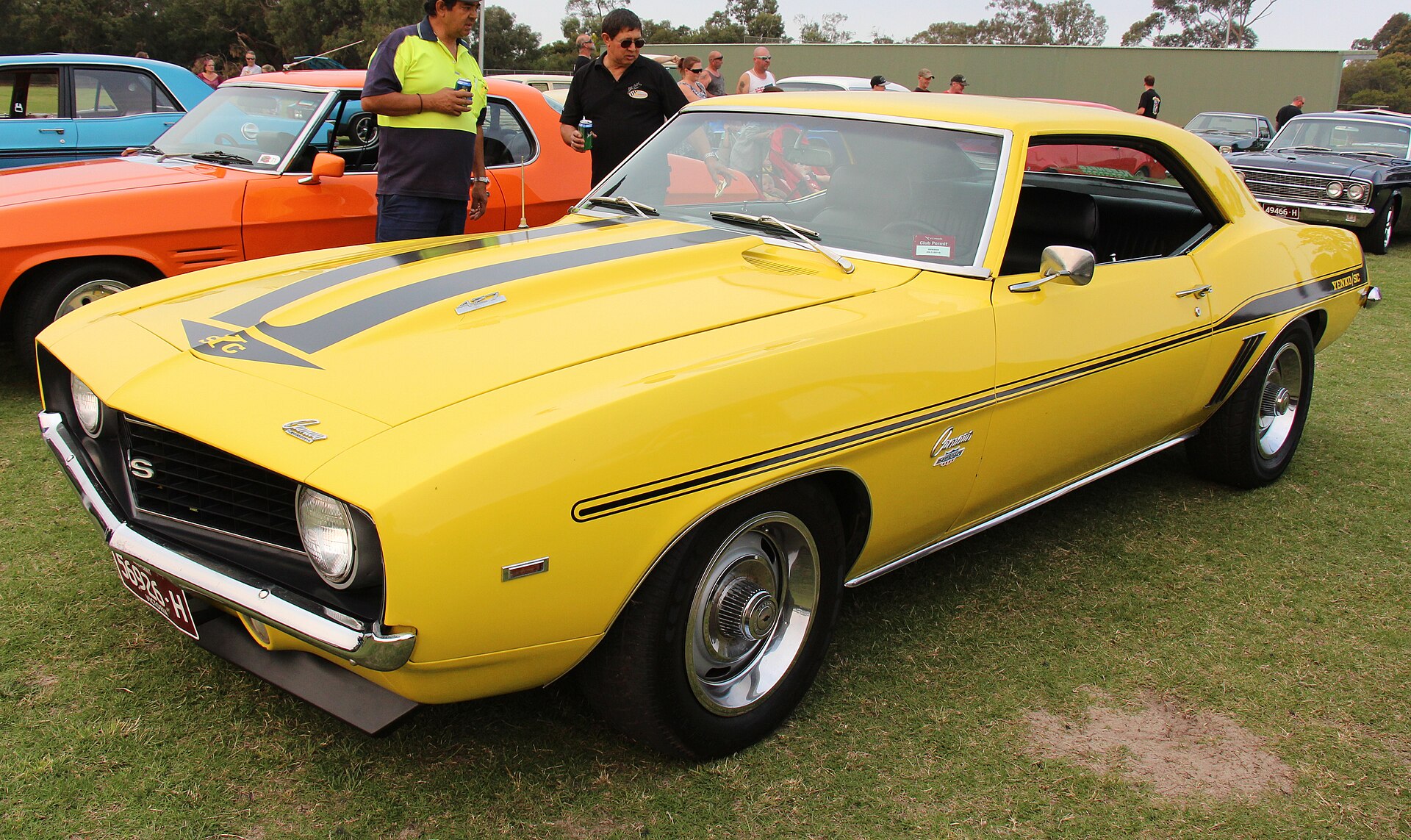
- Built
- 1967–1969
- Generations
- 2
- Top power
- 336 kW (457 PS)
Timeline
Yenko Camaro generations
Click a generation for its own page
- Yenko Super Camaro 1967–1968 · Coupe · 336 kW (457 PS)
- Yenko Camaro II 1969 · Coupe · 317 kW (431 PS)
Newest first · 2 generations since 1967


All generations by year: Yenko Camaro II (1969) · Yenko Super Camaro (1967–1968)
Which one is mine?
Pick the year of first registration to see which generation it is.
- Yenko Camaro II 1969
- Yenko Super Camaro 1967–1968
Which Yenko to choose
Our verdict · Sarah Whitmore
- For the original dealer story: a 1967 or 1968 Super Camaro conversion.
- For a factory-built 427 Camaro: a 1969 COPO 9561 Yenko, especially with the four-speed.
- For the ultimate COPO: the aluminium ZL1, if a Yenko is not rare enough.
All Camaro versions are in the Chevrolet catalogue, and the American muscle car guide and car rankings compare the 427 Camaros with other golden-age cars.
The Yenko Camaro was a first-generation Chevrolet Camaro sold with a 427 V8 by Yenko Chevrolet, a dealership in Canonsburg, Pennsylvania, run by the racing driver Don Yenko. In 1967 and 1968 the dealer swapped the engines itself; for 1969 Yenko had Chevrolet install the 427 at the factory through the Central Office Production Order (COPO) system and ordered 201 cars. The result was one of the most powerful Camaros of the golden age, rated at 317 kW (425 hp, SAE gross) in 1969.
In short
- GM policy did not allow engines over 400 cu in in its mid-size and smaller cars, so dealers such as Yenko fitted them themselves.
- About 54 cars in 1967 and about 64 in 1968 were converted to the Corvette's L72 427, according to Wikipedia.
- 1969: 201 COPO 9561 Camaros, 171 with a four-speed manual and 30 with an automatic.
- Don Yenko died in a plane crash in 1987; the Yenko name later returned on modern conversions.
Specs by version
Engines
| Version | Engine | Power | Torque | Drive | Production years |
|---|---|---|---|---|---|
| Yenko Camaro II · 427 L72 V8, COPO 9561 (SAE gross) | 7.0 l · 8 cyl · Petrol 6,997 cc | 317 kW 431 PS425 hp | 624 Nm460 lb-ft | Rear-wheel drive | 1969 |
Dimensions and weight
Show all 1 versions
| Version | Wheelbase |
|---|---|
| Yenko Camaro II · 427 L72 V8, COPO 9561 (SAE gross) | 2,743 mm108.0 in |
Verified Manufacturer and type-approval data from our catalog · Sources and methodology
Yenko Camaro at a glance
| Specification | Yenko Camaro |
|---|---|
| Model years | 1967–1969 (dealer conversions); later revivals |
| Base car | first-generation Chevrolet Camaro, GM F-body, 2,743 mm (108 in) wheelbase |
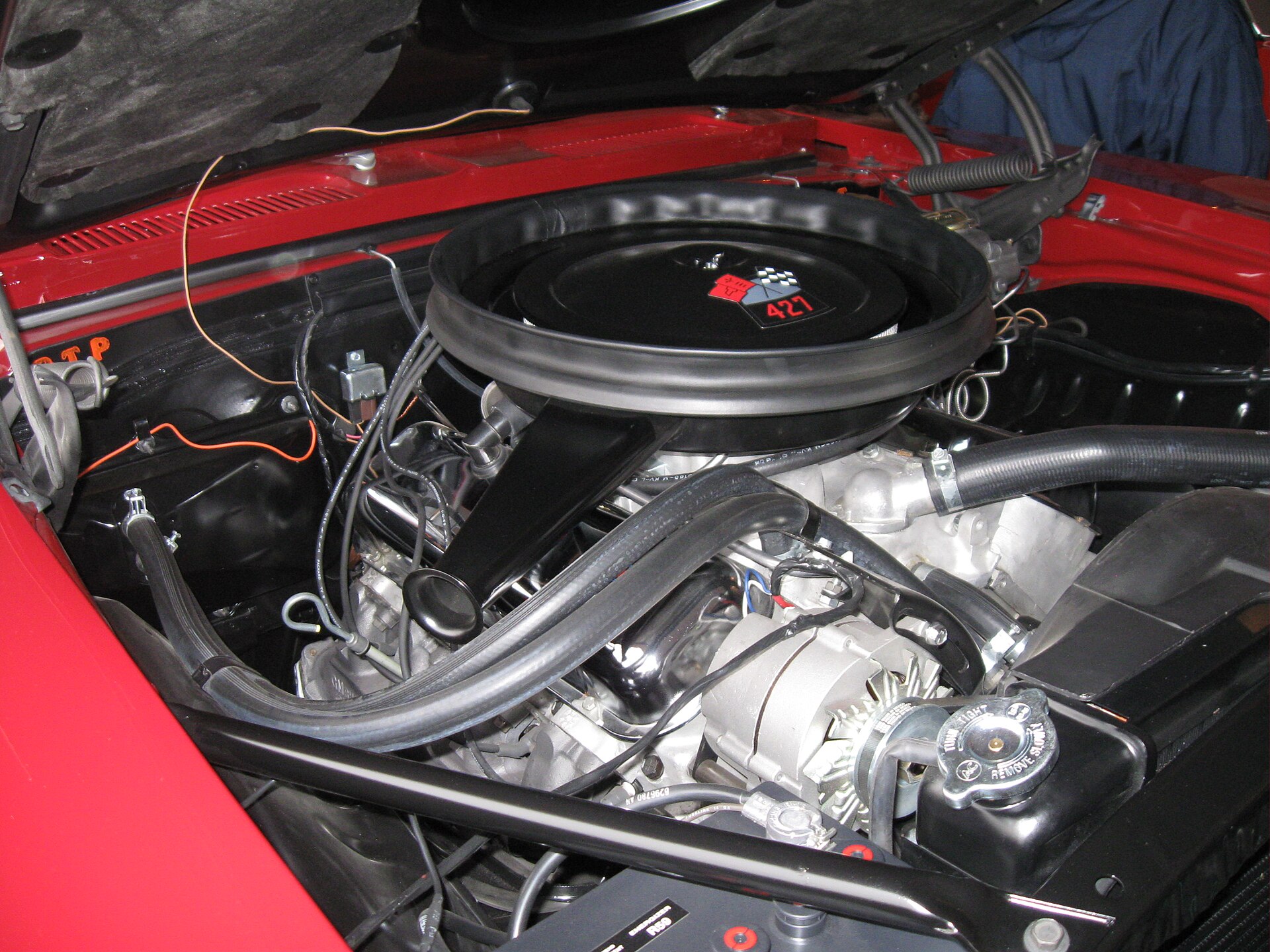
| Engine | 427 cu in (7.0 l) L72 V8 with solid lifters |
| Power | 317 kW (425 hp, SAE gross) at 5,600 rpm in 1969; Wikipedia lists 336 kW (450 hp) for the 1968 cars |
| Torque | 624 Nm (460 lb-ft) at 4,000 rpm (COPO 9561) |
| Gearboxes | Muncie M-21 close-ratio four-speed; Turbo Hydra-Matic 400 automatic (1969) |
| Rear axle (1969) | 4.10:1 Positraction with heat-treated half-shafts |
| Built | about 54 (1967), about 64 (1968), 201 (1969) |
| Dealer | Yenko Chevrolet, Canonsburg, Pennsylvania |
The Yenko is a version of the Chevrolet Camaro, and it took a different route to performance from the Camaro Z28, Chevrolet's Trans-Am car of the same years.
Why dealers built 427 Camaros
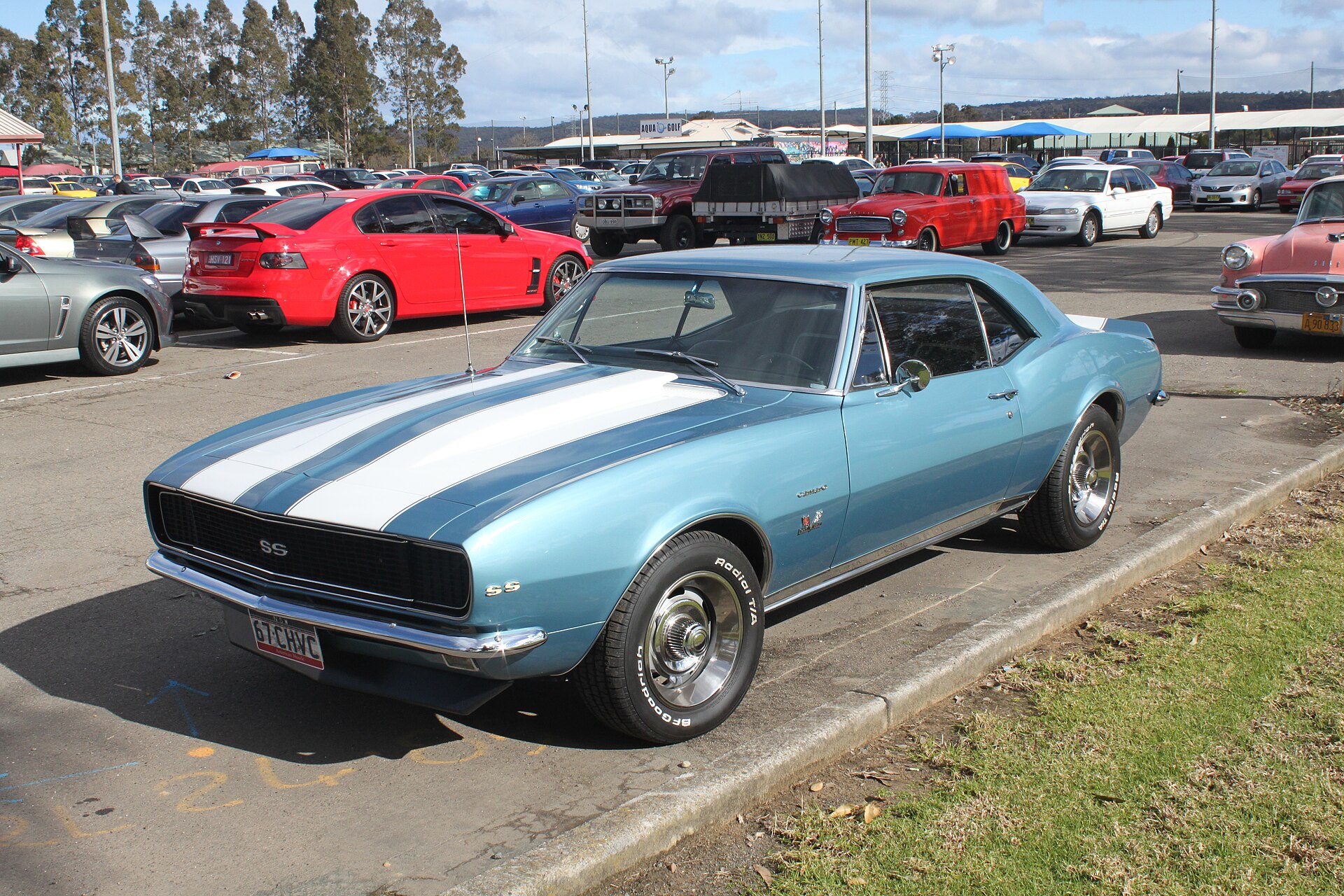
When the Camaro arrived for 1967, the SS could be ordered with the 396 V8; Chevy Hardcore gives the L78 version as 280 kW (375 hp). General Motors had a corporate rule that its divisions should not install engines larger than 400 cu in in mid-size and smaller cars, so the Corvette's 427 was off limits.
A group of performance dealers worked around the rule by swapping engines themselves. Wikipedia names Don Yenko in Pennsylvania, Baldwin-Motion in New York, Nickey in Illinois and Dana in California. Their success pushed Chevrolet to offer the 427 through the COPO channel, an ordering process normally used for fleet and special orders.

1967–1968: the Yenko Super Camaro
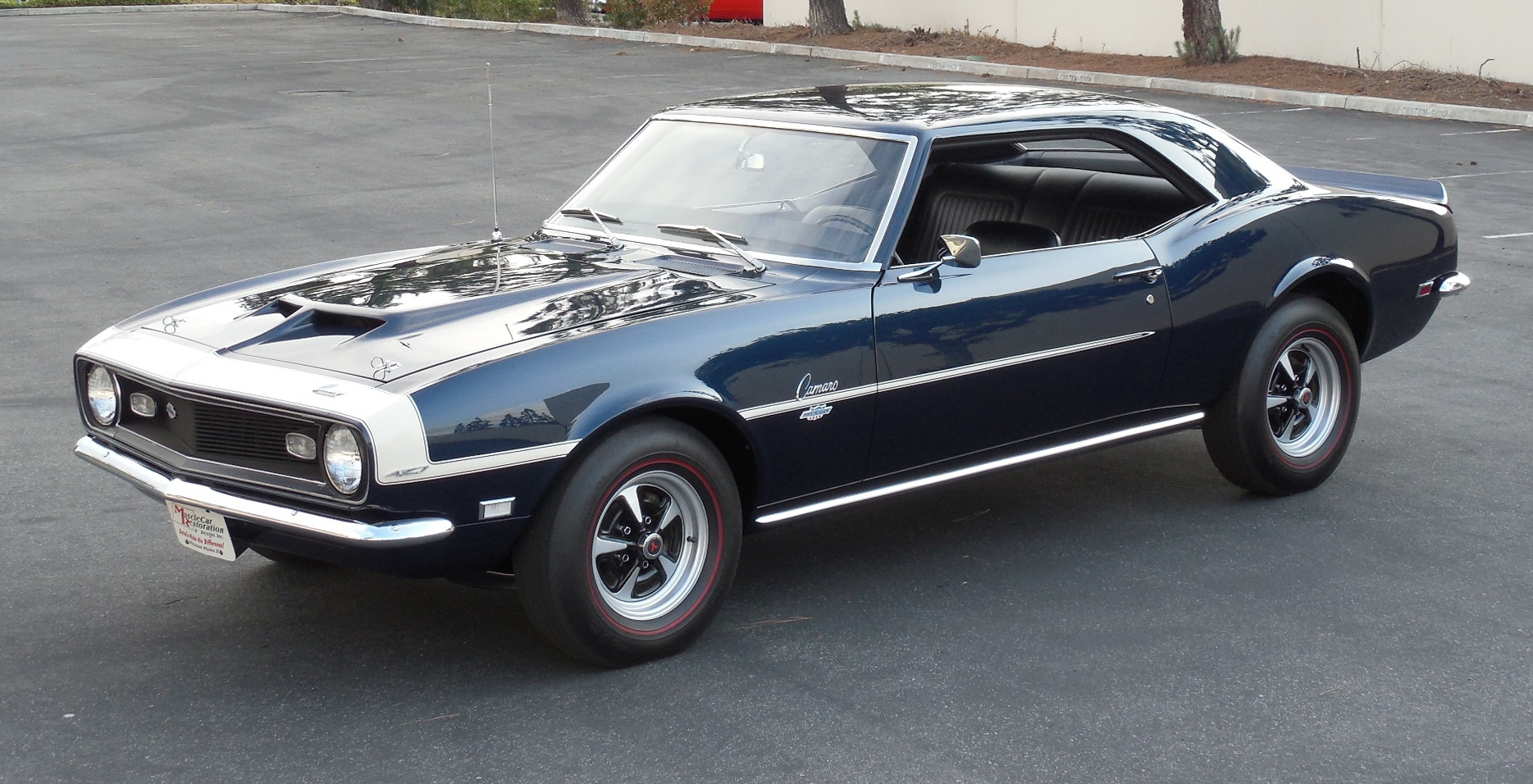
Yenko's first cars were 1967 Camaro SS models from which the dealer removed the 396 and fitted the L72 427, a solid-lifter engine with higher-flow cylinder heads and a more aggressive camshaft. Wikipedia counts about 54 conversions in 1967 and about 64 in 1968.
Chevy Hardcore describes the 1968 cars with a Muncie M-21 close-ratio four-speed, a large twin-scoop bonnet, Yenko badges on the sides and tail and a 140 mph speedometer. Wikipedia lists about 336 kW (450 hp) for the 1968 L72 conversion; Chevy Hardcore uses the factory rating of the L72, 317 kW (425 hp).
1969: COPO 9561 and the factory-built Yenko
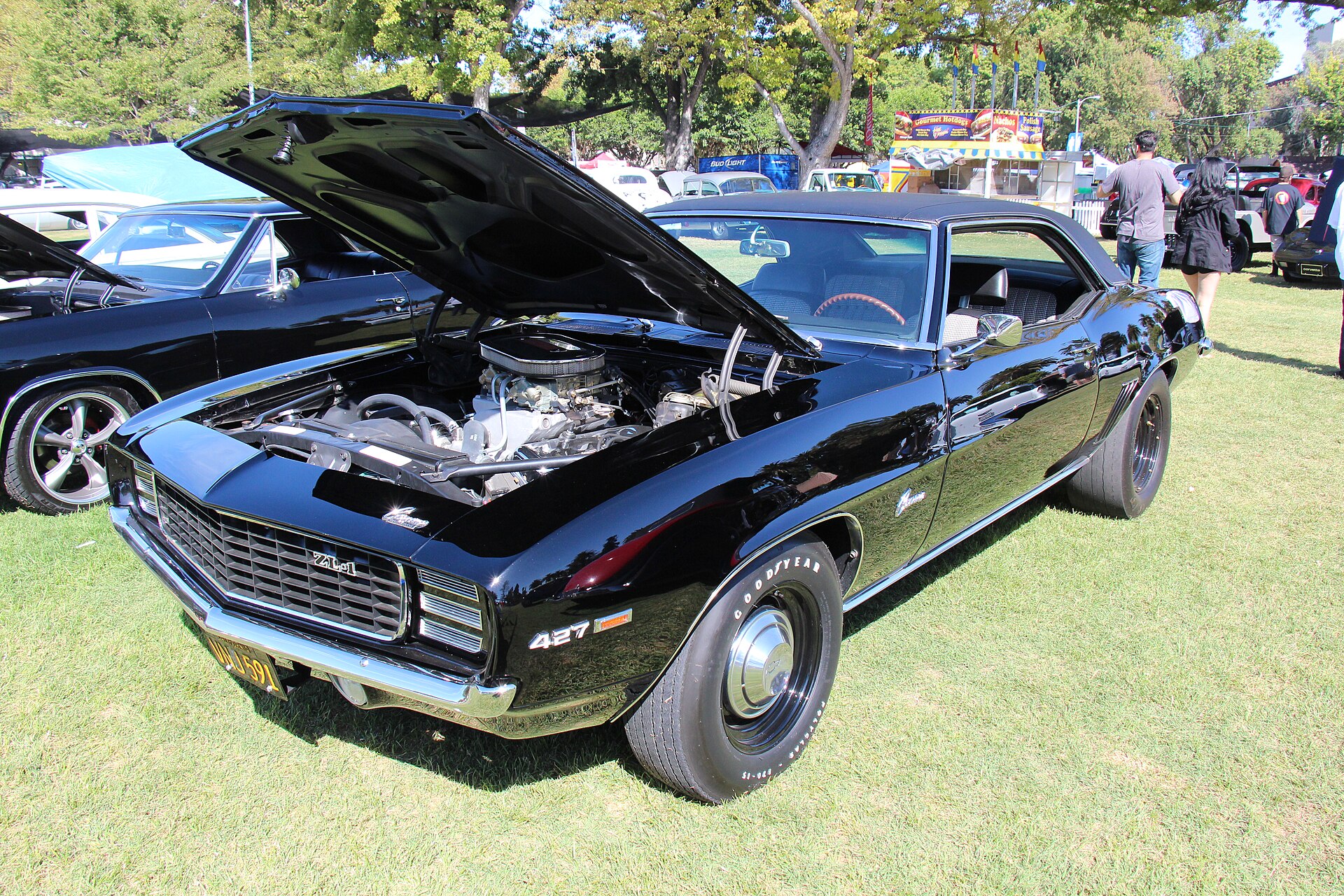
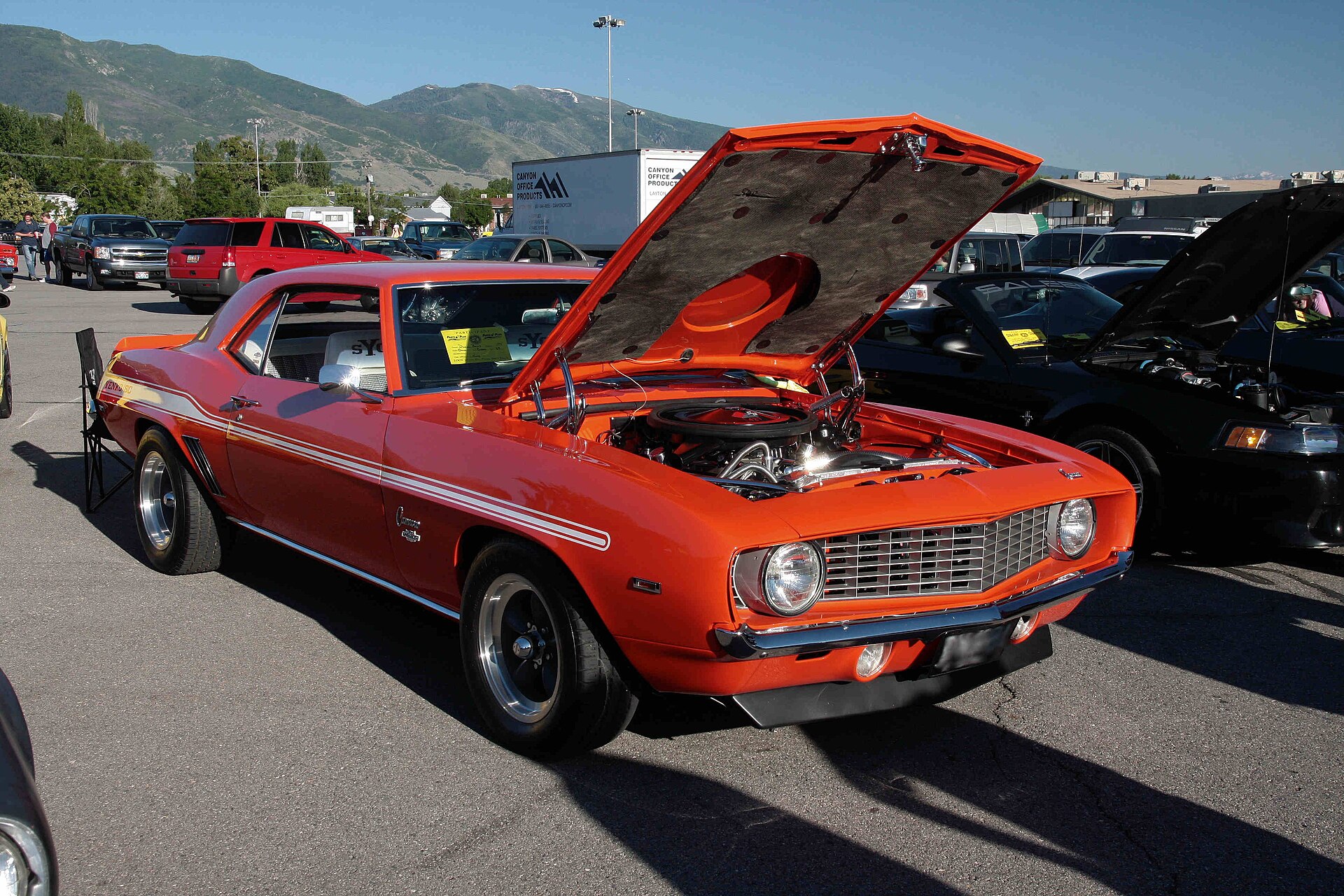
The conversions were labour-intensive, so for 1969 Yenko used the COPO system to have the L72 installed on Chevrolet's own production line. The order was COPO 9561. Chevrolet rated the iron-block L72 at 317 kW (425 hp, SAE gross) at 5,600 rpm and 624 Nm (460 lb-ft) at 4,000 rpm. Yenko ordered 201 cars: 171 with the four-speed and 30 with the Turbo Hydra-Matic 400 automatic.
Chevy Hardcore lists the 1969 specification:
- power front disc brakes and the Z28's front anti-roll bar;
- a heavy-duty radiator and high-performance suspension;
- a 4.10:1 Positraction rear axle with heat-treated half-shafts;
- 15 × 7-inch rally wheels;
- front and rear spoilers and a cowl-induction bonnet;
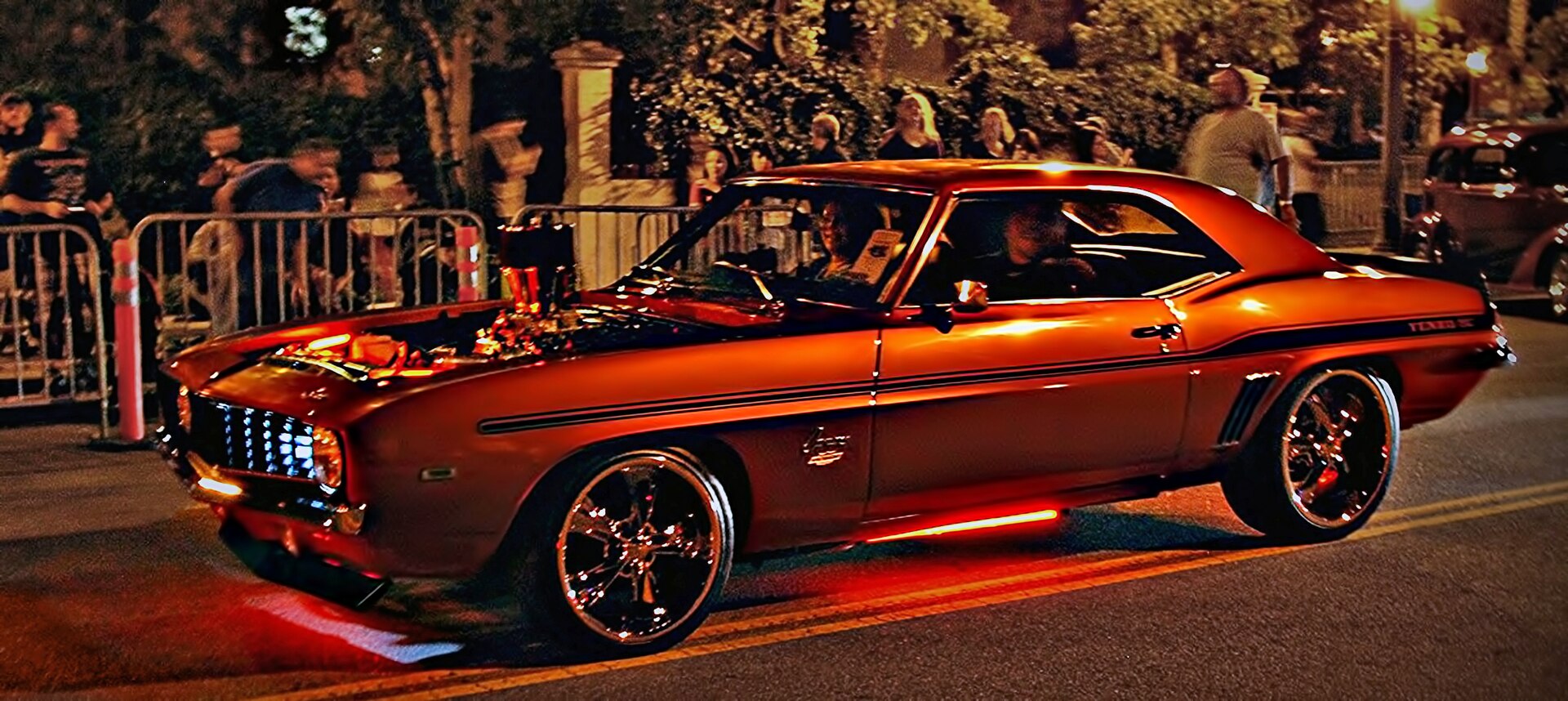
- "Yenko 427" badges, optional twin side and bonnet stripes in black or white and optional "sYc" lettering on the headrests.
The cars were offered in six special colours, and the standard interior was black. Wikipedia notes that around 1,000 Camaros in all received the L72 that year, through Yenko and other channels.
The other COPO 427: the ZL1
Next to the iron-block COPO 9561 there was COPO 9560, the ZL1, with an all-aluminium 427. Only 69 Camaros were built with it. Drag racer Dick Harrell conceived the package, and it was ordered through Fred Gibb Chevrolet in La Harpe, Illinois. The engine alone cost more than a base V8 Camaro.
| 1969 COPO engine | Block | Power (SAE gross) | Torque | Camaros built |
|---|---|---|---|---|
| COPO 9561, L72 427 | cast iron | 317 kW (425 hp) at 5,600 rpm | 624 Nm (460 lb-ft) at 4,000 rpm | Yenko ordered 201 |
| COPO 9560, ZL1 427 | aluminium | 321 kW (430 hp) at 5,200 rpm; 280 kW (376 hp) net as installed | 610 Nm (450 lb-ft) at 4,400 rpm | 69 |
With 69 cars against Yenko's 201, the ZL1 was the rarer of the two COPO Camaros.

Don Yenko and the later Yenkos
Don Yenko died in 1987 at the age of 59 in a plane crash, Chevy Hardcore reports. The name did not disappear. Wikipedia mentions a 1981 Yenko Turbo Z, the restart of 1969-style Yenko Camaro production by Classic Automotive Restoration Specialists in 2007, a modern Yenko Camaro shown at SEMA in 2009 and the Yenko programme of Specialty Vehicle Engineering announced in 2016. These later cars lie outside the 1967–1969 period covered by this page.
Checking a Yenko Camaro
- Year: 1967–1968 cars are dealer conversions; 1969 cars were built by Chevrolet under COPO 9561.
- Paperwork: COPO and dealer documents are essential, because the Yenko look is easy to copy.
- Gearbox split: of the 201 cars of 1969, 171 had the four-speed and 30 the automatic.
- Equipment: a 1969 car should have front disc brakes, the 4.10:1 Positraction axle and the cowl-induction bonnet.
- ZL1 or Yenko: an aluminium-block 427 means a COPO 9560 ZL1, a different car.
Photo gallery


Video

Chevrolet Yenko Camaro: first vs latest generation
| Spec | Yenko Super Camaro | Yenko Camaro II | Change |
|---|---|---|---|
| Years | 1967–1968 | 1969 | 2 years apart |
| Most powerful version | 336 kW (457 PS) | 317 kW (431 PS) | −19 kW (−6%) |
Oldest and newest generation in the 1cars catalog. Power is the strongest version of each; other rows are shown only when both generations have the figure.
Image credits · Photos from Wikimedia Commons under free licences
- Chevrolet Yenko Super Camaro · Photo: Dana Hurt / Wikimedia Commons, CC BY-SA 4.0
- Chevrolet Yenko Camaro II · Photo: Sicnag / Wikimedia Commons, CC BY 2.0
Chevrolet Yenko Camaro in our rankings
- No. 1 of 94 · Most powerful cars of the 1960s (336 kW)
- No. 43 of 557 · Biggest engines: cars (6,997 cc · top 8%)
- No. 32 of 173 · Biggest engines: coupes (6,997 cc · top 20%)
- No. 32 of 154 · Most powerful American cars (336 kW · top 23%)
- No. 230 of 859 · Most powerful cars (336 kW · top 28%)
- No. 115 of 368 · Most torque: cars (624 Nm · top 32%)
More powerful than 98% of ranked cars of the 1960s in the 1CARS catalog (No. 1 of 94).
Chevrolet Yenko Camaro photos 6
FAQ
What is a Yenko Camaro?
A Chevrolet Camaro of 1967–1969 sold by Yenko Chevrolet of Canonsburg, Pennsylvania, with the 427 L72 V8 instead of the factory engines.
How many 1969 Yenko Camaros were built?
201, according to Wikipedia and Chevy Hardcore: 171 with a four-speed manual and 30 with an automatic.
What is COPO 9561?
The Central Office Production Order under which Chevrolet installed the L72 427 in 1969 Camaros, rated at 317 kW (425 hp, SAE gross).
What is the difference between a Yenko and a COPO ZL1?
The Yenko used the cast-iron L72 427; the ZL1 (COPO 9560) had an all-aluminium 427, and only 69 were built.
When did Don Yenko die?
In 1987, at 59, in a plane crash.
Data sources
Data checked by an editor against the sources below.
- Wikipedia — Yenko Camaro
- Wikipedia — Chevrolet Camaro (first generation)