
 DS 4
All generations, specs and history
Published Sources (5) Report an error
By Felix Hartmann, Automotive Technology & EV Contributor
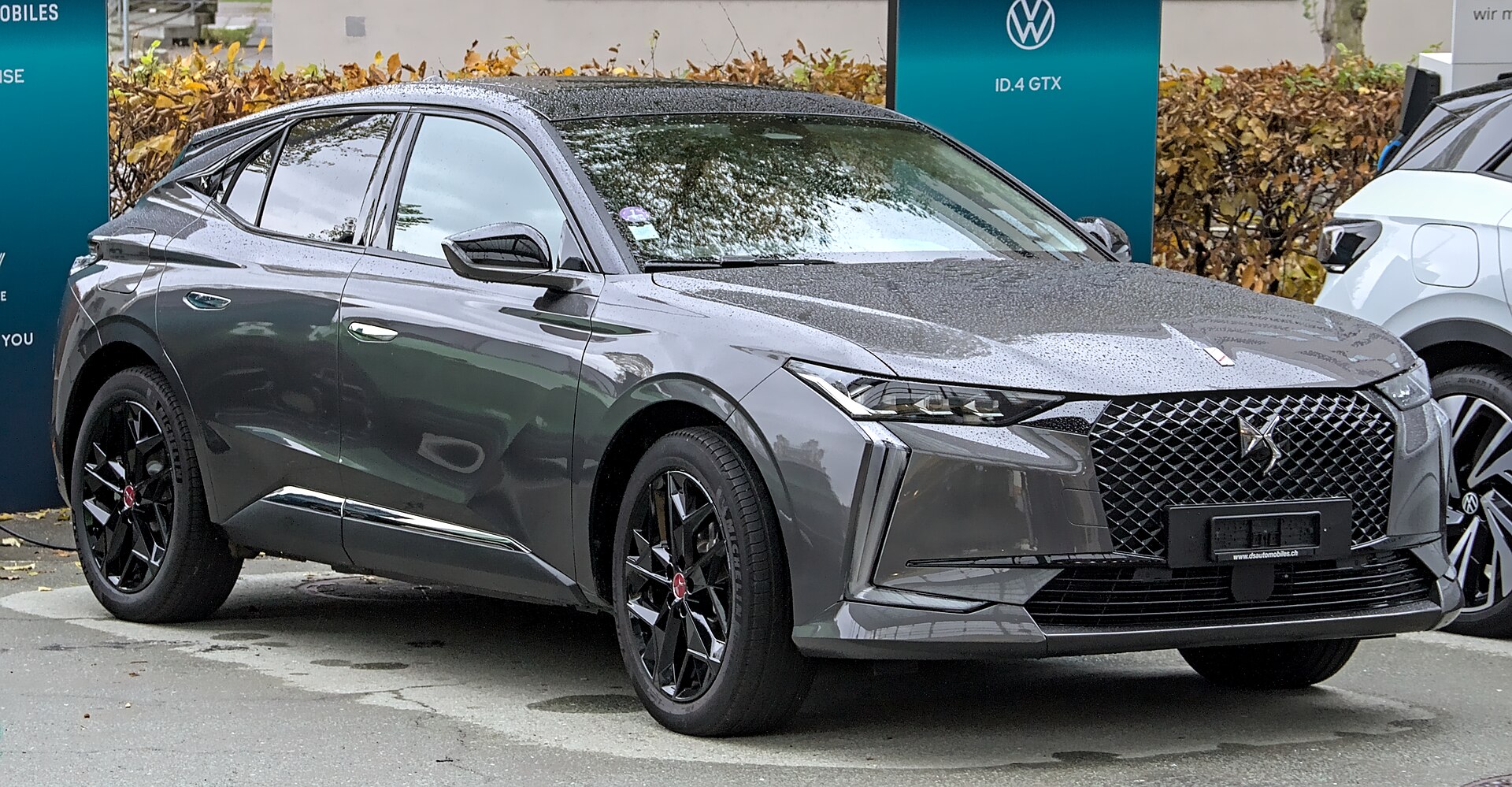
- Built
- 2010–present
- Generations
- 2
- Top power
- 165 kW (224 PS)
Timeline
DS 4 generations
Click a generation for its own page

- DS4 2010–2018 · Hatchback, Crossover · 82–155 kW (111–211 PS)
- DS 4 / N°4 Current 2021–now · Hatchback, Crossover · 96–165 kW (131–224 PS)
Newest first · 2 generations since 2010
- 2021 / N°4 In production 2021–now · Hatchback, Crossover · 96–165 kW (131–224 PS)
-
2010
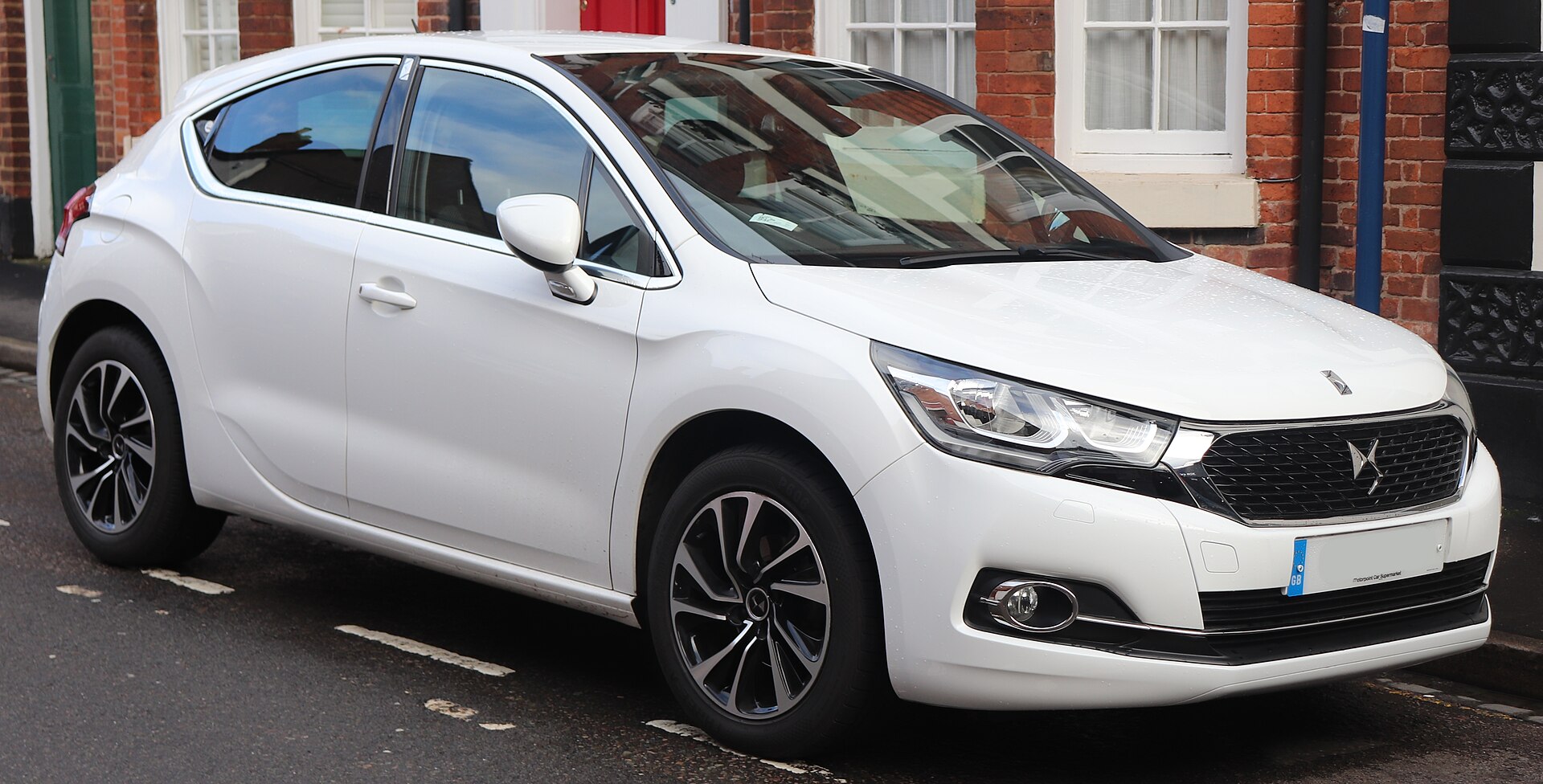
All generations by year: DS 4 / N°4 (2021–now) · DS4 (2010–2018)
Which one is mine?
Pick the year of first registration to see which generation it is.
- DS 4 / N°4 2021–present
- DS4 2010–2018
The DS 4 is a premium compact hatchback with crossover styling, unveiled on 3 February 2021 and built at the Opel plant in Rüsselsheim, Germany, on Stellantis' EMP2 platform. Its name revives the Citroën DS4 of 2011-2018. A 2025 update renamed the car DS N°4 and added the first fully electric version, the E-Tense with 156 kW (213 PS) and up to 450 km of WLTP range.
In short
- Two generations: the Citroën, later DS, DS4 of 2011-2018 and the DS 4 of 2021, renamed N°4 in May 2025.
- Current versions: Hybrid 145, Plug-in Hybrid 225, BlueHDi 130 diesel and the electric E-Tense with a 58.3 kWh usable battery.
- Euro NCAP 2022: four stars as standard, five stars with the optional Safety Pack Plus.
- German list prices from EUR 39,230 for the N°4 Hybrid 145 Pallas in 2026 (ADAC, valid since September 2025).
Size at a glance
| Dimensions | DS 4 / N°4 |
|---|---|
| Length | 4,400 mm173.2 in |
| Width | 1,830 mm72.0 in |
| Height | 1,470 mm57.9 in |
| Wheelbase | 2,675 mm105.3 in |
| Boot | 390 L13.8 cu ft |
Running cost
Fuel · DS 4 E-Tense 225 (PHEV)
about 350 EUR fuel a year at 15,000 km
1.4 l/100 km · petrol at 1.75 EUR/l · change mileage, fuel price or version
Specs by version
Engines
| Version | Engine | Power | Torque | Gearbox | Drive | Production years |
|---|---|---|---|---|---|---|
| Hybrid · 1 version | ||||||
| DS 4 / N°4 · Hybrid 145 eDCT-6 | 1.2 l · 3 cyl · Hybrid 1,199 cc | 107 kW 145 PS143 hp | 230 Nm170 lb-ft | 6-sp Dual-clutch | Front-wheel drive | 2025 |
| Plug-in hybrid · 2 versions | ||||||
| DS 4 / N°4 · Plug-in Hybrid 225 (N°4) | 4 cyl · Plug-in hybrid | 165 kW 224 PS221 hp | 360 Nm266 lb-ft | 7-sp Dual-clutch | Front-wheel drive | 2025 |
| DS 4 / N°4 · E-Tense 225 (PHEV) | 1.6 l · 4 cyl · Plug-in hybrid 1,598 cc | 165 kW 224 PS221 hp | 360 Nm266 lb-ft | Automatic | Front-wheel drive | 2021–2025 |
| Electric · 1 version | ||||||
| DS 4 / N°4 · E-Tense 213 (electric) | Electric | 156 kW 212 PS209 hp | 343 Nm253 lb-ft | Single-speed | Front-wheel drive | 2025 |
| Diesel · 1 version | ||||||
| DS 4 / N°4 · BlueHDi 130 | 4 cyl · Diesel | 96 kW 131 PS129 hp | - | Automatic | Front-wheel drive | 2021 |
| Petrol · 1 version | ||||||
| DS 4 / N°4 · PureTech 130 | 3 cyl · Petrol | 96 kW 131 PS129 hp | - | Automatic | Front-wheel drive | 2021–2024 |
Performance
Show all 4 versions
| Version | 0–100 km/h | Top speed | Fuel consumption | CO₂ |
|---|---|---|---|---|
| Hybrid · 1 version | ||||
| DS 4 / N°4 · Hybrid 145 eDCT-6 | - | - | - | 116 g/km |
| Plug-in hybrid · 2 versions | ||||
| DS 4 / N°4 · Plug-in Hybrid 225 (N°4) | 7.4 s 0–62 mph | - | - | - |
| DS 4 / N°4 · E-Tense 225 (PHEV) | 8.0 s 0–62 mph | 233 km/h145 mph | 1.4 l/100 km168.0 mpg US · 201.8 mpg UK | 32 g/km |
| Electric · 1 version | ||||
| DS 4 / N°4 · E-Tense 213 (electric) | - | 160 km/h99 mph | 15.0 kWh/100 km24.1 kWh/100 mi | - |
Dimensions and weight
Show all 4 versions
| Version | Length | Width | Height | Wheelbase | Kerb weight | Boot | Battery |
|---|---|---|---|---|---|---|---|
| Hybrid · 1 version | |||||||
| DS 4 / N°4 · Hybrid 145 eDCT-6 | - | - | - | - | - | 430 l15.2 cu ft | - |
| Plug-in hybrid · 2 versions | |||||||
| DS 4 / N°4 · Plug-in Hybrid 225 (N°4) | - | - | - | - | - | 360 l12.7 cu ft | 15 kWh |
| DS 4 / N°4 · E-Tense 225 (PHEV) | 4,400 mm173.2 in | 1,830 mm72.0 in | 1,470 mm57.9 in | 2,675 mm105.3 in | 1,790 kg3,946 lb | 390 l13.8 cu ft | 10 kWh |
| Electric · 1 version | |||||||
| DS 4 / N°4 · E-Tense 213 (electric) | 4,400 mm173.2 in | 1,830 mm72.0 in | 1,470 mm57.9 in | 2,675 mm105.3 in | 1,792 kg3,951 lb | 390 l13.8 cu ft | 58 kWh |
Verified Manufacturer and type-approval data from our catalog · Sources and methodology
DS 4 at a glance
| Specification | DS 4 / DS N°4 (second generation) |
|---|---|
| Segment and body | premium C-segment five-door hatchback; DS 4 Cross with crossover trim |
| Production | Opel plant, Rüsselsheim (Germany), sales from the fourth quarter of 2021 |
| Platform | Stellantis EMP2, shared with the Peugeot 308 and Opel Astra L |
| Drive | front-wheel drive |
| Power | 96 kW (130 PS) to 165 kW (224 PS) |
| Battery | 58.3 kWh usable (E-Tense); 14.6 kWh (plug-in hybrid since 2025) |
| WLTP range | 449-450 km (E-Tense); up to 81 km electric (plug-in hybrid) |
| Length / wheelbase | 4,400 mm (173.2 in) / 2,675 mm (105.3 in) |
| Boot | 430 l (Hybrid), 390 l (E-Tense), 360 l (plug-in hybrid) |
| Euro NCAP | 4 stars standard, 5 stars with Safety Pack Plus (2022) |
| Price from | EUR 39,230 in Germany (N°4 Hybrid 145 Pallas, 2026) |
The first DS4 of 2010-2018
The original DS4 was a Citroën model, produced from 30 August 2010 and launched internationally in March 2011. It was built in Mulhouse, France, and in Gurun, Malaysia, on the PSA PF2 platform of the Citroën C4, with a design by Olivier Vincent. The car was 4,275 mm long on a 2,612 mm wheelbase and had a 385-litre boot.
| Generation | Years | Platform and plant | Engines | Euro NCAP |
|---|---|---|---|---|
| DS4 (Citroën, DS from 2015) | 2010-2018 | PF2, Mulhouse | 1.6 VTi 88 kW (120 PS) to 1.6 THP 147 kW (200 PS); HDi diesels up to 120 kW (163 PS) | 5 stars (2011) |
| DS 4 / N°4 | since 2021 | EMP2, Rüsselsheim | PureTech, BlueHDi, Hybrid, plug-in hybrid, electric | 4 stars (5 with pack, 2022) |
When DS Automobiles became a separate brand, the August 2015 facelift removed the Citroën badges, added the DS Wings grille and introduced the raised DS 4 Crossback. Production ended in April 2018; worldwide sales peaked at 33,157 in 2012 and fell to 5,381 in 2018. How DS grew into a stand-alone brand is described in the history of DS Automobiles.

Second-generation DS 4: design, plant and platform
The second DS 4 returned in 2021 after a three-year gap. It was designed in Paris and is assembled alongside the Opel Astra in Rüsselsheim, using the same EMP2 platform as the Opel Astra L and the Peugeot 308. ADAC lists it at 4,400 mm long, 1,830 mm wide and 1,470 mm tall, on a 2,675 mm wheelbase. Three styles were offered at launch: the standard DS 4, the DS 4 Cross with crossover-style trim, and the Performance Line.
In October 2022 DS revised the trim structure, added the Opera flagship and increased the electric range of the plug-in hybrid. In the range, the DS 4 sits below the DS 7 SUV.
DS 4 engines and the electric N°4 E-Tense
At launch in October 2021 ADAC listed the PureTech 130 at 96 kW (130 PS), the PureTech 180 at 133 kW (181 PS), the PureTech 225 at 165 kW (224 PS), the BlueHDi 130 diesel at 96 kW (130 PS) and the E-Tense 225 plug-in hybrid. The pure petrol engines were dropped by the end of 2024 and replaced by the Hybrid 136 at 100 kW (136 PS), followed by the Hybrid 145 in 2025.
| Version | Engine or battery | Power and torque | Gearbox | WLTP | 0-100 km/h |
|---|---|---|---|---|---|
| Hybrid 145 | 1.2 l 3 cyl. turbo, 21 kW motor | 107 kW (145 PS), 230 Nm | 6-speed dual-clutch | from 116 g/km CO2 | - |
| Plug-in Hybrid 225 | 1.6 l 4 cyl. turbo + motor, 14.6 kWh | 165 kW (224 PS), 360 Nm | 7-speed dual-clutch | up to 81 km electric | 7.4 s |
| BlueHDi 130 | 1.5 l 4 cyl. diesel | 96 kW (130 PS) | automatic | - | - |
| E-Tense | 58.3 kWh usable | 156 kW (213 PS), 343 Nm | single-speed | 449-450 km | - |
| E-Tense 225 (2021-2025) | 1.6 l + 81 kW motor, 12 kWh gross | 165 kW (224 PS), 360 Nm | automatic | 62 km electric | 8.0 s |
The electric E-Tense is the first battery-electric DS 4. DS quotes 11 kW AC charging as standard and up to 120 kW DC, with 20-80% in about 30 minutes; ADAC lists 100 kW DC and 31 minutes for the same charge. The battery uses a nickel-rich chemistry, and vehicle-to-load output is available with an adapter.
The 2025 N°4 update
DS announced the update on 14 May 2025 and renamed the car N°4, in line with the larger N°8. The front end was redesigned, the 19-inch wheels became standard, and the cabin gained a 10-inch touchscreen, a 10.25-inch digital cluster and an extended head-up display projecting a 21-inch image about 4 m ahead. DS Drive Assist 2.0 provides level 2 assisted driving, and an infrared camera monitors driver attention. Orders opened in France and Germany in June 2025, and electrive reported deliveries from September 2025. All versions continue to be built in Rüsselsheim.
Safety: four stars or five with Safety Pack Plus
Euro NCAP published the DS 4 result on 13 April 2022. In standard form the car received four stars because its camera-only automatic emergency braking performed poorly in car-to-car tests. With the optional Safety Pack Plus, which adds a radar sensor, the car earned five stars. Standard equipment includes an active bonnet and a centre airbag between the front seats. Wikipedia gives scores of 85% for adult occupants, 86% for child occupants, 74% for vulnerable road users and 65% for safety assist.
N°4 prices in Germany and rivals
ADAC lists the N°4 in Pallas, DS Performance Line and Étoile trims. The Hybrid 145 Pallas costs EUR 39,230 and the BlueHDi 130 Pallas EUR 40,230 in 2026. The Plug-in Hybrid 225 Pallas and the electric E-Tense Pallas are both listed at EUR 46,490 in 2026, so buyers in Germany pay the same for either. The most expensive version, the Plug-in Hybrid 225 Étoile Nappa, costs EUR 55,490 in 2026. For comparison, the 2021 launch model started at EUR 28,900 with the PureTech 130 Bastille.
The DS 4 targets premium compact cars such as the Audi A3. electrive compares the electric N°4 with its Stellantis sister model, the Peugeot E-408, priced at EUR 46,600 in France in 2025. For buyers who drive mostly short distances the Hybrid 145 is the cheapest choice; with home charging and longer daily trips, the E-Tense makes sense at the same German price as the plug-in hybrid. Other DS models are listed in the DS catalogue.
Photo gallery


DS 4: first vs latest generation
| Spec | DS4 | DS 4 / N°4 | Change |
|---|---|---|---|
| Years | 2010–2018 | 2021–present | 11 years apart |
| Most powerful version | 155 kW (211 PS) | 165 kW (224 PS) | +10 kW (+6%) |
Oldest and newest generation in the 1cars catalog. Power is the strongest version of each; other rows are shown only when both generations have the figure.
DS 4 in our rankings
- No. 12 of 89 · Heaviest hatchbacks (1,792 kg · top 14%)
- No. 15 of 103 · Widest hatchbacks (1,830 mm · top 15%)
- No. 14 of 87 · Fastest hatchbacks (233 km/h · top 18%)
- No. 15 of 77 · Biggest boot: hatchbacks (430 l · top 20%)
- No. 25 of 108 · Longest hatchbacks (4,400 mm · top 24%)
- No. 293 of 1193 · Longest-running car nameplates (16 years · top 25%)
Heavier than 86% of ranked hatchbacks in the 1CARS catalog (No. 12 of 89).
FAQ
Is the DS N°4 the same car as the DS 4?
Yes. The N°4 is the DS 4 after its 2025 update, announced on 14 May 2025. It keeps the EMP2 platform, the Rüsselsheim plant and the plug-in hybrid, and adds a new front, new interior technology and the first electric version, the E-Tense.
What is the range of the electric DS N°4 E-Tense?
DS quotes 450 km on the WLTP cycle and ADAC lists 449 km. The car has a 58.3 kWh usable battery, 156 kW (213 PS) and 343 Nm, and charges from 20 to 80% in about 30 minutes on a fast charger.
Where is the DS 4 built?
The second-generation DS 4 is built at the Opel plant in Rüsselsheim, Germany, next to the Opel Astra. The first-generation DS4 of 2010-2018 was built in Mulhouse, France, and in Gurun, Malaysia.
How many Euro NCAP stars does the DS 4 have?
The DS 4 has four stars in standard form and five stars with the optional Safety Pack Plus, according to Euro NCAP's April 2022 results. The pack adds a radar sensor that improves automatic emergency braking in car-to-car scenarios.
Data sources
Data checked by an editor against the sources below.
- Wikipedia - DS No. 4
- Wikipedia - DS 4
- Euro NCAP - Next To Best Honda Hr V And Ds 4 Go For Four While Dacia Struggles Again
- ADAC - 2generation
- ADAC


