 Volkswagen Passat B4
Specs, engines and history
Published Report an error
By Felix Hartmann, Automotive Technology & EV Contributor
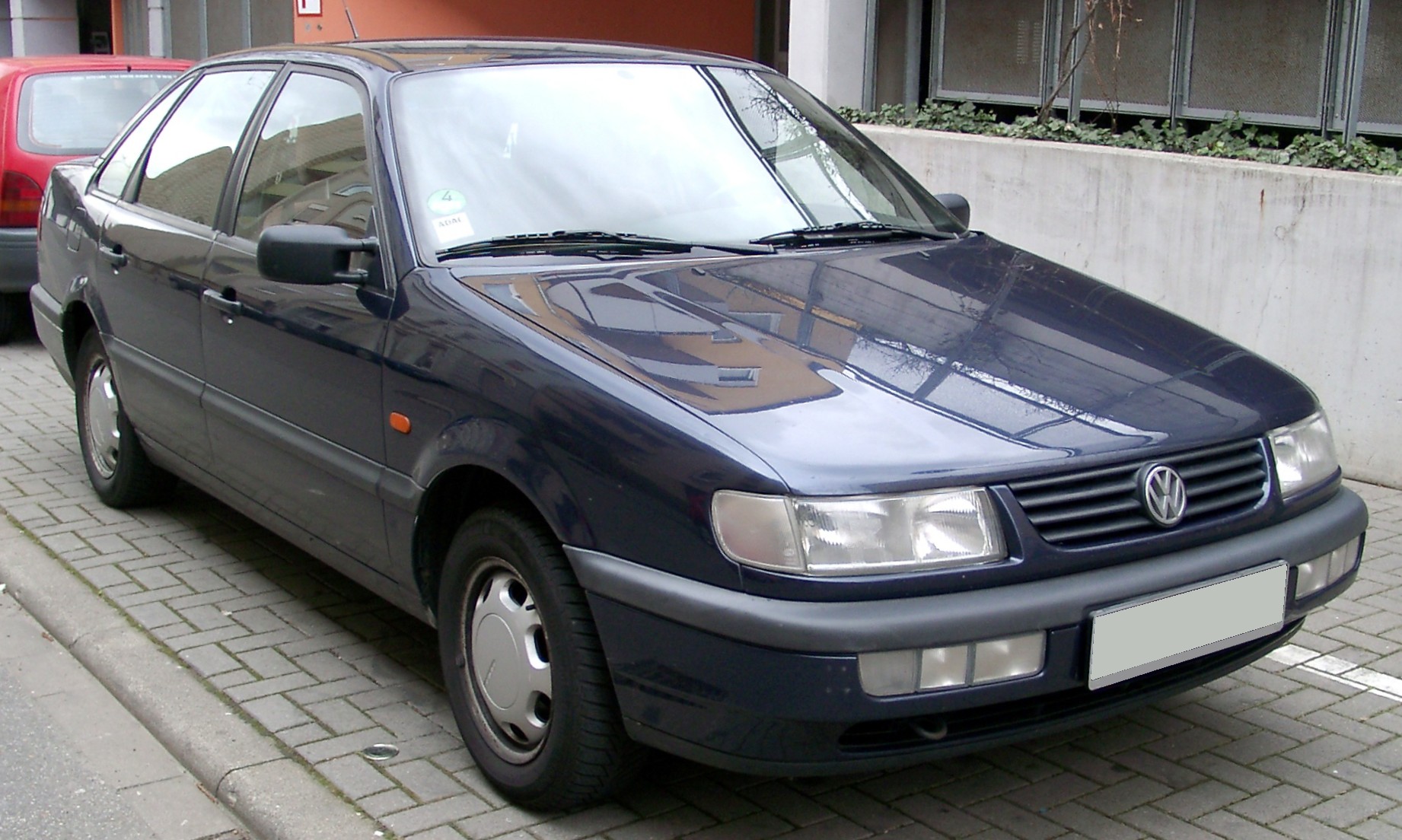
Which Passat B4 to choose
Our verdict · Felix Hartmann
- For economy: the 1.9 TDI, preferably the 81 kW (110 PS) AFN of 1996–1997 with 235 Nm.
- For smooth performance: the 2.8 VR6, the fastest B4 at 224 km/h.
- For all-weather use: a 2.0 Syncro or the 2.9 VR6 Syncro, the only B4 with 135 kW (184 PS).
- For space: the Variant estate, 1,491 mm tall and only 13 mm shorter than the saloon.
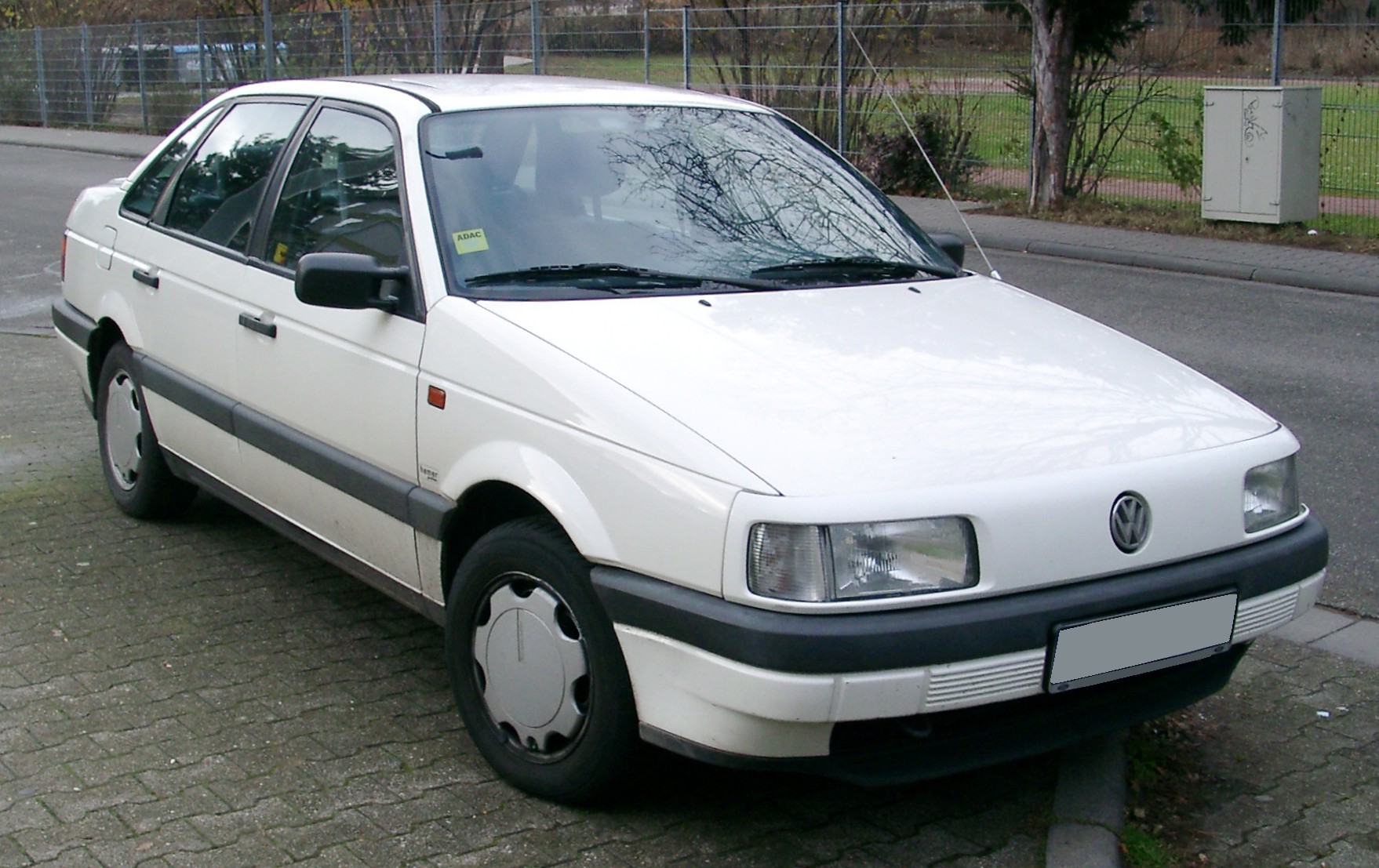
The Volkswagen Passat B4 is the 1993–1997 version of Volkswagen's mid-size family car, sold as a saloon and a Variant estate. Technically it was a thorough facelift of the Passat B3: the roof and glasshouse stayed, but every other outer panel changed and the grille returned. It is best known today as the Passat that brought the 1.9 TDI direct-injection diesel into the range.
In short
- Built from October 1993 to May 1997 in Emden (Germany) and Vorst (Belgium).
- Saloon and Variant, front-wheel drive or Syncro four-wheel drive.
- Engines from 55 kW (75 PS) to the 135 kW (184 PS) 2.9 VR6; diesels up to the 81 kW (110 PS) 1.9 TDI.
- Dual front airbags and seat belt pretensioners added; dashboard carried over from the B3.
Passat B4 at a glance
| Specification | Volkswagen Passat B4 |
|---|---|
| Production | October 1993 – May 1997 |
| Plants | Emden, Germany; Vorst (Brussels), Belgium |
| Class | large family car (D-segment) |
| Body styles | 4-door saloon, 5-door estate (Variant) |
| Layout | transverse front engine, front-wheel drive or four-wheel drive (Syncro) |
| Platform | Volkswagen Group B4 |
| Power range | 55–135 kW (75–184 PS) |
| Gearboxes | 5-speed manual, 4-speed automatic |
| Trims (Europe) | L, CL, GL, GT |
| Predecessor / successor | Passat B3 / Passat B5 |
The B4 is listed in our Volkswagen catalogue. Its sister model in the compact class, the Golf Mk3, shares the grille theme; you can follow that line in our article on all Golf generations.
What changed from the B3
Volkswagen did not develop a new car for 1993. Instead it reworked the B3 so heavily that the result is counted as a generation of its own. The B4 kept the B3's roof and glass, but every other outer panel was new. The most visible change was at the front: the smooth, grille-less nose of the B3 gave way to a conventional grille that matched the Golf Mk3 and the Jetta Mk3 of the same period.
The saloon grew to 4,610 mm in length and the Variant to 4,597 mm, on an unchanged wheelbase of 2,624 mm. Width rose to 1,714 mm. The saloon stood 1,433 mm tall, the estate 1,491 mm.
Inside, the changes were smaller. The basic dashboard design stayed, but safety equipment improved with dual front airbags and seat belt pretensioners.

Passat B4 engines and performance
The B4 kept most of the B3's petrol engines, raised the output of the 2.0 16V and added a larger VR6. The big news was on the diesel side: the 1.9 TDI, with direct injection and a turbocharger, gave the Passat strong mid-range torque and low consumption.
| Engine | Code | Years | Power | Torque | Top speed |
|---|---|---|---|---|---|
| 1.6 petrol | AEK / AFT | 1994–1997 | 74 kW (101 PS) | 135–140 Nm | 186 km/h |
| 1.8 petrol | AAM / ANN | 1993–1997 | 55 kW (75 PS) | 140 Nm | 169 km/h |
| 1.8 petrol | ABS / ADZ / ANP | 1993–1997 | 66 kW (90 PS) | 145 Nm | 178 km/h |
| 2.0 petrol (also Syncro) | 2E / ADY / AGG | 1993–1997 | 85 kW (115 PS) | 166 Nm | 195 km/h |
| 2.0 16V petrol | ABF | 1993–1997 | 110 kW (150 PS) | 180 Nm | 213 km/h |
| 2.8 VR6 | AAA | 1993–1997 | 128 kW (174 PS) | 235 Nm | 224 km/h |
| 2.9 VR6 (also Syncro) | ABV | 1994–1997 | 135 kW (184 PS) | 245 Nm | 218 km/h |
| 1.9 TD | AAZ | 1993–1996 | 55 kW (75 PS) | 150 Nm | 165 km/h |
| 1.9 TDI | 1Z / AHU | 1993–1997 | 66 kW (90 PS) | 202 Nm | 178 km/h |
| 1.9 TDI | AFN | 1996–1997 | 81 kW (110 PS) | 235 Nm | 193 km/h |
Compared with the B3, the 2.0 16V gained 10 kW (from 100 to 110 kW) and the new 2.9 VR6 added 7 kW over the 2.8. The 2.9 VR6 was offered with front-wheel drive and with Syncro; its quoted top speed of 218 km/h is below the 224 km/h of the 2.8. The TDI engines produced their maximum torque at only 1,900 rpm; the 66 kW (90 PS) version gave more torque than the 2.0 petrol, and the 81 kW (110 PS) version as much as the 2.8 VR6.

Fuel economy and range
The B4 had a 70-litre fuel tank. With the TDI, a saloon could cover more than 1,300 km (800 miles) on one tank. All versions used a five-speed manual or a four-speed automatic.

Key specifications: Passat B4 1.9 TDI (81 kW)
| Parameter | Metric | Imperial |
|---|---|---|
| Engine | 1.9-litre four-cylinder TDI (AFN) | 1.9-litre TDI |
| Power | 81 kW (110 PS) at 4,150 rpm | 81 kW (108 hp) |
| Torque | 235 Nm at 1,900 rpm | 173 lb-ft |
| Top speed | 193 km/h | 120 mph |
| Fuel tank | 70 l | 18.5 US gal |
| Length (saloon) | 4,610 mm | 181.5 in |
| Width | 1,714 mm | 67.5 in |
| Wheelbase | 2,624 mm | 103.3 in |
| Height (saloon / Variant) | 1,433 / 1,491 mm | 56.4 / 58.7 in |
North America and other markets
North American buyers had to wait: the B4 went on sale in the United States only for the 1995 model year. Three versions were offered there: the GLS with the 2.0 eight-valve four, the GLX with the 2.8 VR6 rated at 128 kW (172 hp), and the TDI. Fewer than 1,000 TDI wagons were sold in the US in 1996–1997.
Canada started earlier, for the 1994 model year, with the VR6 only. The 2.0 and the 1.9 turbodiesel followed in 1995, and the TDI replaced the older diesel in 1996. Mexico received only the VR6 in GLX trim, imported and priced above the locally built Volkswagens because of import tariffs.

End of production and the B5
The B5 Passat replaced the B4 saloon in 1996, and B4 production ended completely in 1997. Together, the B3 and B4 form one line of transverse-engined Passats that ran for nine years, from 1988 to 1997.
For a modern comparison, see our article on the Passat B8 and its facelift, or put any two cars side by side in the car comparison tool.
Photo gallery

Volkswagen Passat B4 in our rankings
In production longer than 17% of ranked nameplates in the 1CARS catalog (No. 845 of 1082).
FAQ
What years was the Passat B4 made?
From October 1993 to May 1997. The saloon was replaced by the B5 in 1996, and the last B4 cars were built in 1997.
Is the Passat B4 a new car or a facelift?
A heavy facelift of the B3. The roof and glasshouse were kept, but all other outer panels changed and a grille was added.
Which engines did the Passat B4 have?
Petrol engines from 1.6 to 2.9 litres (55–135 kW) and diesels from the 1.9 TD to the 1.9 TDI with 66 or 81 kW.
How far can a Passat B4 TDI go on one tank?
With its 70-litre tank, a TDI saloon can cover more than 1,300 km.
Was the Passat B4 sold in the United States?
Yes, from the 1995 model year, as the GLS, GLX VR6 and TDI.