 Volkswagen California
All generations, specs and history
Published Sources (5) Report an error
By Felix Hartmann, Automotive Technology & EV Contributor
- Built
- 1988–present
- Generations
- 6 · T3 to T7
- Top power
- 180 kW (245 PS)
Timeline
California generations
Click a generation for its own page
- California T3 1988–1990 · Van
- California T4 1990–2003 · Van
- California T5 2003–2015 · Van
- California T6 2015–2019 · Van
- California T6.1 2019–2024 · Van · 81–146 kW (110–199 PS)
- California T7 Current 2024–now · Van · 110–180 kW (150–245 PS)
Newest first · 6 generations since 1988
-
2024
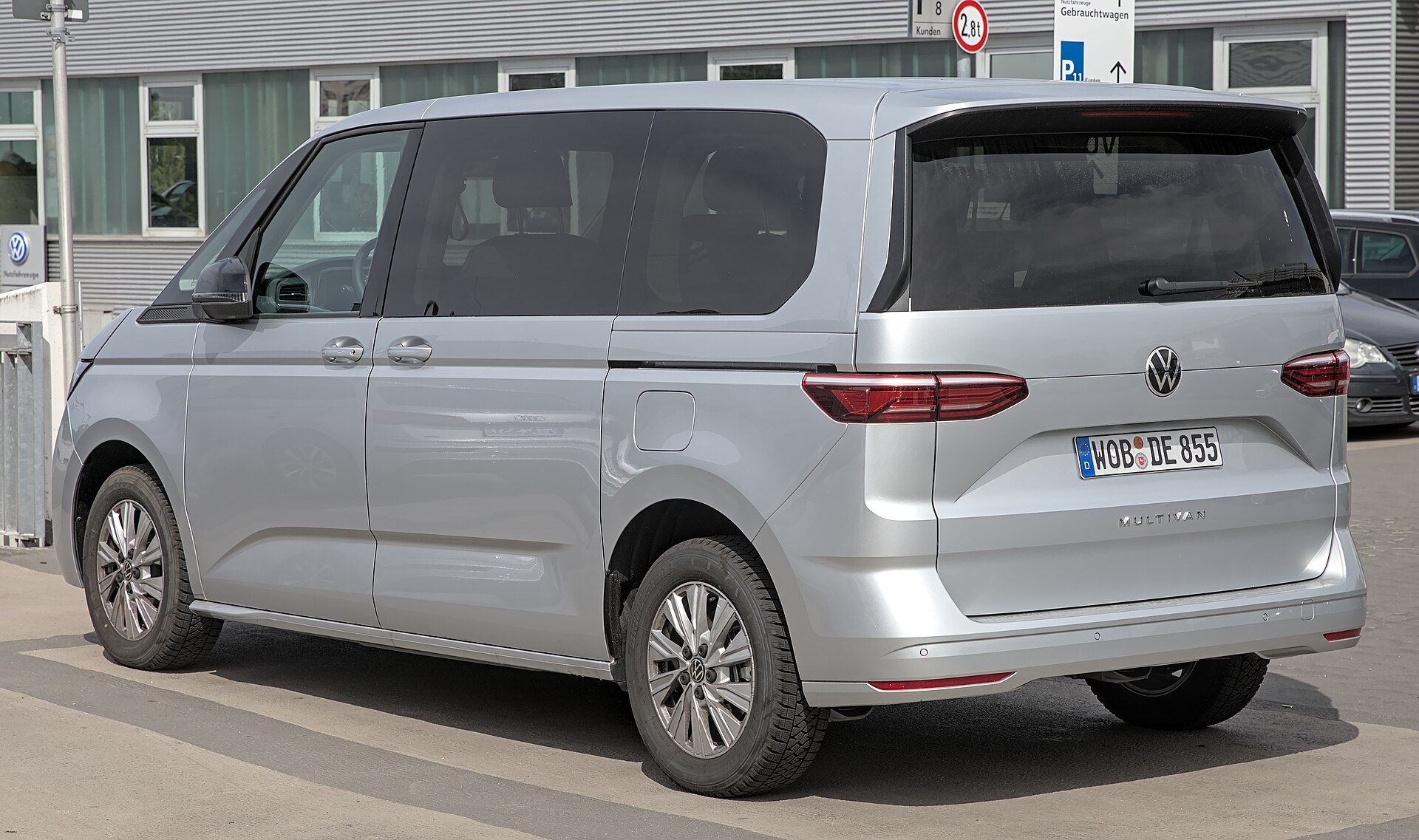
- 2019 T6.1 2019–2024 · Van · 81–146 kW (110–199 PS)
- 2015 T6 2015–2019 · Van
-
2003
-
1990
-
1988
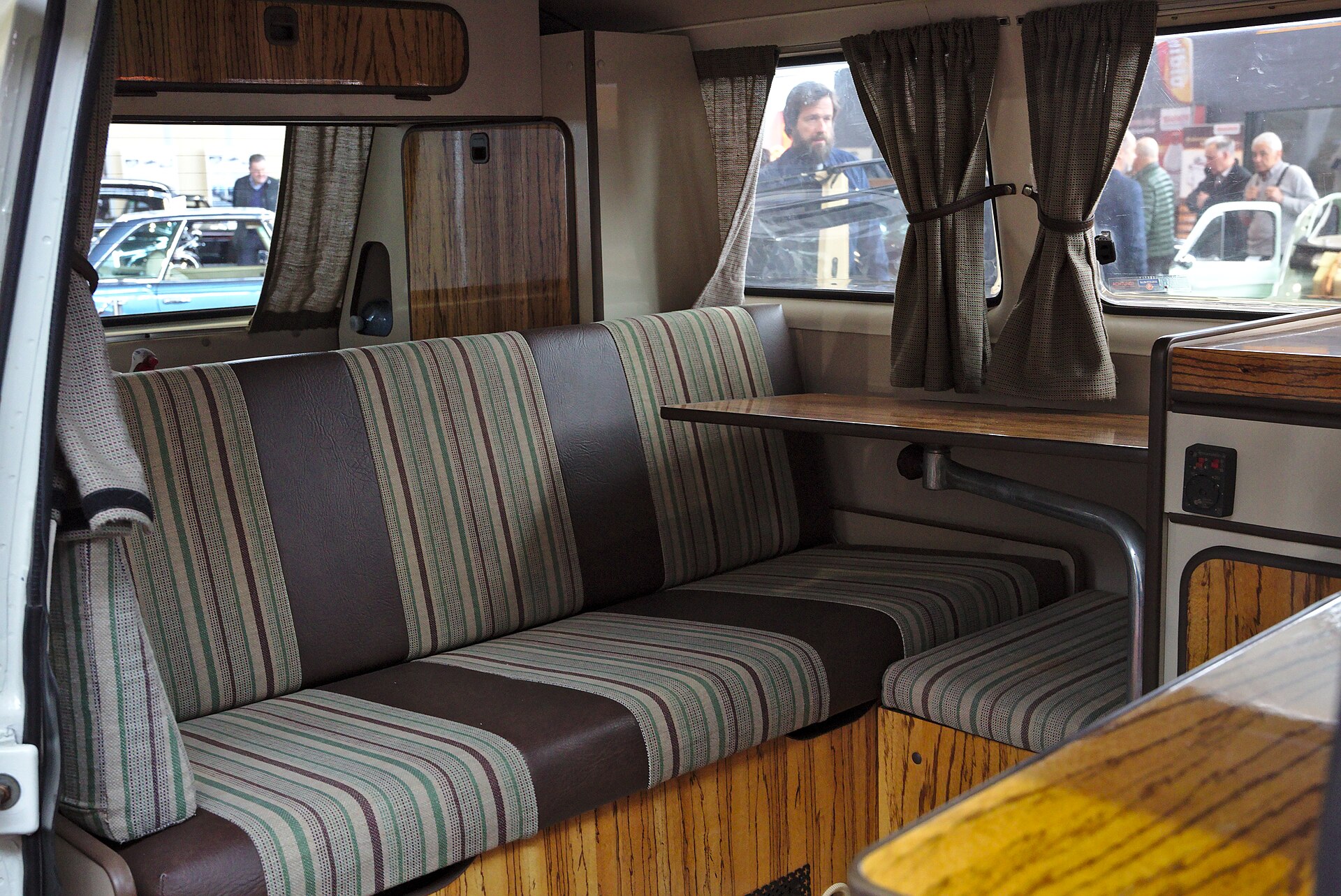


All generations by year: California T7 (2024–now) · California T6.1 (2019–2024) · California T6 (2015–2019) · California T5 (2003–2015) · California T4 (1990–2003) · California T3 (1988–1990)
Which one is mine?
Pick the year of first registration to see which generation it is.
Check by VINWhich California to buy
Our verdict · Felix Hartmann
- For the best value used: a T6.1 with the 110 kW (150 PS) TDI and DSG, which covers most needs and could be ordered with 4MOTION.
- For a family of four that drives every day: a T7 Beach Tour, with six seats, two beds and a mini kitchen option.
- For long trips: an Ocean or Coast, which are registered as motorhomes and have a full kitchen.
- For short trips on electric power: the eHybrid 4MOTION, the first California with a plug-in hybrid and all-wheel drive.
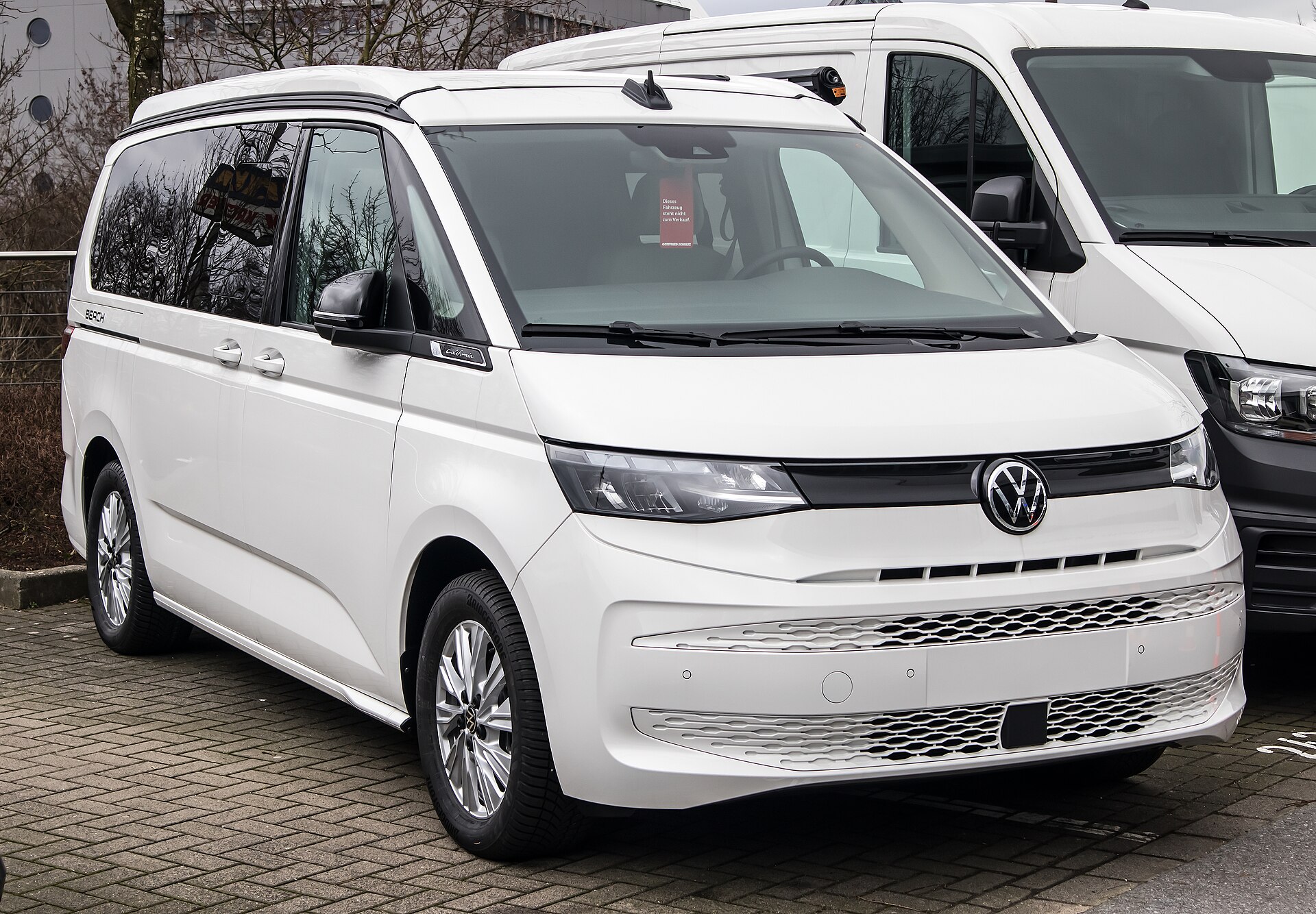
The Volkswagen California is the factory camper van that Volkswagen has sold under this name since 1988, built on the Transporter and, since 2024, on the Multivan. It combines a pop-up roof with a double bed, a kitchen block in the camper versions and the footprint of a large MPV, so it can still be used as an everyday car. The current California is built in Hanover and is the first with sliding doors on both sides and a plug-in hybrid with all-wheel drive.
In short
- Six generations so far: T3 (1988), T4 (1990), T5 (2003), T6 (2015), T6.1 (2019) and the Multivan-based T7 (2024).
- The current range runs from the 110 kW (150 PS) 2.0 TDI to the 180 kW (245 PS) eHybrid 4MOTION plug-in hybrid.
- More than 160,000 Californias had been built by 2018, when Volkswagen celebrated 30 years of the model.
- In Germany the T7 California Beach started from about EUR 62,700 in 2024; the revised 2026 Beach is listed at EUR 66,087 (2026).
Size at a glance
| Dimensions | Volkswagen California T7 |
|---|---|
| Length | 5,173 mm203.7 in |
| Width | 1,941 mm76.4 in |
| Height | 1,990 mm78.3 in |
| Wheelbase | 3,124 mm123.0 in |
Specs by version
Engines
| Version | Engine | Power | Torque | Gearbox | Drive | Production years |
|---|---|---|---|---|---|---|
| Plug-in hybrid · 1 version | ||||||
| T7 · 1.5 TSI eHybrid 4MOTION | Plug-in hybrid | 180 kW 245 PS241 hp | 350 Nm258 lb-ft | 6-sp Dual-clutch | All-wheel drive | 2024 |
| Diesel · 1 version | ||||||
| T7 · 2.0 TDI 150 DSG | Diesel | 110 kW 150 PS148 hp | - | Dual-clutch | Front-wheel drive | 2024 |
| Petrol · 1 version | ||||||
| T7 · 2.0 TSI 204 DSG | Petrol | 150 kW 204 PS201 hp | - | Dual-clutch | Front-wheel drive | 2024 |
Performance
Show all 1 versions
| Version | Top speed |
|---|---|
| T7 · 2024–present | |
| T7 · 1.5 TSI eHybrid 4MOTION | 200 km/h124 mph |
Dimensions and weight
Show all 3 versions
| Version | Length | Width | Height | Wheelbase | Battery |
|---|---|---|---|---|---|
| Plug-in hybrid · 1 version | |||||
| T7 · 1.5 TSI eHybrid 4MOTION | 5,173 mm203.7 in | 1,941 mm76.4 in | 1,990 mm78.3 in | 3,124 mm123.0 in | 20 kWh |
| Diesel · 1 version | |||||
| T7 · 2.0 TDI 150 DSG | 5,173 mm203.7 in | 1,941 mm76.4 in | 1,990 mm78.3 in | 3,124 mm123.0 in | - |
| Petrol · 1 version | |||||
| T7 · 2.0 TSI 204 DSG | 5,173 mm203.7 in | 1,941 mm76.4 in | 1,990 mm78.3 in | 3,124 mm123.0 in | - |
Verified Manufacturer and type-approval data from our catalog · Sources and methodology
Volkswagen California at a glance
| Item | Volkswagen California (T7) |
|---|---|
| Segment | camper van based on a large MPV |
| Body | five-door van, sliding doors on both sides, pop-up roof as standard |
| Platform | Volkswagen Group MQB Evo, front-wheel drive; 4MOTION on the eHybrid |
| Built | Volkswagen Commercial Vehicles, Hanover, Germany |
| Seats / berths | up to 6 seats (Beach Tour), up to 4 berths |
| Versions | Beach, Beach Tour, Beach Camper, Coast, Ocean |
| Power range | 110-180 kW (150-245 PS) |
The California is the most famous member of the Volkswagen camper family, which also includes the Crafter-based Grand California (2019) and the Caddy California (2021). Those two are separate models and are not covered here. Other Volkswagen models are in our Volkswagen catalogue.
Generations from T3 to T7
The California name first appeared on a Volkswagen camper in 1988. Westfalia, which had converted Volkswagen buses since 1950, built the early cars, and they were sold through Volkswagen dealers. With the T5 in 2003, Volkswagen moved production in-house to its Hanover plant.
| Generation | Code | Years | Body styles | Engines | Power (kW / PS) |
|---|---|---|---|---|---|
| California (Westfalia) | T3 | 1988-1990 | camper van, pop-up roof | rear-mounted boxer | not covered |
| California (Westfalia) | T4 | 1990-2003 | camper van, pop-up roof | front-mounted, water-cooled | not covered |
| California | T5 | 2003-2015 | camper van, pop-up roof | diesel, incl. 2.5 TDI 4MOTION | not covered |
| California | T6 | 2015-2019 | camper van, pop-up roof | diesel | not covered |
| California | T6.1 | 2019-2024 | camper van, pop-up roof | 2.0 TDI | 81-146 kW (110-199 PS) |
| California | T7 | since 2024 | camper van, pop-up roof | 2.0 TDI, 2.0 TSI, 1.5 TSI eHybrid | 110-180 kW (150-245 PS) |
T3 (1988-1990). The first California was offered in Pastel White and Marsala Red, with the engine at the back. About 22,000 were sold in three years.
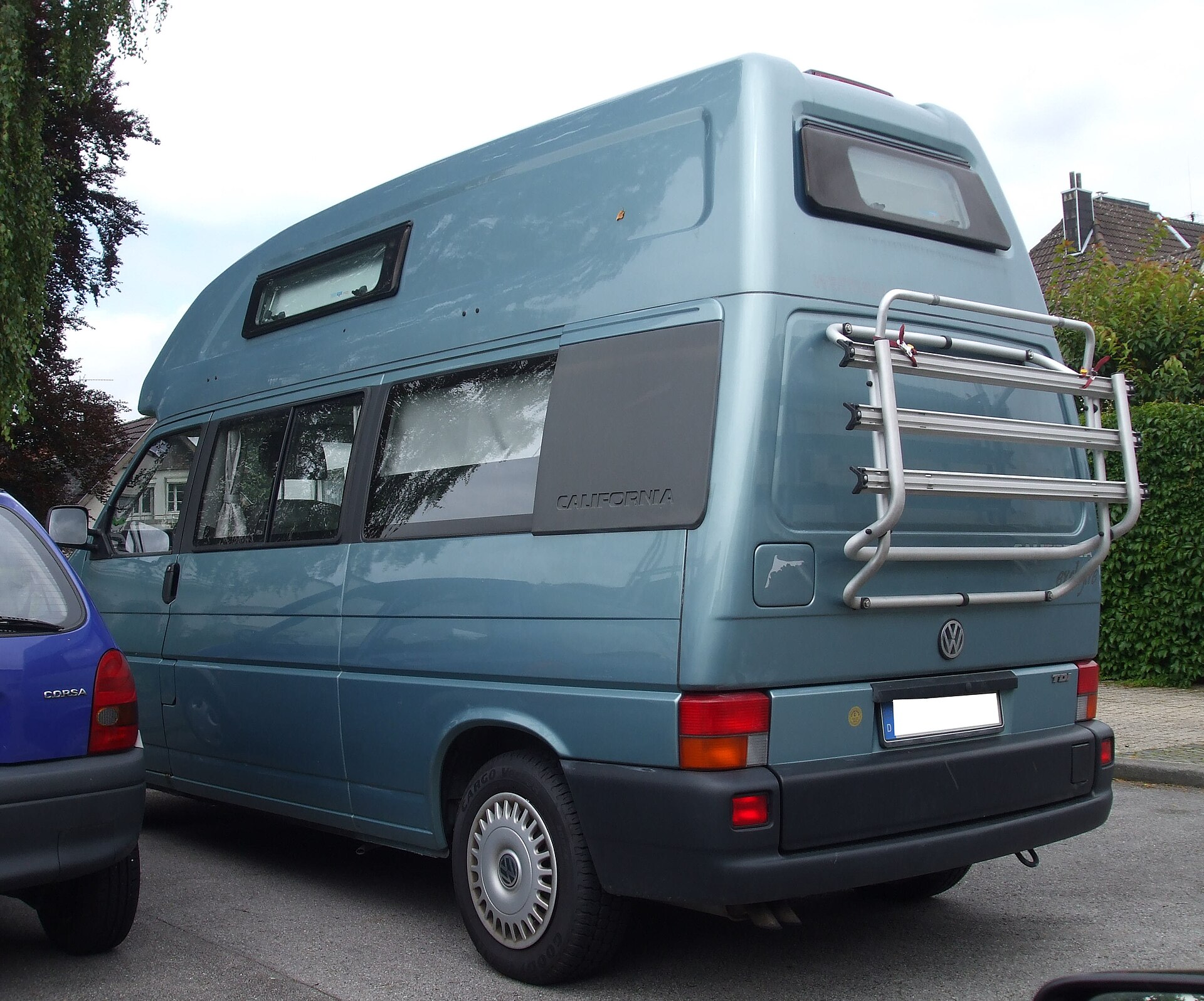
T4 (1990-2003). The front-mounted, water-cooled engine freed up interior space. Volkswagen advertised it as the "Hotel California", and about 39,000 were sold.
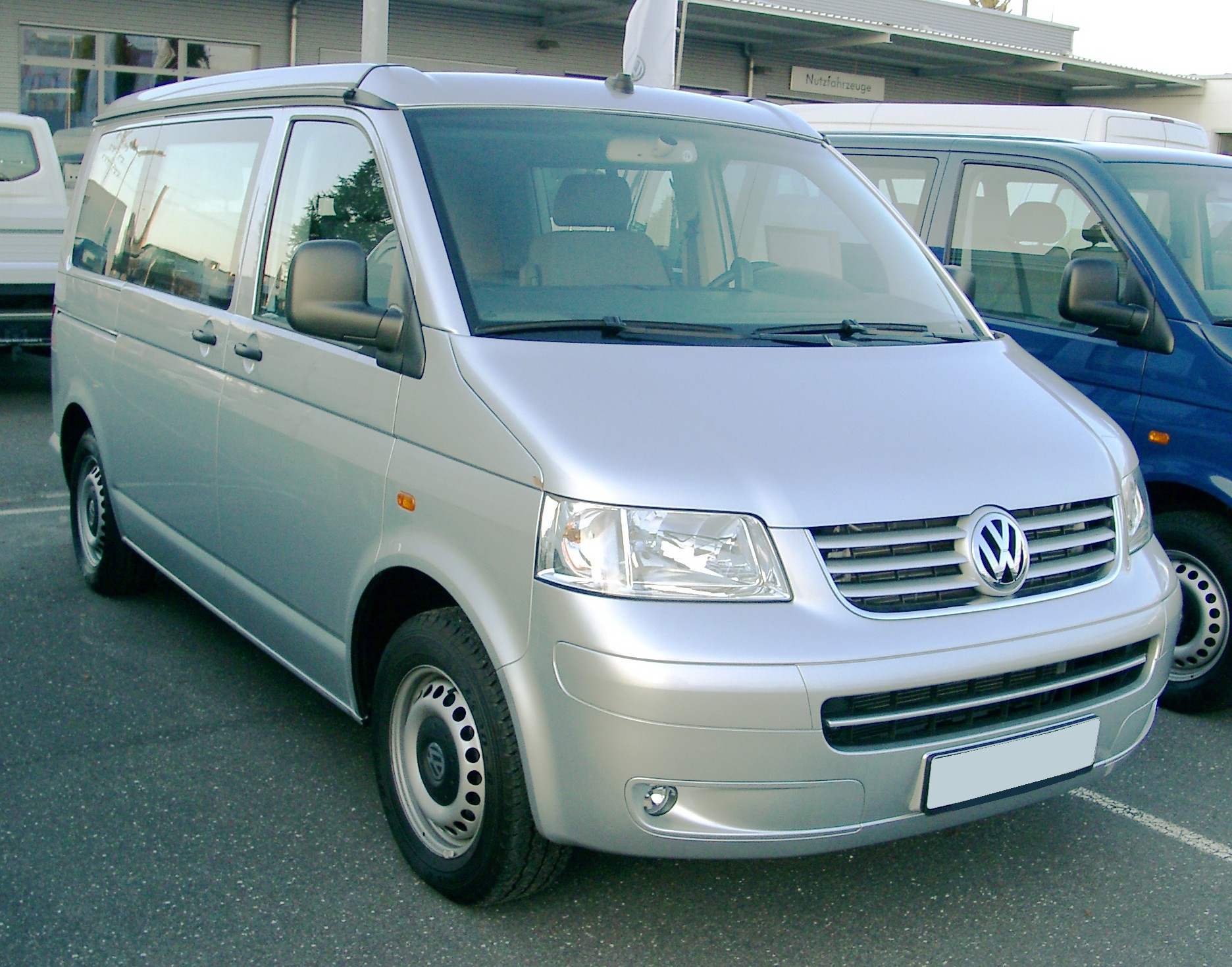
T5 (2003-2015). The first California built by Volkswagen itself in Hanover, and the biggest seller of the early generations, with about 55,000 cars.
T6 (2015-2019) and T6.1 (2019-2024). The T6 arrived at the end of 2015. In 2018 Volkswagen marked 30 years of the California with the 30 Years edition, limited to 999 cars, and celebrated the 100,000th California built in Hanover. The T6.1, launched at the Düsseldorf Caravan Salon in September 2019, brought an optional digital instrument cluster, permanent online connectivity, more driver assistance systems and a touchscreen in the roof console for the camper functions. The Coast version was dropped worldwide in 2022.


The current California (T7, since 2024)
Volkswagen showed the T7 California as a concept at the 2023 Caravan Salon, and pre-sales opened on 6 June 2024. It now shares its body and MQB Evo platform with the Multivan rather than the Transporter. Every version has two sliding doors, a first for the California, and every version except the Beach has a 5-inch touchscreen for the camper functions that can also be controlled with a smartphone app.
In August 2026 Volkswagen moved the complete California build to its main plant in Hanover; before that, the camper conversion was done outside the main plant. The update that started production in September 2026 added a new front end, a redesigned cockpit, a 12.9-inch infotainment screen, Travel Assist with traffic-light recognition and Emergency Assist.

Engines, transmissions and performance
| Engine | Generation | Power | Gearbox, drive |
|---|---|---|---|
| 2.0 TDI | T6.1 | 81 kW (110 PS) | FWD |
| 2.0 TDI | T6.1 | 110 kW (150 PS) | 7-speed DSG available, FWD or 4MOTION |
| 2.0 TDI | T6.1 | 146 kW (199 PS) | 7-speed DSG as standard, FWD or 4MOTION |
| 2.0 TDI | T7 | 110 kW (150 PS) | DSG, FWD |
| 2.0 TSI | T7 | 150 kW (204 PS) | DSG, FWD |
| 1.5 TSI eHybrid 4MOTION | T7 | 180 kW (245 PS), 350 Nm | 6-speed DSG, AWD |
The eHybrid 4MOTION, announced in November 2024, combines a 1.5 TSI petrol engine with 130 kW (177 PS), an 85 kW (115 PS) electric motor in the front gearbox and a 100 kW (136 PS) motor on the rear axle. Its 19.7 kWh (net) battery sits under the front seats. Volkswagen quotes up to 130 km/h on electric power, a top speed of 200 km/h, AC charging at 11 kW and DC charging at up to 50 kW. Volkswagen quotes a combined electric range of 84-89 km in its German homologation data and "up to 91 km" in the text of the same release. German sources give a towing capacity of up to 2 tonnes for the plug-in hybrid. Use our power converter to switch between kW and PS.
Dimensions, beds and space
| Parameter | Metric | Imperial |
|---|---|---|
| Length | 5,173 mm | 203.7 in |
| Width | 1,941 mm | 76.4 in |
| Height, roof closed | 1,990 mm | 78.3 in |
| Wheelbase | 3,124 mm | 123.0 in |
| Interior height, roof closed / open | 1,297 / 2,108 mm | 51.1 / 83.0 in |
| Roof bed | 2,054 x 1,137 mm | 80.9 x 44.8 in |
| Lower bed, Beach Tour | 1,980 x 1,330 mm | 78.0 x 52.4 in |
| Lower bed, Coast and Ocean | 1,980 x 1,060 mm | 78.0 x 41.7 in |
At just under 2 metres high, the California still fits under the height barriers of many car parks. The previous T6.1 Ocean had a 200 x 116 cm lower bed and a 200 x 120 cm roof bed, a 42-litre compressor fridge, a 2.8 kg gas bottle and fresh and waste water tanks of 30 litres each. To check whether a 5.2-metre van fits at home, try our garage fit tool.
Fuel economy and running costs
For the eHybrid 4MOTION, Volkswagen's German data give 7.7-8.1 l/100 km with a discharged battery (175-185 g/km CO2) and a weighted combined figure of 19-22 g/km CO2, with 22.3-23.5 kWh/100 km of electricity. Real costs depend heavily on how often the battery is charged. We have no official figures for the TDI and TSI in the sources used here.
Trims and equipment
German launch prices for the T7 in 2024, all with the 2.0 TDI:
| Version | Registration | Seats | Key equipment | Price from (EUR, 2024) |
|---|---|---|---|---|
| Beach | passenger car | 6 | manual pop-up roof, bed for two in the roof | 62,689 |
| Beach Tour | passenger car | 6 | swivelling front seats, fold-out bed, mini kitchen option, camper battery | 67,824 |
| Beach Camper | motorhome | 5 | rear mini kitchen with single gas burner | 69,472 |
| Coast | motorhome | 4 | full kitchen unit on the driver's side, fridge accessible from outside | 77,832 |
| Ocean | motorhome | 4 | top version, second leisure battery, roof storage box | 84,359 |
The eHybrid 4MOTION started at EUR 77,772 in Germany (November 2024). After the 2026 update, the California Beach is listed at EUR 66,087 (Germany, 2026).
Safety
Euro NCAP has not tested the California itself. The Multivan T7, which shares its body structure and platform, received five stars in 2022, with 90% for adult occupants, 89% for children, 69% for vulnerable road users and 87% for safety assist. Fitted camper furniture and roof beds are not part of that test. Our safety ratings section explains how the scores work.
Reliability and known issues
We have not found published fault statistics for the California in the sources used for this article. As with any camper, a used buyer should check the pop-up roof mechanism and canvas, the gas installation, the water system and the leisure battery as well as the base vehicle.
Rivals
| Model | Engines | Power (kW / PS) | Boot (l) | Price from (EUR) |
|---|---|---|---|---|
| Volkswagen California (T7) | 2.0 TDI, 2.0 TSI, 1.5 eHybrid | 110-180 kW (150-245 PS) | - | 62,689 (Beach, Germany, 2024) |
| Mercedes-Benz V-Class (base of the Marco Polo) | 2.0 diesel, 2.0 petrol | 120-174 kW (163-237 PS) | - | 52,330 (V 220 d, Germany, 2024) |
| Volkswagen Multivan (T7) | 1.5 TSI, 2.0 TSI, 2.0 TDI, eHybrid | 100-180 kW (136-245 PS) | - | 57,465 (Trend, Germany, 2026) |
Mercedes-Benz sells its camper as the Marco Polo, based on the V-Class; the V-Class prices above are for the people carrier, not for the camper. The Multivan is the non-camper sister of the current California.
Photo gallery

Volkswagen California evolution in numbers
Did you know?
- The Volkswagen California has been around for 38 years: 6 generations in our catalog since 1988.
- The longest-running generation is the California T4 (1990–2003): 13 years.
Volkswagen California in our rankings
More powerful than 83% of ranked vans and minibuses in the 1CARS catalog (No. 3 of 18).
FAQ
How many generations of the Volkswagen California are there?
Six: T3 (1988-1990), T4 (1990-2003), T5 (2003-2015), T6 (2015-2019), T6.1 (2019-2024) and the Multivan-based T7 since 2024.
Where is the Volkswagen California built?
At Volkswagen Commercial Vehicles in Hanover, Germany. The first two generations were built by Westfalia; since August 2026 the whole build has been done at the Hanover main plant.
How much does a new California cost?
In Germany the California Beach is listed at EUR 66,087 (2026). The 2024 launch range ran from EUR 62,689 for the Beach to EUR 84,359 for the Ocean.
Is there a 4x4 or hybrid California?
Yes. The T6.1 offered 4MOTION with the 110 kW and 146 kW TDI, and the T7 eHybrid 4MOTION is a 180 kW (245 PS) plug-in hybrid with an electric motor on each axle.
How many people can sleep in a California?
Up to four: two in the pop-up roof bed (2,054 x 1,137 mm in the T7) and two on the lower bed.
Data sources
Data checked by an editor against the sources below.
- Wikipedia - Volkswagen California
- Autorai - Autos Van Toen Volkswagen California
- Newatlas
- Quotidianomotori - Volkswagen California 6 1
- Motor1 - Vw California Camper Multivan 2024