 Hyundai Ioniq 6
Specs, engines and history
Published Sources (2) Report an error
By Felix Hartmann, Automotive Technology & EV Contributor
- Built
- 2022–present
- Top power
- 478 kW (650 PS)
Which one to buy
Our verdict · Felix Hartmann
- Best value: the facelifted 63 kWh car. It is quicker than the old 53 kWh base model and has 521 km of WLTP range.
- Best all-rounder: the 84 kWh rear-drive car, with 168 kW (229 PS), the bigger battery and the rear-drive layout that ADAC lists with a 45-litre front compartment.
- Used buy: a 77.4 kWh rear-drive car from 2022-2025, rated at 614 km WLTP.
- For drivers: the Ioniq 6 N, with 478 kW and a 3.2-second 0-100 km/h time.
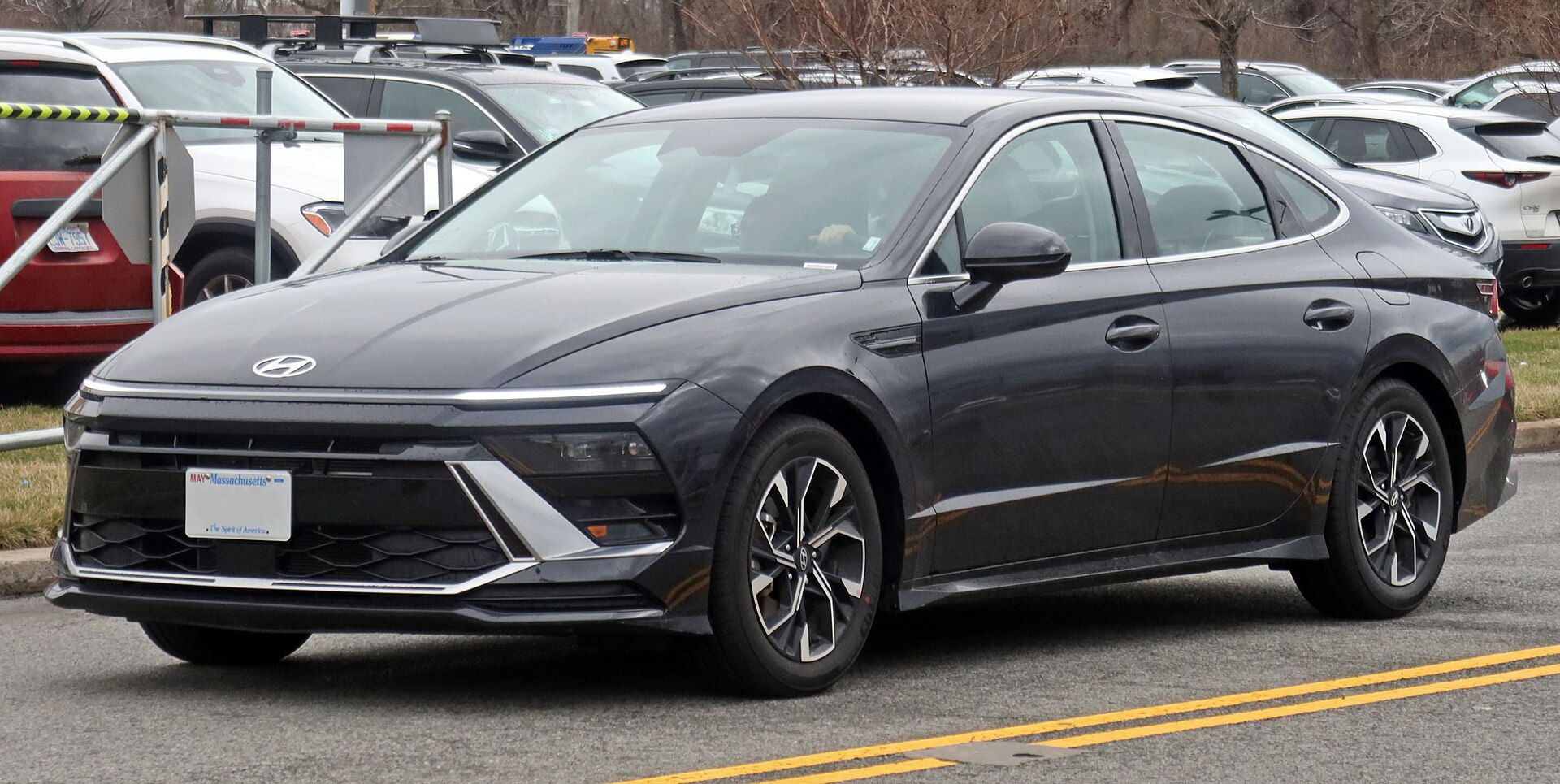
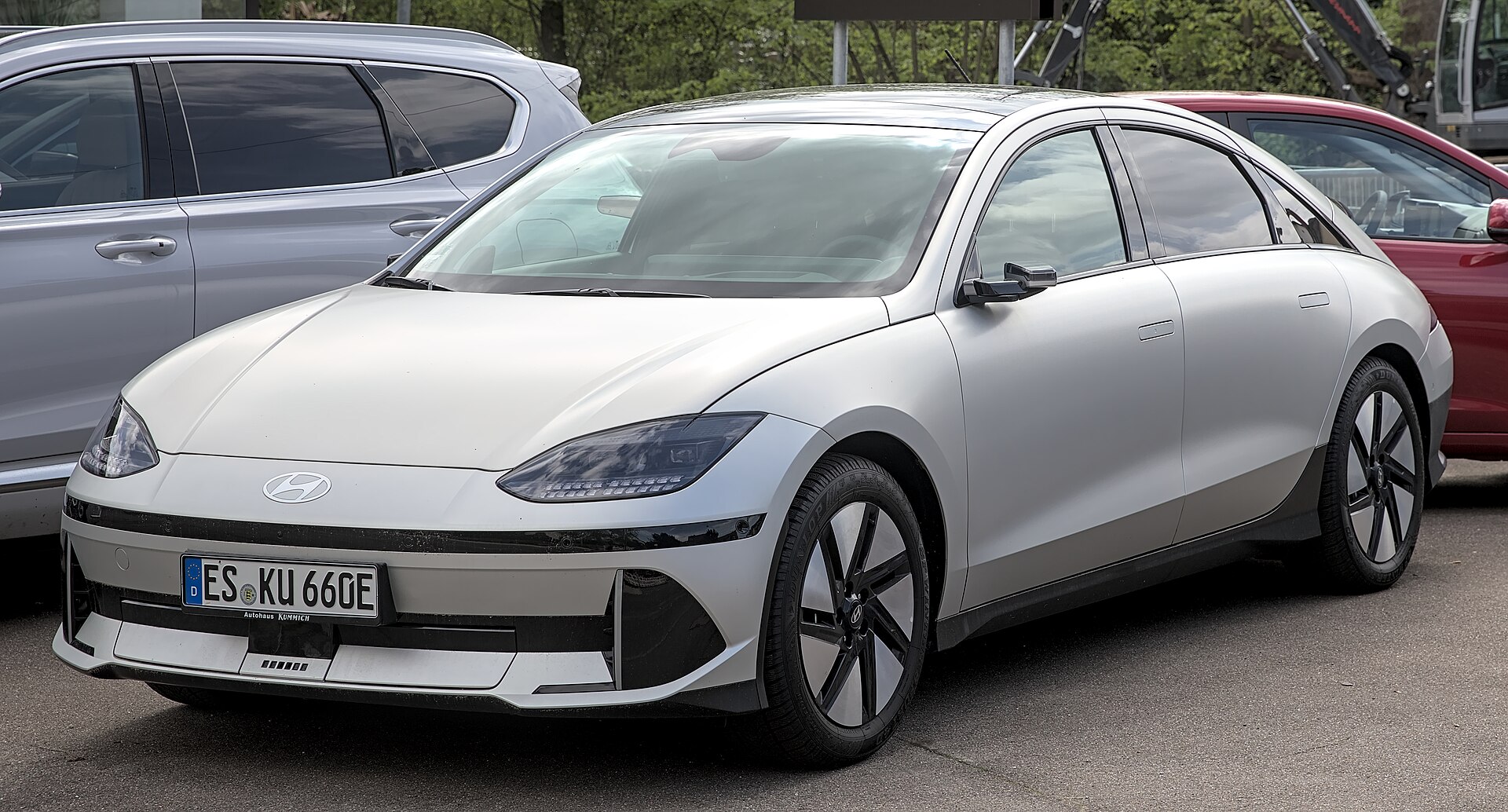
The Hyundai Ioniq 6 is a battery-electric four-door saloon built on Hyundai's E-GMP platform since July 2022, in Asan, South Korea, and at Hyundai's HMGICS plant in Singapore. Its streamlined body has a drag coefficient of 0.21, and in Germany the facelifted car starts at EUR 45,750 (ADAC, January 2026) with up to 650 km of WLTP range. It was named World Car of the Year 2023.
In short
- One generation (code CE) since 2022, facelifted in 2025; a 478 kW Ioniq 6 N was added for 2026.
- Batteries: 53 and 77.4 kWh at launch, 63 and 84 kWh after the facelift; outputs from 111 kW (151 PS) to 239 kW (325 PS), plus the N.
- 800 V charging: 10 to 80 per cent in about 18 minutes on a fast enough DC charger.
- Euro NCAP: five stars in 2022; boot of 401 litres plus a 45-litre front compartment on rear-drive cars.
Size at a glance
| Dimensions | Hyundai Ioniq 6 CE |
|---|---|
| Length | 4,855 mm191.1 in |
| Width | 1,880 mm74.0 in |
| Height | 1,495 mm58.9 in |
| Wheelbase | 2,950 mm116.1 in |
| Boot | 401 L14.2 cu ft |
Specs by version
Engines
| Version | Engine | Power | Torque | Gearbox | Drive | Production years |
|---|---|---|---|---|---|---|
| 53 kWh RWD | Electric | 111 kW 151 PS149 hp | 350 Nm258 lb-ft | Single-speed | Rear-wheel drive | 2022–2025 |
| 63 kWh RWD | Electric | 125 kW 170 PS168 hp | 350 Nm258 lb-ft | Single-speed | Rear-wheel drive | 2026 |
| 77.4 kWh RWD | Electric | 168 kW 228 PS225 hp | 350 Nm258 lb-ft | Single-speed | Rear-wheel drive | 2022–2025 |
| 84 kWh AWD | Electric | 239 kW 325 PS321 hp | 605 Nm446 lb-ft | Single-speed | All-wheel drive | 2026 |
Performance
Show all 4 versions
| Version | 0–100 km/h | Top speed | Fuel consumption | Range |
|---|---|---|---|---|
| 53 kWh RWD | 8.8 s 0–62 mph | 185 km/h115 mph | - | - |
| 63 kWh RWD | 8.3 s 0–62 mph | 185 km/h115 mph | 13.4 kWh/100 km21.6 kWh/100 mi | 521 km324 mi |
| 77.4 kWh RWD | 7.4 s 0–62 mph | 185 km/h115 mph | 14.3 kWh/100 km23.0 kWh/100 mi | 614 km382 mi |
| 84 kWh AWD | 5.1 s 0–62 mph | 185 km/h115 mph | 13.8 kWh/100 km22.2 kWh/100 mi | 650 km404 mi |
Dimensions and weight
Show all 4 versions
| Version | Length | Width | Height | Wheelbase | Kerb weight | Boot | Battery |
|---|---|---|---|---|---|---|---|
| 53 kWh RWD | 4,855 mm191.1 in | 1,880 mm74.0 in | 1,495 mm58.9 in | 2,950 mm116.1 in | - | - | 53 kWh |
| 63 kWh RWD | 4,925 mm193.9 in | 1,880 mm74.0 in | 1,495 mm58.9 in | 2,950 mm116.1 in | 1,892 kg4,171 lb | 401 l14.2 cu ft | 63 kWh |
| 77.4 kWh RWD | 4,855 mm191.1 in | 1,880 mm74.0 in | 1,495 mm58.9 in | 2,950 mm116.1 in | 1,985 kg4,376 lb | 401 l14.2 cu ft | - |
| 84 kWh AWD | 4,925 mm193.9 in | 1,880 mm74.0 in | 1,495 mm58.9 in | 2,950 mm116.1 in | 2,105 kg4,641 lb | 401 l14.2 cu ft | 84 kWh |
Verified Manufacturer and type-approval data from our catalog · Sources and methodology
Hyundai Ioniq 6 at a glance
| Parameter | Detail |
|---|---|
| Segment | Mid-size (D-segment) electric saloon |
| Body | Four-door saloon, five seats |
| Platform | E-GMP (800 V) |
| Built | Asan, South Korea; Jurong, Singapore (HMGICS) |
| Production | July 2022 to date |
| Drive | Rear-wheel drive or dual-motor all-wheel drive |
| Euro NCAP | Five stars (2022) |
Where the Ioniq 5 is a boxy crossover, the Ioniq 6 puts E-GMP hardware into a low, curved saloon body from Hyundai's design centre under SangYup Lee, with clear links to the Prophecy concept shown in 2020. The shape is the point: with a drag coefficient of 0.21, the 77.4 kWh rear-drive car reaches a WLTP range of 614 km.

Versions and model history
Only one generation exists, so the useful split is between the original car and the facelift.
| Generation | Code | Years | Body styles | Engines | Power (kW / hp) |
|---|---|---|---|---|---|
| Ioniq 6 | CE | 2022-2025 | Saloon | 53 kWh RWD, 77.4 kWh RWD and AWD | 111-239 kW (151-325 PS) |
| Ioniq 6 facelift | CE | 2025 to date | Saloon | 63 kWh RWD, 84 kWh RWD and AWD | 125-239 kW (170-325 PS) |
| Ioniq 6 N | CE | 2026 to date | Saloon | 84 kWh dual-motor | 478 kW (650 PS) with N Grin Boost |
2022-2025. German sales started in late 2022 with three battery and motor combinations. ADAC lists the 53 kWh car from EUR 43,900 and the 77.4 kWh First Edition with all-wheel drive at EUR 66,400 (both 2022 list prices).
Facelift (2025). Hyundai revealed the update on 3 April 2025 at the Seoul Mobility Show. It brought new front and rear bumpers, new headlights and tail lights with slimmer daytime running lights, a redesigned steering wheel and a larger climate display, and the first N Line trim. The length grew from 4,855 to 4,925 mm. German deliveries of the facelift started in January 2026.
Ioniq 6 N. Shown at the Goodwood Festival of Speed on 10 July 2025, the N uses two motors and an 84 kWh battery. With N Grin Boost it makes 478 kW (650 PS) and 770 Nm, reaches 100 km/h in 3.2 seconds and tops out at 257 km/h. Production in Korea began in 2026.


Motors, batteries and performance
| Version | Battery | Power | Torque | 0-100 km/h | WLTP range |
|---|---|---|---|---|---|
| 53 kWh RWD (2022-2025) | 53 kWh | 111 kW (151 PS) | 350 Nm | 8.8 s | - |
| 77.4 kWh RWD (2022-2025) | 77.4 kWh | 168 kW (229 PS) | 350 Nm | 7.4 s | 614 km |
| 77.4 kWh AWD (2022-2025) | 77.4 kWh | 239 kW (325 PS) | 605 Nm | 5.1 s | - |
| 63 kWh RWD (from 2026) | 63 kWh | 125 kW (170 PS) | 350 Nm | 8.3 s | 521 km |
| 84 kWh RWD (from 2026) | 84 kWh | 168 kW (229 PS) | - | - | - |
| 84 kWh AWD (from 2026) | 84 kWh | 239 kW (325 PS) | 605 Nm | 5.1 s | 650 km |
All standard versions are limited to 185 km/h. On the all-wheel-drive car, ADAC splits the output into 165 kW (225 PS) and 350 Nm at the rear and 74 kW (100 PS) and 255 Nm at the front. The standard versions use a single-speed reduction gear.
Charging is where the E-GMP hardware earns its keep. The 800 V system takes up to 11 kW on AC, and Hyundai quotes 10 to 80 per cent in 18 minutes on a 350 kW charger. ADAC lists the peak DC rate as 240 kW for the 77.4 kWh car, 195 kW for the 63 kWh car and 260 kW for the 84 kWh all-wheel-drive car, each with an 18-minute fast-charge time. Use the power converter if you think in horsepower rather than kilowatts.

Dimensions, space and boot
| Parameter | Metric | Imperial |
|---|---|---|
| Length (2022-2025) | 4,855 mm | 191.1 in |
| Length (facelift) | 4,925 mm | 193.9 in |
| Width | 1,880 mm | 74.0 in |
| Height | 1,495 mm | 58.9 in |
| Wheelbase | 2,950 mm | 116.1 in |
| Kerb weight | 1,892-2,105 kg | 4,171-4,641 lb |
| Boot (rear) | 401 l | 14.2 cu ft |
| Front compartment | 45 l (RWD), 15 l (AWD) | 1.6 / 0.5 cu ft |
The long 2,950 mm wheelbase is the basis for a roomy cabin, but at 401 litres the boot is modest for a car of this length, and as a saloon it has a boot lid rather than a hatch. ADAC gives a braked towing limit of 750 kg. The facelift is 4,925 mm long, which is worth checking against your garage with the size comparison tool.
Efficiency and running costs
ADAC lists WLTP consumption of 13.4 kWh/100 km for the facelifted 63 kWh car, 13.8 kWh/100 km for the 84 kWh all-wheel-drive version and 14.3 kWh/100 km for the earlier 77.4 kWh rear-drive car. At 10 °C and 90 km/h, ADAC's range calculator estimates 505 km for the 63 kWh car.
In Germany Hyundai gives five years of vehicle warranty, and the high-voltage battery is covered for eight years or 160,000 km to 70 per cent state of health (ADAC, 2026 models).
Trims and prices
German prices for the facelift (ADAC, from January 2026):
| Version | Power | Price (EUR, 2026) |
|---|---|---|
| 63 kWh | 125 kW (170 PS) | 45,750 |
| 63 kWh Centriq | 125 kW (170 PS) | 52,250 |
| 84 kWh Centriq | 168 kW (229 PS) | 55,600 |
| 84 kWh N Line | 168 kW (229 PS) | 58,300 |
| 84 kWh Uniq | 168 kW (229 PS) | 60,500 |
| 84 kWh N Line AWD | 239 kW (325 PS) | 61,550 |
| 84 kWh N Line X AWD | 239 kW (325 PS) | 65,350 |
Before the facelift, the German range ran from EUR 43,900 for the 53 kWh car to EUR 64,200 for the 77.4 kWh Uniq with all-wheel drive (ADAC, list prices 2022-2026).

Safety
Euro NCAP tested the Ioniq 6 in 2022 and gave it five stars: 97 per cent for adult occupant protection, 87 per cent for child occupants, 66 per cent for vulnerable road users and 90 per cent for safety assist. ANCAP adopted the same results. In the United States the 2023 model was an IIHS Top Safety Pick+. More results are on our safety ratings page.
Reliability and known issues
The Ioniq 6 is still young, and the sources used for this guide do not document recurring faults, so we do not list any. The eight-year or 160,000 km battery warranty in Germany covers the most expensive component, and a used car bought from 2026 on should still have several years of that cover left.
Sales
Global sales were 14,821 in 2022, 54,824 in 2023 and 27,971 in 2024. Europe took 10,819 cars in 2023 and 6,631 in 2024, which makes the Ioniq 6 a much rarer sight than the Ioniq 5.
Rivals
| Model | Engines | Power (hp) | Boot (l) | Price from (EUR) |
|---|---|---|---|---|
| Hyundai Ioniq 6 | Electric, RWD or AWD | 170-325 | 401 + 45 | 45,750 (DE, 2026) |
| Tesla Model 3 | Electric, RWD or AWD | 283-460 | - | 36,990 (DE, 2025) |
| Volkswagen ID.7 | Electric, RWD or AWD | 286 | 532 | 54,505 (DE, 2023) |
| BMW i4 | Electric, RWD or AWD | 286-401 | 470 | 58,200 (DE, 2025) |
The Model 3 is the obvious comparison, and in Germany it now starts below the Ioniq 6, at EUR 36,990 (ADAC, December 2025). The ID.7 is a bigger liftback with a larger boot, and the i4 is the premium choice. Rival prices are ADAC German list prices; boot volumes come from the 1cars catalogue. Compare them side by side in the comparison tool.
Photo gallery

Hyundai Ioniq 6 in our rankings
- No. 3 of 47 · Most powerful Korean cars (478 kW)
- No. 4 of 25 · Quickest Korean cars, 0–100 (5.1 s)
- No. 9 of 174 · Most powerful sedans (478 kW)
- No. 10 of 88 · Longest-range electric cars (650 km)
- No. 10 of 61 · Heaviest sedans (2,105 kg)
- No. 118 of 1011 · Most powerful cars (478 kW · top 12%)
More powerful than 94% of ranked sedans in the 1CARS catalog (No. 9 of 174).
FAQ
How far can the Hyundai Ioniq 6 go on a charge?
Up to 650 km WLTP for the facelifted 84 kWh all-wheel-drive car and 614 km for the 2022-2025 77.4 kWh rear-drive car (ADAC). The 63 kWh car is rated at 521 km.
How fast does the Ioniq 6 charge?
Hyundai quotes 10 to 80 per cent in about 18 minutes on a 350 kW, 800 V charger. On AC it takes up to 11 kW.
How much does the Ioniq 6 cost?
In Germany the facelifted car starts at EUR 45,750 for the 63 kWh version (ADAC, January 2026).
Is the Ioniq 6 safe?
Yes. Euro NCAP gave it five stars in 2022, with 97 per cent for adult occupant protection.
Where is the Ioniq 6 built?
In Asan, South Korea, and at Hyundai's HMGICS plant in Jurong, Singapore.
Data sources
Data checked by an editor against the sources below.