 Ford Transit Connect
All generations, specs and history
Published Sources (3) Report an error
By Felix Hartmann, Automotive Technology & EV Contributor
- Built
- 2002–present
- Generations
- 3
- Top power
- 110 kW (150 PS)
Timeline
Transit Connect generations
Click a generation for its own page

PJ2 and II overlapped in 2012–2013, so II sits on a second lane
- Transit Connect PJ2 2002–2013 · Minivan / MPV, Van · 55–101 kW (75–137 PS)
- Transit Connect II 2012–2022 · Minivan / MPV, Van · 55–88 kW (75–120 PS)
- Transit Connect III Current 2021–now · Minivan / MPV, Van · 75–110 kW (102–150 PS)
Newest first · 3 generations since 2002
-
2021
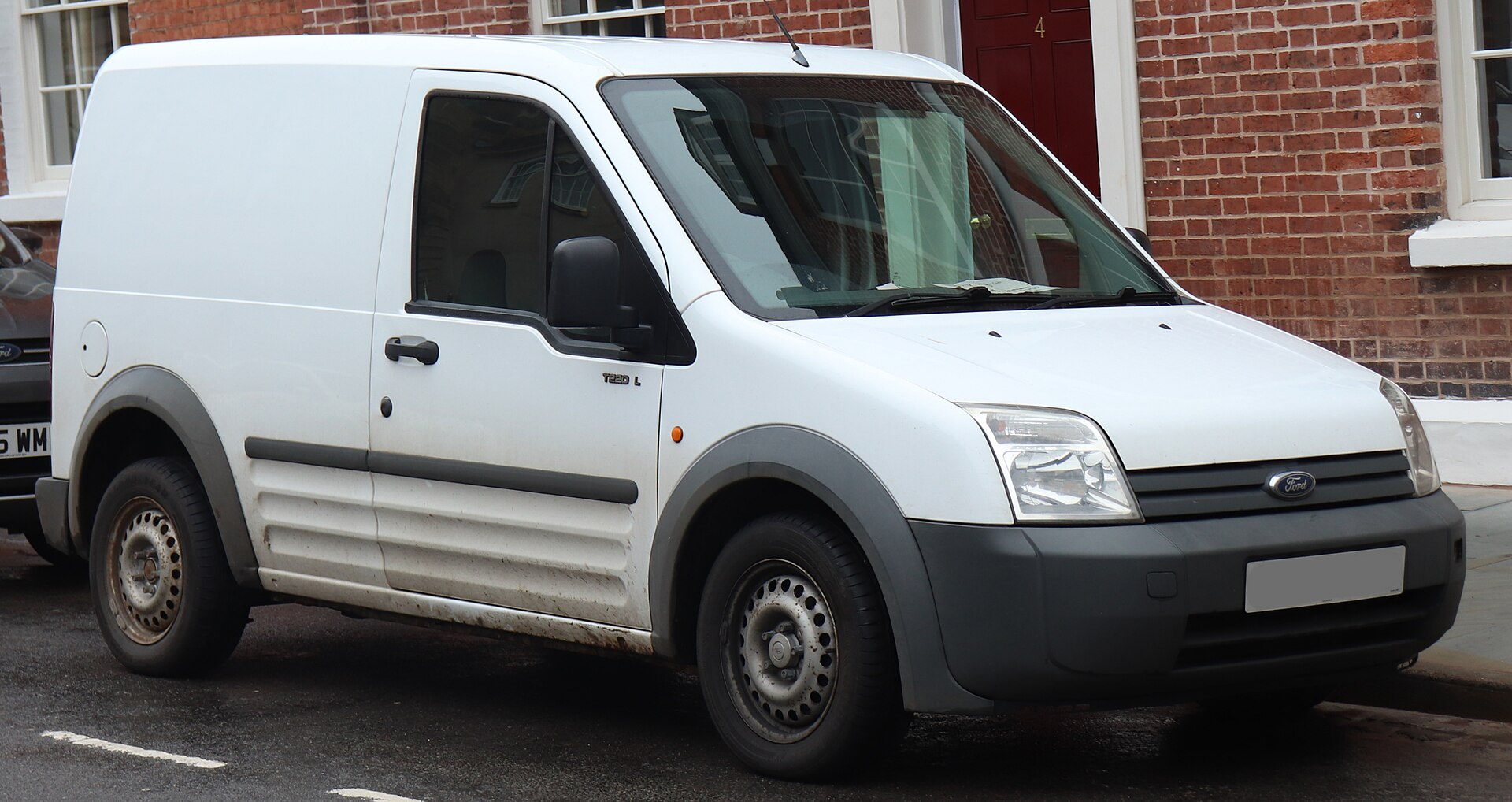
- 2012 II 2012–2022 · Minivan / MPV, Van · 55–88 kW (75–120 PS) PJ2 and II overlapped in 2012–2013
- 2002 PJ2 2002–2013 · Minivan / MPV, Van · 55–101 kW (75–137 PS)
All generations by year: Transit Connect III (2021–now) · Transit Connect II (2012–2022) · Transit Connect PJ2 (2002–2013)
Which one is mine?
Pick the year of first registration to see which generation it is.
- Transit Connect III 2021–present
- Transit Connect II 2012–2022
- PJ2 2002–2013
Which Transit Connect to buy
Our verdict · Felix Hartmann
- Most buyers: the 2.0 EcoBlue with 75 kW (102 PS) and a manual gearbox, the cheapest version.
- Urban delivery with charging: the plug-in hybrid, which can cover around 118 km on electricity (WLTP).
- Poor roads or winter use: the 90 kW AWD automatic, offered since June 2025.
- Used: a 2018-2022 van with the 1.5 EcoBlue, the last generation built by Ford itself.
All other Ford vans and cars are in our Ford catalogue.
The Ford Transit Connect is Ford's compact van, the smallest Transit apart from the Courier, sold since 2002 with a passenger version called the Tourneo Connect. Three generations have come from three different places: Ford Otosan in Turkey, Ford's Valencia plant in Spain and, since 2021, Volkswagen's plant in Poland, because the current model is a rebadged Volkswagen Caddy. The latest Transit Connect van offers a 2.0 EcoBlue diesel and a 1.5 EcoBoost plug-in hybrid with about 118 km of electric range.
In short
- Three generations: 2002-2013 (Turkey and Romania), 2012-2022 (Spain) and since 2021/2024 (Poland, based on the Volkswagen Caddy).
- Current engines in Germany: 2.0 EcoBlue diesel with 75 kW (102 PS) or 90 kW (122 PS), optional all-wheel drive, and a 110 kW (150 PS) plug-in hybrid with a 19.7 kWh battery.
- Current van: 4,500 mm long, 3,100 litres of load space and up to 743 kg payload (ADAC, 2026); the Grand version adds a longer wheelbase.
- Five Euro NCAP stars for the Tourneo Connect in 2013 and again in the 2021 test cycle.
Size at a glance
| Dimensions | Ford Transit Connect III |
|---|---|
| Length | 4,500 mm177.2 in |
| Width | 1,855 mm73.0 in |
| Height | 1,856 mm73.1 in |
| Wheelbase | 2,755 mm108.5 in |
Specs by version
Engines
| Version | Engine | Power | Torque | Gearbox | Drive | Production years |
|---|---|---|---|---|---|---|
| Plug-in hybrid · 1 version | ||||||
| Transit Connect III · 1.5 EcoBoost PHEV | 1.5 l · 4 cyl · Plug-in hybrid 1,498 cc | 110 kW 150 PS148 hp | 350 Nm258 lb-ft | 6-sp Dual-clutch | Front-wheel drive | 2024 |
| Diesel · 2 versions | ||||||
| Transit Connect III · 2.0 EcoBlue 102 | 4 cyl · Diesel | 75 kW 102 PS101 hp | 280 Nm207 lb-ft | 6-sp Manual | Front-wheel drive | 2024 |
| Transit Connect III · 2.0 EcoBlue 122 AWD automatic | 4 cyl · Diesel | 90 kW 122 PS121 hp | - | Automatic | All-wheel drive | 2025 |
Performance
Show all 1 versions
| Version | 0–100 km/h | Top speed |
|---|---|---|
| Transit Connect III · 2.0 EcoBlue 102 | 13.5 s 0–62 mph | 175 km/h109 mph |
Dimensions and weight
Show all 2 versions
| Version | Length | Width | Height | Wheelbase | Kerb weight |
|---|---|---|---|---|---|
| Plug-in hybrid · 1 version | |||||
| Transit Connect III · 1.5 EcoBoost PHEV | 4,500 mm177.2 in | 1,855 mm73.0 in | 1,856 mm73.1 in | 2,755 mm108.5 in | 1,694 kg3,735 lb |
| Diesel · 1 version | |||||
| Transit Connect III · 2.0 EcoBlue 102 | 4,500 mm177.2 in | 1,855 mm73.0 in | 1,856 mm73.1 in | 2,755 mm108.5 in | 1,477 kg3,256 lb |
Verified Manufacturer and type-approval data from our catalog · Sources and methodology
Ford Transit Connect at a glance
The Transit Connect has always had a transverse front engine, front-wheel drive as standard and sliding side doors. It competes with the Volkswagen Caddy, Renault Kangoo and the Stellantis vans sold as Citroën Berlingo, Peugeot Partner and Opel Combo. Short and long wheelbases have been offered in every generation, and the Tourneo Connect and Grand Tourneo Connect carry five or seven people.
| Parameter (2026 van, standard length) | Metric | Imperial |
|---|---|---|
| Length | 4,500 mm | 177.2 in |
| Width (without mirrors) | 1,855 mm | 73.0 in |
| Height | 1,856 mm | 73.1 in |
| Wheelbase (standard / Grand) | 2,755 / 2,975 mm | 108.5 / 117.1 in |
| Load volume | 3,100 l | 109.5 cu ft |
| Payload (2.0 EcoBlue, 75 kW) | 743 kg | 1,638 lb |
| Kerb weight (2.0 EcoBlue, 75 kW) | 1,477 kg | 3,256 lb |
| Towing, braked | 1,500 kg | 3,307 lb |
Figures from the ADAC catalogue; the Grand wheelbase from Wikipedia.
Generations
| Generation | Code | Years | Body styles | Engines | Power (kW / hp) |
|---|---|---|---|---|---|
| Transit Connect I | PJ2/PH2 | 2002-2013 | van, Tourneo Connect MPV | 1.8 petrol, 1.8 TDDi, 1.8 TDCi | 55-85 kW (75-115 PS) |
| Transit Connect II | - | 2012-2022 | van, Tourneo/Grand Tourneo Connect | 1.0/1.6 EcoBoost, 1.5/1.6 TDCi, 1.5 EcoBlue | 55-88 kW (75-120 PS) in Germany |
| Transit Connect III | - | since 2021 (van from 2024) | van, Tourneo/Grand Tourneo Connect | 2.0 EcoBlue, 1.5 EcoBoost PHEV | 75-110 kW (102-150 PS) |
First generation (2002-2013)
The first Transit Connect was a purpose-built small van that borrowed parts from the first Ford Focus. Production started in 2002 at Ford Otosan in Gölcük, Kocaeli, Turkey, with European sales from 2003; from September 2009 Ford Romania in Craiova also built it. There were two wheelbases, 2,664 mm and 2,912 mm, with lengths of about 4,275 mm and 4,525 mm, and load volumes of 2.8 m3 with the low roof and 3.7 m3 with the high roof.
European buyers chose between a 1.8-litre petrol engine with 85 kW (115 PS) and a 1.8-litre diesel, first as the TDDi with 55 kW (75 PS) and the TDCi with 66 kW (90 PS). After the 2006 facelift the German range was diesel only: the 1.8 TDCi with 55 kW (75 PS), 66 kW (90 PS) or 81 kW (110 PS).
In 2009 the van went to North America with a 2.0-litre Duratec petrol engine of 101 kW (136 hp) and a four-speed automatic, and it was named North American Truck of the Year 2010. From December 2010 Azure Dynamics built a Transit Connect Electric with a range of about 90 km; it cost US$57,400 (2010, approx. EUR 43,000).
Second generation (2012-2022)
Ford revealed the second Transit Connect in Amsterdam on 6 September 2012 and built it at its Valencia Body and Assembly plant in Almussafes, Spain, with European sales from October 2012. This generation introduced the long-wheelbase Grand Tourneo Connect, and an optional rear liftgate joined the twin rear doors. German vans started with the 1.6 TDCi in 70 kW (95 PS) and 85 kW (116 PS) forms; from 2015 a 1.5 TDCi with 74 kW (100 PS) or 88 kW (120 PS) took over.
The 2018 facelift brought the 1.0 EcoBoost three-cylinder petrol engine with 74 kW (100 PS) and the 1.5 EcoBlue diesel with 55 kW (75 PS), 74 kW (100 PS) or 88 kW (120 PS). ADAC list prices for the facelifted van ranged from EUR 19,968 to EUR 40,008. The short-wheelbase van ended in 2020 and the rest of the range in 2022.
In North America the second generation used 2.5-litre and 1.6 EcoBoost petrol engines, later a 2.0-litre with an eight-speed automatic. Ford imported the vans as passenger vehicles with rear seats and windows, then removed them, to avoid the 25% US tariff on light trucks; in 2019 a US court ruled the vans were cargo vehicles. Ford stopped US sales after the 2023 model year, with 495,932 sold there from 2009 to 2023.
Third generation (since 2021)
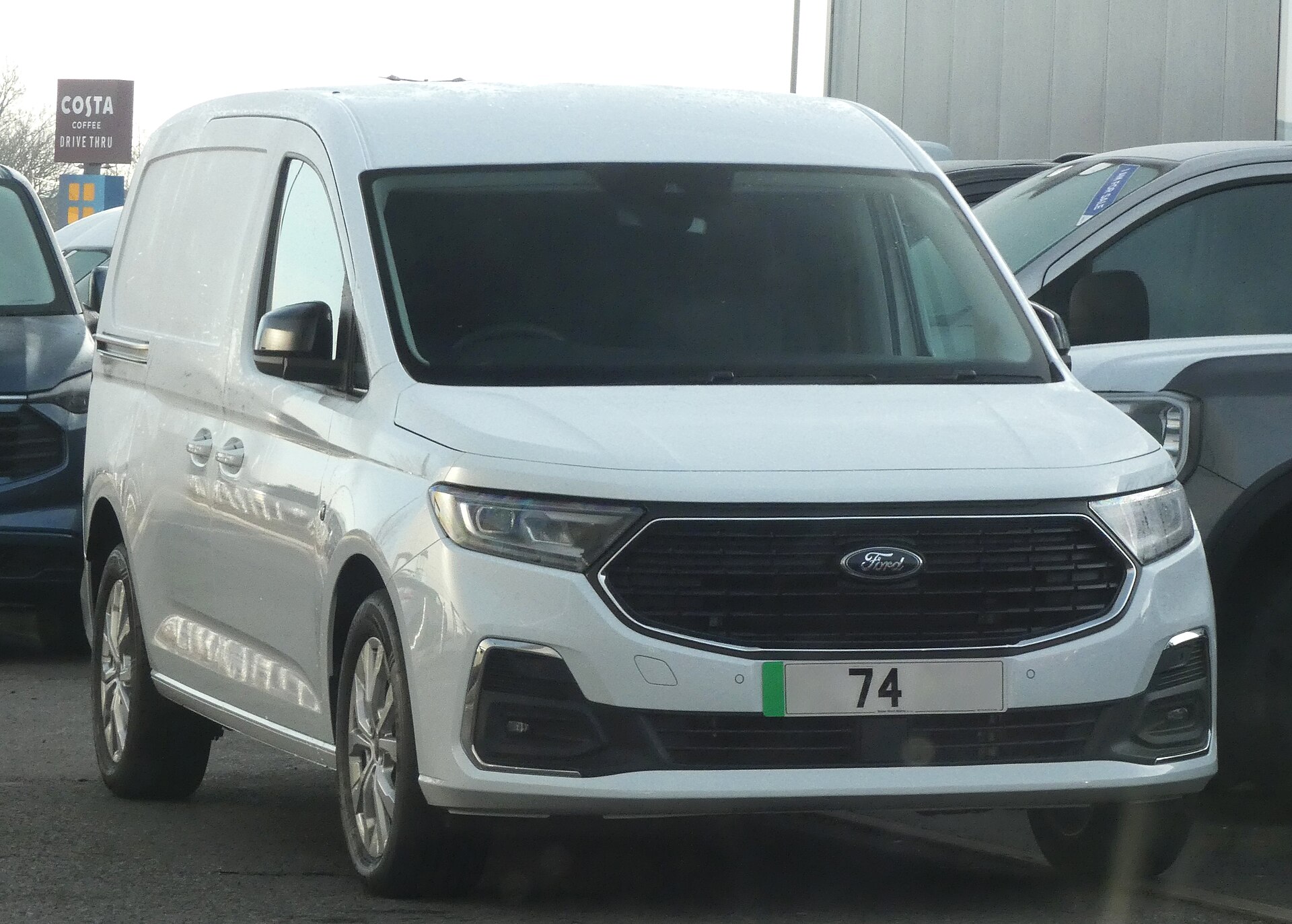
The third generation is a rebadged Volkswagen Caddy, part of the Ford and Volkswagen commercial vehicle alliance, assembled by Volkswagen in Poland. The Tourneo Connect passenger version came first in October 2021; the Transit Connect van followed in 2024. It has a 2,755 mm wheelbase, or 2,975 mm for the Grand (Maxi) version, which is 4,859 mm long. ADAC also lists Flexcab versions of both lengths.


Engines and performance
| Engine (Transit Connect III, Germany) | Power | Torque | Gearbox | Drive |
|---|---|---|---|---|
| 2.0 EcoBlue diesel | 75 kW (102 PS) | 280 Nm | 6-speed manual | FWD |
| 2.0 EcoBlue diesel | 90 kW (122 PS) | - | automatic | FWD or AWD (from 06/2025) |
| 1.5 EcoBoost PHEV | 110 kW (150 PS) system | 350 Nm system | 6-speed dual-clutch | FWD |
The 75 kW diesel reaches 100 km/h in 13.5 seconds and 175 km/h. The plug-in hybrid combines an 85 kW (116 PS) petrol engine with an electric motor in the gearbox housing and a 19.7 kWh net battery. There is no fully electric Transit Connect in this generation.
Load space and practicality
The standard van has 3,100 litres of cargo space according to ADAC, and the plug-in hybrid keeps most of the diesel's payload with 706 kg against 743 kg. Both can tow 1,500 kg braked. The older generations offered load volumes from 2.8 to 3.7 m3, so the current model sits in the middle of that range in space, while adding all-wheel drive and a plug-in hybrid to the German line-up.

Fuel economy and running costs
ADAC lists the 75 kW 2.0 EcoBlue at 5.4 l/100 km (WLTP) and 143 g/km. The plug-in hybrid is rated at 0.5 l/100 km and 18.8 kWh/100 km in the weighted WLTP cycle, 6.3 l/100 km with an empty battery, and 118 km of electric range. For business users the real cost depends on how often the battery is charged; our cost of ownership calculator helps compare both. Ford Germany gives a two-year vehicle warranty and 12 years against rust perforation (ADAC).
Trims and prices
In Germany the van comes in Trend and Limited trims, the Flexcab in Trend and Active. ADAC list prices (2026, without a note on whether VAT is included):
| Version | Power | Price (Germany, 2026) |
|---|---|---|
| Transit Connect 2.0 EcoBlue Trend | 75 kW (102 PS) | EUR 31,178 |
| Transit Connect 2.0 EcoBlue Trend AWD automatic | 90 kW (122 PS) | EUR 35,938 |
| Transit Connect 1.5 EcoBoost PHEV Trend | 110 kW (150 PS) | EUR 40,877 |
| Grand Transit Connect 2.0 EcoBlue Trend | 75 kW (102 PS) | EUR 33,499 |
| Grand Transit Connect Flexcab PHEV Active | 110 kW (150 PS) | EUR 48,374 |
Safety
Euro NCAP gave the second-generation Tourneo Connect five stars in November 2013, with 94% for adult and 85% for child occupant protection; it was the first compact people mover to reach the maximum rating. The third-generation Tourneo Connect also has five stars from the 2021 test cycle, published in March 2022, with 84% for adult and 82% for child occupants. Euro NCAP based that result on the Volkswagen Caddy and ran extra tests where needed. See more crash results in our safety section.
Reliability and known issues
In the US, the 1.6 EcoBoost petrol engine of 2013-2015 was the subject of a recall that Wikipedia mentions in its Transit Connect article, together with a large financial charge for Ford. We found no European reliability data in the sources used here, so we do not list other faults.
Rivals
| Model | Engines | Power (hp) | Boot (l) | Price from (EUR) |
|---|---|---|---|---|
| Ford Transit Connect | 2.0 diesel, 1.5 PHEV | 75-110 kW (102-150 PS) | 3,100 (load) | 31,178 (DE, 2026) |
| Volkswagen Caddy Cargo | diesel, petrol, PHEV | same platform | - | - |
| Opel Combo Cargo | 1.2 petrol, 1.5 diesel, electric | 75-100 kW (102-136 PS) | up to 4,400 (load) | 26,656 (DE, 2026) |
The Caddy is the Transit Connect's twin, so the choice comes down to price, dealer network and design details. The Opel Combo and its Citroën and Peugeot siblings offer an electric version, which the Ford does not. Use our comparison tool for exact figures.
Ford Transit Connect evolution in numbers
Did you know?
- The Ford Transit Connect has been around for 24 years: 3 generations in our catalog since 2002.
- The longest-running generation is the Transit Connect PJ2 (2002–2013): 11 years.
- The biggest jump in power came with the Transit Connect III: up to 110 kW (150 PS), 22 kW more than the Transit Connect II.
Most powerful version, kW
Figures from the 1cars catalog: power is the strongest version of each generation; generations without the figure are left out.
Ford Transit Connect: first vs latest generation
| Spec | Transit Connect PJ2 | Transit Connect III | Change |
|---|---|---|---|
| Years | 2002–2013 | 2021–present | 19 years apart |
| Most powerful version | 101 kW (137 PS) | 110 kW (150 PS) | +9 kW (+9%) |
Oldest and newest generation in the 1cars catalog. Power is the strongest version of each; other rows are shown only when both generations have the figure.
Ford Transit Connect in our rankings
More powerful than 33% of ranked vans and minibuses in the 1CARS catalog (No. 12 of 18).
FAQ
Is the Ford Transit Connect the same as the Volkswagen Caddy?
Since the third generation, yes: the Transit Connect and Tourneo Connect are rebadged Caddys assembled by Volkswagen in Poland.
Is there an electric Transit Connect?
Not in the current generation, which offers a plug-in hybrid. A Transit Connect Electric built with Azure Dynamics was sold in North America from 2010.
How much can a Transit Connect carry?
The 2026 standard van carries up to 743 kg and offers 3,100 litres of load space, according to ADAC.
Is the Transit Connect still sold in the US?
No. Ford ended US sales after the 2023 model year.
What is the difference between the Transit Connect and Tourneo Connect?
The Transit Connect is the van; the Tourneo Connect is the passenger version with windows and five or seven seats.
Data sources
Data checked by an editor against the sources below.
- Wikipedia - Ford Transit Connect
- ADAC
- ADAC - 3generation