 Ford S-Max
All generations, specs and history
Published Sources (3) Report an error
By Felix Hartmann, Automotive Technology & EV Contributor
- Built
- 2006–2023
- Generations
- 2 · CD340 to CD539
- Top power
- 177 kW (241 PS)
Timeline
S-Max generations
Click a generation for its own page

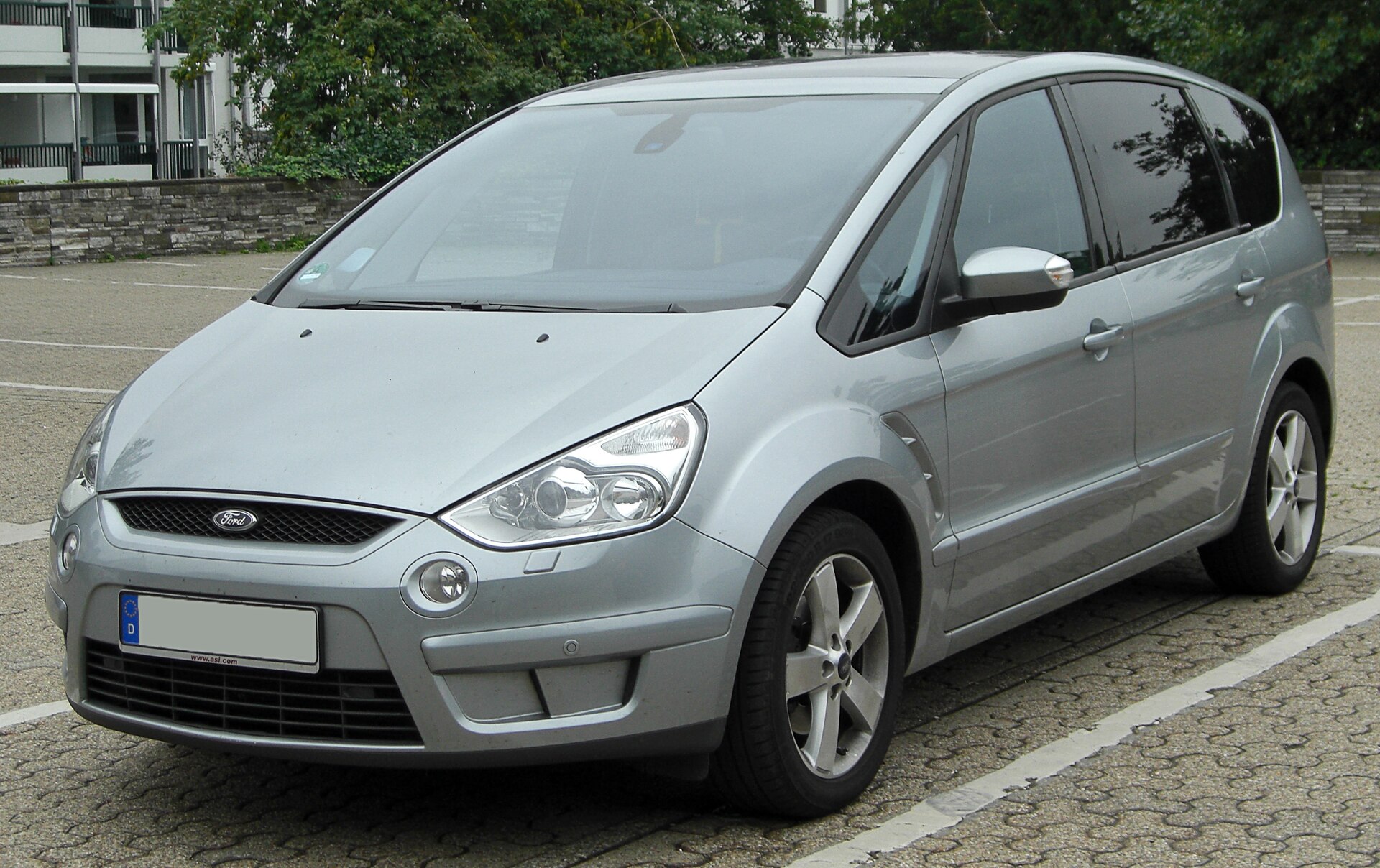
- S-Max I CD340 2006–2014 · Minivan / MPV · 74–176 kW (101–239 PS)
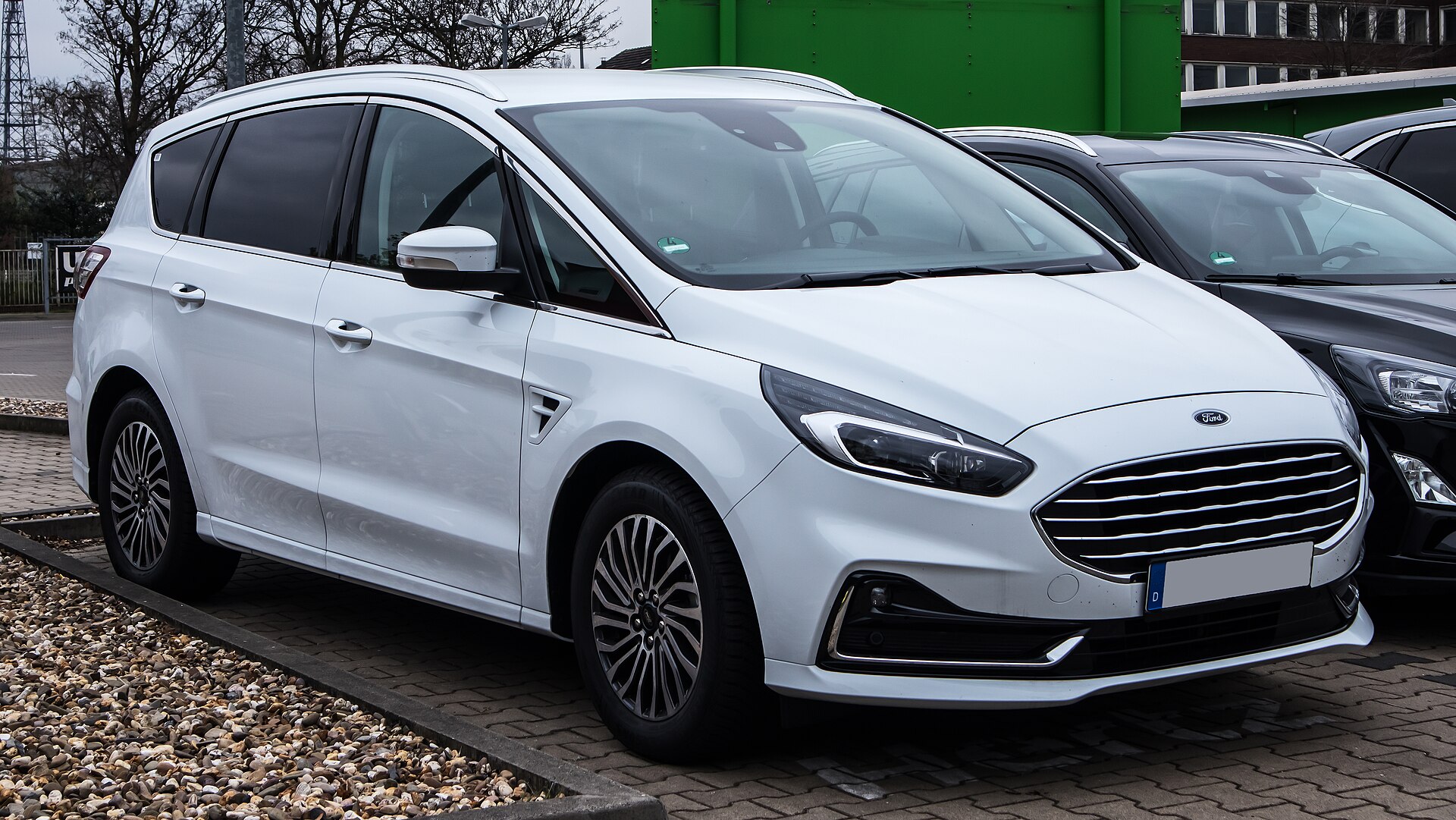
- S-Max II CD539 2015–2023 · Minivan / MPV · 88–177 kW (120–241 PS)
Newest first · 2 generations since 2006
-
2015
- 2006 CD340 2006–2014 · Minivan / MPV · 74–176 kW (101–239 PS)
All generations by year: S-Max II CD539 (2015–2023) · S-Max I CD340 (2006–2014)
Which one is mine?
Pick the year of first registration to see which generation it is.
Check by VINWhich S-Max to buy
Our verdict · Felix Hartmann
- Best all-rounder: a 2015-2019 S-Max II with the 110 kW (150 PS) diesel, which combines 350 Nm with official CO2 of 129 g/km.
- Long-distance tow car or high mileage: the facelifted 2.0 EcoBlue with 140 kW (190 PS), available with all-wheel drive.
- Mostly urban use: the 2021-2023 2.5 Hybrid, the only version that can run briefly on electricity, but with the smallest seven-seat boot.
- Budget buy: a first-generation car after the 2010 facelift; the 2.5 turbo is fast but thirsty.
The Ford S-Max is a large five- or seven-seat MPV that Ford of Europe built from 2006 to April 2023 as a lower, sportier alternative to the Galaxy. There were two generations: the CD340, made in Genk, Belgium, from 2006 to 2014, and the CD539, made at Almussafes near Valencia, Spain, from 2015 to 2023. The first car won European Car of the Year 2007, and the last cars were sold only as a 140 kW (190 PS) full hybrid.
In short
- Two generations: S-Max I (CD340, 2006-2014) and S-Max II (CD539, 2015-2023), with facelifts in 2010 and 2019.
- Power ranged from 74 kW (100 PS) in the early 1.8 TDCi to 177 kW (240 PS) in the 2.0 EcoBlue Bi-Turbo; the Mk1 2.5 turbo with 162 kW (220 PS) was the fastest, at 7.9 seconds to 100 km/h.
- Euro NCAP: five stars for the first car in 2006 and for the second in 2015.
- Production ended in April 2023 together with the Galaxy, with no direct successor.
Size at a glance
| Dimensions | Ford S-Max II CD539 |
|---|---|
| Length | 4,804 mm189.1 in |
| Width | 1,916 mm75.4 in |
| Height | 1,655 mm65.2 in |
| Wheelbase | 2,850 mm112.2 in |
| Boot | 185 L6.5 cu ft |
Running cost
Fuel · S-Max CD539 2.5 Hybrid CVT
about 1,700 EUR fuel a year at 15,000 km
6.4 l/100 km · petrol at 1.75 EUR/l · change mileage, fuel price or version
Specs by version
Engines
| Version | Engine | Power | Torque | Gearbox | Drive | Production years |
|---|---|---|---|---|---|---|
| Hybrid · 1 version | ||||||
| CD539 · 2.5 Hybrid CVT | 4 cyl · Hybrid | 140 kW 190 PS188 hp | 200 Nm148 lb-ft | CVT | Front-wheel drive | 2021–2023 |
| Diesel · 2 versions | ||||||
| CD539 · 2.0 EcoBlue 150 | 4 cyl · Diesel | 110 kW 150 PS148 hp | - | 6-sp Manual | Front-wheel drive | 2019–2021 |
| CD539 · 2.0 EcoBlue 190 | 4 cyl · Diesel | 140 kW 190 PS188 hp | - | 8-sp Automatic | Front-wheel drive | 2019–2021 |
Performance
Show all 1 versions
| Version | 0–100 km/h | Top speed | Fuel consumption | CO₂ |
|---|---|---|---|---|
| CD539 · 2015–2023 | ||||
| CD539 · 2.5 Hybrid CVT | 9.8 s 0–62 mph | 182 km/h113 mph | 6.4 l/100 km36.8 mpg US · 44.1 mpg UK | 146 g/km |
Dimensions and weight
Show all 1 versions
| Version | Length | Width | Height | Wheelbase | Kerb weight | Boot | Fuel tank |
|---|---|---|---|---|---|---|---|
| CD539 · 2015–2023 | |||||||
| CD539 · 2.5 Hybrid CVT | 4,804 mm189.1 in | 1,916 mm75.4 in | 1,655 mm65.2 in | 2,850 mm112.2 in | 1,878 kg4,140 lb | 185 l6.5 cu ft | 65 l17.2 gal US |
Verified Manufacturer and type-approval data from our catalog · Sources and methodology
Ford S-Max at a glance
| Specification | Ford S-Max |
|---|---|
| Segment | Large MPV (M segment); Ford called it a "sports activity vehicle" |
| Body | Five-door MPV, five or seven seats |
| Production | June 2006 - 2014 (Genk, Belgium); 2015 - April 2023 (Almussafes, Spain) |
| Other plant | Chongqing, China (Changan Ford), first generation |
| Layout | Front engine, front-wheel drive; all-wheel drive on some Mk2 diesels |
| Power range | 74-177 kW (100-240 PS) |
| Sister model | Ford Galaxy; engines shared with the Mondeo and Edge |
| Successor | none |
The S-Max sits in our Ford catalogue next to the Galaxy, which shared its platform, plants and most of its engines but had a taller body and a more upright roof.
Generations and model history
| Generation | Code | Years | Body styles | Engines | Power (kW / hp) |
|---|---|---|---|---|---|
| S-Max I | CD340 | 2006-2010 | 5-door MPV | 2.0, 2.3 and 2.5 turbo petrol; 1.8, 2.0 and 2.2 TDCi diesel | 74-162 kW (100-220 PS) |
| S-Max I facelift | CD340 | 2010-2014 | 5-door MPV | 1.6 and 2.0 EcoBoost petrol; 1.6, 2.0 and 2.2 TDCi diesel | 85-176 kW (115-240 PS) |
| S-Max II | CD539 | 2015-2019 | 5-door MPV | 1.5 and 2.0 EcoBoost petrol; 2.0 TDCi diesel | 88-176 kW (120-240 PS) |
| S-Max II facelift | CD539 | 2019-2023 | 5-door MPV | 1.5 EcoBoost, 2.0 EcoBlue diesel, 2.5 Hybrid | 110-177 kW (150-240 PS) |
First generation (CD340, 2006-2014)
Ford showed the S-Max at the Geneva Motor Show in March 2006 and put it on sale in May 2006, alongside a new Galaxy. It was the first Ford styled in the Kinetic Design language, with angular headlamps, a large trapezoid grille and pronounced wheel arches. The jury of European Car of the Year voted it the winner for 2007 on 13 November 2006.
The cabin was built around Ford's Fold Flat System: the second and third rows fold into the floor, and the middle row has three individual seats, each with ISOFIX points. Heated front and rear screens, parking sensors and dual-zone climate control were standard. In English-speaking markets the trims were Edge, Zetec and Titanium; continental Europe had Trend, Titanium and Titanium S. About 60% of buyers chose a Titanium.
The engine range grew steadily. The 2.2 TDCi with 129 kW (175 PS) arrived in March 2008, a 103 kW (140 PS) 2.0 TDCi with 159 g/km of CO2 followed in September 2008, and the 2010 facelift brought turbocharged EcoBoost petrol engines: a 1.6 with 118 kW (160 PS) and a six-speed manual, and a 2.0 with 149 kW (203 PS) and the PowerShift dual-clutch gearbox. For 2012 Ford added a 1.6 TDCi with 85 kW (115 PS), a 147 kW (200 PS) version of the 2.2 TDCi and a 176 kW (240 PS) 2.0 EcoBoost.
Second generation (CD539, 2015-2023)
The second S-Max was presented at the Paris Motor Show in 2014 and production started in 2015, this time in Spain. It kept the 2,850 mm wheelbase but grew to about 4.80 m. Trims were Zetec, Titanium, Titanium Sport, ST-Line and the upmarket Vignale; in Germany the range ran Trend, Titanium, ST-Line and Vignale. Intelligent all-wheel drive was offered with the 110 kW (150 PS) and 132 kW (180 PS) diesels.
The facelift that arrived in October 2019 replaced the old diesels with 2.0 EcoBlue units of 110 kW (150 PS), 140 kW (190 PS) and, as a Bi-Turbo, 177 kW (240 PS); a 1.5 EcoBoost with 121 kW (165 PS) stayed on German price lists until October 2020. The 2.5 Hybrid arrived in February 2021, and after the diesels left the German price list in November 2021 it was the only S-Max on sale. Ford stopped building the S-Max and the Galaxy in April 2023, citing falling MPV demand and its move towards SUVs and electrified models.

Engines, transmissions and performance
| Engine | Years | Power | Torque | 0-100 km/h | CO2 (official) |
|---|---|---|---|---|---|
| 2.5 turbo petrol (Mk1) | 2006-2010 | 162 kW (220 PS) | 320 Nm | 7.9 s | 224 g/km (NEDC) |
| 1.5 EcoBoost | 2015-2018 | 118 kW (160 PS) | 240 Nm | 9.9 s | 149 g/km |
| 2.0 EcoBoost, automatic | 2015-2018 | 176 kW (240 PS) | 345 Nm | 8.4 s | 174 g/km |
| 2.0 diesel 120 | 2015-2019 | 88 kW (120 PS) | 310 Nm | 13.4 s | 129 g/km |
| 2.0 diesel 150 | 2015-2019 | 110 kW (150 PS) | 350 Nm | 10.8 s | 129 g/km |
| 2.0 diesel 180 | 2015-2019 | 132 kW (180 PS) | 400 Nm | 9.7 s | 129 g/km |
| 2.0 diesel Bi-Turbo 210, PowerShift | 2015-2019 | 154 kW (210 PS) | 450 Nm | 8.8 s | 144 g/km |
| 2.5 Hybrid, CVT | 2021-2023 | 140 kW (190 PS) system | 200 Nm (engine) | 9.8 s | 146 g/km (WLTP) |
The first S-Max used five- and six-speed manuals and a six-speed automatic, with PowerShift for the 2.0 EcoBoost. The second generation offered a six-speed manual, six- and eight-speed automatics, the six-speed PowerShift and, for the hybrid, a continuously variable transmission. The Mk1 2.5, a turbocharged engine shared with the Focus ST, reached 230 km/h.
The 2.5 Hybrid pairs an Atkinson-cycle 2.5-litre four-cylinder with 110 kW (150 PS) and an electric motor; the lithium-ion battery holds 1.1 kWh gross, so the car cannot be plugged in. ADAC lists a top speed of 182 km/h. Use our power converter if you need hp, PS and kW side by side.


Dimensions, space and boot
Key figures for the last S-Max, the 2.5 Hybrid seven-seater (ADAC data):
| Parameter | Metric | Imperial |
|---|---|---|
| Length | 4,804 mm | 189.1 in |
| Width (without mirrors) | 1,916 mm | 75.4 in |
| Height | 1,655 mm | 65.2 in |
| Wheelbase | 2,850 mm | 112.2 in |
| Kerb weight (EU) | 1,878 kg | 4,140 lb |
| Boot, seven seats in use | 185 l | 6.5 cu ft |
| Boot, maximum (to the roof) | 2,020 l | 71.3 cu ft |
| Fuel tank | 65 l | 17.2 US gal |
The first generation was 4,768 mm long, 1,884 mm wide and 1,658 mm tall on the same 2,850 mm wheelbase. ADAC measured 285 litres of luggage space in normal configuration and up to 2,000 litres to the roof, and the 2.5 weighed 1,681 kg. Five-seat versions of the hybrid were also listed from March 2022.
Fuel economy and running costs
The hybrid's official WLTP figure is 6.4 l/100 km (about 36.8 mpg US) with 146 g/km of CO2. The older diesels were thriftier on paper: the 2.0 TDCi 120 was rated at 129 g/km and about 57 mpg on the UK scale. At the other end, the Mk1 2.5 turbo was rated at 9.4 l/100 km and 224 g/km on the old NEDC cycle. Our fuel cost calculator turns these figures into a yearly bill.
Prices give an idea of the market position. In Germany the Mk1 2.5 Titanium cost EUR 33,900 in 2006. The facelifted Mk2 started at EUR 33,630 for the 1.5 EcoBoost Trend (2019), and the hybrid at EUR 43,400 (2021). ADAC lists a two-year vehicle warranty for the final cars.
Trims and equipment
The first generation already came with dual-zone climate control, heated front and rear screens and parking sensors as standard. The second generation added a more upmarket Vignale version with its own interior trim and a sporty ST-Line. Titanium and Vignale were the volume trims in many markets; the hybrid was offered in Trend, Titanium, ST-Line and Vignale specification in Germany.

Safety
Euro NCAP gave the first S-Max five stars in 2006. The second generation was tested with the Galaxy in 2015 and also received five stars: 87% for adult occupants, 87% for child occupants, 79% for pedestrians and 71% for safety assist. Other MPVs and their ratings are collected on our safety page.
Reliability and known issues
Hard data is limited. Carbuyer, citing the 2021 Driver Power owner survey, reports that the S-Max did not appear among the top 75 cars, that Ford finished 25th of 29 manufacturers, and that more than 21% of owners reported a fault in the first year. Carbuyer gives the car 3.5 out of 5 for reliability. We found no model-specific defect pattern in the sources used, so check the service history and any open recalls on the car you are looking at.
Rivals
| Model | Engines | Power (kW / hp) | Boot (l) | Price from (EUR) |
|---|---|---|---|---|
| Ford S-Max II facelift | 1.5 EcoBoost, 2.0 EcoBlue, 2.5 Hybrid | 110-177 kW (150-240 PS) | 185 (7 seats, Hybrid) | 33,630 (Germany, 2019) |
| Ford Galaxy III facelift | 1.5 EcoBoost, 2.0 EcoBlue, 2.5 Hybrid | 110-177 kW (150-240 PS) | - | 35,580 (Germany, 2019) |
| Volkswagen Sharan II facelift | 1.4 TSI, 2.0 TSI, 2.0 TDI | 85-162 kW (115-220 PS) | 955 (5 seats) | 33,325 (Germany, 2015) |
| SEAT Alhambra 7N facelift | 1.4 TSI, 2.0 TSI, 2.0 TDI | 85-162 kW (115-220 PS) | 809 (5 seats) | 30,815 (Germany, 2015-2022 list) |
The Volkswagen Sharan and SEAT Alhambra were built together in Portugal and had sliding rear doors, which the S-Max never offered. All four have gone out of production.
Photo gallery


Ford S-Max: first vs latest generation
| Spec | S-Max I CD340 | S-Max II CD539 | Change |
|---|---|---|---|
| Years | 2006–2014 | 2015–2023 | 9 years apart |
| Most powerful version | 176 kW (239 PS) | 177 kW (241 PS) | +1 kW (+1%) |
Oldest and newest generation in the 1cars catalog. Power is the strongest version of each; other rows are shown only when both generations have the figure.
Ford S-Max in our rankings
- No. 9 of 26 · Most powerful minivans and MPVs (177 kW)
- No. 254 of 1082 · Longest-running car nameplates (17 years · top 25%)
- No. 129 of 531 · Longest cars (4,804 mm · top 25%)
- No. 130 of 509 · Widest cars (1,916 mm · top 26%)
- No. 128 of 391 · Heaviest cars (1,878 kg · top 33%)
- No. 115 of 297 · Most economical cars (6.4 l/100 km · top 41%)
In production longer than 75% of ranked nameplates in the 1CARS catalog (No. 254 of 1082).
FAQ
How many generations of the Ford S-Max are there?
Two. The first (CD340) was built from 2006 to 2014 in Genk, Belgium; the second (CD539) from 2015 to April 2023 in Almussafes, Spain.
Is the Ford S-Max still made?
No. Ford ended production of the S-Max and Galaxy in April 2023 and did not replace them with a direct successor.
Does the S-Max have seven seats?
Most were seven-seaters with two folding seats in the third row; five-seat versions were also sold. With all seven seats up, ADAC measured 185 litres of boot space in the hybrid.
Was there a hybrid S-Max?
Yes. From 2021 the S-Max was sold only as the 2.5 Hybrid, a self-charging full hybrid with 140 kW (190 PS) system output and a CVT.
Data sources
Data checked by an editor against the sources below.
- Wikipedia - Ford S Max
- ADAC
- ADAC - Ii Facelift