 Ford Granada Europe
Specs, engines and history
Published Report an error
By Felix Hartmann, Automotive Technology & EV Contributor
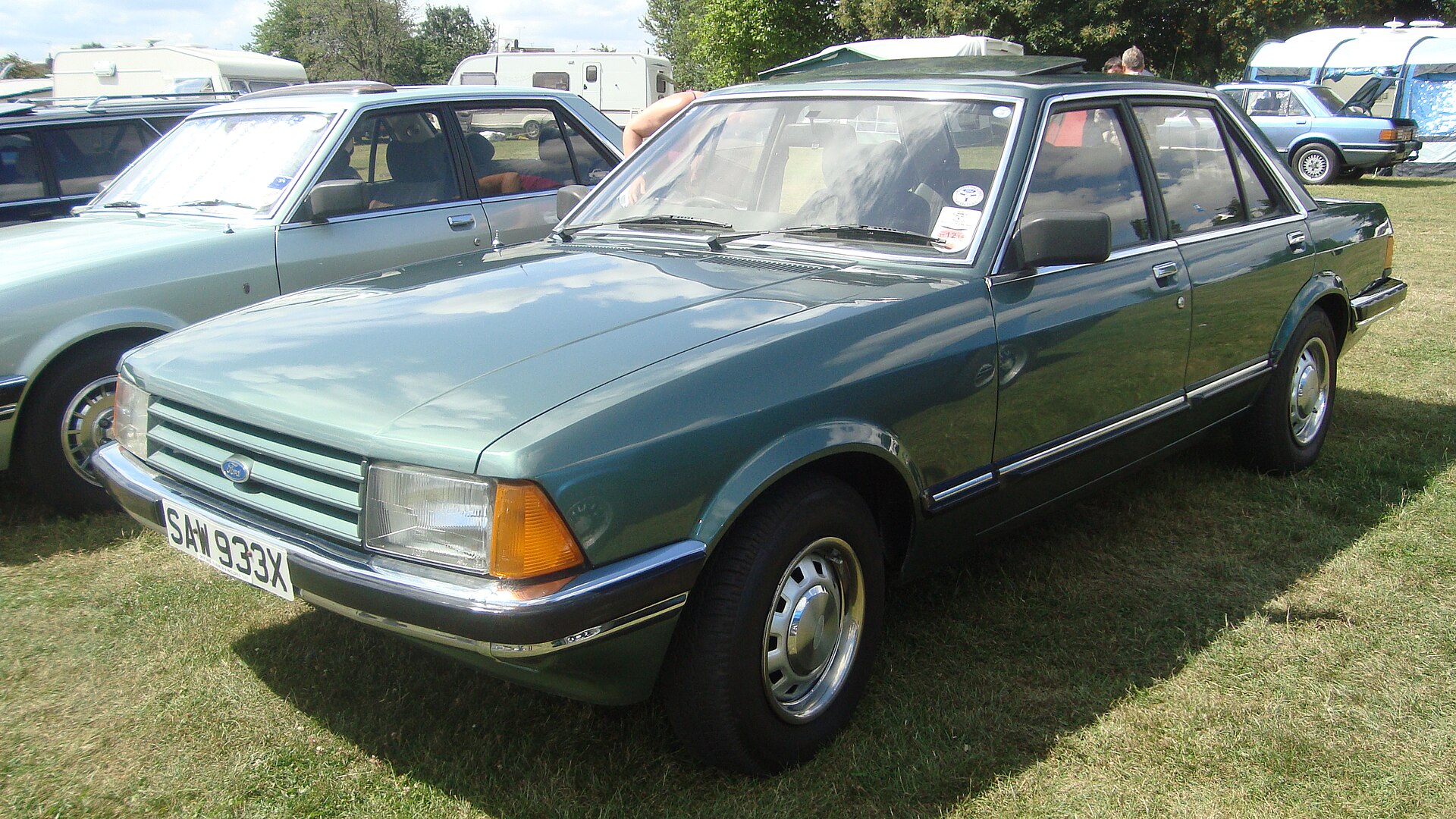
The Ford Granada was Ford of Europe's large executive saloon and estate from 1972 to 1994. Ford built the first two generations in Cologne and, until 1976, in Dagenham. They replaced the British Zephyr and Zodiac and the German 17M/20M/26M. From 1985 the third generation was sold as the Scorpio in continental Europe, but in the UK and Ireland it kept the Granada name until 1994. Taxi drivers, police forces and company-car fleets used it widely, and Wikipedia EN describes it as the best-selling car in its class in Britain throughout its production.
In short
- Mk I 1972–1977, Mk II ("Granada '78") 1977–1985, Mk III 1985–1994 (Scorpio outside the UK and Ireland).
- About 1.619 million Mk I and Mk II cars were built up to March 1985; Hyundai assembled another 4,743 in South Korea.
- Engines from the 51 kW (70 PS) 1.7 V4 to the 118 kW (160 PS) 2.8 injection V6; the 1991 24-valve Cosworth V6 made 150 kW (200 bhp).
- The Mk III was European Car of the Year 1986 and the first European volume car with standard ABS.
Granada at a glance
| Item | Ford Granada (Europe) |
|---|---|
| Maker | Ford of Europe; plants in Cologne-Niehl and Dagenham (Mk I to 1976) |
| Production | March 1972 – 1994 (Granada badge on the Mk III only in the UK and Ireland) |
| Generations | Mk I 1972–1977, Mk II 1977–1985, Mk III 1985–1994 |
| Body styles | four-door saloon, five-door estate (Turnier), two-door saloon, fastback coupé (Mk I) |
| Layout | front engine, rear-wheel drive, independent rear suspension with coil springs |
| Engines | V4, Pinto four-cylinder, Cologne and Essex V6, Peugeot (Indenor) diesels |
| Predecessors | Ford Zephyr/Zodiac (UK), Ford 17M/20M/26M P7 (Germany) |
| Successor | Ford Scorpio |
The Granada is listed in our Ford catalogue, and the company's wider story is told in our history of Ford.
Development and production history
Development started in 1968, and Ford invested 500 million Deutschmarks in the project. The Granada was presented at the Geneva Motor Show in March 1972. It was about 10 cm more compact than the German car it replaced but, depending on the model, at least 140 kg heavier. Lower-trim models were first sold as the Consul; after a trademark dispute, all cars were called Granada from 1975 (Wikipedia DE dates the merged "Granada '76" range to May 1975).
| Year | Event |
|---|---|
| 1968 | development starts |
| March 1972 | launch at the Geneva Motor Show; Consul and Granada ranges |
| May 1973 | two-door saloon added (not sold in the UK) |
| 1975 | Consul name dropped; one Granada range |
| 1976 | production moves entirely to Cologne |
| August 1977 | Mk II "Granada '78" launched for the 1978 model year |
| March 1979 | Peugeot diesel engines (GLD) |
| 1981 | facelift; 1.6 Pinto replaces the 1.7 V4 on the mainland |
| April 1985 | Mk III launched; Scorpio name in continental Europe |
| 1986 | Mk III voted European Car of the Year |
| 1991 | 24-valve Cosworth V6 |
| 1994 | Granada name ends; Scorpio continues across Europe |
In the UK the Granada was a top-ten seller in 1978 and 1982 and peaked as the seventh best-selling car in 1979, with more than 50,000 sales.


Design and engineering
At the front the Mk I used double wishbones instead of MacPherson struts, as the contemporary Cortina/Taunus did, and at the rear it had independent suspension on coil springs. Unlike the Zephyr and Zodiac, it used drum brakes at the rear. Top Mk I models ran on 195/70R14 Pirelli Cinturato tyres, while the top Mk II used 190/65VR390 Michelin TRX tyres.
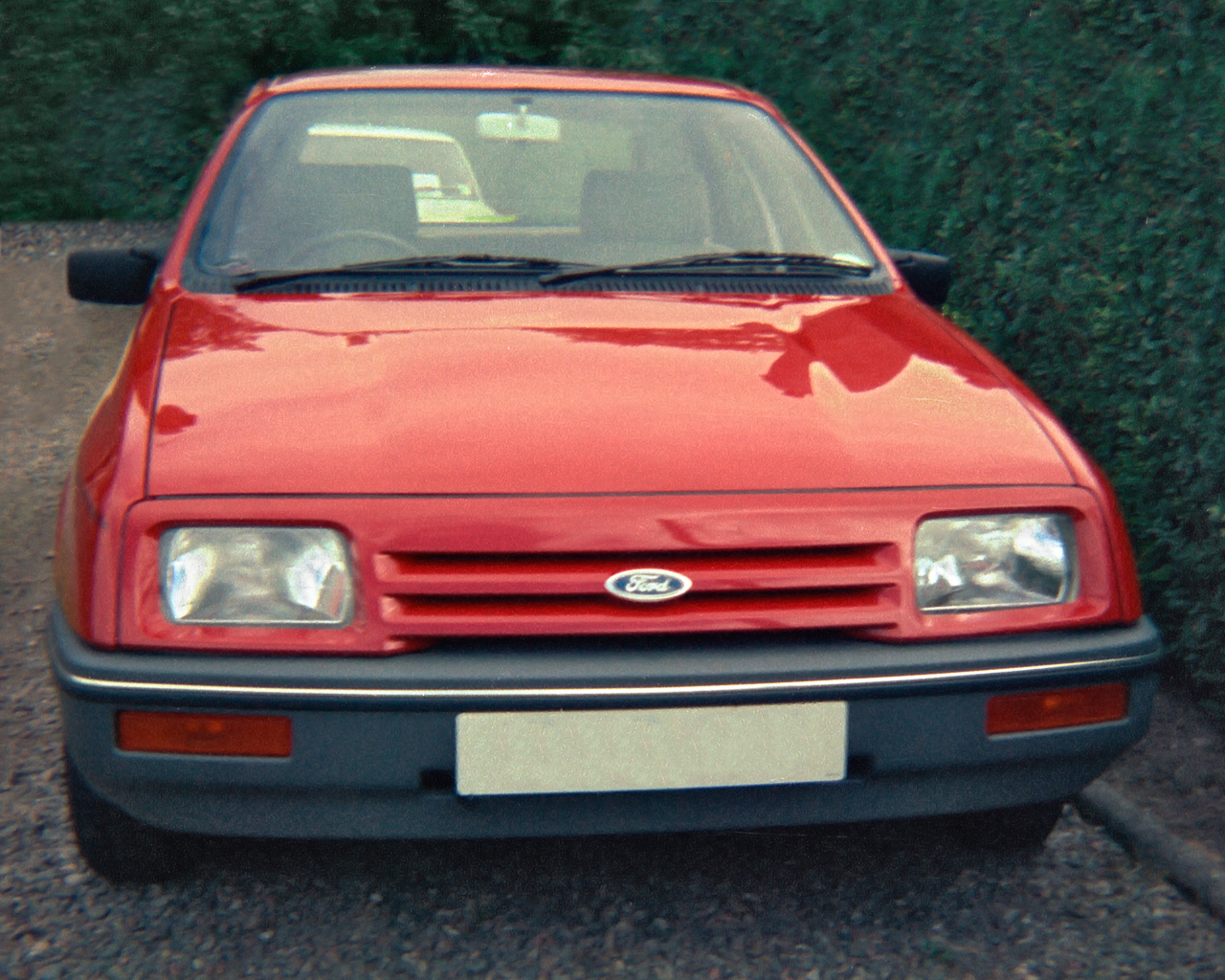
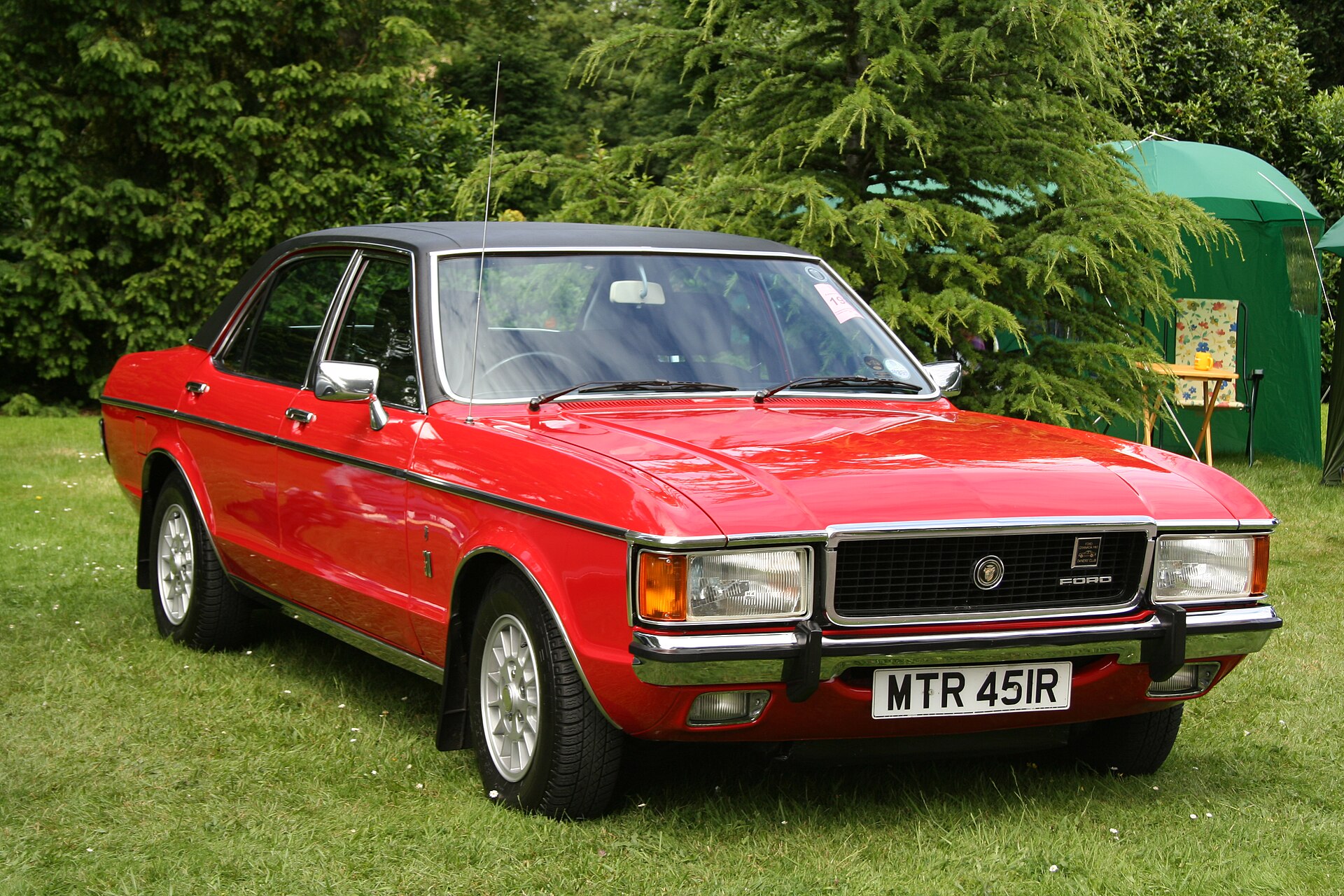
The Mk II of 1977 was a reskin of the Mk I, styled under Uwe Bahnsen, with sharper lines that Wikipedia links to the Fiat 130 Coupé. The fastback coupé was dropped. The Mk III of 1985 was a new car on a stretched Sierra floorpan and suspension.
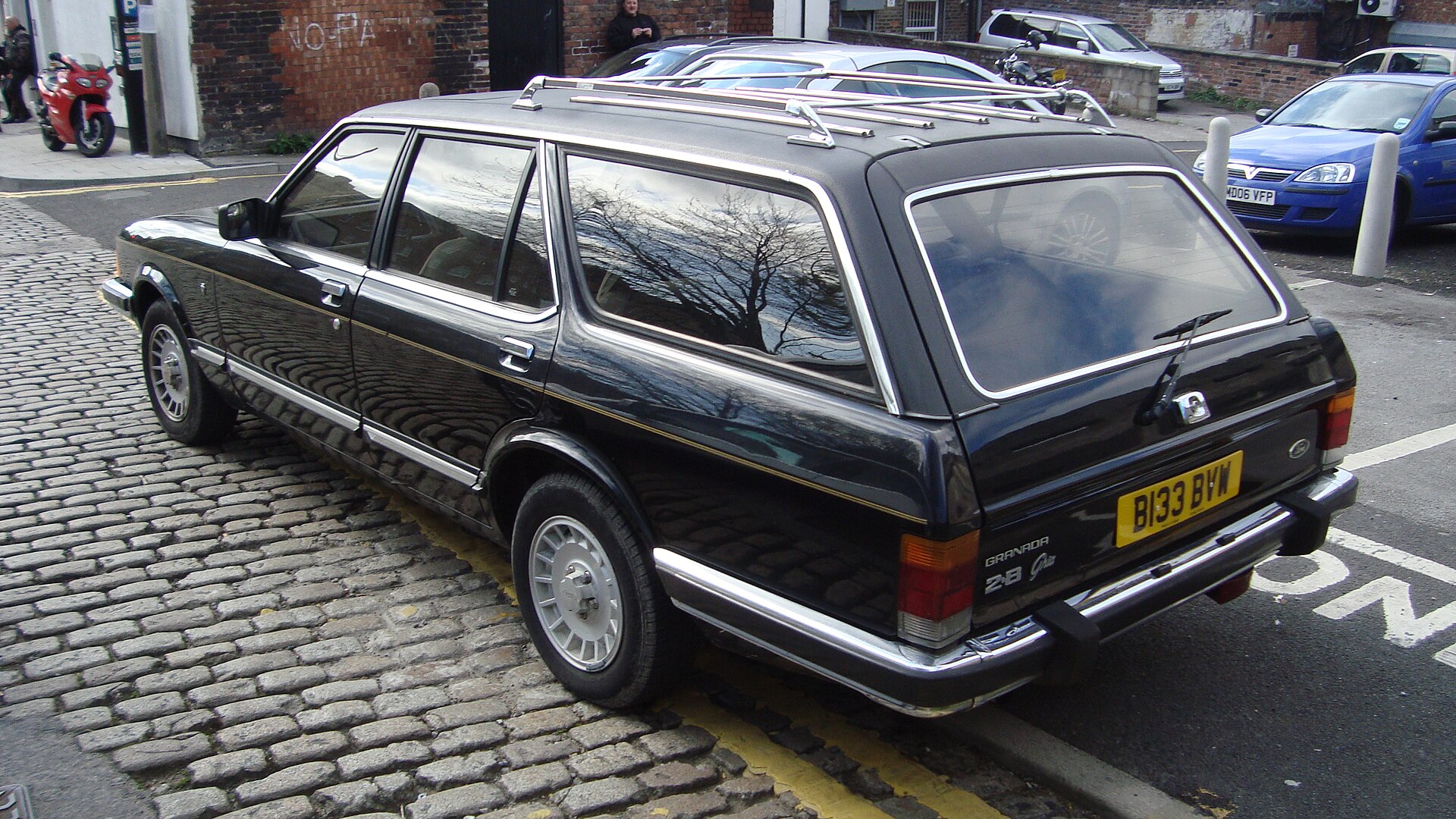
Coachbuilders Coleman Milne and Woodall Nicholson turned Granadas into limousines and hearses, and the car was a familiar sight as a taxi. A silver 2.8i S appeared in the British police series The Sweeney.

Engine and drivetrain
| Engine | Generation | Power (Wikipedia DE) | Torque |
|---|---|---|---|
| 1.6 Pinto I4 | Mk II from 1981 | 55 kW (75 PS) | - |
| 1.7 V4 | Mk I / Mk II | 51 kW (70 PS) | 120 Nm |
| 2.0 V6 (Cologne) | Mk I / Mk II | 66 kW (90 PS) | - |
| 2.3 V6 (Cologne) | Mk I / Mk II | 79–84 kW (108–114 PS) | - |
| 2.6 V6 (Cologne) | Mk I | 92 kW (125 PS) | - |
| 3.0 V6 (Essex) | Mk I | 101 kW (138 PS) | - |
| 2.8 V6 carburettor | Mk II | 99 kW (135 PS) | - |
| 2.8 V6 injection | Mk II | 118 kW (160 PS) | 217 Nm |
| 1.9 / 2.1 / 2.5 diesel (Peugeot) | Mk II | 40 / 46 / 51 kW (54 / 63 / 69 PS) | 148 Nm (2.5) |
| 2.9 V6 24-valve (Cosworth) | Mk III from 1991 | 150 kW (200 bhp, Wikipedia EN) | - |
British Mk Is used the Essex V4 2.0 and the Essex V6 2.5 and 3.0; German cars used the Taunus V4 1.7 and the Cologne V6 in 2.0, 2.3 and 2.6 litres. In 1976–1977 an injected Cologne V6 of 110 kW (150 PS) appeared. Wikipedia EN gives the later 2.8 injection as 112 kW (150 bhp), lower than the 118 kW (160 PS) of Wikipedia DE. In 1980 the German tuner Schwabengarage offered a turbo conversion for just under DM 6,000 that raised the 2.8 V6 to about 147 kW (200 PS). The Mk III used Pinto four-cylinders of 1.8 and 2.0 litres and Cologne V6s of 2.4, 2.8 and 2.9 litres; Ford claimed 230 km/h for the 24-valve car.

Ford Granada specifications
| Parameter | Metric | Imperial |
|---|---|---|
| Length (Mk II saloon) | 4,824 mm | 189.9 in |
| Engines | 1.6–3.0 litres | 98–183 cu in |
| Top speed (Mk III 24V, factory) | 230 km/h | 140 mph |
| Tyres (Mk II top models) | 190/65VR390 Michelin TRX | – |
| Weight versus predecessor | at least 140 kg heavier | at least 309 lb heavier |
Variants and derivatives
| Variant | Years | Body / purpose | Engine | Notes |
|---|---|---|---|---|
| Consul | 1972–1975 | lower-trim saloon and estate | V4 and V6 | name dropped after a trademark dispute |
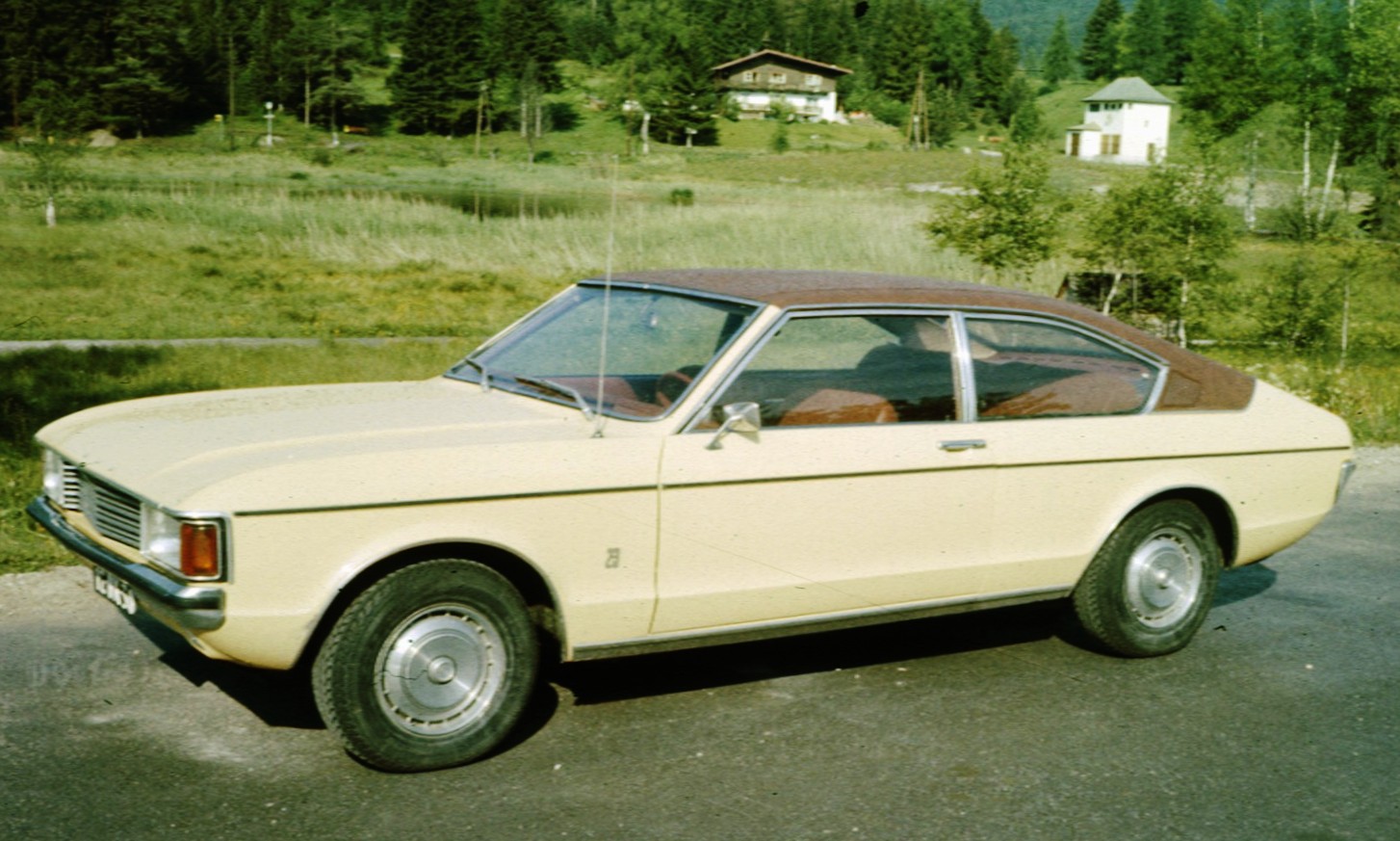
| Granada coupé | 1972–1977 | two-door fastback | V6 | dropped with the Mk II |
| Granada Ghia / Ghia X | Mk I–II | top trim | V6, also 2.5 diesel | Ghia X Executive with Connolly leather |
| 2.8 Injection / 2.8i GLS | Mk II (GLS name from 1979) | sporting saloon | 2.8 V6 injection | TRX wheels, Recaro seats |
| Saphir (Germany) | 1975, 1979 | limited editions | – | 1,000 and 600 cars |
| Perana (South Africa) | Mk I | performance saloon | 4.9 Windsor V8, 188 kW (255 PS) | Port Elizabeth assembly |
| Hyundai Granada | to December 1985 | Korean assembly | 2.0 V6, later 2.0 four | 4,743 built |
| Granada Mk III / Scorpio | 1985–1994 | hatchback, later saloon and estate | 1.8–2.9 | European Car of the Year 1986 |
Taxi editions, sold only in black, even had a foot-operated panic button. Wikipedia EN notes that only 12 "coupé limousines" were built by coachbuilders.

In service: reliability and legacy
The Granada's mix of space, V6 power and rear-wheel drive made it a staple of British fleets, taxi ranks and police forces in the 1970s and 1980s. After 1994 the Scorpio name carried the large rear-wheel-drive Ford on across Europe. To compare a Granada with its rivals of the time, use the car comparison tool.
Preservation and collecting today
Many Granadas served as fleet cars and taxis. The special versions are the Mk I coupé, the 2.8 injection models, the German Saphir editions and the 24-valve cars of 1991–1994. Our sources do not cover rust or reliability problems in detail, so a specialist inspection is the safest approach for any 40-year-old Ford. More cars of the period are in our classics section.
Photo gallery


Ford Granada Europe in our rankings
In production longer than 84% of ranked nameplates in the 1CARS catalog (No. 156 of 1082).
Ford Granada Europe photos 7
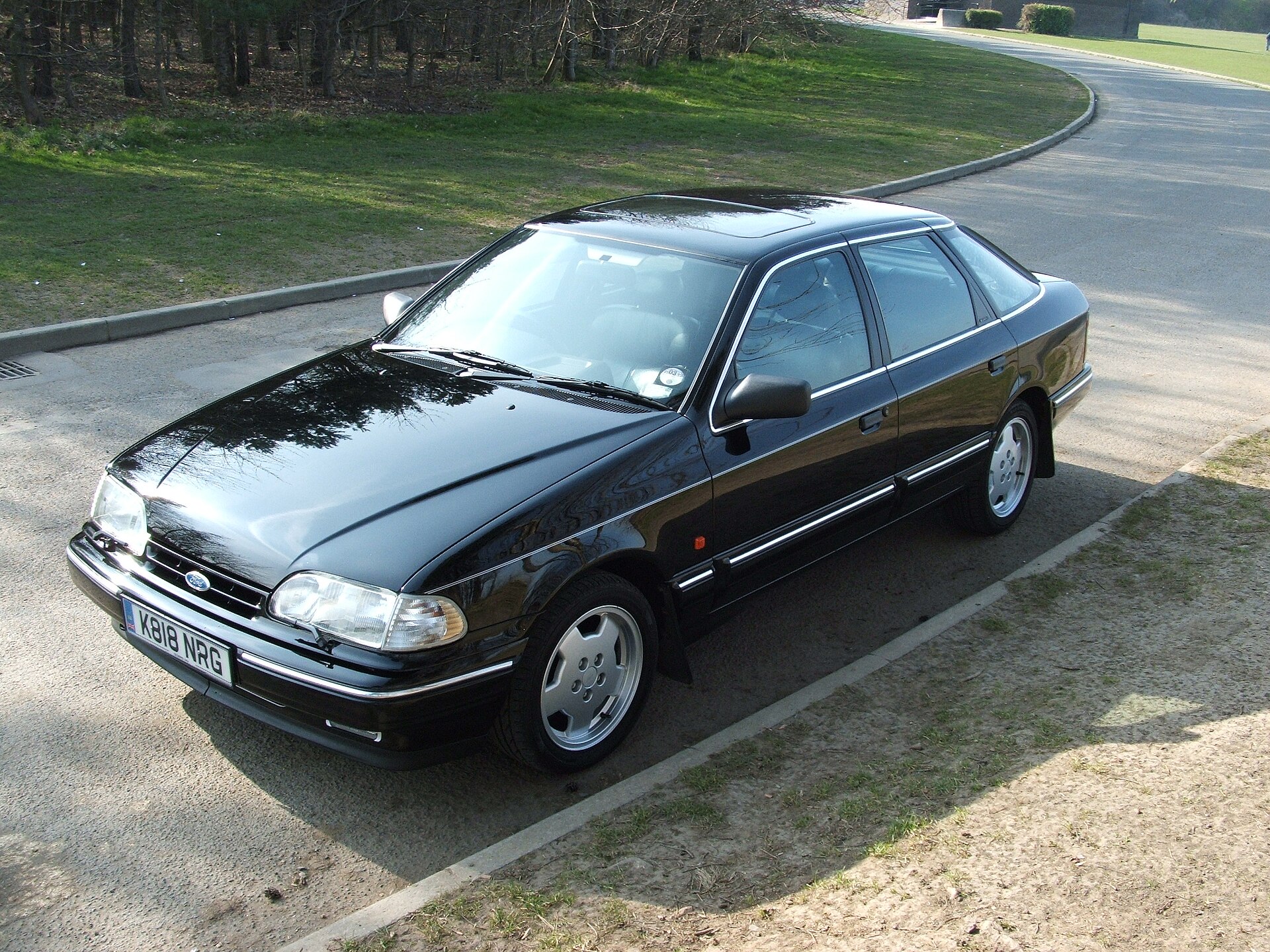
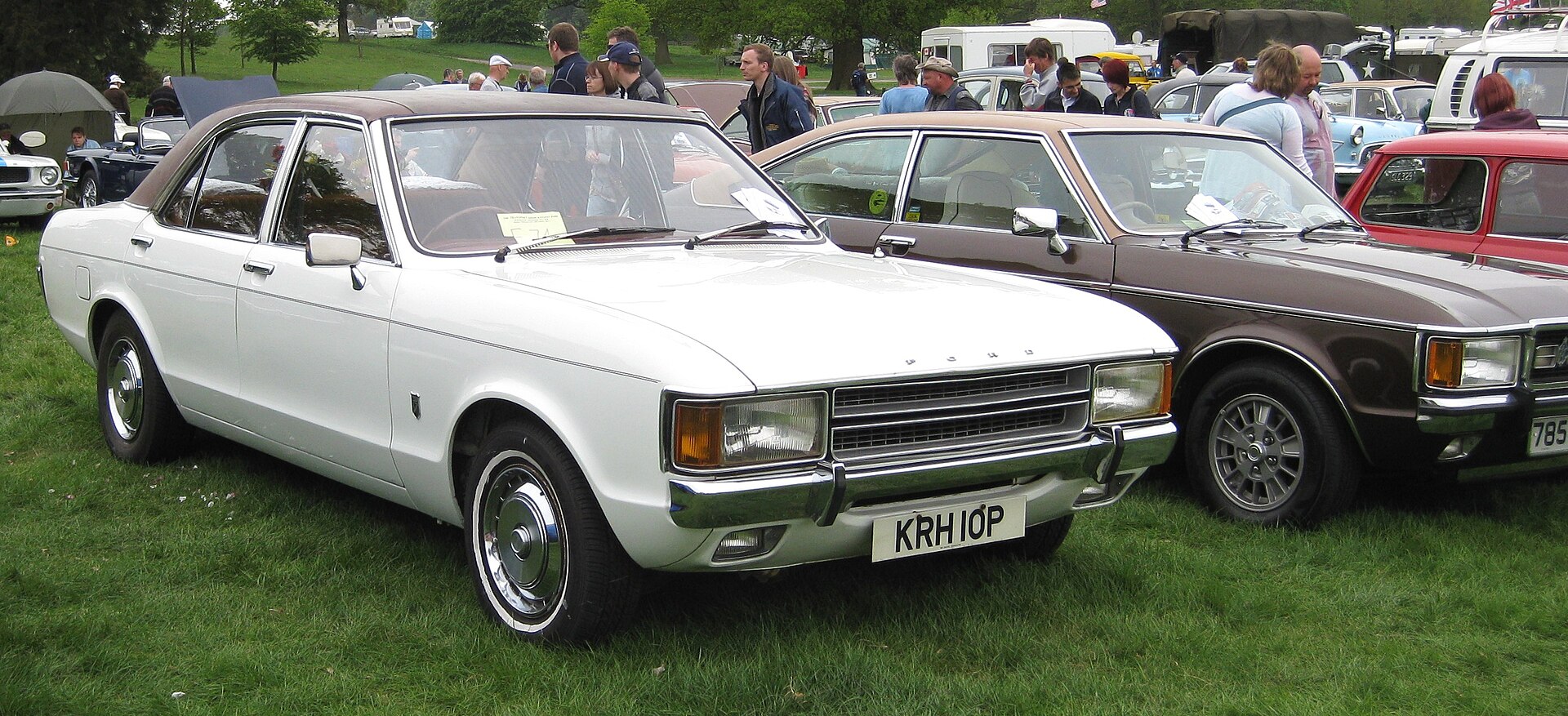
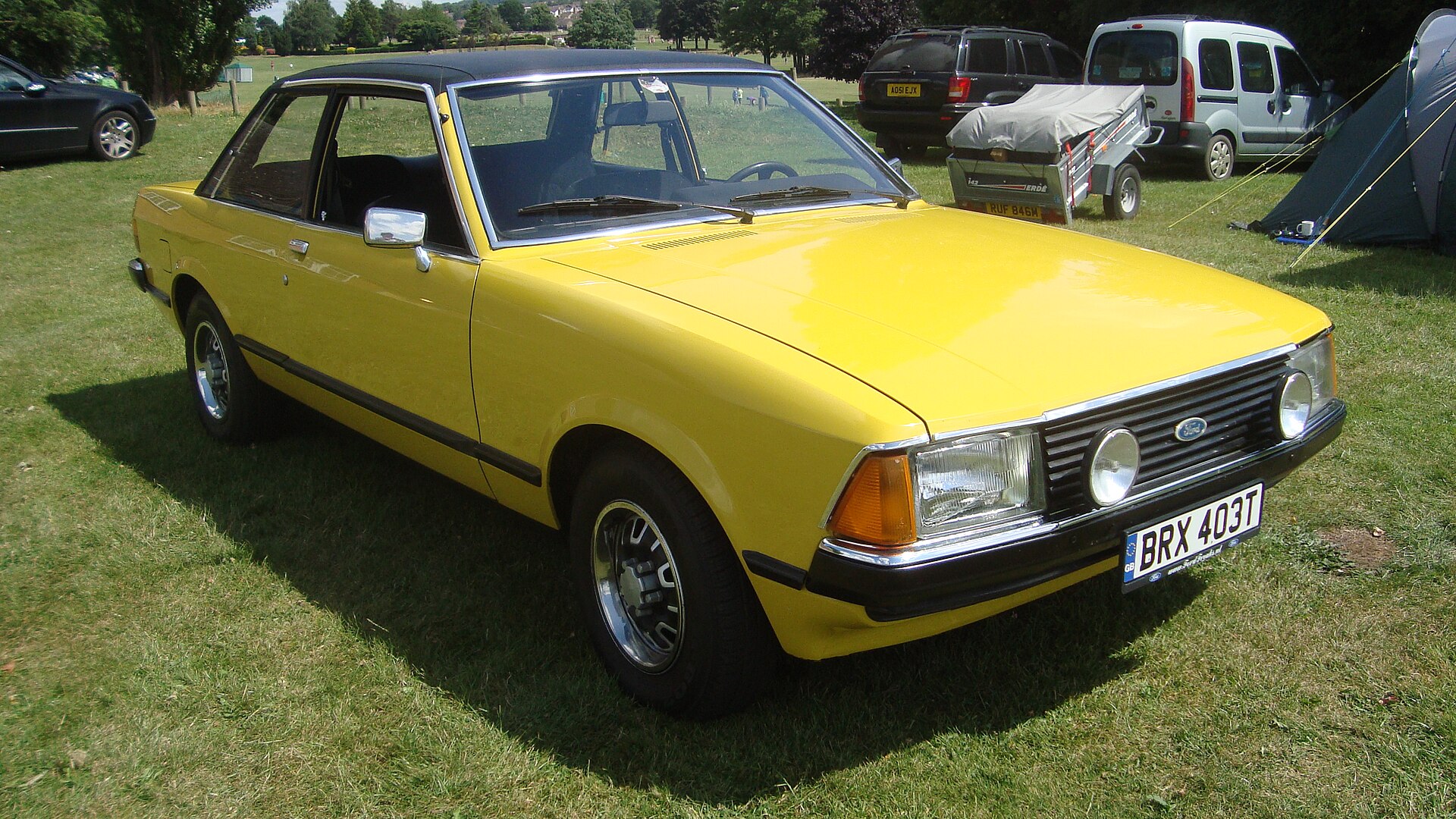
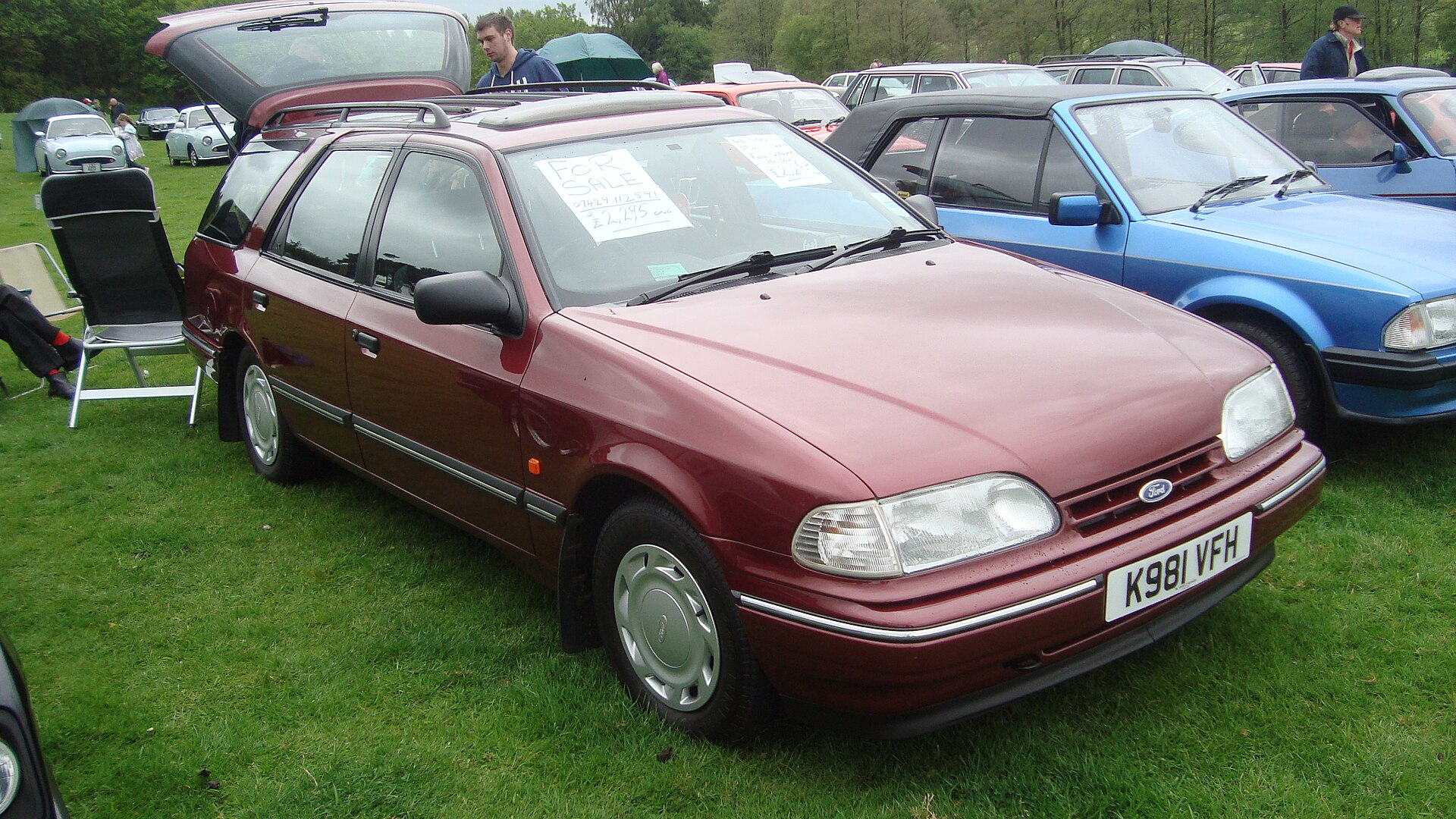
FAQ
When was the Ford Granada produced, and where?
From March 1972 to 1994, in Cologne and, until 1976, Dagenham; the Granada name was used on the third generation only in the UK and Ireland.
How many Ford Granadas were built?
About 1.619 million Mk I and Mk II cars up to March 1985, plus 4,743 assembled by Hyundai in Korea. Separate Mk III totals are not given by our sources.
What engines did the Ford Granada have?
V4 and Pinto four-cylinders, Cologne V6s from 2.0 to 2.9 litres, the Essex V6 in British Mk Is and Peugeot diesels from 1979; outputs range from 40 kW (54 PS) to 150 kW (200 bhp).
What is the difference between the Granada and the Scorpio?
The 1985 third generation was sold as the Scorpio in continental Europe and as the Granada in the UK and Ireland. From 1994 the Scorpio name was used everywhere.
Is the Ford Granada collectable?
It is a recognised classic. The special versions are the Mk I coupé, the 2.8i and the 24-valve Cosworth V6 cars; check the condition carefully, as many cars led a hard fleet life.