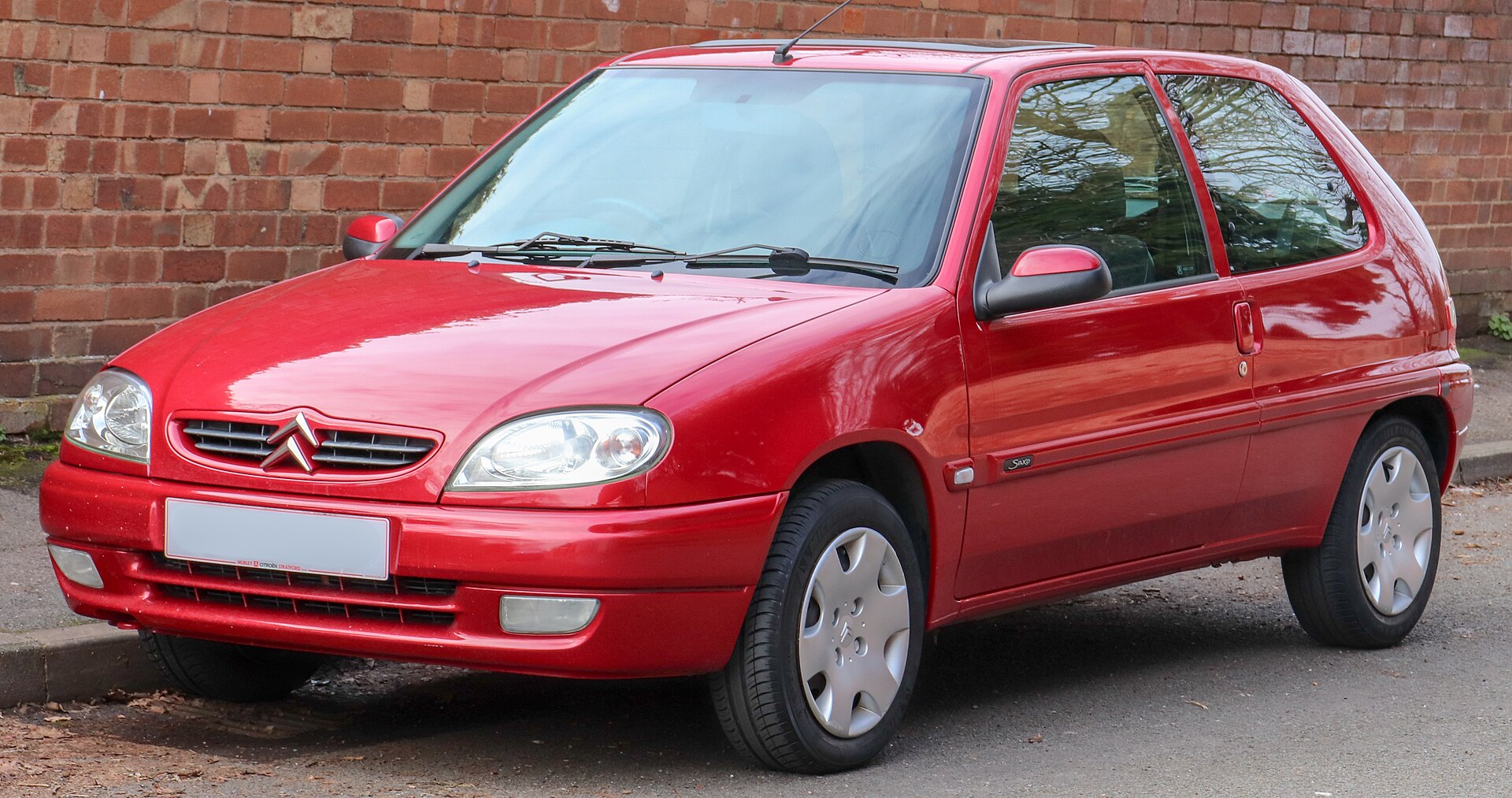
 Citroen Xsara
Specs, engines and history
Published Sources (1) Report an error
By Felix Hartmann, Automotive Technology & EV Contributor
- Built
- 1997–2006
- Top power
- 123 kW (167 PS)
Which Xsara to buy
Our verdict · Felix Hartmann
- For low running costs: a facelifted 2.0 HDi 90 or HDi 110, the most economical engines in the range.
- For simple, cheap motoring: the 1.4 petrol, with 55 kW (75 PS) and an eight-valve engine.
- For fun: the VTS with the 2.0 16V, 123 kW (167 PS) before the facelift; rare now and worth a careful inspection.
- For space: the Break, longer than the hatchback and built until 2006.
Whatever the version, check the rear axle first. A worn trailing arm bearing can cost more to fix than an older Xsara is worth.
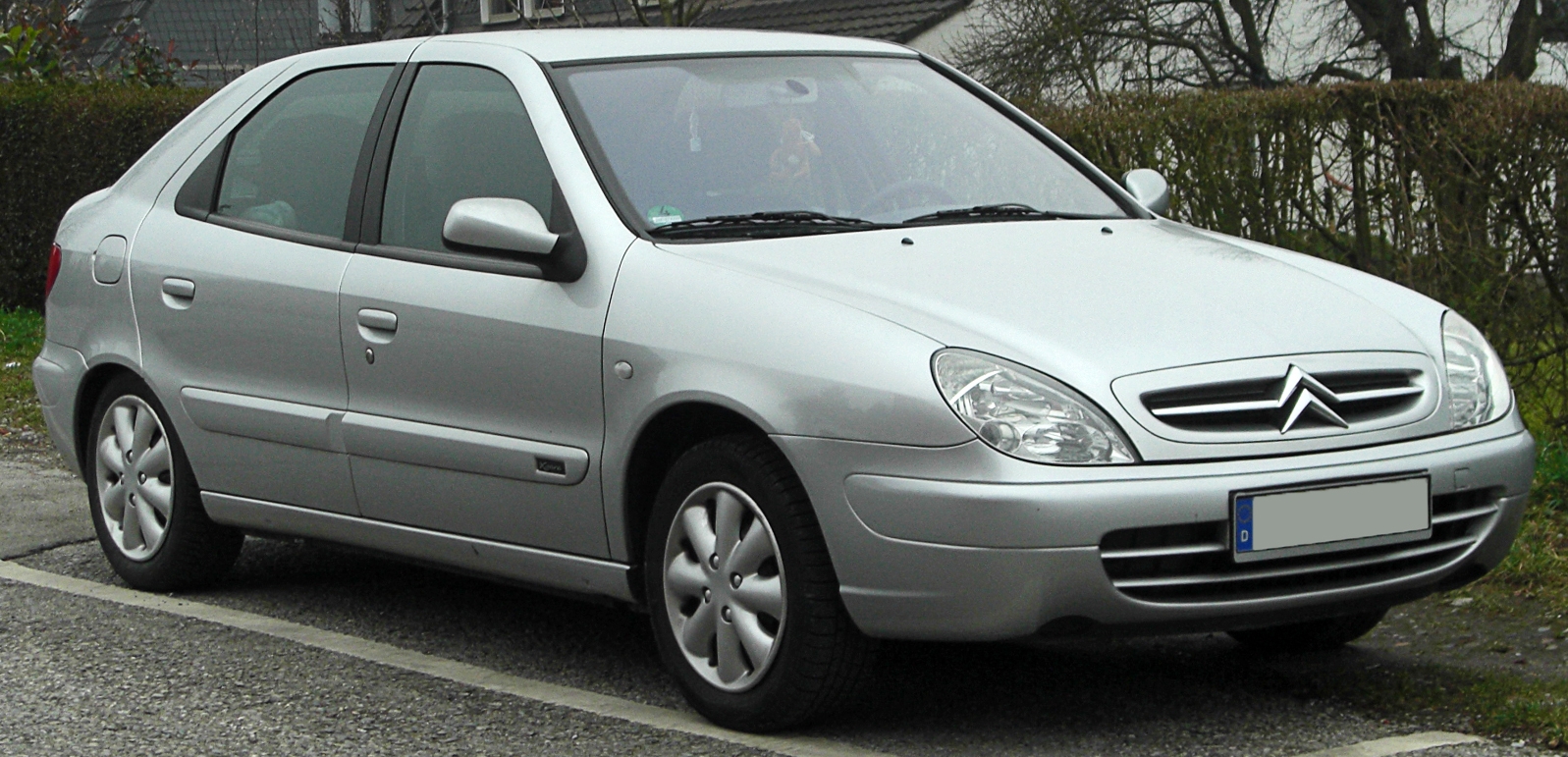
The Citroën Xsara is the compact family car that Citroën built from 1997 to 2006 as the successor to the ZX, on the same platform and running gear as the ZX and the Peugeot 306. It came as a five-door hatchback, a three-door Coupé and a Break estate, was facelifted in September 2000 and gave its name to the Xsara WRC, which won three manufacturers' titles. The hatchback was replaced by the Citroën C4 in November 2004; the estate carried on in Europe until 2006.
In short
- C-segment hatchback, Coupé and Break, built in Rennes (France), Madrid and Vigo (Spain) and in several other countries.
- Petrol engines from 1.4 to 2.0 litres, 55 kW (75 PS) to 123 kW (167 PS) in the Xsara VTS; diesels from 1.4 HDi to 2.0 HDi, 43-80 kW (58-109 PS).
- Facelift for the 2001 model year: about 80 kg heavier, 21 mm longer, new 16-valve engines.
- Euro NCAP 1998: three stars for adult occupant protection.
Citroën Xsara at a glance
| Item | Citroën Xsara |
|---|---|
| Segment | small family car (C-segment) |
| Production | 1997-2006 (hatchback in Europe to November 2004) |
| Body styles | 5-door hatchback, 3-door hatchback (Coupé), 5-door estate (Break) |
| Platform | shared with Citroën ZX and Peugeot 306; front engine, front-wheel drive |
| Plants | Rennes (France); Villaverde, Madrid and Vigo (Spain); Uruguay; Wuhan (China); Cairo (Egypt) |
| Designers | Donato Coco, Giles Taylor |
| Predecessor / successor | Citroën ZX / Citroën C4 (hatchback), C4 Picasso (estate role) |
The Xsara is one of the older models in our Citroën catalogue. Its MPV offshoot, the Xsara Picasso, used the Xsara name but was a separate model and continued alongside its C4-based successor.
Generations and versions
The Xsara had a single generation. The September 2000 facelift, sold from the 2001 model year, changed the front end, added track width and made 15-inch wheels standard.
| Generation | Code | Years | Body styles | Engines | Power (kW / hp) |
|---|---|---|---|---|---|
| Xsara | - | 1997-2000 | hatchback, Coupé, Break | 1.4, 1.6, 1.8, 2.0 petrol; 1.5, 1.9, 2.0 diesel | 43-123 kW (58-167 PS) |
| Xsara facelift | - | 2000-2006 | hatchback, Coupé, Break | 1.4, 1.6 16V, 2.0 16V petrol; 1.4 HDi, 1.5, 1.9, 2.0 HDi diesel | 43-122 kW (58-166 PS) |
The ADAC catalogue lists the facelifted hatchback in Germany from October 2000 to November 2004, the Coupé to 2004 and the Break to 2005. Dongfeng Peugeot-Citroën, PSA's joint venture in China, kept building the hatchback for another year after European production ended.

Engines, transmissions and performance
At launch in September 1997 the range ran from a 1.4 eight-valve petrol to the 2.0 16-valve of the Xsara VTS. The facelift dropped the 1.8 and brought new 16-valve 1.6 and 2.0 petrol engines; the EW10 2.0 replaced the older XU10 in 2002.
| Engine (launch, 1997) | Code | Power | Torque |
|---|---|---|---|
| 1.4 8V petrol | TU3JP | 55 kW (75 PS) | 111 Nm |
| 1.6 8V petrol | TU5JP | 66 kW (90 PS) | 136 Nm |
| 1.8 16V petrol | XU7JP4 | 82 kW (110 hp) | 155 Nm |
| 2.0 16V petrol | XU10J4R | 99 kW (135 PS) | - |
| 2.0 16V petrol (VTS) | XU10J4RS | 123 kW (167 PS) | - |
| 1.9 diesel | XUD9A | 50 kW (68 PS) | - |
| 1.9 turbodiesel | XUD9TE | 66 kW (90 PS) | - |
| 2.0 HDi | DW10TD | 66 kW (90 PS) | - |
| 2.0 HDi | DW10ATED | 80 kW (109 PS) | - |
| Engine (facelift, 2000-2006) | Code | Power | Torque |
|---|---|---|---|
| 1.4 8V petrol | TU3JP | 55 kW (75 PS) | 121 Nm |
| 1.6 16V petrol | TU5JP4 | 81 kW (110 PS) | - |
| 2.0 16V petrol (VTS, to 2002) | XU10J4RS | 122 kW (166 PS) | - |
| 2.0 16V petrol | EW10J4 | 101 kW (137 PS) | - |
| 1.4 HDi (2004 only) | DW4TD | 50 kW (68 PS) | - |
| 1.9 diesel | DW8B | 53 kW (72 PS) | - |
| 2.0 HDi | DW10TD | 66 kW (90 PS) | 205 Nm |
| 2.0 HDi | DW10ATED | 79 kW (107 PS) | - |
German catalogue figures differ slightly: ADAC gives 80 kW (109 PS) for the facelifted 1.6 16V and 100 kW (136 PS) for the 2.0 16V. Most cars had a five-speed manual gearbox, and an automatic was offered on some petrol and HDi versions; the ADAC lists 1.6 16V and HDi 110 Exclusive versions with automatic transmission. The HDi 90 hatchback reaches 100 km/h in 13.2 seconds and 180 km/h (ADAC, manufacturer data).

Dimensions, space and boot
| Parameter | Metric | Imperial |
|---|---|---|
| Length (hatchback, Coupé) | 4,167-4,188 mm | 164.1-164.9 in |
| Length (Break) | 4,350-4,369 mm | 171.3-172.0 in |
| Width | 1,705 mm | 67.1 in |
| Height (hatchback / Break) | 1,405 / 1,420 mm | 55.3 / 55.9 in |
| Wheelbase | 2,540 mm | 100.0 in |
| Boot, hatchback (seats up / folded) | 408 / 1,190 l | 14.4 / 42.0 cu ft |
| Kerb weight (2.0 HDi 90, facelift) | 1,275 kg | 2,811 lb |
| Fuel tank | 54 l | 11.9 imp gal |
Boot, weight and tank figures are for the facelifted five-door 2.0 HDi 90 (ADAC). The Break is about 180 mm longer than the hatchback on the same wheelbase.

Fuel economy and running costs
The 2.0 HDi 90 was the economy choice: ADAC lists 5.4 l/100 km combined (NEDC) and 141 g/km of CO2 for the facelifted five-door. Petrol versions use more, and the VTS more still. To turn those figures into a yearly cost, use the fuel cost calculator.
In Germany the facelifted hatchback cost from EUR 13,340 for the 1.4 Tonic (ADAC, list price 2003) up to EUR 22,475 for the HDi 110 Exclusive with automatic gearbox (2001-2004). Those are new-car list prices of the time, not today's used values.
Trims and equipment
German trims after the facelift were SX, SX Plus, Chrono, Tonic and Exclusive, with VTR and VTS as the sporty names in other markets. Citroën experimented with technology in the Xsara: it worked with Intel on an in-car Auto PC shown at CES in January 1998 and sold from 1999, and with Microsoft on a Windows CE version, of which 500 were built in 2000. Two hybrid prototypes, the Dynalto of 1998 and the Dynactive estate of 2000 with 20 km of electric range, never reached production.
Safety
Euro NCAP tested the Xsara hatchback in 1998. It scored 20 points and three stars for adult occupant protection. The tested car had a driver's airbag and front side airbags but no front passenger airbag. Today's safety standards are far higher; the safety section explains how ratings have changed.

Reliability and known issues
Wikipedia lists two rear-axle problems on high-mileage cars. The rear axle mounting bushes wear, which is easy to fix. More serious is wear of the rear trailing arm bearings, which then wears the trailing arm axle tubes; that needs an expensive rebuild or a replacement axle assembly.
The Xsara in rallying
The Xsara Kit Car won Rallye Catalunya and the Tour de Corse outright in 1999. The four-wheel-drive Xsara WRC, with 235 kW (315 bhp), followed in 2001 and raced until the 2010 Rallye de France. It won 32 World Rally Championship events, 28 of them with Sébastien Loeb, took the manufacturers' title in 2003, 2004 and 2005, and carried Loeb to the drivers' titles in 2004, 2005 and 2006.
Rivals
The Xsara competed in the biggest segment of the European market, against cars such as the Volkswagen Golf IV, Ford Focus, Renault Mégane, Opel Astra and its own platform sister, the Peugeot 306.
| Model | Engines | Power (hp) | Boot (l) | Price from (EUR) |
|---|---|---|---|---|
| Citroën Xsara (facelift) | 1.4-2.0 petrol, 1.4-2.0 diesel | 43-122 kW (58-166 PS) | 408 | 13,340 (Germany, 2003) |
| Peugeot 306 | same PSA engine families | - | - | - |
| Volkswagen Golf IV | petrol, diesel | - | - | - |
| Renault Mégane | petrol, diesel | - | - | - |
Side-by-side figures for these rivals are in our comparison tool.
Photo gallery


Citroen Xsara in our rankings
- No. 29 of 70 · Most powerful French cars (123 kW · top 42%)
- No. 478 of 1082 · Longest-running car nameplates (9 years · top 49%)
- No. 754 of 1011 · Most powerful cars (123 kW · top 75%)
More powerful than 58% of ranked French cars in the 1CARS catalog (No. 29 of 70).
FAQ
When was the Citroën Xsara made?
From 1997 to 2006. The hatchback was replaced in Europe by the C4 in November 2004, and the estate was built in Europe until 2006.
Is the Xsara the same car as the Peugeot 306?
They share a platform and running gear, as did the earlier Citroën ZX, but the Xsara has its own body and interior.
What is the most powerful Xsara?
The VTS with the 2.0 16-valve XU10J4RS engine: 123 kW (167 PS) before the facelift and 122 kW (166 PS) after it. The rally Xsara WRC had 235 kW.
How safe is the Citroën Xsara?
Euro NCAP gave it three stars and 20 points for adult occupant protection in 1998, in a car without a front passenger airbag.
What should I check on a used Xsara?
The rear axle: worn mounting bushes are cheap to replace, but worn trailing arm bearings can damage the axle tubes and need a rebuild or a replacement axle.
Data sources
Data checked by an editor against the sources below.