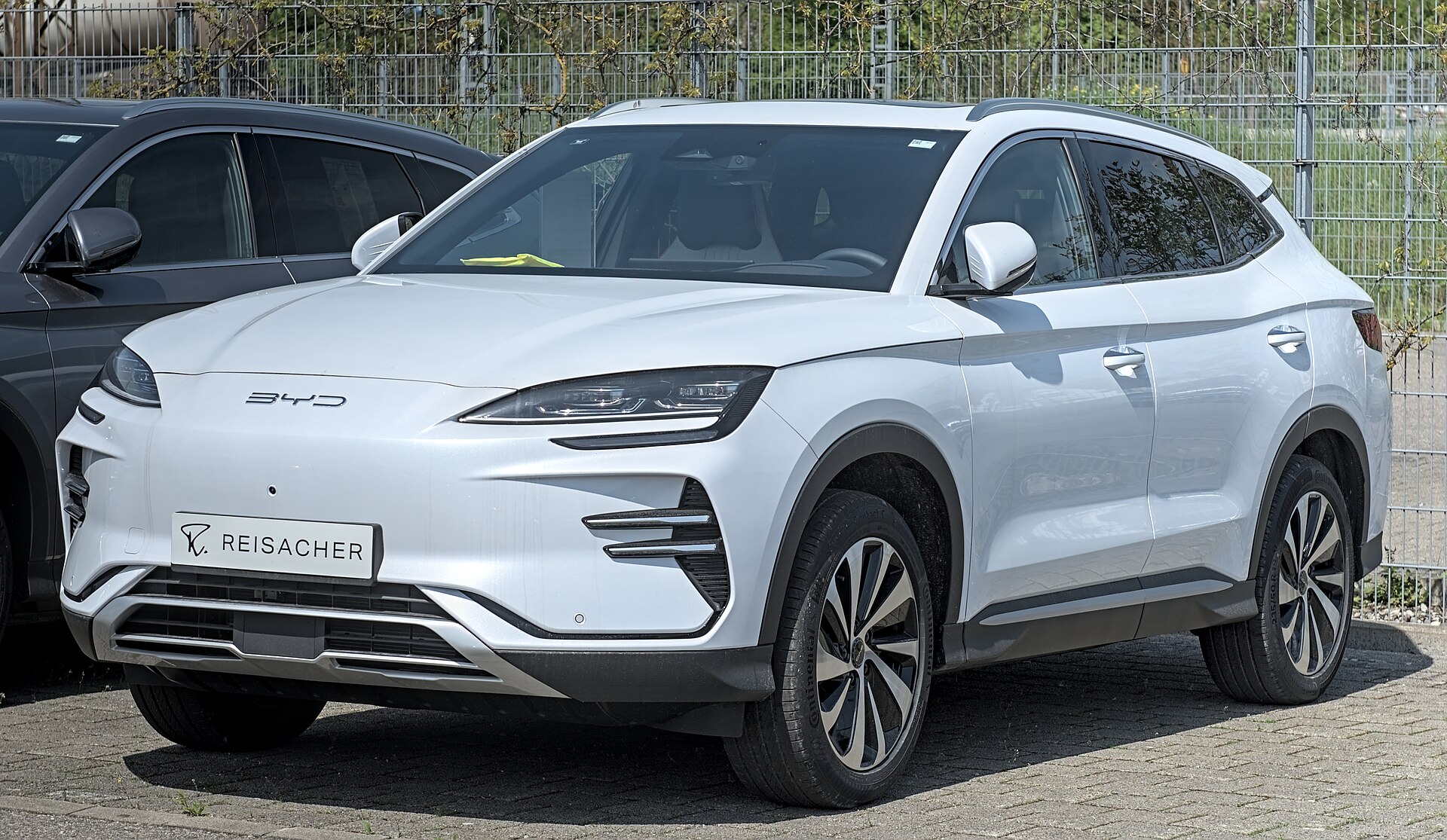
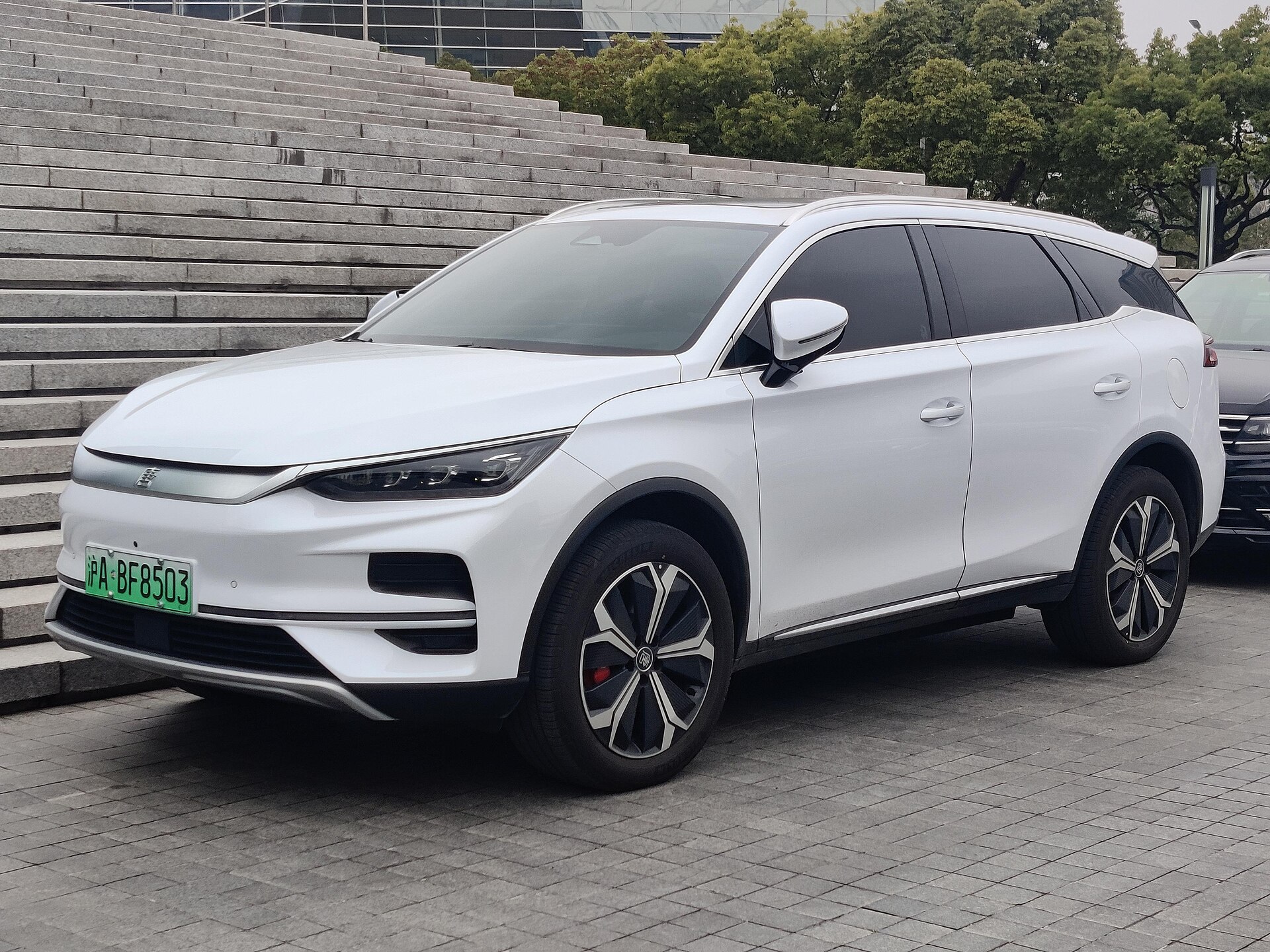
 BYD Tang
All generations, specs and history
Published Sources (2) Report an error
By Felix Hartmann, Automotive Technology & EV Contributor
- Built
- 2015–present
- Generations
- 2
- Top power
- 380 kW (517 PS)
Timeline
Tang generations
Click a generation for its own page
Newest first · 2 generations since 2015
- 2018 II In production 2018–now · SUV · 180–380 kW (245–517 PS)
- 2015 I 2015–2018 · SUV · 371 kW (504 PS)
All generations by year: Tang II (2018–now) · Tang I (2015–2018)
Which one is mine?
Pick the year of first registration to see which generation it is.
Check by VINWhich one to buy
Our verdict · Felix Hartmann
- In Europe: the facelifted Flagship AWD from July 2024; there was no cheaper version.
- For towing: the Tang is rated at 1,500 kg braked, enough for a small caravan.
- For economy: in China, a Tang DM-i with up to 112 km electric range and 1,050 km total.
- Used: a pre-facelift European car from 2023-2024 has the same 380 kW drivetrain and battery for less money.
The BYD Tang is BYD's seven-seat SUV, built since 2015 as a plug-in hybrid and since 2018 also as a full electric car. The Tang EV was the first BYD exported to Europe, starting in Norway in 2021; in Germany it was listed from EUR 75,000 as the 380 kW (517 PS) Flagship AWD (ADAC, 2024). In China it was the best-selling plug-in car of 2016, and its sales peaked at about 150,000 a year in 2022.
In short
- Two generations: Tang I (2015-2018, plug-in hybrid only) and Tang II (from 2018, plug-in hybrid, electric and, until 2021, petrol).
- European Tang EV: 4,970 mm long, seven seats, 108.8 kWh LFP battery, 530 km WLTP, 0-100 km/h in 4.9 s.
- Five Euro NCAP stars in the 2023 results, with 87% for adult and child occupants.
- Joined in China in 2025 by the larger Tang L, sold in some export markets as the Sealion 8.
Size at a glance
| Dimensions | BYD Tang II |
|---|---|
| Length | 4,970 mm195.7 in |
| Width | 1,955 mm77.0 in |
| Height | 1,745 mm68.7 in |
| Wheelbase | 2,820 mm111.0 in |
| Boot | 235 L8.3 cu ft |
Specs by version
Engines
| Version | Engine | Power | Torque | Gearbox | Drive | Production years |
|---|---|---|---|---|---|---|
| Tang II · EV Flagship AWD 108.8 kWh | Electric | 380 kW 517 PS510 hp | 680 Nm502 lb-ft | Single-speed | All-wheel drive | 2023–2026 |
Performance
Show all 1 versions
| Version | 0–100 km/h | Top speed | Fuel consumption | Range |
|---|---|---|---|---|
| Tang II · EV Flagship AWD 108.8 kWh | 4.9 s 0–62 mph | 190 km/h118 mph | 24.0 kWh/100 km38.6 kWh/100 mi | 530 km329 mi |
Dimensions and weight
Show all 1 versions
| Version | Length | Width | Height | Wheelbase | Kerb weight | Boot | Battery |
|---|---|---|---|---|---|---|---|
| Tang II · EV Flagship AWD 108.8 kWh | 4,970 mm195.7 in | 1,955 mm77.0 in | 1,745 mm68.7 in | 2,820 mm111.0 in | 2,630 kg5,798 lb | 235 l8.3 cu ft | 109 kWh |
Verified Manufacturer and type-approval data from our catalog · Sources and methodology
BYD Tang at a glance
| Specification | BYD Tang (second generation, Europe) |
|---|---|
| Segment | mid-size to large SUV, seven seats |
| Production | 2015-2018 (Tang I); from 2018 (Tang II) |
| Body | five-door SUV |
| Drive | all-wheel drive (Europe); FWD or AWD in China |
| Length / width / height | 4,970 / 1,955 / 1,745 mm |
| Wheelbase | 2,820 mm |
| Battery (EV, from 2022) | 108.8 kWh LFP Blade |
| Power (Europe) | 380 kW (517 PS), 680 Nm |
The name comes from the Tang dynasty, in line with BYD's Dynasty family of Han, Qin, Song and Yuan. Other models of the brand are on our BYD brand page.
Generations
| Generation | Code | Years | Body styles | Engines | Power (kW / hp) |
|---|---|---|---|---|---|
| Tang I | - | 2015-2018 | 5-door SUV | 2.0 petrol plug-in hybrid, AWD | 371 kW (498 hp) system |
| Tang II | - | 2018- | 5-door SUV | electric; 1.5 turbo and 2.0 turbo plug-in hybrids; petrol (to 2021) | 180-380 kW (241-510 hp) |
Tang I (2015-2018)
The first Tang was shown at the 2014 Beijing Auto Show and reached Chinese customers in June 2015. Based on the BYD S6, it was sold only as a plug-in hybrid with BYD's second-generation Dual Mode (DM) system: a 2.0-litre petrol engine with 151 kW and 320 Nm plus front and rear electric motors of 110 kW each. Combined output was 371 kW (504 PS) and 820 Nm, enough for 0-100 km/h in 4.9 s. An 18.4 kWh LFP battery gave 80 km of electric range. The Tang 100 of February 2017 raised the electric range to 100 km. In 2016 the Tang was the best-selling plug-in passenger car in China and the world's best-selling plug-in hybrid.
Tang II (from 2018)
The second generation, previewed by the 2017 Dynasty concept, appeared at Auto China in April 2018. It came as a plug-in hybrid (DM), as the electric EV600 and EV600D, and, until 2021, with a petrol engine only. The 2021 facelift introduced the Tang DM-i with a 1.5-litre turbo Atkinson-cycle engine, Blade battery, 52 or 112 km of electric range and up to 1,050 km of total range. The Tang DM-p is the performance hybrid, quoted at under 4.3 s to 100 km/h and 215 km of electric range. For the EV, the 2022 update removed the grille and increased the battery from 82.8 to 108.8 kWh; the tail lamps were redesigned in 2023.
In Europe the Tang EV went on sale in Norway in 2021. ADAC lists it in Germany from April 2023, updated in July 2024 and listed until October 2026.

Motors, batteries and performance
| Version | Battery | Power | Torque | 0-100 km/h | Range |
|---|---|---|---|---|---|
| Tang I DM (2015) | 18.4 kWh | 371 kW (504 PS) | 820 Nm | 4.9 s | 80 km electric |
| Tang II EV (China) | 82.8 kWh | 180 kW (245 PS) front motor | - | - | - |
| Tang II DM-i (2021) | Blade | - | - | 8.5 s | 52-112 km electric |
| Tang EV Flagship AWD (Europe) | 108.8 kWh | 380 kW (517 PS) | 680 Nm | 4.9 s | 530 km WLTP |
The European Tang has a 180 kW front motor and a 200 kW rear motor (330 and 350 Nm). ADAC lists a top speed of 190 km/h, 11 kW AC charging and up to 170 kW DC; a 10-80% DC charge is quoted at 46 minutes, and a full AC charge takes about 11 hours. Our power converter translates kW into hp and PS.


Dimensions, space and boot
| Parameter | Metric | Imperial |
|---|---|---|
| Length | 4,970 mm | 195.7 in |
| Width (without / with mirrors) | 1,955 / 2,130 mm | 77.0 / 83.9 in |
| Height | 1,745 mm | 68.7 in |
| Wheelbase | 2,820 mm | 111.0 in |
| Kerb weight (EU) | 2,630 kg | 5,798 lb |
| Boot (7 seats / 5 seats to window / to roof) | 235 / 940 / 1,655 l | 8.3 / 33.2 / 58.4 cu ft |
| Towing, braked / unbraked | 1,500 / 750 kg | 3,307 / 1,653 lb |
| Payload | 575 kg | 1,268 lb |
With all seven seats in use only 235 litres remain for luggage; folding the third row gives 940 litres up to the window line. Will it fit your garage? Check with our garage fit tool.

Energy consumption and running costs
ADAC lists 24.0 kWh/100 km in the WLTP combined cycle for the Flagship AWD, a high figure that reflects the 2.6-tonne weight and two motors. In China the Tang DM-i was rated at 5.3 and 5.5 l/100 km. BYD's German warranty for its current models runs for 6 years or 150,000 km, with 8 years or 200,000 km on the high-voltage battery (ADAC data for other BYD models; check the terms for a specific Tang).
Trims and prices
Germany had one version, the Tang Flagship AWD with seven seats. ADAC lists it at EUR 69,615 for cars built from April 2023 to July 2024 and EUR 75,000 for the updated model from July 2024 (Germany). In China the Tang 100 plug-in hybrid had a guide price of CNY 299,900 in 2017 and the Tang DM-p started at CNY 289,800 in 2022.
Safety: Euro NCAP
Euro NCAP tested the Tang EV Flagship and published five stars in its 2023 results: 87% for adult occupants, 87% for child occupants, 80% for vulnerable road users and 73% for safety assist. The rating applies to left- and right-hand-drive cars. In China, C-NCAP rated the 2018 Tang DM at 86.2% overall.
Reliability and known issues
No Tang-specific recalls or defects were documented in the sources used for this article. The EV uses BYD's LFP Blade battery from the 2022 update onwards.
Sales
China sales by year, according to Wikipedia: 18,375 (2015), 31,405 (2016), 14,547 (2017), 62,078 (2018), 76,741 (2019), 35,583 (2020), 54,204 (2021), 149,761 (2022), 140,861 (2023), 140,627 (2024) and 68,186 (2025). Most were plug-in hybrids; the EV peaked at 35,796 in 2019 and fell to 146 in 2025.
Rivals
| Model | Engines | Power (hp) | Boot (l) | Price from (EUR) |
|---|---|---|---|---|
| BYD Tang Flagship AWD | electric | 380 kW (517 PS) | 235-1,655 | 75,000 (Germany, 2024) |
| BYD Han Executive AWD | electric | 380 kW (517 PS) | 410 | 69,020 (Germany, 2023) |
| Kia EV9 | electric | - | - | - |
| Volvo EX90 | electric | - | - | - |
| Mercedes-Benz EQB | electric | - | - | - |
The comparison tool shows how the Tang stacks up against other three-row electric SUVs.
Photo gallery


BYD Tang: first vs latest generation
| Spec | Tang I | Tang II | Change |
|---|---|---|---|
| Years | 2015–2018 | 2018–present | 3 years apart |
| Most powerful version | 371 kW (504 PS) | 380 kW (517 PS) | +9 kW (+2%) |
Oldest and newest generation in the 1cars catalog. Power is the strongest version of each; other rows are shown only when both generations have the figure.
BYD Tang in our rankings
- No. 5 of 75 · Heaviest electric cars (2,630 kg)
- No. 7 of 107 · Biggest batteries: electric cars (109 kWh)
- No. 10 of 144 · Heaviest SUVs and crossovers (2,630 kg)
- No. 14 of 391 · Heaviest cars (2,630 kg · top 4%)
- No. 22 of 198 · Longest SUVs and crossovers (4,970 mm · top 12%)
- No. 65 of 531 · Longest cars (4,970 mm · top 13%)
Heavier than 96% of ranked cars in the 1CARS catalog (No. 14 of 391).
FAQ
Is the BYD Tang a seven-seater?
Yes. The European Tang EV has seven seats in three rows; with all of them up, the boot holds 235 litres.
What is the range of the BYD Tang?
530 km WLTP for the European Tang EV Flagship AWD with its 108.8 kWh battery (ADAC).
How fast is the Tang?
The European Tang has 380 kW (517 PS) and reaches 100 km/h in 4.9 s; top speed is 190 km/h.
Is the BYD Tang safe?
Yes. Euro NCAP gave it five stars in its 2023 results, with 87% for adult and child occupant protection.
What is the BYD Tang L?
A larger SUV introduced in China in 2025 with BYD's newer DM-i 5.0 and Super e platforms; it is sold as the Sealion 8 in some export markets.
Data sources
Data checked by an editor against the sources below.
- Wikipedia - BYD Tang
- ADAC