 BMW 1 Series
Specs, engines and history
Published Report an error
By Felix Hartmann, Automotive Technology & EV Contributor
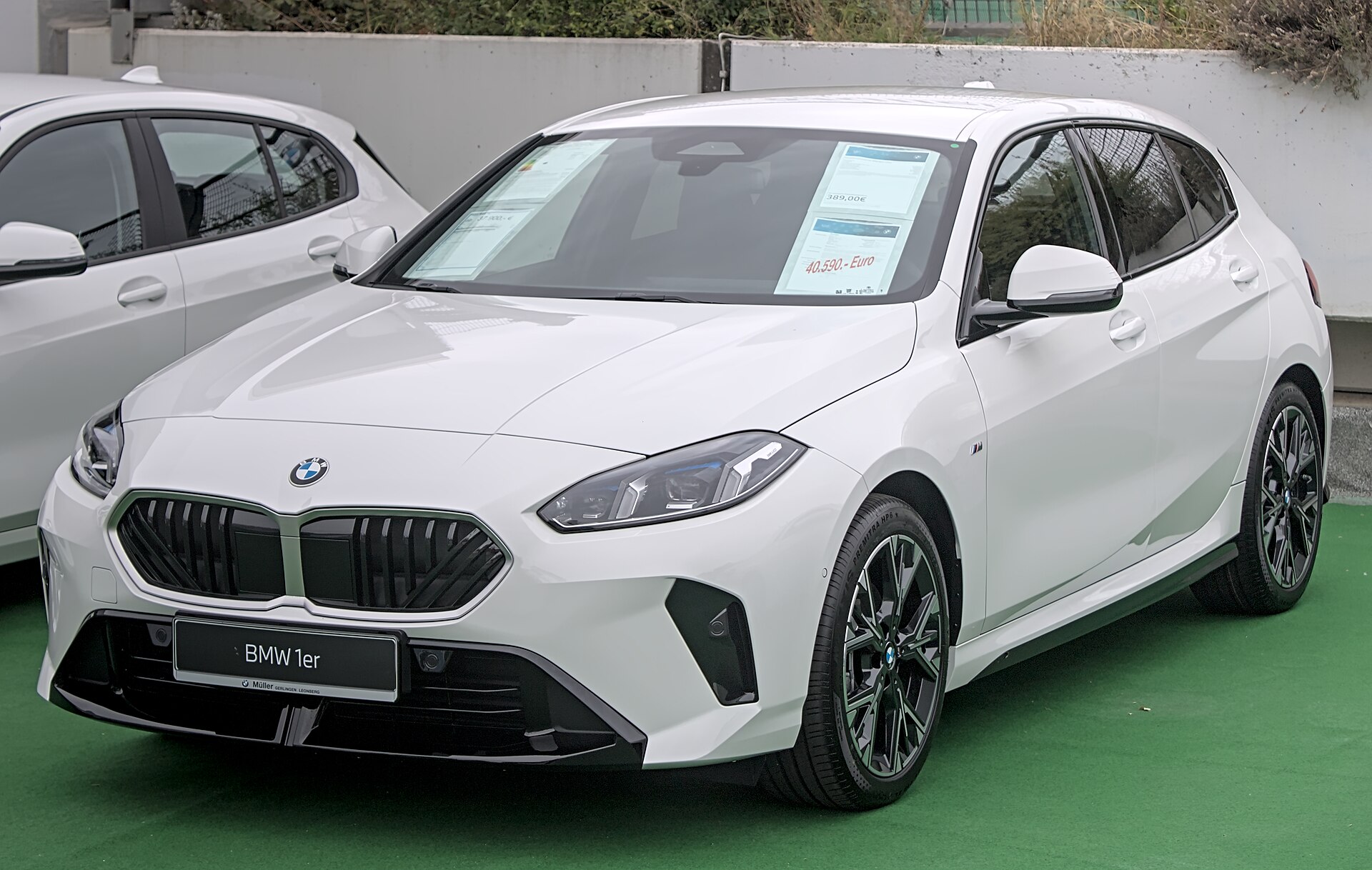
The BMW 1 Series is BMW's entry-level model and its compact premium hatchback, built since 2004 as the successor to the 3 Series Compact. The first two generations had rear-wheel drive and longitudinal engines, including six-cylinder versions such as the 130i, the 135i, the 1 Series M Coupé and the M140i. Since the third generation of 2019 the 1 Series uses BMW's front-wheel-drive UKL2 platform, and the fourth generation (F70) has been built in Leipzig since July 2024.
In short
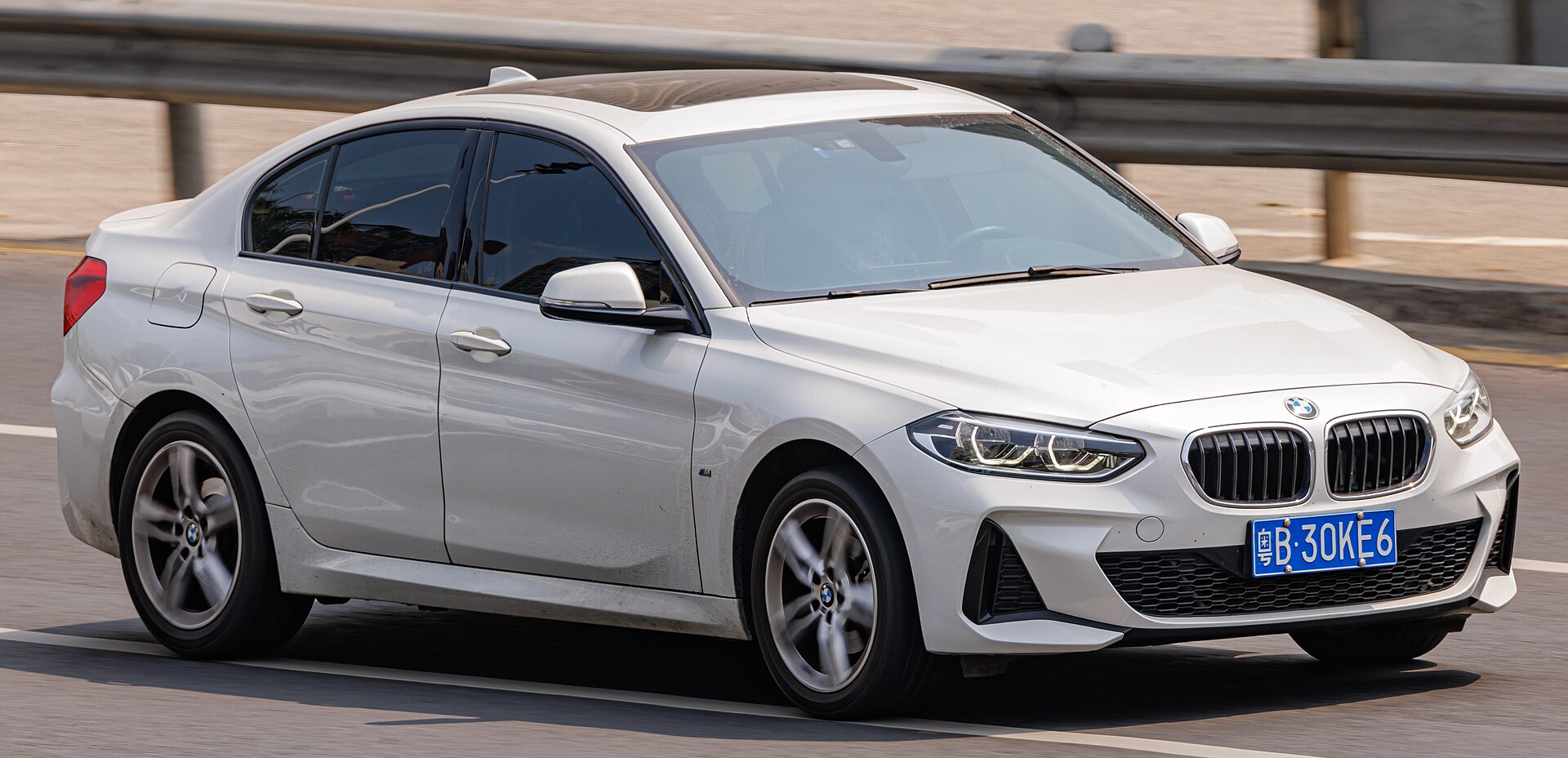
- Four generations: E81/E82/E87/E88 (2004–2013), F20/F21 (2011–2019), F40 (2019–2024), F70 (from 2024); plus a China-only F52 saloon (2017–2023).
- Rear-wheel drive until 2019, front-wheel drive with optional xDrive since the F40.
- Built in Leipzig and Regensburg; yearly production peaked at about 225,000–227,000 cars in 2008 and 2012.
- Most powerful versions: 1 Series M Coupé with 250 kW (340 PS) and the 2016–2019 M140i with 250 kW (340 PS).
BMW 1 Series at a glance
| Specification | BMW 1 Series |
|---|---|
| Segment | compact premium car (C-segment) |
| Production | since 2004 |
| Plants | Leipzig and Regensburg (Germany); F52 saloon by BMW Brilliance in China |
| Body styles | three- and five-door hatchback; coupé and convertible 2007–2013; saloon in China |
| Layout | front engine, rear-wheel drive (2004–2019); front-wheel drive, optional xDrive (since 2019) |
| Power range | 70–250 kW (95–340 PS) |
| Predecessor | BMW 3 Series Compact |
| Spin-offs | 1 Series coupé and convertible replaced by the 2 Series in 2014 |
The 1 Series belongs to our BMW catalogue. The 1 Series M Coupé's successor is described in our BMW M2 article, and the SUV on the same UKL2 base in the BMW X1 review.
BMW 1 Series generations
| Generation | Code | Years | Body styles | Engines | Power (kW / hp) |
|---|---|---|---|---|---|
| First | E87, E81, E82, E88 | 2004–2013 | 5-door, 3-door, coupé, convertible | I4 petrol and diesel, I6 petrol | 85–250 kW (114–335 hp) |
| Second | F20, F21 | 2011–2019 | 5-door, 3-door | I3/I4 petrol and diesel, I6 turbo | 70–250 kW (94–335 hp) |
| Third | F40 | 2019–2024 | 5-door | I3/I4 petrol and diesel | 80–225 kW (107–302 hp) |
| Fourth | F70 | from 2024 | 5-door | I3/I4 petrol and diesel, 48-volt mild hybrids | 91–221 kW (122–296 hp) |
| China saloon | F52 | 2017–2023 | 4-door saloon | - | - |
First generation (E8x), 2004–2013
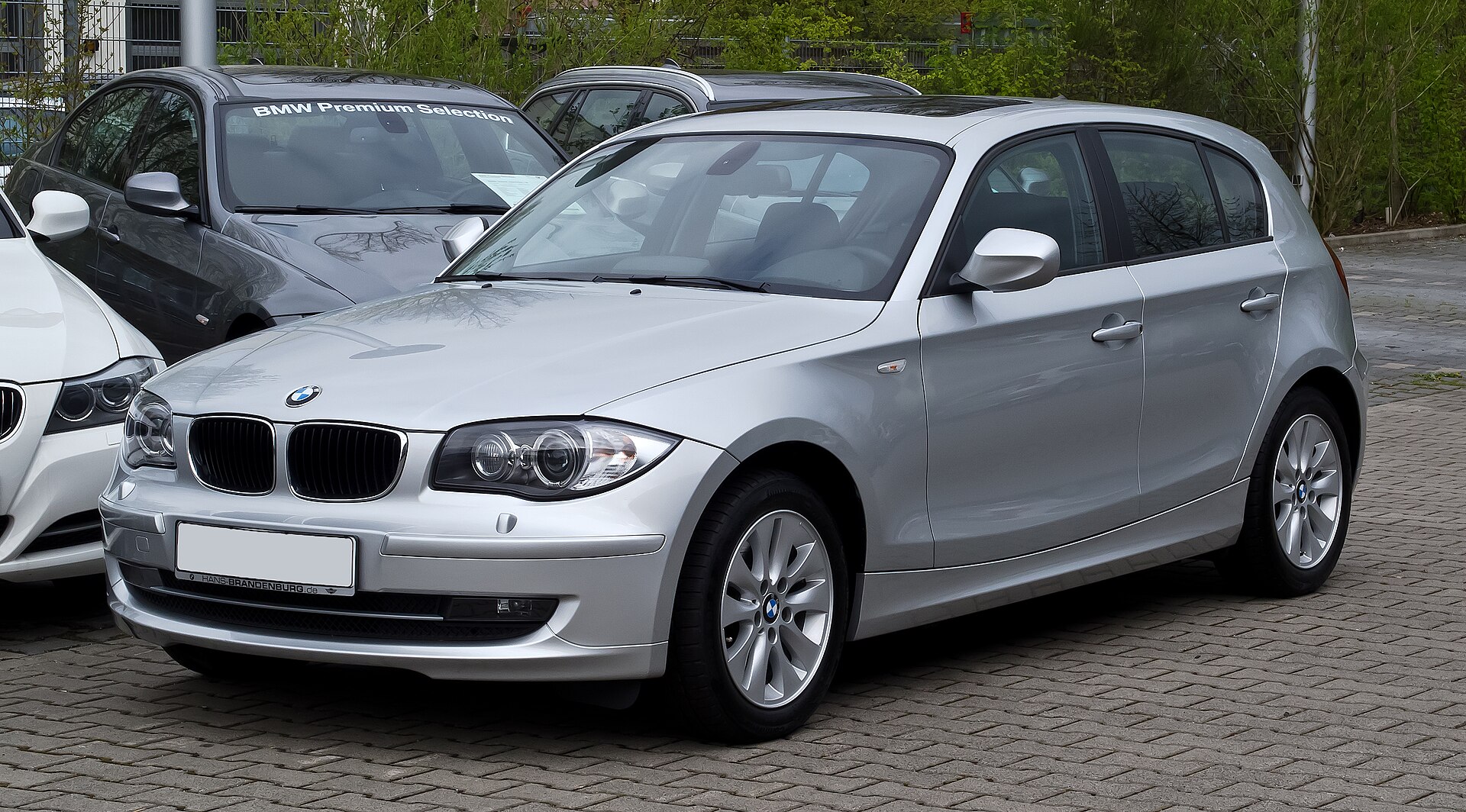
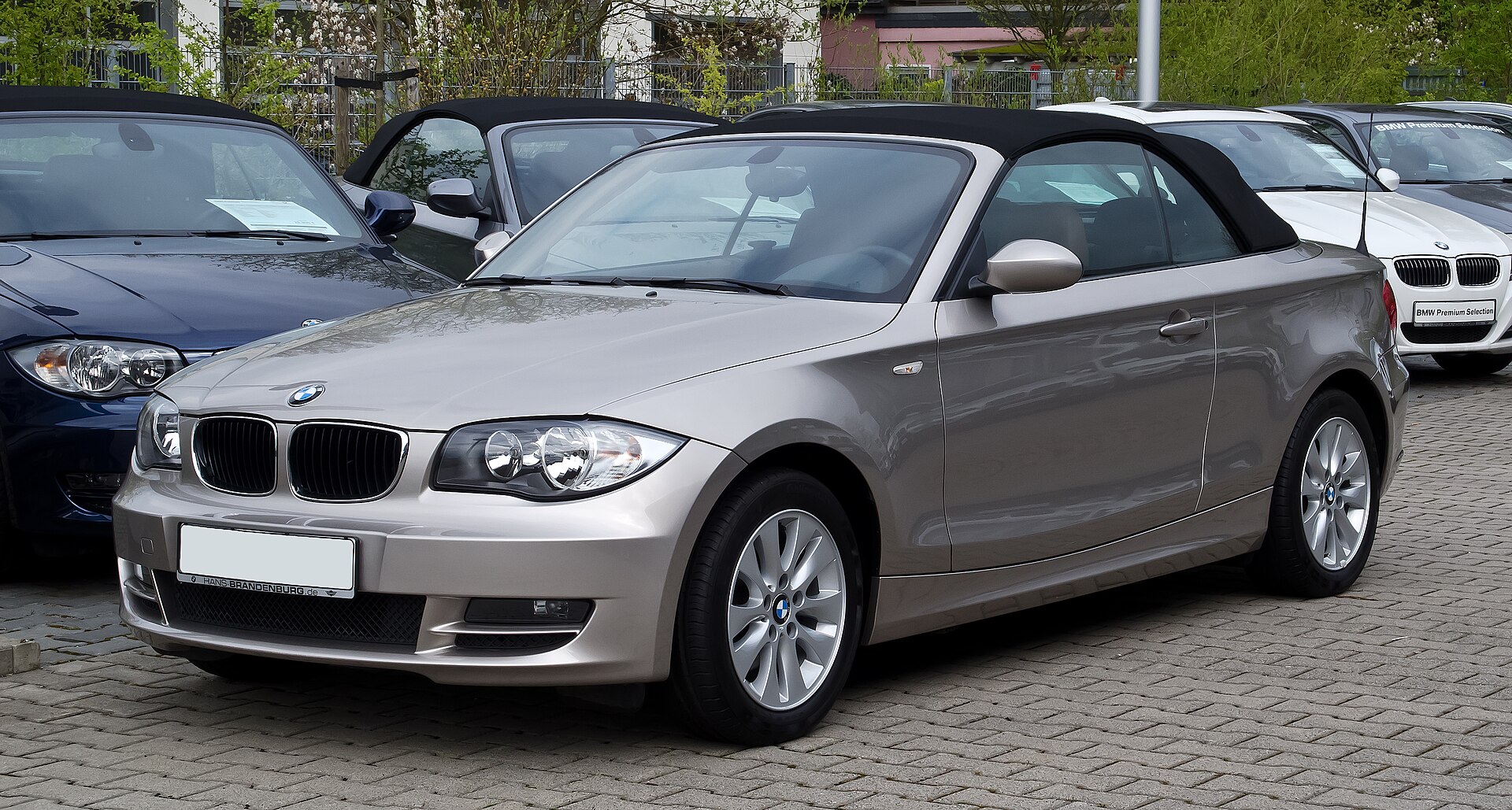
The first 1 Series, the five-door E87, was shown at the Paris Motor Show in September 2004. The three-door E81 followed in 2007, together with the E82 coupé, which went on sale on 24 November 2007, and the E88 convertible. The cars were built in Leipzig and Regensburg on a 2,660 mm wheelbase, weighed between 1,245 and 1,540 kg and were all rear-wheel drive.
The facelift of March 2007 introduced the N43 four-cylinder, BMW's EfficientDynamics fuel-saving measures and electric power steering. The 130i used the naturally aspirated 3.0-litre N52 with up to 195 kW, and the coupé and convertible offered the 135i with the twin-turbo N54 and 225 kW (306 PS). The final 135is of 2013 had 239 kW (325 PS).
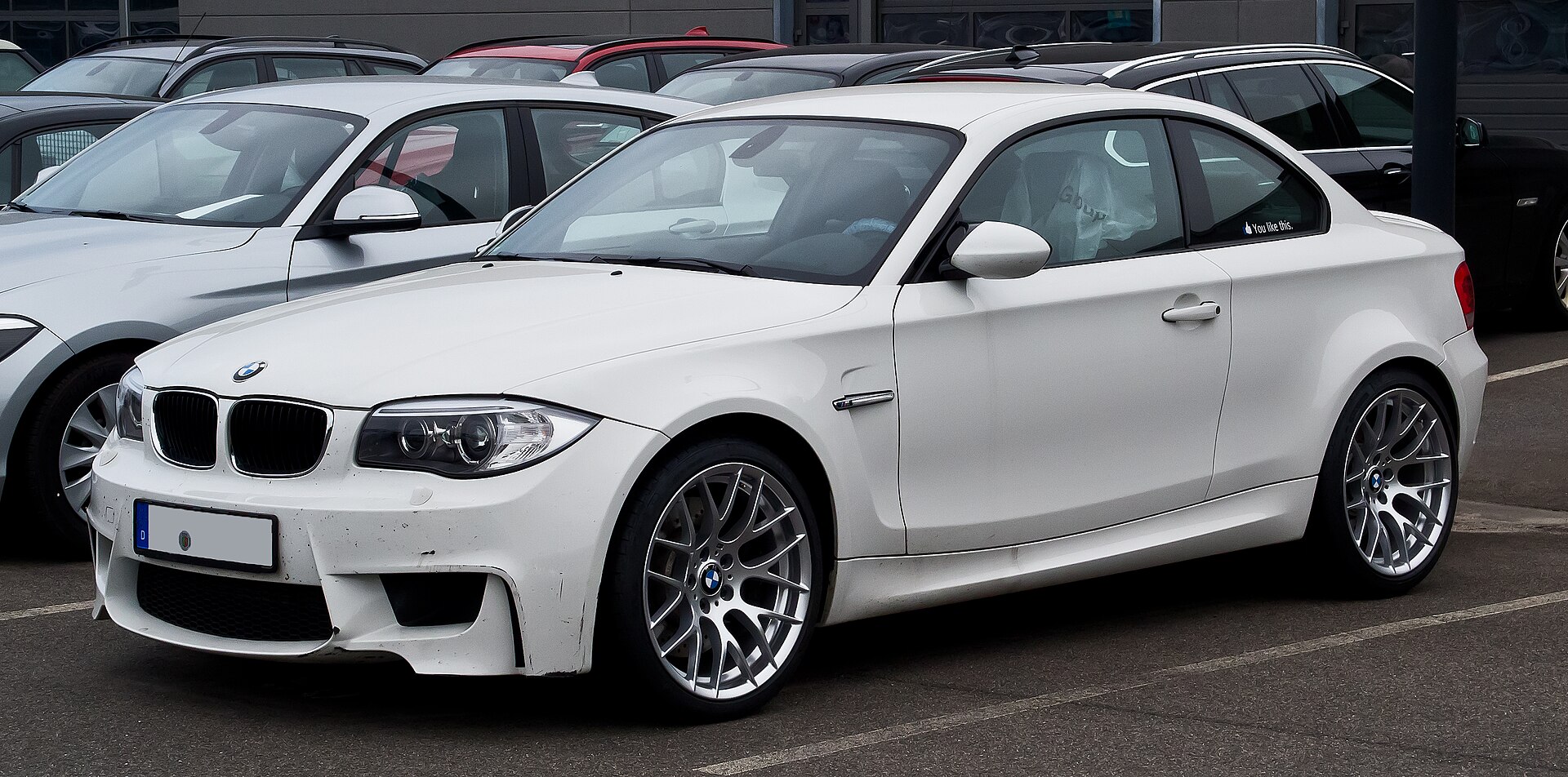
The 1 Series M Coupé (often called the 1M) used the N54 with 250 kW (340 PS) and 450 Nm, briefly 500 Nm on overboost, and only a six-speed manual. BMW planned 2,700 cars but built 6,309. Its successor from 2016 is the M2.


Second generation (F20/F21), 2011–2019
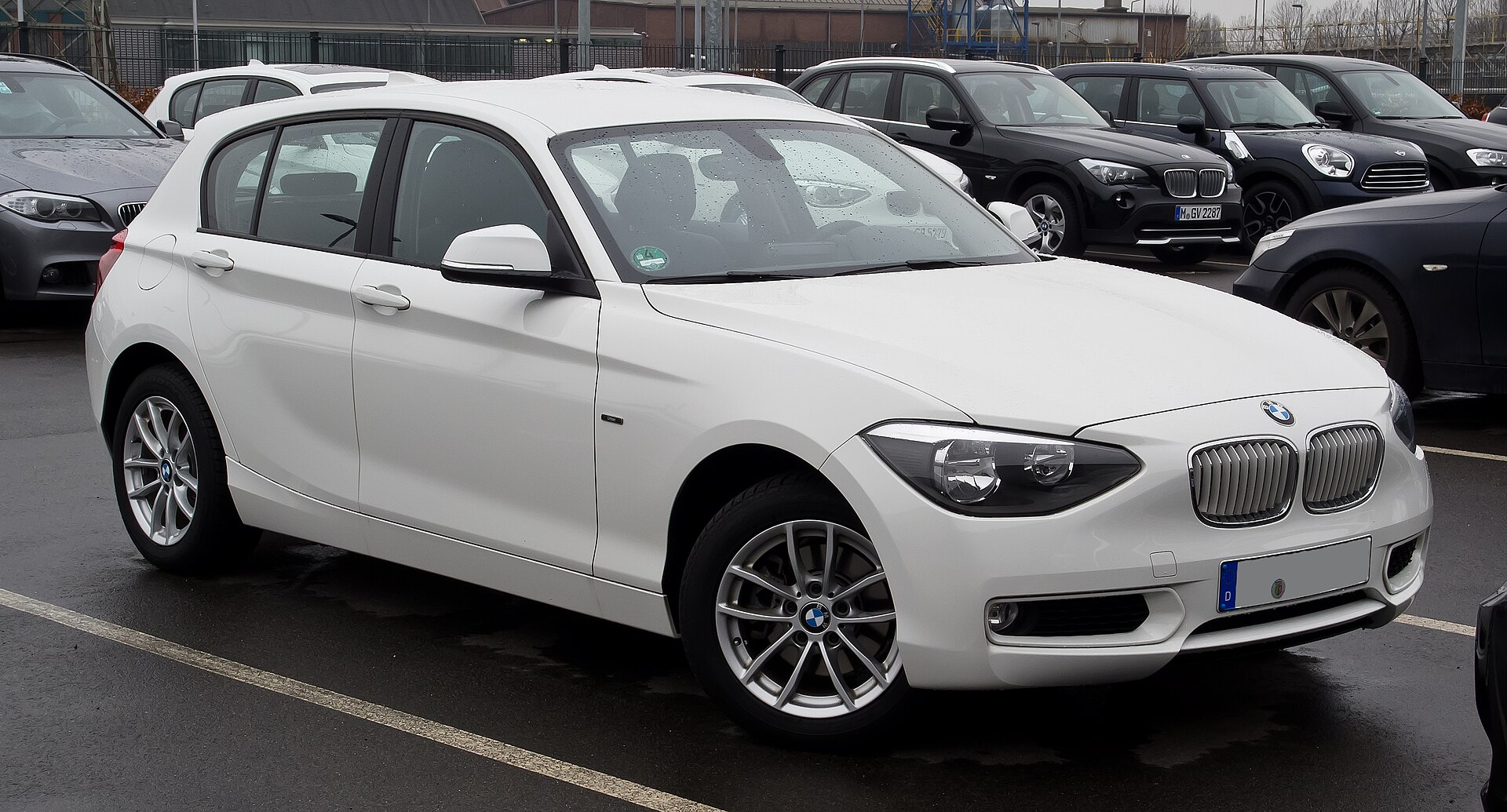
The F20 five-door was shown at the Frankfurt Motor Show in 2011, and the F21 three-door followed in 2012. The coupé and convertible no longer belonged to the range: from 2014 they were sold as the 2 Series. The car grew to 4,324 mm in length on a 2,690 mm wheelbase. All engines were now turbocharged, paired with a six-speed manual or the ZF eight-speed automatic, and xDrive all-wheel drive became available for the first time.
The facelift was unveiled at the Geneva show on 5 March 2015. It brought new bumpers, tail lights and LED headlights, and BMW's new modular engines: three-cylinder 1.5-litre B38 petrol and B37 diesel units and four-cylinder B47 diesels. The six-cylinder M135i (235 kW, later 240 kW) was replaced in 2016 by the M140i with the B58 engine, 250 kW (340 PS) and 500 Nm.


Third generation (F40), 2019–2024
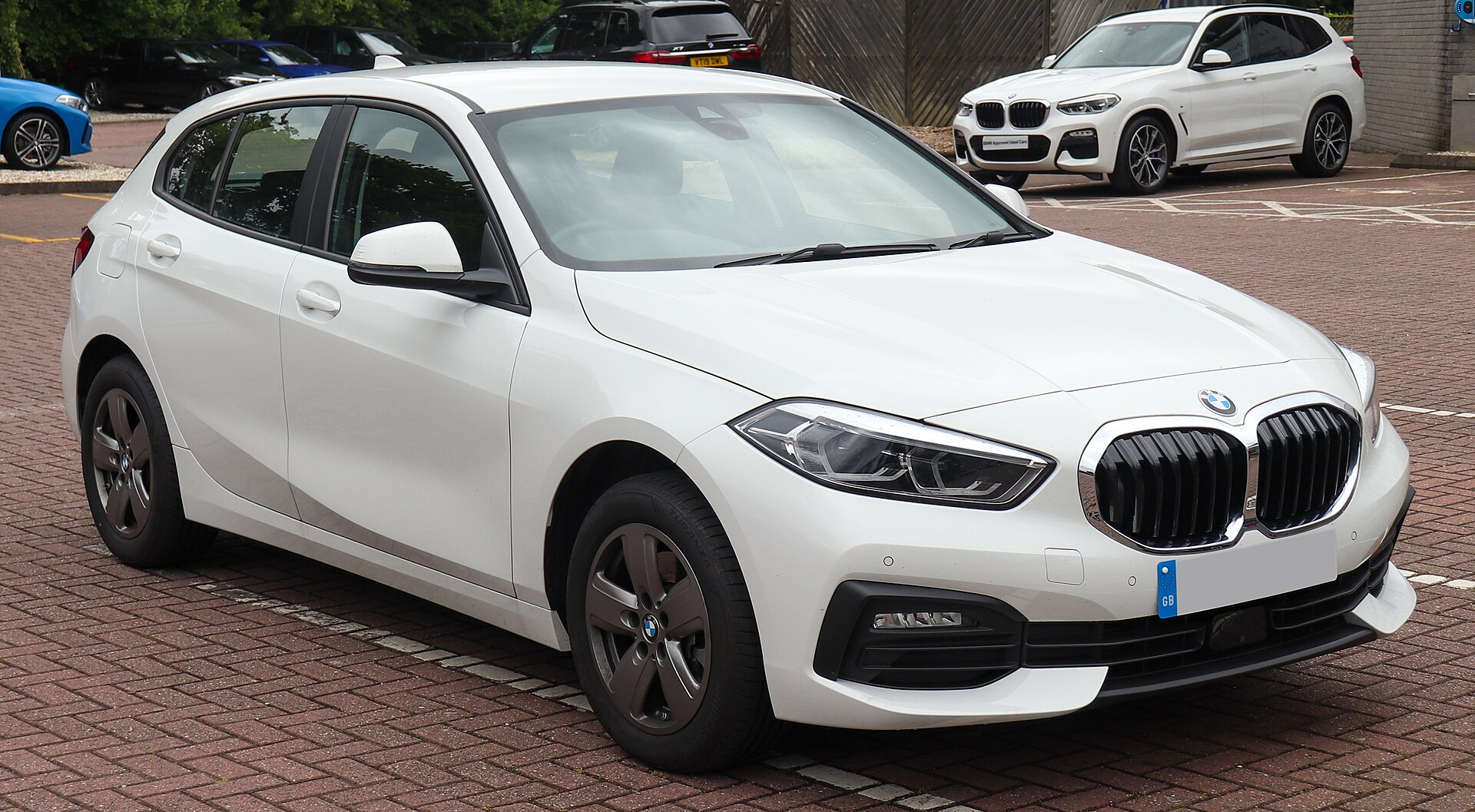
Production of the F40 began in July 2019 and it was launched on 28 September 2019. It moved to the UKL2 platform shared with the X1, X2 and 2 Series Gran Coupé, with transverse engines and front-wheel drive; xDrive remained optional. Only the five-door body was offered, and the boot holds 380 litres, or 1,200 litres with the rear seats folded.
The top model became the M135i xDrive with a 2.0-litre four-cylinder of 225 kW (306 PS) and 450 Nm, reaching 100 km/h in 4.8 seconds. In 2020 BMW added the front-wheel-drive 128ti with 195 kW (265 PS) and 400 Nm.

Fourth generation (F70), since 2024
BMW unveiled the F70 on 4 June 2024 and began production in Leipzig in July 2024, with market launch in October 2024. Wikipedia describes it as a heavy update of the F40 rather than a new design: it keeps the UKL2 platform and the 2,670 mm wheelbase but grows to 4,361 mm. All versions use a seven-speed dual-clutch gearbox. The 120 and 120d have a 48-volt mild-hybrid system with a 14 kW electric motor; their boot shrinks to 300 litres because of the battery.
Engines, transmissions and performance
| Version | Generation | Engine | Power | Torque |
|---|---|---|---|---|
| 116i | E87 (2004–2011) | 1.6 N45 I4 | 85 kW (116 PS) | 150 Nm |
| 120d | F20 (2015–2019) | 2.0 B47 I4 diesel | 140 kW (190 PS) | 400 Nm |
| 130i | E87 (2005–2007) | 3.0 N52 I6 | 195 kW (265 PS) | 315 Nm |
| 135i | E82/E88 (2007–2010) | 3.0 N54 I6 twin-turbo | 225 kW (306 PS) | 400 Nm |
| 1 Series M Coupé | E82 | 3.0 N54 I6 twin-turbo | 250 kW (340 PS) | 450–500 Nm |
| M140i | F20/F21 (2016–2019) | 3.0 B58 I6 turbo | 250 kW (340 PS) | 500 Nm |
| 116i | F40 (2020–2024) | 1.5 B38 I3 | 80 kW (109 PS) | 190 Nm |
| 128ti | F40 (2020–2024) | 2.0 I4 turbo | 195 kW (265 PS) | 400 Nm |
| M135i xDrive | F40 (2019–2024) | 2.0 I4 turbo | 225 kW (306 PS) | 450 Nm |
| 120 | F70 (from 2024) | 1.5 B38 I3 + 48 V | 125 kW (170 PS) | 240 Nm |
| 120d | F70 (from 2024) | 2.0 B47 I4 diesel + 48 V | 120 kW (163 PS) | 360 Nm |
| M135 xDrive | F70 (from 2024) | 2.0 B48 I4 turbo | 221 kW (300 PS) | 400 Nm |
The F40 116i needed 10.8 seconds to 100 km/h and the 120i 7.1 seconds. For Europe, the F70 M135 is detuned compared with other markets.
Dimensions, interior space and boot capacity
| Parameter | E87 (2004) | F20 (2011) | F40 (2019) | F70 (2024) |
|---|---|---|---|---|
| Length | 4,227–4,380 mm (all E8x bodies) | 4,324 mm | 4,319 mm | 4,361 mm |
| Wheelbase | 2,660 mm | 2,690 mm | 2,670 mm | 2,670 mm |
| Width | 1,748–1,803 mm | 1,765 mm | 1,799 mm | - |
| Kerb weight | 1,245–1,540 kg | 1,360–1,590 kg | 1,290–1,525 kg | - |
| Boot | - | - | 380–1,200 l | 380–1,200 l (300 l mild hybrid) |
In imperial units the F70 is 171.7 in long on a 105.1 in wheelbase, and its boot holds 13.4 cu ft.
Safety ratings
Euro NCAP tested the F20 116i in 2012: 91% adult occupant protection, 83% child occupant, 63% pedestrian and 86% safety assist. The F40 received five stars in 2019, with 83% for adults, 87% for children, 76% for pedestrians and 72% for safety assist. The F70 was tested under the stricter 2025 protocol and scored 78% (adult), 84% (child), 85% (vulnerable road users) and 80% (safety assist).
Rivals and which 1 Series to buy
The 1 Series competes with other premium compact hatchbacks; the comparison tool shows their specifications side by side, and the car finder filters by power and drive.
- For rear-wheel-drive enthusiasts: an F20/F21 M140i (2016–2019) with the B58 six-cylinder, or the rare 1 Series M Coupé.
- For an affordable classic six: an E87 130i or E82 135i coupé.
- For space and economy: an F40 118d or 120d with the 380-litre boot and diesel torque of 350–400 Nm.
- For the latest technology: the F70 120 or 120d mild hybrid, accepting the smaller 300-litre boot.
Photo gallery


BMW 1 Series photos 6
FAQ
How many generations of the BMW 1 Series are there?
Four: E8x (2004–2013), F20/F21 (2011–2019), F40 (2019–2024) and F70 (from 2024), plus the China-only F52 saloon.
Is the BMW 1 Series rear-wheel drive?
The first two generations were rear-wheel drive. Since the F40 of 2019 the 1 Series has front-wheel drive, with xDrive all-wheel drive as an option and as standard on the M135 models.
Is the 1 Series available as a hybrid?
Yes. The F70 120 and 120d use a 48-volt mild-hybrid system with a 14 kW electric motor.
What replaced the 1 Series coupé and convertible?
From 2014 the coupé and convertible were sold as the BMW 2 Series; the 1 Series M Coupé was followed by the M2 in 2016.