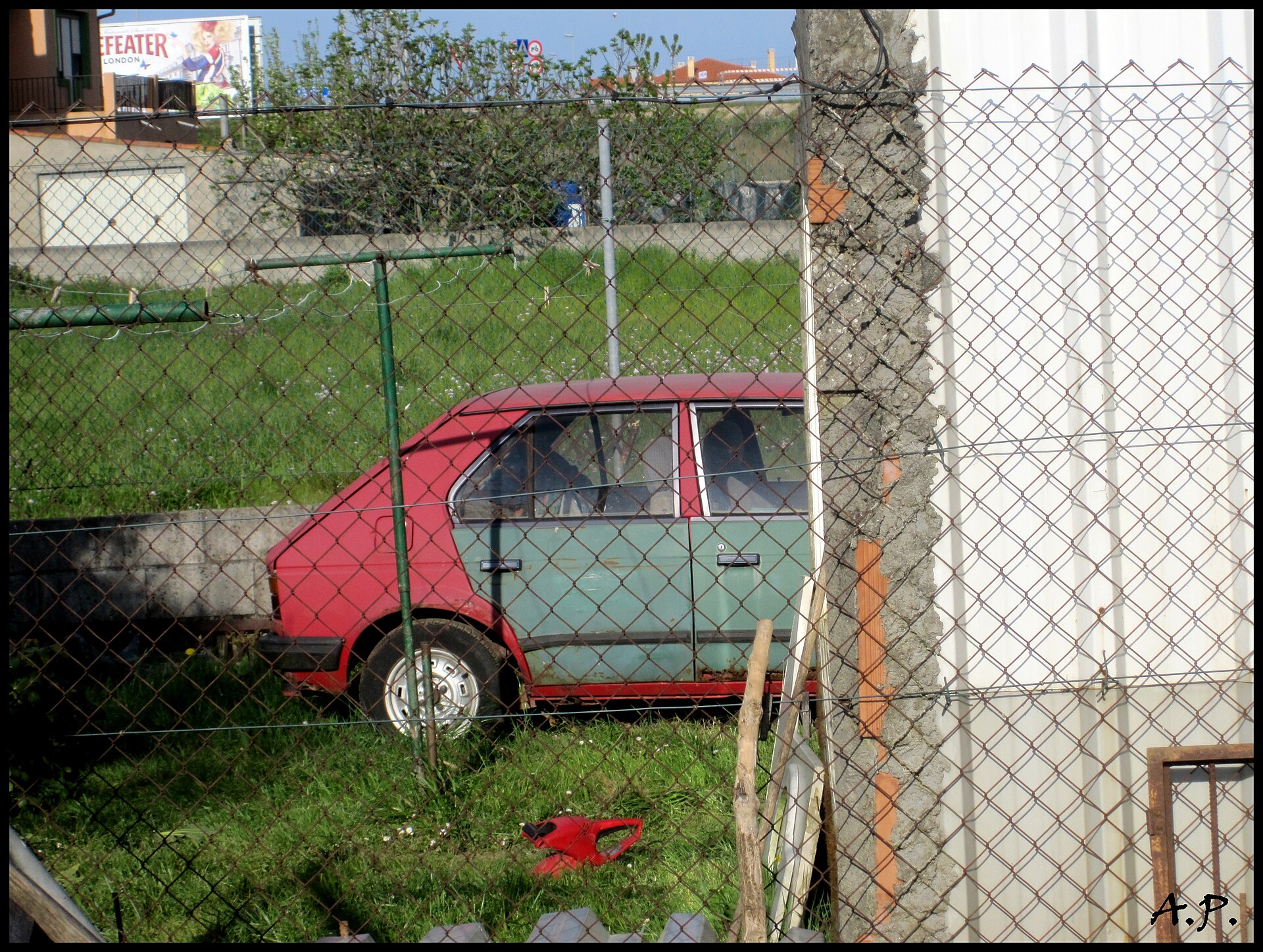
Talbot — A British-French Marque From 1902 to the Express Van
Talbot is a car marque with two lives and two countries. It began in London in 1902–1903 as Clément-Talbot, an Anglo-French company backed by the Earl of Shrewsbury and Talbot and Adolphe Clément. Its French branch became the Talbot-Lago of Suresnes, winner of Le Mans in 1950. After passing through Rootes, Simca and Chrysler, the name was revived by Peugeot's parent PSA in 1979 for the former Chrysler Europe range. It won the 1981 World Rally Championship for manufacturers with the Sunbeam Lotus, then disappeared from cars in 1986–1987 and from vans in 1994. Stellantis holds the rights today.
Key takeaways
- Clément-Talbot was set up in London by the 20th Earl of Shrewsbury and Talbot with Adolphe Clément. It was incorporated in October 1902 according to a contemporary journal, while Wikipedia's infobox gives 1903.
- In 1919–1920 Darracq bought Clément-Talbot and joined Sunbeam to form S.T.D. Motors, which collapsed financially in 1934–1935.
- Rootes took the British Talbot, Antonio Lago the French one; Louis Rosier and his son won the 1950 Le Mans 24 Hours in a Talbot-Lago.
- PSA revived Talbot in 1979; passenger cars ended in 1986–1987 and the Express van in 1994.
Talbot at a glance
| Fact | Value |
|---|---|
| Founded | 1902–1903, London, as Clément-Talbot |
| Founders | Charles Chetwynd-Talbot, 20th Earl of Shrewsbury and Talbot; Adolphe Clément |
| Factories | Ladbroke Grove, North Kensington (London); Suresnes (France); Linwood (Scotland) for the Sunbeam |
| Owners | S.T.D. Motors (1920–1935), Rootes (British Talbot), Antonio Lago (French Talbot), Simca (1959), Chrysler, PSA (1979), Stellantis (rights since 2021) |
| Best-known models | Talbot 105, Talbot-Lago T150-C SS and T26, Sunbeam Lotus, Horizon, Samba |
| Racing | Le Mans winner 1950; World Rally Championship manufacturers' title 1981 |
| Passenger cars ended | 1986–1987 |
| Last vehicle | Talbot Express van, 1994 |
The first Talbots in London
Charles Chetwynd-Talbot, the 20th Earl of Shrewsbury and Talbot, arranged the capital for a company that began by assembling French Clément-Bayard cars in London. Adolphe Clément was a shareholder, together with Baron Auguste Lucas and Emile Lamberjack. A footnote in Wikipedia cites The Automotive Journal for an incorporation date of 11 October 1902; the infobox gives 1903. The first cars were assembled in London from French mechanical parts, but British parts soon replaced them. After the first year the brand name was shortened to Talbot.
The works were at Ladbroke Grove in North Kensington, on a site that grew from 5 to 28 acres. The range grew steadily between 1904 and 1915. On 15 February 1913 Percy Lambert set a world record in a Talbot at Brooklands. Both founders reduced their financial interest during the war.

S.T.D. Motors and Georges Roesch
In autumn 1919 Darracq & Co., the French firm based at Suresnes near Paris, agreed to buy Clément-Talbot, taking over its entire capital in December 1919. In 1920 Darracq joined with Sunbeam to form S.T.D. Motors, for Sunbeam, Talbot and Darracq, although each company kept operating separately. From 1920 the French cars from Suresnes were badged Talbot-Darracq. From 1922 they were badged simply Talbot, so that two different Talbots, one British and one French, now existed in the same group.
In London, the engineer Georges Roesch is named as the key figure behind the cars of the 1920s and 1930s. The range listed for the period includes the 14-45, 75, 90 and 105, with 34, 52, 69 and 75 kW (46, 70, 93 and 100 bhp). The last Roesch-designed cars date from 1937. Clément-Talbot remained profitable through the Depression, but S.T.D. Motors did not: debts dating partly from borrowing in 1924 for Sunbeam's racing programme brought the group down in late 1934, and it ceased to exist in 1936.
Rootes in Britain, Lago in France
The two Talbots then went separate ways. The Rootes brothers bought Clément-Talbot in London, and in 1935 Rootes acquired Darracq & Co. and kept Talbot as a brand. Rootes built Talbots with Hillman and Humber parts; a modified Hillman Aero Minx became the Talbot Ten. In 1938 Rootes formed Sunbeam-Talbot Limited, and the British cars were badged Sunbeam-Talbot. The Rootes connection survives in models such as the Sunbeam Tiger and the Hillman Imp.
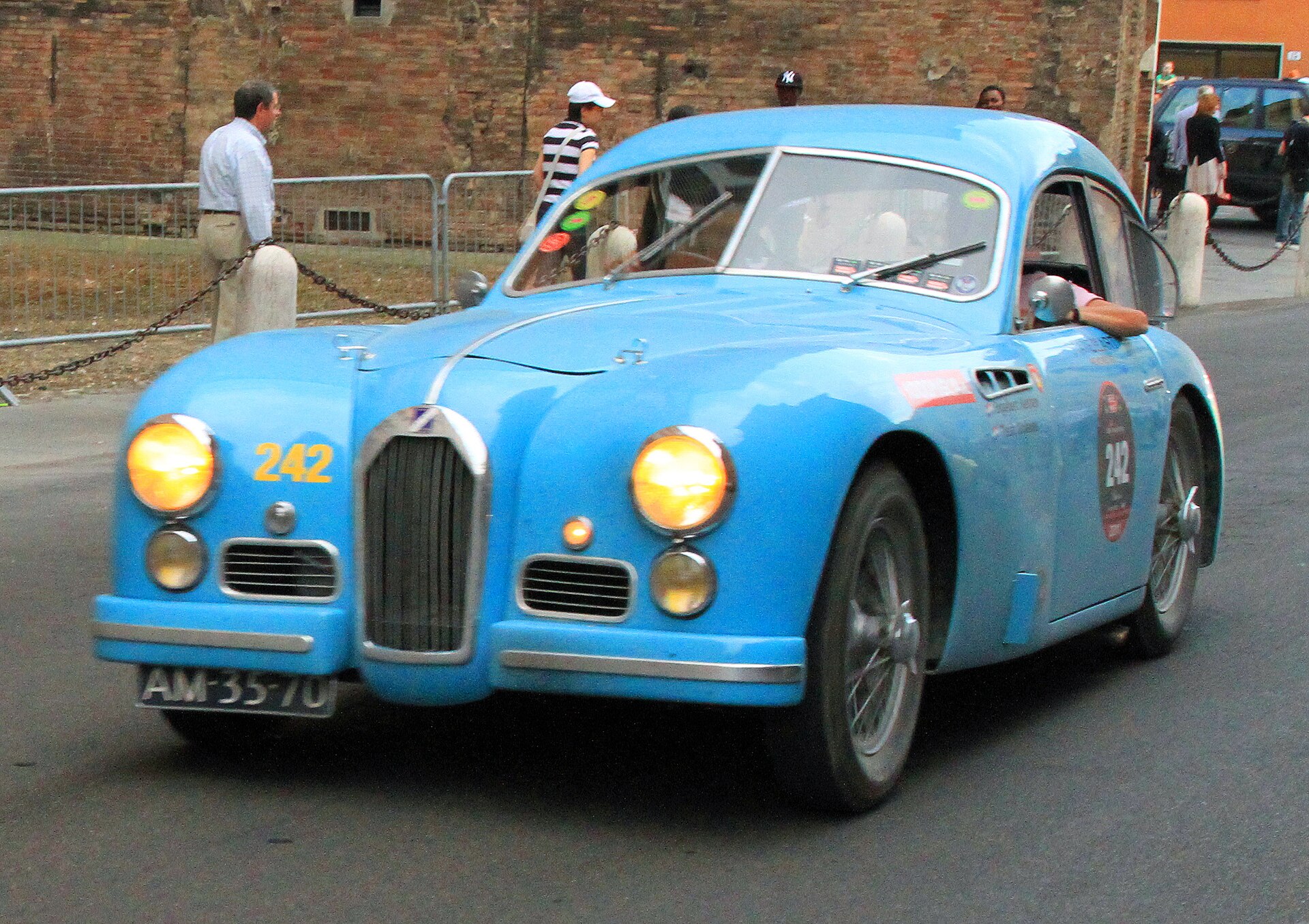
In France, Antonio Lago, managing director at Suresnes since 1932, completed a management buy-out of Automobiles Talbot from the receiver in 1936. His Talbot-Lago cars became famous for their bodies and their racing. The T150-C SS is best known with the teardrop coupé body by Figoni et Falaschi, and a factory-bodied 1939 car sold for US$418,000 in 2013. After the war Talbot-Lago built the Lago Record, a 4.5-litre six-cylinder saloon of 1946–1952 with 127 kW (170 hp). The T26 Grand Sport of 1947–1954 followed, with 142 kW (190 bhp). The T26C single-seater was built for the 1948 Formula One rules, and in 1950 Louis Rosier and his son Jean-Louis won the 24 Hours of Le Mans.
The cars were too expensive for post-war France, where engines over 2.6 litres were heavily taxed. Output fell from 433 cars in 1950 to 80 in 1951 and 34 in 1952, and on 6 March 1951 Lago was granted a moratorium on his debts. He put the business up for sale in 1958, and in 1959 Simca's president Henri Pigozzi acquired it; the last Talbots used a Simca V8. Lago died in 1960.
Chrysler Europe and the PSA revival
Chrysler gradually took control of Simca between 1963 and 1970 and already owned Rootes, so both Talbot names were now in one group. In August 1978 PSA Peugeot Citroën agreed to buy Chrysler Europe for a nominal US$1, and it took control on 1 January 1979. PSA decided to use the dormant Talbot name for the former Simca and Chrysler/Rootes models. Every former Chrysler model registered in Britain after 1 August 1979 carried a Talbot badge. The French side of the story is in the Peugeot history.
The new Talbot range was large. It included the Horizon hatchback, a Chrysler and Simca design that was European Car of the Year for 1979 and is covered in the Talbot Horizon history. Next came the Alpine, Solara and 1510 family of 1979–1986, renamed Minx and Rapier in late 1984; as the Chrysler Alpine, the car had been European Car of the Year for 1976. The range also included the Sunbeam hatchback and the Peugeot 104-based Samba of 1981–1986. At the top sat the large Tagora saloon of 1981–1983, of which only 19,389 were built, and the Matra-built Murena of 1980–1984 completed the line-up.
Sunbeam Lotus and the rally title
The Sunbeam had gone on sale on 23 July 1977 as a Chrysler. It was a three-door hatchback on a shortened Hillman Avenger platform, built at the former Rootes plant at Linwood in Scotland. About 200,000 were made up to 1981, when Peugeot closed the Linwood plant. The Sunbeam Ti, in British showrooms from June 1979 at £3,779, had a 1,598 cc engine with 75 kW (100 bhp).
The fastest version was the Sunbeam Lotus, with a 2,172 cc 16-valve Lotus slant-four engine of 112 kW (150 bhp) in road form and about 186 kW (250 bhp) in rally trim. Run by a factory team founded in 1979, it won the 1980 RAC Rally with Henri Toivonen. In 1981 Guy Fréquelin's results brought Talbot the manufacturers' title of the World Rally Championship; Fréquelin narrowly lost the drivers' title to Ari Vatanen. Talbot left the championship after 1982, and Jean Todt's Peugeot Talbot Sport, founded in 1981, went on to win the world titles of 1985 and 1986.

The end of Talbot
The revival did not pay. After years of losses PSA abandoned its three-brand strategy. The planned successor to the Horizon, the Talbot Arizona, became the Peugeot 309. In 1986 PSA sold the Whitley research centre to Jaguar, which ended the development of British Talbots. The Samba was discontinued in May 1986, the Horizon was built in Spain and Finland until 1987, and car production ended in 1986–1987. The Talbot Express van, a popular base for motorhomes, continued until 1994, and the marque was then retired.
PSA considered a low-cost Talbot revival in 2008, possibly with cars built in China, but it did not happen. After the 2021 merger of PSA and Fiat Chrysler, the rights belong to Stellantis. Talbot models on 1cars are listed in the Talbot catalogue.

Talbot timeline
| Year | Event |
|---|---|
| 1902–1903 | Clément-Talbot founded in London |
| 1913 | Percy Lambert's world record at Brooklands (15 February) |
| 1919 | Darracq buys Clément-Talbot |
| 1920 | S.T.D. Motors formed with Sunbeam |
| 1934 | S.T.D. Motors collapses (late 1934) |
| 1935 | Rootes takes over the British Talbot |
| 1936 | Antonio Lago buys the French Talbot |
| 1938 | Sunbeam-Talbot Limited formed |
| 1950 | Talbot-Lago wins Le Mans |
| 1959 | Simca acquires Talbot-Lago |
| 1979 | PSA takes over Chrysler Europe (1 January) and revives Talbot |
| 1980 | Toivonen wins the RAC Rally in a Sunbeam Lotus |
| 1981 | World Rally Championship manufacturers' title |
| 1986–1987 | Passenger car production ends |
| 1994 | Express van ends; marque retired |
Landmark Talbot models
| Model | Years | Why it matters |
|---|---|---|
| Talbot 105 | 1930s | Roesch-designed London Talbot |
| Talbot-Lago T150-C SS | late 1930s | Figoni et Falaschi teardrop coupé |
| Talbot-Lago T26 Grand Sport | 1947–1954 | Post-war sports car; Le Mans winner's family |
| Horizon | 1979–1987 | Main family car of the PSA-era Talbot |
| Sunbeam Lotus | 1979–1981 | World rally manufacturers' champion 1981 |
| Samba | 1981–1986 | Small car based on the Peugeot 104 |
| Express | to 1994 | Last vehicle with the Talbot badge |
Photo gallery


FAQ
Is Talbot British or French?
Both. Clément-Talbot was founded in London, while the French Talbot was built at Suresnes and became Talbot-Lago. PSA's Talbots of 1979–1994 were former Chrysler Europe models; the Sunbeam was built at Linwood in Scotland and the Horizon in Spain and Finland, among other plants.
Who owns the Talbot brand?
Stellantis, formed by the merger of PSA and Fiat Chrysler in 2021.
Did Talbot win the World Rally Championship?
Yes. The Sunbeam Lotus won the manufacturers' title in 1981.
When did Talbot stop making cars?
Passenger car production ended in 1986–1987; the Express van continued until 1994.
Sources
- Wikipedia — Talbot (accessed 24 Oct 2026)
- Wikipedia — Clément-Talbot (accessed 24 Oct 2026)
- Wikipedia — Talbot-Lago (accessed 24 Oct 2026)
- Wikipedia — Talbot Sunbeam (accessed 24 Oct 2026)
- Wikipedia — Chrysler Europe (accessed 24 Oct 2026)
Found a mistake? Report an error