Perodua — From the Kancil to Malaysia's Best-Selling Myvi
Perodua, short for Perusahaan Otomobil Kedua Sdn. Bhd., "the second automobile company", is Malaysia's largest car maker. Founded in 1993 and based at Sungai Choh, Rawang, in Selangor, it began in August 1994 with the Kancil, a rebadged Daihatsu Mira, and grew on small, affordable cars developed with Daihatsu. The Myvi, the Axia and the Bezza made it the market leader in Malaysia, and in 2025 it added its first battery-electric model, the QV-E.
Key takeaways
- Perodua was founded in 1993; its first car, the Kancil, was unveiled on 29 August 1994, and 722,223 were built up to 2009.
- Daihatsu, part of Toyota, holds 20% directly and 5% through Daihatsu (Malaysia); UMW Holdings holds 38%.
- The Myvi was Malaysia's best-selling car from 2006 to 2014 and again from 2018 to 2022, with 1.487 million sold by the end of 2024.
- In 2024 Perodua sold 358,000 cars across ASEAN markets, second in the region ahead of Honda.
Perodua at a glance
| Fact | Value |
|---|---|
| Full name | Perusahaan Otomobil Kedua Sdn. Bhd. ("second automobile company") |
| Founded | 1993 |
| Headquarters | Sungai Choh, Rawang, Selangor, Malaysia |
| Shareholders | UMW Holdings 38%, Daihatsu 20%, MBM Resources 20%, PNB Equity Resource 10%, Daihatsu (Malaysia) 5%, Mitsui & Co. 4.2%, Mitsui & Co. (Asia Pacific) 2.8% |
| First model | Kancil, August 1994 |
| Current models | Myvi, Alza, Axia, Bezza, Aruz, Ativa, Traz, QV-E |
| Employees | 11,500 (2023) |
| Export markets (2025) | Singapore, Brunei, Mauritius, Fiji, Sri Lanka, Seychelles |
Founding and shareholders
Perodua was founded in 1993; the name means "second automobile company", and today it is Malaysia's largest car maker, ahead of Proton. Its largest shareholder is UMW Holdings with 38%, followed by Daihatsu and MBM Resources with 20% each, PNB Equity Resource Corporation with 10%, Daihatsu (Malaysia) with 5% and two Mitsui companies with 7% between them. Daihatsu's stake was 20% at the start and rose to 25% in 2001; Wikipedia also mentions a later figure of 35%, which does not match its own shareholder list. Daihatsu Motor is listed as part of Toyota, and its own story is told in the Daihatsu history.
Perodua does not design its main components, such as engines and gearboxes, itself. From the start it has used Daihatsu designs, and its engines are built under licence from Daihatsu.

The Kancil and the first range
The first Perodua, the Kancil, was unveiled on 29 August 1994 and named after the mouse deer. It was a rebadged third-generation Daihatsu Mira (L200), assembled at the Rawang plant in Selangor, with a 660 cc engine of 23 kW (31 PS) and later an 850 cc engine of 27 kW (37 PS); a fuel-injected EZi version had 37 kW (50 PS). In January 1995 the EZ version was launched in Peninsular Malaysia at RM28,931.14. The car became a favourite of beginners and driving schools. From September 1997 it was sold in Britain as the Perodua Nippa for just over £5,000. By July 2009, when the Viva replaced it, 722,223 had been built, of which about 14,000 were exported.
More models followed through the late 1990s and 2000s: the Rusa (1996–2007), the Kembara (1998–2007), the Kenari (2000–2009), the Kelisa (2001–2007), the Viva (2007–2014) and the Nautica (2008–2009). The 1998 logo was unveiled with the Kembara. From 2004 Perodua also assembled the Toyota Avanza at Rawang for the Malaysian market.

The Myvi years
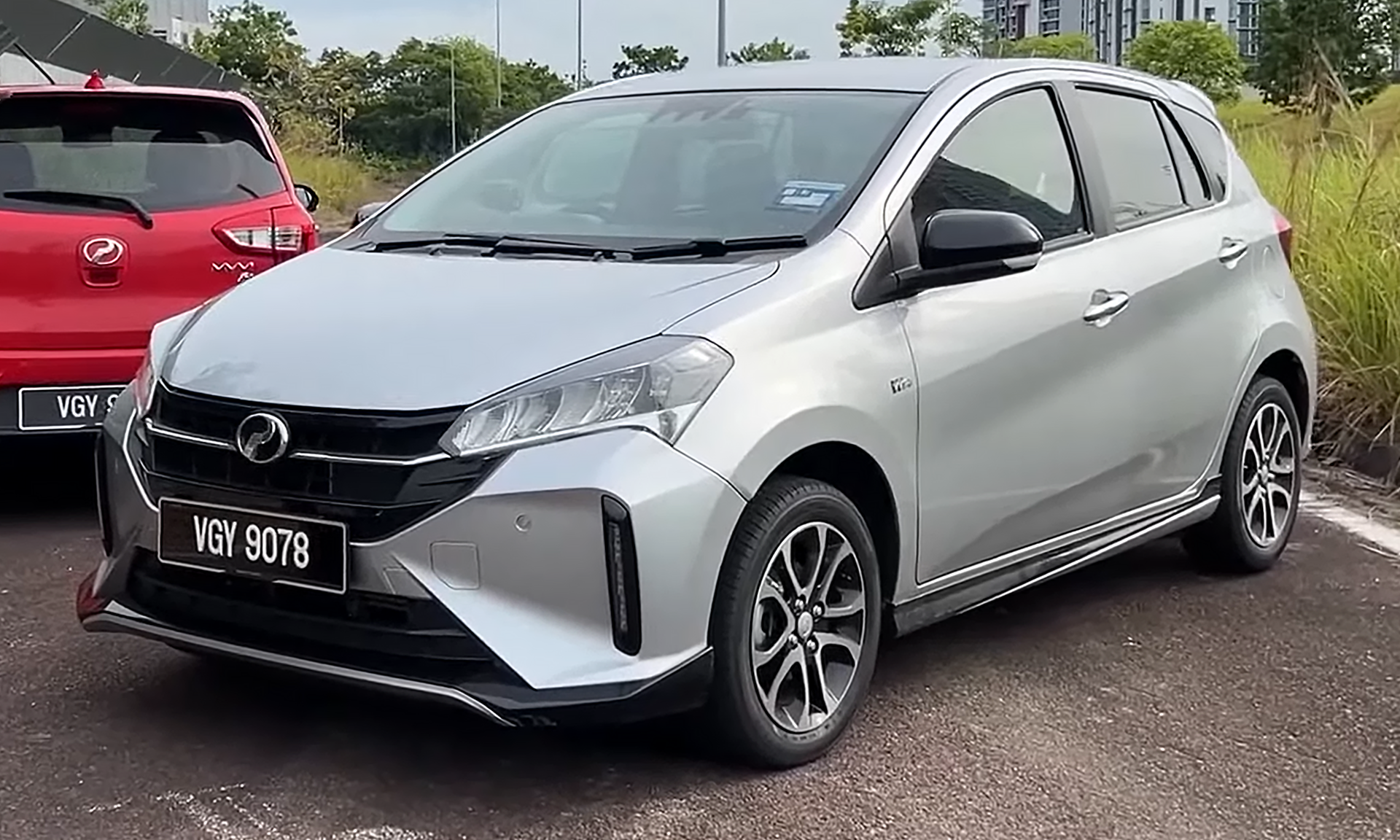
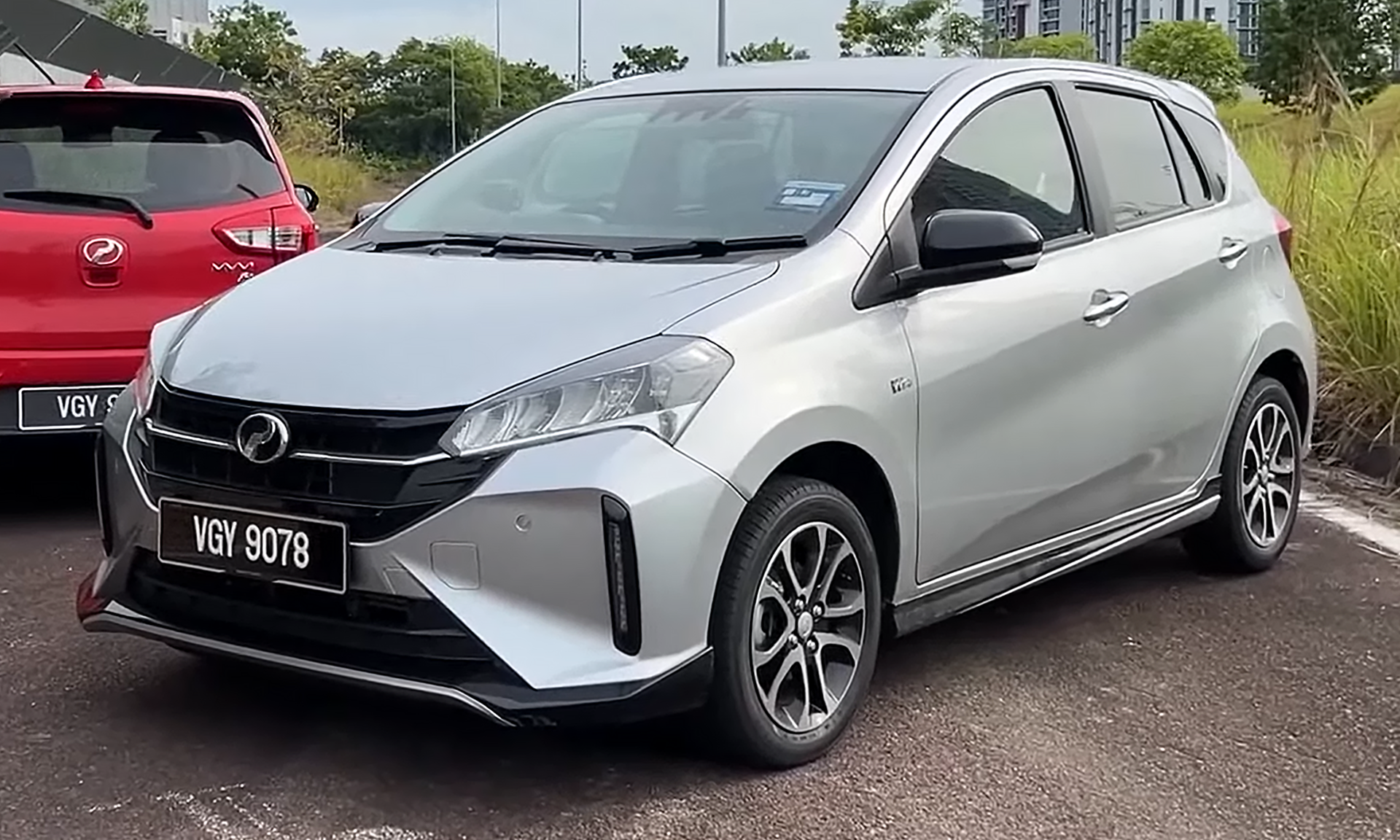
The car that turned Perodua into Malaysia's market leader was the Myvi, launched on 25 May 2005 and based on the first Daihatsu Boon, also sold as the Sirion. Its engines were a 1.0-litre with 43 kW (58.5 PS) and a 1.3-litre with 64 kW (87 PS). The second generation of 16 June 2011 was a rebadged Daihatsu Boon with its own styling and equipment. The third, launched on 16 November 2017, was designed by Perodua itself rather than adapted from the Boon, with 1.3-litre and 1.5-litre engines of 70 kW (95 PS) and 76 kW (103 PS).
The Myvi was the best-selling car in Malaysia for nine years in a row, from 2006 to 2014, and again from 2018 to 2022. Its best year was 2021 with about 47,500 sales, and cumulative sales reached 1.487 million by the end of 2024. From 2007 the Myvi was also exported to Indonesia as the Daihatsu Sirion; according to Wikipedia this accounted for 55% of Perodua's exports in 2020. The generations are covered in the Perodua Myvi guide.
Axia, Bezza and the new plant
The Axia was the first model built at Perodua's second factory in Rawang, a RM1.3 billion facility. Launched on 15 September 2014 to replace the Viva, it used a platform licensed from the Daihatsu Ayla and Toyota Agya and a 998 cc three-cylinder engine with 49 kW (66 hp). It was the first car to qualify as an Energy Efficient Vehicle under Malaysia's National Automotive Policy of 2014, and ASEAN NCAP gave it four stars. Sales in Malaysia reached 99,722 in 2015. The second Axia of 14 February 2023, on Daihatsu's New Global Architecture (DNGA) with a CVT, started at RM38,600; a basic Axia E was later priced at RM22,000 in June 2023 and marketed as the country's cheapest car. By mid-2023 the two generations had passed 600,000 sales. After Daihatsu admitted irregularities in side-collision test approvals for the second Axia, Perodua suspended deliveries of 11,834 cars in Malaysia pending re-testing.
The Bezza of 21 July 2016 was Perodua's first saloon and its first car not based directly on an existing Toyota or Daihatsu model, although it used the Axia's platform. It was also the first Perodua with stop-start ("Eco Idle"), regenerative braking and stability control, with engines of 50 kW (67 hp) and 70 kW (94 hp). Its Malaysian sales passed 100,000 in 2024. In 2016 Perodua sold a record of more than 207,100 vehicles, giving it a record 35.7% of the Malaysian market.

SUVs, MPVs and the first electric Perodua
The range then widened. The Alza dates from 2009, the Aruz from 2019 and the Ativa from 2021. In 2025 Perodua launched two crossovers: the Traz, based on the Toyota Yaris Cross, and the QV-E, a battery-electric B-segment SUV and the company's first electric car. Perodua was named Malaysia Car of the Year 2025.
Exports remain small. As of 2025 Perodua sells in Singapore, Brunei, Mauritius, Fiji, Sri Lanka and the Seychelles, and it has withdrawn from Britain, Nepal and Malta while still supplying parts there. British sales were 624 cars in 2008, 650 in 2009 and 761 in 2010. In 2024 Perodua sold 358,000 cars across ASEAN markets, making it the region's second-largest car maker, ahead of Honda. Perodua models on 1cars are listed in the Perodua catalogue, and comparable small cars are ranked among the best small city cars.

Perodua timeline
| Year | Event |
|---|---|
| 1993 | Perodua founded |
| 1994 | Kancil unveiled (29 August) |
| 1997 | Kancil sold in Britain as the Nippa (September) |
| 1998 | Kembara; second logo |
| 2001 | Daihatsu's stake rises to 25% |
| 2004 | Toyota Avanza assembly at Rawang |
| 2005 | Myvi launched (25 May) |
| 2009 | Kancil ends; Viva replaces it; Alza |
| 2014 | Axia launched (15 September), first car from the second Rawang plant |
| 2016 | Bezza saloon (21 July); record sales of over 207,100 |
| 2017 | Third-generation Myvi (16 November) |
| 2023 | Second-generation Axia on DNGA (14 February) |
| 2025 | Traz and battery-electric QV-E |
Landmark Perodua models
| Model | Years | Why it matters |
|---|---|---|
| Kancil | 1994–2009 | First Perodua, 722,223 built |
| Viva | 2007–2014 | Successor of the Kancil |
| Myvi | 2005–present | Malaysia's best-selling car for many years |
| Axia | 2014–present | Energy Efficient Vehicle from the new Rawang plant |
| Bezza | 2016–present | First Perodua saloon and first not directly based on a Daihatsu or Toyota |
| QV-E | 2025–present | First battery-electric Perodua |
Photo gallery

FAQ
What does Perodua stand for?
Perusahaan Otomobil Kedua Sdn. Bhd., Malay for "second automobile company".
Is Perodua owned by Toyota?
Not outright. Daihatsu, part of Toyota, holds 25% in total; the largest shareholder is UMW Holdings with 38%.
What was the first Perodua car?
The Kancil, a rebadged Daihatsu Mira, unveiled on 29 August 1994.
Does Perodua make electric cars?
Yes. The QV-E, a battery-electric crossover, was launched in 2025.
Sources
- Wikipedia — Perodua (accessed 24 Oct 2026)
- Wikipedia — Perodua Kancil (accessed 24 Oct 2026)
- Wikipedia — Perodua Myvi (accessed 24 Oct 2026)
- Wikipedia — Perodua Axia (accessed 24 Oct 2026)
- Wikipedia — Perodua Bezza (accessed 24 Oct 2026)
Found a mistake? Report an error